


AI Chatbot For Different Industries And Business Departments Powerpoint Presentation Slides AI CD





Try Before you Buy Download Free Sample Product
 Impress Your
 Audience
 100%
100% Editable
 Save Hours
 of Time


AI chatbots facilitate human like conversations with users via chat, employing graphics, text, or speech. Introducing our AI chatbot for Different Industries and Business Departments PowerPoint Presentation. It covers market size, key statistics, trends, and the evolution of AI chatbots. It outlines the steps for deploying AI based chatbots, including readiness assessment, development, testing, and training. Additionally, the Chatbot market templates showcase diverse use cases of AI chatbots in industries like e commerce, retail, healthcare, supply chain management, insurance, and banking. It highlights their applicability in different business departments, such as sales, marketing, human resources, and customer service. Moreover, future potential, impact, and trends of AI chatbots are also explored, along with dashboard metrics, to assess their performance. Lastly, the Chatbot software presentation includes several case studies illustrating AI chatbot usage in various industries, providing comprehensive insights into their practical implementations and benefits. Take advantage of our 100 percent editable artificial intelligence ppt, allowing you to tailor the content to your specific requirements. Benefit from our extensive research and skilfully designed product by downloading it now.
People who downloaded this PowerPoint presentation also viewed the following :
Content of this Powerpoint Presentation
Slide 1: This slide introduces AI Chatbot for Different Industries and Business Departments. State your company name and begin.
Slide 2: This is an Agenda slide. State your agendas here.
Slide 3: This slide shows Table of Content for the presentation.
Slide 4: This slide continues showing Table of Content for the presentation.
Slide 5: This slide shows title for topics that are to be covered next in the template.
Slide 6: This slide showcases global market size of AI chatbots that can help organization to determine the growth potential.
Slide 7: This slide presents various statistics related to AI chatbot adoption and business impact.
Slide 8: This slide describes various characteristics that can help AI chatbots to provide seamless customer experience.
Slide 9: This slide showcases evolution of chatbots over last few years from basic to advanced.
Slide 10: This slide displays latest trends that are contributing to the growth of AI-based chatbot industry.
Slide 11: This slide showcases comparative assessment of rule based and AI chatbots for business operations.
Slide 12: This slide shows title for topics that are to be covered next in the template.
Slide 13: This slide showcases various parameters that can help organization to determine ideal situation for deploying chatbot.
Slide 14: This slide presents factors that can drive AI-based chatbots implementation in organization.
Slide 15: This slide displays challenged faced and proposed solutions for deploying AI chatbot in organization.
Slide 16: This slide showcases checklist that can help organization to determine the AI chatbot deployment readiness.
Slide 17: This slide shows title for topics that are to be covered next in the template.
Slide 18: This slide describes a process that can help organization to develop and deploy AI-based chatbot for improving business efficiency.
Slide 19: This slide showcases building blocks that can help to build AI-based chatbots for seamless customer experience.
Slide 20: This slide presents an overview of chatbot story that can help organization to build conversational flow between bot and customers.
Slide 21: This slide shows title for topics that are to be covered next in the template.
Slide 22: This slide showcases various pre and post launch activities that can help to test AI chatbot before deployment.
Slide 23: This slide presents different criteria that can help organization in effective testing of AI-based chatbots.
Slide 24: This slide shows title for topics that are to be covered next in the template.
Slide 25: This slide showcases various approaches that can help organization to train AI-based chatbots and ideal situation for each technique.
Slide 26: This slide presents steps that can help organization to train AI chatbot for effective implementation in organization.
Slide 27: This slide showcases various strategies that can be deployed by organization to for conducting training of AI-based chatbots.
Slide 28: This slide shows title for topics that are to be covered next in the template.
Slide 29: This slide showcases different types of chatbots that can help organization to handle queries and provide enhanced experience to customers.
Slide 30: This slide displays comparison of traditional vs AI-based ecommerce website navigation for enhanced user experience.
Slide 31: This slide showcases AI chatbot architecture which can help ecommerce companies to solve customer queries and respond to user messages in time.
Slide 32: This slide presents AI chatbot use cases for ecommerce company which can help to increase customer retention reduce cart abandonment rate.
Slide 33: This slide showcases various use cases of AI chatbots that can help to increase the sales of retail store.
Slide 34: This slide shows title for topics that are to be covered next in the template.
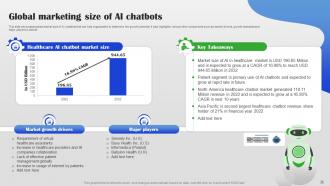
Slide 35: This slide displays global market size of AI chatbots that can help organization to determine the growth potential.
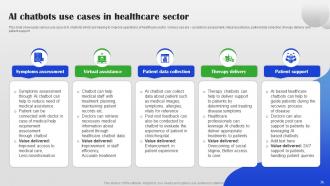
Slide 36: This slide showcases various use case of AI chatbots which are helping to improve operations of healthcare sector.
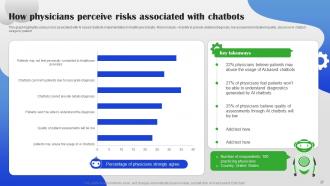
Slide 37: This slide displays graph which highlights various risks associated with AI based chatbots implementation in healthcare industry.
Slide 38: This slide shows title for topics that are to be covered next in the template.
Slide 39: This slide showcases Ai chatbots usage for functions of supply chain management which can help company to improve the operational efficiency.
Slide 40: This slide presents various technologies that can be integrated with AI chatbots for improving supply chain management operations.
Slide 41: This slide showcases various use cases that help supply chain management company to improve and enhance the customer service.
Slide 42: This slide shows title for topics that are to be covered next in the template.
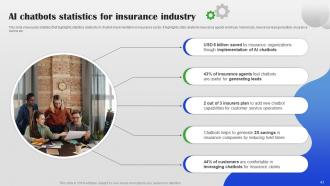
Slide 43: This slide displays statistics that highlights statistics related to AI chatbot implementation in insurance sector.
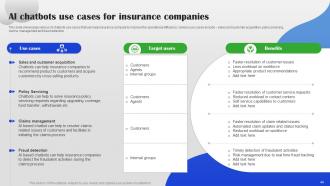
Slide 44: This slide showcases various AI chatbots use cases that can help insurance company to improve the operational efficiency.
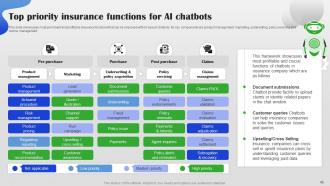
Slide 45: This slide presents most prominent and profitable insurance functions that can be improved with AI-based chatbots.
Slide 46: This slide shows title for topics that are to be covered next in the template.
Slide 47: This slide showcases statistics that highlights statistics related to AI chatbot implementation in banking industry.
Slide 48: This slide presents AI chatbot tools that can help banking industry to streamline the operations.
Slide 49: This slide showcases AI chatbot query routing that can help banking institutions to analyze information of user and generate appropriate solution.
Slide 50: This slide presents different use case of AI that help banking institutions to improve the operational efficiency.
Slide 51: This slide shows title for topics that are to be covered next in the template.
Slide 52: This slide showcases various stats related to AI chatbot implementation in the human resource department.
Slide 53: This slide presents usage of AI-based chatbot in different stages of employee recruitment and selection process.
Slide 54: This slide showcases various building blocks of HR chatbots that help organization to improve the candidate hiring and selection experience.
Slide 55: This slide displays impact of implementing AI chatbots on different talent acquisition metrics.
Slide 56: This slide shows title for topics that are to be covered next in the template.
Slide 57: This slide showcases various statistics related to AI chatbot impact on sales function of business.
Slide 58: This slide presents various strategies of AI chatbots that can help organization to increase the company product sales.
Slide 59: This slide showcases use cases of chatbots during different stages of sales pipeline like acquisition, qualification and conversion.
Slide 60: This slide presents best practices that can help organization in effective usage of AI chatbots for sales.
Slide 61: This slide shows title for topics that are to be covered next in the template.
Slide 62: This slide showcases various statistics related to AI chatbot impact on marketing function of business.
Slide 63: This slide presents various use cases that can help organization to increase the marketing effectiveness.
Slide 64: This slide showcases AI chatbot integration with social media platforms for providing seamless experience to customers and increase the product sales.
Slide 65: This slide describes best practices that can help organization to increase AI chatbot effectiveness for marketing.
Slide 66: This slide shows title for topics that are to be covered next in the template.
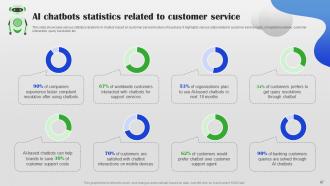
Slide 67: This slide showcases various statistics related to AI chatbot impact on customer service function of business.
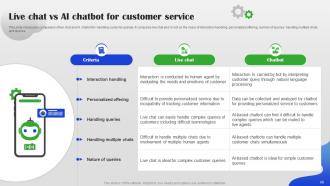
Slide 68: This slide presents comparison of live chat and AI chatbot for handling customer queries.
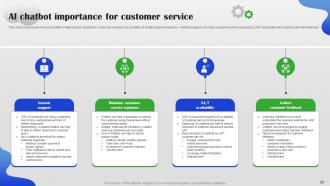
Slide 69: This slide showcases various benefits of deploying AI chatbot for customer service.
Slide 70: This slide presents best practices that can be implemented for increasing effectiveness of customer service AI chatbots.
Slide 71: This slide shows title for topics that are to be covered next in the template.
Slide 72: This slide showcases various AI chatbots tools that can help organization to increase the efficiency of sales and marketing activities.
Slide 73: This slide describes various AI chatbots tools that can help organization to increase the efficiency of customer service activities.
Slide 74: This slide showcases AI-based chatbots that can help organizations to automate the employee hiring, interview scheduling, candidate onboarding etc.
Slide 75: This slide presents various AI chatbots tools that can be used by insurance companies to increase operational efficiency.
Slide 76: This slide showcases AI-based chatbots that can help retail and ecommerce companies to provide seamless experience to customers and increase company sales.
Slide 77: This slide presents various AI chatbots that can help healthcare companies to monitor the physical plus mental health plus assess the symptoms of patient.
Slide 78: This slide showcases overview of Open AI ChatGPT software that is helping businesses to automate the key business activities and jobs.
Slide 79: This slide displays various features of OpenAI ChatGPT model which can help to automate business activities.
Slide 80: This slide highlights various benefits of using ChatGPT for different businesses.
Slide 81: This slide shows title for topics that are to be covered next in the template.
Slide 82: This slide showcases future impacts of AI-based chatbots on different businesses.
Slide 83: This slide displays a graph highlighting various risks associated with AI based chatbots implementation in healthcare industry.
Slide 84: This slide showcases future trends that will help to drive the AI-based chatbot industry and improve business operations.
Slide 85: This slide presents future impacts on different jobs due to deployment of AI-based chatbots.
Slide 86: This slide shows title for topics that are to be covered next in the template.
Slide 87: This slide showcases various metrics that can help organization to track the effectiveness and performance of AI-based chatbots.
Slide 88: This slide presents a dashboard that can help organization to evaluate the performance of multiple chatbots.
Slide 89: This slide shows title for topics that are to be covered next in the template.
Slide 90: This slide showcases a case study of healthcare company that leveraged AI chatbot for increase sales of insurance products and create awareness among customers.
Slide 91: This slide presents Decathlon case study that leveraged AI chatbot for increasing sales and acquire new customers.
Slide 92: This slide shows all the icons included in the presentation.
Slide 93: This slide is titled as Additional Slides for moving forward.
Slide 94: This slide provides 30 60 90 Days Plan with text boxes.
Slide 95: This slide depicts Venn diagram with text boxes.
Slide 96: This is an Idea Generation slide to state a new idea or highlight information, specifications etc.
Slide 97: This slide shows Post It Notes for reminders and deadlines. Post your important notes here.
Slide 98: This is a Thank You slide with address, contact numbers and email address.
AI Chatbot For Different Industries And Business Departments Powerpoint Presentation Slides AI CD with all 103 slides:
Use our AI Chatbot For Different Industries And Business Departments Powerpoint Presentation Slides AI CD to effectively help you save your valuable time. They are readymade to fit into any presentation structure.
-
AI Chatbot for Different Industries and Business Departments
-
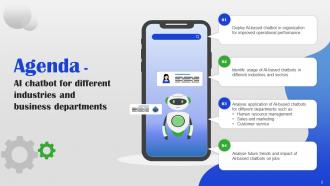
Agenda AI chatbot for different industries and business departments
-
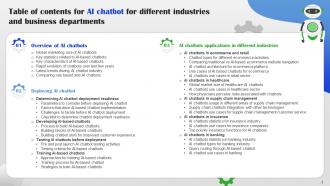
Table of contents for AI chatbot for different industries and business departments
-
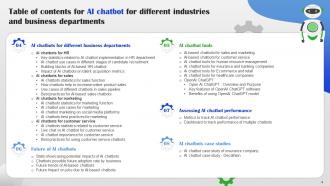
Table of contents for AI chatbot for different industries and business departments
-
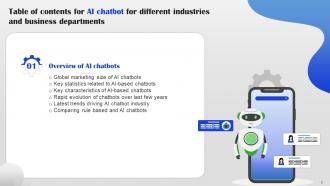
Table of contents for AI chatbot for different industries and business departments
-
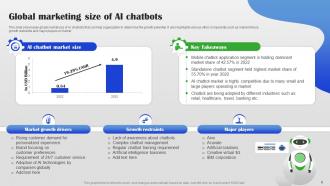
Global marketing size of AI chatbots
-
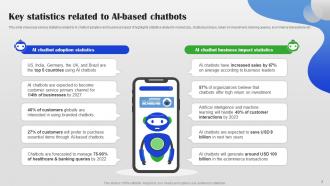
Key statistics related to AI based chatbots
-
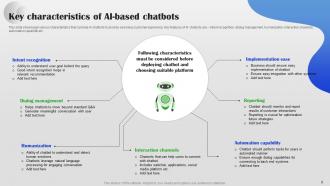
Key characteristics of AI based chatbots
-
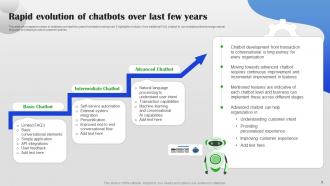
Rapid evolution of chatbots over last few years
-
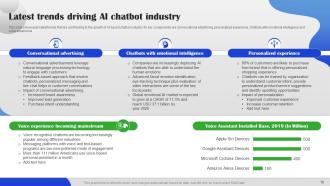
Latest trends driving AI chatbot industry
-
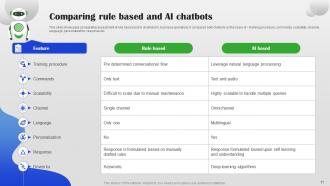
Comparing rule based and AI chatbots for business operations
-
Table of contents for AI chatbot deployment readiness
-
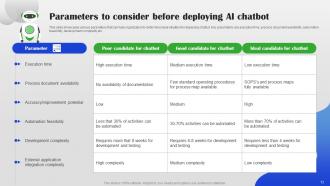
Parameters to consider before deploying AI chatbot
-
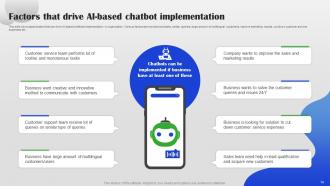
Factors that drive AI based chatbot implementation
-

Challenges to tackle before AI chatbot deployment
-
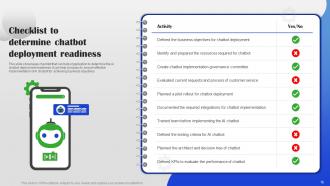
Checklist to determine chatbot deployment readiness
-
Table of contents for AI chatbot for different industries and business departments
-
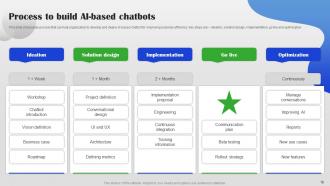
Process to build AI based chatbots
-
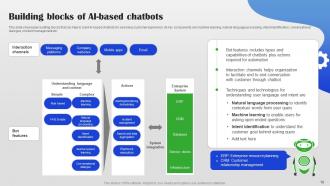
Building blocks of AI based chatbots
-
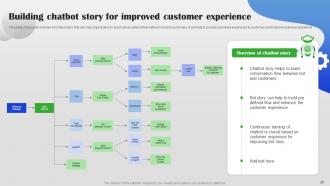
Building chatbot story for improved customer experience
-
Table of contents for AI chatbot deployment in different industries and business departments
-
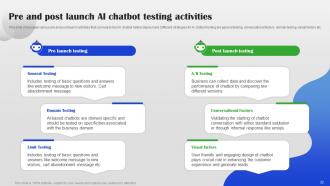
Pre and post launch AI chatbot testing activities
-
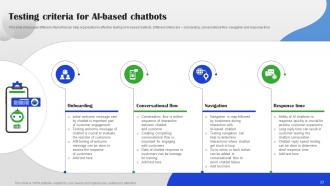
Testing criteria for AI based chatbots
-
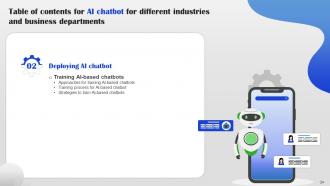
Table of contents for AI chatbot for different industries and business departments
-
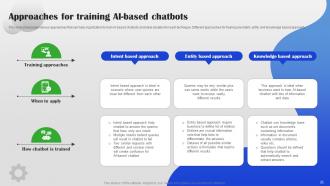
Approaches for training AI based chatbots
-
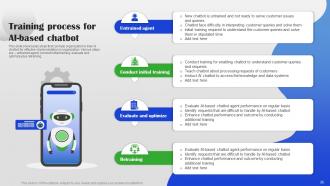
Training process for AI based chatbot
-
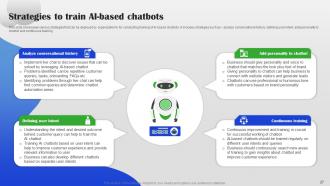
Strategies to train AI based chatbots
-
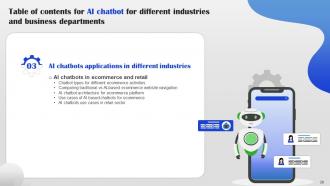
AI chatbot for different industries and business departments
-
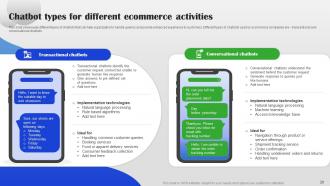
Chatbot types for different ecommerce activities
-
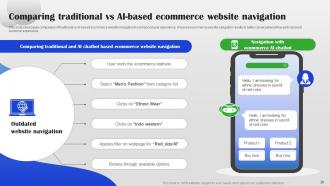
Comparing traditional vs AI based ecommerce website navigation
-
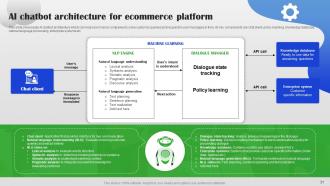
AI chatbot architecture for ecommerce platform
-
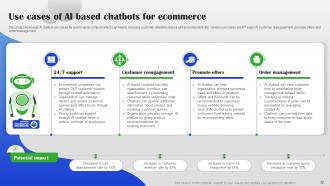
Use cases of AI based chatbots for ecommerce
-
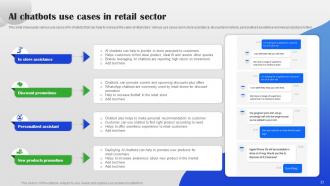
AI chatbots use cases in retail sector
-
AI chatbots applications in different industries
-
Global marketing size of AI chatbots
-
AI chatbots use cases in healthcare sector
-
How physicians perceive risks associated with chatbots
-
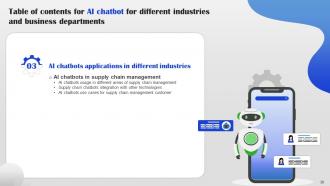
AI chatbots applications in different industries
-
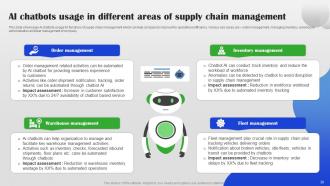
AI chatbots usage in different areas of supply chain management
-
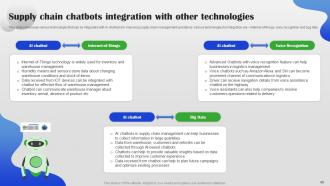
Supply chain chatbots integration with other technologies
-
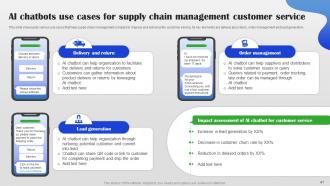
AI chatbots use cases for supply chain management customer service
-
AI chatbots applications in different industries
-
AI chatbots statistics for insurance industry
-
AI chatbots use cases for insurance companies
-
Top priority insurance functions for AI chatbots
-
AI chatbots applications in different industries
-
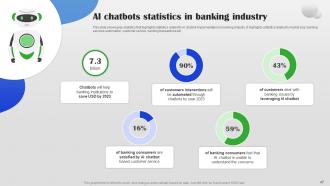
AI chatbots statistics in banking industry
-
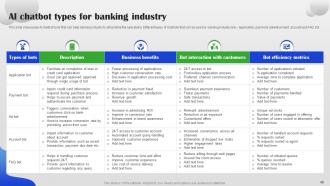
AI chatbot types for banking industry
-
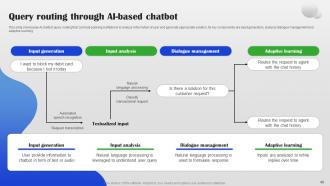
Query routing through AI based chatbot
-
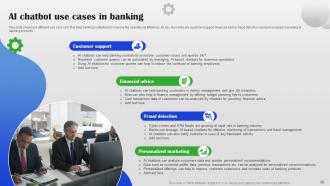
AI chatbot use cases in banking
-
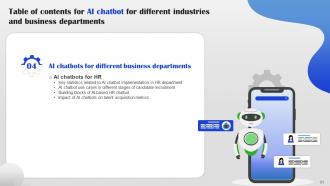
AI chatbots for different business departments
-
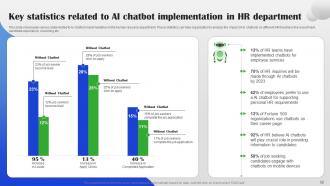
Key statistics related to AI chatbot implementation in HR department
-
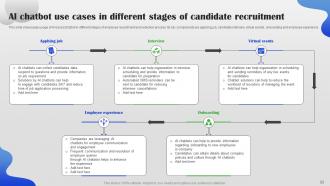
AI chatbot use cases in different stages of candidate recruitment
-
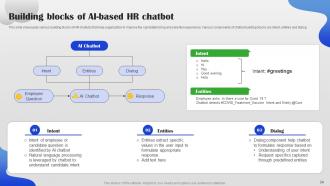
Building blocks of AI based HR chatbot
-
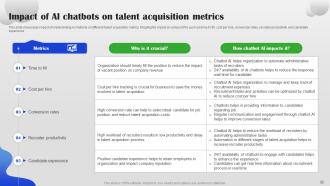
Impact of AI chatbots on talent acquisition metrics
-
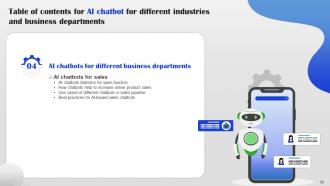
Table of contents for AI chatbot for different industries and business departments
-
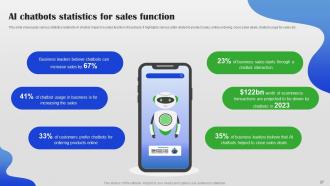
AI chatbots statistics for sales function
-
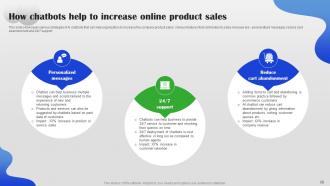
How chatbots help to increase online product sales
-
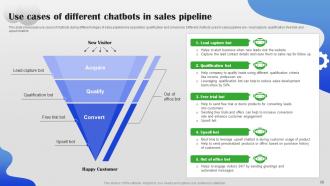
Use cases of different chatbots in sales pipeline
-
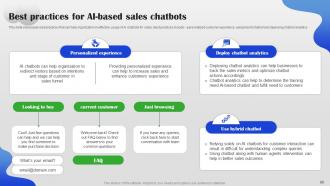
Best practices for AI based sales chatbots
-
Table of contents for AI chatbot for different industries and business departments
-
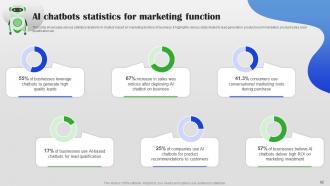
AI chatbots statistics for marketing function
-
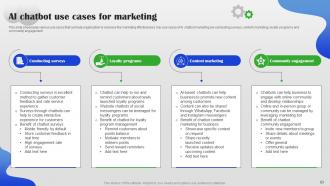
AI chatbot use cases for marketing
-
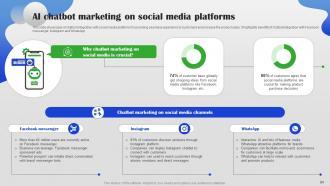
AI chatbot marketing on social media platforms
-
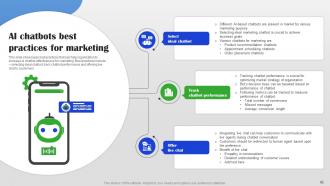
AI chatbots best practices for marketing
-
Table of contents for AI chatbot for different industries and business departments
-
AI chatbots statistics related to customer service
-
Live chat vs AI chatbot for customer service
-
AI chatbot importance for customer service
-
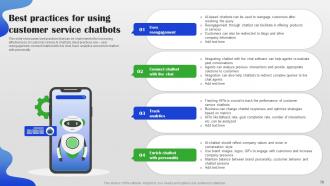
Best practices for using customer service chatbots
-
Table of contents for AI chatbot for different industries and business departments
-
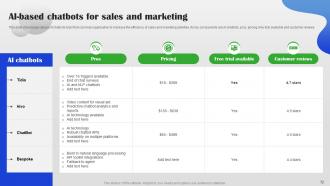
AI based chatbots for sales and marketing
-
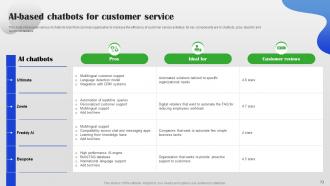
AI based chatbots for customer service
-
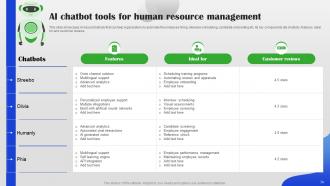
AI chatbot tools for human resource management
-
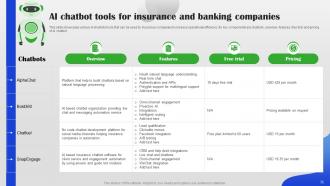
AI chatbot tools for insurance and banking companies
-
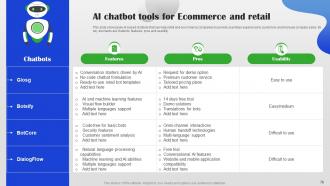
AI chatbot tools for Ecommerce and retail
-
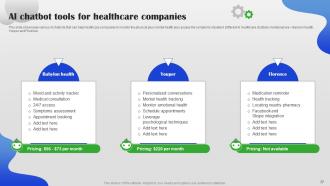
AI chatbot tools for healthcare companies
-
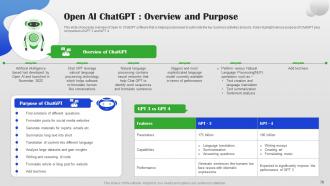
Open AI ChatGPT Overview and Purpose
-
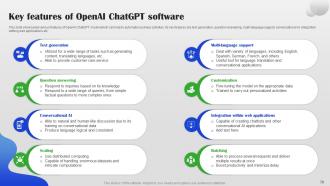
Key features of OpenAI ChatGPT software
-
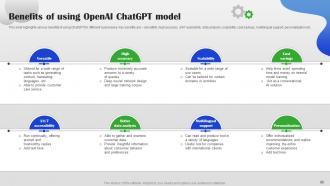
Benefits of using OpenAI ChatGPT model
-
Table of contents for AI chatbot for different industries and business departments
-
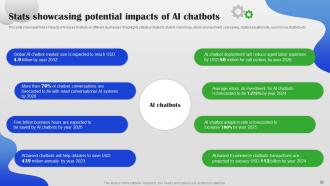
Stats showcasing potential impacts of AI chatbots
-
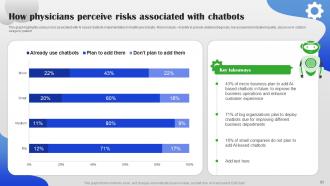
How physicians perceive risks associated with chatbots
-
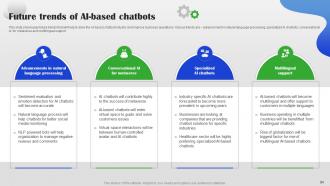
Future trends of AI based chatbots
-
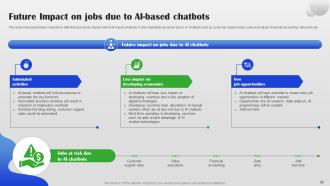
Future Impact on jobs due to AI based chatbots
-
Table of contents for AI chatbot performance assessment
-
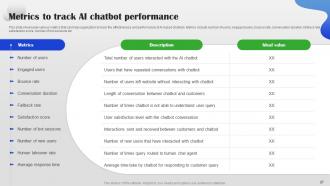
Metrics to track AI chatbot performance
-
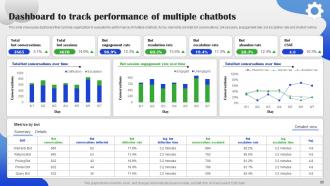
Dashboard to track performance of multiple chatbots
-
Table of contents for AI chatbot case studies in different industries and business departments
-
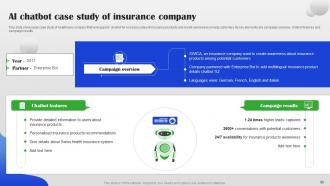
AI chatbot case study of insurance company
-
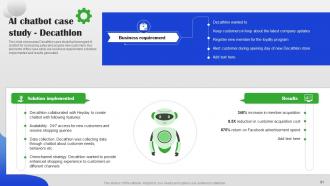
AI chatbot case study Decathlon
-
Icons slide AI chatbot for different industries and business departments
-
Additional slides
-
AI Chatbot for Different Industries and Business Departments AI Cd
-
AI Chatbot for Different Industries and Business Departments AI Cd
-
Idea generation
-
Post it notes
-

Thank you for watching
-

-

-

-

-

FAQs for AI Chatbot For Different Industries And Business Departments Powerpoint Presentation
So customer service is huge - they're everywhere there. E-commerce too, obviously. Banking uses them for basic account stuff, healthcare's doing symptom checkers (can't diagnose you but helpful for initial screening). Retail's all over product recs and tracking orders. Financial services loves them for payment questions. Real estate jumped in recently, education too. Honestly, if you're thinking about it, just look at what questions your team answers over and over. That's where you'll see the biggest impact. They're pretty solid for repetitive stuff but won't replace actual human judgment calls.
Dude, they're actually pretty solid for handling all the boring repetitive stuff. Your team gets to focus on the weird complex problems that actually need human brains. Customers get instant answers about shipping, returns, basic product info - no more sitting in queue hell which honestly makes everyone happier. They work 24/7 too, which is clutch. The cool thing? They actually learn from conversations and get smarter over time. Start with whatever questions your team answers a million times a day - that's where you'll notice the biggest difference right off the bat.
Honestly, chatbots are like having someone work your website around the clock - no breaks, no sick days. When people land on your site, the bot jumps in immediately to ask qualifying questions and grab their contact info before they disappear (which happens way too often). The good ones can book demos or send hot leads directly to your sales team. I know a few companies that literally doubled their conversions just by engaging visitors in those first few seconds instead of crossing their fingers they'd fill out a form. You don't need anything fancy - start with basic qualifying questions and build from there.
Most CRMs these days have API connections or built-in integrations for chatbots - Salesforce and HubSpot are pretty decent for this. Basically your bot grabs customer info to personalize chats, then logs everything back to their profile automatically. It can handle lead qualification, update contacts, book meetings, even kick off workflows. The trick is getting data flowing smoothly in both directions (which honestly can be a bit finicky at first). I'd start by figuring out what customer data your bot actually needs and what info you want it capturing from conversations.
Oh man, there's so much to think about here. Privacy is huge - you're dealing with people's health info, so encryption and HIPAA stuff can't be an afterthought. The scariest part though? What if your bot gives terrible advice and someone gets hurt. That liability alone would keep me up at night. Don't let it replace actual doctors either. Patients need that human connection, especially when they're worried about their health. I'd honestly just use it for basic screening - like helping people figure out if they need to see someone real. Always give them an easy way to talk to an actual person.
So chatbots are basically stalking your customers in the best way possible - they're collecting data from every single conversation. All those preferences and behaviors get turned into detailed profiles. Then boom, they start serving personalized product recs and custom offers in real-time. It's actually kind of creepy how much they pick up from random chats. They'll automatically sort your audience too and trigger different marketing sequences depending on where people are. Oh, and definitely check what conversation data you're already capturing - might surprise you how much is there.
Honestly? Getting the bot to actually understand what people are asking is way harder than it looks. Plus integrating with your current systems can be a total pain. You'll burn through so much time on training data - like, way more than you think. People expect these things to be perfect right away too, which is kinda unrealistic. Oh and figuring out when to pass someone to a real human is tricky because nobody wants to get trapped talking to a robot forever. I'd say start with really basic stuff first and build from there once you've got those down.
Honestly, chatbots are pretty solid for keeping people engaged because they're always there when students get stuck - like at 2am when nobody else is around to help. They can adapt to how different people learn and throw in some gamification stuff too. The best part? They won't get annoyed explaining the same thing over and over (which I definitely would). Makes the whole experience feel less lonely and more interactive. I'd probably start simple with basic Q&A features first, then see what your users actually struggle with before adding more bells and whistles.
So transformer models like GPT and BERT totally changed everything - they're crazy good at understanding context now. Multilingual stuff works way better too, which is huge. The jump from those old rule-based systems? Honestly feels like going from a flip phone to an iPhone. Few-shot learning means you don't need tons of training data anymore, and they can actually remember what you talked about earlier in the conversation. Oh, and definitely look at what OpenAI and Anthropic are doing - that's where things are headed. The progress has been pretty wild to watch.
Track resolution rates first - like how often your bot actually fixes stuff without passing people to humans. Response times and satisfaction scores matter too. Customer effort is the big one though - are you making their lives easier? Don't get caught up in conversation volume (learned this the hard way). What really helps is digging into which chats get escalated and figuring out why your bot failed. Those failures are gold for training improvements. Oh, and do monthly reviews of the messy conversations - that's where you'll find the real patterns to fix.
So first thing - encrypt everything, both stored data and anything moving between servers. Set up proper access controls too so random people can't peek at conversations. Auto-delete chat logs after like 30 days or whatever makes sense for your business (honestly this step saves you so much headache later). Never let passwords or credit card info sit in those chat histories, even for a second. Run security audits regularly - I know it's boring but you'll thank yourself when you catch stuff early. Build everything else on top of that encryption foundation.
So basically chatbots use translation engines that auto-detect what language someone's typing in. Pretty cool actually - they can switch languages mid-convo and keep track of context. Quality's all over the place though depending on your platform. Most support 50+ languages, but Spanish, French, Mandarin work way better than random obscure ones. Translation can totally miss subtle stuff, so definitely test it out first. Oh and honestly? Start small with just your top 2-3 customer languages rather than going crazy with everything at once.
Okay so the biggest thing I'm noticing is how these chatbots are getting crazy good at remembering stuff about you - like actual personalization, not the fake kind. Voice integration is everywhere now, and there's tons of industry-specific ones that actually get what you're talking about. The multi-modal thing is wild too - they can look at your images, videos, documents all at once. Emotional intelligence is honestly getting kinda creepy how accurate it is. Oh and they're building ones that can just go handle entire workflows without you babysitting them. For your situation though, I'd definitely go with something that plays nice with whatever tools you're already using.
Okay so first figure out your brand voice - formal? casual? whatever. Then feed your chatbot examples from your actual content like emails and social posts. Some companies totally mess this up and make their bots sound like they're trying way too hard to be trendy. It's so awkward. Just match what customers already know about your brand. Set up specific greetings and error messages that sound like you. Oh, and definitely test it with real people first - they'll tell you if it sounds weird. Don't overthink it, just keep it authentic to how you normally talk to customers.
Dude, chatbots are game-changers for efficiency. They handle all those basic customer questions 24/7, so your actual team can tackle the interesting stuff. Response times get way faster since bots answer instantly. The cost savings are real too - no more paying people to answer "what are your hours?" for the millionth time. Plus they're secretly great at collecting customer data while they chat. Honestly, I've seen employees get way happier because they're not stuck doing the same boring responses all day. It's like having a tireless intern who never complains.
-
Out of the box and creative design.
-
I had them make a presentation for an office retirement party. They were very helpful in understanding what we wanted and delivered the perfect presentation. Highly recommended!