


Automotive Industry Kpis For Service Department Performance Appraisal





Try Before you Buy Download Free Sample Product
 Impress Your
 Audience
 100%
100% Editable
 Save Hours
 of Time


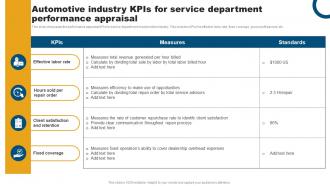
This slide showcases the performance appraisal KPIs for service department of automotive industry. This includes KPIs like effective labor rate, fixed coverage, gross profit percent, etc.
People who downloaded this PowerPoint presentation also viewed the following :
Automotive Industry Kpis For Service Department Performance Appraisal with all 9 slides:
Use our Automotive Industry Kpis For Service Department Performance Appraisal to effectively help you save your valuable time. They are readymade to fit into any presentation structure.








FAQs for Automotive Industry Kpis For Service
Honestly, start with CSAT and NPS - those are your bread and butter. CSAT shows if customers are happy right after service, but NPS is where you see if they'd actually tell their friends about you (which is way more telling). First Time Fix Rate is super important too because nothing pisses people off more than coming back for the same problem. Oh, and definitely track wait times plus your service advisor ratings since those hit the experience hard. I'd probably focus on just those four at first - you can always add more metrics later once you've got a good handle on the basics.
Honestly, tracking repair time is like taking your shop's pulse. Compare what jobs actually took versus your estimates - do this weekly and you'll catch patterns fast. High times usually mean pissed off customers and stressed techs. The real gold is in the outliers though. Why did that brake job take 4 hours instead of 2? Maybe it's parts delays, maybe Jerry needs more training, or your workflow is just broken. I've seen shops ignore this stuff and wonder why their bays are always backed up. Focus on the biggest time gaps first - that's where you'll find your quick wins.
Dude, you gotta track gross profit margin per service first - that's huge. Labor efficiency and average repair order value too. Most shops completely ignore customer lifetime value which is honestly stupid because that's where the real money is. Track your parts markup percentage and revenue per bay per day as well. Oh and customer acquisition cost, can't forget that one. These five will show you exactly where you're losing money or could be making more. Just pull last month's numbers for all of these and you'll see where you stand right away.
Look, if you don't have the parts customers need, you're screwed - longer repairs, angry clients, lost money. But here's the thing: inventory turnover matters just as much. Too much stock eats up your cash and makes your shop look like a hoarder's paradise. Not enough? You'll constantly run out of stuff. I'd shoot for 95%+ parts availability while turning inventory 6-8 times per year. Track what you're missing most and tweak those reorder points. Both metrics together tell the real story.
Look, tech efficiency is huge for your shop's bottom line. Fast techs = more jobs per day = better revenue per bay. Simple math. When your guys are slow, you're bleeding money on labor costs while customers get pissed about wait times. I always tell people to compare actual repair times against estimates - that's where you'll catch the problems. Some techs might need better tools, others need training. But honestly? This one metric affects everything else in your business. Customer satisfaction, profit margins, how many cars you can push through daily. It's the foundation that makes or breaks your KPIs.
So retention rates are basically your report card - tells you if customers actually want to come back. Good service, fair prices, decent communication? People stick around because they trust you. Nobody wants to find a new mechanic every oil change, you know? Track it over time though. When customers bail, figure out why. I always think the drop-offs are where the real insights are hiding. If you're seeing patterns there, something's off in your process and you gotta fix it before more people disappear.
Dude, first-time fix rates are everything in automotive service. Your customers will actually trust you when you nail it on the first visit. Plus you won't have those nightmare comebacks eating your profits - and trust me, dealing with pissed off customers who return with the same issue is the worst part of this business. Your techs stay way more productive too since they're not redoing the same job twice. Track it monthly and shoot for 90%+. If you're falling short, invest in diagnostic training and make sure parts are actually available when needed.
Look, warranty claims are basically your reality check for how good your service actually is. Customers don't come back unless something's really busted, so the data doesn't lie. High claim rates? Your techs are probably rushing through jobs or there's a skills problem. I'd pull monthly reports broken down by technician and repair type - that's where you'll see the patterns. Maybe one guy always has transmission issues coming back, or your brake jobs keep failing. It's honestly the most straightforward way to figure out what's going wrong before it gets worse.
Dude, focus on the big three first: labor efficiency (aim for 85-95%), customer satisfaction, and comeback rates. Comeback rates are honestly the most brutal indicator - like, nobody wants that awkward "hey, you're back already" moment. Also track your average repair value and first-time fix rates since those show if your techs can actually diagnose AND sell. Pull these monthly, then sit down with whoever's consistently tanking. Don't go crazy with a million metrics right away. These five will tell you everything you need to know about what's working.
Honestly, mapping out your customer lifecycle is like having a cheat code for your business. Track how long people stick around and what makes them bail - then you can spot the patterns. Send reminders right when they'd normally book again. Catch the ones about to jump ship before they do. You'll also figure out the perfect timing for upselling stuff. I'd start simple: just watch your average customer journey from first visit to however many times they come back. Then time your campaigns around those natural moments when they're deciding what to do next. Makes revenue planning way less of a guessing game.
Honestly, integrated shop management systems are probably your best bet - they'll auto-track labor hours, parts, completion times without you having to babysit everything. IoT sensors on equipment sound fancy but they're actually super useful for seeing which bays are busy and how tools get used (sometimes the data's weird in a good way). Mobile feedback apps beat paper surveys every time. Oh, and if your current systems can talk to each other through APIs, do that first - saves tons of manual entry headaches. I'd just pick whatever's annoying you most right now and start there.
Dude, seasonal stuff totally messes with your auto shop numbers. Winter hits and everyone needs tires and batteries. Summer? AC repairs everywhere. Spring and fall are goldmines though - that's when people actually prep their cars and you'll make bank per customer. I learned this the hard way my first year lol. Stock up on seasonal parts way early or you'll be scrambling. Check what happened last year to guess what's coming. Also bump up staffing during busy seasons and maybe throw more marketing dollars at prep times. Trust me, once you see the patterns it's pretty predictable.
Dude, reviews are everything for your shop's numbers. People won't even consider you if you're under 4 stars - I sure wouldn't. Strong ratings slash your marketing costs since word-of-mouth beats ads every time. Plus customers stick around longer when they trust you, and they're way more likely to say yes to that brake service you recommend. I'd track your scores on Google, Yelp, and Facebook monthly. Oh and definitely respond to everything, even the weird ones. Honestly, reputation management is probably the cheapest way to boost revenue right now.
Honestly, text reminders work magic - send them 24-48 hours before appointments. Track your no-show rate monthly: just divide no-shows by total appointments, then multiply by 100. Most service software already does this tracking for you, which is nice. I've watched shops go from 15% down to under 8% with better communication alone. Phone calls help too, especially for expensive services. Oh, and requiring small deposits upfront makes people way more likely to show. If you're consistently hitting over 10%, definitely start confirming appointments and maybe overbook slightly during busy periods. Pull weekly reports to watch the trends.
Look, tracking upsell rates tells you everything about how well your advisors sell and whether customers actually trust you guys. Low rates? Your team probably needs training on spotting real problems and explaining why stuff matters - customers can smell a pushy salesperson from a mile away. Good rates plus happy customers means you're doing it right. Break it down monthly by advisor and service type. Honestly, the demographic data is pretty useful too. Then just use all that to coach your people and maybe tweak your pricing. It's one of those metrics that actually matters.
-
Much better than the original! Thanks for the quick turnaround.
-
Professionally designed slides with color coordinated themes and icons. Perfect for enhancing the style of the presentations.