


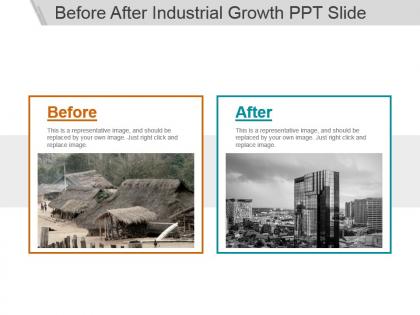
Before after industrial growth ppt slide




Try Before you Buy Download Free Sample Product
 Impress Your
 Audience
 100%
100% Editable
 Save Hours
 of Time


Analyze the chain of events with our Before After Industrial Growth Ppt Slide. Discern the course of action to follow.
People who downloaded this PowerPoint presentation also viewed the following :
Before after industrial growth ppt slide with all 6 slides:
Create an impact as a dutiful citizen with our Before After Industrial Growth Ppt Slide. Build a good impression in your community.





FAQs for Before after industrial
Honestly, I'd focus on manufacturing PMI and industrial production first - those show real momentum. Capacity utilization rates are solid too. Foreign investment flowing into manufacturing tells you a lot, and don't sleep on employment numbers in industrial sectors. That's how you know if growth will actually stick around vs just being a flash in the pan. GDP manufacturing percentages? Skip those early on, they're kinda misleading when markets are all over the place. Build yourself a simple dashboard with maybe 3-4 of these so you can see actual trends instead of random spikes.
Tech just makes everything work better and faster, honestly. Car factories got way more efficient with robots. Data analytics completely changed how supply chains operate. Even steel companies - which sounds super boring - use smart sensors and AI now to optimize everything. The main benefit? Companies can produce more stuff while using fewer resources and cutting down waste. Quality usually goes up too, which is nice. My advice would be to focus on small improvements in whatever industry you're in rather than waiting around for some massive game-changing innovation that might never come.
Government policy basically makes or breaks industrial growth. Tax breaks get companies investing. Infrastructure spending gives industries what they need to operate. Smart trade policies open up markets - crappy ones shut them down. Regulations can either spark innovation or drown it in paperwork (and trust me, most lean toward the paperwork side). Every major industrial boom has solid government moves backing it up. The trick is supporting growth without playing favorites with specific companies. I'd definitely check what policies your target markets are rolling out - that's where the real opportunities are hiding.
Look, sustainability isn't just tree-hugging anymore - it actually saves money long-term. Your energy bills drop, you waste less stuff, and banks are throwing green financing at companies now. Customers want to work with sustainable businesses too, so you're basically shooting yourself in the foot if you ignore it. I'd honestly treat it like any other investment rather than some charity expense. Find whatever gives you the fastest payback in your industry first. Then expand from there. The regulatory stuff is coming whether we like it or not anyway.
Honestly, the worst part is when your suppliers just can't keep up with sudden demand spikes. You'll be scrambling to hire people but good workers are hard to find fast. Your facilities get completely swamped too. Cash flow gets weird - you're spending tons upfront while waiting for revenue to catch up. Quality usually takes a hit because everyone's rushing like crazy (learned that one the hard way). Oh, and don't get me started on trying to stay compliant when you're scaling quickly. Best advice? Plan for these bottlenecks before they smack you in the face.
So basically, global competition forces your domestic companies to step up their game or die. They've gotta innovate faster, slash costs, improve quality - all that survival stuff. Think of it like... idk, having that one friend who always crushes you at video games so you actually get better? Anyway, it usually makes industries more efficient overall and creates better products. Sure, some weaker companies will probably tank. But that's kinda how it works. The real trick is making sure your local industries can actually get the resources and training they need to compete instead of just throwing them to the wolves.
Honestly, automation's pretty messy when it comes to jobs. Companies love it because productivity goes up and costs drop - helps industries grow overall. But tons of routine workers get replaced while demand skyrockets for tech people. Really depends on how fast workers can learn new skills and if fresh industries pop up to hire everyone who got displaced. Short sentences are fine sometimes. If you're thinking about automating stuff at work, definitely push for solid retraining programs. Don't just dump the tech on people without helping them adapt first.
SMEs really are the backbone of industrial growth - they create jobs and spot market gaps big corps totally miss. Unlike huge companies, they can pivot fast and try new stuff without dealing with endless bureaucracy. Most hire locally and buy from nearby suppliers too, which creates this nice ripple effect. Honestly, I think that local sourcing aspect gets overlooked a lot. Many of these smaller companies eventually grow into major players themselves. If you're thinking growth strategies, definitely look at partnering with smaller enterprises in your supply chain - it's usually a smart move.
Dude, supply chain disruptions are brutal for industrial growth. Basically when key materials get delayed or go missing, everything grinds to a halt. Production slows way down. Costs go through the roof. Companies can't fill orders, so growth just tanks. Remember the chip shortage that wrecked car production for like forever? It really depends on how critical that missing piece is and if you've got backup suppliers. Smart move is diversifying where you source stuff from and keeping extra inventory of the really important materials on hand. Not the most exciting strategy, but it works when things go sideways.
Dude, when industries move in, cities get slammed with people chasing jobs. Housing gets crazy expensive fast. Roads turn into parking lots - I swear some cities weren't ready at all. Water systems, power grids, public transit - everything gets overwhelmed if nobody planned ahead. The smart cities start building infrastructure *before* the boom hits, not after. Otherwise you're just playing catch-up forever. Waste management becomes a nightmare too. Honestly, if you know industrial growth is coming your way, start pressuring local planners now to expand capacity.
Honestly, start by digging into your sales data - see what's actually taking off vs what you think is working. Customer behavior patterns are gold mines. Check where competitors are dropping the ball and what gaps exist in the market. I worked with this one company that totally changed direction after finding crazy insights buried in their existing data. Wild stuff. Look at your operational processes too - inefficiencies usually jump out once you start analyzing properly. Don't overcomplicate it though. Audit what data you're already collecting first, then grab some decent analytics tools to make sense of it all.
Honestly, you can't ignore innovation if you want your industry to keep growing. Companies that don't innovate just get left behind - I've watched it happen so many times. Your competitors will eat your lunch if they're faster at improving processes or launching new products. Innovation opens up new markets too. Plus it helps you deal with changing regulations and what customers actually want. My old boss used to say "innovate or die" which sounds dramatic but... he wasn't wrong. You need to bake this into your strategy from day one, not scramble when you're already losing ground.
Trade deals are weird - they help some places while screwing over others. Your region's got certain strengths, right? If it's manufacturing and tariffs drop, exports could boom. But competing with cheap overseas labor? That's rough. I've seen whole factory towns just... disappear while tech cities do great. The trick is figuring out if your area can pivot to better stuff. Honestly, just watch what industries are big near you and follow the trade talks about them. You'll get a feel for whether you should worry or not.
Honestly, renewable energy and AI are where it's at right now. EV charging stations are popping up everywhere - the whole battery ecosystem is just nuts. Healthcare tech is still early too, especially telehealth stuff. Cybersecurity's booming because apparently nobody can keep hackers out anymore lol. Space tech and sustainable farming are getting hot fast. Oh, and biotech obviously. If you're thinking about switching careers or investing, I'd definitely look at renewable energy first - companies are literally desperate for people right now. AI automation too, but that space moves so quick it makes my head spin sometimes.
Honestly, most companies get this backwards. They look at today's skills instead of mapping what they'll actually need in 2-3 years when automation hits their industry. I'd start by figuring out those technical gaps first. Then hit up local colleges or training programs - create something that feeds right into those future roles. Cross-train your current people too. I've watched so many businesses scramble later because they waited too long to build their pipeline. Your training budget should match where you're headed, not just what you need right now. Apprenticeships work great for this stuff.
-
Nice and innovative design.
-
Great quality slides in rapid time.