


Big data tools powerpoint presentation slides




Try Before you Buy Download Free Sample Product
 Impress Your
 Audience
 100%
100% Editable
 Save Hours
 of Time


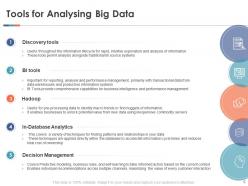
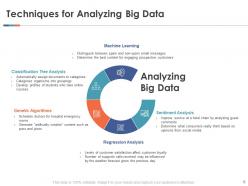
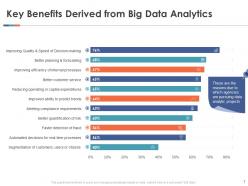
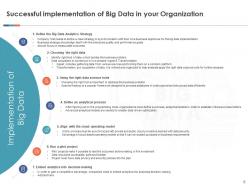
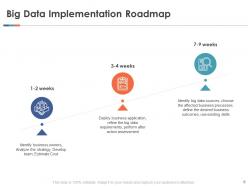
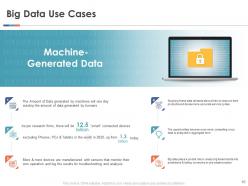
Analyze your information using these Big Data Tools PowerPoint Presentation Slides. Take the assistance of these data analysis PowerPoint visuals to depict certain methods for examining information like discovery tools, decision management, etc. Take advantage of these data analytics PowerPoint infographics to show techniques for analyzing big data like machine learning, genetic algorithms, regression analysis, etc. Showcase the advantages of big data analytics like improved decision making, meeting compliance requirements, better risk quantification, automated decisions amongst others. Demonstrate the steps to implement big data including defining analytics strategy, choosing the right data, using data science tools, etc. with these data management PPT slideshow. Portray the big data use cases like outstripping of data, data analysis in aggregate form, analysis of trends and taking pre-emptive action, etc. Utilize this amazing big data maturity model PPT deck to undertake the best business decisions. Download these amazing big data ppt to achieve exponential growth with the adoption of contemporary technologies.
People who downloaded this PowerPoint presentation also viewed the following :
Big data tools powerpoint presentation slides with all 20 slides:
Use our Big Data Tools Powerpoint Presentation Slides to effectively help you save your valuable time. They are readymade to fit into any presentation structure.







FAQs for Big data tools
Scalability's your biggest priority - find something that grows with your data without choking. Real-time processing speed matters too, especially if you're doing live analytics. Built-in fault tolerance saves you from those 3am "everything's broken" panic calls. Oh, and integration capabilities are clutch since you're probably pulling from like five different sources. Honestly, a clean UI makes such a difference - debugging sucks enough without wrestling terrible interfaces. Community support's worth checking too because you will get stuck on weird edge cases. Just make sure it doesn't clash with whatever stack you're already running.
Here's my take: Hadoop and Spark won't cost you licensing fees, but proprietary stuff can hit tens of thousands per year. Both handle huge datasets fine. The real difference? Open-source lets you build exactly what you want - no restrictions. But here's the thing - when everything crashes at 2 AM, you're on your own. Proprietary vendors actually answer their phones and fix your problems. Honestly, I'd go open-source first if your team knows what they're doing. You can always switch later if the lack of support drives you nuts.
Honestly, you can't do big data analysis without good visualization tools. Raw spreadsheets with millions of rows? That's a nightmare nobody should deal with. Charts and graphs actually make sense of all that chaos - suddenly you can spot trends and weird outliers that would've taken forever to find otherwise. Plus your boss will thank you when you show up with clean visuals instead of dumping a data mess on their desk. Tableau's probably your best bet to start with, though Power BI works too if you're already stuck in the Microsoft ecosystem.
Start with figuring out what sensitive data you actually have and where it's hiding. Multi-layer security is your friend here - encrypt everything (both stored and moving), set up role-based access controls, and audit who's touching what regularly. Big data platforms like Hadoop come with decent security features, but they're often turned off by default which honestly drives me nuts. Don't forget to anonymize sensitive stuff before analysis and mask data in your test environments. Oh, and build security into your pipeline from day one - retrofitting it later is a nightmare.
Honestly, you can't go wrong with Apache Spark, Hadoop, or Kafka right now - they're literally everywhere. Spark's amazing for fast in-memory stuff and handles both batch and streaming. Hadoop's the old school choice for massive storage, though it feels pretty dated tbh. Real-time streaming? Kafka's your best bet. Oh, and cloud options like Databricks and Snowflake are blowing up lately. Really depends on if you need real-time processing and how much data you're dealing with. Also your team's skill level matters. If you're stuck, just start with Spark.
So basically AI and ML take all your messy data and automatically find the useful stuff instead of you manually digging through spreadsheets forever. Machine learning gets better as it processes more data, which is honestly pretty wild. You can spot weird patterns, predict what's coming next, and crunch through huge datasets in real-time. The cool part? You'll get automated alerts when something's off, plus it handles unstructured data too. My advice though - pick one specific problem to solve first. Don't go crazy trying to automate everything right away.
Honestly, the skill gaps hit hardest - your team probably doesn't know these tools yet. Then there's all that messy data scattered everywhere that won't talk to each other. Oh, and good luck picking from like 500 different platforms out there. Start with tiny pilot projects instead of going big. Train your current people rather than hiring (way cheaper). Get everyone agreeing on data standards first - trust me on this one. Master one tool completely before you even think about adding more. The gradual approach saves your sanity and actually works.
Okay so basically it comes down to timing. Real-time tools like Kafka Streams process stuff instantly - we're talking seconds or milliseconds. Perfect for fraud detection or when you need live dashboards. Batch processing handles huge data chunks but waits for scheduled times. MapReduce is pretty dated honestly, though it still works for heavy analytics that aren't urgent. Real-time costs way more and debugging is a nightmare. But if you can wait a few hours for results? Batch is simpler and cheaper. Just depends whether you need answers right now or can chill and wait.
Honestly, just focus on three things when you're picking a Big Data tool. Data volume matters - streaming vs batch processing are totally different beasts. Your team's skills are huge too because Spark has a crazy learning curve compared to those point-and-click tools. Budget's obviously important for licensing and infrastructure. Oh, and definitely check how it plays with your current systems first - I learned that the hard way. Scaling potential matters too. But really, if you nail down your exact use case upfront, it'll cut through all the marketing BS and show you what actually works for your situation.
Honestly, I'd go with cloud for big data stuff. You can scale everything instantly instead of waiting forever for new hardware to show up. The flexibility is insane compared to on-premises setups. Sure, you lose some control with your own servers, but managing all that infrastructure is such a pain. Cloud gives you the newest tools without dealing with updates too. My cousin's company went through this whole mess trying to expand their on-premises setup last year - took months. Start with cloud and see how it goes. You can always move critical stuff back later if you really need to.
So with all these new privacy laws popping up everywhere, you basically have to flip your approach. Start with compliance stuff first - boring but necessary. Look for tools that already do data lineage tracking and audit trails without you having to build it yourself. GDPR and CCPA are just the beginning too. Honestly, half the "cool" new platforms fall apart the second you need proper access controls or automated reporting for audits. Don't get seduced by the shiniest option if it'll leave you scrambling when regulators come knocking.
Big data tools can help you dig into customer behavior and create personalized experiences that actually work. Hadoop, Spark, cloud platforms - they all process huge datasets to segment customers and predict what they want next. Real-time recommendations become possible too. Honestly? Once you see good personalization working, it's kind of addictive. Plus you'll catch customer journey issues you never noticed before. My advice: pick one thing first, maybe email campaigns or your recommendation system, instead of going crazy trying to fix everything. The results speak for themselves once you get rolling.
So Netflix uses Spark and Hadoop for those eerily accurate recommendations (seriously, how do they know I'm obsessed with true crime?). Walmart crunches massive data sets to predict what thousands of stores need. Healthcare companies like Kaiser spot high-risk patients before they hit the ER. JPMorgan catches fraud in real-time with their data processing setup. Honestly, the smart move is starting small - pick one specific problem instead of trying to fix everything at once. Most of these companies began with tiny pilot projects anyway.
Honestly, measuring ROI on big data stuff is kinda tricky but doable. First thing - get your baseline numbers locked down before you start anything. Track operational costs, how long data processing takes, customer acquisition rates, that sort of thing. After 6-12 months with your new tools, measure the same stuff again. You'll see cost savings from efficiency gains and hopefully revenue bumps from better customer insights. The annoying part? Some benefits are impossible to put a dollar amount on, like improved decision-making. Oh, and don't forget to include ALL costs - training, maintenance, the whole shebang, not just what you paid upfront.
Honestly, AI/ML integration is going to be massive - these tools are getting scary good at automating analysis and making predictions. Real-time processing is exploding too. You'll handle streaming data way faster than before. Cloud-native solutions are taking over (on-premise stuff feels ancient now), and edge computing lets you process data right where it's created. Oh, and data democratization tools? Game changer. Your business teams won't need to bug the tech folks for every little report. Start looking at vendors based on their AI roadmaps and cloud-first approach, not just what they do today.
-
Easy to edit slides with easy to understand instructions.
-
Excellent work done on template design and graphics.
-
Good research work and creative work done on every template.