


Blueprint To Develop Information Technology IT Strategic Roadmap Strategy CD V




Try Before you Buy Download Free Sample Product
 Impress Your
 Audience
 100%
100% Editable
 Save Hours
 of Time


Gain valuable insights into developing an effective IT strategy plan that aligns with business goals and drives excellence and cost leadership. Introducing our Blueprint for Information Technology IT Strategic Roadmap template, which outlines the key technologies utilized to achieve both IT and business objectives. This comprehensive template covers essential IT initiatives for business transformation, including IT infrastructure management encompassing storage, service, and network management, IT automation, risk management, and enhanced marketing strategies. Our IT Infrastructure deck provides a holistic view of how technology leaders play a crucial role in managing IT department performance. Furthermore, our IT automation PowerPoint presentation emphasizes the significance of an IT steering committee in achieving cost leadership and offers compelling statistics related to IT trends. The template also explores future predictions for advanced technologies in the IT landscape, such as hyper-automation, edge computing, artificial intelligence, and extended reality. Lastly, our IT strategy plan includes dashboards for tracking IT security incidents and customer satisfaction, enabling you to monitor and improve performance effectively. Do not miss out on the opportunity to access this powerful and customizable template to guide your IT strategy development.
People who downloaded this PowerPoint presentation also viewed the following :
Content of this Powerpoint Presentation
Slide 1: This slide introduces Blueprint to develop information technology (IT) Strategic Roadmap. State your company name and begin.
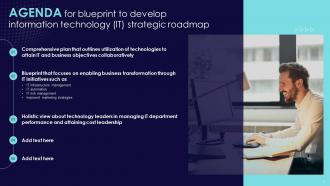
Slide 2: This slide depicts the Agenda of the presentation.
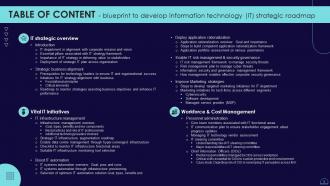
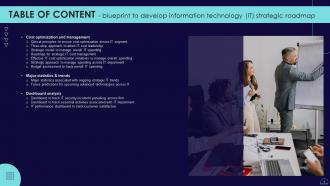
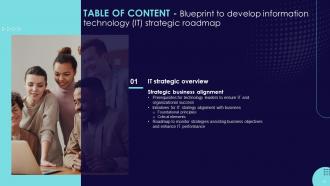
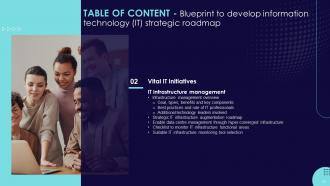
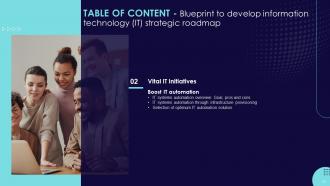
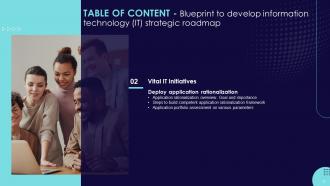
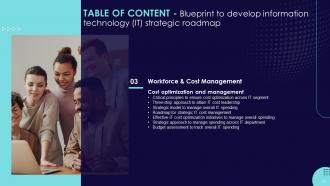
Slide 3: This slide incorporates the Table of Contents.
Slide 4: This is yet another slide continuing the Table of Contents.
Slide 5: This slide highlights the Title for the Topics to be discussed next.
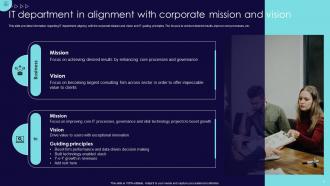
Slide 6: This slide provides information regarding IT department aligning with the corporate mission and vision and IT guiding principles.
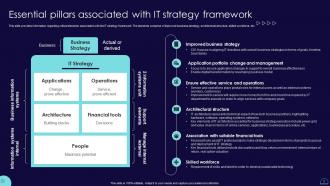
Slide 7: This slide covers the Essential pillars associated with IT strategy framework.
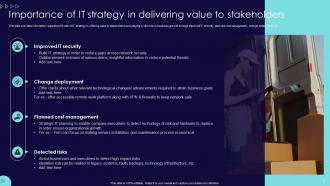
Slide 8: This slide displays the Importance of IT strategy in delivering value to stakeholders.
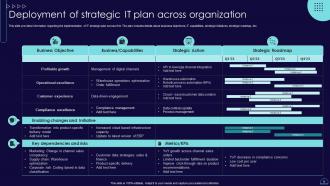
Slide 9: This slide deals with the Deployment of strategic IT plan across organization.
Slide 10: This slide mentions the Heading for the Contents to be discussed further.
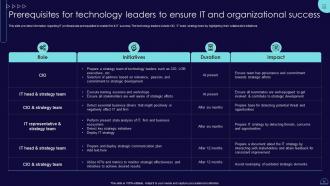
Slide 11: This slide provides information regarding IT professionals prerequisites to enable firm & IT success.
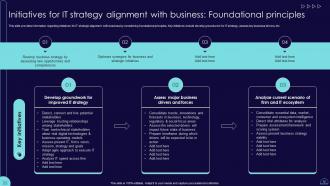
Slide 12: This slide focuses on Initiatives for IT strategy alignment with business: Foundational principles.
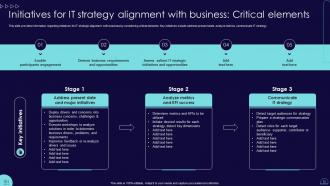
Slide 13: This slide portrays the Initiatives for IT strategy alignment with business: Critical elements.
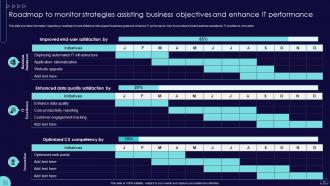
Slide 14: This slide provides information regarding a roadmap to track initiatives that support business goals and enhance IT performance.
Slide 15: This slide depicts the Title for the Ideas to be discussed further.
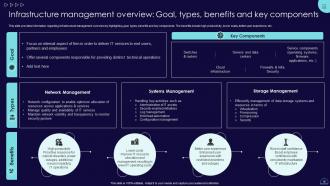
Slide 16: This slide emphasizes on infrastructure management overview by highlighting goal, types, benefits and key components.
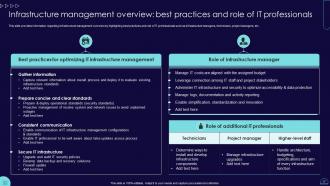
Slide 17: This slide provides information regarding infrastructure management overview by highlighting best practices and role of IT professionals.
Slide 18: This slide focuses on the Infrastructure management overview: Additional technology leaders involved.
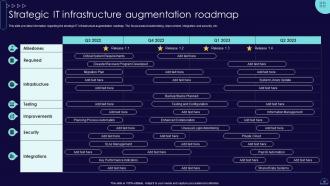
Slide 19: This slide exhibits information about the strategic IT infrastructure augmentation roadmap.
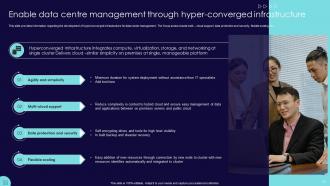
Slide 20: This slide deals with Enabling data centre management through hyper-converged infrastructure.
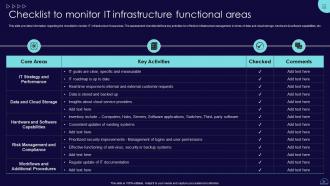
Slide 21: This slide provides information regarding the checklist to monitor IT infrastructure focus areas.
Slide 22: This slide talks about the Suitable IT infrastructure monitoring tool selection.
Slide 23: This slide exhibits the Heading for the Ideas to be discussed further.
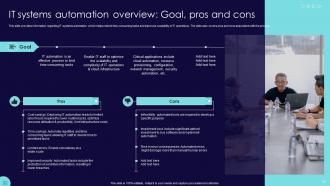
Slide 24: This slide gives information about the IT systems automation which helps restrict time-consuming tasks and improves scalability of IT operations.
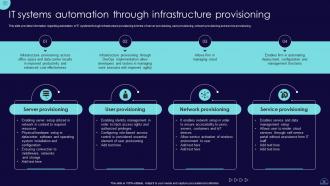
Slide 25: This slide reveals IT systems automation through infrastructure provisioning.
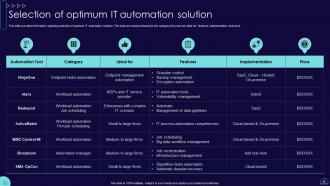
Slide 26: This slide deals with the Selection of optimum IT automation solution.
Slide 27: This slide covers the Title for the Components to be discussed further.
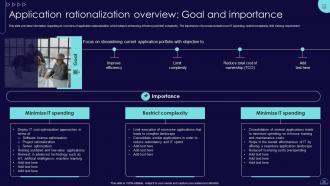
Slide 28: This slide provides information regarding an overview of application rationalization which helps in enhancing efficiency and limit complexity.
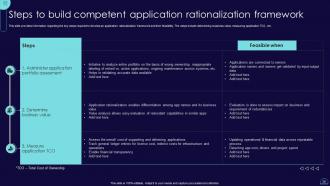
Slide 29: This slide states the Steps to build competent application rationalization framework.
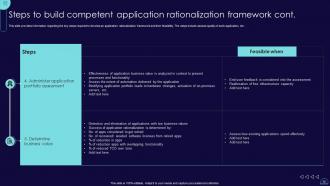
Slide 30: This slide continues the Steps to build competent application rationalization framework.
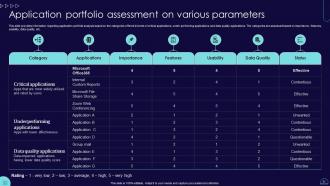
Slide 31: This slide focuses on the Application portfolio assessment on various parameters.
Slide 32: This slide highlights the Heading for the Topics to be covered next.
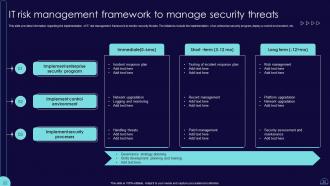
Slide 33: This slide provides information regarding the implementation of IT risk management framework to monitor security threats.
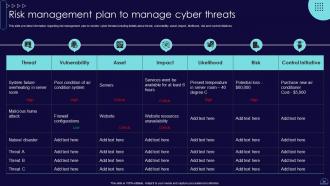
Slide 34: This slide focuses on the Risk management plan to manage cyber threats.
Slide 35: This slide shows Information security and governance management framework.
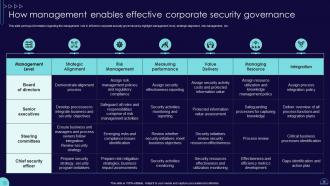
Slide 36: This slide portrays information regarding the management role in effective corporate security governance by highlight management level, strategic alignment, etc.
Slide 37: This slide mentions the Title for the Topics to be discussed in the upcoming template.
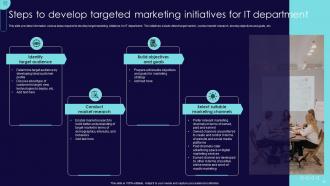
Slide 38: This slide provides information about the various steps required to develop target marketing initiatives for IT department.
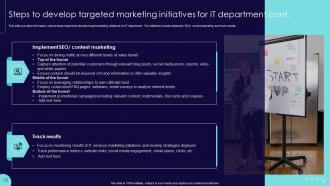
Slide 39: This slide continues the steps required to develop target marketing initiatives for IT department.
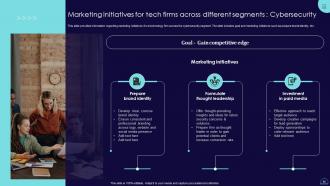
Slide 40: This slide exhibits the Marketing initiatives for tech firms across different segments: Cybersecurity.
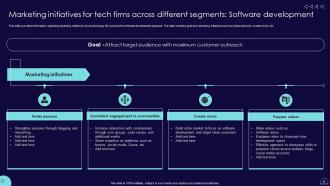
Slide 41: This slide highlights the marketing initiatives for a technology firm across the software development segment.
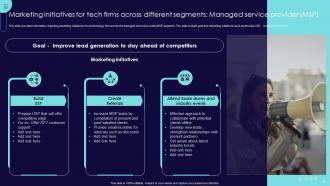
Slide 42: This slide showcases the marketing initiatives for a technology firm across the managed service provider(MSP) segment.
Slide 43: This slide contains the Heading for the Contents to be covered in the following template.
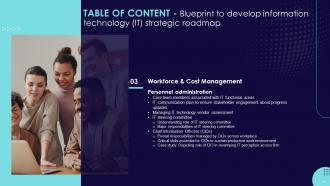
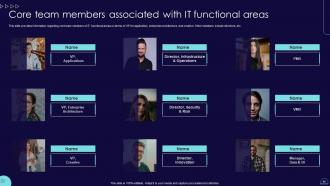
Slide 44: This slide represents the Core team members associated with IT functional areas.
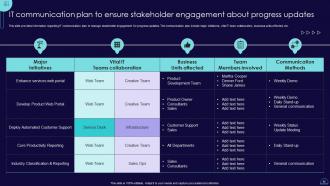
Slide 45: This slide provides information regarding IT communication plan to manage stakeholder engagement for progress updates.
Slide 46: This slide diplays Managing IT technology vendor assessment.
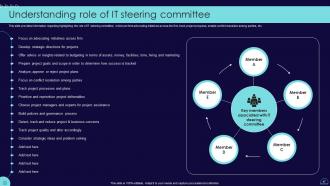
Slide 47: This slide focuses on Understanding role of IT steering committee.
Slide 48: This slide highlights the Major responsibilities of IT steering committee.
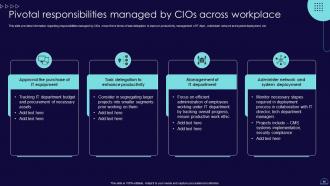
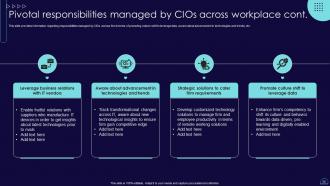
Slide 49: This slide reveals the Pivotal responsibilities managed by CIOs across workplace.
Slide 50: This is yet another slide continuing the Pivotal responsibilities managed by CIOs across workplace.
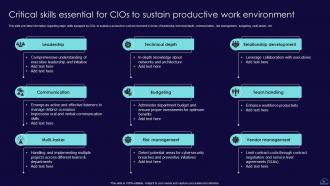
Slide 51: This slide portrays the Critical skills essential for CIOs to sustain productive work environment.
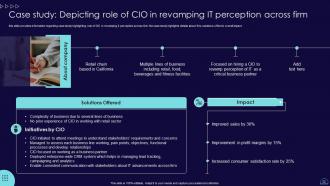
Slide 52: This slide provides information regarding case study highlighting role of CIO in revamping IT perception across firm.
Slide 53: This slide elucidates the Title for the Ideas to be covered further.
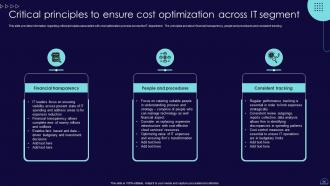
Slide 54: This slide shows the Critical principles to ensure cost optimization across IT segment.
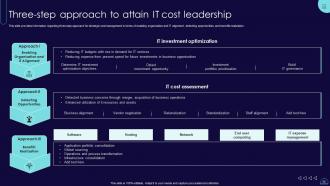
Slide 55: This slide illustrates the Three-step approach to attain IT cost leadership.
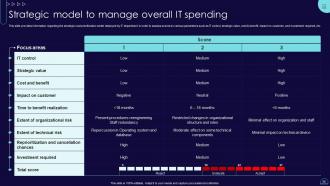
Slide 56: This slide displays the Strategic model to manage overall IT spending.
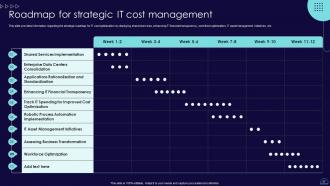
Slide 57: This slide exhibits the Roadmap for strategic IT cost management.
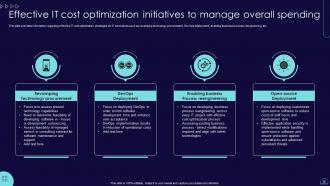
Slide 58: This slide focuses on Effective IT cost optimization initiatives to manage overall spending.
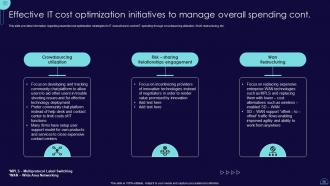
Slide 59: This is an extension slide of Effective IT cost optimization initiatives.
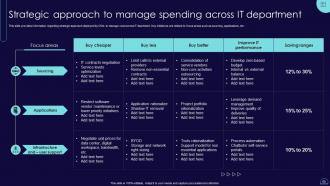
Slide 60: This slide reveals the Strategic approach to manage spending across IT department.
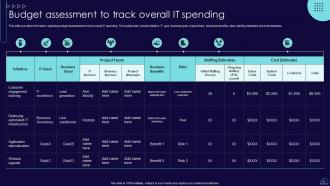
Slide 61: This slide highlights the Budget assessment to track overall IT spending.
Slide 62: This slide incorporates the Heading for the Ideas to be covered in the forth-coming template.
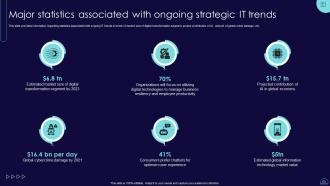
Slide 63: This slide emphasizes on the Major statistics associated with ongoing strategic IT trends.
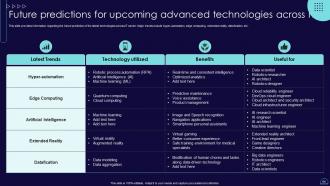
Slide 64: This slide talks about the Future predictions for upcoming advanced technologies across IT.
Slide 65: This slide elucidates the Title for the Contents to be covered further.
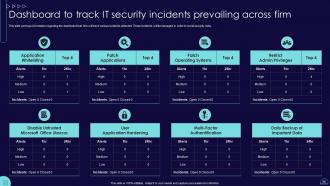
Slide 66: This slide portrays information regarding the dashboard that firm will track various incidents detected.
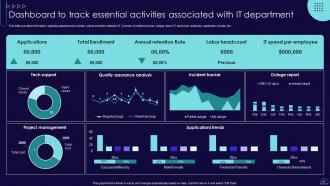
Slide 67: This slide presents the Dashboard to track essential activities associated with IT department.
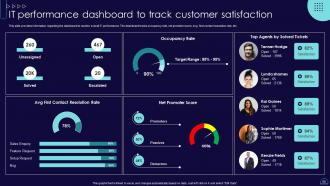
Slide 68: This slide displays the IT performance dashboard to track customer satisfaction.
Slide 69: This slide contains all the icons used in this presentation.
Slide 70: This slide is titled as Additional Slides for moving forward.
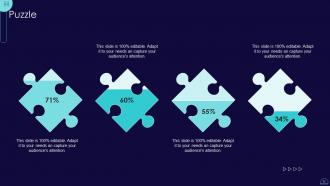
Slide 71: This slide contains Puzzle with related icons and text.
Slide 72: This slide showcases Magnifying Glass to highlight information, specifications etc
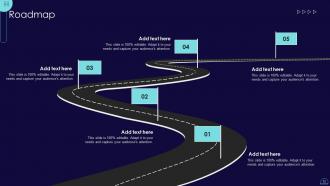
Slide 73: This slide presents Roadmap with additional textboxes.
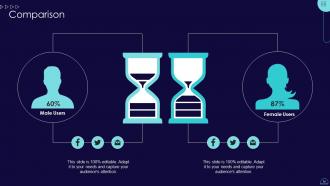
Slide 74: This is a Comparison slide to state comparison between commodities, entities etc.
Slide 75: This is a Location slide with maps to show data related with different locations.
Slide 76: This slide shows Post It Notes. Post your important notes here.
Slide 77: This is a Thank You slide with address, contact numbers and email address.
Blueprint To Develop Information Technology IT Strategic Roadmap Strategy CD V with all 82 slides:
Use our Blueprint To Develop Information Technology IT Strategic Roadmap Strategy CD V to effectively help you save your valuable time. They are readymade to fit into any presentation structure.













FAQs for Blueprint To Develop Information Technology IT Strategic Roadmap
Honestly, start by figuring out what tech you actually have right now - that's always messier than people think. Then you need four other pieces: clear business goals (not just IT goals), a realistic vision of where you're headed, and prioritized projects with actual timelines. Budget planning is huge but somehow gets forgotten constantly. Build in success metrics so you're not just guessing if things work. Get buy-in from other departments early or you'll hate yourself later. The whole thing needs to bend when priorities change, which they will. Risk planning matters too, though it's boring as hell.
Look, first thing - talk to your business leaders regularly, not just once a year. Those quarterly coffee chats are honestly where the magic happens. Map what they're trying to do (like global expansion) straight to what tech you need (cloud stuff, scaling projects). Your roadmap should spell out clear ROI for every single initiative. Connect each project back to actual dollars - revenue gains, cost cuts, whatever gives you an edge. Oh and here's the kicker - build in wiggle room because priorities change constantly. Sometimes I swear business strategy shifts with the weather, but that's just how it goes.
Dude, you absolutely have to talk to stakeholders first - learned this the hard way on my last project. Get executives involved for big picture stuff, department heads for day-to-day operations, and actual users who'll be clicking the buttons. Without their input, you're basically throwing darts blindfolded at what people need. Ask specific questions about budgets, timelines, what success looks like to them. Yeah, it takes time upfront but beats building something nobody wants. Different departments always have wildly different priorities too, so you need that mix of perspectives or your roadmap becomes expensive shelf decoration.
Look, at minimum do it yearly but honestly? Technology moves way too fast for that. I check mine every quarter to see what's shifted - new business priorities, tech that actually matters, market changes, whatever. Some folks split the difference and do quick reviews twice a year, then deep dives annually. The whole thing should feel alive, not like some document you wrote once and forgot about. Oh and set those calendar reminders now because I guarantee you'll forget otherwise. Trust me on that one - I've been there.
Start with TOGAF or COBIT for your framework - don't try to wing it. Lucidchart's what I use for mapping everything out visually. The real trick is doing business capability mapping alongside tech maturity assessments. Basically just means "what can we actually do now vs what we're dreaming about." Timeline-wise, Aha! and ProductPlan are solid choices. Always work backwards from your business goals instead of chasing whatever's trendy (learned that one the hard way). Pick one framework and commit to it - framework-hopping is a nightmare.
Dude, AI and cloud computing totally flip IT planning on its head. Forget those rigid 3-year plans - everything moves way too fast now. You've gotta build in flexibility from day one. Start with pilot programs to test new stuff, then scale what actually works for your business. The tricky part? Balancing all this shiny new tech with keeping things stable (learned that one the hard way). Regular tech scanning helps you spot what's coming next. It's honestly exhausting but pretty exciting too - just don't try to chase every trend that pops up.
Track both tech stuff and business impact - you need the whole story. Uptime, security incidents, delivery times are your tech basics. Business side? Cost savings, productivity gains, customer satisfaction. User adoption is huge though - I've seen so many "successful" rollouts that nobody actually uses, what a waste. Revenue growth from IT projects is gold if you can prove the connection. Pick maybe 5-7 metrics tops and check quarterly. Oh, and get your baseline numbers now or you'll have nothing to compare against later!
Build risk assessment right into your roadmap phases from the start. Think about what could go wrong - cyberattacks, system crashes, budget cuts, all that fun stuff. Then create backup plans for each milestone. Honestly, I always add buffer time because things WILL go sideways. Keep a risk register that you actually review quarterly (not just create and forget). The trick is making it part of your regular process, not some boring annual exercise. Schedule risk check-ins with your team so everyone knows what might hit and how you'll handle it when it does.
So basically, having that roadmap gives everyone a clear picture of where you're going tech-wise. People handle change way better when they understand the "why" behind it, you know? Break everything into smaller chunks instead of dumping massive changes all at once - nobody wants to deal with that chaos. You can spot potential pushback early and actually plan for it. Honestly, I think the biggest thing is just sharing it with everyone and bringing it up whenever you're rolling stuff out. Keeps people on the same page. Oh, and it makes those big transformations feel less intimidating overall.
Honestly, the worst thing you can do is overthink the planning phase. You'll just end up stuck forever analyzing everything. Get your business people involved early - roadmaps made in a vacuum are basically worthless. Don't fall into the trap of cramming every hot new tech trend in there (seriously, the number of "let's AI-ify everything" roadmaps I've seen lately is ridiculous). Your timeline? Add like 40% more time than you think you need. Everyone underestimates implementation. Build in some wiggle room to change direction when - not if - business priorities shift. Always start with what the business actually needs, then figure out the tech.
Honestly, modular architecture is your best friend here - microservices, APIs, containerization, all that good stuff. You want components you can swap out without everything crashing. I've watched so many teams get stuck with these massive monolithic nightmares that are impossible to change later. Cloud-native solutions help too. Set up regular architecture reviews and keep some budget loose for new tech that pops up. The goal is systems that scale horizontally and bend with whatever curveballs the business throws at you. Start by looking at your current setup - see what's already following these patterns and what needs work.
Dude, you gotta break that monster roadmap into smaller pieces or you'll never get anywhere. Focus on the must-haves first - get those wins early to keep everyone happy. Way easier to get money approved for bite-sized chunks than some massive 3-year project that sounds scary to finance people. Each phase teaches you something new too. Maybe your original plan was totally off base? You can pivot before dumping more resources into the wrong direction. Honestly, I've seen too many teams try to do everything at once and just burn out. Start with Phase 1 priorities and actually finish them.
So IT governance frameworks are basically your roadmap's backbone - they keep you from just throwing money at random projects and hoping something sticks. Pick something like COBIT or ITIL that matches where your company actually is right now (not where you wish it was). These frameworks help you prioritize what matters, figure out who's accountable for what, and actually measure if stuff's working. Without them? You're basically just making expensive to-do lists. They align your IT projects with real business goals and give you decision-making processes that don't involve endless meetings about meetings.
Look, market trends and competitive analysis are basically your crystal ball for IT planning. Track what emerging tech is hot and what your competitors are adopting - this stuff directly impacts your investment decisions. You don't want to be that company stuck on legacy systems while everyone else goes cloud-native. Here's what I'd do: build quarterly reviews into your process to check new trends and tweak your roadmap. Also watch changing customer expectations because those can sneak up on you fast. Honestly, regular competitive research beats scrambling to catch up later. The intel you gather shapes your whole technology strategy, so it's worth doing right.
Honestly, getting other departments involved in your IT roadmap is a game-changer. Sales, marketing, finance - they'll tell you what actually matters instead of you guessing. I've seen too many "perfect" solutions flop because nobody asked the users what they needed. Also, coordinating timelines saves everyone's sanity. Trust me, three system upgrades at once = chaos. You'll catch weird dependencies too, like how the CRM update might mess with accounting workflows. My take? Do monthly check-ins with department heads. Actually listen to their complaints - that's where the good stuff is. Way better than building something impressive that nobody uses.
-
Editable templates with innovative design and color combination.
-
Great combination of visuals and information. Glad I purchased your subscription.