


Brand valuation powerpoint presentation slides





Try Before you Buy Download Free Sample Product
 Impress Your
 Audience
 100%
100% Editable
 Save Hours
 of Time


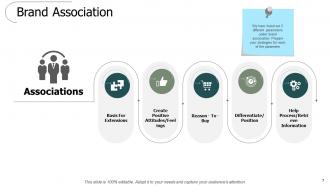
Estimate the total financial value of the brand by using the Brand valuation PowerPoint Presentation Slides. Present the prime factors to develop brand strategies by utilizing brand equity PPT graphics. Provide value to the firm by enhancing brand loyalty, prices, brand extensions, competitive advantage with the help of brand equity framework PPT layouts. Identify your brand segments and prepare short term and long term strategies by taking the assistance of the professionally designed brand awareness PowerPoint visuals. List out the different parameters such as the basis for extensions, the reason to buy, differentiate position, etc to prepare strategies with the help of brand association PPT layouts. Showcase the worth of your loyal customers by using a brand loyalty slideshow. You can also demonstrate the stages of brand development and tracking measures with the help of brand positioning PPT visuals. Position the brand on the minds of the target audience by downloading a visually appealing brand repositioning PPT presentation.
People who downloaded this PowerPoint presentation also viewed the following :
Content of this Powerpoint Presentation
Slide 1: This slide introduces Brand Valuation. State Your Company Name and begin.
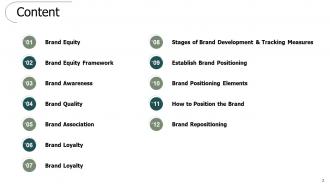
Slide 2: This slide displays the Content of the presentation.
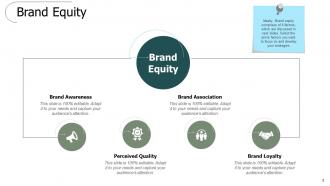
Slide 3: This slide showcases Brand Equity comprises of 4 factors; which are discussed in next slides. Select the prime factors you want to focus on and develop your strategies.
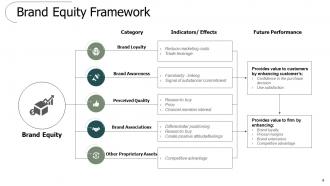
Slide 4: This slide presents Brand Equity Framework with- Category, Indicators/ Effects, Future Performance, Reason to buy, Price, Channel member interest, Perceived Quality, Competitive advantage, Other Proprietary Assets etc.
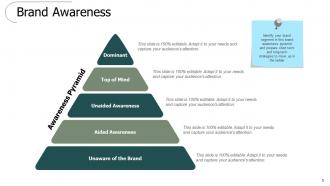
Slide 5: This slide showcases Brand Awareness. Identify your brand segment in this brand awareness pyramid and prepare short term and long term strategies to move up in the ladder
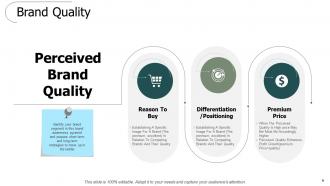
Slide 6: This slide showcases the Brand Quality. Move up in the ladder Identify your brand segment in this brand awareness pyramid and prepare short term and long term strategies.
Slide 7: This slide depicts the Brand Association. We have listed out 5 different parameters under brand association. Prepare your strategies for each of the parameter.
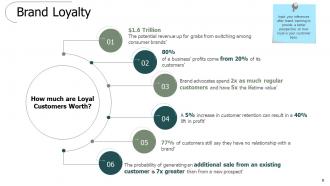
Slide 8: This slide showcases Brand Loyalty. Input your inferences after brand tracking to provide a better perspective on how loyal is your customer base.
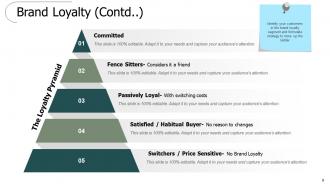
Slide 9: This slide is continued with Brand Loyalty.
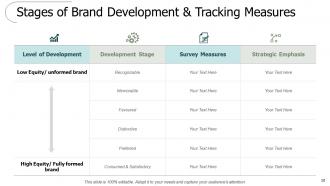
Slide 10: This slide discusses the Stages of Brand Development & Tracking Measures containing- Development Stage, Survey Measures, Strategic Emphasis, Level of Development, Low Equity/ unformed brand, High Equity/ Fully formed brand
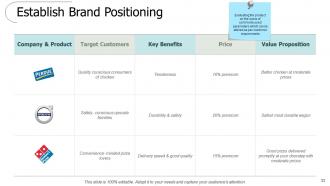
Slide 11: This is Establish Brand Positioning slide. Evaluate the product on the basis of commonly used parameters which can be altered as per customer requirements
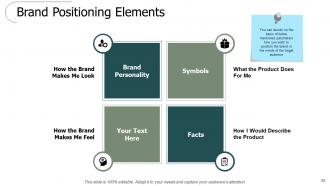
Slide 12: This slide showcases the Brand Positioning Elements. You can decide on the basis of below mentioned parameters how you want to position the brand in the minds of the target audience.
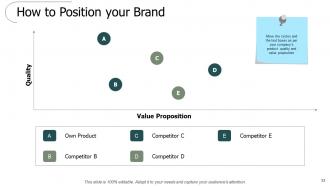
Slide 13: This slide showcases How to Position your Brand.
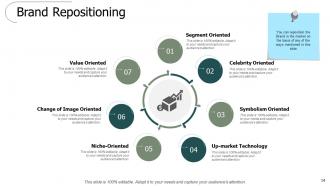
Slide 14: This slide depicts Brand Repositioning with- Segment Oriented, Symbolism Oriented Niche- Oriented, Value Oriented, Celebrity Oriented, Up-market Technology, Change of Image Oriented. You can reposition the Brand in the market on the basis of any of the ways mentioned in this slide.
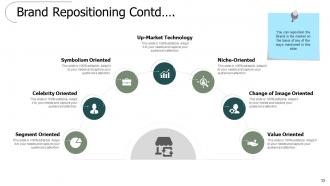
Slide 15: This slide is continued with Brand Repositioning.
Slide 16: This is Brand Association Icons Slide.
Slide 17: This slide is titled as Additional Slides.
Slide 18: This slide displays the Area Stacked with product comparison.
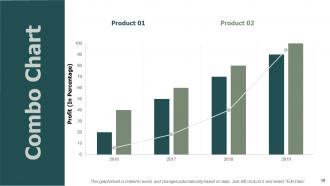
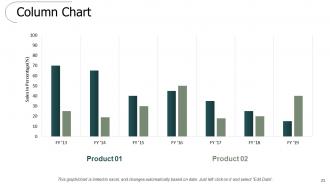
Slide 19: This slide depicts Clustered Column chart with product comparison.
Slide 20: This slide displays the Volume High Low Close Chart.
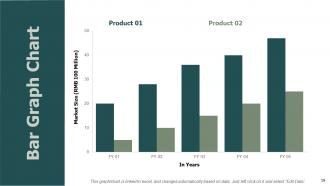
Slide 21: This slide displays the Bar Chart with product comparison.
Slide 22: This is Our Mission slide. Showcase your vision, mission and goals.
Slide 23: This is Venn slide.
Slide 24: This is Our Team slide with names and designations.
Slide 25: This is Our Target slide.
Slide 26: This is Comparison slide with before and after comparison of brand.
Slide 27: This is four years Timeline slide.
Slide 28: This is Financial slide.
Slide 29: This slide is titled as Post it. Post your important notes.
Slide 30: This is Thank You slide with address, email address and contact number.
Brand valuation powerpoint presentation slides with all 30 slides:
Our Brand Valuation Powerpoint Presentation Slides exemplify a can do approach. They create attitudinal changes.





FAQs for Brand valuation
Common brand valuation metrics include financial performance indicators, brand awareness scores, customer loyalty measurements, market share analysis, and brand equity assessments. These metrics work together by combining revenue attribution, consumer perception studies, and competitive positioning data, with many organizations finding that integrated approaches deliver more accurate valuations and strategic insights for investment decisions.
Intangible assets contribute to brand valuation through intellectual property, customer relationships, brand recognition, proprietary processes, and digital assets. These elements enhance market positioning by creating competitive barriers, driving customer loyalty, and enabling premium pricing, with many organizations finding that strong intangible portfolios ultimately deliver sustainable revenue growth and increased market capitalization.
Consumer perception directly influences brand valuation through trust, loyalty, quality associations, and willingness to pay premium prices. These perceptual factors translate into measurable financial metrics, with companies like Apple and Nike commanding higher valuations due to strong consumer relationships, ultimately delivering sustainable competitive advantage and enhanced market positioning.
Brands can quantify social media influence through engagement rate analysis, follower lifetime value calculations, social commerce conversion tracking, brand mention sentiment scoring, and influencer partnership ROI measurements. These metrics enable companies to assign monetary values to social interactions, with retail and hospitality brands finding that strategic social media investments deliver measurable revenue growth and enhanced customer acquisition costs.
Financial brand value measures quantifiable monetary assets like revenue generation, market share, and licensing potential, while emotional brand value encompasses customer loyalty, trust, and perceived quality. Financial metrics streamline investment decisions and merger valuations, whereas emotional elements enhance customer retention and premium pricing capabilities, with many organizations finding that strategic combination of both delivers sustainable competitive advantage.
Mergers and acquisitions significantly impact brand valuation through portfolio consolidation, market positioning changes, and synergy realization that can either enhance or diminish individual brand equity. Through strategic combinations, companies streamline operations, expand market reach, and leverage combined brand assets, with many organizations in sectors like banking and retail finding that successful integrations ultimately deliver competitive advantages.
The most effective brand equity methodologies include financial-based approaches like royalty relief and cost replacement, market-based methods such as comparable transactions, and consumer-based models measuring brand awareness and loyalty metrics. These approaches work together by combining quantitative financial data with qualitative consumer insights, enabling organizations to develop comprehensive valuations that support strategic decisions, optimize marketing investments, and ultimately deliver measurable competitive advantage in increasingly brand-driven markets.
Global market trends significantly influence local brand valuations through currency fluctuations, shifting consumer preferences, competitive pressures, and regulatory changes that impact market positioning. Local brands in sectors like retail, technology, and financial services often find their valuations enhanced when they successfully adapt to global trends while maintaining regional relevance, ultimately delivering stronger market differentiation and customer loyalty.
Brands should consider intellectual property protection, trademark registrations, licensing agreements, potential litigation risks, and regulatory compliance issues during valuation. These legal factors significantly impact asset worth, with many organizations finding that robust IP portfolios and clear ownership documentation enhance valuation accuracy, while unresolved legal disputes or weak trademark protection can substantially diminish perceived brand value and investment attractiveness.
Brand valuation aids strategic decision-making by providing quantitative insights for mergers and acquisitions, investment prioritization, portfolio optimization, licensing negotiations, and resource allocation across markets. Through comprehensive brand assessment, organizations can identify underperforming assets, maximize licensing revenues, and make data-driven expansion decisions, ultimately enabling more strategic resource deployment and competitive positioning in increasingly complex business environments.
Brand loyalty significantly influences long-term valuation by creating predictable revenue streams, reducing customer acquisition costs, and enabling premium pricing strategies. Loyal customers generate higher lifetime value through repeat purchases and referrals, while companies like Apple and Nike demonstrate how strong brand loyalty translates into sustained market premiums, ultimately delivering competitive advantages and enhanced shareholder returns.
Emerging trends in brand valuation technologies include AI-powered analytics, real-time sentiment monitoring, blockchain verification systems, predictive modeling platforms, and integrated social media measurement tools. These technologies streamline brand assessment by automating data collection, enhancing accuracy through machine learning, and delivering comprehensive insights, with many organizations finding that strategic technology integration ultimately provides competitive advantage in increasingly dynamic markets.
SMEs can assess brand value through cost-effective methods like customer surveys, social media analytics, competitor benchmarking, financial performance correlation, and brand recognition studies. These approaches enable smaller businesses to measure brand equity, customer loyalty, and market positioning without expensive consulting fees, while many SMEs find that regular self-assessment ultimately delivers strategic insights for growth planning and competitive positioning.
Sustainability significantly enhances brand valuation by improving consumer trust, reducing operational risks, and attracting ESG-focused investors who increasingly prioritize environmental responsibility. Companies with strong sustainability practices, from renewable energy adoption to circular economy models, often command premium valuations while benefiting from lower borrowing costs, enhanced reputation, and improved long-term financial performance.
Cultural nuances significantly influence brand valuation by affecting consumer perception, brand loyalty, emotional connections, and purchasing behaviors across diverse markets. Brands like McDonald's and Coca-Cola adapt messaging, product offerings, and positioning strategies to resonate with local values, traditions, and preferences, ultimately delivering higher market penetration and stronger competitive advantage in culturally aligned regions.
No Reviews