


Business It Alignment Powerpoint Presentation Slides




Try Before you Buy Download Free Sample Product
 Impress Your
 Audience
 100%
100% Editable
 Save Hours
 of Time


Showcase the key business and IT drivers with the aid of our content ready Business IT Alignment PowerPoint Presentation Slides. You can explain how to align the current and future requirements of an organization by using this visually appealing strategic IT alignment PPT theme. With the help of the business strategy alignment PowerPoint graphic, you can highlight the steps that help to develop the cost schedule of a particular project. Use the business IT alignments presentation template to determine the relationship between information technology and financial measures of performance. Take the assistance of this IT-Business alignment PowerPoint layout to integrate the information technology into business strategy. Employ the organizational alignment PPT theme to create an IT-enabled business strategy. You can develop a plan to implement the projects associated with the IT functions by using this professionally designed strategic alignment presentation slide. Therefore, download our ready-to-use business IT transformation PPT deck and attain better performance outcomes.
People who downloaded this PowerPoint presentation also viewed the following :
Content of this Powerpoint Presentation
Slide 1: This slide introduces Business-IT Alignment. State Your Company Name and begin.
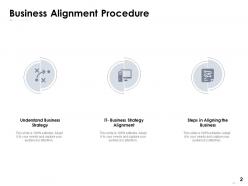
Slide 2: This slide shows Business Alignment Procedure describing- Understand Business Strategy, IT- Business Strategy Alignment, Steps in Aligning the Business.
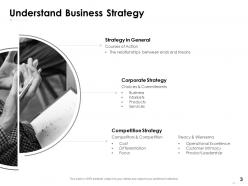
Slide 3: This slide presents Understand Business Strategy as- Strategy in General, Corporate Strategy, Competition Strategy.
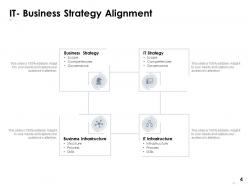
Slide 4: This slide displays IT- Business Strategy Alignment describing- Business Strategy, Business Infrastructure, IT Infrastructure, IT Strategy.
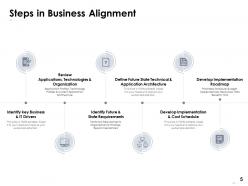
Slide 5: This slide represents Steps in Business Alignment as- Identify key Business & IT Drivers, Identify Future & State Requirements, Review Applications, Technologies & Organization, Develop Implementation & Cost Schedule, Define Future State Technical & Application Architecture, Develop Implementation Roadmap.
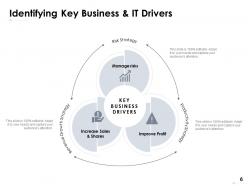
Slide 6: This slide showcases Identifying Key Business & IT Drivers.
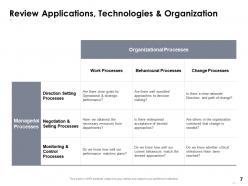
Slide 7: This slide shows Review Applications, Technologies & Organization.
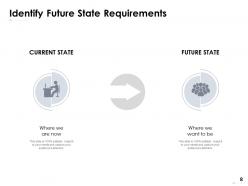
Slide 8: This slide presents Identify Future State Requirements.
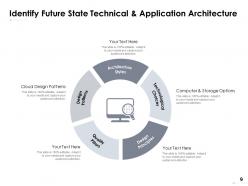
Slide 9: This slide displays Identify Future State Technical & Application Architecture.
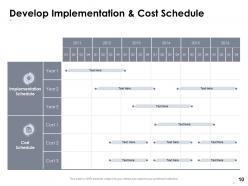
Slide 10: This slide represents Develop Implementation & Cost Schedule.
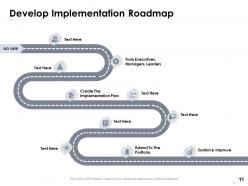
Slide 11: This slide showcases Develop Implementation Roadmap.
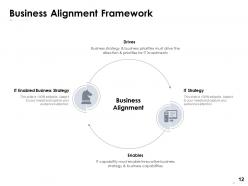
Slide 12: This slide shows Business Alignment Framework with related diagram.
Slide 13: This slide displays Business- IT Alignment Icons.
Slide 14: This slide is titled as Additional Slides for moving forward.
Slide 15: This is an Idea Generation slide to state a new idea or highlight information, specifications etc.
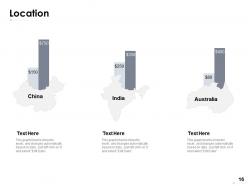
Slide 16: This is a Location slide with map to show data related with different locations.
Slide 17: This is Our Mission slide with related imagery and text.
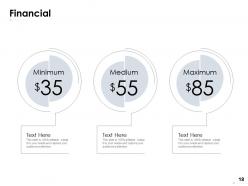
Slide 18: This is a Financial slide. Show your finance related stuff here.
Slide 19: This is Our Goal slide. Show your firm's goals here.
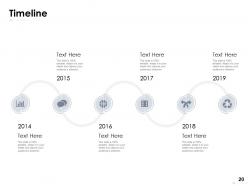
Slide 20: This is a Timeline slide to show information related with time period.
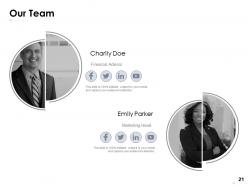
Slide 21: This is Our Team slide with names and designation.
Slide 22: This is a Thank You slide with address, contact numbers and email address.
Business It Alignment Powerpoint Presentation Slides with all 22 slides:
Use our Business It Alignment Powerpoint Presentation Slides to effectively help you save your valuable time. They are readymade to fit into any presentation structure.


FAQs for Business It Alignment
Honestly, it all comes down to getting IT and business people to actually talk to each other - like really talk, not just those painful meetings where everyone's checking their phones. You need leadership backing this from the top, otherwise it's dead in the water. Set up regular meetings where both sides discuss real priorities together. Clear metrics help too, ones that show how tech stuff connects to business results. Oh, and don't try to fix everything at once - pick one business process where IT can actually move the needle and start there. Works way better than trying to boil the ocean.
Honestly, track both the numbers and the feel of things. Project ROI, delivery speed on business requests - that stuff's obvious. But employee satisfaction surveys are where you'll find the real tea about whether people actually like working with IT or if they're still stuck with terrible systems. Collaboration frequency matters too - are teams actually talking or just doing their own thing? Oh, and don't go overboard measuring everything. Pick maybe 3-4 things that actually matter to your company. Check them every quarter. That's it.
Okay so communication is basically everything here - it's what connects what the business actually wants with what IT builds. Without regular check-ins between both sides, you end up with expensive solutions that totally miss what you needed. Honestly, I've watched this trainwreck happen way too often! Don't just do one big requirements meeting and call it done. Business folks need to explain the WHY behind their requests. IT people should translate all the techy stuff into normal language. Set up regular meetings where everyone can actually get on the same page - that's where the magic happens.
So here's the thing - emerging tech like AI and cloud computing doesn't just make your current processes better. It literally forces you to rethink your entire business strategy. Wild, right? These technologies move so damn fast that you can't just plan once and call it done anymore. Your IT alignment has to be way more flexible now. Start building that adaptability into your strategy from day one. And honestly? Don't just think about improving what you're already doing - ask yourself what completely new business models these tools might open up. Regular check-ins are crucial because priorities shift quickly.
Oh man, communication is your biggest enemy here. IT talks code while business talks money - total disconnect. Plus your resources are always stretched thin, and business priorities change every five minutes while IT's stuck with their roadmap. Here's what kills me though - half these projects crash because nobody bothered defining what "success" actually looks like upfront. Teams work in silos and wonder why nothing gets done. My advice? Get everyone in a room regularly and create KPIs that both sides give a damn about. Cross-functional meetings are clutch.
Okay so here's the thing - before any IT project starts, you gotta ask "how does this actually help our business?" I'm talking specific stuff like boosting revenue or cutting costs, not just "it'll be cool." Too many projects I've seen just die because nobody can explain why they matter. Get your IT people and business folks talking regularly - like actually meeting, not just email chains. Oh and create shared metrics that tie back to real business results. Honestly, if you can't draw a straight line from your tech project to actual impact, just... don't. Save yourself the headache.
Honestly, monthly cross-functional meetings are a game changer - get IT and business teams actually talking about priorities and roadblocks together. Share metrics that matter to both sides, not just uptime vs revenue separately. Here's what really works though: have your IT people literally sit with users and watch them work. They'll spot issues you'd never think to mention. For big projects, create mixed teams from the start so everyone's invested. Oh, and don't try to overhaul everything at once - that's a recipe for burnout. Pick one pilot project first. Once people see it working, the collaboration thing starts feeling way more natural.
When your IT and business teams are actually talking to each other, you can pivot way faster. No more of that frustrating stuff where strategy says one thing but the tech can't keep up. Honestly, I've seen companies get completely stuck because their IT becomes this massive roadblock every time the market shifts. But get those teams aligned? Your technology actually helps you move quickly instead of slowing you down. The trick is having those cross-team meetings regularly - boring but it works. Otherwise you're just guessing what everyone needs.
Look, your CEO and department heads need to actually sit down with IT regularly - not just dump projects on them and walk away. Most companies totally blow this part because they act like IT exists in some separate bubble. Leadership has to spell out what the business actually needs, then work together on which tech projects will move the needle. I mean, they control the purse strings anyway, right? So they can fund stuff that matters instead of whatever shiny new thing caught someone's eye. The trick is getting executives to see IT as partners who help win, not just the people who fix computers when they break.
COBIT and TOGAF are your go-to frameworks for governance stuff - they're kinda heavy but solid. ValIT's great for figuring out which IT investments actually matter to the business. Balanced scorecards work well too since you can track IT and business metrics side by side. Honestly, half of these feel super academic when you first dive in, but they do work. You could also try capability mapping or just embed some IT people directly with business teams - that's more straightforward. Oh, and don't overthink it at first. Start with basic alignment meetings using whatever framework clicks with you.
Honestly, data beats guessing every time when you're trying to align IT with business needs. Track which tech investments actually move the needle for revenue or efficiency - you'll be surprised how many don't. I got hooked on the dashboards once I started seeing real patterns emerge (probably spent way too much time on them at first). ROI data helps you figure out what to prioritize next. You can finally spot those annoying gaps where IT thinks they're delivering gold but business units are like "meh." Start small though - pick 2-3 metrics that both sides care about. Makes budget conversations way less painful when you've got actual numbers.
So basically, governance is what makes IT and business alignment actually work. You can't have one without the other - governance acts like guardrails keeping your tech decisions tied to business goals. Without it, your IT spending just goes everywhere except where you need it. Honestly, I've seen companies waste so much money on random tech projects that sounded cool but did nothing for the business. Governance creates accountability and decision-making processes. Plus it makes sure your IT budget supports real strategic stuff instead of just basic maintenance. I'd start by figuring out where your current governance has gaps.
Dude, cross-functional teams are seriously the way to go for getting IT and business on the same page. No more of that ridiculous telephone game where requirements get butchered as they pass through departments. Developers actually sit with business people and end-users from the start. You'll catch problems way earlier instead of building something completely wrong. The trick is giving them real power to make decisions - not just another pointless committee that talks in circles. I've seen it work amazing when done right, but you need the right people or it's just more meetings nobody wants to attend.
Honestly, training is what makes or breaks IT projects. I can't tell you how many companies I've worked with who drop thousands on fancy software, then wonder why nobody uses it. People just find workarounds instead! You've got to teach the "why" behind new tech, not just which buttons to click. Map out skill gaps before you roll anything out - saves tons of headaches later. Oh, and don't make training an afterthought. Build it right into your implementation timeline from the start, or you'll be scrambling to catch up.
Ugh, regulations totally flip your priorities - compliance comes first, business goals get pushed to second place. HIPAA controls everything if you're in healthcare, doesn't matter what you actually want to do. Finance teams deal with SOX constantly and honestly the paperwork is insane. But you know what actually works? Build the compliance stuff right into your IT plan from the start instead of trying to add it later. Map out what regulations you need to hit, match those to your IT setup, then connect it all to your bigger business plans. Way less headache that way.
-
Commendable slides with attractive designs. Extremely pleased with the fact that they are easy to modify. Great work!
-
Amazing product with appealing content and design.
-
Very well designed and informative templates.