


Präsentationsfolien zur Geschäftsprozessauslagerung




Try Before you Buy Download Free Sample Product
 Impress Your
 Audience
 100%
100% Editable
 Save Hours
 of Time


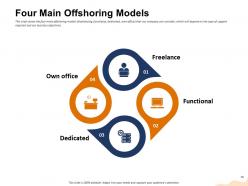
Steigern Sie die Produktivität Ihres Unternehmens mit Hilfe unserer professionell gestalteten Business Process Outsourcing PowerPoint-Präsentationsfolien. Die Präsentation erörtert die derzeitige Situationsanalyse des Unternehmens, die Notwendigkeit des Offshoring und den Umgang mit dessen Schwierigkeiten. Präsentieren Sie Details zu Offshoring-Modellen, der Leistungsmatrix des Unternehmens, Auswirkungsanalysen usw. mit unseren modern gestalteten PPT-Vorlagen. Zeigen Sie vier Hauptoffshoring-Modelle wie eigenes Büro, Freelancer, funktional, dediziert mit Hilfe von BPO-Service-PowerPoint-Layouts. Beschreiben Sie, wie der Offshoring-Prozess durch Erwähnung der Schritte unter Verwendung von inhaltsfertige PowerPoint-Designs funktioniert. Die Folien ermöglichen es Ihnen, die durch das Freelancer-Offshoring-Modell entstandenen Kosten in grafischer Form darzustellen. Erörtern Sie die Auswirkungen des Offshoring auf das Unternehmen mithilfe von inhaltsfertige PPT-Visualisierungen. Sie können die Auswirkungen des Offshoring auf die Geschäftsleistung durch Darstellung der Gesamtumsatzdetails und des Vertriebsvergleichs aufzeigen. Nutzen Sie den Kostenvorteil und setzen Sie neue Fähigkeiten, Kompetenzen und Strategien in Ihrem Unternehmen ein, indem Sie unser benutzerfreundliches Business Process Modeling PowerPoint-Foliendeck herunterladen.
People who downloaded this PowerPoint presentation also viewed the following :
Inhalt dieser Powerpoint-Präsentation
Folie 1: Diese Folie führt in Business Process Outsourcing ein. Erwähnen Sie Ihren Firmennamen und beginnen Sie.
Folie 2: Diese Folie zeigt die Agenda des Offshoring.
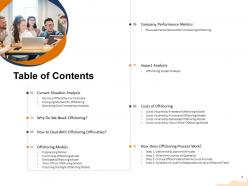
Folie 3: Diese Folie zeigt das Inhaltsverzeichnis.
Folie 4: Diese Folie zeigt das Inhaltsverzeichnis der Präsentation.
Folie 5: Diese Folie hebt die von unserem Unternehmen angebotenen Dienstleistungen hervor.
Folie 6: Diese Folie behandelt die Länder, die am besten geeignet sind, um unserem Unternehmen Offshoring-Dienstleistungen wie Indien, Philippinen, China, Mexiko und Europa anzubieten.
Folie 7: Die Tabelle zeigt den Vergleich der Betriebskosten zwischen dem Heimatland, Land A und Land B in Millionen USD, wobei das Heimatland am teuersten ist.
Folie 8: Die Grafik zeigt den Vergleich der Betriebskosten zwischen dem Heimatland, Land A und Land B in Millionen USD, wobei das Heimatland am teuersten ist.
Folie 9: Diese Folie zeigt das Inhaltsverzeichnis.
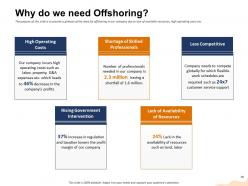
Folie 10: Der Zweck dieser Folie ist es, einen Einblick in die Notwendigkeit des Offshoring in unserem Unternehmen aufgrund fehlender verfügbarer Ressourcen, hoher Betriebskosten usw. zu geben.
Folie 11: Diese Folie zeigt das Inhaltsverzeichnis.
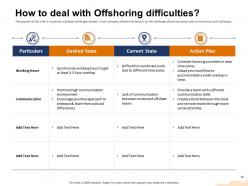
Folie 12: Der Zweck dieser Folie ist es, einen Einblick in die Lückenanalyse in unserem Unternehmen zu geben, wobei der Fokus auf den Herausforderungen und dem Aktionsplan zur Überwindung dieser Herausforderungen liegt.
Folie 13: Diese Folie zeigt das Inhaltsverzeichnis.
Folie 14: Diese Folie zeigt die vier Hauptmodelle für Offshoring (Freelancing, Funktional, Dediziert, eigenes Büro), die unser Unternehmen in Betracht ziehen kann, was von der Art der benötigten Unterstützung und unseren Geschäftszielen abhängt.
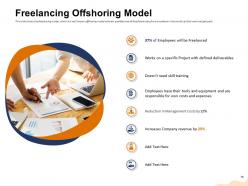
Folie 15: Diese Folie zeigt das Freelancing-Modell, ein bekanntes Offshoring-Modell, bei dem qualifizierte und geschulte Freelancer von überall auf der Welt Arbeit finden und bezahlt werden können.
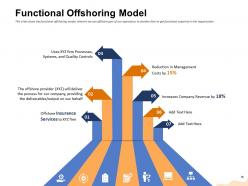
Folie 16: Diese Folie zeigt das funktionale Offshoring-Modell, bei dem wir einen Teil unserer Betriebsabläufe an ein anderes Unternehmen auslagern können, um funktionale Expertise in der Organisation zu erhalten.
Folie 17: Diese Folie zeigt das dedizierte Offshoring-Modell, das effektiv ist, bei dem wir unser Team aufbauen, das direkt an unsere Hauptniederlassung berichtet.
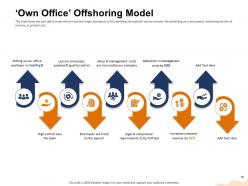
Folie 18: Diese Folie zeigt das eigene Büromodell, das für größere Unternehmen oder zur Erweiterung des Teams aus verschiedenen Gründen wie der Aufnahme eines neuen Projekts, der Erweiterung der Dienstleistungs- oder Produktpalette usw. verwendet wird.
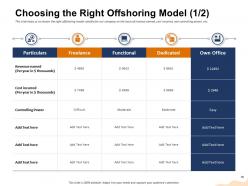
Folie 19: Diese Folie hilft uns, das für unser Unternehmen geeignete Offshoring-Modell auf der Grundlage von Umsatzerlösen, Kosten und Kontrollmöglichkeiten usw. auszuwählen.
Folie 20: Diese Folie hilft uns, das richtige Offshoring-Modell für unser Unternehmen auszuwählen, um langfristig Kosten zu sparen und unsere Reichweite und unseren Wert auf dem Markt zu maximieren.
Folie 21: Diese Folie zeigt das Inhaltsverzeichnis.
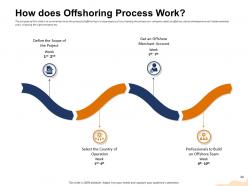
Folie 22: Der Zweck dieser Folie ist es, den gesamten Offshoring-Prozess in einzigartigen Schritten zusammenzufassen, wie z.B. die Auswahl des Prozesses, den unser Unternehmen auslagern muss, die Erstellung und Umsetzung eines Plans, die Auswahl des richtigen Unternehmens usw.
Folie 23: Diese Folie besteht aus den Dienstleistungen und Aktivitäten, die unser Unternehmen auslagern würde, wie z.B. Kundeninteraktionszentren, Versicherungsdienstleistungen, Marketingdienstleistungen oder intern angebotene Dienstleistungen wie Dateneingabe und -konvertierung, Finanz- und Buchhaltungsdienstleistungen usw.
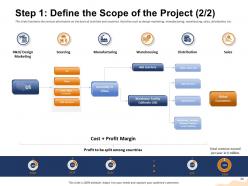
Folie 24: Diese Folie veranschaulicht die Verteilung der Dienstleistungen nach Aktivitäten und Ländern. Aktivitäten wie Design, Marketing, Fertigung, Lagerhaltung, Vertrieb usw.
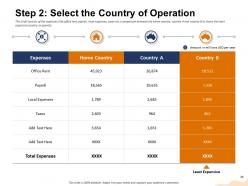
Folie 25: Diese Folie enthält den Vergleich der Ausgaben (wie Büromiete, Gehälter, lokale Ausgaben, Steuern usw.) zwischen dem Heimatland, Land A und Land B, um das kostengünstigste Land für den Betrieb auszuwählen.
Folie 26: Diese Folie enthält verschiedene Offshore-Merchant-Account-Anbieter, von denen einer ausgewählt wird, der unserem Unternehmen die besten Dienstleistungen anbietet.
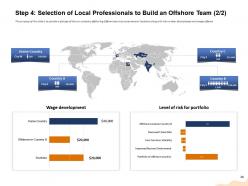
Folie 27: Diese Folie enthält die Punkte für den Aufbau eines Offshore-Teams, einschließlich der angebotenen Rollen und der Anzahl der einzustellenden Mitarbeiter für ein Team, das die Betriebsabläufe des Unternehmens digital transformieren und aufwerten wird.
Folie 28: Der Zweck dieser Folie ist es, einen Einblick darin zu geben, wie unser Unternehmen verschiedene Dienstleistungen an mehreren Standorten auslagert, zusammen mit der Anzahl der Mitarbeiter und den angebotenen Löhnen.
Folie 29: Diese Folie zeigt das Inhaltsverzeichnis.
Folie 30: Diese Grafik liefert Details zu den Ausgaben, die dem Unternehmen durch die Freelancer jedes Jahr entstehen.
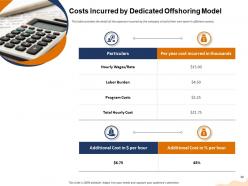
Folie 31: Diese Tabelle liefert Details zu den Ausgaben, die dem Unternehmen durch die verschiedenen Projekte entstehen, die dem Outsourcing-Team zugewiesen wurden.
Folie 32: Diese Tabelle liefert Details zu den Ausgaben, die dem Unternehmen durch den Aufbau des eigenen Teams im Offshore-Land entstehen.
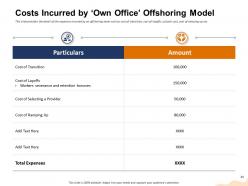
Folie 33: Diese Folie liefert Details zu den Ausgaben eines Offshoring-Teams, wie z.B. Übergangskosten, Entlassungskosten, kulturelle Kosten, Anlaufkosten usw.
Folie 34: Diese Folie zeigt das Inhaltsverzeichnis.
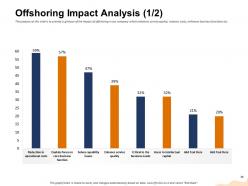
Folie 35: Der Zweck dieser Folie ist es, einen Einblick in die Auswirkungen des Offshoring in unserem Unternehmen zu geben, was die Servicequalität verbessert, Kosten senkt, Geschäftsfunktionen erweitert usw.
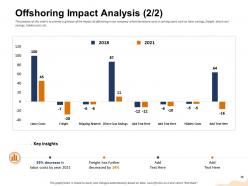
Folie 36: Der Zweck dieser Folie ist es, einen Einblick in die Auswirkungen des Offshoring in unserem Unternehmen zu geben, was die Kosten in den kommenden Jahren senkt, wie z.B. Arbeitskosteneinsparungen, Fracht, direkte Kosteneinsparungen, versteckte Kosten usw.
Folie 37: Diese Folie zeigt das Inhaltsverzeichnis.
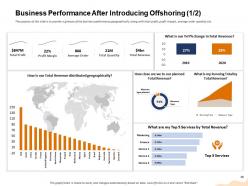
Folie 38: Der Zweck dieser Folie ist es, einen Einblick in die geschäftliche Leistung nach geografischen Gebieten zusammen mit Gesamtgewinn, Gewinnspanne, durchschnittlicher Bestellmenge usw. zu geben.
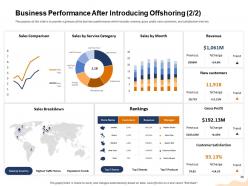
Folie 39: Der Zweck dieser Folie ist es, einen Einblick in die Geschäftsleistung zu geben, einschließlich Umsatz, Bruttogewinn, Neukunden und Zufriedenheitsgrad usw.
Folie 40: Dies ist die Folie mit Business Process Outsourcing-Symbolen.
Folie 41: Diese Folie trägt den Titel Zusätzliche Folien für den Fortschritt.
Folie 42: Diese Folie zeigt Vision, Mission und Ziele.
Folie 43: Dies ist die Folie Unser Team mit Namen und Bezeichnungen.
Folie 44: Diese Folie trägt den Titel Post-it-Notes.
Folie 45: Dies ist die Folie Über uns mit Unternehmensangaben.
Folie 46: Diese Folie zeigt die Business Offshoring-Roadmap.
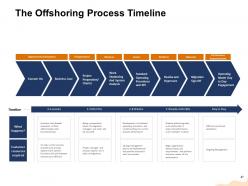
Folie 47: Die Folie zeigt den Offshoring-Prozess-Zeitplan.
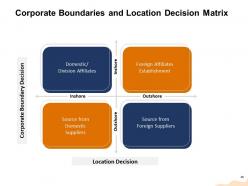
Folie 48: Diese Folie hebt Corporate Boundaries und Location Decision Matrix hervor.
Folie 49: Dies ist die Folie 30 60 90 Aktionsplan.
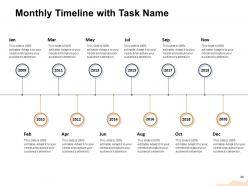
Folie 50: Diese Folie zeigt den monatlichen Zeitplan mit Aufgabennamen.
Folie 51: Dies ist die Dankesfolie mit Kontaktdaten.
Geschäftsprozess-Outsourcing-Präsentationsfolien mit allen 51 Folien
Unser Geschäftsprozess-Outsourcing-Präsentationsfolien können Ihnen effektiv dabei helfen, wertvolle Zeit zu sparen. Sie sind fertig erstellt, um in jede Präsentationsstruktur zu passen.




















FAQs for Business Process Outsourcing
Honestly, the money you'll save is huge – way cheaper than hiring full-time people for stuff like accounting or customer service. What I love about it is you get these experienced teams who actually know what they're doing, without all the HR drama and benefits costs. Frees you up to focus on the important stuff instead of drowning in paperwork. Oh, and don't go crazy at first – try outsourcing just one thing to see how it goes. You can always expand later once you're comfortable with how they work.
Honestly, BPO is pretty smart when you think about it. You hand off all the boring, repetitive stuff to companies that literally do it all day - so they're faster and way cheaper than doing it in-house. They've got the fancy tech, round-the-clock teams, all that infrastructure you'd never want to pay for yourself. Your people can actually focus on the stuff that grows your business instead of drowning in paperwork or whatever. I'd start by looking at which processes eat up the most time but aren't really what makes you money, you know?
Most people outsource customer service, IT support, accounting, HR stuff, and data entry. Honestly, call centers are probably the biggest one - way cheaper labor costs overseas. Data entry's another no-brainer since it's mind-numbing work nobody wants to do in-house. Companies also dump payroll processing because it's complicated but not really their main thing, you know? Same with IT support - you need those skills but can't afford a full team. The whole point is saving money and letting your actual employees focus on stuff that makes you money instead of getting bogged down in busywork.
Honestly, cultural stuff can totally make or break your BPO deal. Communication styles are huge - like how people give feedback or handle deadlines varies so much between cultures. Time zones already suck, but throw in language barriers and you're in for a headache. What works though is getting both teams trained on each other's work styles upfront. Be super clear about response times and meeting expectations from day one. Oh, and escalation processes too - that's where things usually go sideways. Once everyone gets the "why" behind different approaches, everything flows way better.
So basically, tech runs the whole BPO game now. Cloud systems handle all the data processing stuff, while AI takes care of boring tasks like data entry and basic customer questions. Analytics give you real-time performance updates too. Remote teams stay connected through collaboration tools - honestly can't imagine working without them anymore. Security protocols keep your sensitive info safe across different locations. Oh, and here's the thing - when you're shopping around for BPO providers, definitely grill them about their tech setup and what they've automated. That'll tell you everything you need to know about how smooth things will actually run.
Check their security certs first - SOC 2, ISO 27001, that kind of stuff. They better be encrypting everything and have proper access controls too. The companies that get burned? They always skipped doing their homework upfront. Write specific data handling rules into the contract - breach notifications, who's liable if things go south, all that. Oh and don't forget regular security audits. I know it sounds like overkill but you'd do this for your own team, right? Same standards should apply here.
You definitely need both the numbers stuff and the relationship side. Cost savings and SLAs are obvious starting points. Error rates matter too - nobody wants to deal with constant fixes. Your team's productivity boost is huge but people always forget to measure it for some reason. I'd set up scorecards for vendor performance and track how smooth communication flows between teams. Quality scores from customers tell you if it's actually working. Keep it simple though - maybe 5-6 key metrics max on a dashboard. More than that and you'll spend forever analyzing instead of fixing problems.
So BPO works because you're getting cheaper labor costs while these companies spread their overhead across tons of clients. They actually know what they're doing too - like, they eat, sleep, and breathe whatever process you're handing off. Way more expertise than your internal team probably has. Quality stays decent because they've got contracts and SLAs to hit, plus they don't want to lose you as a client. Just make sure you pick someone good and nail down your metrics from day one. Otherwise you'll get burned with that whole "we saved money but everything sucks now" thing that happens way too often.
Honestly, BPO comes with some real headaches. You'll lose control over your processes, which sucks. Data security breaches are always a risk too - vendors don't care about your info like you do. Quality can tank if they cut corners to save money. Communication gets messy, especially with different time zones. I've watched companies get burned when expectations weren't clear from day one. Plus you become dependent on them, so good luck if they jack up prices later or things go south. Hidden fees will definitely pop up. Do your homework on potential partners and nail down solid SLAs with specific metrics before signing anything.
First thing - figure out exactly what you want to outsource and what success looks like. When you're vetting companies, don't just pick the cheapest one (learned that lesson the hard way). Look at their experience in your industry and whether they actually get your business. Cultural fit matters more than people think. Check their security stuff and how they communicate - some are terrible at updates. Oh, and definitely call their references, don't just read testimonials. Start small with a pilot project before you sign anything big. That way you'll know if they're actually worth it.
Look, BPO hits morale hard if people think you're just cutting jobs or don't trust them to do the work. Some folks actually don't mind losing boring repetitive stuff though - frees them up for better projects. Communication is everything here. Tell your team what's getting outsourced and why, then show them real growth paths in their remaining roles. Skip this step and you'll watch productivity tank while good people bail. I've seen teams get way too paranoid about this. Get them involved early and focus on training them up, not just saving money.
Honestly, the timezone thing is brutal but you gotta nail down communication rules from day one. Pick regular check-in times that don't completely destroy someone's sleep schedule - though let's be real, somebody's gonna be tired. Slack or Teams for daily stuff works great, just document everything because things get lost super easily. Oh, and cultural differences mess you up way more than language barriers sometimes. Assign one main contact person per side too, otherwise it becomes total chaos with everyone messaging everyone.
So AI's basically eating up all the boring repetitive stuff now. Companies want specialists, not just cheap labor - the whole "save money at any cost" thing is kinda dead. Nearshoring is blowing up because honestly, nobody wants to deal with crazy time zones anymore. Cloud operations aren't even a trend, they're just how things work now. Oh, and everyone's shifting to paying for results instead of hours, which makes way more sense. Security rules are getting nuts though - like, everywhere you look there's new compliance requirements. When you're picking a BPO partner, focus on their automation game and security setup. That's where everything's moving.
BPO really depends on what field you're in. Healthcare stuff involves medical coding and claims processing - tons of regulations to deal with. Finance is all accounting, payroll, and compliance work (which honestly sounds like a headache). Retail BPO handles customer service and inventory management mostly. The main thing is how specialized each one gets. Like, you can't just grab any random BPO provider - they need actual experience in your specific industry, not just general business knowledge. Otherwise you'll probably end up regretting it.
Pick a vendor who actually knows your space - cheap isn't always smart here. Before you hand anything off, document your current processes like crazy. I learned this the hard way, but assumptions will absolutely wreck your timeline. Your team needs to know what's happening and when. Don't dump everything at once either - phase it out gradually. Set up KPIs and regular check-ins right from the start. Here's the thing though: keep some internal people who understand the work. You'll need them to oversee quality and handle the bigger strategic stuff down the road.
-
Excellent products for quick understanding.
-
Illustrative design with editable content. Exceptional value for money. Highly pleased with the product.
-
It saves your time and decrease your efforts in half.
-
Colors used are bright and distinctive.
-
Excellent design and quick turnaround.
-
Amazing product with appealing content and design.
-
Qualitative and comprehensive slides.
-
Presentation Design is very nice, good work with the content as well.