


Call Center Performance Improvement Action Plan Powerpoint Presentation Slides





Try Before you Buy Download Free Sample Product
 Impress Your
 Audience
 100%
100% Editable
 Save Hours
 of Time


A call center is a centralized department that manages inbound and outbound calls from potential customers. Check out our professionally designed Call Center Performance Improvement Action Plan PowerPoint presentation. Firstly, It covers the company background information overview, geographical presence, organizational structure, and journey roadmap from 2008 to 2021. The deck also includes the solutions offered by the BPO company with inbound and outbound call volume rates. Furthermore, this Call Center Business Plan PPT includes the problems faced by the BPO center and its impact on the company. It also mentions the recent technological improvements in the industry and the strategies, including telephone etiquette for support agents and dealing with unsatisfied customers. Additionally, our performance management module includes the wrong and right approach to handling customers and Strategies for customer complaints and faults. It also mentions how to improve business processes with IT services, including IT services for BPO and training programs for call center agents. At last, the template highlights the improvement plans expected growth, including call center key performance indicators and dashboards. Download this 100 percent editable presentation and get access to our highly researched and skillfully designed product.
People who downloaded this PowerPoint presentation also viewed the following :
Content of this Powerpoint Presentation
Slide 1: This slide introduces Call Center Performance Improvement Action Plan. State your company name and begin.
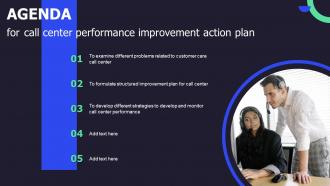
Slide 2: This slide states Agenda of the presentation.
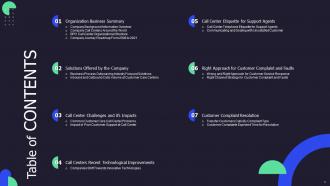
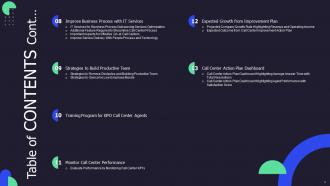
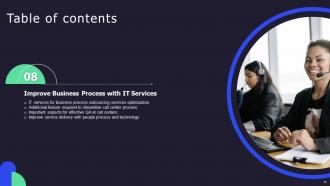
Slide 3: This slide shows Table of Content for the presentation.
Slide 4: This is another slide continuing Table of Content for the presentation.
Slide 5: This slide highlights title for topics that are to be covered next in the template.
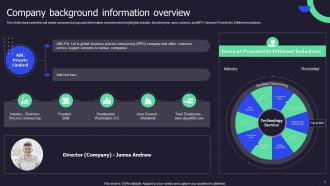
Slide 6: This slide presents Company background information overview.
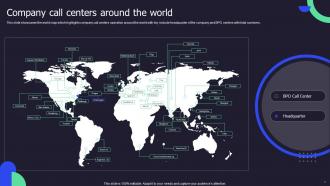
Slide 7: This slide displays Company call centers around the world.
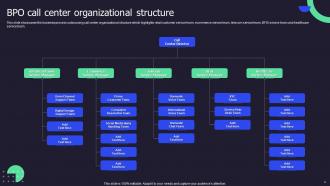
Slide 8: This slide represents BPO call center organizational structure.
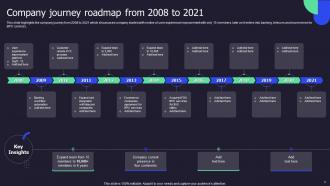
Slide 9: This slide showcases Company journey roadmap from 2008 to 2021.
Slide 10: This slide highlights title for topics that are to be covered next in the template.
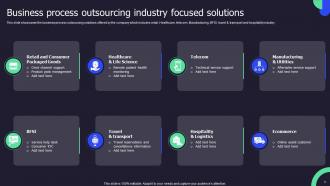
Slide 11: This slide shows Business process outsourcing industry focused solutions.
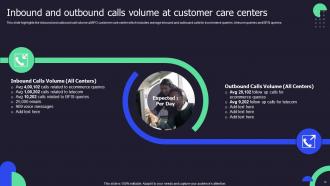
Slide 12: This slide presents Inbound and outbound calls volume at customer care centers.
Slide 13: This slide highlights title for topics that are to be covered next in the template.
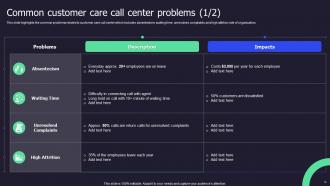
Slide 14: This slide displays Common customer care call center problems.
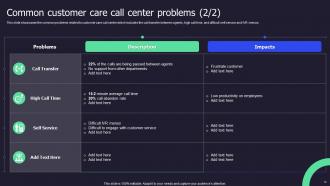
Slide 15: This is another slide continuing Common customer care call center problems.
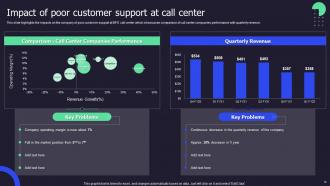
Slide 16: This slide presents Impact of poor customer support at call center.
Slide 17: This slide highlights title for topics that are to be covered next in the template.
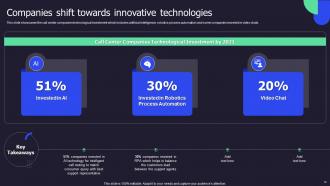
Slide 18: This slide represents Companies shift towards innovative technologies.
Slide 19: This slide highlights title for topics that are to be covered next in the template.
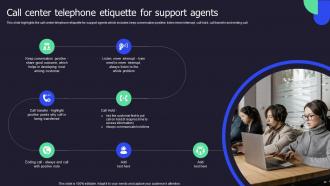
Slide 20: This slide showcases Call center telephone etiquette for support agents.
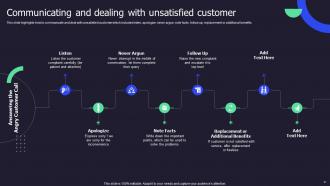
Slide 21: This slide shows Communicating and dealing with unsatisfied customer.
Slide 22: This slide highlights title for topics that are to be covered next in the template.
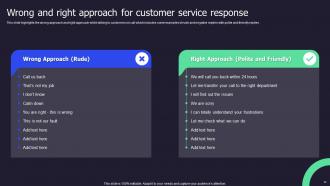
Slide 23: This slide presents Wrong and right approach for customer service response.
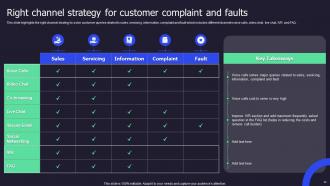
Slide 24: This slide displays Right channel strategy for customer complaint and faults.
Slide 25: This slide highlights title for topics that are to be covered next in the template.
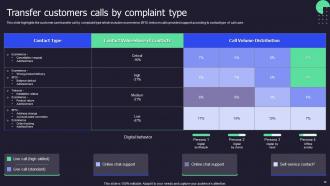
Slide 26: This slide represents Transfer customers calls by complaint type.
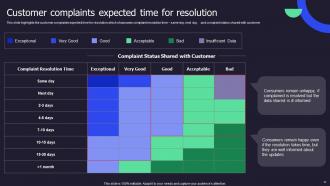
Slide 27: This slide showcases Customer complaints expected time for resolution.
Slide 28: This slide highlights title for topics that are to be covered next in the template.
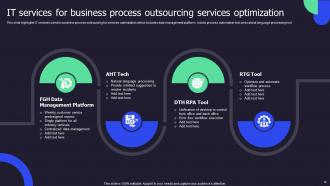
Slide 29: This slide shows IT services for business process outsourcing services optimization.
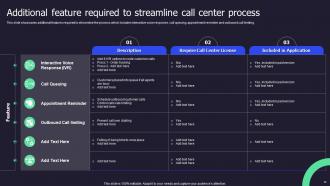
Slide 30: This slide presents Additional feature required to streamline call center process.
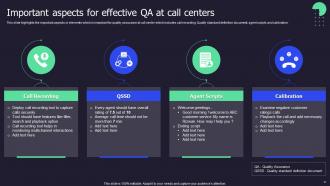
Slide 31: This slide displays Important aspects for effective QA at call centers.
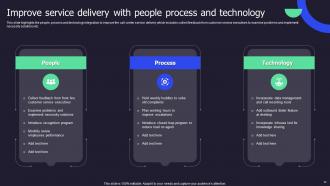
Slide 32: This slide represents Improve service delivery with people process and technology.
Slide 33: This slide highlights title for topics that are to be covered next in the template.
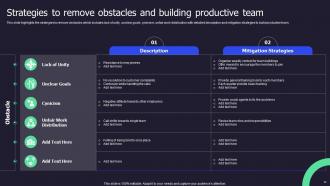
Slide 34: This slide showcases Strategies to remove obstacles and building productive team.
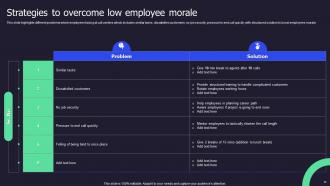
Slide 35: This slide shows Strategies to overcome low employee morale.
Slide 36: This slide highlights title for topics that are to be covered next in the template.
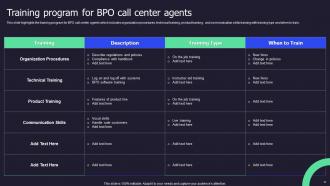
Slide 37: This slide presents Training program for BPO call center agents.
Slide 38: This slide highlights title for topics that are to be covered next in the template.
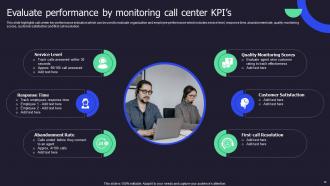
Slide 39: This slide displays Evaluate performance by monitoring call center kpi’s.
Slide 40: This slide highlights title for topics that are to be covered next in the template.
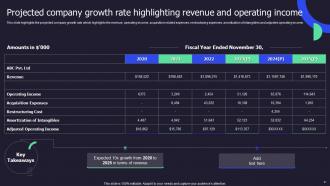
Slide 41: This slide represents Projected company growth rate highlighting revenue and operating income.
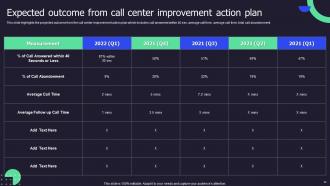
Slide 42: This slide showcases Expected outcome from call center improvement action plan.
Slide 43: This slide highlights title for topics that are to be covered next in the template.
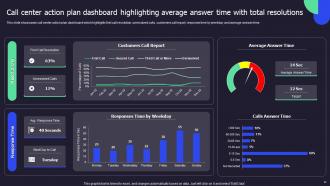
Slide 44: This slide shows Call center action plan dashboard highlighting average answer time with total resolutions.
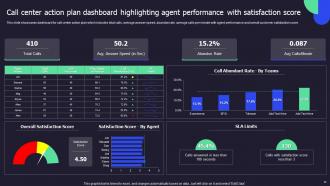
Slide 45: This slide presents Call center action plan dashboard highlighting agent performance with satisfaction score.
Slide 46: This slide contains all the icons used in this presentation.
Slide 47: This slide is titled as Additional Slides for moving forward.
Slide 48: This is About Us slide to show company specifications etc.
Slide 49: This is Our Mission slide with related imagery and text.
Slide 50: This is Our Team slide with names and designation.
Slide 51: This is Our Target slide. State your targets here.
Slide 52: This slide shows Post It Notes. Post your important notes here.
Slide 53: This slide displays Mind Map with related imagery.
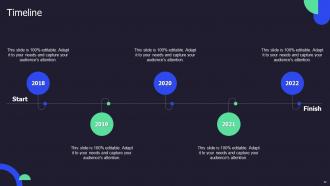
Slide 54: This is a Timeline slide. Show data related to time intervals here.
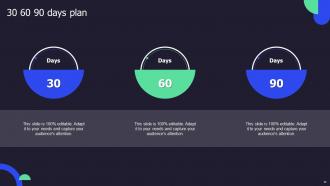
Slide 55: This slide provides 30 60 90 Days Plan with text boxes.
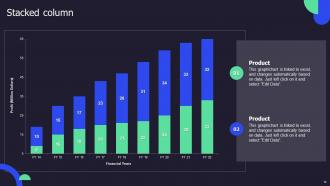
Slide 56: This slide represents Stacked Column chart with two products comparison.
Slide 57: This is a Thank You slide with address, contact numbers and email address.
Call Center Performance Improvement Action Plan Powerpoint Presentation Slides with all 62 slides:
Use our Call Center Performance Improvement Action Plan Powerpoint Presentation Slides to effectively help you save your valuable time. They are readymade to fit into any presentation structure.






FAQs for Call Center Performance Improvement Action Plan
Start with First Call Resolution and Customer Satisfaction - those two will make or break you. Average Handle Time is useful but don't let agents stress about it too much or they'll rush people off calls. Schedule Adherence helps with staffing during crazy busy periods. Agent utilization and abandonment rates are solid too. Honestly, there's like a million metrics you could track but these five cover the important stuff. Build a dashboard that's actually readable (not some nightmare spreadsheet), then add more later once your team gets comfortable with the basics.
Honestly, good training makes such a huge difference for call centers. Your agents won't be scrambling around trying to figure out basic stuff, which means calls get resolved way faster. I've watched teams where people were clearly winging it - those calls just drag on forever. When agents actually know what they're doing, you'll see fewer transfers and less supervisor hand-holding too. Plus your experienced staff can tackle the real problems instead of constantly putting out fires. I'd start by looking at where your current training falls short and go from there.
Honestly, tech can totally transform your call center situation. AI routing gets customers to the right agents way faster. Chatbots handle all the basic stuff so your team isn't stuck answering "what are your hours" a million times. CRM systems are clutch - customer info pops up the second a call comes in. Real-time dashboards catch problems early, which saves you so much headache later. Oh, and speech analytics tools are actually pretty wild - they can tell when calls are tanking and suggest what to do next. Don't try to upgrade everything at once though. Pick whatever's driving you crazy right now and start there.
Honestly, you've got to actually *do* something with customer feedback instead of just collecting it. Send quick surveys after calls and keep an eye on social media complaints - but here's the thing, don't let that data just sit there gathering dust. I always create monthly action plans targeting the biggest pain points. Share what you're learning during team meetings and definitely follow up with anyone who had issues. Oh, and track your satisfaction scores afterward - that's literally the only way you'll know if your fixes worked. It sounds obvious but most companies skip that last step.
Look at your past call data first - that's gonna tell you when things get crazy. Build schedules around those patterns but don't make them super rigid. Cross-train people so you can shift them around when departments get slammed (trust me, this saves your butt constantly). Get some workforce management software to track who's sticking to schedules and who isn't. Here's what really works though - always keep a few agents as backup for those random spikes that'll definitely happen. Review everything weekly and tweak based on reality vs what you thought would happen.
Check your key metrics first - average handle time, first-call resolution, queue wait times. That's where you'll see what's actually broken. Dig into patterns too: maybe calls pile up at lunch, or Sarah from Team B always struggles with billing issues (we all have that one person, right?). Don't try fixing everything at once though. Pick your worst bottleneck and tackle it with targeted stuff like extra training or better call routing. Sometimes it's just a staffing thing. The data will tell you way more than anyone's gut feeling about what's wrong.
Dude, real-time dashboards are a game changer. Instead of waiting for weekly reports, you'll catch problems the second they pop up. Hold times spiking? Half your agents mysteriously offline? You'll see it instantly on metrics like call volumes and wait times. Honestly, I got way too into watching those numbers update live - it's weirdly mesmerizing. Set up alerts for your breaking points though, like when wait times hit 3+ minutes or abandonment rates jump past 5%. Then you can actually do something about it - move calls around, grab backup agents, whatever. Way better than hearing about angry customers after the fact.
Honestly, engaged call center agents are like night and day compared to checked-out ones. They wrap up calls quicker, actually solve problems instead of just passing them along, and don't call in "sick" every other week. Your first-call resolution rates will climb while handle times drop - it's pretty wild how much difference it makes. Plus they won't bail after three months, which saves you from constantly hiring and training new people (that cycle is exhausting). I'd throw together some quick pulse surveys to track how people are feeling. Can't fix what you don't measure, right?
Track what's making your calls drag on first - that's where you'll see the biggest wins. Agent training helps a ton, especially giving them cheat sheets for common issues. Nothing's worse than listening to someone click around looking for basic info. Fix your call routing too so people don't get bounced between departments like a pinball. Good CRM software is worth the money since agents can instantly see customer history. Oh, and honestly? Sometimes it's just one super slow process that's killing your times. Find that bottleneck and you're golden.
Look, skills-based routing is your best bet - match customers with agents who actually know their stuff. Set up queue management that factors in agent availability and call complexity too. Honestly, forget the fancy AI bells and whistles for now. Getting your basic routing rules dialed in first will blow your mind how much it helps. Real-time monitoring lets you tweak things based on current volumes. Oh, and definitely dig into your call patterns and agent performance data first - you'll spot exactly where things are breaking down.
Yeah, incentive programs totally work if you set them up right. You'll see better call resolution and happier customers. But here's the thing - don't just reward speed or your satisfaction scores will tank hard. I've watched places make that mistake way too many times. Focus on stuff like first-call resolution and customer feedback instead of pure call volume. Oh, and ask your agents what actually motivates them first! Sometimes they just want recognition or better schedules, not more money. Balance is everything here.
Track your main stuff against industry benchmarks - average handle time, first call resolution, customer satisfaction, agent utilization. COPC and ICMI have decent benchmark reports, though honestly the numbers are all over the place depending on your industry. I'd look at trends quarterly instead of freaking out over individual data points. Pick maybe 3-4 metrics that actually matter to your business first. Don't go crazy tracking everything right away. The whole point is spotting where you're behind and fixing those areas. Way more useful than trying to be perfect at everything.
Honestly, celebrate the small wins - they matter way more than people realize. Make sure your agents can actually speak up without getting in trouble for it. Training and clear career paths are huge too, otherwise people just see it as a dead-end job. Your managers need to have agents' backs during rough calls, not just nitpick everything they do wrong. When stuff goes sideways, focus on fixing it together instead of pointing fingers. Oh, and do those quick pulse surveys regularly. You'd be surprised what you'll learn about what your team actually needs to stay motivated.
Honestly, start with fixing your CRM setup - that's where you'll see the biggest difference right away. When customers don't have to repeat their entire saga every time they call, they're automatically in a better mood. Real-time coaching software is pretty cool too - it literally tells you when things are going sideways and suggests what to say instead. Speech analytics helps spot what actually works across your whole team. There's even sentiment analysis stuff that catches when someone's about to lose it before they actually do. I'd prioritize the CRM thing first though.
Track the usual metrics - call times, satisfaction scores, resolution rates. But here's the thing: numbers only tell half the story. Listen to actual calls with your team and give real feedback, not generic stuff. Monthly check-ins work way better than waiting for annual reviews. I've noticed managers who just stare at spreadsheets miss obvious coaching opportunities. You can spot patterns and fix problems before they snowball. Oh, and make the feedback specific - "great job" doesn't help anyone improve. Mix hard data with regular coaching conversations.
-
Use of different colors is good. It's simple and attractive.
-
I was really impressed with the presentation I created with their templates. I’ll be using their services moving forward.