


Call Center Agent Performance Improvement Plan Powerpoint Presentation Slides




Try Before you Buy Download Free Sample Product
 Impress Your
 Audience
 100%
100% Editable
 Save Hours
 of Time


A call center is a centralized department that manages inbound and outbound calls from potential customers. Check out our professionally designed Call Center Agent Performance Improvement Plan PowerPoint presentation. Firstly, It covers the company background information overview, geographical presence, organizational structure, and journey roadmap from 2008 to 2021. The deck also includes the solutions offered by the BPO company with inbound and outbound call volume rates. Furthermore, this Call Center Business Plan PPT includes the problems faced by the BPO center and its impact on the company. It also mentions the recent technological improvements in the industry and the strategies, including telephone etiquette for support agents and dealing with unsatisfied customers. Additionally, our performance management module includes the wrong and right approach to handling customers and Strategies for customer complaints and faults. It also mentions how to improve business processes with IT services, including IT services for BPO and training programs for call center agents. At last, the template highlights the improvement plans expected growth, including call center key performance indicators and dashboards. Download this 100 percent editable presentation and get access to our highly researched and skillfully designed product.
People who downloaded this PowerPoint presentation also viewed the following :
Content of this Powerpoint Presentation
Slide 1: This slide introduces Call Center Agent Performance Improvement Plan. State your company name and begin.
Slide 2: This slide states Agenda of the presentation.
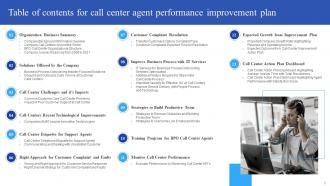
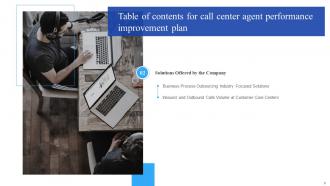
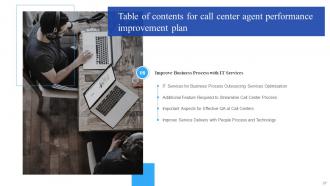
Slide 3: This slide shows Table of Content for the presentation.
Slide 4: This slide highlights title for topics that are to be covered next in the template.
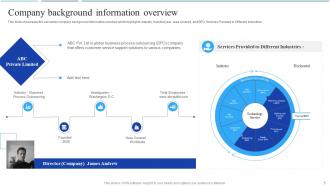
Slide 5: This slide presents Company background information overview.
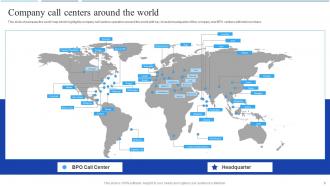
Slide 6: This slide displays Company call centers around the world.
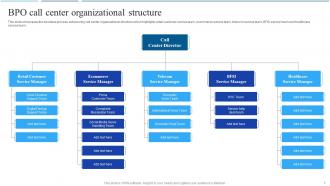
Slide 7: This slide represents BPO call center organizational structure.
Slide 8: This slide showcases Company journey roadmap from 2008 to 2021.
Slide 9: This slide highlights title for topics that are to be covered next in the template.
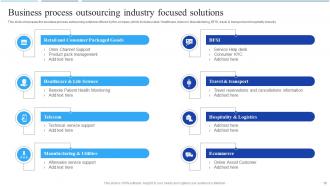
Slide 10: This slide shows Business process outsourcing industry focused solutions.
Slide 11: This slide presents Inbound and outbound calls volume at customer care centers.
Slide 12: This slide highlights title for topics that are to be covered next in the template.
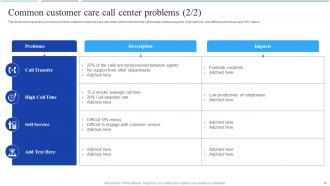
Slide 13: This slide displays Common customer care call center problems.
Slide 14: This is another slide continuing Common customer care call center problems.
Slide 15: This slide presents Impact of poor customer support at call center.
Slide 16: This slide highlights title for topics that are to be covered next in the template.
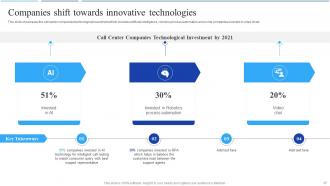
Slide 17: This slide represents Companies shift towards innovative technologies.
Slide 18: This slide highlights title for topics that are to be covered next in the template.
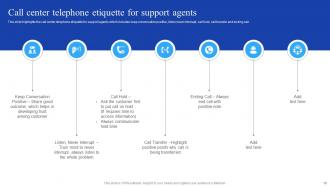
Slide 19: This slide showcases Call center telephone etiquette for support agents.
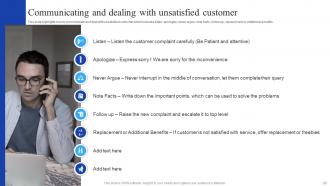
Slide 20: This slide shows Communicating and dealing with unsatisfied customer.
Slide 21: This slide highlights title for topics that are to be covered next in the template.
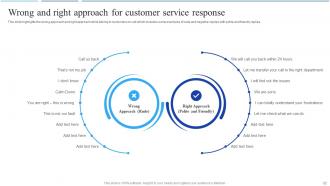
Slide 22: This slide presents Wrong and right approach for customer service response.
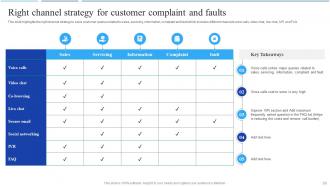
Slide 23: This slide displays Right channel strategy for customer complaint and faults.
Slide 24: This slide highlights title for topics that are to be covered next in the template.
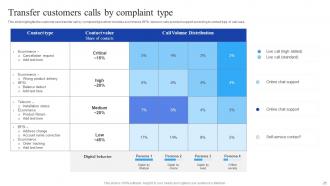
Slide 25: This slide represents Transfer customers calls by complaint type.
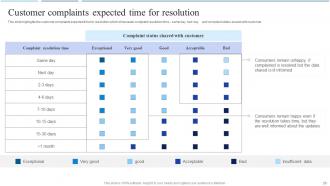
Slide 26: This slide showcases Customer complaints expected time for resolution.
Slide 27: This slide highlights title for topics that are to be covered next in the template.
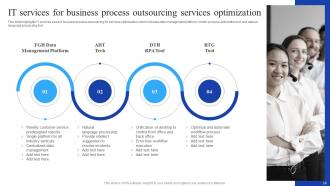
Slide 28: This slide shows IT services for business process outsourcing services optimization.
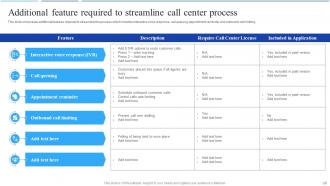
Slide 29: This slide presents Additional feature required to streamline call center process.
Slide 30: This slide displays Important aspects for effective QA at call centers.
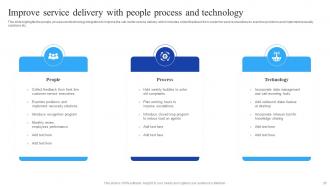
Slide 31: This slide represents Improve service delivery with people process and technology.
Slide 32: This slide highlights title for topics that are to be covered next in the template.
Slide 33: This slide showcases Strategies to remove obstacles and building productive team.
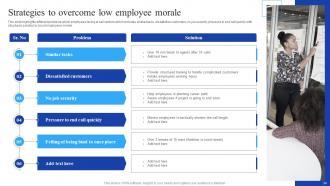
Slide 34: This slide shows Strategies to overcome low employee morale.
Slide 35: This slide highlights title for topics that are to be covered next in the template.
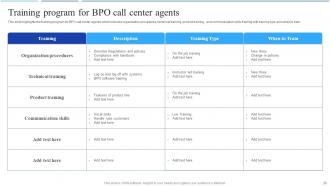
Slide 36: This slide presents Training program for BPO call center agents.
Slide 37: This slide highlights title for topics that are to be covered next in the template.
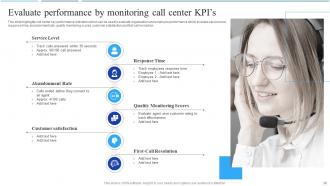
Slide 38: This slide displays Evaluate performance by monitoring call center kpi’s.
Slide 39: This slide highlights title for topics that are to be covered next in the template.
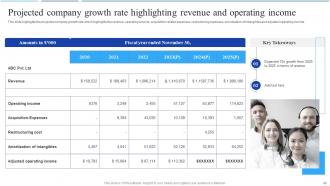
Slide 40: This slide represents Projected company growth rate highlighting revenue and operating income.
Slide 41: This slide showcases Expected outcome from call center improvement action plan.
Slide 42: This slide highlights title for topics that are to be covered next in the template.
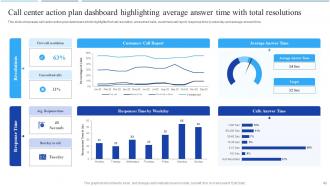
Slide 43: This slide shows Call center action plan dashboard highlighting average answer time with total resolutions.
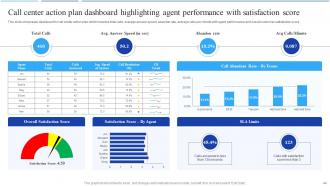
Slide 44: This slide presents Call center action plan dashboard highlighting agent performance with satisfaction score.
Slide 45: This slide contains all the icons used in this presentation.
Slide 46: This slide is titled as Additional Slides for moving forward.
Slide 47: This is About Us slide to show company specifications etc.
Slide 48: This is Our Mission slide with related imagery and text.
Slide 49: This slide depicts Venn diagram with text boxes.
Slide 50: This slide provides 30 60 90 Days Plan with text boxes.
Slide 51: This is Our Goal slide. State your firm's goals here.
Slide 52: This is a Timeline slide. Show data related to time intervals here.
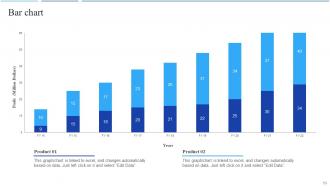
Slide 53: This slide presents Bar chart with two products comparison.
Slide 54: This slide showcases Magnifying Glass to highlight information, specifications etc
Slide 55: This slide shows Post It Notes. Post your important notes here.
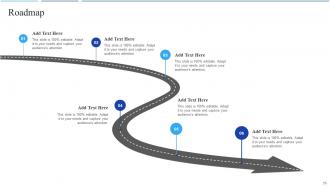
Slide 56: This slide presents Roadmap with additional textboxes.
Slide 57: This is a Thank You slide with address, contact numbers and email address.
Call Center Agent Performance Improvement Plan Powerpoint Presentation Slides with all 62 slides:
Use our Call Center Agent Performance Improvement Plan Powerpoint Presentation Slides to effectively help you save your valuable time. They are readymade to fit into any presentation structure.






















FAQs for Call Center Agent Performance Improvement Plan
Start with call resolution rate, customer satisfaction scores, and first call resolution - those will show you exactly what's broken. Average handle time matters too, but don't get crazy with tracking everything under the sun. I made that mistake once and my agents felt like they were being micromanaged to death. Schedule adherence is boring but honestly crucial in call centers. Pick maybe 5-6 metrics max that actually tie to what you're trying to fix. Set realistic targets with deadlines. More than that and you'll just create analysis paralysis for everyone involved.
Honestly? Don't wait for quarterly reviews if you want real improvement. Every 2-4 weeks works way better - I've seen this firsthand. Monthly hits that sweet spot for most teams. Weekly can work if someone's really struggling, but it gets overwhelming fast. Pick whatever schedule you can actually stick to though. Consistency beats everything else. I'd do bi-weekly formal sit-downs plus those quick daily check-ins for immediate stuff. Oh, and document everything - sounds boring but you'll thank yourself later when you can actually see the progress happening over time.
Honestly, I'd hit three main things. First, teach your agents to actually *listen* - sounds basic but most jump straight to solutions without getting the full picture. Role-playing helps tons too. Use real scenarios from your calls so they can practice the tricky stuff without a customer on the line getting frustrated. The feedback piece is huge though - have supervisors jump in right after calls while everything's fresh. Oh, and don't make it some one-and-done workshop thing. Keep it going regularly or people forget everything within a week.
Honestly, call monitoring is such a goldmine that most managers totally waste. Instead of guessing what's wrong, you get actual data on where agents struggle. Track their progress over weeks, spot weird patterns in conversations. The trick is coaching them up rather than tearing them down - nobody learns when they're stressed. Share what they're crushing AND what needs work. Build training around the gaps you find, give feedback right away when possible. I swear, teams that do this right see way better results than places that just wing it.
Honestly, training is huge for PIPs - like, you can't just tell someone to improve without giving them the tools to actually do it. Map out exactly which skills are lacking first. Then build training around those specific gaps, whether it's product knowledge, sales techniques, or just basic communication stuff. I've watched so many managers mess this up by skipping straight to the "do better" part without any support. That's just setting people up to fail, which seems counterproductive? Short, targeted sessions work way better than throwing everything at them at once. It really comes down to being strategic about what you're teaching.
So there's call center software like Five9 or Genesys that'll automatically track everything - call times, resolution rates, customer satisfaction, schedule adherence. Honestly, the dashboards look overwhelming at first but they're pretty straightforward once you mess around with them. Real-time reports show how each agent's doing against their targets, and it flags issues like dropping satisfaction scores or calls getting too long. There's even speech analytics that listens for tone and keywords during calls (kinda creepy but useful). Best feature though? Automated alerts when someone's numbers tank, so you can jump in right away instead of finding out weeks later.
Honestly, make it feel like you're working *with* them, not against them. Get your agents involved in setting their own goals - they'll actually care about hitting targets they helped create. Skip the formal quarterly nonsense and do regular quick check-ins instead. Way less painful for everyone. Celebrate wins publicly when they happen, and connect their growth to real career opportunities if you can. The whole thing needs to show what's in it for *them*, not just company numbers. Give feedback that's actually specific and useful, then ask what they need from you to make it work.
So basically, when your team's always learning new stuff, they get way more confident handling tough calls. Nobody feels stuck anymore. They'll actually ask questions instead of pretending they know everything - which honestly drives me crazy when people do that. Short learning sessions work better than making it feel like school. Have your best agents share quick tips weekly. Keeps everyone from getting bored out of their minds doing identical calls forever. People stay longer too. The whole thing just flows better when learning feels normal, not forced.
Honestly, remote agents get hit hardest by feeling cut off and dealing with crappy tech support. Weekly video calls work way better than just looking at numbers - talk through actual calls they struggled with. Make sure they've got backup internet because nothing kills productivity like connection drops. Oh, and don't skip the social stuff - agents need to talk to each other, not just managers all the time. I'd start with quick 15-minute daily huddles. Sounds cheesy but it actually helps them feel less isolated. You can't just walk over anymore when someone's having a rough day, so you gotta be more intentional about it.
Look at your customer feedback data and dig into what people are saying about each agent specifically. Survey scores, chat ratings, complaints - all that stuff. You'll start seeing patterns like "this person talks way too fast" or "they never actually listen to what I'm saying." Way better than just guessing what's wrong, honestly. Then when you coach them, get super specific. Don't just say "communicate better" - tell them exactly what to fix, like slowing down their speech or asking follow-up questions. Makes such a huge difference in actually changing behavior instead of having these vague conversations that go nowhere.
Honestly, SMART goals are a game-changer because your agents get something real to aim for instead of hearing "just do better." You know how frustrating vague feedback is, right? With Specific, Measurable, Achievable, Relevant, Time-bound targets - like "hit 85% first-call resolution in 30 days" - they actually know what winning looks like. Track progress weekly and celebrate the small stuff. Quick course corrections when things go sideways. But seriously, stick to 2-3 goals max per person or they'll try fixing everything and end up nowhere.
Honestly, I'd pair the struggling agent with someone who's crushing it as their mentor. Regular check-ins work great - maybe they shadow each other for a bit? Agents usually pick up stuff faster from their teammates than from management anyway. Set some team goals too so everyone's invested in helping this person succeed. Group coaching sessions are solid for working through problems together. Just don't make it feel weird or forced, you know? Start small with one mentor pair first. See how that goes before you do the whole team thing.
Dude, you're gonna regret skipping PIPs later. Poor performers will keep dragging down your customer scores and pissing off clients who'll just leave. Your good employees will get annoyed seeing slackers face zero consequences - been there, it sucks for morale. Here's the thing though: if you ever need to fire someone, HR will want proof you tried helping them improve first. Otherwise you're looking at potential legal headaches. I know creating improvement plans feels like busy work, but start documenting everything now. Handle times, customer complaints, the whole mess. It'll save your ass down the road.
Dude, soft skills training seriously works. Your CSAT scores will climb, first-call resolution gets better, and handle times drop. I've watched teams hit 15-20% jumps in customer satisfaction after running these programs. Here's the thing - you can know all the tech stuff in the world, but when someone's pissed off and calling in, it's really about how you talk to them. Active listening and empathy beat product knowledge every time. Just make sure you're tracking metrics before and after. The ROI usually shows up pretty quick, like within three months.
Okay so here's the thing - when you actually recognize your high performers, everyone else notices their hard work gets seen. People start pushing themselves more because they realize effort pays off. I'd set up regular shout-outs during team meetings, maybe track performance stuff where everyone can see it. The whole team's morale goes up, plus your struggling people finally get concrete examples of what good work looks like. Sometimes they just haven't seen it done right, you know? It creates this competitive energy that's actually healthy, and honestly productivity jumps because people feel valued instead of invisible.
-
Qualitative and comprehensive slides.
-
SlideTeam is the way to go when you are in a time crunch. Their templates have saved me many times in the past three months.