


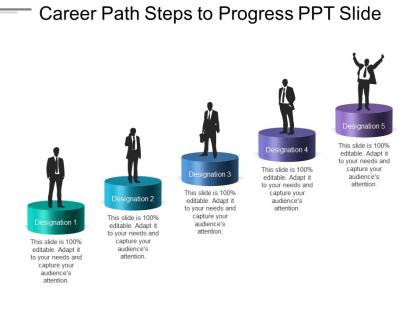
Career path steps to progress ppt slide




Try Before you Buy Download Free Sample Product
 Impress Your
 Audience
 100%
100% Editable
 Save Hours
 of Time


Our Career Path Steps To Progress Ppt Slide cater to demographics. They are appealing to all cultures.
People who downloaded this PowerPoint presentation also viewed the following :
Career path steps to progress ppt slide with all 5 slides:
Control your habits with our Career Path Steps To Progress Ppt Slide. Don't let compulsions deter you.


FAQs for Career path steps to
So basically you've got entry-level where you're just figuring everything out, then you move into specialist roles building your expertise. After that comes senior stuff - leading projects, managing teams, whatever. Then there's executive level if that's your thing. Oh, and some companies have this "high potential" track or subject matter expert path, which is actually smart since not everyone wants to deal with managing people (honestly, I get it). The titles change depending on where you work, but the structure's pretty much the same everywhere. Just figure out where you are now and what you need to get to the next step.
Honestly, start by figuring out where you actually want to be in 2-3 years. Then reverse-engineer what you need to get there - skills, experience, whatever. Coffee chats with people already doing what you want? Total game changer. Most folks love talking about their career journey if you just ask. Check out job postings for roles you're eyeing to see what keeps popping up as requirements. Oh, and see if your company has any internal programs you haven't explored yet. Don't just wait around hoping something good will happen - that never works. Seriously, schedule those conversations this week.
Dude, networking is seriously where it's at for getting ahead. Most jobs get filled through connections before they even hit job boards - it's wild. I thought it was all fake schmoozing too (still hate those awkward mixers tbh), but really it's just staying in touch with old coworkers and actually being useful to people. LinkedIn's pretty solid for this stuff. When you've got real relationships, people think of you for opportunities and will actually recommend you. Maybe text someone you worked with before? Even just a quick "hey how's the new role going" works.
Honestly, focus on three things: staying current with tech, getting good at explaining stuff, and thinking bigger picture. Communication is huge - way more than most people think. You'll need to break down complex technical things for executives who don't get it. Business skills matter too, like understanding how your work actually affects the bottom line. Oh, and leadership development even before you manage anyone. The mentor thing is clutch though - find someone who's already where you want to be and have them check in on your progress every few months. Trust me on that one.
Honestly, having a mentor is like having cheat codes for your career. They'll give you the real insider scoop on your industry and introduce you to people you'd never meet otherwise. The feedback alone is worth it - they've already screwed up the things you're about to screw up, so you can skip that drama. They can also vouch for you when opportunities come up and help you figure out all the unspoken office politics stuff. Don't bother waiting around for some formal program though. Just find someone whose path looks interesting and ask them to grab coffee sometime.
Honestly? Certs are worth it if you pick the right ones. They definitely help with getting past HR filters - recruiters eat that stuff up. More importantly though, they keep your skills sharp and show you're not just coasting. I'd focus on whatever aligns with where you want to be in a couple years, not your current role. The learning process itself makes you way more confident at work. Plus some higher-level jobs literally won't consider you without specific credentials. Just don't go crazy getting every certification under the sun - been there, learned that lesson the hard way.
Honestly, figure out what YOU actually want first - not what sounds impressive to others. Pick maybe 2-3 concrete things for the next year, like mastering some skill or taking on a bigger project. Long-term stuff is weird because life throws curveballs, but still think about where you'd want to be in 3-5 years. I always write mine down because otherwise I just forget or they get all wishy-washy in my head. Check back every few months too. Oh, and make sure your short-term goals actually connect to the bigger picture - otherwise you're just randomly busy.
Honestly? Start acting like a leader before you get the title. Take on projects, mentor the new people, volunteer for stuff that gets you working with other departments. I learned this the hard way - I used to wait around for someone to give me permission, which was dumb. Building relationships is everything since leadership's basically about getting people to want to work with you. Make sure the higher-ups actually know what you're doing - speak up in meetings, share your wins. Oh, and find someone who can advocate for you when opportunities come up. That's probably the most important part.
Dude, feedback is like having a GPS for your career. Your boss knows what skills you need for that promotion, and coworkers will call out blind spots you can't see. Sometimes you think you're killing it but you're actually way off base - happens to everyone. Ask specific stuff like "what would get me to senior level?" instead of the generic "how am I doing?" question. Most people get good advice then just... ignore it. Don't be that person. Act on what they tell you and you'll actually get somewhere.
Ugh, the biggest mistake? Staying quiet about your accomplishments. I can't tell you how many talented people I've watched get overlooked because they thought good work speaks for itself - spoiler alert, it doesn't. Don't job-hop constantly early on, but also don't get too cozy without picking up new skills. Burning bridges with annoying coworkers always backfires eventually. Never trash-talk your current job in interviews either. Write down your wins and actually talk to your manager about career stuff regularly. Most people skip that last part completely.
Internal moves are definitely faster - you already know everyone and how things work, so no learning curve. Your boss can vouch for you too. But honestly? External jumps usually pay way better. Sometimes it's the only way companies actually give you a real raise, which is kinda ridiculous if you ask me. Starting over somewhere new means proving yourself again though. You'll be building relationships from zero. I'd probably do internal moves first to pick up different skills quickly, then jump ship later when you want that big promotion and salary boost.
Check what your company offers first - most have mentorship programs or learning stuff you probably don't even know about. LinkedIn Learning's pretty decent for picking up skills. Industry groups are underrated honestly, way better networking than random events. Coffee chats work too if there's someone you look up to. Career coaches? They help but damn they're expensive. Oh and ask HR what they've got - tuition reimbursement is more common than you'd think. Start internal then branch out from there.
Dude, personal branding is everything now. Recruiters literally stalk your LinkedIn before they even call you back - kinda creepy but whatever. Figure out what you want people to think when they hear your name, then just... be that person online. Post stuff about your expertise, maybe speak at some industry thing if you're feeling brave. Everyone's got the same resume these days anyway. The trick is being consistent about it. Don't post random thoughts one day then go silent for three months. Pick your lane and own it. Way better than blending into the background with everyone else.
Think of industry trends as your roadmap for what's coming next. Follow what's actually growing in your field - new tech, shifting customer demands, that kind of stuff. Then build skills around those changes instead of chasing roles that might disappear. I made the mistake of ignoring this once and felt totally behind for months. Short bursts work better than trying to absorb everything - grab a few industry publications, maybe join a professional group or two. The goal is spotting where things are headed so you're not scrambling later.
Honestly, you gotta be picky about which opportunities you actually go for. Online courses during lunch? Perfect. Internal projects that don't mess with your evenings? Even better. I've found mentorship works great too since it happens during normal work hours anyway. That whole "grind 24/7" thing is such BS - like, who actually has energy for that? Focus on stuff that'll actually move the needle without making you miserable. Just be upfront with your manager about your limits. You don't need to do everything at once (even though it feels like you should sometimes).
-
Thanks for all your great templates they have saved me lots of time and accelerate my presentations. Great product, keep them up!
-
Topic best represented with attractive design.
-
Very Good
-
Very good