


Change Management Implementations Powerpoint Presentation Slides





Try Before you Buy Download Free Sample Product
 Impress Your
 Audience
 100%
100% Editable
 Save Hours
 of Time


Change Management Implementations PowerPoint Presentation Slides are designed to showcase steps of implementing a change management process. Incorporate transformation process PPT slides to manage the change process. Change and transition PowerPoint complete deck contains a set of ready to use slides such as change transition plan, change transition curve, change management communication plan, training, timelines, sustaining momentum, change management model. Demonstrate the necessary steps i.e. recognize the changes, developing the necessary adjustments, training the employees with the business transformation plan PPT visuals. All templates are efficiently designed for a specific purpose. This allows users to create a presentation very quickly. Change strategy PowerPoint slide also goes well with various related topics such as change control process, strategic change, performance management, organizational change management tools & techniques, transition plan, continuous improvement, business control, and transformation projects. Download organizational change plan presentation layout to identify the scope of change and measure the progress.
People who downloaded this PowerPoint presentation also viewed the following :
Content of this Powerpoint Presentation
Slide 1: This slide introduces Change Management Implementations. Put Company Name etc. here.
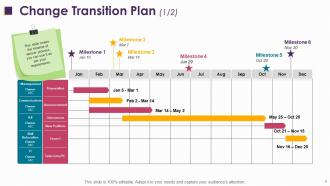
Slide 2: This slide presents a timeline showing Change Transition Plan in terms of months and years. Use it as per your requirement.
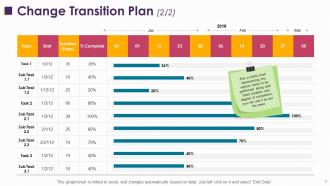
Slide 3: This is a Gantt Chart slide showing Change Transition Plan. This Gantt Chart represents the various tasks to be performed along with their duration and degree of completion, you can use it as per your need.
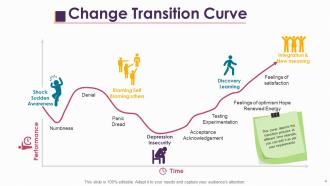
Slide 4: This slide displays Change Transition Curve diagram depicting the transition process at different time intervals. You can edit it as per your requirements.
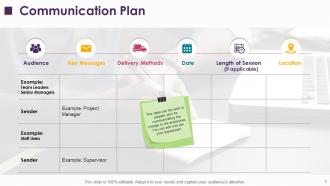
Slide 5: This slide shows Communication Plan table. This table can be used to prepare a plan for communicating the change to the employees. You can edit it as per your requirement.
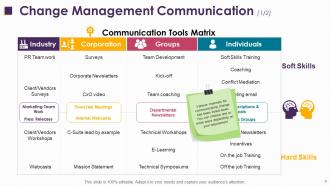
Slide 6: This slide shows Change Management Communication with Communication Tools Matrix. Various channels for communicating change has been listed here. You can choose one or more ways depending on your requirement.
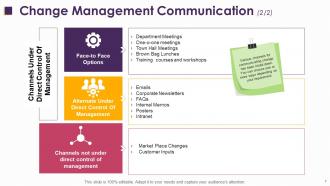
Slide 7: This is also Change Management Communication slide showing Channels Under Direct Control Of Management- 1) Face-to Face Options: department meetings, one-o-one meetings, town hall meetings, brown bag lunches, training courses and workshops. 2) Alternate Under Direct Control Of Management: emails, corporate newsletters, FAQs, internal memos, posters, intranet. 3) Channels not under direct control of management: market place changes, customer inputs.
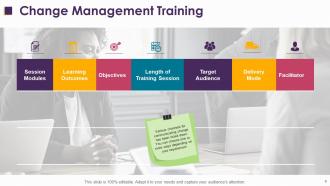
Slide 8: This slide presents Change Management Training with the following sub headings- Session Modules, Learning Outcomes, Objectives, Length of Training Session, Target Audience, Delivery Mode, Facilitator.
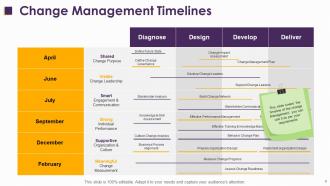
Slide 9: This slide is titled Change Management Timelines. It covers the timeline of the change Management which you can use as per your requirement.
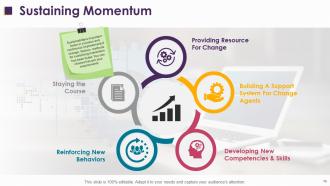
Slide 10: This slide shows the following factors for Sustaining Momentum- Building A Support System For Change Agents, Developing New Competencies & Skills, Reinforcing New Behaviors, Staying the Course, Providing Resource For Change. Sustainability is an important factor in success and continuous improvement of change. Various methods for sustaining momentum has been listed. You can choose it as per your requirements.
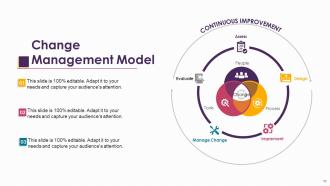
Slide 11: This slide shows Change Management Model. It also shows a few of its aspects such as Change, People, Process, Tools, Assess, Design, Evaluate, Implement etc.
Slide 12: This is Change Management Implementations Icon Slide. Alter as per need.
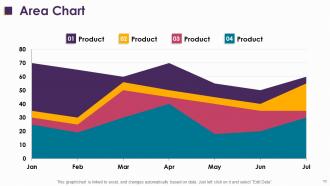
Slide 13: This is an Area Chart slide to show product/ entity growth, comparison, specifications etc.
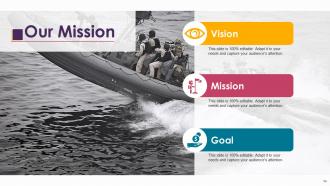
Slide 14: This slide contains Our Mission, Vision and Goals with text boxes.
Slide 15: This slide showcases Our Team with Name and Designation to fill.
Slide 16: This is a Puzzle pieces image slide to show information, specifications etc.
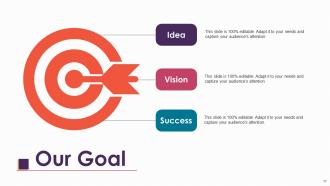
Slide 17: This is Our Goal slide. State your goals here. You can also mention your ideas, vision and success here.
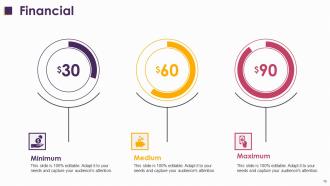
Slide 18: This slide displays Financial scores etc. in terms of Minimum, Medium and Maximum.
Slide 19: This is a Lego blocks image slide to present information, specifications etc.
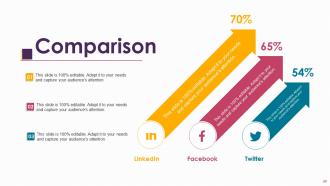
Slide 20: This is a Comparison slide for comparing entities/ products etc. here.
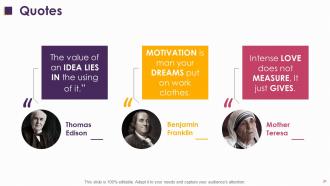
Slide 21: This is a Quotes slide to convey company messages, beliefs etc. You can change the slide contents as per need.
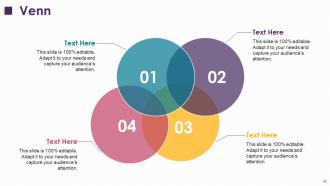
Slide 22: This is a Venn diagram image slide to show information, specifications etc.
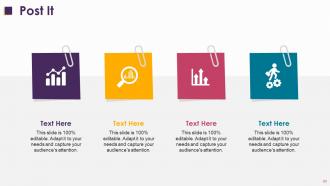
Slide 23: This is a Post It slide to mark events, important information etc.
Slide 24: This is a Mind Map image slide to show information, specifications etc.
Slide 25: This is a Bulb or Idea slide to state a new idea or highlight specifications/ information etc.
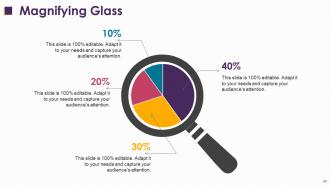
Slide 26: This is a Magnifying glass image slide to show information, scoping aspects etc.
Slide 27: This is a Thank You slide with Address# street number, city, state, Email Address, Contact Numbers.
Change Management Implementations Powerpoint Presentation Slides with all 27 slides:
Your ideas will become the magic mantra. Chant them with our Change Management Implementations Powerpoint Presentation Slides.
FAQs for Change Management Implementations
Okay so there's basically four main steps. Start with planning - figure out what's actually changing and how you'll handle it. Communication comes next, and honestly this is where everything usually falls apart if you're not careful. People need to understand WHY this change matters, not just what's happening. Then you move into actually doing it - supporting everyone through the transition. Monitor how it's going afterward and keep reinforcing the new stuff until it becomes normal. Seriously though, don't rush that communication part. I've seen so many changes bomb because leadership just assumed people would get on board automatically.
Honestly, surveys and focus groups are your best bet here. One-on-ones work great too. What you're really looking for is trust in leadership, how past changes went, and whether people actually get WHY this is happening. Current workload stress matters too - nobody wants more change when they're already drowning. Here's the thing though: informal conversations tell you way more than official feedback sometimes. Watch body language in meetings. I've watched so many leaders skip this whole step and then act shocked when everything falls apart later. Get that honest input upfront so you can tackle resistance before it spirals.
Dude, communication literally saves or kills these things. People freak out when they don't know what's happening - I've seen it so many times. You gotta explain the why behind everything, not just what's changing. Share your vision early. Tell them how it affects their day-to-day stuff. Then keep updating them constantly throughout the whole mess. Oh, and actually listen to their feedback too - don't just talk at people. I always tell managers to overcommunicate rather than leave people guessing. Trust me, the anxiety drops way down when everyone knows what's going on.
Honestly, you've gotta figure out why people are pushing back first. Usually it's fear or they feel blindsided by decisions made without them. Have real conversations - listen to what's actually bothering them. Yeah, explain the benefits, but don't sugarcoat the rough parts either. Nobody likes work surprises! Try to get your biggest skeptics involved in the planning if you can. Those small wins really do help build momentum. The key thing though? Stay consistent with your message and don't expect instant results. I'd start with a coffee chat with whoever's most resistant this week.
Kotter's 8-Step Process is probably your best bet - it's the most widely used for a reason. ADKAR works well if you're focused on individual change, and Lean Change Management is great for agile teams. Don't overthink the framework choice though, because honestly? People spend way too much time debating which one's "best" instead of just picking one and running with it. For tools, grab something like Asana or Monday for project management, plus whatever communication platform your team already uses. Oh, and don't forget feedback tools - surveys work fine. Just pick a framework that matches your company culture and commit to it.
Definitely track the hard numbers - productivity, quality scores, how often people call out sick, task completion times. That stuff matters. But honestly? The real story comes from actually talking to people. Do pulse surveys, sit down for one-on-ones, create feedback sessions. Numbers lie sometimes when morale's in the toilet. You gotta track this consistently over like 3-6 months to spot real patterns. Oh, and start collecting baseline data now before you even launch the change - otherwise you're just guessing if things actually improved or not.
Here's the thing - change freaks people out when they don't get the "why" behind it. So explain that first. Then celebrate your early adopters loudly because peer pressure actually works way better than boss mandates (learned that the hard way). Make sure people can complain without getting their heads bitten off. Your managers need to champion this stuff, not just relay messages. But honestly? The biggest game-changer is involving people in creating solutions instead of just telling them what's happening. Oh, and pilot programs work great - let volunteers go first, builds natural momentum.
Honestly, the key is just talking to people way more than you think you need to. Map out who's getting hit by this change and what they actually care about - not what you assume they care about. Those big company-wide meetings? Pretty much useless. People zone out or get annoyed. Try surveys, small group chats, even grabbing coffee with folks. The trick is making it two-way so they can complain or ask questions without feeling weird about it. When they give feedback, you've gotta show you heard them somehow. Treat them like they're helping shape this thing, not just dealing with whatever you decide.
Honestly, most change efforts crash because leaders don't explain WHY things are changing before dropping the bomb about what's different. People hate surprises, especially at work. Also - and I can't stress this enough - everything takes way longer than you'd expect. Like, double whatever timeline you're thinking. Get your key people involved in the planning phase, not just telling them what's happening later. Build in extra time (seriously), and don't forget to celebrate the small stuff along the way. Oh, and make some kind of communication plan and actually stick to it. Sounds basic but you'd be surprised how often that gets forgotten.
First thing - figure out what kind of workplace you're dealing with. Is it old-school hierarchy or more of a team-based vibe? That totally changes your approach. Traditional places need the big bosses on board first, then it trickles down through formal announcements. But collaborative cultures? They want workshops and cross-department teams actually driving the change together. Risk-averse companies (ugh, they're exhausting) need endless data and pilot programs before they'll budge. Innovation-focused ones might jump straight into testing stuff out. Honestly, just look at what worked or bombed in past changes - that's your best guide for reading the room.
So here's the thing - you can't really have organizational agility without solid change management. I mean, what's the point of being able to pivot quickly if your team freaks out every time something shifts? Change management is like... it teaches people how to roll with transitions instead of fighting them. The smoother your change processes are, the more willing everyone becomes to try new stuff or switch directions when the market demands it. Honestly, I've seen too many companies try to be "agile" but skip this part. Big mistake. If you want real agility, work on your change management game first.
Dude, tech makes change management way less painful. Project management tools help you see what's actually happening instead of just hoping things are on track. I'm obsessed with those analytics dashboards - they'll show you who's struggling before people even complain. Survey tools are clutch for getting real feedback instead of the usual "everything's fine" BS in meetings. Collaboration platforms keep everyone talking to each other, which honestly prevents half the drama. Just don't go crazy with too many tools or you'll spend more time managing the tech than the actual change. Pick maybe 2-3 that work together well.
Look at adoption rates first - are people actually using the new stuff or just pretending? Then hit your main performance metrics like productivity or quality scores, whatever matters for your situation. The human stuff is honestly just as important though. Check employee satisfaction surveys and retention rates to see if people are genuinely on board or just going through the motions. Milestone completion matters too, obviously. Keep your dashboard simple - maybe 4-6 key things max. We do monthly reviews with the team and it works pretty well.
Honestly, training is everything when you're trying to get people on board with changes. Figure out what skills your team's missing first - that's your starting point. You can't just throw new processes at people and expect magic to happen. Good training shows them the "why" behind changes, not just the "how." I've seen too many companies skip this step and wonder why everyone's resisting. Get employees involved in learning - makes them feel like they have skin in the game. The emotional stuff matters too. When people understand how changes actually benefit them personally, they're way more likely to embrace the whole thing instead of dragging their feet.
Honestly, most change projects crash because of people stuff, not the actual process. Leadership says they're on board but then doesn't really show it. People get confused about why things are changing in the first place. Here's the thing - you can't just announce a big change and expect everyone to roll with it. That's not how humans work. When people push back, it's usually because they feel left out or don't get what's in it for them. Sometimes they're actually making good points but nobody's listening. Start with explaining why you're doing this before diving into all the logistics. Makes a huge difference.
No Reviews