


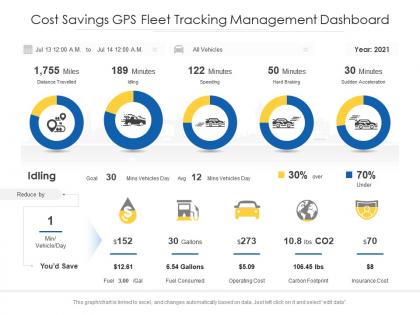
Cost savings gps fleet tracking management dashboard




Try Before you Buy Download Free Sample Product
 Impress Your
 Audience
 100%
100% Editable
 Save Hours
 of Time


Our Cost Savings GPS Fleet Tracking Management Dashboard are topically designed to provide an attractive backdrop to any subject. Use them to look like a presentation pro.
People who downloaded this PowerPoint presentation also viewed the following :
Cost savings gps fleet tracking management dashboard with all 2 slides:
Use our Cost Savings GPS Fleet Tracking Management Dashboard to effectively help you save your valuable time. They are readymade to fit into any presentation structure.
FAQs for Cost savings gps fleet
Real-time GPS tracking is your must-have - can't run a fleet without knowing where everyone is. Driver monitoring catches the speeders and hard brakers too. Route optimization saves tons on fuel, but honestly? Geofencing is where it's at. You'll stop stressing about random unauthorized stops. Mobile dashboard is key since you're probably never at your actual desk anyway. Don't forget maintenance scheduling and fuel tracking - those reports need to be customizable or they're useless. Start simple with these basics first, then pile on the fancy stuff once your drivers aren't freaking out about being monitored.
Dude, real-time analytics basically turns your fleet dashboard into something that actually helps you make decisions instead of just showing dots on a map. You'll catch maintenance problems before they cost you big money, spot fuel-wasting routes right away, and see when drivers are screwing around. Honestly, the fuel savings alone make it worth it - I was shocked how much gas some routes burn unnecessarily. Set up alerts for speeding and off-route stuff first, that's where you'll see results fast. Way better than finding out about problems three days later when it's too late to fix anything.
Start with location tracking and route optimization - that's where you'll see immediate wins. Driver stuff is massive too. Track speeding, hard braking, and how much they're idling because fuel costs add up fast. Trust me, the idle time reports will make you cringe at first. Fuel consumption and maintenance schedules are obvious ones. Oh, and arrival times so customers aren't constantly calling asking where their delivery is. Don't go crazy though - pick maybe 5 metrics that hit your worst problems first, then expand from there.
Dude, GPS tracking is a game changer for keeping your drivers safe. You get real-time alerts when someone's speeding or braking like crazy. The compliance stuff alone is worth it - automatically logs their hours, tracks when trucks need maintenance, generates all those DOT reports. No more drowning in paperwork, thank god. What I love most? You can jump on coaching right away instead of hearing about crashes weeks later. Oh, and it'll ping you if drivers go off their routes too. Honestly saved my buddy's company from a huge lawsuit last year.
Honestly, UI can make or break the whole thing. Your drivers and dispatchers need to find info fast - if it's cluttered or confusing, they'll just ignore half the features. I've watched teams dump expensive systems because navigating them was such a pain. Clean design is everything. Make sure the visual hierarchy actually makes sense and data's easy to scan quickly. Oh, and customizable views are huge since drivers care about different stuff than dispatchers do. Nobody wants to hunt through menus when they're trying to work.
Dude, that historical data is gold. You'll spot patterns you never noticed - like certain routes just guzzling fuel or which drivers always hit rush hour. I'd start with your biggest money drains first, fuel and maintenance costs. Pull those reports and see what jumps out over a few months, not just day-to-day stuff. Routes can get optimized, you can time maintenance better, figure out which trucks are dying on you. Honestly once you start digging around in there it gets kind of addictive. Just don't get lost in daily snapshots - the real insights come from longer trends.
Honestly, fuel management integration is pretty clutch - you get everything in one spot instead of bouncing between apps. Real-time data shows you which drivers idle too much or which routes are gas guzzlers. Plus you can catch fuel theft early, which is surprisingly common. The budget planning piece is huge too. Set alerts when vehicles go over your baseline MPG and you'll spot problem drivers fast. I learned this the hard way with our delivery trucks last year. Best part? All your fuel data sits right next to maintenance schedules and driver behavior stuff, so you're not piecing together info from different systems.
Start with the basics - speeding, going off route, maintenance stuff, and people using vehicles when they shouldn't. Honestly, don't go crazy with alerts at first because you'll just tune them out (learned that one the hard way lol). Set up different types based on how urgent things are - push notifications for emergencies, emails for maintenance reminders, dashboard stuff for minor issues. Geofencing is pretty useful too when vehicles leave certain areas. Add more alerts gradually once your team gets used to it. Less is definitely more in the beginning.
Honestly, the driver pushback is gonna be your biggest headache. Nobody wants to feel micromanaged, you know? Frame it around safety perks instead of the whole "we're watching you" thing. Data-wise, brace yourself for information overload - GPS tracking dumps SO much data on you at first. Your existing systems probably won't play nice with new tech right away either. Signal dead zones will mess with accuracy too, which is annoying but expected. I'd say test it with a few drivers who are actually on board first. Work out the bugs before rolling it out to everyone - saves you major drama later.
So the dashboard basically shows everything at once - where your drivers are, traffic conditions, all the delivery spots. You can spot crappy routes right away and fix them. It'll suggest better paths based on traffic and delivery windows, plus it actually learns from past data which is pretty cool. When something urgent pops up, just reassign it to whoever's closest. The best part? It updates all day long, not just in the morning like most systems. Honestly, I'd start by checking that route suggestions tab every day and see how it compares to what you're doing now.
Honestly, start with three main views and you'll be set. Real-time tracking is obvious - gotta know where your trucks are for dispatch stuff. Historical replay is clutch for seeing actual routes drivers took, plus it saves your butt when customers complain about timing. Geofencing lets you draw virtual zones and get pinged when vehicles cross them. Oh, and satellite vs street view toggle - sometimes you need that overhead angle, you know? I'd nail these down first instead of getting distracted by all the bells and whistles. Trust me on this one.
Dude, mobile access is a total game changer for fleet stuff. You can literally check where all your trucks are from anywhere - I probably look at mine way too much lol. Real-time alerts hit your phone when drivers have issues or break down, so you're not finding out hours later. Your drivers can update delivery info and log hours right from their phones too. The best part? You actually catch problems as they happen instead of discovering them when you get back to the office. Way better than being stuck at your desk all day.
First thing - get multi-factor authentication set up, not just basic passwords. Your vendor should be storing everything in compliant facilities with clear retention policies. The location tracking is honestly the scariest part since it follows your drivers everywhere, so lock down who can access that data. Encrypted transmission is non-negotiable too. Oh, and definitely read through their terms about data ownership before signing anything. You don't want to be stuck unable to delete your info if you switch providers later. Trust me on that one.
Dude, that fleet tracking thing is a game changer for customer service. You can ditch those awful "we'll be there between 9-5" windows that make everyone hate you. Give people actual real-time updates instead! Plus you'll spot which drivers are always running behind or taking weird routes. That data helps you give customers realistic timeframes from the start. Oh, and for emergency calls? You can instantly see who's closest. Honestly, most companies are still playing catch-up while customers call asking "where's my driver?" Use the live tracking to flip that script.
Oh dude, fleet tracking dashboards are actually perfect for this stuff. Route optimization cuts fuel use by like 10-20% without much effort - honestly surprised more companies don't jump on that first. You can watch driver habits too, catch people idling forever or flooring it at every light. The carbon footprint tracking gives you solid numbers for those sustainability reports everyone wants now. I'd focus on fuel consumption metrics right off the bat since that's your biggest bang for buck. Plus you'll spot which vehicles are just gas guzzlers that need replacing.
-
Commendable slides with attractive designs. Extremely pleased with the fact that they are easy to modify. Great work!
-
Thanks for all your great templates they have saved me lots of time and accelerate my presentations. Great product, keep them up!
-
Thanks for all your great templates they have saved me lots of time and accelerate my presentations. Great product, keep them up!