


Cybersecurity and digital business risk management flow diagram of incident response process




Try Before you Buy Download Free Sample Product
 Impress Your
 Audience
 100%
100% Editable
 Save Hours
 of Time


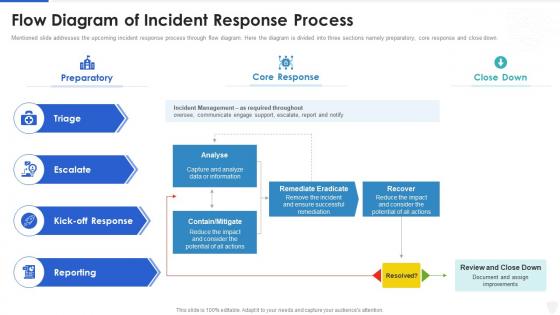
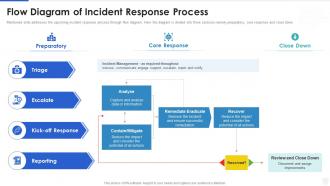
Mentioned slide addresses the upcoming incident response process through flow diagram. Here the diagram is divided into three sections namely preparatory, core response and close down.
People who downloaded this PowerPoint presentation also viewed the following :
Cybersecurity and digital business risk management flow diagram of incident response process with all 6 slides:
Use our Cybersecurity And Digital Business Risk Management Flow Diagram Of Incident Response Process to effectively help you save your valuable time. They are readymade to fit into any presentation structure.





FAQs for Cybersecurity and digital business risk management flow diagram of
Dude, you'll want to nail down the basics first - prep work like playbooks and who does what. Detection comes next (figuring out wtf actually happened), then containment to stop things getting worse. After that it's cleanup and getting everything back online. Don't forget the post-mortem! Honestly, communication is huge throughout the whole mess because people freak out when they're left guessing. Document everything beforehand though - trust me, you don't want to be googling incident response while your infrastructure is melting down. Test your plan sometimes too or it'll be useless when you need it.
Honestly, start by figuring out what you're actually working with - run some pen tests and audit who has access to what. Map your network too because I swear half the companies I've worked with have no clue what's even connected. Then do tabletop exercises with your team. See how everyone reacts when you throw different attack scenarios at them. You'll quickly spot the weak points before the bad guys do. Once you know where you stand (and what resources you actually have), building a solid incident response plan becomes way more realistic.
Your incident commander basically runs the show and makes the big calls. Security analysts dive deep into the technical mess to figure out what went wrong. IT ops jumps on containment and getting systems back up. Legal handles the regulatory nightmare (because there's always one). Communications deals with keeping everyone informed - both your team and anyone external. Oh, and someone needs to document everything as it happens. Trust me, you'll want that paper trail later for postmortems and covering your ass legally. Get everyone clear on their roles beforehand though. Last thing you need is people stepping on each other when everything's on fire.
Look, threat intel is a game changer for incident response teams. You're not flying blind anymore - you get context on attackers and their methods right off the bat. Pattern recognition becomes way easier. Your team can spot familiar TTPs and even guess what the bad guys might try next. Honestly, prioritizing incidents gets so much simpler when you know which alerts are legit threats versus noise. Attribution and containment decisions happen faster too. First step? Get those threat feeds hooked up to your SIEM. Your analysts will thank you when IOCs start correlating automatically during investigations. Makes the whole process less of a headache.
Honestly, start with mean time to detection and response (MTTD/MTTR) - they're super straightforward to track and tell you how fast you're spotting and handling threats. Containment and recovery times matter too. Don't forget false positive rates because your team will hate you if they're constantly chasing fake alerts. I'd also watch cost per incident and escalation rates. The magic happens when you trend this stuff over months - that's where you actually see if you're improving or just spinning your wheels. MTTD and MTTR give you the most value upfront though.
Each cyber incident hits differently, so you can't just use the same playbook for everything. Malware? You're basically playing whack-a-mole trying to isolate infected machines before they spread. Phishing is more about training people since they're usually how attackers get in. Data breaches are honestly a nightmare - you've got compliance headaches, angry customers to notify, plus forensics teams crawling all over your systems. My old boss used to say having response plans ready beforehand saves your sanity when everything's on fire. Trust me, you don't want your team googling "what to do" during an actual attack.
Honestly, the worst thing companies do is build these crazy detailed plans that sit in a drawer somewhere. Nobody practices them. Then when stuff hits the fan, you've got like three people all thinking they're running the show while the actual boss is on vacation or whatever. Communication breaks down fast too - especially if your main systems are toast. Recovery always takes way longer than anyone thinks it will. My take? Keep it dead simple. Run those fake scenario drills every few months. Make sure everyone knows exactly what they're supposed to do beforehand, not during the crisis.
Get ahead of it fast and be straight with people. Pick ONE person for internal stuff and someone else for external - seriously, don't let random people start talking or you'll have chaos. Even if nothing's changed, send updates anyway because radio silence freaks everyone out. With the public, just stick to what actually happened and what you're doing next. Oh and loop in legal right away - they'll save you from saying something stupid that comes back later. People hate being left in the dark way more than hearing "we're still working on it."
Start with tabletop exercises - way easier than you'd think. Your team just talks through scenarios like ransomware hits without breaking anything real (thank god). Then move up to live simulations in safe environments. Different people need different training though - SOC analysts vs communications folks, totally different skill sets. The tricky part? Making it stressful enough that people actually absorb something instead of just checking boxes. I've seen too many half-hearted drills that don't help anyone. Full-scale exercises work best once everyone's comfortable with the basics.
Build compliance straight into your incident response plan right from the start. Figure out what regs hit your industry - GDPR, HIPAA, whatever applies. Those notification deadlines are brutal and come fast. We almost blew a GDPR deadline once because we weren't prepared (not fun explaining that to leadership). Make templates for different incident types so legal can move quickly. Document everything like crazy during incidents since regulators will want every detail. Oh, and set automated reminders for those deadlines - you'll be way too stressed to remember them otherwise.
Get a decent SIEM first - Splunk's pricey but solid, or go with ELK if you're budget-conscious. CrowdStrike's my go-to for endpoint stuff, though SentinelOne works too. Wireshark for network analysis, obviously. EnCase if you've got money, Autopsy if you don't. Set up proper comms channels for your team - can't stress this enough. But here's the thing: tools won't save you if your processes suck. Document what you're actually doing now, then figure out what'll genuinely speed things up. Half these vendors oversell anyway.
Think of it like this - incident response is your fire department, business continuity is your evacuation plan. When ransomware hits, IR jumps in to stop the bleeding while BCP gets your backup systems online so you're not dead in the water. The trick is making sure both teams actually talk to each other (shocking concept, I know). Your plans should cross-reference so when IR identifies what's compromised, they immediately know which BCP procedures to kick off. Test them together too. Running drills separately is pretty much useless since real attacks don't happen in neat little boxes.
Look, you need forensics because otherwise you're just shooting in the dark. It shows you exactly how they broke in and what they actually did - not what you think happened. The logs don't lie, right? You'll see their whole path from initial breach to moving around your network to stealing data. Without that timeline and technical proof, you're basically guessing at fixes. And honestly, that's how you end up with the same attack happening again next month. The forensic findings tell you which specific security gaps to close instead of just random patching.
After big incidents, do a proper review to figure out what broke and what actually worked. Write it all down somewhere everyone can see - then here's the key part: actually update your procedures based on what you learned. So many teams just... don't do this step, drives me crazy. Every quarter, look back at your incident patterns to spot the stuff that keeps happening. New people need to know about past failures too, otherwise you'll just repeat everything. Honestly, start tracking this stuff now before your next fire.
Honestly, automation is huge for incident response. It handles all the boring repetitive tasks while your team tackles the real problems. Set up automated alerts and containment - stuff that normally wastes critical minutes. We cut response time in half just from better detection rules. Plus it saves you from those awful 3 AM mistakes when everyone's half-dead and chugging coffee. Though I'd start small with low-risk scenarios first. Build some wins before you automate anything too complex or you'll just create new headaches.
-
Best Representation of topics, really appreciable.
-
Innovative and Colorful designs.