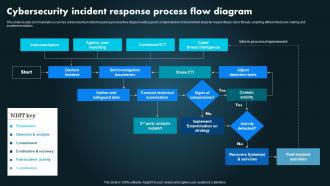
Cybersecurity Incident Response Process Flow Diagram
Try Before you Buy Download Free Sample Product
Audience
Editable
of Time
This slide visually communicates a concise cybersecurity incident response process flow diagram aiding quick comprehension of streamlined steps for responding to cyber threats, enabling efficient decision-making and incident resolution.
People who downloaded this PowerPoint presentation also viewed the following :
Cybersecurity Incident Response Process Flow Diagram with all 9 slides:
Use our Cybersecurity Incident Response Process Flow Diagram to effectively help you save your valuable time. They are readymade to fit into any presentation structure.
FAQs for Cybersecurity Incident Response
So you've got four main pieces to worry about. First, prep work - figure out who's doing what, how you'll communicate, get your tools lined up. Detection comes next, which is spotting problems fast and actually understanding what went wrong (honestly this is where most teams fall apart). Containment and cleanup follow - stop the damage, kick out the bad guys, bring everything back online properly. Document the whole mess as it happens because you'll need it later for figuring out what you learned, plus legal might want it. Oh, and practice this stuff regularly so your team isn't totally lost when it's go time.
Map out your critical stuff beforehand - customer data, financial systems, whatever actually makes you money. When shit hits the fan, go for the crown jewels first. I usually ask teams "what would make your CEO lose sleep?" because that's probably priority one. Set up a simple tier system: critical, important, and nice-to-have. Each tier gets recovery time goals. Your incident team needs to know this hierarchy cold so they're not arguing about what to fix first while everything's burning. Oh, and make sure someone actually tests this system occasionally - you'd be surprised how many companies skip that part.
Detection is your early warning system - catch incidents fast and you'll limit the damage. It's like a smoke detector but way more complex, and the "fire" might be silently stealing data for months. You need multiple layers working together: endpoint monitoring, network analysis, user behavior stuff. Can't rely on just one method because advanced threats are sneaky and blend in with normal traffic. Honestly, half the companies I know have detection tools that don't even alert the right people when something goes wrong. At that point you're just paying for fancy log storage.
Honestly? Tabletop exercises are where it's at. Run scenarios quarterly - walk your team through everything from spotting threats to shutting them down completely. Cross-train everyone because Murphy's Law guarantees your lead guy will be in Hawaii when disaster strikes. Short drills work better than marathon sessions, trust me on that. Get your core people certified too. The whole point is making responses automatic through repetition. Someone's specific role doesn't matter if they freeze up when it's real. Schedule something this month.
Malware and phishing attacks are probably the biggest headaches you'll deal with - those alone account for most incidents. Ransomware's gotten really nasty lately, especially when they hit your backups (which honestly just ruins your whole week). Data breaches happen constantly too. Don't forget about insider threats - sometimes it's malicious, but usually it's just Karen from accounting clicking the wrong thing. DDoS attacks still pop up, plus you've got credential stuffing when people use "password123" everywhere. Social engineering has gotten way more sophisticated than those old Nigerian prince emails. Oh, and definitely have your incident response plan ready beforehand - trust me, you don't want to be scrambling around trying to figure out the process while everything's on fire.
Honestly, communication can totally make or break your incident response. Clear, fast communication means you'll contain threats quicker and limit damage. But when there's confusion about who does what, delayed alerts, or teams working separately? Things go downhill really fast. I've actually seen cases where the communication mess caused more harm than the original attack - which is crazy when you think about it. You need solid communication channels set up beforehand, clear escalation paths, and everyone knows their role. Don't wait until you're in crisis mode to figure this stuff out.
Breach notification laws are your first priority - they set the timelines for reporting to regulators and customers. Different rules like GDPR, CCPA, and HIPAA all have their own deadlines, which honestly becomes a total headache to track. You'll also need to think about preserving evidence for lawsuits and deciding if cops need to get involved. Get your legal team in the loop immediately - they'll guide how you collect data and what you can say publicly. Oh, and make a quick reference chart mapping your regulations to response times beforehand. Trust me, you don't want to be figuring that out during an actual crisis.
Honestly, threat intelligence is a game changer for staying ahead of attacks. Feed those IOCs into your SIEM and you'll spot threats way earlier. The real magic happens when you understand attacker behavior patterns - suddenly those random alerts actually make sense. Start with threat feeds that match your industry (some are better than others, trust me). Use the intel to figure out which vulns need patching first instead of just scrambling randomly. It's like having a heads up on what's coming your way. Your whole incident response gets sharper when you know what you're actually dealing with.
Okay first things first - isolate those systems ASAP so this doesn't spread everywhere. Take screenshots of literally everything you're seeing, grab logs, note the timestamps. I can't stress this enough though - don't just start shutting stuff down randomly because honestly that usually makes everything way worse. Get your incident response team looped in immediately, plus whoever else needs to know. Here's the thing that's hard to resist: don't try fixing it yourself yet. You'll mess up the forensic evidence. If you've got an incident response plan, now's the time to actually use it. Contain first, then figure out how bad this really is.
Think of post-incident analysis like reviewing game footage after a loss - you gotta figure out what went wrong so it doesn't happen again. Document everything: the timeline, how they got in, what took too long to detect, where communication fell apart. My team always argues about this part but it's worth the time. Update your security tools based on what you learn. Refine your response procedures. Train everyone on the new attack methods you discovered. Then actually measure if your changes worked by tracking response times and detection rates. Otherwise you're just guessing whether you've improved anything.
Start with a SIEM for log analysis and something like Wireshark for network monitoring. EDR tools are absolute game-changers when malware shows up. You'll need forensic imaging software too. Threat intel platforms help you stay ahead of attacks. Here's the thing though - get a decent ticketing system because the documentation side will eat you alive otherwise. Slack or Teams for team coordination during incidents. Oh, and make sure everyone's actually trained on this stuff beforehand. I've seen teams with amazing tools who couldn't use them when it mattered.
Look, don't get stuck trying to figure out every detail first - that's how attackers buy themselves time. Hit the brakes on the damage right now: isolate those systems, reset any sketchy credentials, block suspicious IPs. While you're doing that containment stuff, have someone else start grabbing logs and evidence. I know it feels backwards working without the full picture, but honestly? You can piece together what happened later. What you can't do is undo the mess if you wait too long to act.
Honestly, third-party vendors are a double-edged sword when shit hits the fan. Sometimes you absolutely need forensics experts or legal counsel - your internal team just can't handle everything, especially the really nasty breaches. But here's what I learned the hard way: get those vendor contracts locked down BEFORE anything happens. Trust me on this one. You don't want to be frantically googling "incident response consultants" at 2am while your systems are compromised. Keep their contact info updated in your response plan and know exactly who to call for different scenarios.
Think of simulation exercises like fire drills but for cyber attacks. Your team gets to practice handling breaches or ransomware without the real-world chaos. They're honestly a lifesaver compared to figuring things out mid-crisis when everyone's freaking out. You'll spot holes in your response plan and see how departments actually communicate under pressure. Make the scenarios realistic though - otherwise people won't take it seriously. I'd say run them quarterly if you can swing it, then always do a debrief after to fix whatever went sideways.
Honestly, the best thing you can do is learn from your screwups. After every real incident, sit down with your team and figure out what went sideways - that feedback is pure gold. I'd also run fake scenarios every few months to see how everyone reacts. Keeps people sharp, you know? Don't forget to update your playbooks when new threats pop up or you add tools to your setup. The trick is making this stuff routine instead of scrambling after disasters. Maybe do quick monthly check-ins on your plans so nothing gets stale.
-
I came across many PowerPoint presentations with excellent creatives and I believe they would be beneficial to my work.
-
Great product with effective design. Helped a lot in our corporate presentations. Easy to edit and stunning visuals.