


Diferentes canales de servicio al cliente Edu Ppt




Try Before you Buy Download Free Sample Product
 Impress Your
 Audience
 100%
100% Editable
 Save Hours
 of Time


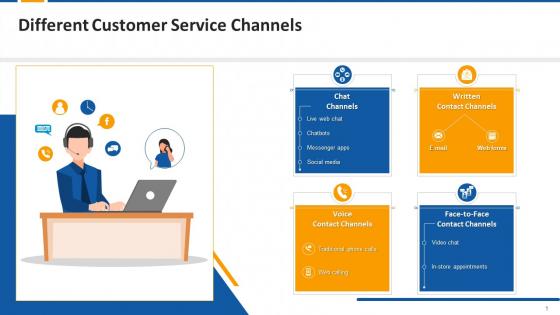
Esta presentación de PPT muestra los múltiples canales utilizados en el servicio al cliente para contactar a los usuarios, como chat, escrito, voz y cara a cara. Además, profundiza en las herramientas utilizadas en cada canal, como el chat web en vivo, los chatbots, las aplicaciones de mensajería, las redes sociales, los correos electrónicos, los formularios web, las llamadas telefónicas tradicionales, las llamadas web, el chat de video y las citas en la tienda.
People who downloaded this PowerPoint presentation also viewed the following :
Contenido de esta presentación de Powerpoint
Diapositiva 1
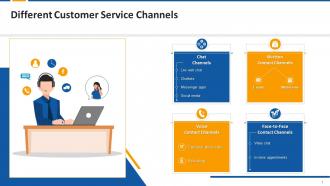
Esta diapositiva cubre información sobre los tipos de canales de servicio al cliente, como chatbots, correo electrónico, video chat, citas en la tienda, etc.
Diapositiva 2
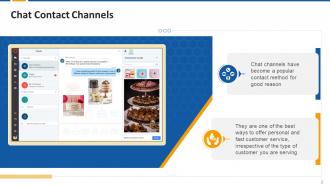
Esta diapositiva proporciona información sobre el chat como uno de los canales para brindar servicio al cliente.
Diapositiva 3
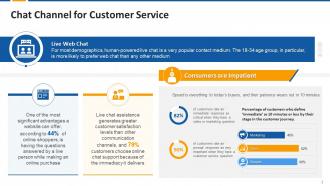
Esta diapositiva cubre información sobre la ventaja de la asistencia de chat en vivo y cómo conduce a una mayor satisfacción del cliente.
Diapositiva 4
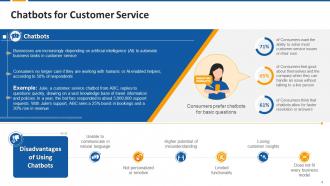
Esta diapositiva cubre información sobre la dependencia de las empresas en los chatbots para automatizar las tareas comerciales en el servicio al cliente.
Notas del instructor:
¿Cómo se pueden usar los chatbots para brindar un servicio al cliente eficiente?
· La implementación de chatbots puede ser un método inteligente para brindar un servicio rápido sin hacer esperar a los clientes si la empresa recibe consultas repetitivas.
· En el primer punto de contacto, una empresa puede usar chatbots para reducir la rotación de clientes y realizar transferencias humanas para problemas complejos.
· Los chatbots de servicio al cliente se pueden entrenar para anticipar las necesidades del cliente y brindar respuestas relevantes
· Con los chatbots de atención al cliente, se puede reducir la cantidad de tickets de soporte generados al abordar consultas simples al instante.
Diapositiva 5
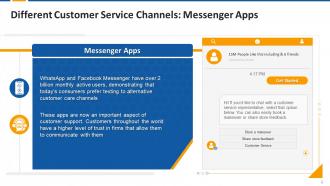
Esta diapositiva cubre información sobre la dependencia de las empresas de las aplicaciones de mensajería para la comunicación empresarial.
Notas del instructor:
Beneficios de usar aplicaciones de mensajería en atención al cliente:
· Las aplicaciones de mensajería son útiles para saber cuántos de sus mensajes se entregan y leen
· También pueden ser bastante efectivos para proporcionar información sobre ofertas y promociones especiales.
· Los clientes no tienen que esperar para reportar sus consultas
Diapositiva 6
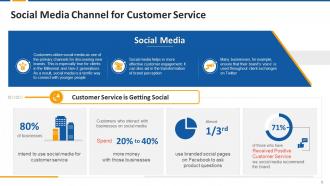
Esta diapositiva muestra la importancia de las redes sociales en el servicio al cliente. Muestra cómo las redes sociales ayudan en la participación efectiva del cliente.
Diapositiva 8
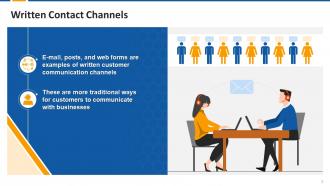
Esta diapositiva muestra los canales de contacto escritos, como el correo electrónico, las publicaciones y los formularios web que los clientes pueden usar para comunicarse con las empresas.
Diapositiva 9
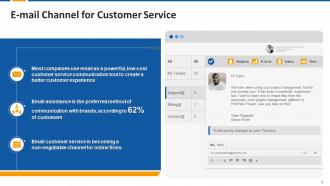
Esta diapositiva cubre cómo el canal de correo electrónico para el servicio al cliente se ha convertido en una herramienta de comunicación de servicio al cliente poderosa y de bajo costo para una mejor experiencia del cliente.
Diapositiva 10
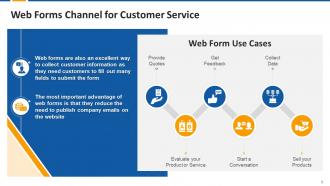
Esta diapositiva cubre los beneficios de usar formularios web para recopilar información del cliente. También muestra los casos de uso de formularios web, como obtener comentarios, iniciar una conversación y recopilar datos, etc.
Diapositiva 12
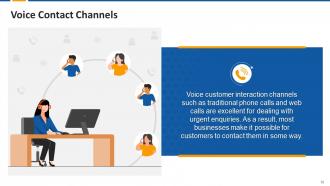
Esta diapositiva muestra los canales de contacto de voz, como las llamadas telefónicas tradicionales y las llamadas web, que las empresas utilizan para consultas urgentes.
Diapositiva 13
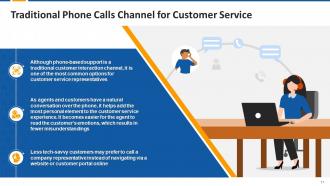
Esta diapositiva cubre la importancia del sistema de soporte telefónico y por qué los clientes eligen el método de interacción tradicional en lugar del sitio web o cualquier portal de clientes.
Notas del instructor:
Los siguientes son los consejos para las organizaciones que confían en las llamadas de voz para el servicio al cliente:
· Los ejecutivos de atención al cliente deben estar capacitados con la etiqueta de servicio al cliente adecuada para mantener un tono positivo cuando conversan con los clientes por teléfono para maximizar la experiencia del cliente.
· Los agentes pueden personalizar las conversaciones utilizando el nombre del cliente y evitando el uso excesivo de guiones con plantillas.
Diapositiva 14
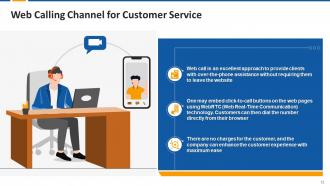
Esta diapositiva muestra los beneficios de las llamadas web que una empresa puede ofrecer a sus clientes.
Diapositiva 15
Esta diapositiva muestra los beneficios de utilizar las devoluciones de llamadas, como la reducción de los tiempos de espera de las llamadas, la mejora de la satisfacción del cliente y el aumento de los clientes potenciales, etc.
Diapositiva 17
Esta diapositiva cubre la importancia del canal de contacto cara a cara, como un servicio al cliente personalizado y proactivo.
Diapositiva 18
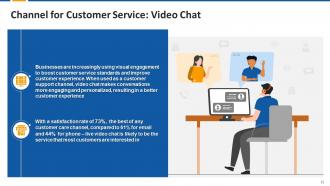
Esta diapositiva cubre cómo las empresas utilizan cada vez más la participación visual, como los canales de chat de video, para mejorar la experiencia del cliente.
Notas del instructor:
Así es como el chat de video puede ayudar a las empresas a comunicarse de manera más efectiva:
· El chat de video en vivo ayuda a identificar problemas más rápido en el primer intento y brinda respuestas efectivas
· Cuando se utiliza para el servicio al cliente, el chat de video le permite identificar el problema exacto en tiempo real y brindar soluciones rápidas.
· Se pueden proporcionar interacciones personalizadas que generan confianza en el cliente durante las sesiones de chat.
· A diferencia de los canales de atención al cliente reactivos, el chat de video (junto con el chat en vivo y la navegación compartida) ayuda a los clientes a superar situaciones difíciles en tiempo real.
Diapositiva 19
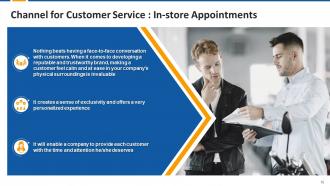
Esta diapositiva cubre la importancia de las citas en la tienda. Las citas en la tienda en el entorno físico de la empresa hacen que el cliente se sienta tranquilo y a gusto.
Diferentes canales de atención al cliente Edu Ppt con las 32 diapositivas:
Utilice nuestros diferentes canales de atención al cliente Edu Ppt para ayudarlo de manera efectiva a ahorrar su valioso tiempo. Están listos para encajar en cualquier estructura de presentación.









FAQs for Different Customer Service
Live chat and email are the big ones. Phone support too, though honestly most people hate calling now - I sure do. Social media's gotten huge since angry customers love posting publicly about bad service lol. Chatbots handle the basic stuff pretty well these days. Self-service portals are solid for people who just want to figure things out themselves. My advice? Pick 2-3 channels and actually do them right instead of trying to be everywhere at once. Better to nail a few than suck at everything.
Dude, live chat absolutely crushes email for customer satisfaction - we're talking 73% vs 61%. People love that instant back-and-forth thing, you know? Email just feels so... formal and slow. Your customers can actually get their problems solved right away instead of waiting around for replies. Plus your support team can juggle like 3-4 chats at once, which is pretty sweet for efficiency. Oh, and nobody wants to deal with those endless email threads that go nowhere. If you're gonna spend money on customer service stuff, definitely put it toward chat first.
Honestly, customers basically live on social media now, so that's where they'll complain first. Twitter and Facebook especially - they know companies hate bad reviews just sitting there publicly, so you're forced to respond super fast. Response time is everything (like, within a few hours max or you look terrible). The visibility is intense but it works both ways - handle something well and boom, free good PR. You really need dedicated people for this though, can't just throw it to whoever. Oh and the tone matters way more than regular support since everyone's watching. It's become this weird mix of customer service and public relations.
Get a platform that connects everything - chat, email, phone, social media. Trust me, customers switch channels constantly and there's nothing worse than having to repeat your whole story. Your CRM needs to play nice with all your communication tools so agents can see the full conversation history. I'd start with whatever two channels you use most, then add others later. Also make sure you've got decent routing set up so stuff doesn't just land randomly. Train everyone on the same processes too - sounds boring but it actually makes a huge difference.
Track response time, resolution time, and CSAT scores - those are your bread and butter. First contact resolution is massive though, because honestly, customers lose their minds when they have to repeat their issue to three different people. Channel volume and cost per interaction will show you what's actually working. Agent utilization and escalation rates matter too. Pick maybe 4-5 metrics that align with what your customers care about and your business needs. Then actually look at them weekly - I've seen too many dashboards that just sit there gathering dust while problems pile up.
Dude, this stuff is wild when you really think about it. Japanese customers usually want those formal email chains where they can think through everything. Americans? Just call us and get it over with. Age matters too - my mom still refuses to use chat support lol. Some cultures think phone calls are rude or pushy, others won't trust you unless you pick up. Don't guess what your customers want though. Survey them directly about which channels they actually prefer using.
Dude, chatbots are getting scary good with AI now. Video support is everywhere too - like actually helpful, not just those awkward Zoom calls. Oh and customers can literally shop and get help in the same app, which is pretty cool I guess. Voice assistants are becoming a thing, plus AR for troubleshooting (mind blown). But here's what's really happening - people start chatting, switch to email, then call, and they don't want to explain everything again. Most companies totally suck at this handoff stuff. Sales and support teams are basically doing the same job now.
Honestly, chatbots are a game changer for customer service. They handle all the boring stuff 24/7 - password resets, order tracking, basic questions. Your actual team can focus on real problems instead. Customers love getting instant answers too, way better than sitting on hold forever (which is the worst). The trick is making sure the bot knows when to pass things off to a human. I'd start with your top 5 most common questions - you'll probably be surprised how much time it saves. Just don't make the bot too robotic, people can tell.
Oh nice! First things first - get your agents comfortable on camera with decent lighting and audio. Nothing worse than trying to help someone when you look like a potato. Use video for the tricky stuff where showing beats explaining, like software demos or product walkthroughs. Always make it optional though - some people just want to stay faceless, which I totally get. Your team should be way more chatty than they'd be in regular chat support. That's literally the whole advantage here. Oh and definitely record sessions if customers are cool with it - you can actually see what's working and what isn't.
Honestly, start by checking where most of your tickets are coming from right now - email, phone, chat, whatever. Then ask your customers what they actually prefer because sometimes there's a weird disconnect there. Social media's a pain since everything's public, but that's usually where stuff blows up first so you can't ignore it. Don't try to be everywhere at once though - pick maybe 2-3 channels and actually do them well. Put your strongest people on whatever gets the most volume. Way better than being mediocre across like 8 different platforms.
Honestly, the messaging consistency thing will drive you nuts - customers notice when your email tone doesn't match your chat vibe. Your team's gonna struggle too, jumping between phone calls and Instagram DMs like they're completely different jobs. The worst part? When someone calls after already emailing and your agent has zero clue about that previous conversation. Makes everyone look incompetent. Budget-wise, you're basically funding multiple support teams at first which... ouch. Oh, and pray your current systems actually integrate because that's where things get messy fast. My advice? Pick two channels, nail those first, then add more slowly.
Set up a knowledge base that everyone can actually access - seriously, I've watched teams fail because they had five different answers floating around. Make templates for the stuff you get asked constantly. Train people on the same responses, policies, and tone whether they're doing email, chat, or whatever. Cross-team meetings help since you'll realize different departments are getting the same weird questions. Oh, and document everything properly - doesn't matter how good your system is if nobody uses it. The whole point is customers shouldn't get wildly different answers depending on who they contact.
Dude, customer feedback is literally a cheat sheet for your business. People complain about hold times but rave about your chat? Move staff there! Track your satisfaction scores and response times for each channel - then actually do something with that info. Honestly, most companies collect feedback and then... nothing happens with it. Set up those feedback loops and let customers guide where you put your energy. They're basically telling you exactly how to not suck at customer service. It's way easier than guessing what'll work.
Honestly, just start with a solid knowledge base and some FAQs - handle all the boring stuff like password resets and order tracking that your team probably hates dealing with anyway. Most people actually want to fix things themselves instead of sitting on hold forever. I'd grab your most common support tickets first and build guides for those. Screenshots help a ton, maybe throw in some quick videos for the messier processes. The trick is making everything super easy to find - nothing worse than burying helpful content where nobody can see it. Oh, and chatbots work great for the really basic questions.
Oh man, messaging apps for customer service can get messy privacy-wise. These third-party platforms basically hoover up user data - some are way worse than others about it. You've got GDPR and CCPA to worry about if sensitive customer info ends up on their servers. Encryption varies like crazy between platforms too. I'd honestly audit their privacy policies first before jumping in. The real pain is you might not control where that customer data actually goes or lives. WhatsApp vs Telegram vs whatever - they're all different beasts when it comes to handling your customers' info.
-
The quality of the templates is as fine as it could get. It was a purchase well made!
-
I am a big fan of their newsletters because that is how I found my perfect requirement at the time of urgency. Thank God, I kept opening those.