Customer Service Quality Assurance Edu Ppt

Rating:
90%
Customer Service Quality Assurance Edu Ppt
Slide 1 of 34

or

Favourites Favourites

Try Before you Buy Download Free Sample Product

Audience Impress Your
Audience
Editable 100%
Editable
Time Save Hours
of Time
The Biggest Sale is ending soon in
0
0
:
0
0
:
0
0
Rating:
90%
Presenting Customer Service Quality Assurance. Our PowerPoint experts have included all the necessary templates, designs, icons, graphs, and other essential material. This deck is well crafted by extensive research. Slides consist of amazing visuals and appropriate content. These PPT slides can be instantly downloaded with just a click. Compatible with all screen types and monitors. Supports Google Slides. Premium Customer Support is available. Suitable for use by managers, employees, and organizations. These slides are easily customizable. You can edit the color, text, icon, and font size to suit your requirements.

Content of this Powerpoint Presentation

Slide 4

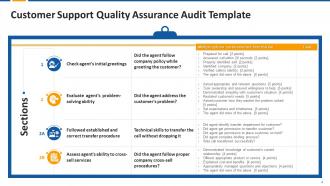
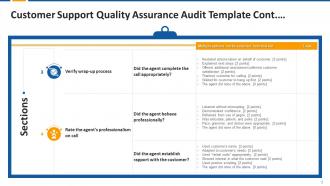
This slide covers customer service team quality assurance checklist template. It includes questions regarding client support technical and soft skills to handle the customer and agent’s ability to cross-sell.

Slide 5

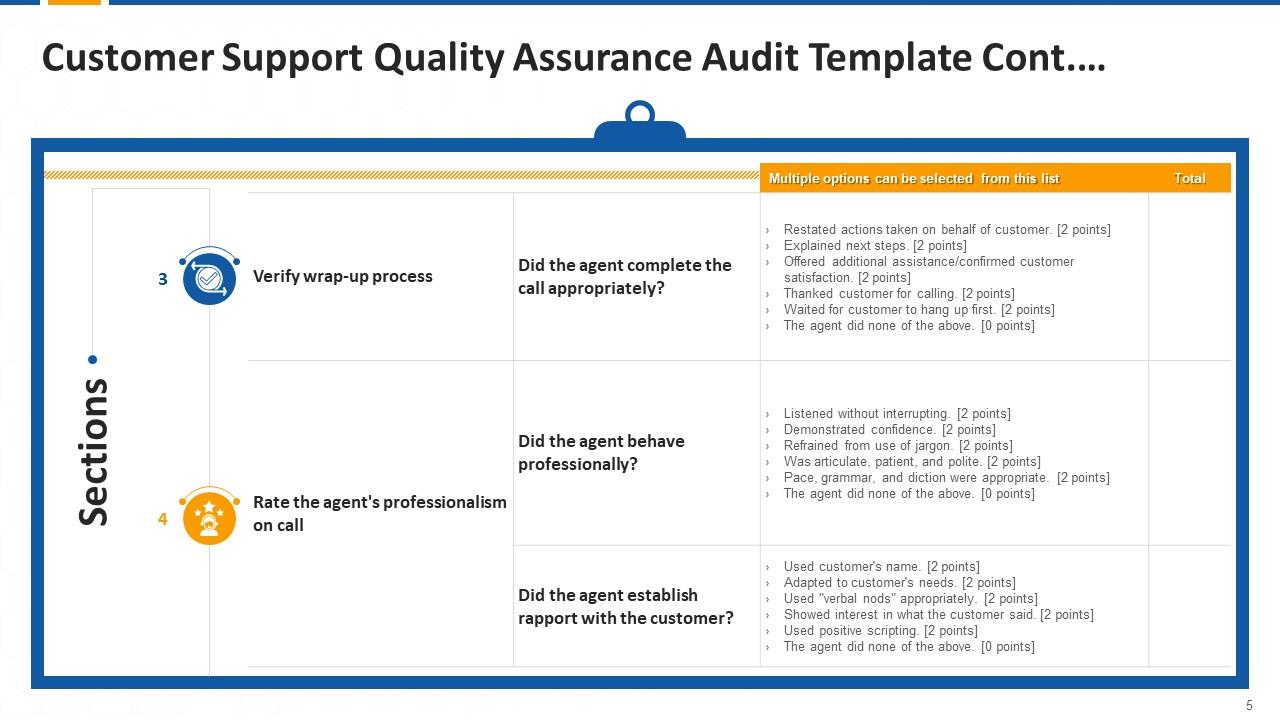
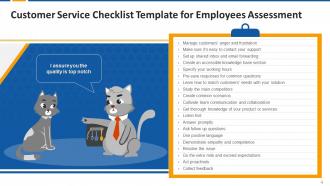
This slide covers customer service team quality assurance checklist template. It includes questions regarding client support technical and soft skills to handle the customer problems.

Slide 6

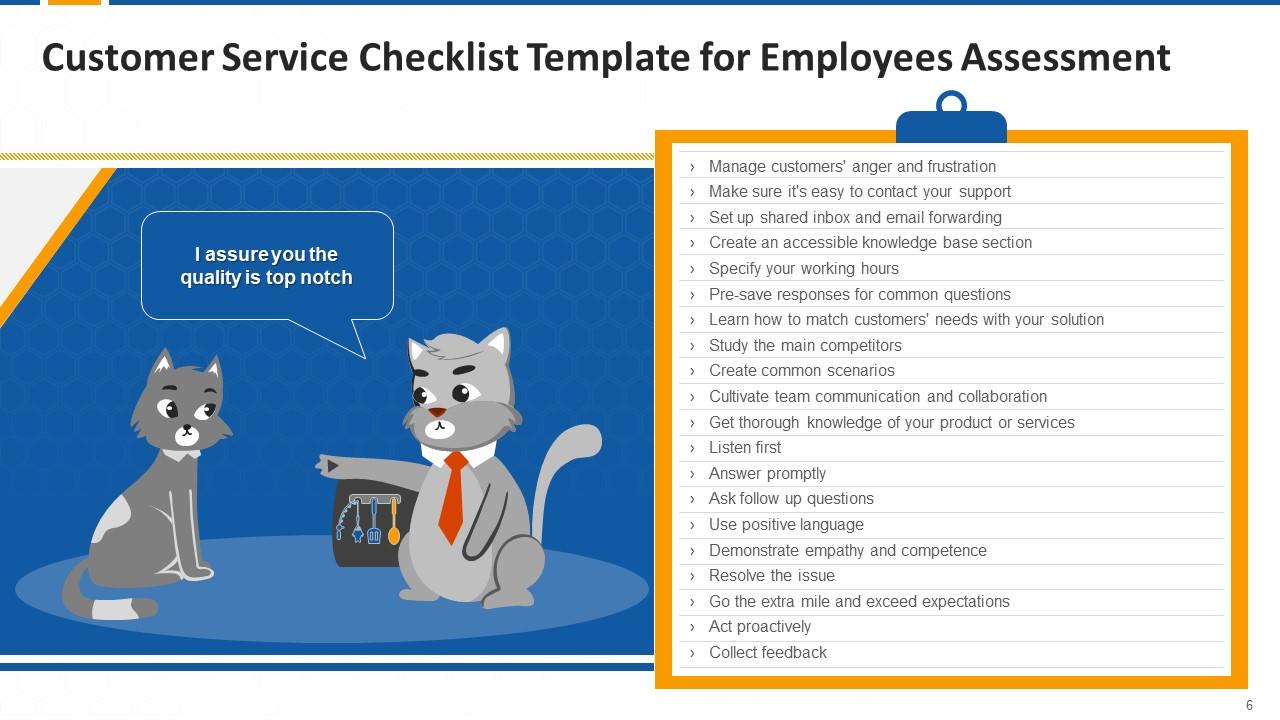
This slide covers client support team quality assessment checklist template.

Slide 8

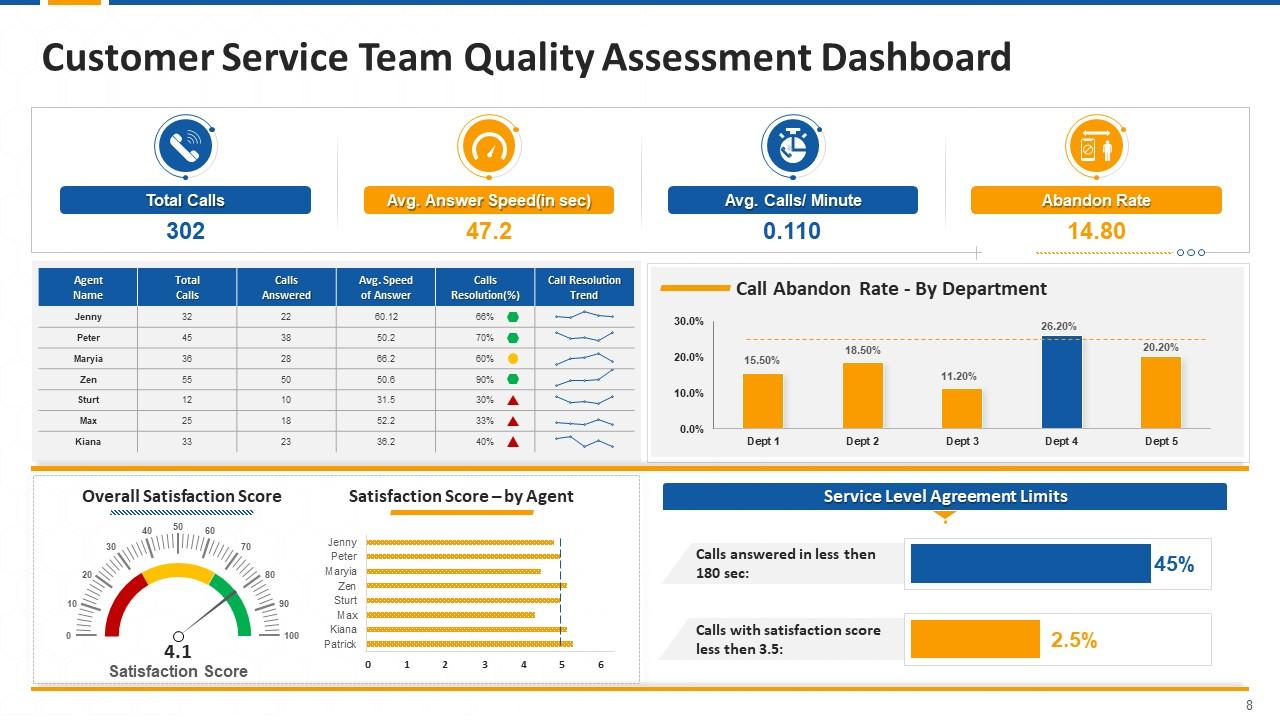
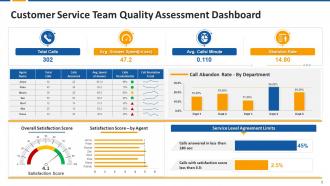
This slide covers customer support dashboard including KPIs like average speed of answer calls, CR trend, Call resolution, abandon rate, average call per minutes, customer satisfaction score etc.

Slide 9

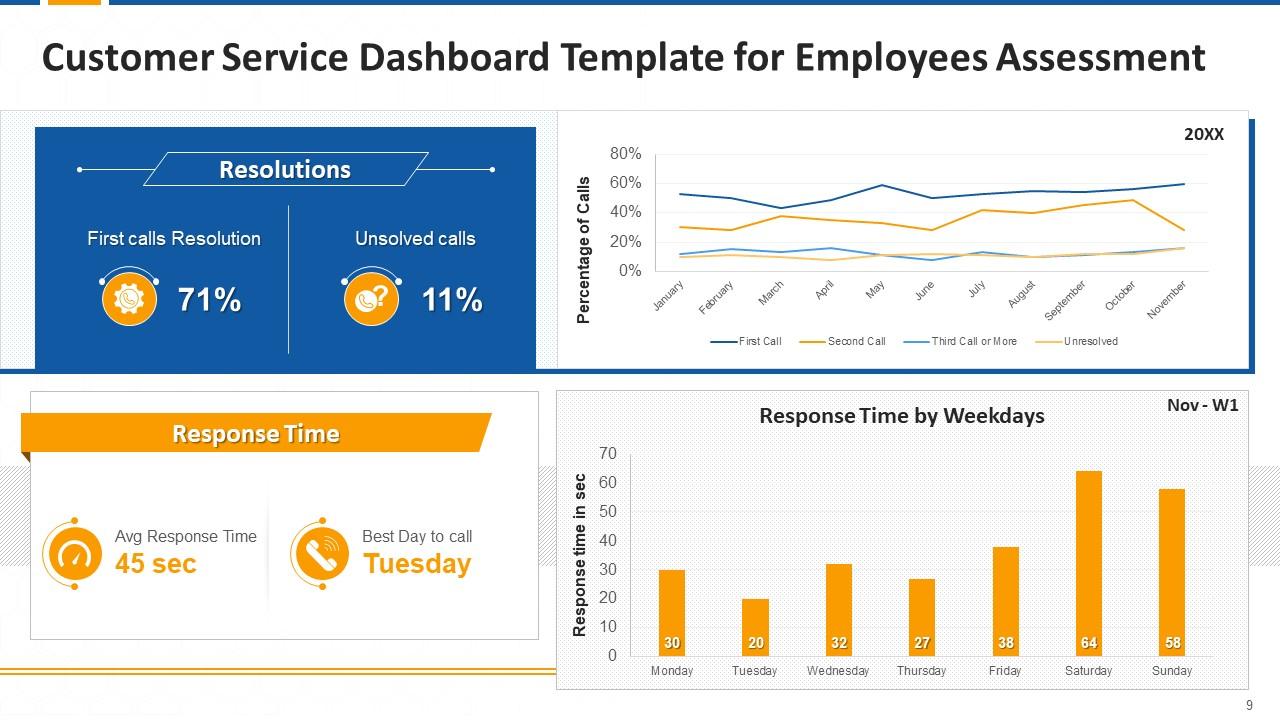
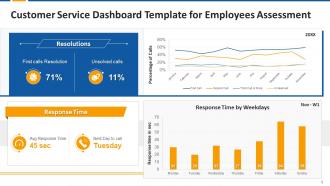
This slide covers KPI dashboard for customer support team audit. It includes metrics such as first call resolution rate, unresolved call rate, average response time by team etc.

Slide 10

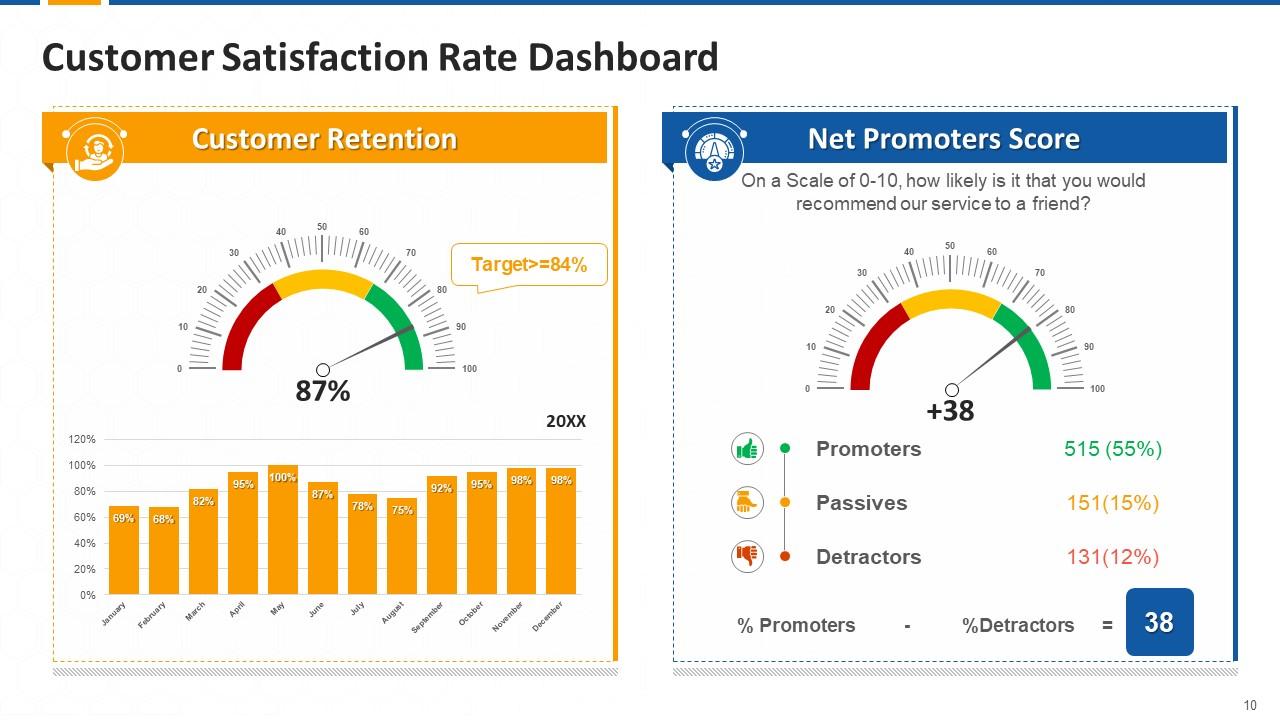
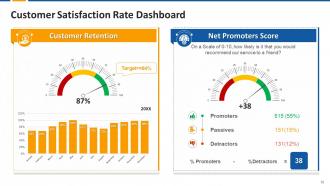
This slide covers customer satisfaction key performance indicators such as net promoter score (NPS) and customer retention rate.

Slide 11

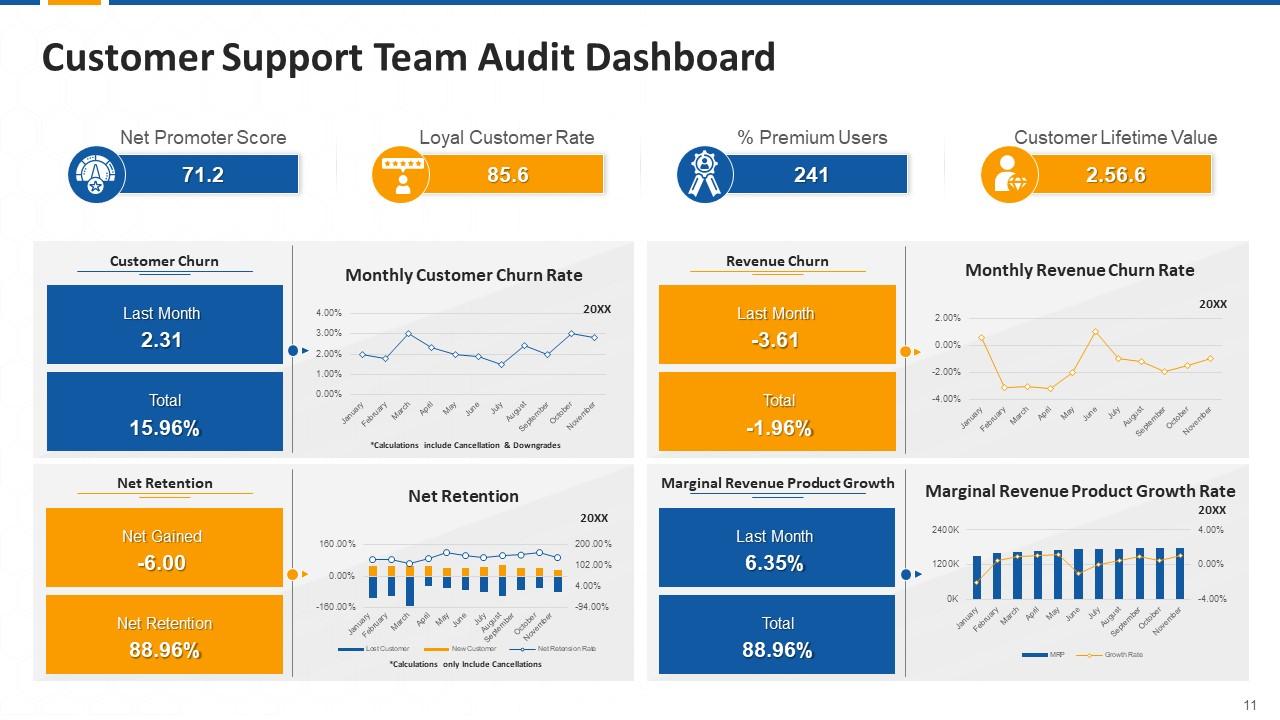
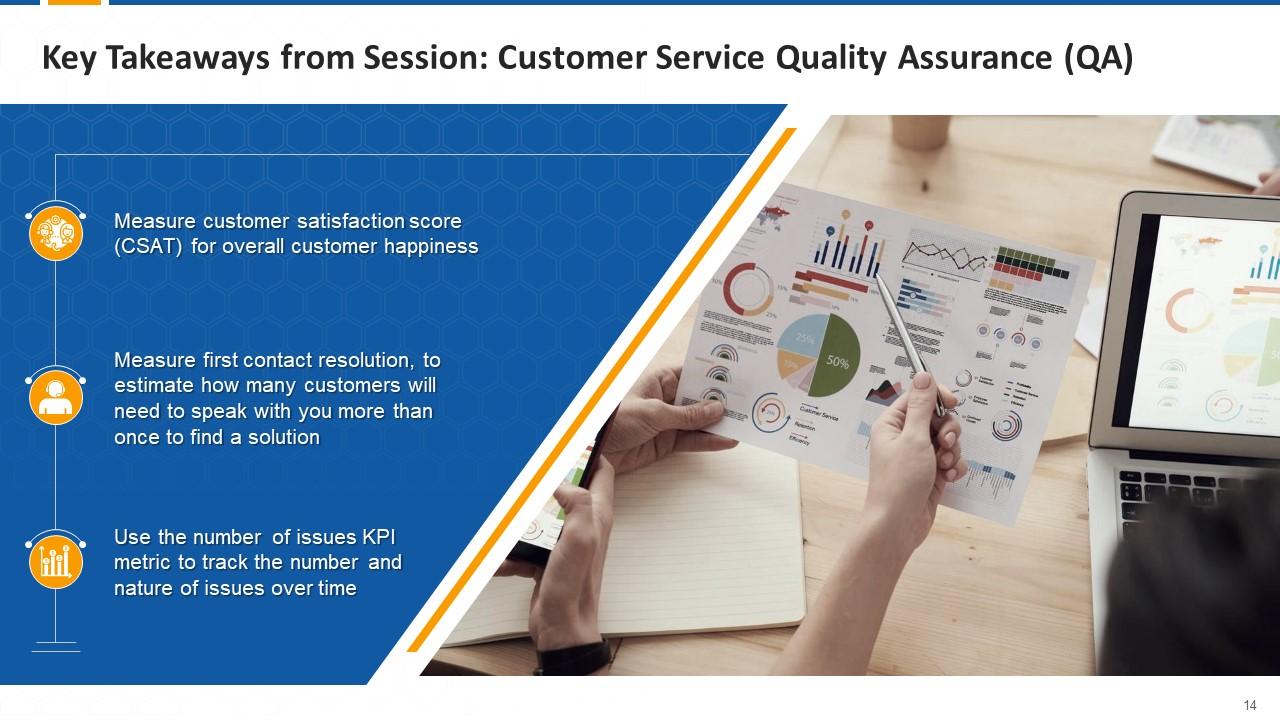
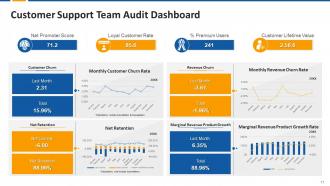
This slide covers Customer service quality assurance (QA) dashboard. It includes KPIs such as NPS, loyal customer rate, CLV, churn rate, net retention, MRR growth etc.

Slide 12

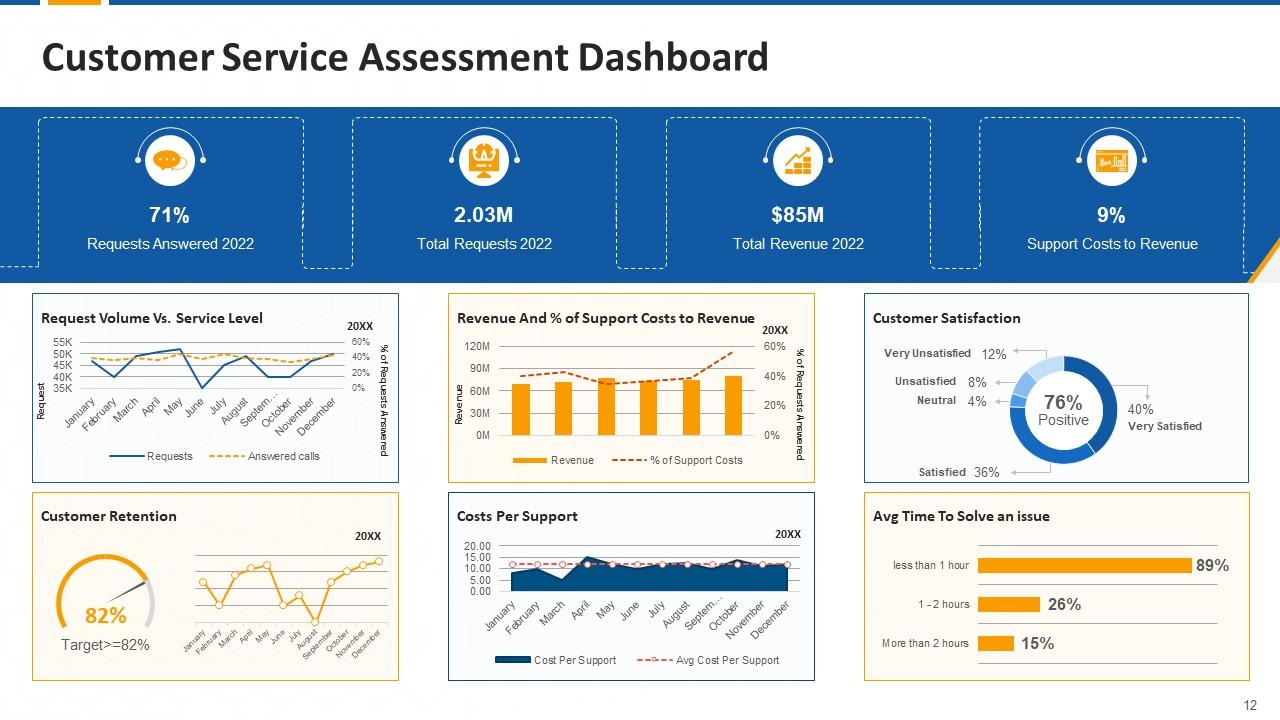
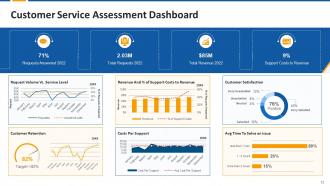
This slide covers customer support metrics such as customer retention rate, average time to solve an issue, customer satisfaction, total request, request answered etc.

FAQs for Customer Service Quality

Honestly, I'd focus on the basics first - response times, how long it takes to actually solve stuff, and customer satisfaction scores. First contact resolution is probably the most important thing because calling back multiple times is just annoying for everyone. Track your Net Promoter Score too since that shows if people would actually tell their friends about you. Sentiment analysis from feedback helps, and if you do phone support, call quality matters. But here's the thing - don't try measuring everything at once or you'll go crazy. Pick like 3-4 metrics that actually matter for your goals and stick with those.

Honestly, good onboarding is everything - cover your company values but focus on real scenarios they'll actually deal with. Role-playing feels awkward at first but it works. Have them practice with difficult customers before the real thing hits. Don't just do training once and forget about it either. Shadow coaching is probably the most underrated thing you can do. Give feedback constantly, not just during those awful annual reviews. Oh, and set clear standards for what good service looks like, then actually track it. Otherwise your team's just guessing what success means.

Honestly, tech is a total game-changer for QA scaling. Call recording with speech analytics catches problems automatically - way better than trying to review everything manually (ain't nobody got time for that). Sentiment analysis helps you spot pissed off customers before things blow up. Real-time AI coaching gives agents instant feedback too. The dashboards are clutch because they surface patterns you'd miss otherwise. Oh, and definitely start with automated scoring on whatever channels you're using now. It'll show you exactly where the biggest issues are so you can focus your actual human reviewers on stuff that actually matters.

Honestly, most companies are terrible at this - they collect feedback then let it die in some random dashboard. Here's what actually works: grab your top 3 customer complaints from this month and build them straight into your QA scorecards as real metrics. Set up automated surveys after calls, then make your agents review those comments during coaching sessions. The whole point is creating a loop that actually loops back, you know? Also track recurring issues so they show up in your quality rubrics. Otherwise you're just scoring agents on stuff that doesn't matter to customers.

Ugh, turnover is absolutely brutal - you're always training someone new. Training inconsistency kills you too, plus getting real-time feedback is nearly impossible. Different channels feel totally disconnected to customers... like phone support says one thing, chat says another. Start by figuring out where your quality tanks most - that's where you'll get the biggest wins. Standard training helps, but honestly regular coaching makes a bigger difference. Get some monitoring tools that actually tell you something useful, not just random scores. Oh and create clear escalation rules so people aren't just winging it when things go sideways.

So mystery shopping is where you hire people to pretend they're regular customers and see how your staff actually treats them. They'll test everything - how fast responses are, if your team's helpful, whether problems get solved properly. Honestly, it beats surveys by a mile since your employees act totally different when they don't realize they're being watched. You get the real picture of what's going down, not just what you hope is happening. I'd start with whatever customer interactions matter most to your business and build realistic scenarios from there.

So here's the thing - when your employees are miserable, customers definitely feel it. Happy workers give way better service, period. Track your employee satisfaction surveys and turnover rates, then compare those to your customer feedback scores. I've watched entire teams crash their customer ratings because morale was in the toilet. Also watch call times and how often issues get escalated - stressed employees either rush people off the phone or just punt everything to their manager. Honestly, if both your internal and customer metrics are dropping together, that's when you know you've got a real problem on your hands.

Honestly, I'd automate the boring stuff first - order tracking, basic FAQs, scheduling. Nobody really wants to wait on hold for that anyway. But anything emotional or complicated? Send those straight to humans. The trick is training your bots to actually recognize frustration and bail out quickly. I've seen too many companies trap angry customers in chatbot hell - super annoying. Make your automated responses sound somewhat natural too, not robotic. Reference their purchase history if you can. That way your actual team gets to focus on the relationships that matter instead of answering "where's my order" 50 times a day.

So you want to check both random stuff and actual complaints to get the whole story. I'd sample maybe 2-3% of interactions monthly - pull from different channels, times, team members, whatever. Your scoring rubric should hit response time, tone, how well they solved things, policy stuff. Most teams totally overcomplicate the rubric though, which is annoying. Get feedback to your reps fast, like within 48 hours while they still remember what happened. Weekly reviews work great when you're starting out. Then switch to monthly once you've got your groove down.

Honestly, data analytics is a game-changer for this stuff. Start tracking resolution times, satisfaction scores, and what people complain about most - you'll spot where your agents are struggling way faster than just guessing. Real-time dashboards are clutch because you can jump in and help someone immediately instead of finding out weeks later they've been bombing calls. Oh, and analyzing chat logs is super helpful but gets nerdy quick. I'd say pick maybe 2-3 metrics to focus on first, then expand from there once you've got the hang of it.

Honestly, role-playing is where the magic happens. Get your team actually practicing those nightmare customer calls instead of just talking about them. I've watched people completely flip their mindset once they work through real complaints in a low-pressure setting. Also - and this might sound cheesy but it works - have everyone share stories about times they actually helped customers. People retain that stuff way better than boring training slides. Oh, and definitely pair newbies with your best customer service people for shadowing. Try doing quick 15-minute practice sessions weekly. They'll start thinking customer-first without even realizing it.

Oh man, this stuff is actually pretty wild when you think about it. Some customers want super formal, structured interactions - like everything by the book. Others just want you to be chill and friendly. Western customers usually don't mind direct feedback, but in other cultures? That's basically insulting someone to their face. Cultural sensitivity training is huge for your team. You might even want to tweak your whole approach depending on who you're mainly serving. It's crazy how much these expectations vary, but once you get it, customer relationships become so much smoother.

Honestly, it all comes down to whether your leaders actually give a damn about customer service or just pretend to in meetings. The good ones? They're out there modeling what they want to see, not hiding in their offices. Training and tools matter, but if leadership doesn't walk the walk, forget about it. I've seen this so many times - teams mirror their bosses' energy completely. Best managers I've worked with made quality feel personal, celebrated the wins, and actually let staff fix problems without asking permission first. Oh, and they listened when people complained instead of brushing it off.

Oh man, this is HUGE. I can't tell you how many times I've dealt with companies where the phone person tells me one thing, then chat says something totally different - it's maddening! Your customers will bounce so fast if they're getting mixed messages. What I'd do first is check all your current channels and see where the gaps are. Then get everyone on the same page with shared training stuff and scripts. Honestly, people can smell inconsistency from a mile away and it kills trust instantly. Make sure it feels like one company talking, not three different ones.

Honestly, real-time feedback and AI analytics are total game-changers - you'll catch patterns that would fly right past you otherwise. Listen to actual call recordings too, the sentiment shifts tell you everything. Oh and gamification works way better than it should (competitive people love leaderboards, who knew?). Mystery shopping gives you the real picture. Cross-training agents across channels pays off huge. Predictive stuff is cool because you can fix problems before customers even know they exist. Just pick one thing and start there though, don't try everything at once.

Ratings and Reviews

90% of 100
Review Form
Write a review
Most Relevant Reviews
  1. 80%

    by Denis Rose

    SlideTeam provides PPTs on every single topic. Their templates suit my job very well. I am very grateful!
  2. 100%

    by Earnest Carpenter

    A big thanks to SlideTeam! An incredible and diverse library of templates helped me with my business project presentation.

2 Item(s)

per page: