


Digital Transformation In A Banking And Financial Services Company Case Competition Complete Deck




Try Before you Buy Download Free Sample Product
 Impress Your
 Audience
 100%
100% Editable
 Save Hours
 of Time


Creating a modern banking organization requires an emphasis that goes beyond modern technologies. Although several banks are focused on the technological improvements needed for technological transformation, cultural change needs to precede investment in and implementation of new technologies. There is a need to change the current or old technology with the latest one for long-term sustainability. Check out our efficiently designed Digital Transformation in a Banking and Financial Services presentation that identifies the importance of digital technology in the banking industry. This presentation is helpful for the banking institutions who want to increase their operational efficiency, create banking advantages for their customers, want to deliver better innovative products and services, etc. Technology helps the banking company protect its customers from various types of fraud. This presentation includes various slides, i.e., company introduction, company financials, global banking industry, the importance of technology in the banking company, SWOT Analysis, competitive analysis, strategies to overcome the challenges, profitability analysis, major risks, and mitigation strategies, etc. In the end, it comprises slides that show an increase in company financials due to the successful implementation of the strategies with dashboards. Get access now.
People who downloaded this PowerPoint presentation also viewed the following :
Content of this Powerpoint Presentation
Slide 1: This slide introduces Digital Transformation in a Banking and Financial Services Company (Case Competition). State Your Company Name and begin.
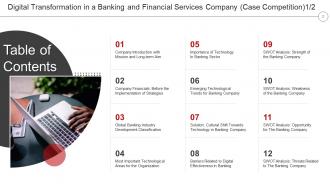
Slide 2: This slide presents Table of Content for the presentation.
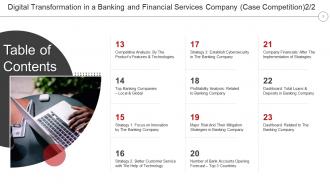
Slide 3: This is another slide continuing Table of Content for the presentation.
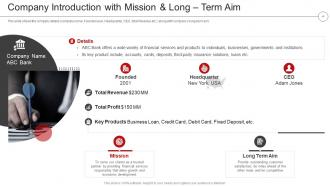
Slide 4: This slide shows the company details i.e. company name, Founded year, Headquarter, CEO, total Revenue etc.
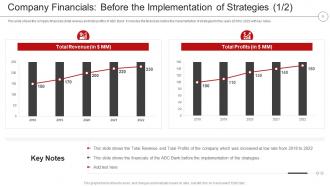
Slide 5: This slide presents the company financials (total revenue and total profits) of ABC Bank.
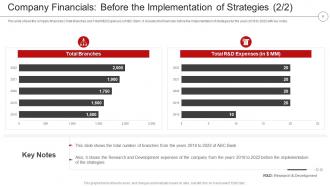
Slide 6: This slide shows the company financials (Total Branches and Total R&D Expenses) of ABC Bank.
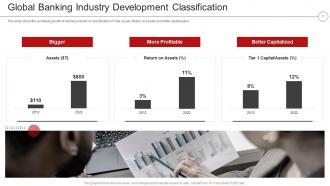
Slide 7: This slide displays Global Banking Industry Development Classification.
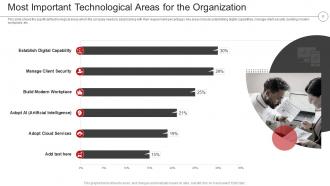
Slide 8: This slide represents Most Important Technological Areas for the Organization.
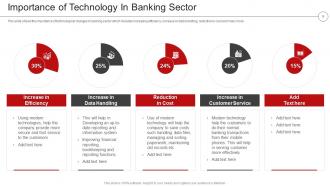
Slide 9: This slide showcases Importance of Technology In Banking Sector.
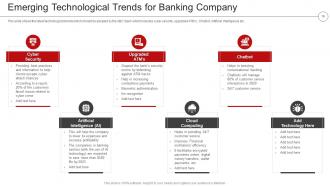
Slide 10: This slide shows Emerging Technological Trends for Banking Company.
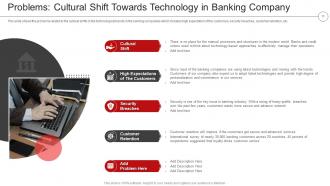
Slide 11: This slide presents the problems related to the cultural shifts in the technological trends.
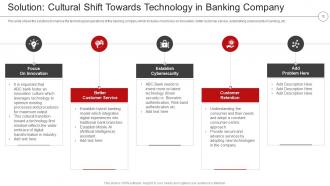
Slide 12: This slide displays the solutions to improve the technological operations of the banking company.
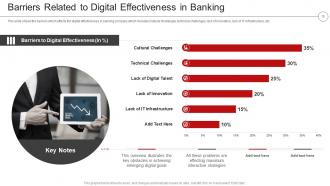
Slide 13: This slide represents Barriers Related to Digital Effectiveness in Banking.
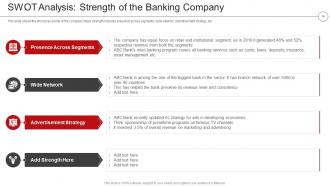
Slide 14: This slide shows the strong key points of the company.
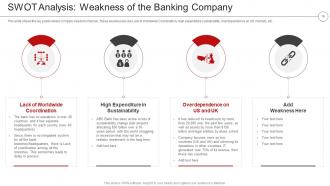
Slide 15: This slide displays the key points where company needs to improve..
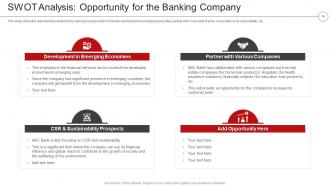
Slide 16: This slide shows the opportunities related to the banking company.
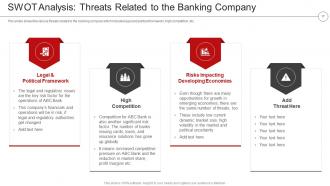
Slide 17: This slide represents the various threats related to the banking company.
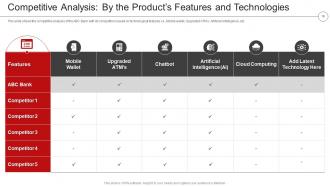
Slide 18: This slide showcases the competitive analysis of the ABC Bank with its competitors.
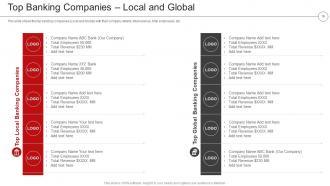
Slide 19: This slide shows the top banking companies (Local and Global) with their company details.
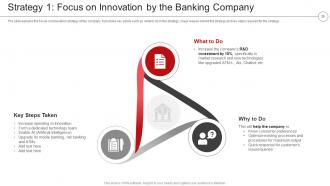
Slide 20: The slide explains the Focus on Innovation strategy of the company.
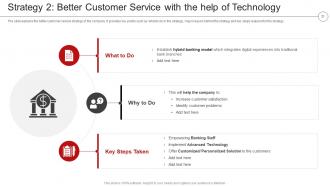
Slide 21: The slide explains the better customer service strategy of the company.
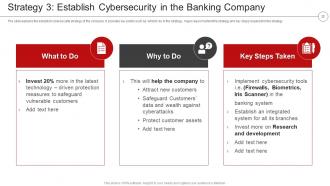
Slide 22: This slide presents the establish cybersecurity strategy of the company.
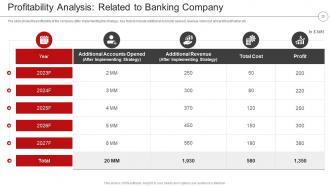
Slide 23: The slide shows the profitability of the company (after implementing the strategy).
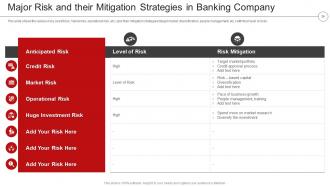
Slide 24: This slide displays Major Risk and their Mitigation Strategies in Banking Company.
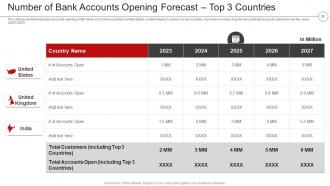
Slide 25: The slide shows the forecasted accounts opening of ABC Bank in top three countries.
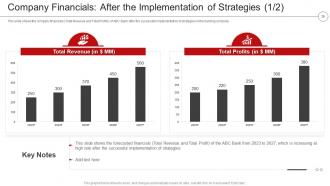
Slide 26: This slide represents the company financials (Total Revenue and Total Profits) of ABC Bank.
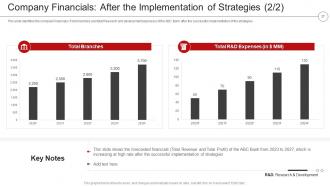
Slide 27: This slide identifies the company Financials i.e. Total branches and total Research & development expenses of the ABC Bank.
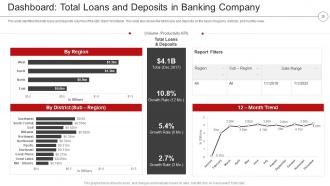
Slide 28: This slide identifies the total loans and deposits volumes of the ABC Bank Worldwide.
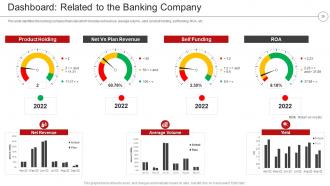
Slide 29: This slide identifies the banking company financials which includes net revenue, average volume, yield, etc.
Slide 30: This slide is titled as Additional Slides for moving forward.
Slide 31: This slide displays Icons for Digital Transformation in a Banking and Financial Services Company.
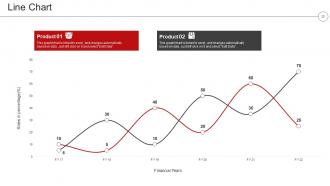
Slide 32: This slide describes Line chart with two products comparison.
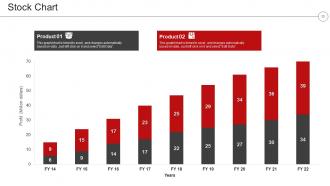
Slide 33: This slide presents Stock chart with two products comparison.
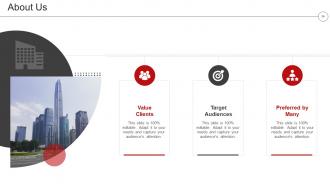
Slide 34: This is About Us slide to show company specifications etc.
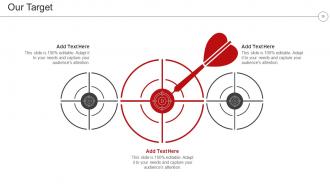
Slide 35: This is Our Target slide. State your targets here.
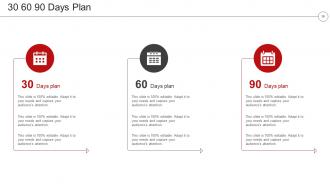
Slide 36: This slide provides 30 60 90 Days Plan with text boxes.
Slide 37: This slide showcases Magnifying Glass to highlight information, specifications, etc.
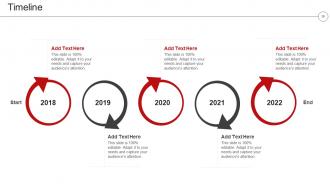
Slide 38: This is a Timeline slide. Show data related to time intervals here.
Slide 39: This slide shows Post It Notes. Post your important notes here.
Slide 40: This slide depicts Venn diagram with text boxes.
Slide 41: This is a Thank You slide with address, contact numbers and email address.
Digital Transformation In A Banking And Financial Services Company Case Competition Complete Deck with all 46 slides:
Use our Digital Transformation In A Banking And Financial Services Company Case Competition Complete Deck to effectively help you save your valuable time. They are readymade to fit into any presentation structure.






FAQs for Digital Transformation In A Banking And Financial Services Company Case
Honestly, get your leadership on board first - without their backing you're dead in the water. Budget matters too because this stuff gets expensive fast. Focus on one pilot project instead of going crazy trying to fix everything. Your team and culture shift are probably more important than whatever shiny new tech you're considering (people always forget this part). Data strategy needs some serious thought, and don't skip the cybersecurity basics. Oh, and figure out how new systems will actually play nice with what you've already got. Start small, see what works.
Track the obvious stuff first - cost savings, new revenue streams, lower expenses. But honestly? The harder-to-measure wins are often bigger. Think faster decisions, happier customers, more productive teams. Get your baseline numbers before you change anything, then check progress every quarter. Just heads up - digital transformation ROI is slow, usually takes over a year to really show. I'd pick maybe 3-5 metrics that actually matter to your specific business and don't get distracted by vanity metrics. The temptation to track everything is real but you'll just confuse yourself.
Honestly, leadership makes or breaks the whole thing. I've watched so many digital transformations crash because executives preached change but kept doing everything the old way. Your leaders need to actually use the new tools first - not just talk about them in meetings. Get them to communicate the vision clearly and fight for budget, sure. But here's what really matters: they have to model the behavior they want. Once key people start using new systems, everyone else follows. It's weird how much people watch what their bosses actually do versus what they say. Without that top-down buy-in, you'll hit walls everywhere.
Oh man, you're gonna hit so many roadblocks. Your team will push back hard - nobody likes change, even when the current system sucks. Budget's always tight too. Then there's the tech skills gap, which is honestly brutal right now. Don't even get me started on making legacy systems play nice with new stuff... it's like forcing a flip phone to run Instagram. Security concerns will come up every damn meeting. Plus picking the right tech feels impossible with a million options. Start with small pilots though, get the important people on board early, and seriously - train your team first or you're screwed.
So AI and IoT are like your best friends for going digital. They'll automate a ton of stuff and give you real-time insights so you can actually make good decisions quickly. Chatbots can handle customer service, predictive analytics does its magic, and IoT connects all your physical stuff to digital systems. You can literally monitor everything remotely now - it's crazy how much smoother operations get. My advice? Start with small pilot projects where things are already broken or annoying. Then just scale up whatever actually works instead of trying to do everything at once.
Skip the generic workshops - they're basically worthless. You want training that's actually tied to what people do every day. Create different learning paths for different roles, not some blanket approach. Get your early adopters involved as mentors since people trust their coworkers way more than some outside trainer. Focus on hands-on practice with the real tools they'll use. Oh, and definitely explain WHY you're making these changes, not just how to do them. Start small with pilot groups first - you'll catch issues before they blow up company-wide. That's saved my butt more times than I can count.
Dude, don't make the same mistake everyone else does - bake security right into your digital transformation instead of scrambling to add it later. Get a data governance framework sorted first (boring but necessary). Encrypt everything, use multi-factor auth everywhere, and audit regularly for holes. Train your people too because honestly, Karen from accounting will click on anything. Oh, and loop your security folks into the planning from the start. They'll catch stuff you'd never think of. Trust me, it's way cheaper than dealing with a breach later.
Digital transformation totally changes how customers deal with your business - and yeah, it's usually a good thing. Customers can get personalized stuff at scale, chat with bots for quick help, and handle things themselves through apps. They love faster responses and services that actually fit what they want. Plus the data you gather? It helps you figure out what they need before they even know it. Honestly, I'd start by looking at where customers currently touch your business - then see where digital tools could make things smoother or just way better.
Honestly, APIs and middleware are your best friends here - they're like translators between your old and new systems. Don't try to replace everything at once (I've seen that go horribly wrong). Figure out which legacy stuff is absolutely critical first. Map your data flows, get a decent integration platform, maybe look into cloud connectors if you're going the SaaS route. Oh, and definitely start with just one integration to test everything out. Once that's solid, you can scale up from there. It's way less stressful than the big bang approach.
Track both the tech stuff and business impact - uptime, how fast people adopt new tools, deployment speed. Then customer satisfaction, digital revenue, efficiency gains. But honestly? Most teams go overboard and track like 20 things. Total waste of time. Pick 5-7 metrics that actually matter for your goals. Build a dashboard that doesn't require a PhD to understand (seriously, keep it simple). Check it monthly, not every damn day or you'll drive yourself crazy. The key is connecting what you measure to what you're trying to achieve. Otherwise you're just collecting numbers for no reason.
Honestly, culture is everything when it comes to digital transformation. If people are scared of change or stuck in their old ways, you're screwed before you even start. New tech gets ignored. Projects die. It's frustrating as hell. But when teams actually want to try new things and aren't afraid to mess up? That's when the magic happens. Collaboration flows better too - which sounds cheesy but it's true. My advice? Figure out what's blocking people first. Maybe they hate change, maybe departments don't talk. Fix that cultural stuff before you throw fancy software at the problem.
Target crushed it with their buy-online-pickup-in-store thing - so smooth now. JPMorgan went hard on mobile banking plus AI fraud stuff. Kaiser Permanente totally redid their patient experience around digital (COVID really pushed that). Oh, and GE added IoT sensors to manufacturing equipment for real-time tracking. Honestly, healthcare's been the most interesting to watch change. The trick isn't trying to digitize everything at once though. Just pick whatever's annoying your customers most and fix that first. You'll see way better results.
Honestly, going digital can cut your environmental impact way more than people realize. You'll ditch tons of paper waste and travel less since everyone can collaborate remotely. Data analytics helps optimize energy use too - it's pretty cool how much you can streamline once you see the actual numbers. Cloud servers are definitely more efficient than running your own setup. Smart sensors let you catch waste as it happens instead of finding out months later. The trick is replacing old resource-heavy stuff rather than just piling more tech on top. Otherwise you're kind of missing the point.
Honestly, customer feedback is everything when you're figuring out what to build first. I'd start with your biggest customers - just ask them what's driving them crazy right now. Map those complaints directly to your digital roadmap because that's where you'll actually make a difference. Don't be like those companies that spend months building some fancy feature nobody wanted (we've all seen that disaster). Focus on the stuff that's genuinely breaking their experience. Short surveys work great, or even quick calls if you can swing it. The goal is finding where they're hitting walls so you can knock those down first.
Honestly, just pick one or two things that are actually driving you crazy and fix those first. Most small businesses go way overboard trying to automate everything at once - total budget killer. Maybe grab a free CRM or one of those social media schedulers. Cloud stuff is pretty solid since you're not dropping huge money upfront. I'd probably start with whatever repetitive task makes you want to scream, then see if it actually helps before moving on. The whole "measure first, then add more" thing sounds boring but it'll save you from buying a bunch of tools you'll never use.
-
These stunning templates can help you create a presentation like a pro.
-
I have just started downloading templates for my presentations and I must say this is a great design. It helped accelerate my presentation design process and made it more visually appealing.