


Digital transformation of client onboarding process powerpoint presentation slides
The digital transformation of the client onboarding process can be a game-changer for businesses. It can streamline the entire process, from initial contact to signing the contract. Digital transformation can also help businesses keep track of their clients' progress and performance, making it easier to identify areas where improvements can be made. In addition, digital transformation can help businesses save time and money by automating repetitive tasks. Implementing a digital transformation of the client onboarding process can help businesses improve their bottom line and better serve their clients. SlideTeam’s library of professionally designed PowerPoint templates can help you get up and running quickly. We have a wide variety of templates that are perfect for any type of business or organization, from start-ups to large enterprises. Our templates are easy to use and customizable, so you can make them your own. Plus, they come with the expert support you need to ensure a successful launch. Download our digital transformation ppt templates now and get started on transforming your business today.
























You must be logged in to download this presentation.


Do you want to remove this product from your favourites?
PowerPoint presentation slides
This complete deck covers various topics and highlights important concepts. It has PPT slides which cater to your business needs. This complete deck presentation emphasizes Digital Transformation Of Client Onboarding Process Powerpoint Presentation Slides and has templates with professional background images and relevant content. This deck consists of total of fifty four slides. Our designers have created customizable templates, keeping your convenience in mind. You can edit the colour, text and font size with ease. Not just this, you can also add or delete the content if needed. Get access to this fully editable complete presentation by clicking the download button below.

People who downloaded this PowerPoint presentation also viewed the following :
Content of this Powerpoint Presentation
Slide 1: This title slide introduces the Digital Transformation of the Client Onboarding Process. Add the name of your company here.
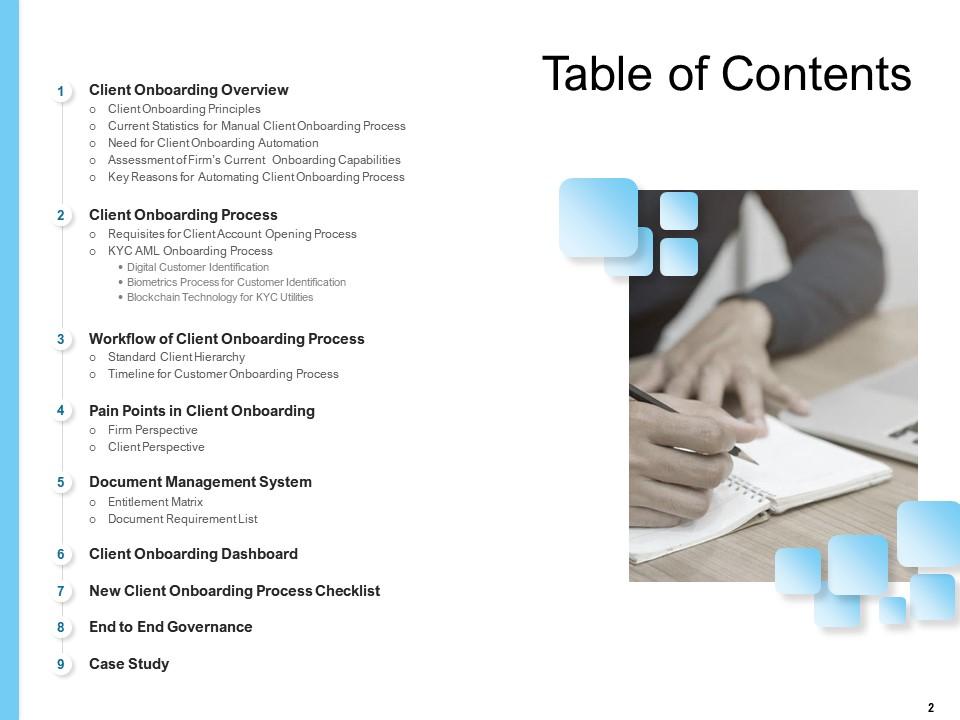
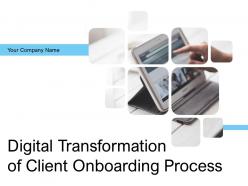
Slide 2: This slide contains the Table of Contents. It includes - Client Onboarding Overview, Client Onboarding Process, Workflow of Client Onboarding Process, etc.
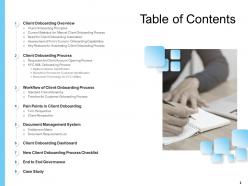
Slide 3: This is a table of content slide showing the Client Onboarding Overview.
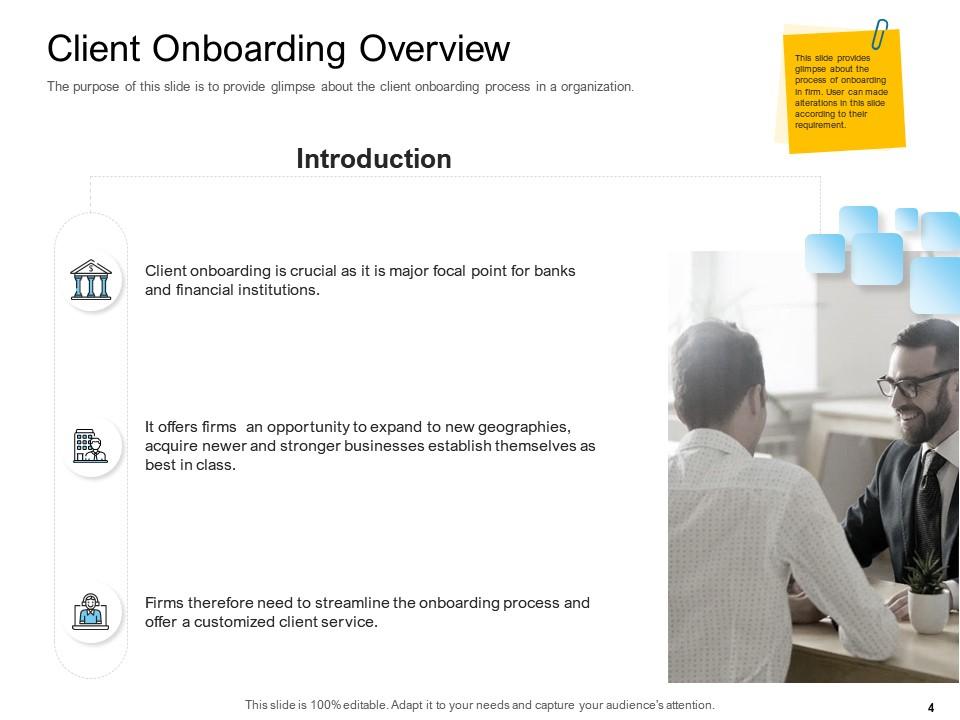
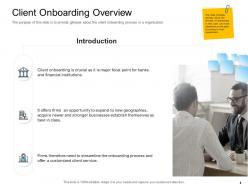
Slide 4: This slide presents the Client Onboarding Overview.
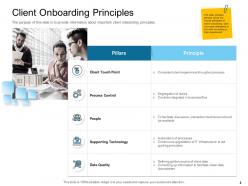
Slide 5: This slide presents the Client Onboarding Principles.
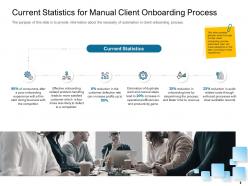
Slide 6: This slide presents the Current Statistics for Manual Client Onboarding Process.
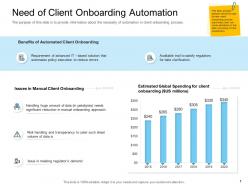
Slide 7: This slide presents the Need of Client Onboarding Automation.
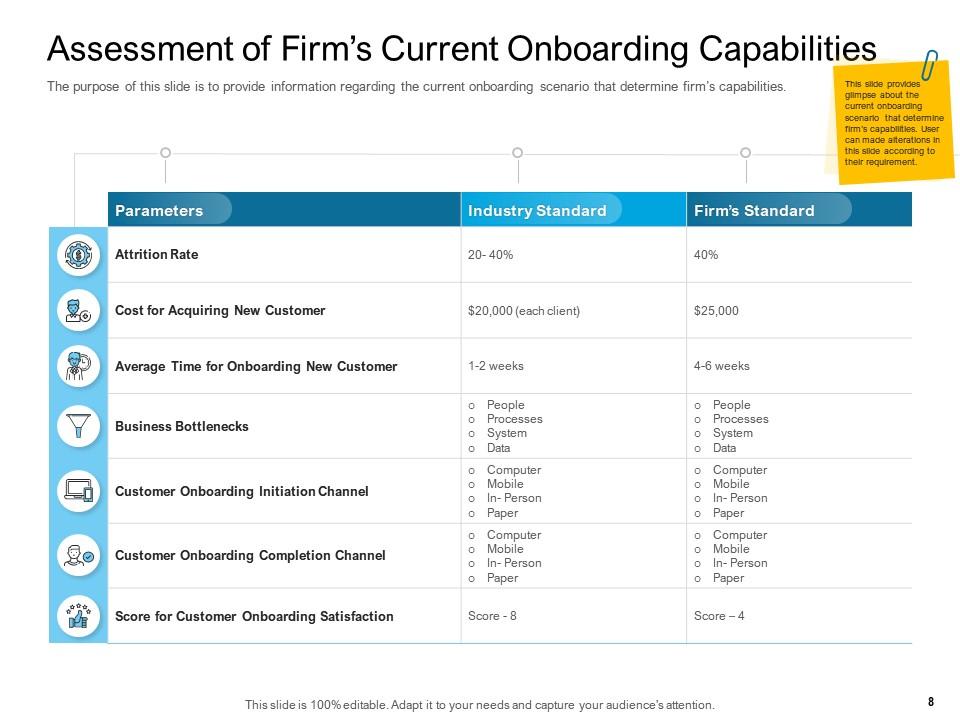
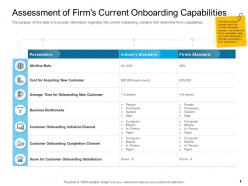
Slide 8: This slide presents the Assessment of the Firm’s Current Onboarding Capabilities.
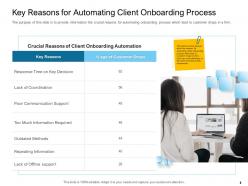
Slide 9: This slide presents the Key Reasons for Automating Client Onboarding Process.
Slide 10: This is a table of content slide showing the Client Onboarding Process.
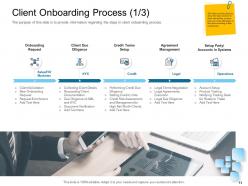
Slide 11: This slide presents the Client Onboarding Process (1/3). It provides information regarding the steps in the client onboarding process.
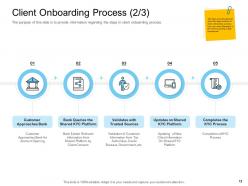
Slide 12: This slide presents the Client Onboarding Process (2/3). It provides a glimpse of the steps involved in the client onboarding process.
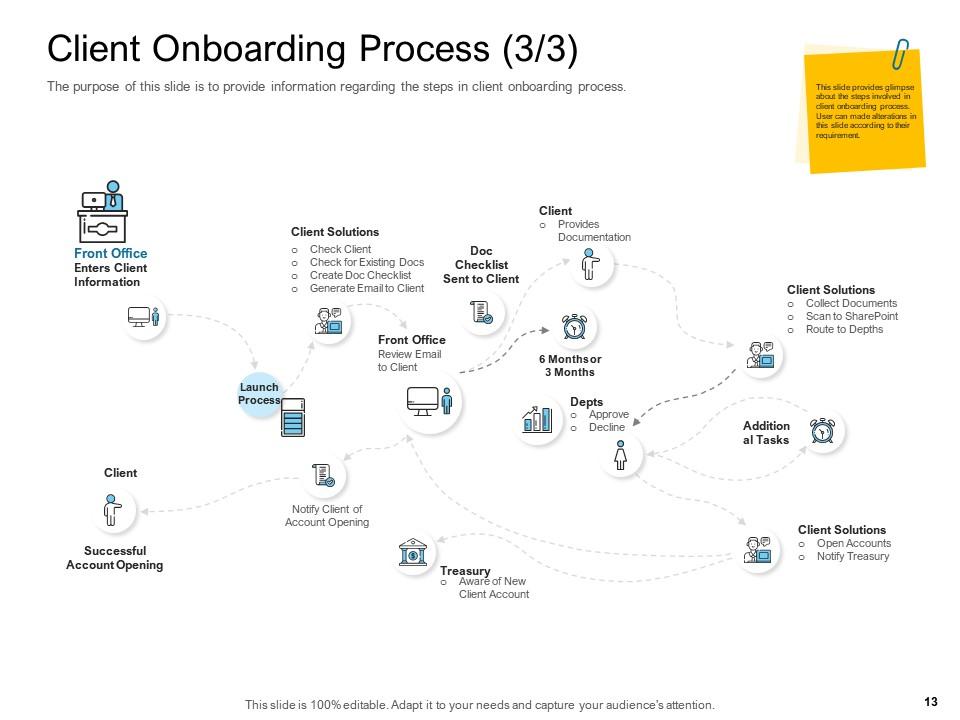
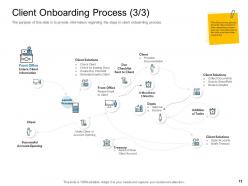
Slide 13: This slide presents the Client Onboarding Process (3/3). It provides information regarding the steps in the client onboarding process.
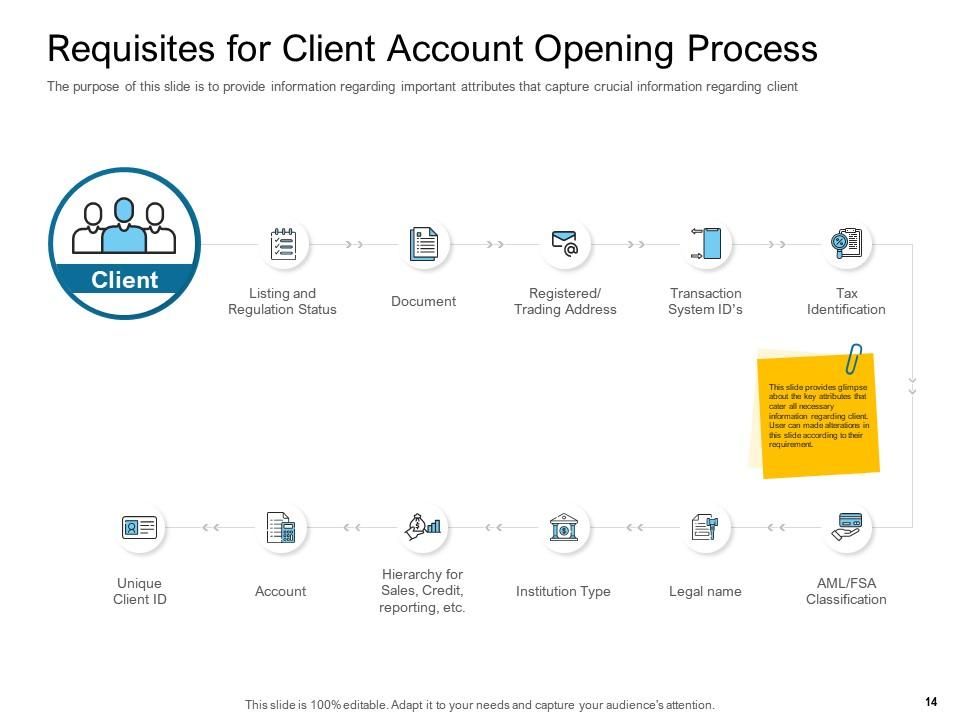
Slide 14: This slide presents the Requisites for Client Account Opening Process.
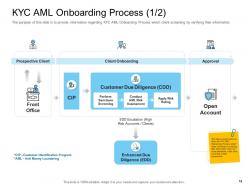
Slide 15: This slide presents the KYC AML Onboarding Process (1/2). It provides a glimpse about the KYC AML Onboarding Process which clients screening by verifying their information.
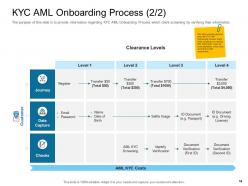
Slide 16: This slide presents the KYC AML Onboarding Process (2/2). It provides information regarding KYC AML Onboarding Process which clients screening by verifying their information.
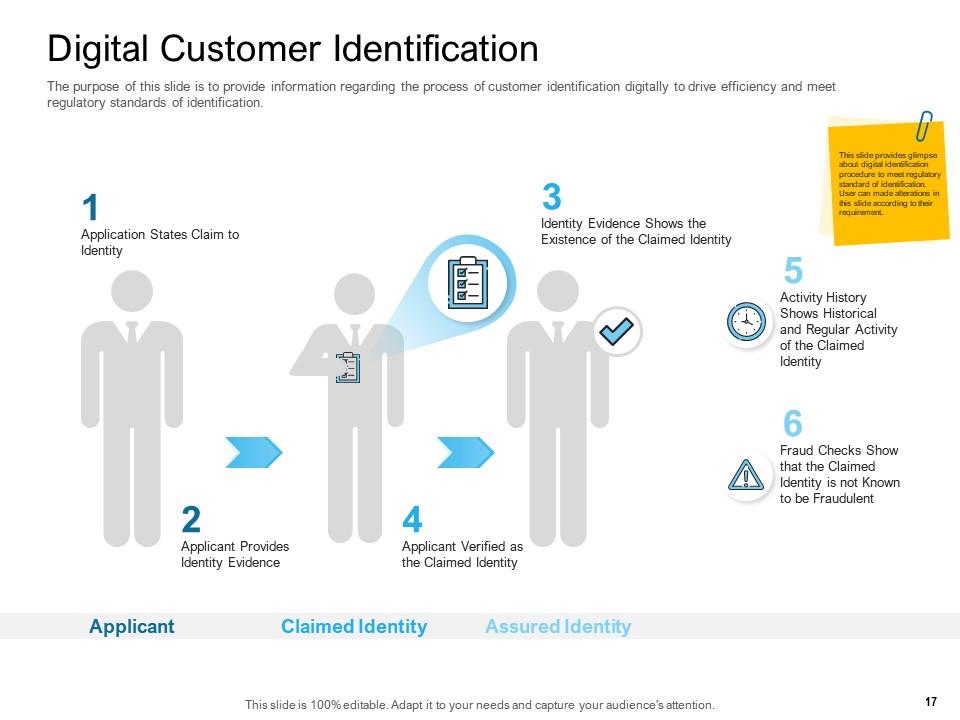
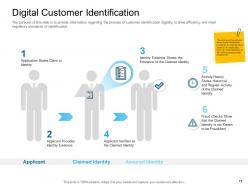
Slide 17: This slide presents the Digital Customer Identification.
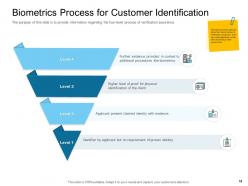
Slide 18: This slide presents the Biometrics Process for Customer Identification.
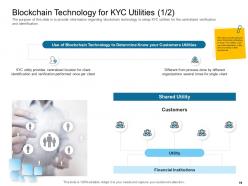
Slide 19: This slide presents the Blockchain Technology for KYC Utilities (1/2). It provides a glimpse of blockchain technology to set up KYC utilities.
Slide 20: This slide presents the Blockchain Technology for KYC Utilities (2/2). It provides information regarding blockchain technology to set up KYC utilities for centralized verification and identification.
Slide 21: This is a table of content slide showing the Workflow of the Client Onboarding Process.
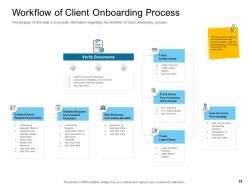
Slide 22: This slide presents the Workflow of Client Onboarding Process.
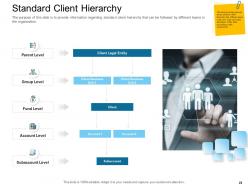
Slide 23: This slide presents the Standard Client Hierarchy.
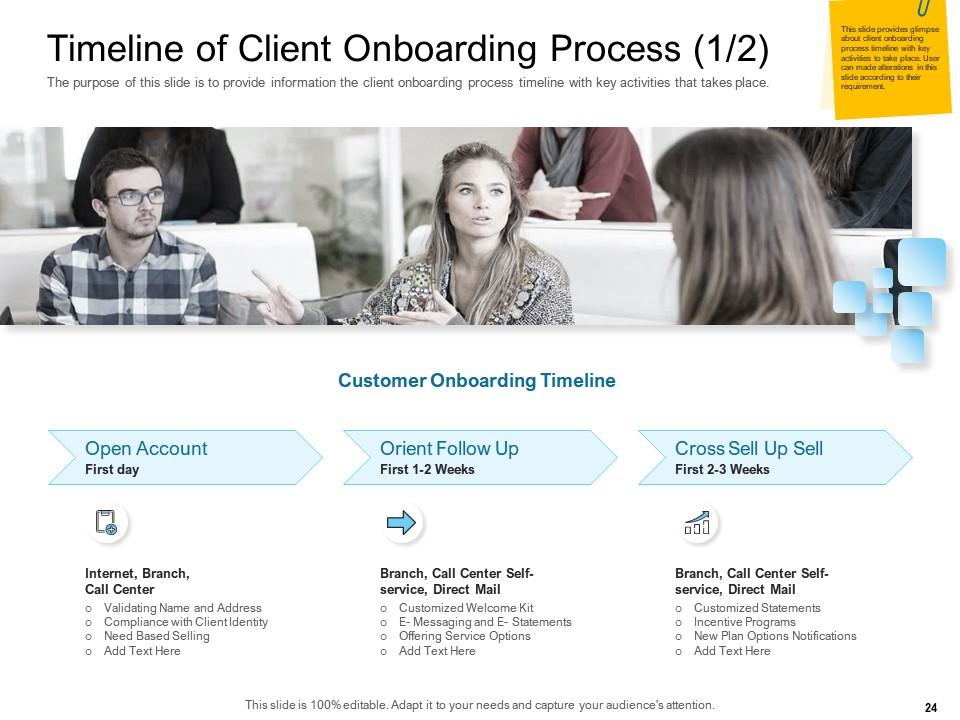
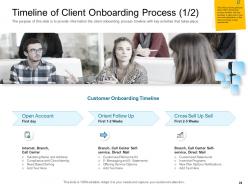
Slide 24: This slide presents the Timeline of the Client Onboarding Process (1/2). It provides information on the client onboarding process timeline with key activities that takes place.
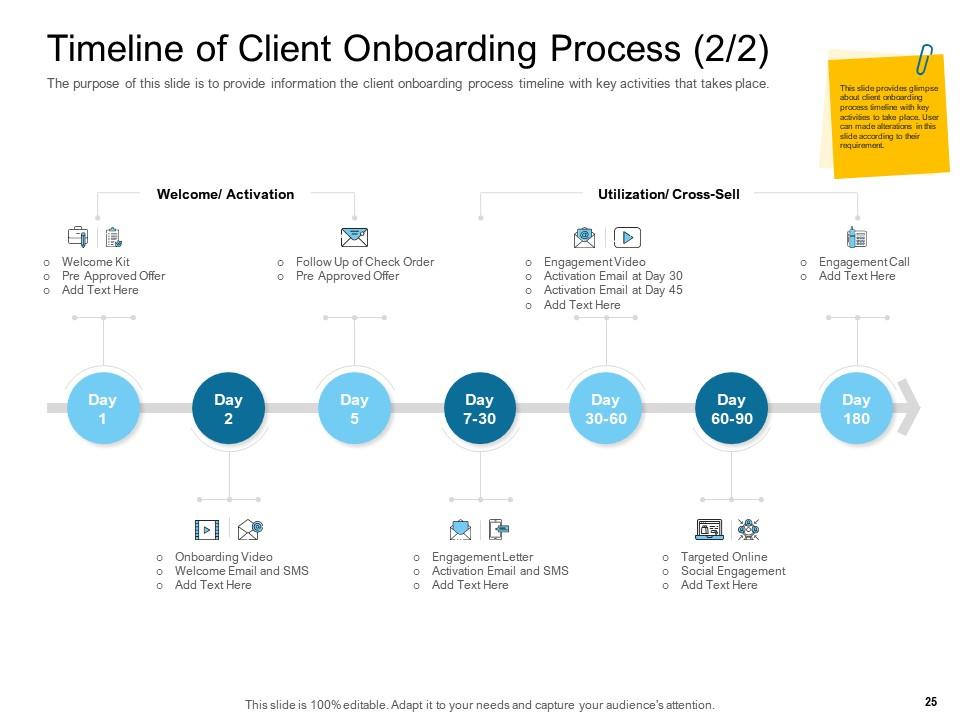
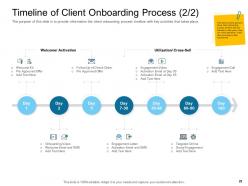
Slide 25: This slide presents the Timeline of the Client Onboarding Process (2/2). It provides a glimpse of the client onboarding process timeline with key activities to take place.
Slide 26: This is a table of content slide showing the Pain Points in Client Onboarding.
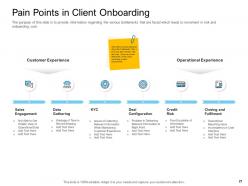
Slide 27: This slide presents the Pain Points in Client Onboarding. It provides a glimpse of the bottlenecks that a firm faces that increases risk and cost.
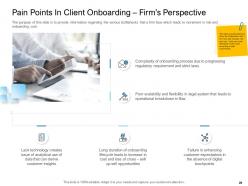
Slide 28: This slide presents the Pain Points In Client Onboarding – Firm’s Perspective.
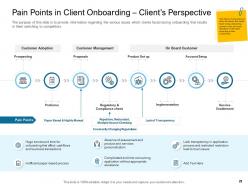
Slide 29: This slide presents the Pain Points in Client Onboarding – Client’s Perspective.
Slide 30: This is a table of content slide showing the Document Management System.
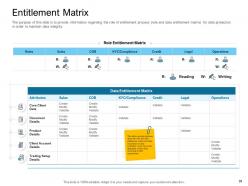
Slide 31: This slide presents the Entitlement Matrix.
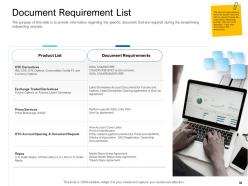
Slide 32: This slide presents the Document Requirement List.
Slide 33: This is a table of content slide showing the Client Onboarding Dashboard.
Slide 34: This slide presents the Client Onboarding Dashboard (1/3). It provides a glimpse of the client onboarding dashboard which will determine the performance of the client onboarding process.
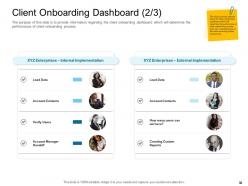
Slide 35: This slide presents the Client Onboarding Dashboard (2/3). It provides information regarding the client onboarding dashboard which will determine the performance of the client onboarding process.
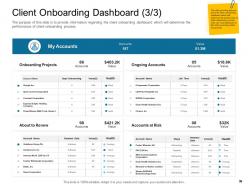
Slide 36: This slide presents the Client Onboarding Dashboard (3/3). It provides a glimpse of the client onboarding dashboard which will determine the performance of the client onboarding process.
Slide 37: This is a table of content slide showing the New Client Onboarding Process Checklist.
Slide 38: This slide presents the New Client Onboarding Process Checklist. It provides information regarding the checklist that will check the progress of the onboarding process of new clients.
Slide 39: This is a table of content slide showing the End-to-End Governance.
Slide 40: This slide presents End-to-End Governance. It provides a glimpse regarding the end-to-end governance in the onboarding process.
Slide 41: This is a table of content slide showing the Case Study.
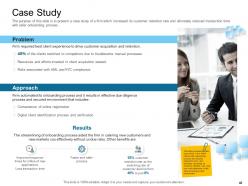
Slide 42: This slide presents the Case Study. It presents a case study of a firm that increased its customer retention rate and ultimately reduced transaction time with the safer onboarding process.
Slide 43: This is the Icons Slide for Digital Transformation of Client Onboarding Process.
Slide 44: This slide presents the Additional Slides.
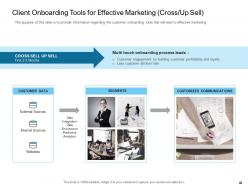
Slide 45: This slide presents the Client Onboarding Tools for Effective Marketing (cross/up-sell).
Slide 46: This is a slide with a 30 60 90 Days Plan to set goals for these important intervals.
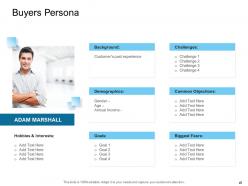
Slide 47: This slide presents the Buyers Persona.
Slide 48: This slide contains the information about the company aka the ‘About Us’ section. This includes the Value Clients, the Target Audience, and Premium Services.
Slide 49: This slide provides the Mission for the entire company. This includes the vision, the mission, and the goal.
Slide 50: This slide shows the members of the company team with their name, designation, and photo.
Slide 51: This slide presents the Comparison between the percentages of users of various social media.
Slide 52: This slide is a Roadmap template to showcase the stages of a project, for example.
Slide 53: This slide is a Timeline template to showcase the progress of the steps of a project with time.
Slide 54: This is a Thank You slide where details such as the address, contact number, email address are added.
Digital transformation of client onboarding process powerpoint presentation slides with all 54 slides:
Use our Digital Transformation Of Client Onboarding Process Powerpoint Presentation Slides to effectively help you save your valuable time. They are readymade to fit into any presentation structure.
-
Page:
- You're currently reading page 1
- Page 2
-

-
Excellent work done on template design and graphics.
-
Visually stunning presentation, love the content.
-
Wonderful templates design to use in business meetings.
-
Best Representation of topics, really appreciable.
-
Great experience, I would definitely use your services further.
-
Appreciate the research and its presentable format.
-
Great product with highly impressive and engaging designs.
-
Good research work and creative work done on every template.
-
Editable templates with innovative design and color combination.
-
Appreciate the research and its presentable format.
-
Page:
- You're currently reading page 1
- Page 2
-
