


Due Diligence Powerpoint Presentation Slides




Try Before you Buy Download Free Sample Product
 Impress Your
 Audience
 100%
100% Editable
 Save Hours
 of Time


Our Due Diligence Powerpoint Presentation Slides enable achievement of dreams. You will find them empowering contributors.
People who downloaded this PowerPoint presentation also viewed the following :
Content of this Powerpoint Presentation
Slide 1: This slide introduces Due Diligence. State Your Company Name and begin.
Slide 2: This slide shows Due Diligence Outline with these sections- Financial Due Diligence, Technology/Intellectual Property, Customer/Sales, Strategic Fit with Buyer, Material Contract, Employee Management Issues, Litigation, Taxation, Insurance, Antitrust & Regulatory Issues, Environmental Issues & General Business Affairs, Marketing & Business Development, Competitive Analysis, Due Diligence Summary.
Slide 3: This slide presents Financial Due Diligence. Add your details and make use of it.
Slide 4: This slide showcases P&L - KPIs with four of the features we have put forward.
Slide 5: This slide presents P&L - KPIs (Tabular Form). You can add the figures in this and make use of it.
Slide 6: This slide showcases Balance Sheet - KPIs. Add the figures and make use of it.
Slide 7: This slide presents Balance Sheet - KPIs (Tabular Form). You can use as per your requirement.
Slide 8: This slide shows Balance Sheet - KPIs (Tabular Form) Cont. You can add the data or information and make use.
Slide 9: This slide presents Cash Flow Statement - KPIs wiṭh these four graph it is showing.
Slide 10: This slide showcases Cash Flow Statement - KPIs (Tabular Form). You can add the information and use ir accordingly.
Slide 11: This slide shows Financial Projections – P&L which further showing the income statement and other parameters.
Slide 12: This slide presents Financial Projections – Balance Sheet. You can add the data and best use of it.
Slide 13: This slide showcases Key Financial Ratios (1/2) with these key points it is showing.
Slide 14: This slide presents Key Financial Ratios (2/2) with these four points- Liquidity, Profitability, Activity, Solvency.
Slide 15: This slide showcases Liquidity Ratios with these two parameters- Current Ratio: Current Assets/ Current liabilities, Quick Ratio: Current Assets/ Current liabilities.
Slide 16: This slide presents Profitability Ratios which further showcases - Net Profit Ratio: Net Profit after Tax/ Net Sales, Gross Profit Ratio: Gross Profit / Net Sales.
Slide 17: This slide showcases Activity Ratios with these two parameters- Inventory Turnover: COGS / Avg. Inventory, Receivables Turnover: Net Credit Sales / Average Accounts Receivable.
Slide 18: This slide presents Solvency Ratios with these two samples such as- Debt-Equity Ratio: Total Liabilities ÷ Total Equity, Time Interest Earned Ratio: EBIT/ Interest Expense.
Slide 19: This slide showcases Conclusion with which you can use it for the statements.
Slide 20: This slide showcases Technology/Intellectual Property. you can add your data and make use of it.
Slide 21: This slide presents Technology/Intellectual Property with these eight parameters.
Slide 22: This slide showcases Customers/Sales with which you can add and use it accordingly.
Slide 23: This slide presents Top Customers & Revenue.
Slide 24: This slide showcases Customer Concentration Issues/Risk with these three factors- Analysis, Action, Control.
Slide 25: This slide shows Customer Satisfaction which is showing journey of customer in an year.
Slide 26: This slide presents Other Customer Focus Areas. You can add the area and make use of it.
Slide 27: This slide showcases Strategic Fit With Buyer with a imagery background.
Slide 28: This slide shows Business Compatibility with the listed factors we have mentioned.
Slide 29: This slide showcases Financial Compatibility with these characteristics.
Slide 30: This slide presents Material Contract with a imagery background.
Slide 31: This slide displays Material Contract Checklist with some of the factors we need to add.
Slide 32: This slide shows Employee Management Issues with an imagery background.
Slide 33: This slide presents Management Organizational Chart. Add the data in this and make use of it.
Slide 34: This slide showcases Key Issues with some of the four parameters.
Slide 35: This slide presents Litigation which further presents imagery background.
Slide 36: This slide shows Litigation Timeline with milestone and event.
Slide 37: This slide showcases Litigation And Judicial Activities with these six stages- International Affairs & Commerce, Correctional Activities, Natural Resources, Litigation And Judicial Activities, Environmental Management, Disaster Management.
Slide 38: This slide Litigation KPIs. Add the features and make the best use of it.
Slide 39: This slide presents Taxation.
Slide 40: This slide showcases Taxation Checklist with some of the factors we have listed.
Slide 41: This slide presents Insurance, Antitrust & Regulatory Issues.
Slide 42: This slide showcases Antitrust and Regulatory Issues with three of the we have mentioned.
Slide 43: This slide shows Insurance Checklist with some of the points we have taken.
Slide 44: This slide presents Environmental Issues & General Business Affairs.
Slide 45: This slide showcases Environmental Issues. Add the one of those you want.
Slide 46: This slide presents General Corporate Matters with these four we have listed- List of current officers and directors, List of subsidiaries and their respective charter documents, List of “No-shop” or exclusivity obligations, Lists of all security holders.
Slide 47: This slide showcases Related Party Transactions with the three paramets we have proposed.
Slide 48: This slide presents Governmental Regulations, Filings, And Compliance With Laws.
Slide 50: This slide showcases Yearly Production with for products comaprison.
Slide 51: This slide presents Marketing & Business Development.
Slide 52: This slide showcases Business Development Process with these four stages.
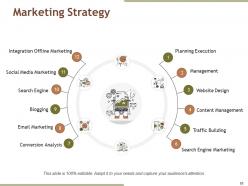
Slide 53: This slide showcases Marketing Strategy which further showing some of the important points.
Slide 54: This slide presents Competitive Analysis with an imagery background.
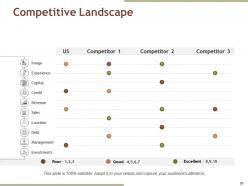
Slide 55: This slide showcases Competitive Landscape.
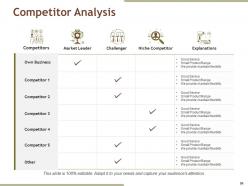
Slide 56: This slide presents Competitor Analysis. You can add the data in the table and make use of it.
Slide 57: This slide shows Summary with a imagery background.
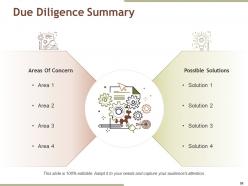
Slide 58: This slide presents Due Diligence Summary.
Slide 59: This slide is a Coffee Break image for a halt.
Slide 60: This slide forwards to Charts & Graphs.
Slide 61: This slide shows a Stacked bar graph in terms of percentage and years for comparison of Product 01, Product 02, Product 03 etc.
Slide 62: This slide shows a Stacked Line graph in terms of percentage and years for comparison of Products.
Slide 63: This slide presents Donut Pie Chart. You can compare the percentage through this.
Slide 64: This slide is titled Additional Slides.
Slide 65: This slide represents Our Mission. State your mission, goals etc.
Slide 66: This slide showcases Our Team with Name and Designation to fill.
Slide 67: This slide helps show- About Our Company. The sub headings include- Creative Design, Customer Care, Expand Company .
Slide 68: This slide is titled as Financials. Show finance related stuff here.
Slide 69: This slide shows Comparison of number of users and Time.
Slide 70: This slide showcases a Puzzle with imagery.
Slide 71: This slide shows Target image with text boxes.
Slide 72: This slide shows a Mind map for representing entities.
Slide 73: This is a Venn diagram slide to show information etc.
Slide 74: This slide displays a Magnifying Glass with icon imagery.
Slide 75: This is a Bulb or Idea slide to state a new idea or highlight specifications/information etc.
Slide 76: This is a Thank You slide with image.
Due Diligence Powerpoint Presentation Slides with all 76 slides:
Take the cue from our Due Diligence Powerpoint Presentation Slides. They will help your thoughts emanate.
-
Effective Due Diligence Checklist for Businesses
-
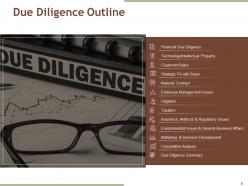
Comprehensive Due Diligence Outline for Business Analysis
-
Essential Guide to Financial Due Diligence
-
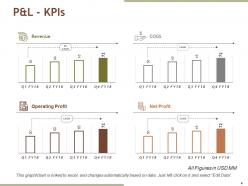
Profit and Loss KPIs Overview for Fiscal Year 2018
-
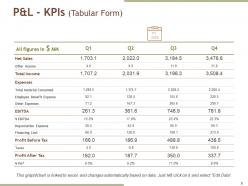
Annual P&L KPIs for FY 2018: Quarterly Financial Performance Overview
-
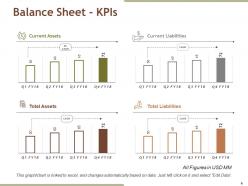
Key Performance Indicators: Balance Sheet Analysis of Current Assets and Liabilities
-
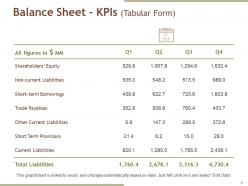
Detailed Balance Sheet KPIs for FY 2018 in Tabular Format
-
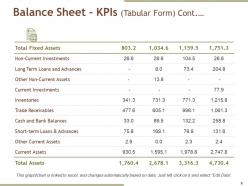
Comprehensive Balance Sheet KPIs Overview in Tabular Format
-

Cash Flow Statement Analysis: Key Performance Indicators (KPIs)
-
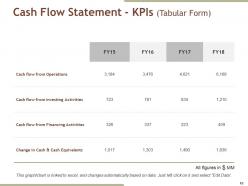
Cash Flow Statement KPIs for FY15 to FY18: Financial Analysis
-
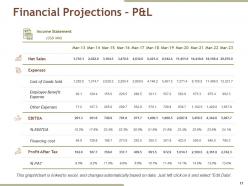
Financial Projections: Comprehensive Income Statement Analysis (USD MM)
-
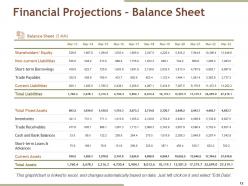
Comprehensive Financial Projections: Balance Sheet Overview
-
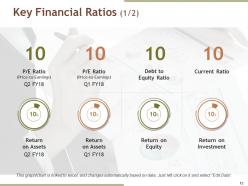
Understanding Key Financial Ratios for Effective Analysis
-
Understanding Key Financial Ratios: Liquidity, Profitability, Activity, and Solvency
-
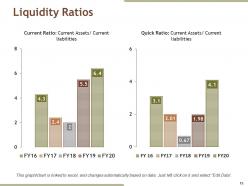
Comparative Analysis of Liquidity Ratios Over Fiscal Years
-
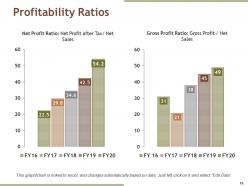
Understanding Profitability Ratios: Net and Gross Profit Analysis (FY 2016-2020)
-
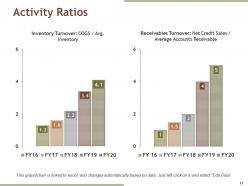
Key Activity Ratios: Inventory and Receivables Turnover Trends
-
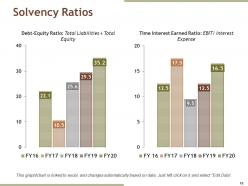
Understanding Solvency Ratios: Debt-Equity and Time Interest Earned
-
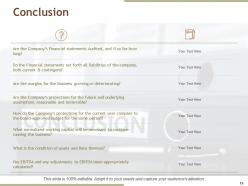
Key Questions for Assessing Company Financial Health
-

Understanding Technology and Intellectual Property Essentials
-
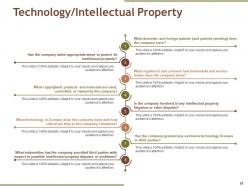
Understanding Technology and Intellectual Property Management
-

Enhancing Customer Engagement and Sales Strategies
-
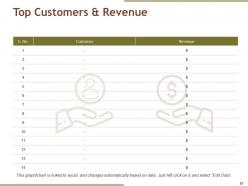
Overview of Top Customers by Revenue
-
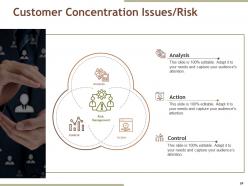
Addressing Customer Concentration Risks: Analysis, Control, and Action Strategies
-
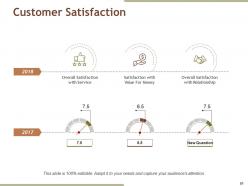
Customer Satisfaction Overview: Service, Value, and Relationship Ratings (2017-2018)
-
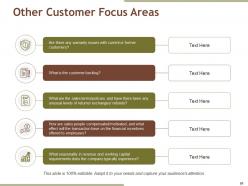
Key Customer Focus Areas for Business Improvement
-

Strategic Alignment with Buyers: Analyzing Fit and Engagement
-
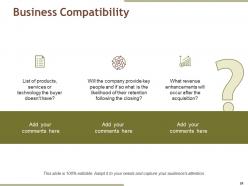
Evaluating Business Compatibility for Acquisitions
-
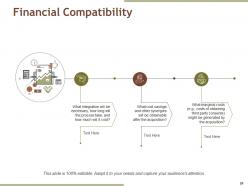
Financial Compatibility Analysis for Acquisitions
-

Essential Elements of a Material Contract with Charts and Documents
-
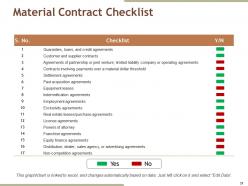
Comprehensive Material Contract Checklist for Businesses
-
Addressing Employee Management Issues in Business
-
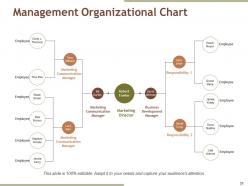
Management Organizational Chart Displaying Roles and Responsibilities
-
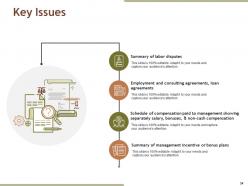
Key Issues in Employment and Compensation Overview
-

Key Elements of Litigation Process
-
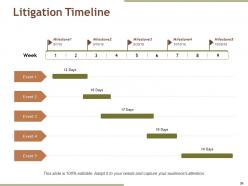
Comprehensive Litigation Timeline with Event Durations
-
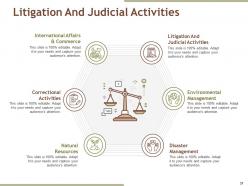
Overview of Litigation and Judicial Activities for Effective Management
-
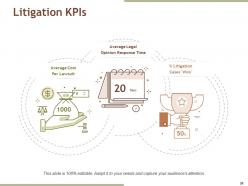
Key Litigation Performance Indicators (KPIs): Cost, Time, and Success Rates
-

Understanding Taxation: Key Concepts and Analysis
-
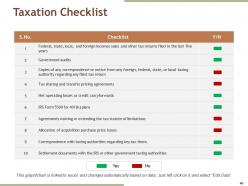
Comprehensive Taxation Checklist for Filing and Compliance
-
Exploring Insurance, Antitrust, and Regulatory Challenges
-
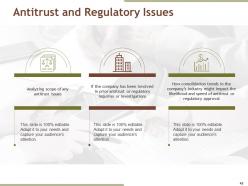
Understanding Antitrust and Regulatory Issues in Business**
-
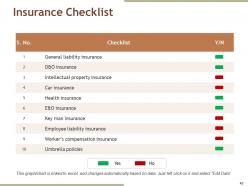
Essential Insurance Checklist for Businesses
-
Environmental Issues and Business Affairs: A Visual Overview
-
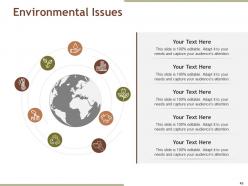
Key Environmental Issues: Understanding and Addressing Global Challenges
-
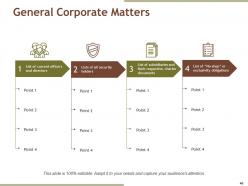
Comprehensive Overview of Corporate Governance Components
-
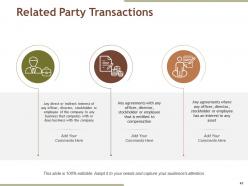
Understanding Related Party Transactions
-
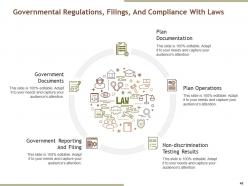
Understanding Government Regulations and Compliance Processes
-

Essential Documents in Property Due Diligence
-
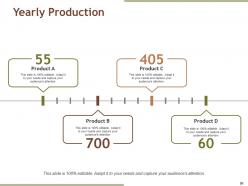
Yearly Production Statistics for Products A, B, C, and D
-

Effective Marketing and Business Development Strategies
-
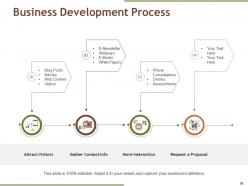
Effective Business Development Process Flowchart
-
Comprehensive Marketing Strategy Framework
-

Effective Competitive Analysis Strategies for Business Growth
-
Analyzing the Competitive Landscape: Key Metrics for Market Comparison
-
Comprehensive Competitor Analysis Template for Business Strategy
-

Business Report Summary with Charts and Notes
-
Comprehensive Due Diligence Summary with Solutions
-

Enjoy a Quick Coffee Break: Refresh and Recharge
-

Visualizing Data: Essential Charts and Graphs for Analysis
-

Stacked Bar Chart of Product Sales by Quarter
-

Monthly Profit Comparison for Product 01 and Product 02
-
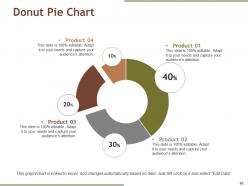
Editable Donut Pie Chart for Product Distribution Analysis
-

Enhance Your Presentations with Additional Slides
-

Our Mission: Driving Success Through Strategic Vision
-

Meet Our Team: Leaders in Management, Editing, and Innovation
-

About Us: Our Value, Preferences, and Target Audiences
-
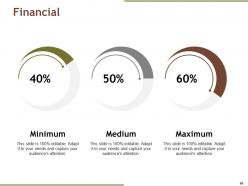
Financial Performance Metrics Visualization
-
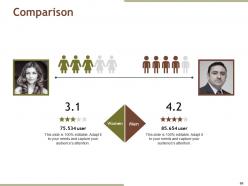
Gender Comparison: User Ratings for Men and Women
-
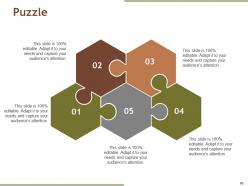
Editable Puzzle Slide Design for Presentations
-
Effective Targeting Strategies for Engaging Audiences
-

Creative Mind Map Template for Effective Brainstorming
-
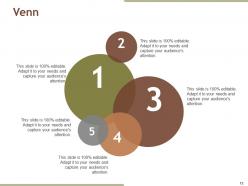
Editable Venn Diagram for Visual Data Representation
-
Using a Magnifying Glass to Focus on Important Details
-
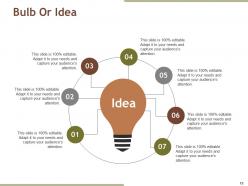
Creative Idea Generation Flowchart with Bulb Illustration
-

Contact Information and Gratitude Layout
FAQs for Due Diligence
Start with financials - audited statements, tax returns, cash flows. Legal stuff comes next: contracts, any lawsuits, IP rights. Operations matter too - who are the key people, how concentrated are customers, supply chain issues. Market analysis is honestly where I see people mess up the most. Check out competitors, growth trends, all that. Regulatory compliance depends on what industry you're dealing with. A tech startup's gonna need totally different scrutiny than some manufacturing business. Grab a standard template but don't be afraid to customize it based on deal size and sector.
Look, it really comes down to what you're trying to accomplish and what could blow up the deal. Buying a whole company? You'll want financial, legal, and operational reviews at bare minimum. Just partnering or investing? Focus on what actually matters - like IP stuff for tech deals or environmental issues if there's manufacturing involved. Most deals honestly work better when you check multiple areas since problems tend to be connected anyway. I'd start by listing your biggest worries and potential dealbreakers, then build your scope around those. Better to look at too much upfront than miss something important.
Dude, financial analysis is where you figure out if you're buying something solid or total garbage. Look at their cash flow, debt, and how they've been doing revenue-wise over time. Compare their numbers to what other companies in that space are pulling - gives you way better perspective. This step kills more deals than anything else, but also where you find the gems. Don't just trust what management says either, the numbers don't lie. You want to see the actual business health, not just this quarter's pretty picture.
Start with the boring stuff - financial audits and legal reviews to spot any sketchy business in their books. Supply chain issues and key person risks matter too, honestly more than people think. Check their reputation online because one bad viral moment can kill everything. Talk to their employees and customers if you can swing it - that's where you'll get the real dirt. Market analysis helps you see what threats they're actually facing. Oh, and build a risk matrix to rank everything you find, then work those concerns into your valuation.
Start with the big stuff - corporate formation docs, shareholder agreements, major customer/supplier contracts. IP is critical, especially patents and trademarks. Employment agreements matter too. Honestly, litigation files can bite you if you miss them - I've seen deals go sideways over that. Regulatory licenses and permits are industry-specific but super important. Make a document request list upfront. For smaller deals, you don't need to dig into every tiny vendor contract. Focus your energy on what could actually kill the deal.
Dude, you'll save so much time if you automate the boring stuff first - document collection, data checks, basic risk scoring. AI can rip through thousands of docs in minutes instead of your team spending days on it. Virtual data rooms work great for sharing files securely too. Pick something that plays nice with whatever systems you're already using though, because nobody wants to remember 15 different passwords. Oh and those workflow tools with built-in checklists? Total game changer for keeping everyone on schedule. I'd start with just document management and build from there.
Dude, don't rush the timeline even when everyone's breathing down your neck. Management will give you this polished presentation, but you gotta dig into the actual numbers yourself. Talk to customers and suppliers too - not just the executives doing their whole song and dance. Here's the thing that bites people: confirmation bias. You'll only hunt for stuff that backs up what you already think about the deal. Regulatory issues are brutal if you miss them. Honestly, just make a solid checklist from day one and actually follow it. I know it sounds boring but it saves your ass later.
Think of due diligence as collecting your best cards for negotiation. Find financial problems or legal mess? Perfect - now you can push for a lower price or make the seller keep those risks. Environmental issues work great too. I've seen deals where buyers found sketchy accounting and knocked 15% off the valuation. Don't go crazy though and nitpick every tiny thing or you'll just piss people off. Pick your battles with the stuff that actually matters. Use the big findings to restructure terms in your favor, or honestly just bail if it's too messy.
Honestly, cultural fit is what kills most mergers even when the money makes sense. Two companies can look perfect on spreadsheets, but if their teams work totally differently? You're screwed. Different communication styles, how they make decisions, even basic daily routines - it all matters way more than people think. I've watched deals that seemed bulletproof completely implode because nobody checked if the actual workers would mesh. Employee turnover goes crazy during these transitions. Don't just meet with executives either. Spend real time with their regular staff - that's where you'll see how they really operate day-to-day.
Okay so first thing - figure out what regulations actually apply to their industry. Then dig into their licenses and permits yourself, don't just trust what they tell you. I mean, actually look at the compliance docs, audit reports, all that boring stuff. Trust me, I've watched deals completely blow up because people got lazy here. Also check if there's any new regulations coming down the pipeline that'll hit them later. Oh and one more thing - be systematic about this whole process instead of just crossing your fingers and hoping nothing's wrong.
Commercial DD is all about market validation - does anyone actually want this thing you're buying? You're checking customer demand, competition, pricing strength, growth runway. Operational DD asks if the company can deliver without falling apart. Management quality, processes, tech systems, org structure - the nuts and bolts stuff. Honestly, I think of it as "can we win the market?" versus "can we actually run this place?" Both matter obviously, but you'll focus more on one depending if you're chasing growth or steady cash flow.
Honestly, you gotta do some detective work here. Background checks and litigation searches are your starting point - dig up any sketchy stuff. Reference calls with former colleagues or investors are where you'll get the real tea, especially off the record. LinkedIn's actually pretty clutch for mapping out their network and seeing how their career actually played out. Check industry publications too, go back a few years. Coffee chats with people who've worked with them before are perfect - way more casual than formal references. The whole thing is about getting info from multiple angles instead of just believing whatever they tell you directly.
Honestly, start with the free stuff first - SEC filings, state records, court databases. Takes forever but saves cash. PitchBook and Crunchbase are solid for financial digging, though Bloomberg's gonna murder your wallet (seriously overpriced imo). For operational research, try survey tools or simple Google searches - people overshare like crazy online. Virtual data rooms like Box work too. Industry reports from IBISWorld help fill gaps. My advice? Map out what you actually need first, then see which paid tools are worth it based on what the free sources missed.
Dude, international DD is domestic due diligence but way messier. Multiple regulations, different accounting rules, currency headaches - the works. You'll definitely need local lawyers in each country, which gets pricey quick. Cultural stuff trips people up more than you'd think too. Tax gets insane with all the transfer pricing nonsense and treaties. Way more paperwork than domestic deals, obviously. Honestly? I'd start the whole process like 30% earlier than normal and just accept you're gonna pay through the nose for legal fees. Better to know upfront than get blindsided later.
Look, good due diligence literally saves your ass later. You'll catch cultural clashes, crappy tech, and hidden problems before they blow up your timeline. DD shows you which systems need merging first and which people you can't afford to lose. Without it? You're basically flying blind into a mess. I've seen deals go sideways because nobody bothered checking if the two companies' software could even talk to each other - embarrassing but true. Just make sure your DD people actually communicate with whoever's running integration. Otherwise stuff falls through the cracks and you're scrambling.
-
Colors used are bright and distinctive.
-
Great experience, I would definitely use your services further.