Employee performance review powerpoint presentation slides
Try Before you Buy Download Free Sample Product
Audience
Editable
of Time
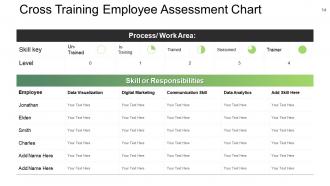
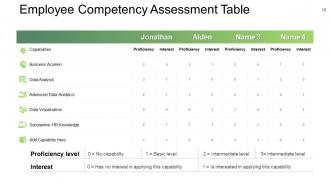
Identify the efficiency level of your employees by using Employee Performance review PowerPoint Presentation Slides. With the help of the performance review powerpoint presentation slides, an organization can evaluate the working and productivity of an individual employee in relation to establish a specified target. There are various characteristics present in performance appraisal presentation deck, such as providing feedback to the employee, reviewing its target, behavior within the organization, evolving creative ideas, achieving the objective, etc. which not only measures the growth of an individual but also raising their development in monetary terms. This job performance PowerPoint complete deck comprises a total of 25 slides such as employee assessment scorecard, review table, self-evaluation forms, etc. which helps in making the assessment table more clear and understandable. A company can review the capabilities, data analysis, quality of work, additional productivity, and accuracy of an individual employee by using job evaluation slideshow PPT deck. Therefore, download this ready-to-use job evaluation PPT and measure your employee’s development.
People who downloaded this PowerPoint presentation also viewed the following :
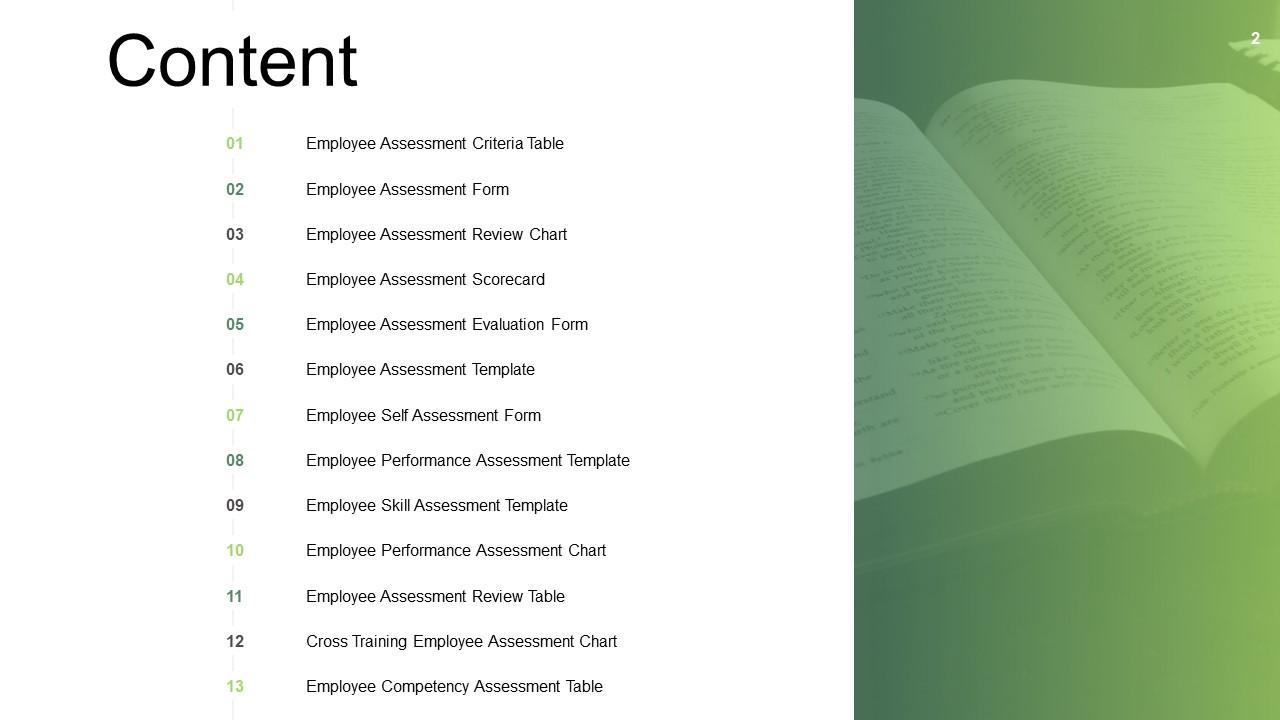
Content of this Powerpoint Presentation
When growing a business, it is important to constantly evaluate your team’s strengths, skills, and areas of improvement. This is why employee performance reviews are necessary to help you see which employees are prospering and learning new skills and who might need more training. This way, you can also carefully allocate your resources and use any untapped potential for added success.
Employee performance reviews are not just essential for the company; they are also considered valuable for the employees. Over 90% of employees feel that regular feedback helps them improve their performance. Thus, these evaluations help employees identify more with their goals in the company and thrive when their progress is acknowledged.
But navigating through endless spreadsheets and documents can get tiring. This is where our Employee Performance Review PPT templates come in! You can use them to provide constructive criticism and feedback to your team, align company goals with individual success, ignite innovation and productivity among your employees, and track and measure individual performance.
You can also use our Employee Performance Review Process templates to get a better understanding of how a performance evaluation works.
Employee Performance Review Templates
Our employee performance review templates are 100% editable and customizable and help simplify the evaluation process. These templates help you streamline performance evaluations with customizable formats, crisp visuals, and user-friendly interfaces. You can easily enhance your team’s strength and make them more engaged with these regular and consistent evaluations!
Pair these review templates with these Employee performance review evaluation forms to optimize your workforce!
Start your path to success with our performance evaluation templates!
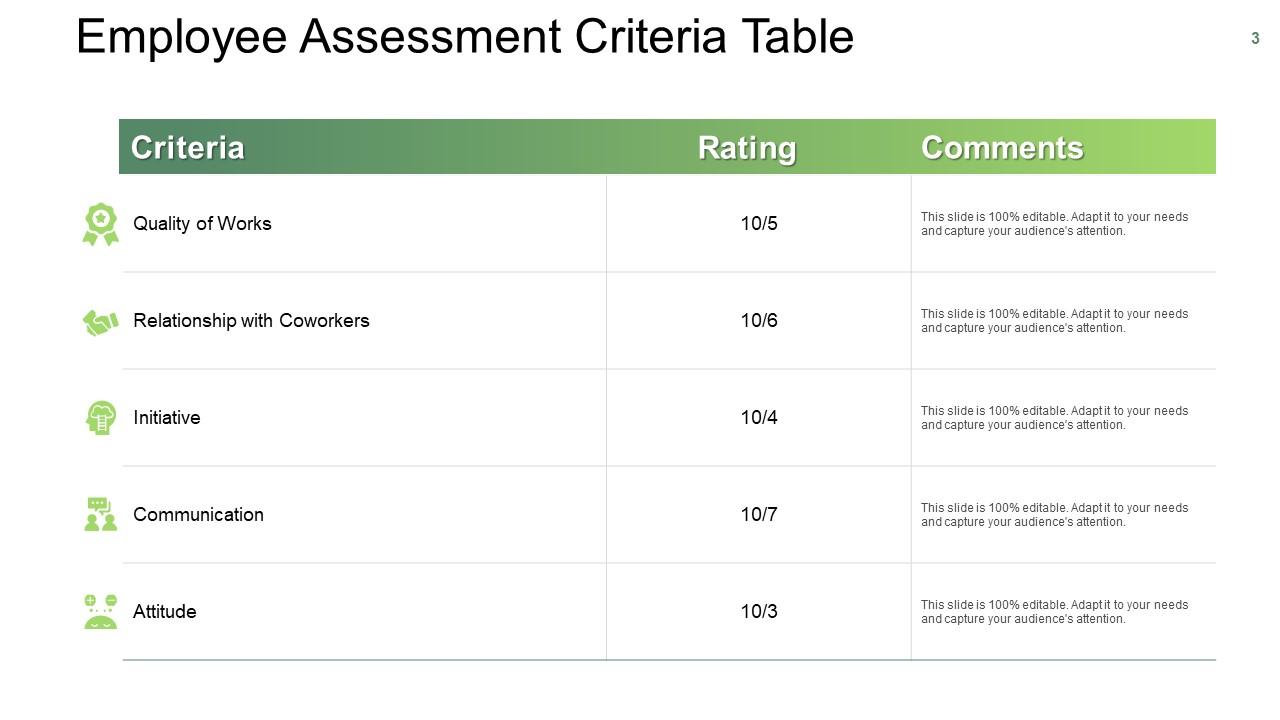
Template 1: Employee Assessment Criteria Table

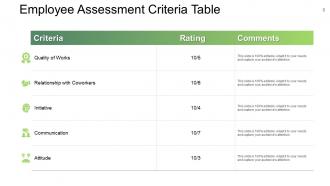
Your team's overall performance is the foundation for a successful business. To keep your business growing, you must constantly evaluate your employees to determine their strengths and potential. This is possible with The Employee Assessment Criteria Table, which provides detailed information about an employee's strengths, relationships with coworkers, initiatives, communication, attitude, and work quality. Based on these criteria, you can make informed decisions about promotions and skill development, as well as translate observations into actionable insights to help build a strong team.
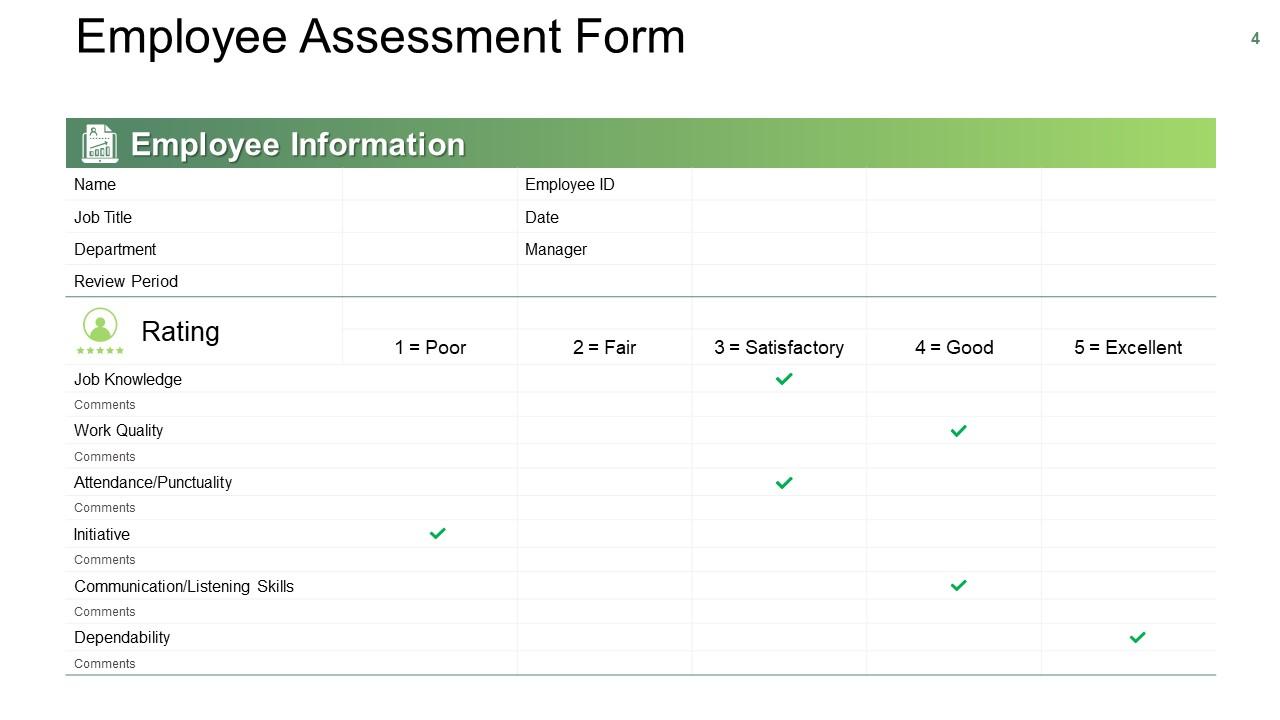
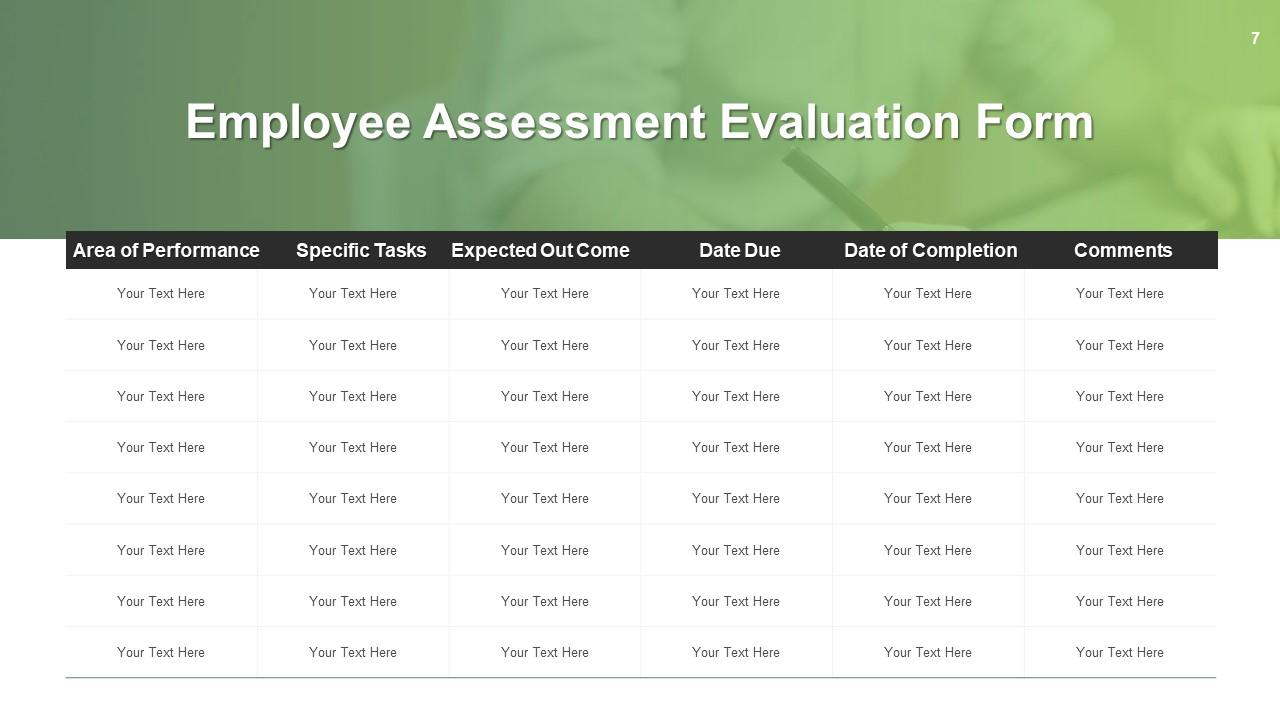
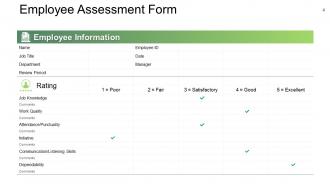
Template 2: Employee Assessment Form

To create a culture of accountability, continuous improvement, and transparency, it is important to constantly assess your employees. The Employee Assessment Form above is a helpful tool in this regard as you can keep a track of your employees’ job knowledge, work quality, attendance, punctuality, initiatives, communication and dependency. This helps in effective talent management and propels your business towards its aspirations.
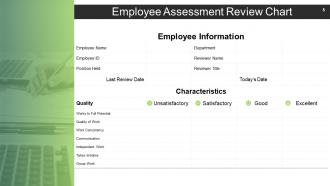
Template 3: Employee Assessment Review Chart

The Employee Assessment Review Chart is a vital part of business management. It makes it easier to create a visual depiction of your employees' performance that highlights their areas of strength and growth. Through the assessment of attributes such as work quality, potential, consistency, initiative, and more, you can assist your staff members' continuous development. This will help the company and its employees in their efforts to promote a culture that is excellence-focused.
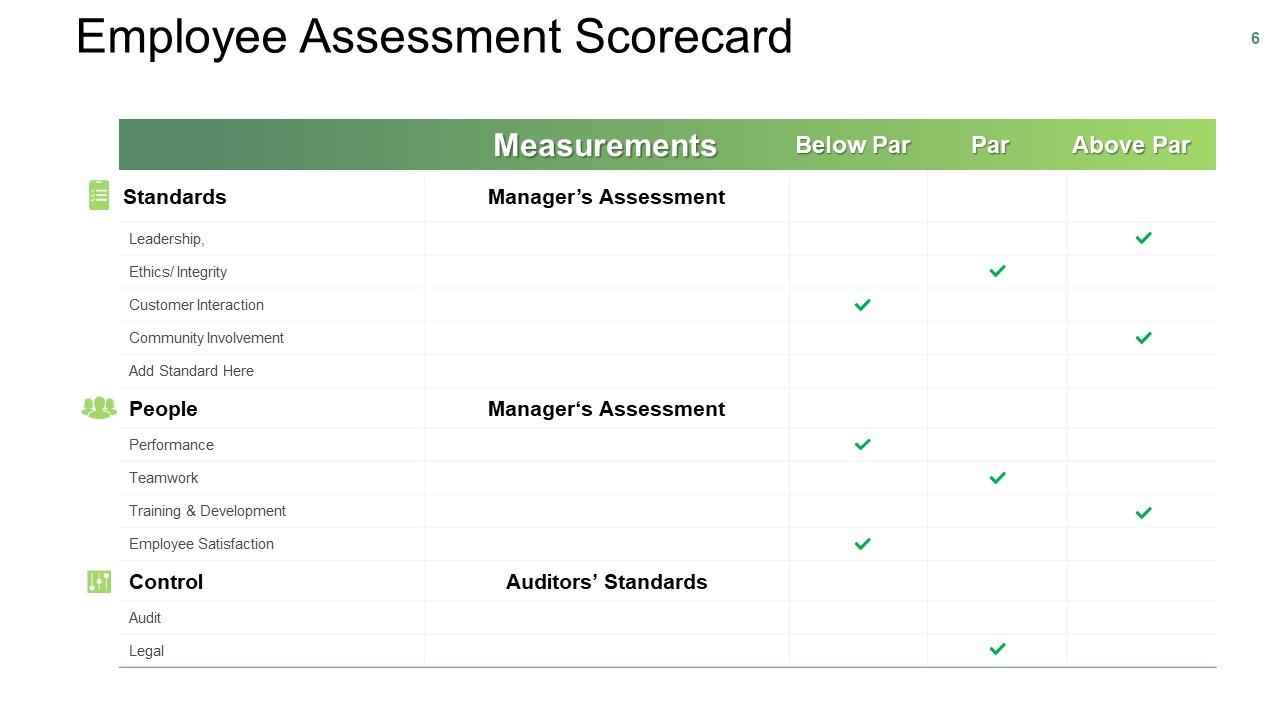
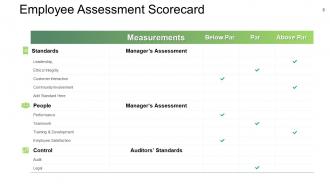
Template 4: Employee Assessment Scorecard

To provide clear and objective metrics about your employees’ and teams’ performance, you can use this Employee Assessment Scorecard. It helps identify standards like leadership, ethics, integrity, and customer interaction, as well as measurements like teamwork and employee satisfaction. You can also use this scorecard to assess control measurements like audit and legal. It helps understand your employees’ potential and thus aligns employee goals with your business objectives.
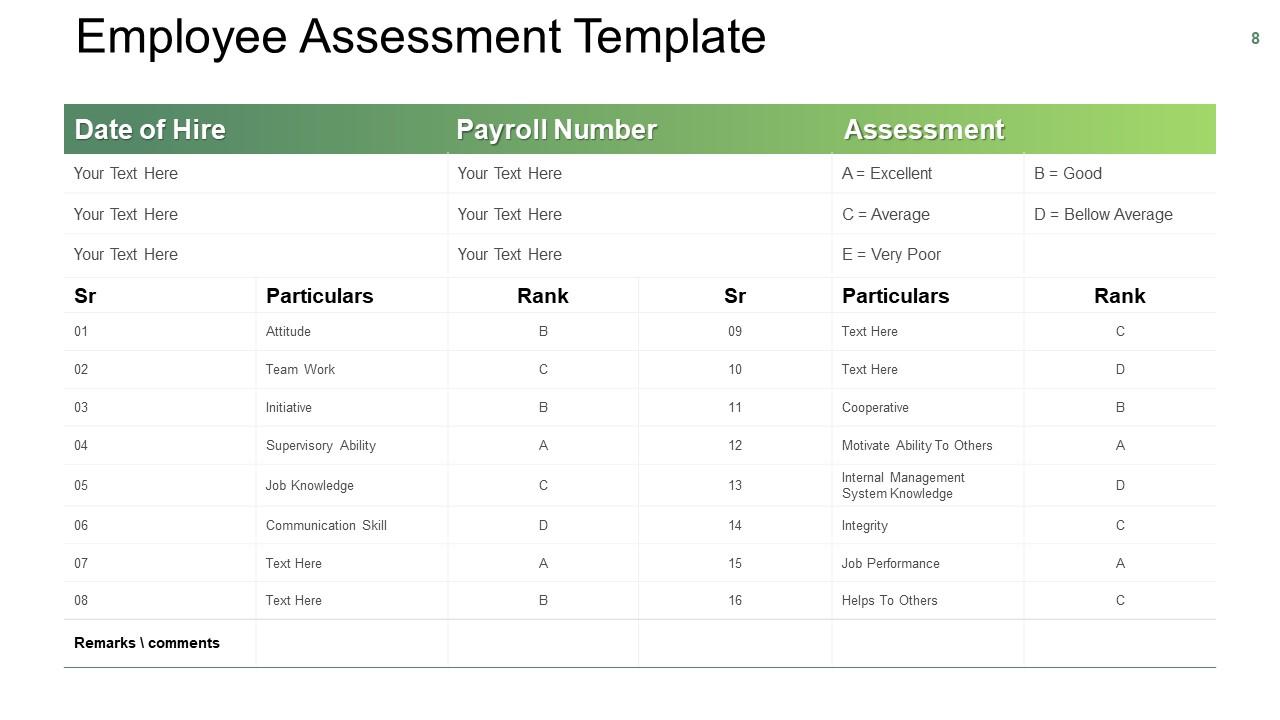
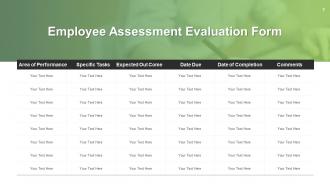
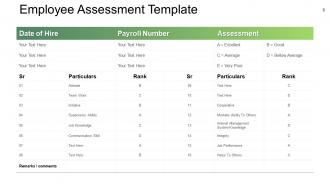
Template 5: Employee Assessment Template

It is critical to conduct an employee assessment within a structured and comprehensive framework. This facilitates the efficient assessment of your employees' contributions. Using our Employee Assessment Template, you can evaluate your employees' abilities, attitudes, teamwork, supervisory skills, job knowledge, and more to ensure a fair and accurate assessment. This template simplifies the evaluation process with relevant details and a transparent ranking system, saving you time and money. This tool can help businesses improve their performance, make better decisions, and achieve success.
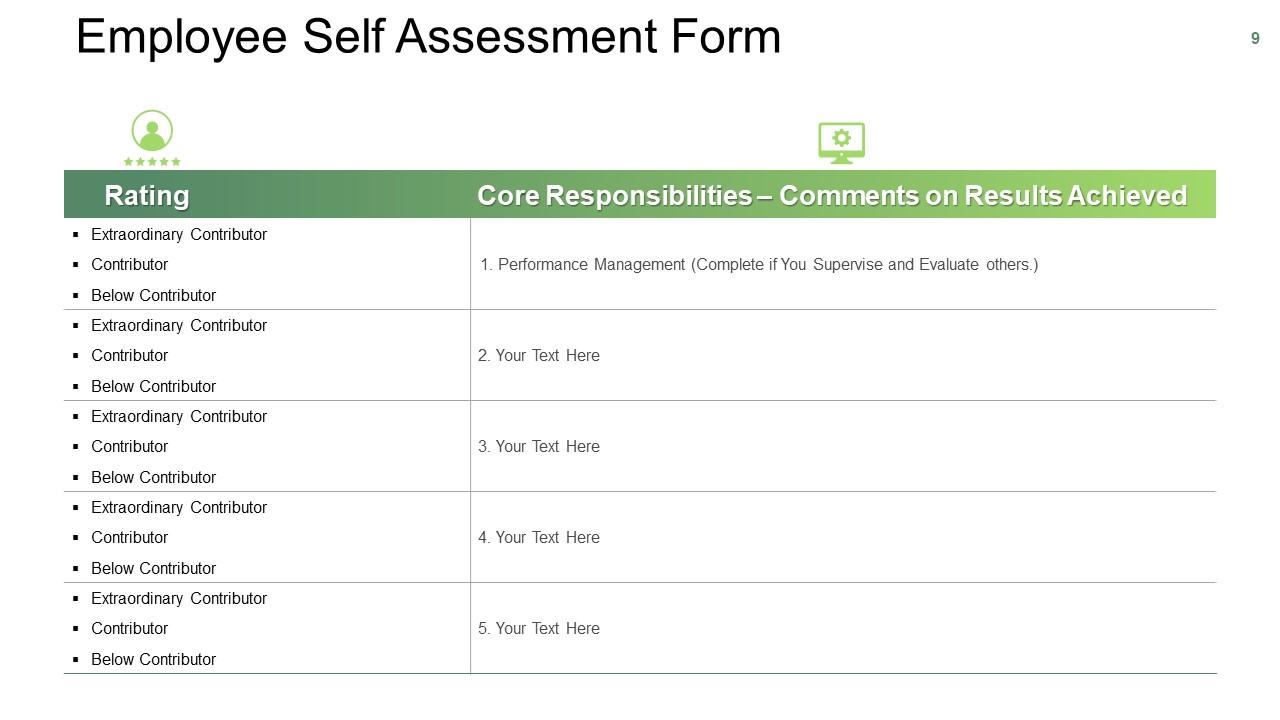
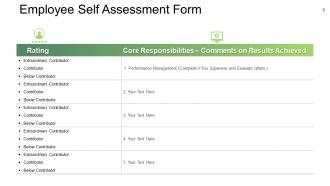
Template 6: Employee Self Assessment Form

The Employee Self-Assessment Form enables your employees to share their achievements, challenges, and future goals with the organization. Employees can improve their understanding of their professional goals by reflecting on their work experiences. This form allows them to rate their primary responsibilities, such as performance management, on three levels: extraordinary contributor, contributor, and below contributor. This type of honest self-evaluation improves communication between management and employees while also helping to develop a strategic growth mindset.
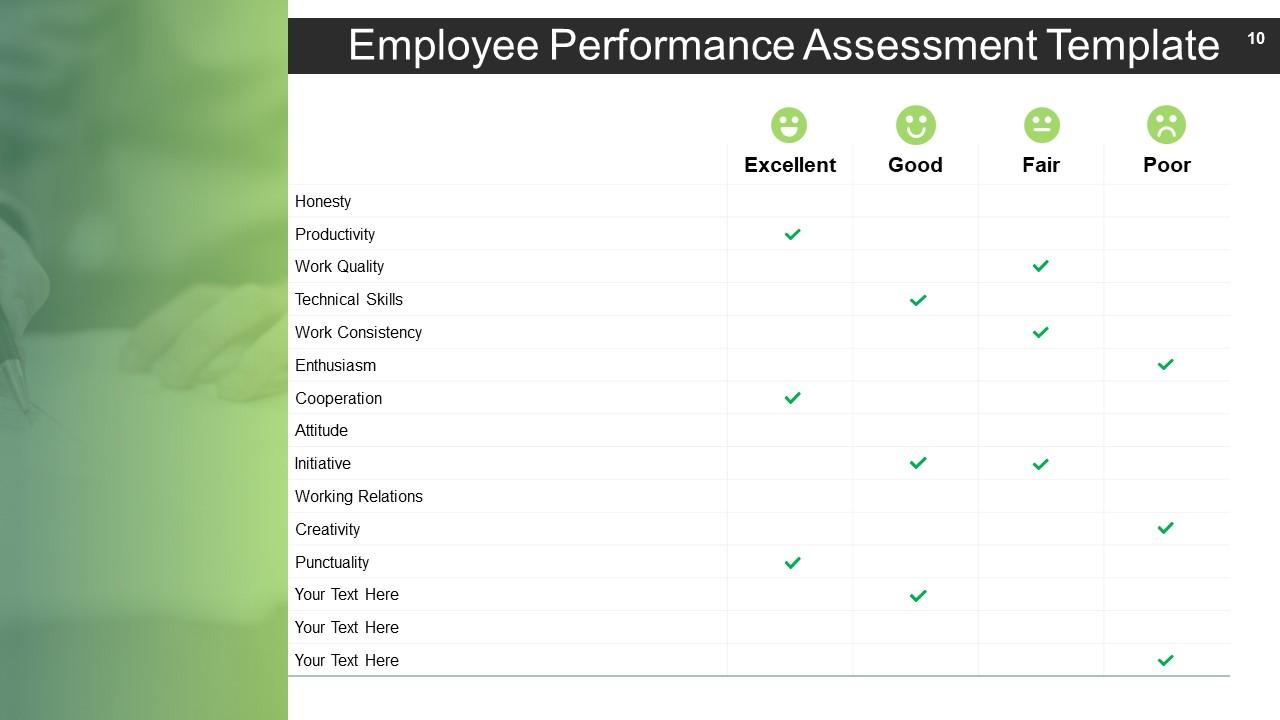
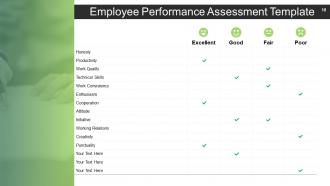
Template 7: Employee Performance Assessment Template

Using our Employee Performance Assessment Template, you can monitor your employees' work and provide constructive criticism. This template, presented in an easy-to-read format, allows you to rate your employees based on a list of desired characteristics such as honesty and productivity. This not only helps your management and HR make decisions about bonuses, promotions, and additional training opportunities, but it also ensures objectivity throughout the assessment process.
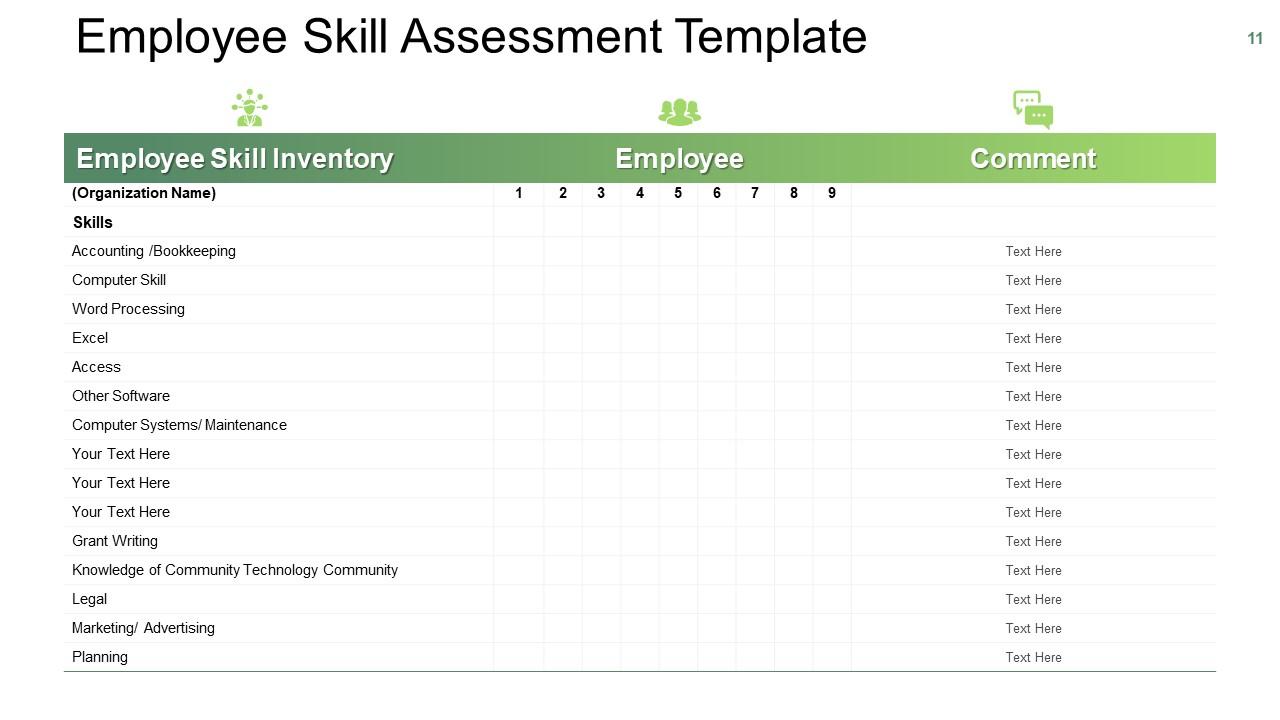
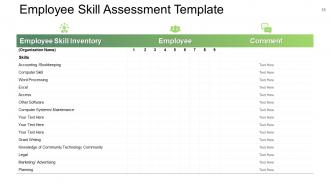
Template 8: Employee Skill Assessment Template

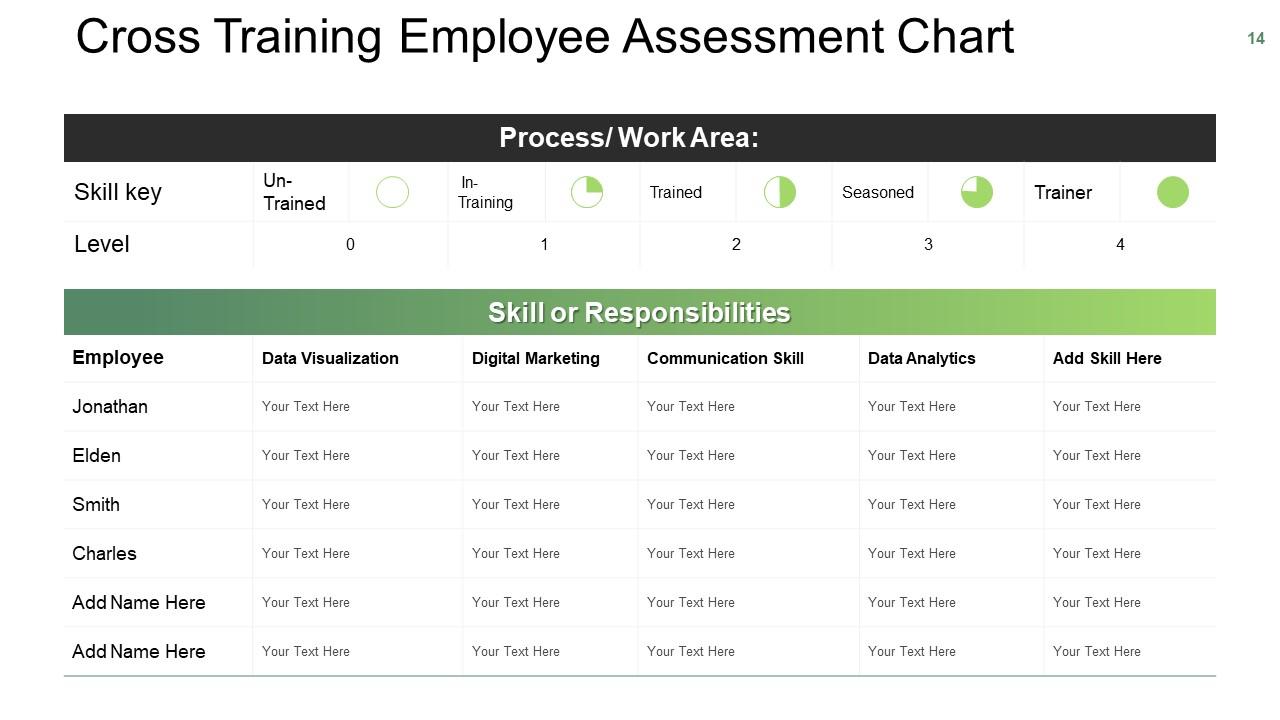
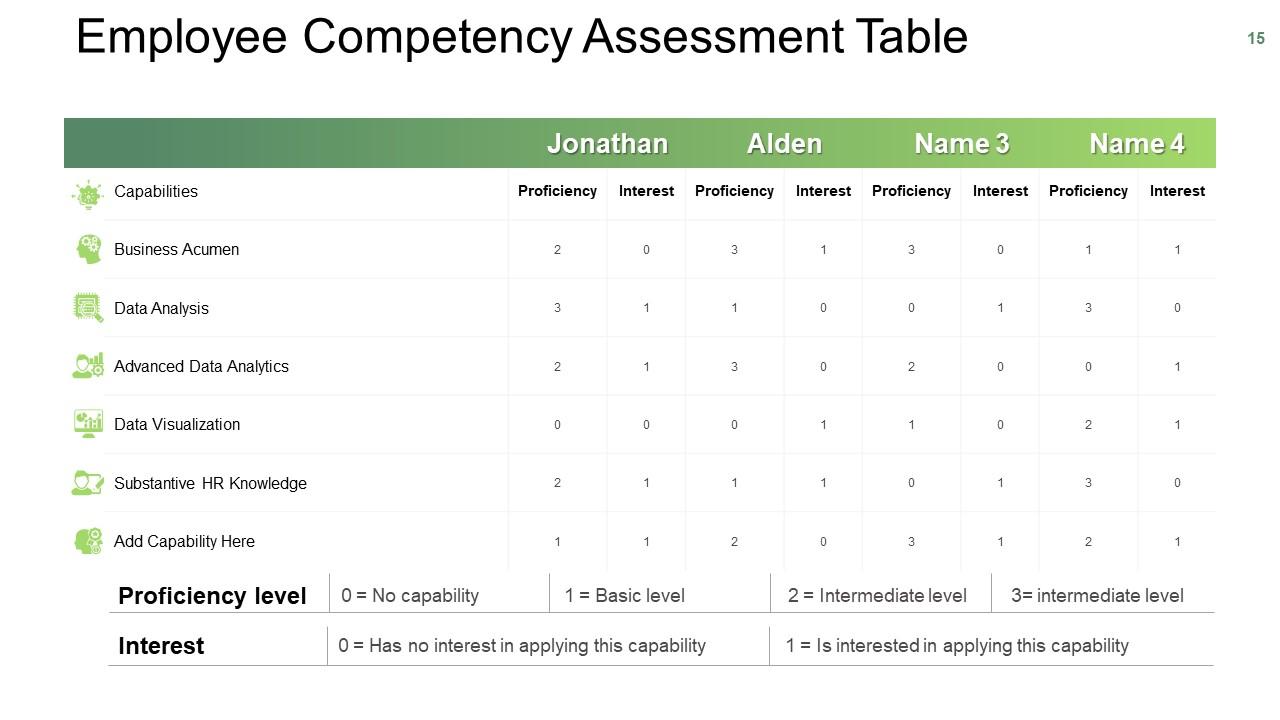
To maximize your employees' potential, you must constantly assess their skills. This Employee Skill Assessment Template allows you to rate and comment on your employees' skills, including accounting, computer skills, WordPress, legal knowledge, planning, and more. This template allows you to identify any gaps in what your employees may be missing and thus allocate your resources more effectively. This will help you align your employees' skills with what your company believes in, ensuring that you are all on the same page.
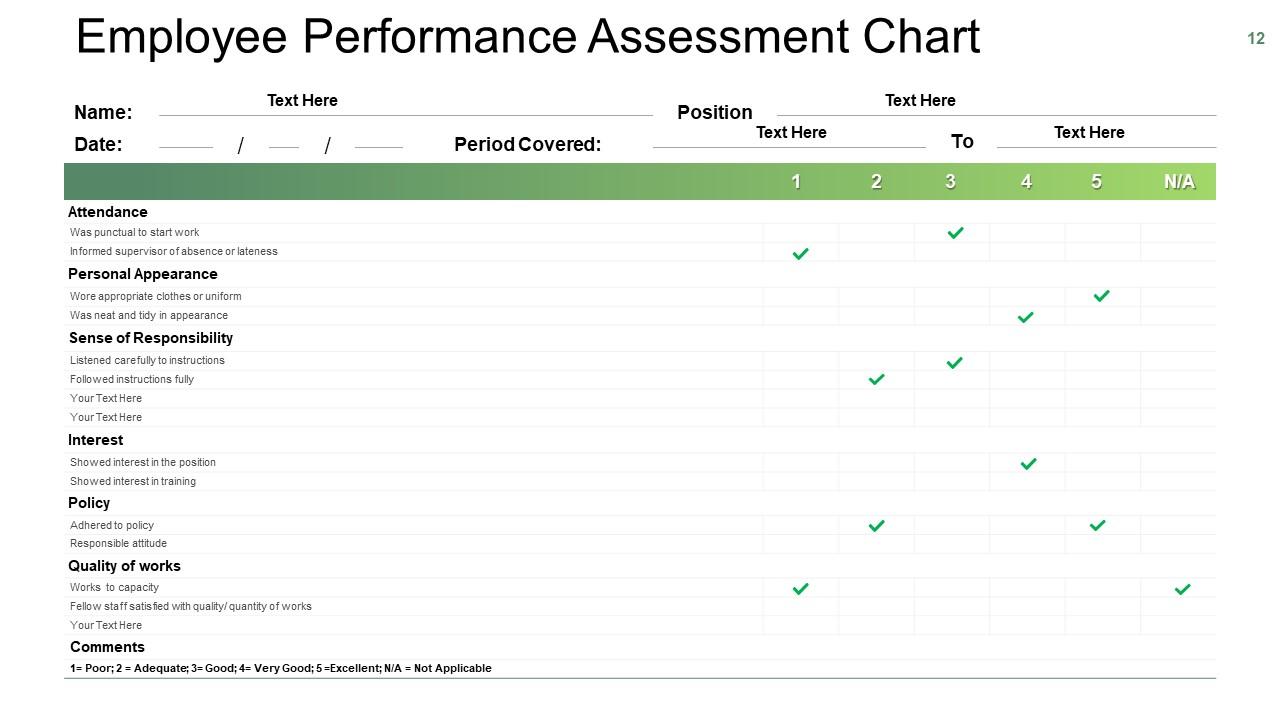
Template 9: Employee Performance Assessment Chart

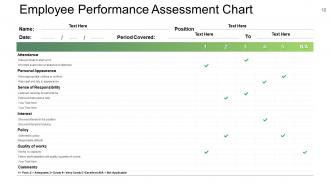
In order to get a better sense of how your employees are performing, you can use this Employee Performance Assessment Chart. It gives you a proper list of important criteria like attendance and punctuality, personal appearance and neat attire, as well as a sense of responsibility. This can help you figure out what your employees are skilled in and where they might need some training tools to help them become better. You can use this chart to manage your employees efficiently and provide them with the right training for upskilling and growth.
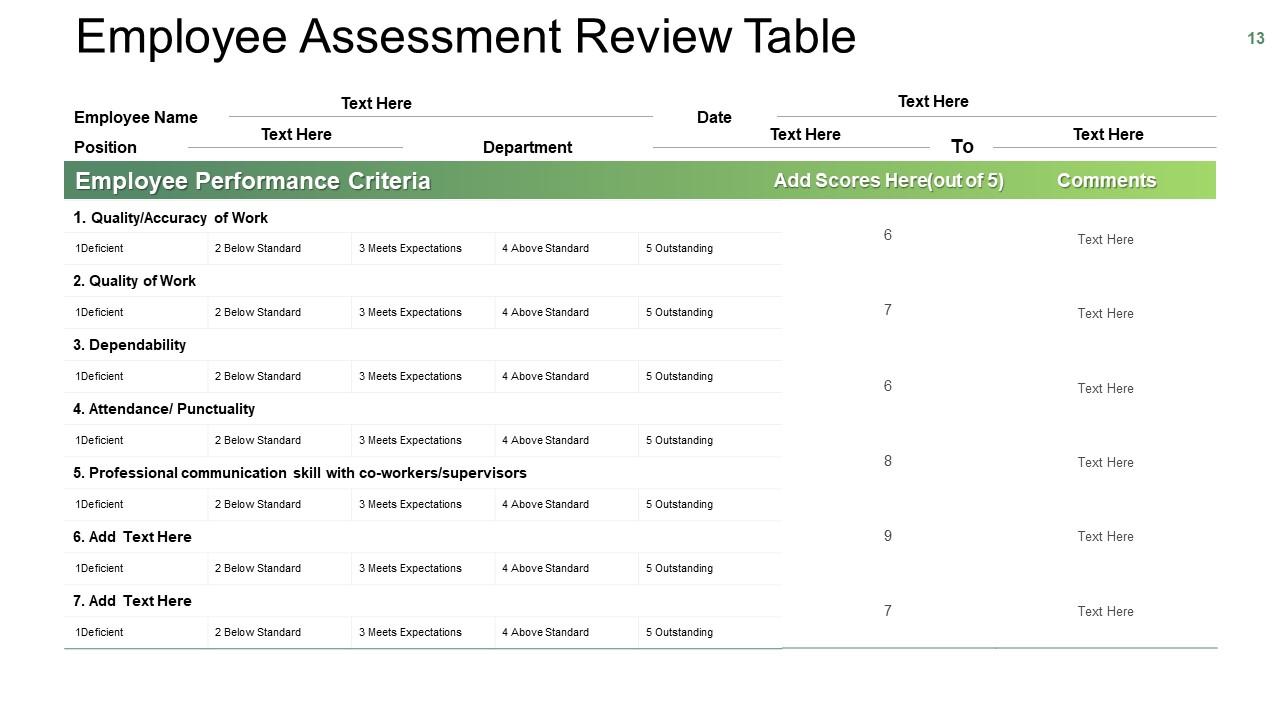
Template 10: Employee Assessment Review Table

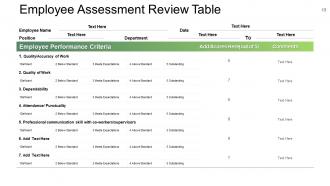
Employee assessments are critical for developing talent within your organization and assisting employees in reaching their full potential. This employee assessment review table allows you to see how well your employees performed in a variety of areas, including work accuracy and timeliness. A scoring system and comment section can help you determine which employees excel in which areas and where they still need to improve their knowledge and skills. All employees will have the opportunity to advance based on their skill sets, and HR and management will be able to better determine which employees deserve bonuses and raises.
Embracing Meaningful Evaluations
Employee performance review templates can help to create a dynamic work environment that values growth and learning. These PowerPoint slides can help you assess your employees' strengths, understand their skill set, understand the company's future goals, and identify any areas where they may need to improve. This strategy allows you to increase output while also providing your employees with the training they need to stay motivated. This constructive criticism will help your company grow and succeed.
PS: You can also use this one-page employee performance review presentation in an infographic manner to showcase all the details of your employee assessment reviews.
Employee performance review powerpoint presentation slides with all 25 slides:
Indicate flaws in the initial assumptions with our Employee Performance Review Powerpoint Presentation Slides. Expose invalid arguments.
FAQs for Employee performance review
Honestly, I'd stick to the stuff that actually moves the needle - did they hit their goals, quality of work, how they mesh with the team. Communication's big too, plus whether they jump on problems or just sit there waiting for instructions. Time management matters since everything changes constantly anyway. Oh, and definitely compare where they are now vs their last review. That growth piece is huge. Don't try to rate them on like fifteen different things though - pick maybe 4-5 metrics that actually relate to what they do day-to-day.
Mix hard numbers with the story behind them. Sales figures and completion rates are solid starting points, but they're pretty one-dimensional honestly. You'll want specific examples of how someone communicates or handles problems - way more useful than generic "team player" nonsense. I typically go 60/40 numbers to stories, though it depends on the job. Oh, and avoid vague feedback entirely. "Shows initiative" means nothing compared to "restructured the client database without being asked." Keep the qualitative stuff concrete and you're golden.
Ok so you've probably heard of SMART goals - specific, measurable, achievable, relevant, time-bound. I know it sounds corporate but it genuinely helps. Don't overwhelm them with like 10 different things though. Stick to maybe 3-5 that actually matter. The goals need to make sense for their career growth AND help the business - otherwise it just feels like busywork. But honestly? The most important part is getting them involved in creating the goals. People are way more motivated when they help build their own targets instead of having stuff just dumped on them. Have an actual conversation about it.
Most companies do annual reviews with quarterly check-ins - works pretty well honestly. The quarterly stuff prevents disasters and makes the big annual review way less awful since nobody's blindsided. You need enough time between formal reviews for people to actually improve, but those mini check-ins every few months keep everyone on track. Annual review dumps are the worst - just this massive overwhelming conversation that stresses everyone out. I'd start with whatever you can realistically handle given your team size. Then tweak it once you see what's actually working vs. what sounds good on paper.
So basically, it's your chance to tell your own story before your boss writes their review. Highlight the good stuff you did! Most people totally phone it in or get all modest - which is dumb because your manager probably forgot half the things you killed it on months ago. I mean, they're busy too, right? Use it to bring up wins that might've slipped through the cracks. Also be real about where you want to improve. Don't rush through it. Be confident but honest - it actually matters more than people think for setting the whole tone of your review.
Get yourself some performance management software - it'll handle all the annoying stuff like scheduling reviews and sending reminders. BambooHR and 15Five are solid options. Employees can do their own self-assessments while you track goals year-round instead of panicking when review season hits. Game changer is having everything in one place so you're not digging through old emails for feedback. The analytics are pretty useful too for spotting team patterns. I'd start simple - just digitize your current forms first, then add fancier automation once everyone's used to it. Way less stressful than the old spreadsheet nightmare.
Ugh, performance reviews are the worst for bias traps! You'll definitely hit recency bias - like only remembering last month's stuff. Then there's the halo effect where one awesome project makes you forget about everything else they screwed up. I'm SO guilty of comparing everyone to my top performer instead of, you know, actual job requirements. Confirmation bias is sneaky too - you just hunt for proof of what you already think about someone. Attribution errors are another big one where good results = luck, bad results = totally their fault. My advice? Write down specific examples from the whole year beforehand and focus on what they actually did, not personality stuff.
Honestly, peer feedback is a game changer because your colleagues see stuff you never will. They watch how someone handles stress, deals with conflict, communicates in meetings - all that daily interaction stuff that's invisible to managers. Way better than trying to figure out if someone's actually a team player from your occasional check-ins with them. The 360 view catches blind spots you'd miss otherwise. Also validates whether what you're seeing is the full story or just their "manager face." Just don't make it too vague - give people specific behaviors to comment on instead of personality stuff.
Here's the thing - most companies totally blow this because they're way too vague about connecting daily work to the big picture. Break down your annual goals into stuff each person can actually impact. During reviews, be super specific about how their work affected revenue or customer happiness or whatever matters most. I learned this the hard way at my last job tbh. Focus performance talks on how they'll contribute to future priorities, not just rehashing what already happened. Think of it like... you're showing them exactly how their puzzle piece fits into the whole image.
Honestly, skip the personality stuff and stick to actual behaviors. Like instead of "you're messy," say "those client reports were late three times last month." Way more useful. Don't be brutal about it though - nobody's world should end over bad spreadsheet formatting lol. Ask what kind of support they need to fix whatever's going wrong. That usually works better than just pointing out problems. Oh, and definitely mention stuff they're doing well too. People just shut down when it's all criticism. Work together on solutions instead of just dumping feedback on them.
Oh man, performance reviews get so tricky with cultural stuff! Some people want you to be super direct with feedback, while others think that's rude or too harsh. Your team members from more traditional cultures might want formal processes and won't question authority much. But others expect collaborative conversations where everyone's equal. Individual vs team achievements is another minefield - honestly depends where someone grew up. My advice? Just ask people straight up how they like getting feedback and what review style works for them. Way easier than guessing!
Start with communication training if you can - that's the foundation for everything else. Active listening workshops are clutch too because half these conversations fail when people don't feel heard. Documentation training helps you write better reviews instead of those vague "needs improvement" comments we've all seen. Coaching skills matter since reviews should actually develop people, not just check boxes. Honestly, goal-setting training is underrated - most managers suck at this part. Communication first though. Makes the rest way easier once you can give feedback without people getting all defensive.
Make the whole thing forward-looking instead of just rehashing old mistakes. Most of the convo should be about growth, skills they want to build, career stuff. I've watched way too many managers turn these into total gotcha sessions - seriously don't do that. Try asking "what support do you need to crush it?" rather than just listing what went wrong. When you do give feedback, pair it with concrete examples of what success actually looks like. Think collaboration, not interrogation. Oh and definitely end by asking what YOU should do differently as their manager to help them win.
Okay so definitely start with goal achievement - did they actually hit what they were supposed to? Then cover their core competencies and strengths. The self-assessment part is honestly my favorite because people are way harsher on themselves than you'd think! Also throw in improvement areas and career development stuff. Don't forget they might need specific resources or support from you. Try to use actual numbers when you can instead of just vague feedback. Oh, and make sure there's clear next steps with deadlines at the end. The whole thing should feel more like a real conversation than some formal interrogation.
Okay so first thing - get that summary email out within 24 hours while it's all fresh. List out exactly what needs to happen, when, and who's doing it. I always cc their manager because honestly, people forget stuff otherwise. Don't do that vague "let's touch base soon" thing either - book those follow-up meetings right there in the room. Then actually send the calendar invites immediately (I learned this the hard way). Oh and make sure you're tracking everything in your HR system. The more specific you are about deadlines and what success looks like, the better off you'll be.
No Reviews