


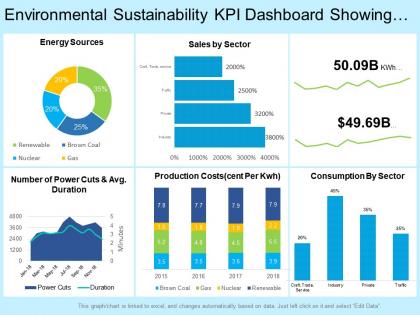
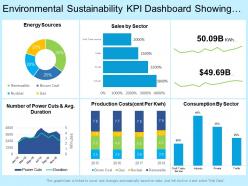
Environmental sustainability kpi dashboard showing total consumption sales energy sources




Try Before you Buy Download Free Sample Product
 Impress Your
 Audience
 100%
100% Editable
 Save Hours
 of Time


Your gang of followers will automatically increase due to our Environmental Sustainability Kpi Dashboard Showing Total Consumption Sales Energy Sources. It generates intangible gains.
People who downloaded this PowerPoint presentation also viewed the following :
Environmental sustainability kpi dashboard showing total consumption sales energy sources with all 6 slides:
Join the cloth with our Environmental Sustainability Kpi Dashboard Showing Total Consumption Sales Energy Sources. Get all the edges to fit exactly.


FAQs for Environmental sustainability kpi dashboard showing total consumption
Honestly, the biggest wins are pretty straightforward - better public transit, making buildings way more energy efficient, and adding green spaces everywhere. Electric buses are amazing because one replaces like 30+ cars. Retrofitting old buildings with decent insulation can slash emissions by 30-40%, which is huge. Trees and urban forests basically work as natural AC while sucking up CO2 - kinda underrated tbh. Oh and bike lanes obviously help tons. If you're trying to push for change locally, focus on this infrastructure stuff rather than just individual actions. Don't get me wrong, personal changes matter, but the scale just isn't comparable.
So first thing - map your whole supply chain to see where the biggest environmental hits are happening. Work backwards from your main suppliers and ask about their energy, waste, transport stuff. Some will definitely resist being transparent (which honestly tells you everything you need know). Put sustainability requirements right in the contracts and look for suppliers with certifications like B-Corp or ISO 14001. Don't just make demands though - treat it like a partnership. Oh, and start small with a couple pilot programs first to figure out what actually works before going all-in.
Look, renewable energy is honestly our best shot at not completely screwing up the planet. Solar, wind, hydro - they don't spew CO2 like coal does, so you're actually cutting emissions by a ton. The sun's not going anywhere anytime soon (knock on wood), so we've got unlimited power just sitting there. Clean air, cleaner water, better climate for the next generation. Even throwing some solar panels on your roof makes a difference. I mean, the alternative is pretty grim if we keep burning fossil fuels at this rate.
So basically, connect your green spaces first - even tiny patches help animals move around. Plant native stuff because local bugs and birds actually need those specific plants they evolved with. Stop spraying everything with pesticides too. Oh and lawns are honestly overrated - the obsession with perfect grass kills biodiversity. Community gardens work great, plus anything pollinator-friendly. Wetlands are clutch if you have them. I'd start by just walking around and seeing where you could squeeze in more native plants between all the concrete. Small changes actually add up pretty fast.
Money's the biggest issue, honestly. The upfront costs for organic stuff and equipment changes hit hard. Yields usually drop during that 3-5 year transition period too, which sucks when you're already spending more. A lot of farmers just don't know the techniques or can't access proper training. Market's brutal - sustainable doesn't always mean better prices, especially with commodity buyers who only care about cheap. Oh, and regulations are all over the place depending where you are. I'd say start with small test plots first and definitely hit up your local extension office for help.
Dude, the tech stuff happening for sustainability is actually insane right now. Smart grids are making energy way more efficient, and AI can predict waste before it happens. Renewable energy keeps getting cheaper too - like, solar is practically free compared to five years ago. Electric cars and better batteries are obviously huge. Carbon capture tech is where things get really interesting though. Oh, and companies are using IoT sensors to track their environmental footprint in real-time, so they can actually fix issues instead of just crossing their fingers. You should definitely look into data analytics for spotting waste patterns in whatever you're working on.
Honestly, just start small and don't stress about being perfect. LED bulbs and unplugging stuff makes a difference - though I'm awful at remembering the unplugging part lol. Transportation's probably where you'll see the biggest impact if you can walk or bike more. Shorter showers, fix leaks when they happen. I've gotten into composting lately and it's actually pretty satisfying? Try bringing reusable bags and a water bottle first - those habits kind of snowball into bigger changes. Oh, and avoid buying things wrapped in tons of plastic when possible. It all adds up over time.
Honestly, it's pretty depressing what's happening to our oceans right now. Sea turtles are eating plastic bags thinking they're jellyfish, and birds are literally filling their stomachs with bottle caps. Microplastics have gotten so bad they're showing up in our seafood - which is gross if you think about it. But you can actually help! Ditch single-use stuff when you can. I started carrying a reusable water bottle everywhere and it's become second nature. Beach cleanups are surprisingly therapeutic too if you're near the coast. Even just buying from companies that don't wrap everything in plastic makes a difference when we all do it.
Honestly, the best approach is mixing rewards with punishment - carbon pricing plus tax breaks for clean energy. Companies respond when you hit their wallets. Look at the EU's carbon market, it's actually working pretty well. Mandatory emissions standards help too, especially with real penalties that hurt. Environmental impact assessments should be required for any major project (though let's be real, some still slip through). International coordination is huge since pollution doesn't care about borders. Also push for transparency requirements - nothing makes companies move faster than bad press and angry customers calling them out.
So you know how we usually just make stuff, use it, then toss it? Circular economy flips that - you design things to get reused, fixed up, or recycled back into your business. Honestly, it's pretty brilliant from a money standpoint. Your material costs drop, you're not paying those annoying disposal fees, and suddenly your "waste" becomes another income source. Customers eat this stuff up too since everyone's obsessed with sustainability now. The planet wins because we're not constantly mining new resources or filling up landfills. I'd say pick one product line first and see how you could extend its life somehow.
Climate change is messing with water cycles big time. Some places get hit with crazy droughts while others deal with floods that wreck everything. The infrastructure we have? It wasn't designed for this kind of chaos. Higher temps mean water evaporates way faster too, so supplies disappear quicker than anyone planned for. Honestly feels like we're always playing catch-up. We need management systems that can handle both too much and too little water - which sounds impossible but whatever. Bottom line: invest in better storage and conservation tech now before it gets even messier.
Honestly, the trick is making it personal. People don't really care about abstract climate data - but show them how their choices affect their own neighborhood's air quality? That hits different. Connect it to stuff they already worry about: their health, saving money, their kids. Hands-on programs work best too. School gardens are amazing for this, or doing home energy audits where you actually see results right away. I've noticed community programs that teach practical skills people can use at home tend to stick better than just lecturing about polar ice caps.
Yeah there's definitely upfront costs - big infrastructure investments and some job displacement in coal/oil. But long-term? It's honestly a pretty smart move economically. Once you install solar or wind, they're basically free to run - no fuel costs. Plus you create a ton of new jobs in manufacturing and installation. Your energy prices get way more predictable too since you're not at the mercy of crazy oil market swings. The trick is just timing it right so you can retrain workers and not blow your budget all at once. My cousin works in solar now and says it's booming.
So electrifying buses and expanding rail is huge for sustainability. Plus connecting everything to renewable energy grids. But honestly? None of that matters if the service sucks - unreliable transit kills ridership faster than anything. You've gotta make it so frequent and convenient that people actually want to ditch their cars. Dedicated bus lanes help tons, better connections between different lines, smart scheduling with real-time data. Oh and building more stuff around transit stations is key too. More people per mile = way lower emissions per person. Pretty straightforward math there.
Honestly, non-profits are where the real action happens with sustainability stuff. Governments drag their feet, corporations only care about profits - but these organizations actually push for change. They're doing research, lobbying, teaching communities better practices. Like Greenpeace with their crazy activism stunts, or local groups showing farmers sustainable methods. The best part? They don't answer to shareholders, so they can focus on what matters. If you want to make a difference, supporting non-profits is probably your smartest move. Way more impact than most other options out there.
-
Out of the box and creative design.
-
Great quality slides in rapid time.