

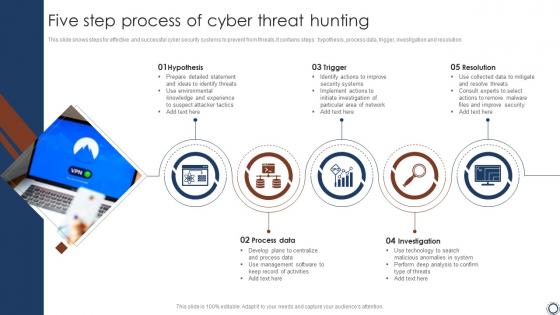
Five Step Process Of Cyber Threat Hunting




Try Before you Buy Download Free Sample Product
 Impress Your
 Audience
 100%
100% Editable
 Save Hours
 of Time


This slide shows steps for effective and successful cyber security systems to prevent from threats.it contains steps hypothesis, process data, trigger, investigation and resolution.
People who downloaded this PowerPoint presentation also viewed the following :
Five Step Process Of Cyber Threat Hunting with all 6 slides:
Use our Five Step Process Of Cyber Threat Hunting to effectively help you save your valuable time. They are readymade to fit into any presentation structure.





FAQs for Five Step Process Of
Honestly, it's pretty simple once you get the hang of it. Build your hypothesis first - maybe from threat intel or weird stuff you noticed. Collect data from logs and endpoints, then dig into any sketchy indicators. That's where it gets fun because you're basically being a detective. I always document everything (learned that the hard way). After you confirm threats, contain and fix them. Update your detection rules too. Oh, and share what you learned with the team - they'll appreciate it. The main thing is staying organized instead of just randomly hunting through data and hoping something pops up.
Honestly, start with just a few key numbers - don't go crazy tracking everything right away. Mean time to detection is huge, plus how many threats your team finds that automated tools completely miss. False positives matter too because nobody wants to chase ghosts all day. The real win though? Count how many incidents you stop before they turn into actual breaches. That's where you prove your worth. Oh, and don't ignore the softer stuff - are your analysts getting better at reading the environment? Set some baselines first, then watch how you improve over time. Much easier than trying to measure success without knowing where you started.
Get a decent SIEM first - Splunk's pricey but solid, or try Elastic if budget's tight. CrowdStrike handles endpoint stuff really well. Network monitoring catches the sneaky lateral movement attempts. Tool sprawl becomes a nightmare though, trust me on that one. MISP's free for threat intel, or grab commercial feeds if you've got cash. The real trick? Making everything actually connect. I've seen too many teams drowning in disconnected dashboards. Start simple with tools that play nice together. Features don't mean much if you can't see the bigger picture.
So basically, IDS and those traditional tools just sit there waiting for alarms to go off when they recognize something bad. Threat hunting is way more proactive - you're actually going out looking for stuff that's already hiding in your network. It's like... your security alarm tells you when a window breaks, but threat hunting is when you walk around checking if someone snuck in through that back door you forgot about. You're digging for weird patterns and sketchy behavior that the automated stuff totally misses. Honestly, I'd start doing some basic hunting queries every week or so. Catches things your regular tools don't.
Dude, you gotta get solid with network protocols and system admin stuff first - understanding how attackers actually move around networks. The analytical side is massive because you're literally hunting for tiny clues in oceans of log files. Python or PowerShell will save your sanity for automating repetitive tasks. SIEM tools are your bread and butter, plus threat intel platforms. Honestly though? The mental game matters more than people think. You need crazy patience, genuine curiosity, and this weird ability to think like the bad guys. Start messing around with Wireshark (it's free) and build yourself a little lab to practice in.
Honestly, ML and AI are pretty clutch for threat hunting - they'll automate all that boring pattern recognition work you hate doing. What's cool is they learn your network's "normal" behavior first, then flag weird stuff that might be actual threats. Way better than manually sifting through mountains of data (who has time for that?). The algorithms actually get smarter over time and cut down false positives, which is huge. I'd start with ML-powered SIEM tools or user behavior analytics. You'll get way cleaner alerts to dig into instead of drowning in useless noise.
Dude, start with network stuff - weird outbound connections, sketchy DNS requests, traffic at 3am when nobody should be working. File changes are massive red flags too: random executables popping up, registry getting tweaked, new scheduled tasks. Honestly, user behavior is where I'd put most of my energy though - failed logins, privilege escalations, people logging in during weird hours. That's where most breaches actually start. Don't forget process anomalies like PowerShell running from random spots. Get these patterns into your SIEM as detection rules and you'll spot threats way earlier.
So basically, grab your IOCs and TTPs from threat intel and plug them straight into your hunt queries. Recent intel reports are gold for building solid hunting hypotheses - beats randomly sifting through logs any day. I always start there when prioritizing which systems to hit first. Your hunting platform should pull fresh intel feeds daily (set that up if you haven't already). Then map out hunt books around whatever emerging threats are trending. Understanding the full attack chain helps too, though honestly that part can get pretty complex depending on what you're dealing with.
Dude, you absolutely can't hunt threats solo - it's like trying to solve a puzzle blindfolded. Your hunters need to buddy up with incident response folks, SOC teams, even IT people to actually understand what's going down in your network. When teams share their findings, everyone gets smarter about spotting the bad stuff. Honestly, the threat landscape moves so stupidly fast that working in silos is just asking for trouble. Set up regular meetups where hunters can swap IOCs, talk through new attack methods, and bounce ideas off people who see things differently. Trust me, fresh perspectives catch what you'll miss.
Look for APTs first - those things hide for months stealing data and they're a nightmare. Insider threats are huge too, plus living-off-the-land attacks that dodge your usual security stuff. Ransomware crews have honestly gotten terrifying at staying invisible. Hunt for credential theft and lateral movement since attackers do this stuff slowly on purpose. Data exfiltration's another big one. Oh, and focus on whatever would absolutely wreck your company if it got hit - that's where they'll go first anyway. The slow, quiet attacks are way scarier than the obvious ones.
Honestly, just map out your crown jewels first - domain controllers, financial stuff, customer data, whatever would make you cry if it got hit. Think like the bad guys for a sec: what's their dream target? Hunt there first instead of everywhere at once. Also grab some threat intel on who's actually hitting your industry right now. Why waste cycles on random threats when specific APT groups are probably already gunning for companies like yours with known tactics? Start with that focused approach, then branch out once you've got bandwidth. Way more effective than boiling the ocean.
First things first - get proper authorization before you start poking around. Document everything because you'll thank yourself later if auditors come knocking. Don't go rogue on systems you don't own or lack permission for. Privacy laws like GDPR will bite you if you're not careful with personal data. Honestly, the ethical stuff matters just as much as the legal side. Stay within your scope, keep findings confidential, and do responsible disclosure for any vulns you find. Court cases aren't fun when you can't justify what you did.
Okay so here's the thing - stop talking tech to execs, they literally don't care about PsExec. Tell them "hackers broke in and could've stolen customer data" instead. Think about it like this: would you explain car engine pistons to someone who just wants to know if their car's safe to drive? Use dashboards, risk scores, maybe compare it to building security since they get that. What really gets their attention? Money lost, lawsuits, bad press. Always give them clear steps and deadlines. You're not trying to make them security experts - just informed enough so they'll actually make decisions and fund what you need.
Honestly, the hardest part is just finding people who actually know what they're doing - good threat hunters cost a fortune and everyone wants them. Your current team is probably drowning in alerts already, so asking them to hunt for new threats feels cruel. Then there's the whole budget conversation with leadership about buying more tools and data feeds (fun times, right?). Oh, and defining success is weirdly tricky since you're basically looking for stuff that might not even be there. My advice? Don't go crazy trying to build some massive program right away. Start with one solid hunter and a few clear use cases first.
Honestly, aim for daily if you can swing it - even just 30-45 minutes beats doing one giant session monthly. Weekly works too if that's more realistic for your team. The thing is, threats don't take weekends off, so consistent hunting catches stuff before it blows up into actual incidents. Daily practice also helps your team get way better at spotting patterns (though I realize that sounds obvious). My buddy's team started with weekly hunts and gradually moved to daily mini-sessions once they got their workflow down. Just pick whatever you can actually stick to consistently, then ramp up from there.
-
Extremely professional slides with attractive designs. I especially appreciate how easily they can be modified and come in different colors, shapes, and sizes!
-
I’m not a design person, so I couldn’t make a presentation to save my life. Thankfully, they have all kinds of templates that I regularly use for my work.