


Fleet Management Operations Dashboard For Logistics Organization




Try Before you Buy Download Free Sample Product
 Impress Your
 Audience
 100%
100% Editable
 Save Hours
 of Time


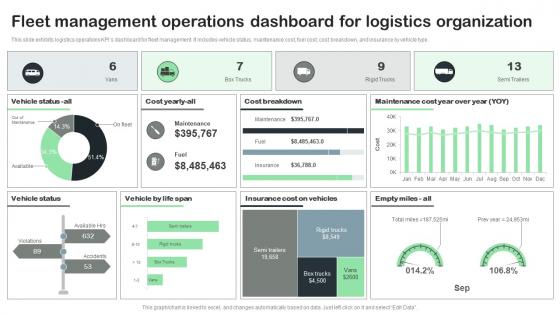
This slide exhibits logistics operations KPIs dashboard for fleet management. It includes vehicle status, maintenance cost, fuel cost, cost breakdown, and insurance by vehicle type.
People who downloaded this PowerPoint presentation also viewed the following :
Fleet Management Operations Dashboard For Logistics Organization with all 7 slides:
Use our Fleet Management Operations Dashboard For Logistics Organization to effectively help you save your valuable time. They are readymade to fit into any presentation structure.






FAQs for Fleet Management Operations Dashboard
Track your vehicle utilization rates first - that's where most companies find their biggest surprises. Fuel costs and maintenance expenses are obvious ones, but don't sleep on driver behavior stuff like hard braking and speeding. Your insurance company will actually love you for monitoring that. Route efficiency shows you the money you're wasting on bad planning. Idle time tracking too. Real-time GPS locations keep daily ops running smooth. Oh, and driver hours for DOT compliance if that applies to you. I'd throw in breakdown frequencies so you can dump those problem trucks before they cost you more. Start there, then get fancy later.
Dude, real-time data is a game changer - you can actually catch problems before they blow up your budget. Like when traffic hits, you'll instantly reroute drivers instead of watching them burn gas in gridlock. Plus you can spot which vehicles are guzzling fuel or about to break down before someone gets stuck roadside. My buddy runs a delivery company and swears by it now. Honestly feels like you're running blind without it once you get hooked. Oh, and don't try tracking everything at once - just focus on whatever's causing you the biggest headaches first.
So telematics is like having eyes on all your trucks 24/7. It pulls real-time stuff - where they are, fuel burn, how drivers are actually driving, engine health, all that. Pretty cool tech honestly. You'll catch things like inefficient routes, drivers who brake too hard or speed, plus maintenance problems before they turn into huge repair bills. Also helps cut fuel waste and idle time. The trick though? You gotta actually look at the data regularly - don't just let it sit there. Set up alerts for whatever matters most to you and check reports weekly.
Honestly, these dashboards are game-changers for cutting costs. Real-time data shows you exactly where money's bleeding - fuel waste, maintenance headaches, drivers who speed or brake like maniacs. Route optimization alone will shock you with how much it saves (I'm talking serious money). The trick is setting up alerts for stuff like excessive idling or overdue oil changes, then actually following through. Otherwise you're just staring at pretty charts while your budget burns. Catch maintenance problems early before they turn into roadside disasters that cost 10x more.
Dude, go with cloud for sure. You can check your fleet stuff from literally anywhere - I'm talking your phone at 6am in pajamas if needed. No servers to babysit, updates happen automatically, and your IT guys won't hate you. Monthly costs beat those massive upfront bills too. The only reason I'd skip it is if you've got crazy security requirements that force everything to stay in-house. But honestly? Most companies don't. Way less hassle overall.
Set up automated validation rules first - cross-check GPS data against fleet cards and maintenance records. Don't trust just one source, especially for fuel consumption or service schedules. The whole garbage-in-garbage-out thing is so real with fleet data! Do random spot checks too, like comparing actual receipts to what's logged. Build alerts for weird outliers - I've seen systems show 500 MPG or negative mileage, which is obviously wrong. Having multiple data streams helps you catch problems before they mess up your reports. Oh, and redundancy is your friend here.
Honestly, data sync is gonna be your biggest pain. GPS updates every 30 seconds but fuel data only syncs hourly - users hate those gaps. Each vendor formats stuff differently too, so you're always converting units and mapping random field names. Plus juggling multiple API keys is annoying, especially with rate limits. Oh and authentication headaches are real. The worst part? When one source crashes, your whole dashboard looks broken. I learned this the hard way lol. Build data validation from day one and always show something when APIs fail, even if it's old data.
Look at your historical data to find patterns - you'll catch problems before they wreck your budget. Track which trucks break down constantly and when. Figure out the best maintenance timing and fuel-efficient routes. Honestly, the dashboard info on driver habits is pretty eye-opening too. Seasonal trends show up clear as day once you start paying attention. Vehicle replacement timing becomes way less of a guessing game. Focus on your 3 biggest cost drains first - that's where smart changes actually move the needle instead of just looking busy.
Real-time vehicle tracking is your top priority - that's literally how you make money. Your drivers need solid communication tools since they're stuck in trucks all day dealing with random issues. Fuel monitoring saves you tons of cash, trust me on that one. Maintenance alerts are clutch too. Mobile screens are a nightmare to design for though, so keep everything dead simple to navigate. Route optimization is worth adding if you've got the budget. Honestly, focus on what your team will use every single day instead of cool features that'll just sit there unused.
So basically it tracks all the annoying stuff - driver hours, inspections, maintenance dates, safety incidents. Real-time alerts save your ass from DOT deadlines and drivers hitting their limits. During audits? Total game changer. Instead of digging through stacks of paperwork like some medieval librarian, you just pull instant reports. Honestly the best feature is catching problems before they turn into expensive violations. My advice - figure out what's causing you the biggest headaches right now and set those alerts up first.
Dude, trust me on this - visualizations are a total lifesaver for fleet stuff. Charts and maps let you spot weird patterns right away instead of going cross-eyed staring at spreadsheets. You'll instantly see which routes are guzzling fuel or if Bob from dispatch is always speeding (again). Heat maps? Seriously brilliant for finding trouble spots. I probably sound like a broken record, but dashboards make everything click faster since the important stuff just pops out visually. Start simple though - just track your main KPIs first and build from there.
So the dashboard shows you real-time stuff like speeding, harsh braking, and fuel efficiency scores. Set up alerts for risky driving behaviors and compare everyone against safety benchmarks. What's cool is seeing patterns - like which drivers actually get better over time vs the ones who need more help. Weekly performance reviews work way better when you have specific data instead of just saying "hey, drive safer." You'll also get reports on hours of service compliance and route efficiency. Oh, and don't forget vehicle inspection completion rates - that stuff matters too for keeping everything running smoothly.
Figure out what numbers actually matter to you first - fuel costs, how much your vehicles are being used, maintenance timing, whatever. Don't dump everything onto one screen just because the software lets you (I've made that mistake). Group similar stuff together and make the most important things pop visually. You'll want to click through from big picture stuff down to the nitty-gritty details when something looks off. But honestly? The most crucial thing is getting your team to actually try it out before you go live. Their feedback will save you from building something that looks pretty but sits there unused.
Honestly, this stuff matters way more than people think. Bad interface design will kill your dashboard faster than anything else - I've watched companies blow serious cash on tools that just collect digital dust because nobody can figure them out. Your drivers and dispatchers need to find info fast, not hunt around some confusing mess of buttons. Clean layouts are everything. Make it mobile-friendly too since half your team's probably checking it on their phones anyway. Here's the thing though - test it with real users before you launch. They'll spot problems you'd never notice and save you from a expensive mistake later.
Dude, fleet tech is getting crazy right now. AI's basically turning dashboards into fortune tellers - they'll predict your truck's gonna break down next Tuesday instead of just telling you it already did. IoT sensors are everywhere now, tracking tire pressure, how your drivers are behaving, all that stuff. The data overload is honestly kinda nuts. AR's creeping in for maintenance help, and some companies are playing with blockchain for supply chain stuff (though I'm still skeptical on that one). Biggest change? Everything's becoming proactive instead of just reactive. Don't get sucked into shiny new tech though - pick what actually fixes your headaches.
-
Mesmerized with the fantastic collection! Super sleek, relevant infographics.
-
Unique research projects to present in meeting.