


Four dimensions approach or layers of diversity edu ppt




Try Before you Buy Download Free Sample Product
 Impress Your
 Audience
 100%
100% Editable
 Save Hours
 of Time


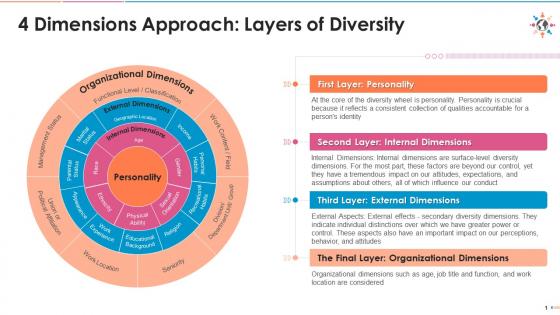
This slide covers four layers of diversity dimension approach such as personality, internal and external dimensions, and lastly, organizational dimensions.
People who downloaded this PowerPoint presentation also viewed the following :
Four dimensions approach or layers of diversity edu ppt with all 16 slides:
Use our Four Dimensions Approach Or Layers Of Diversity Edu Ppt to effectively help you save your valuable time. They are readymade to fit into any presentation structure.








FAQs for Four dimensions approach or layers of
Honestly, diverse teams just make better decisions - they catch stuff homogeneous groups totally miss. Financial performance is usually stronger too, which is nice for obvious reasons. Innovation goes up because different backgrounds = different solutions to problems. Oh, and hiring gets easier since top talent actually wants to work somewhere inclusive these days. Your customer relationships improve when your team looks more like your client base. I'd start by checking where you're sourcing candidates - are you hitting the same networks every time? That's usually the first problem to fix.
Honestly, start with just 2-3 solid metrics - don't go crazy trying to measure everything right away. Survey data is where the real gold is though, like asking people if they actually feel included and valued at work. Numbers-wise, track hiring and promotion rates across different groups, plus retention stuff. Oh and participation in mentorship programs is pretty telling too. The trick is getting your baseline data first before you change anything, then you can actually see if your efforts are working. ERG engagement and 360 feedback scores are good additions once you get the basics down. But seriously, the survey responses will probably surprise you more than the hard numbers.
Honestly, leadership makes or breaks diversity efforts. You're literally setting the vibe for everyone. When you actually prioritize diverse hiring and call out bias, your team picks up on that energy. I've watched managers completely flip their team dynamics just by walking the walk instead of empty talk. Here's the thing though - you control the big stuff. Promotions, who gets plum projects, whose ideas actually get heard in meetings. Diversity won't magically happen on its own (wish it would, but yeah). Start small: look at your own decisions. Are you really giving everyone the same shot at success? That self-check is huge.
Honestly, blind resume reviews are a game changer - just strip out names and other identifying info before anyone sees them. I'd also suggest standardized interview questions so you're comparing apples to apples. Multiple people making decisions helps too, and diverse interview panels are surprisingly effective. Skills-based tests beat "gut feelings" about culture fit every time, though that took me a while to learn. Don't try to change everything at once though. Pick like two things and actually track your hiring data to see if it's working.
Look, most companies keep hiring from the exact same places and act shocked when their teams look identical. Try posting on different job boards and partner with groups that support underrepresented people. Clean up your job descriptions too - ditch the inclusive language buzzwords but remove requirements that aren't actually needed. Structured interviews help cut down on bias, which is huge. After you hire people, focus on making them feel safe to speak up. Oh and mentorship programs are clutch for keeping good people around. Employee resource groups work well too, though they take time to build momentum.
Look, diversity is honestly like having a bunch of different problem-solving superpowers on one team. People from different backgrounds will spot things you'd totally miss and challenge ideas in ways that actually make them better. I've seen this play out so many times - homogeneous teams just get stuck in the same thought patterns. The tricky part though? You need people to feel safe speaking up, otherwise what's the point of having all those perspectives if nobody shares them. Next time you're brainstorming, actually ask someone to play devil's advocate. Works way better than you'd think.
You can't just hire diverse people and call it a day. People need to feel safe speaking up without getting shot down - that's literally everything. Pay attention to who dominates your meetings and pull in the quiet voices. Deal with microaggressions when they happen. Also, check your processes for bias stuff - interviews, who gets the cool projects, all that. Honestly, just start by watching who talks and who doesn't in your next meeting. It's pretty eye-opening once you notice the patterns.
Honestly, having diverse people on your team is a game-changer for understanding customers. Different backgrounds = catching stuff you'd never notice otherwise. Like, someone might know that white flowers mean death in certain cultures while your marketing team's planning a "pure and clean" campaign. Customers connect better when they feel actually understood too. Oh, and the decision-making gets way better since you're not all thinking the same way. I'd look at who you're selling to first, then figure out where your team's missing perspectives. It's not just being PC - it genuinely works.
Oh man, the biggest pain is always getting people on board who think it's just corporate BS. Leadership says they want change but won't actually fund it properly - classic move, right? Then you've got employees rolling their eyes like "here we go again with another initiative." Budget fights are brutal too since real programs cost real money. What really sucks is proving it works because culture shifts take forever and you can't exactly put that in a spreadsheet. My advice? Find leaders who actually care (not just performative stuff) and tie everything back to money somehow. That's the only language some people speak.
Honestly, skip the awareness stuff and go straight for behavior change. Use real scenarios from your actual workplace - nobody cares about generic examples. Interactive is key here. Don't make it one of those soul-crushing checkbox trainings we've all endured. Build it into regular conversations instead and actually follow up with action plans. Get leadership involved where people can see it, then track real outcomes (not just who showed up). Oh, and work backwards - figure out exactly what behaviors you want first, then design everything around that.
Yeah, you can totally have both! Most people think they're opposites but they're really not. The trick is fixing how you hire, not dropping your standards. Clean up those job descriptions to remove bias, do structured interviews where everyone gets asked the same stuff, and get diverse people on your interview panels. Honestly? Most "merit-based" hiring fails because of unconscious bias anyway - not because you hired someone less qualified. Cast a wider net for candidates. Change how you evaluate skills, but don't change what skills you actually need. Fair systems just let the best people from everywhere actually shine through.
Oh totally - diverse teams are way stickier and happier. When people see folks like them in leadership, they actually feel heard and valued. Makes sense, right? It creates this whole cycle where everyone feels safe to share ideas and stays loyal. Better decisions happen too, which honestly just makes work more enjoyable for everyone. Quick tip though - check your current demographics first. Look at who's getting promoted and where the gaps are. That's probably the easiest place to start making changes.
Honestly, you want people with totally different backgrounds tackling problems together. An engineer sees the technical stuff while marketing spots user issues you'd never think of. It's like having different superpowers, which sounds cheesy but it's true. The tricky part? Getting everyone to actually speak up. Quieter people often have the best insights but won't share unless you directly ask them. I'd rotate who runs brainstorming sessions too - keeps things fresh. Oh, and don't let the loud personalities dominate everything. That kills the whole point.
Honestly, getting involved in your community is probably the best way to actually diversify your team. You'll tap into talent pools that most companies completely miss with their boring online job posts. Instead of just showing up when you need someone, try sponsoring local groups or hitting up community events regularly. People can tell when you're being fake about it though - like my old company that only cared about diversity during hiring season, so cringe. Find communities that match what you're looking for and actually contribute something meaningful first. Building those real relationships takes time but it's worth it.
Skip the corporate fluff and get personal with your diversity stories. Real employee experiences hit way harder than boring policy updates, trust me. Have people tell their own stories - that moment they finally felt included, or when their different perspective actually solved a team problem. HR doesn't need to filter everything! Honestly, authentic beats polished every day. Start gathering these stories now. Focus on specific moments of change, not just numbers. People remember individual journeys, not statistics. Use those stories in your next communication and you'll see the difference.
-
The Designed Graphic are very professional and classic.