


How AI Is Revolutionizing Finance Industry Powerpoint Presentation Slides AI CD




Try Before you Buy Download Free Sample Product
 Impress Your
 Audience
 100%
100% Editable
 Save Hours
 of Time


Artificial Intelligence AI in finance is a strategy of leveraging data and machine learning ML for managing money and streamlining the operations of financial institutions. Grab our How AI is revolutionizing the finance industry template. It assists organizations in getting familiar with AI finance by referring to aspects such as benefits, statistics, use cases, the latest trends, etc. Our AI Banking deck highlights various AI technologies financial institutions use, such as deep learning, machine learning, computer vision, and natural language processing. Furthermore, it shows the usage of AI in different areas of finance, such as wealth management, banking, insurance, FinTech, and corporate finance. Our AI Insurance PPT also highlights the usage of AI finance in banking and insurance for fraud detection, customer KYC, credit scoring, debt collection, etc. It further shows AI applications for increasing the sales of financial products. Moreover, our AI FinTech module offers various AI tools for automated market trading, fraud detection, and customer experience enhancement. It also highlights Open AI ChatGPT tools and the future impacts of AI on finance jobs and different business functions. Lastly, it highlights case studies of companies leveraging AI to improve operations. Get instant access.
People who downloaded this PowerPoint presentation also viewed the following :
Content of this Powerpoint Presentation
Slide 1: This slide introduces How AI is Revolutionizing Finance Industry. Commence by stating Your Company Name.
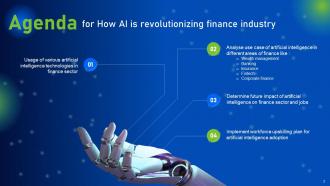
Slide 2: This slide depicts the Agenda of the presentation.
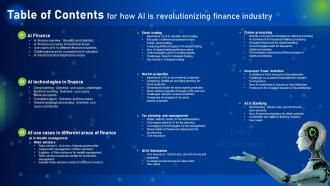
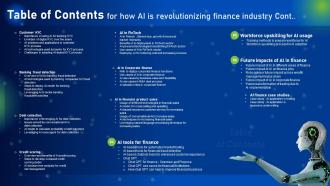
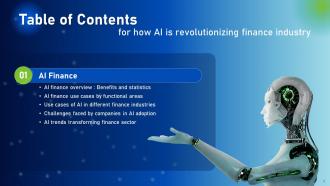
Slide 3: This slide includes the Table of Contents.
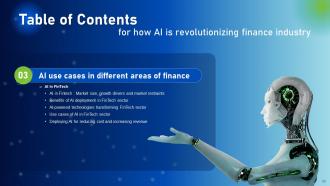
Slide 4: This is yet another slide continuing the Table of Contents.
Slide 5: This slide highlights the Title for the Topics to be covered further.
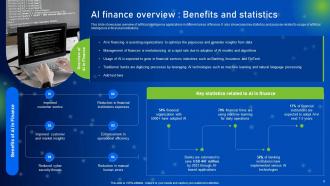
Slide 6: This slide showcases overview of artificial intelligence applications in different areas of finance.
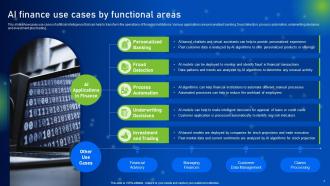
Slide 7: This slide mentions about the AI finance use cases by functional areas.
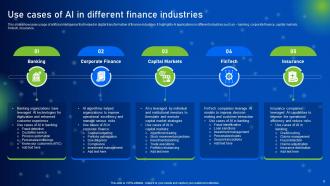
Slide 8: This slide presents the Use cases of AI in different finance industries.
Slide 9: This slide exhibits the Challenges faced by finance companies in AI adoption.
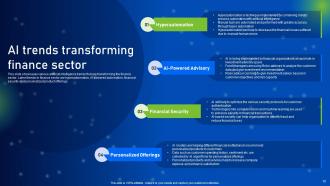
Slide 10: This slide talks about the AI trends transforming finance sector.
Slide 11: This slide indicates the Heading for the Contents to be further discussed.
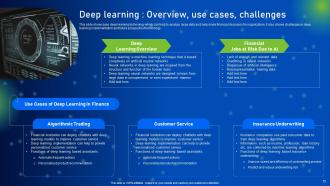
Slide 12: This slide showcases deep learning technology which can help to analyze large data and help make financial decisions for organization.
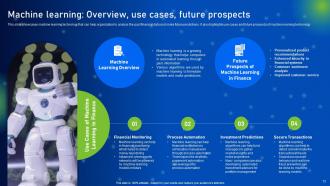
Slide 13: This slide reveals Machine learning technology to analyze the past financial data and make future predictions.
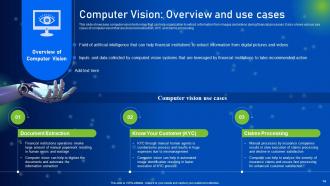
Slide 14: This slide showcases computer vision technology to extract information from images and videos during financial processes.
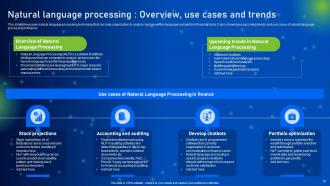
Slide 15: This slide portrays natural language processing technology to analyze human written language and perform financial tasks.
Slide 16: This slide indicates the Title for the Ideas to be covered in the following template.
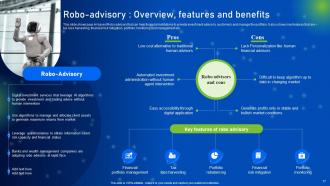
Slide 17: This slide shows AI-based Robo advisory to provide investment advice to customers and manage the portfolio.
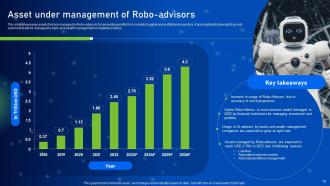
Slide 18: This slide presents the Asset under management of Robo-advisors.
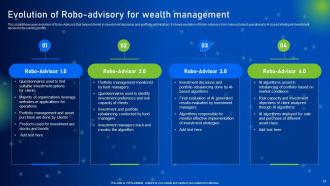
Slide 19: This slide highlights the Evolution of Robo-advisory for wealth management.
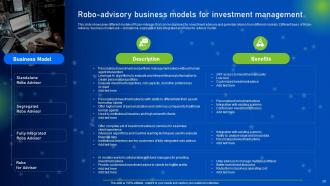
Slide 20: This slide showcases different models of Robo-Advisory for investment advisory and generate returns from different markets.
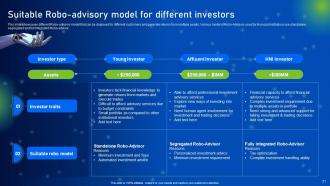
Slide 21: This slide displays the Suitable Robo-advisory model for different investors.
Slide 22: This slide incorporates the Heading for the Ideas to be discussed further.
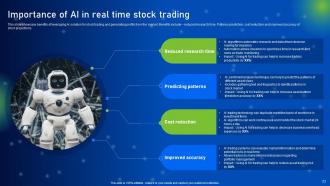
Slide 23: This slide presents the Importance of AI in real time stock trading.
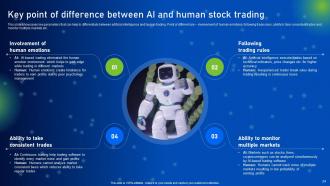
Slide 24: This slide states the Key point of difference between AI and human stock trading.
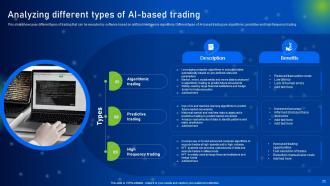
Slide 25: This slide deals with Analyzing different types of AI-based trading.
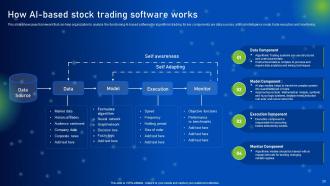
Slide 26: This slide showcases framework that can help organization to analyze the functioning AI-based software for algorithmic trading.
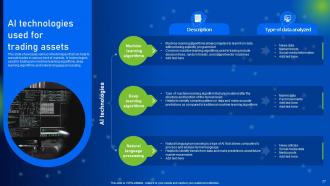
Slide 27: This slide exhibits various AI techniques that can help to execute trades in various kind of markets.
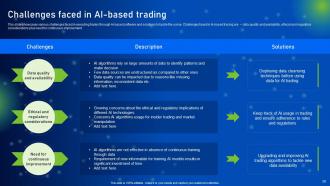
Slide 28: This slide depicts the Challenges faced in AI-based trading.
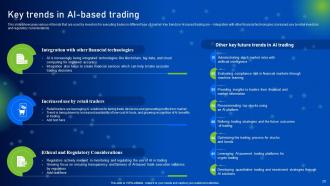
Slide 29: This slide presents the Key trends in AI-based trading.
Slide 30: This slide displays the Title for the Contents to be covered next.
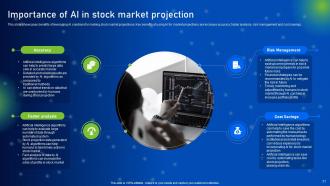
Slide 31: This slide showcases benefits of leveraging AI solutions for making stock market projections.
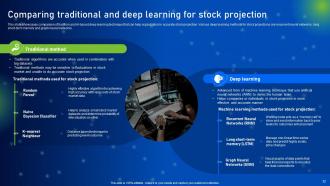
Slide 32: This slide focuses on Comparing traditional and deep learning for stock projection.
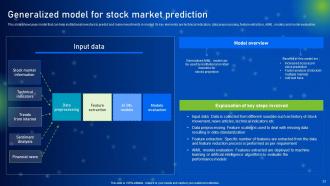
Slide 33: This slide showcases model that can help institutional investors to predict and make investments in market.
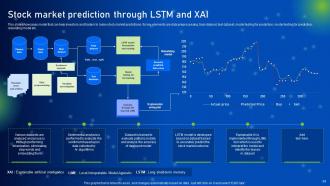
Slide 34: This slide reveals the Stock market prediction through LSTM and XAI.
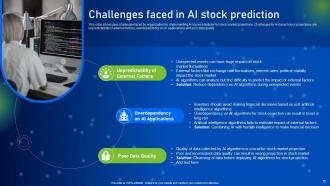
Slide 35: This slide portrays the Challenges faced in AI stock prediction.
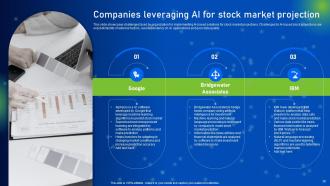
Slide 36: This slide mentions about the Companies leveraging AI for stock market projection.
Slide 37: This slide contains the Heading for the Topics to be discussed further.
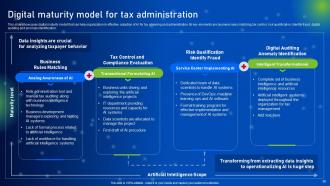
Slide 38: This slide depicts the Digital maturity model for tax administration.
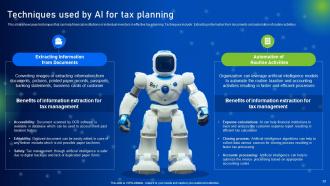
Slide 39: This slide exhibits the Techniques used by AI for tax planning.
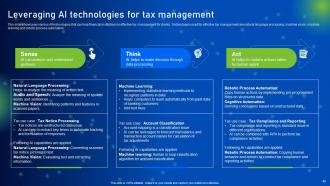
Slide 40: This slide represents Leveraging AI technologies for tax management.
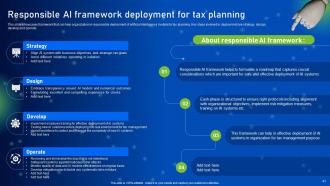
Slide 41: This slide illustrates the Responsible AI framework deployment for tax planning.
Slide 42: This slide portrays the Title for the Topics to be covered further.
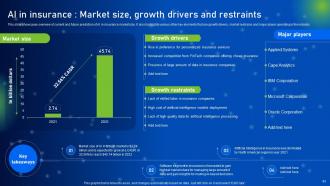
Slide 43: This slide showcases overview of current and future prediction of AI in insurance market size.
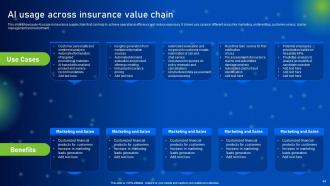
Slide 44: This slide indicates the AI usage across insurance value chain.
Slide 45: This slide presents the Title for the Contents to be covered in the upcoming template.
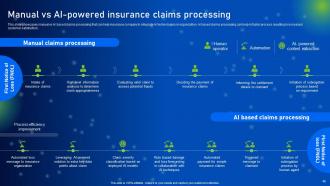
Slide 46: This slide showcases manual vs AI based claims processing to integrate AI technologies in organization.
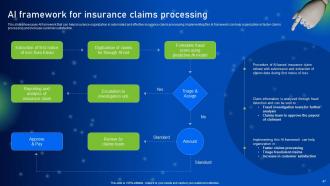
Slide 47: This slide illustrates the AI framework for insurance claims processing.
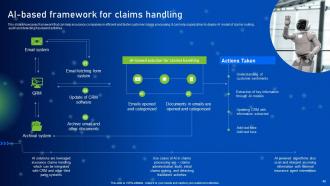
Slide 48: This slide showcases framework that can help insurance companies in efficient and faster customer claims processing.
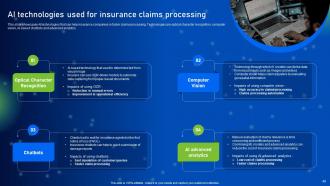
Slide 49: This slide mentions about the AI technologies used for insurance claims processing.
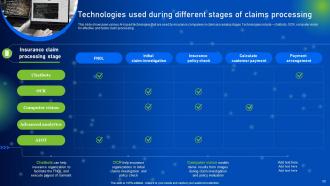
Slide 50: This slide showcases various AI-based technologies that are used by insurance companies in claim processing stages.
Slide 51: This slide indicates the Heading for the Topics to be further discussed.
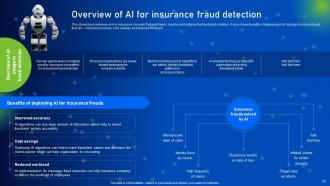
Slide 52: This slide reveals the Overview of AI in insurance company that can help to monitor and mitigate the fraudulent activities.
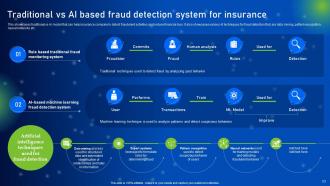
Slide 53: This slide highlights the Traditional vs AI based fraud detection system for insurance.
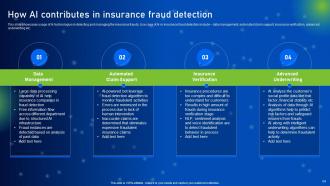
Slide 54: This slide showcases usage of AI technologies in detecting and managing the insurance frauds.
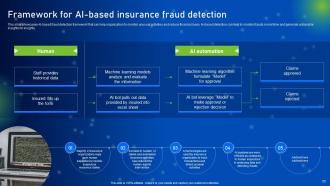
Slide 55: This slide presents the Framework for AI-based insurance fraud detection.
Slide 56: This slide includes the Title for the Ideas to be discussed in the following template.
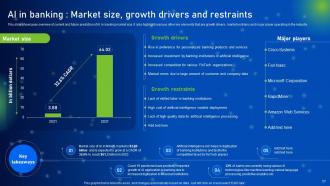
Slide 57: This slide states the overview of current and future prediction of AI in banking market size.
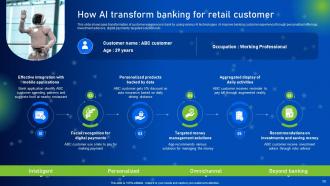
Slide 58: This slide portrays the transformation of customer experience in bank by using various AI technologies.
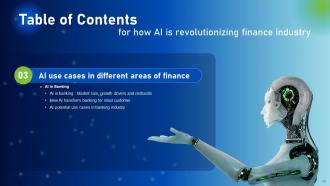
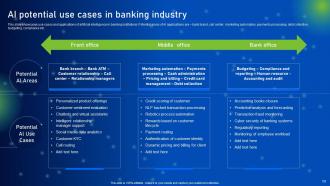
Slide 59: This slide displays the AI potential use cases in banking industry.
Slide 60: This slide exhibits the Heading for the Ideas to be covered further.
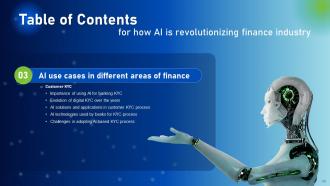
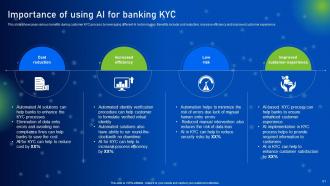
Slide 61: This slide displays the Importance of using AI for banking KYC.
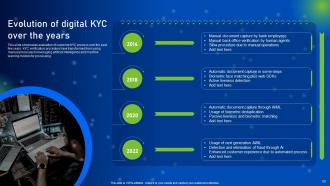
Slide 62: This slide represents the Evolution of digital KYC over the years.
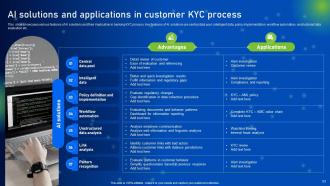
Slide 63: This slide portrays the AI solutions and applications in customer KYC process.
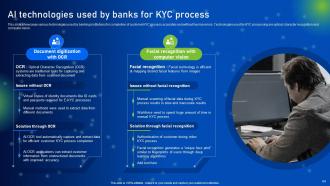
Slide 64: This slide talks about the AI technologies used by banks for KYC process.
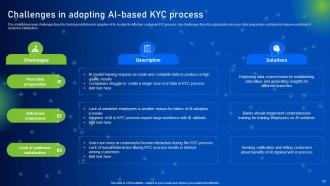
Slide 65: This slide exhibits the Challenges in adopting AI-based KYC process.
Slide 66: This slide includes the Title for the Contents to be discussed next.
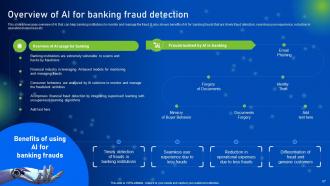
Slide 67: This slide showcases overview of AI that can help banking institutions to monitor and manage the fraud.
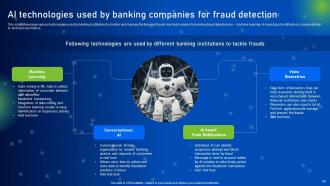
Slide 68: This slide highlights the various technologies used by banking institutions to monitor and manage the financial frauds.
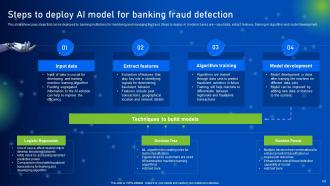
Slide 69: This slide states the Steps to deploy AI model for banking fraud detection.
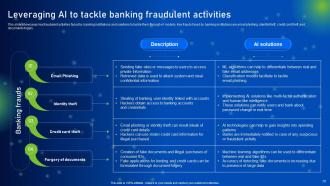
Slide 70: This slide talks about Leveraging AI to tackle banking fraudulent activities.
Slide 71: This slide exhibits the Heading for the Topics to be covered in the following template.
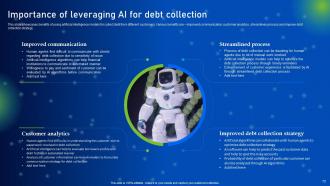
Slide 72: This slide states the Importance of leveraging AI for debt collection.
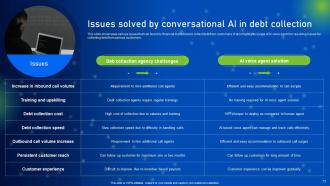
Slide 73: This slide displays the Issues solved by conversational AI in debt collection.
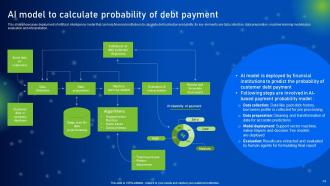
Slide 74: This slide presents the AI model to calculate probability of debt payment.
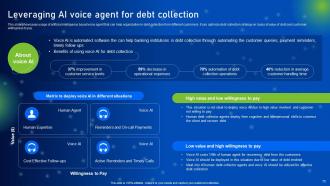
Slide 75: This slide showcases usage of artificial intelligence based voice agent to help organization in debt collection from different customers.
Slide 76: This slide incorporates the Title for the Topics to be covered next.
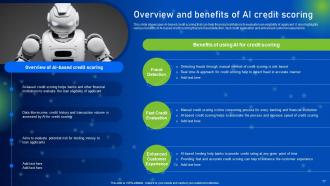
Slide 77: This slide showcases AI-based credit scoring that can help financial institutions to evaluate loan eligibility of applicant.
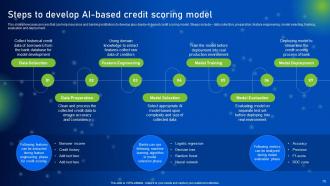
Slide 78: This slide outlines the Steps to develop AI-based credit scoring model.
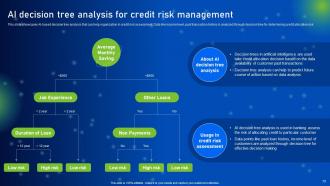
Slide 79: This slide displays the AI decision tree analysis for credit risk management.
Slide 80: This slide contains the Heading for the Topics to be discussed in the next template.
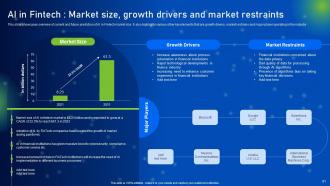
Slide 81: This slide showcases overview of current and future prediction of AI in Fintech market size.
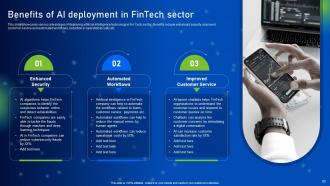
Slide 82: This slide exhibits the Benefits of AI deployment in FinTech sector.
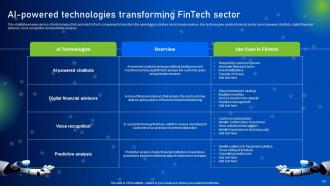
Slide 83: This slide talks about the AI-powered technologies transforming FinTech sector.
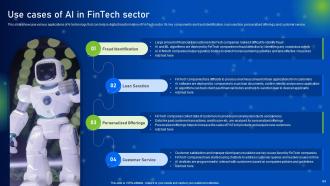
Slide 84: This slide presents the Use cases of AI in FinTech sector.
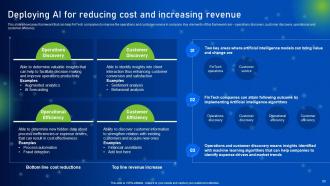
Slide 85: This slide deals with Deploying AI for reducing cost and increasing revenue.
Slide 86: This slide includes the Title for the Ideas to be covered next.
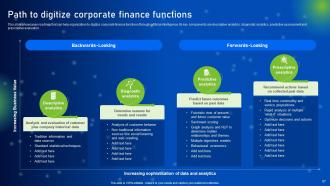
Slide 87: This slide indicates the Path to digitize corporate finance functions.
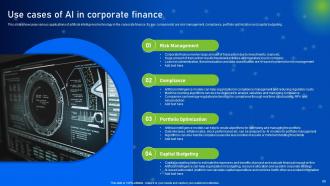
Slide 88: This slide depicts the Use cases of AI in corporate finance.
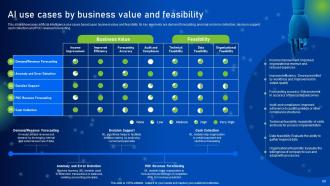
Slide 89: This slide showcases artificial intelligence use cases based upon business value and feasibility.
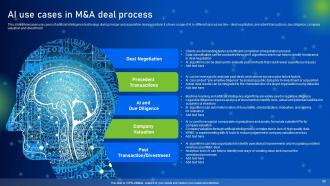
Slide 90: This slide presents use cases of artificial intelligence technology during merger and acquisition deal procedure.
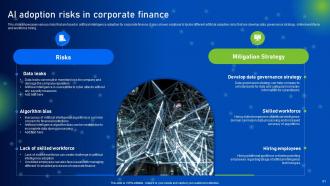
Slide 91: This slide talks about the various risks that are faced in artificial intelligence adoption for corporate finance.
Slide 92: This slide contains the Heading for the Ideas to be discussed in the following template.
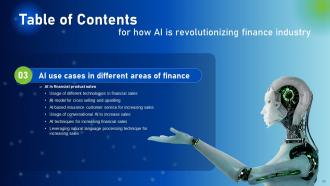
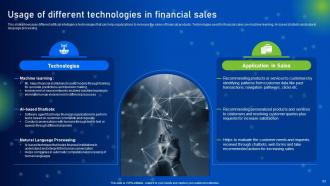
Slide 93: This slide shows the Usage of different technologies in financial sales.
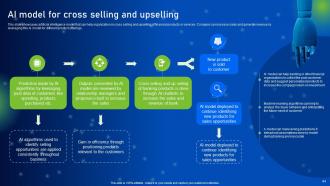
Slide 94: This slide depicts the AI model for cross selling and upselling.
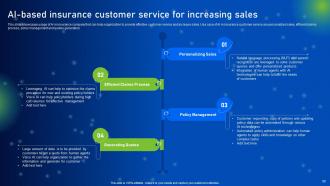
Slide 95: This slide portrays the AI-based insurance customer service for increasing sales.
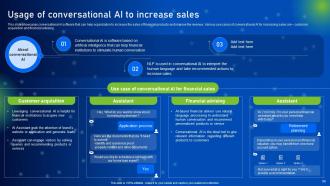
Slide 96: This slide elucidates the Usage of conversational AI to increase sales.
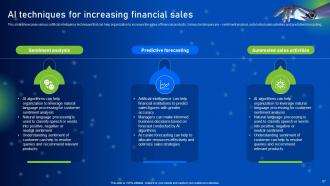
Slide 97: This slide displays the AI techniques for increasing financial sales.
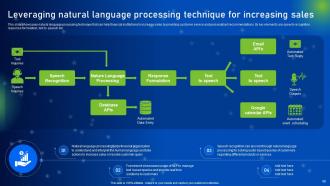
Slide 98: This slide talks about Leveraging natural language processing technique for increasing sales.
Slide 99: This slide exhibits the Title for the Contents to be discussed next.
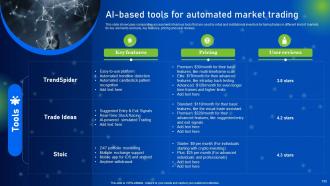
Slide 100: This slide depicts the AI-based tools for automated market trading.
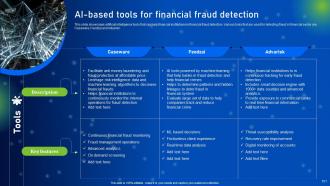
Slide 101: This slide showcases artificial intelligence tools that can help financial institutions in financial fraud detection.
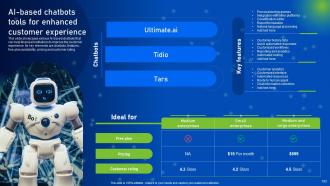
Slide 102: This slide mentions about the AI-based chatbots tools for enhanced customer experience.
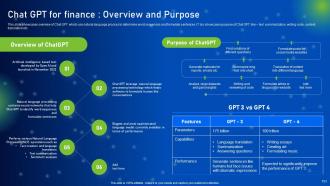
Slide 103: This slide showcases overview of Chat GPT which use natural language process to determine word sequences and formulate sentences.
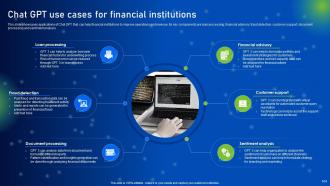
Slide 104: This slide reveals the Chat GPT use cases for financial institutions.
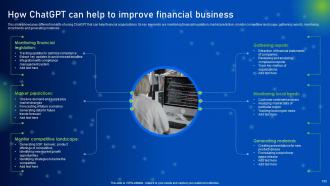
Slide 105: This slide states the different benefits of using ChatGPT that can help financial organizations.
Slide 106: This slide indicates the Heading for the Topics to be covered in the forthcoming template.
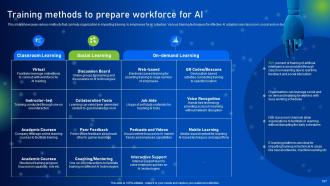
Slide 107: This slide exhibits the Training methods to prepare workforce for AI.
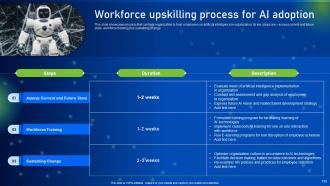
Slide 108: This slide talks about the Workforce upskilling process for AI adoption.
Slide 109: This slide highlights the Title for the Topics to be discussed further.
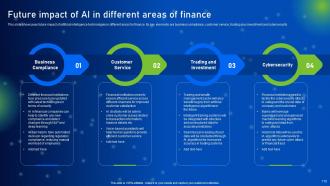
Slide 110: This slide showcases future impact of artificial intelligence technologies in different areas for finance.
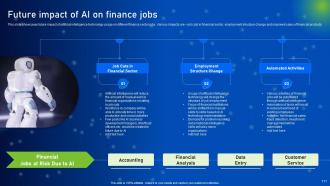
Slide 111: This slide portrays the future impact of artificial intelligence technology usage on different finance sector jobs.
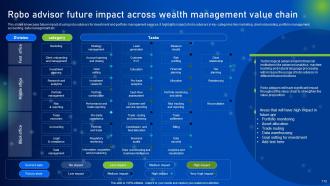
Slide 112: This slide reveals the Robo advisor future impact across wealth management value chain.
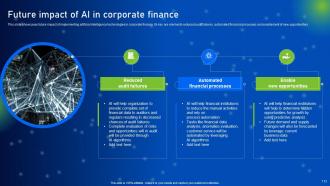
Slide 113: This slide exhibits the Future impact of AI in corporate finance.
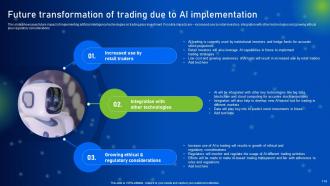
Slide 114: This slide showcases future impact of implementing artificial intelligence technologies on trading plus investment.
Slide 115: This slide outlines the Heading for the Contents to be covered next.
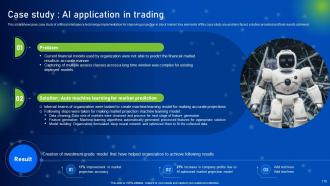
Slide 116: This slide showcases case study of artificial intelligence technology implementation for improving projection in stock market.
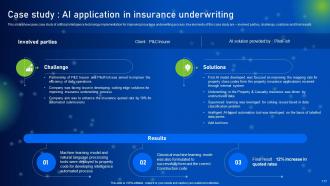
Slide 117: This slide reveals the case study of artificial intelligence technology implementation for improving insurance underwriting process.
Slide 118: This is the Icons slide containing all the Icons used in the plan.
Slide 119: This is the Thank You slide for acknowledgemnet.
How AI Is Revolutionizing Finance Industry Powerpoint Presentation Slides AI CD with all 124 slides:
Use our How AI Is Revolutionizing Finance Industry Powerpoint Presentation Slides AI CD to effectively help you save your valuable time. They are readymade to fit into any presentation structure.








FAQs for How AI Is Revolutionizing Finance Industry Powerpoint Presentation
Dude, banks are going crazy with AI for risk stuff right now. Machine learning can crunch insane amounts of data and spot patterns we'd never catch - like credit scores that look at thousands of factors instead of the usual handful. Fraud detection got way faster too since those old rule systems were honestly terrible. The predictive modeling is kinda freaky though, it can forecast market risks and customer behavior with ridiculous accuracy. My cousin works in risk management and says everyone's scrambling to learn these tools because they're becoming the norm everywhere.
So basically these AI systems crunch through tons of transaction data super fast and catch weird patterns we'd never notice. Like if your card gets swiped in NYC then London an hour later - instant red flag. They study old fraud cases to get better at spotting sketchy stuff. What's cool is they keep learning new scammer tricks, so they're always improving. Most banks already have this running in the background protecting your accounts. Oh, and definitely turn on those text alerts if you haven't - they'll ping you right away when something looks off.
Honestly, ML is changing banking in some pretty cool ways. Chatbots don't give you those awful robotic responses anymore - they actually get what you're asking. Fraud detection happens instantly now, which is clutch. Banks are also way better at suggesting stuff you'd actually want instead of random products. Oh, and loan approvals? So much faster since algorithms can check your creditworthiness right away. The predictive stuff is wild too - like they'll warn you about cash flow problems before you notice. Everything feels more personalized to your situation rather than generic banking BS.
Okay so three main things you gotta nail down: fairness, transparency, and privacy. Your AI can't be screwing over certain groups - lending stuff is where this gets really messy legally. Be upfront about using AI too, because people get pissed when they find out later they were talking to a bot. Customer data protection is basically life or death for your business at this point. Oh, and definitely audit whatever AI you've got running now for bias issues. Set up some solid governance rules before launching new stuff - way easier than fixing problems later.
So predictive analytics can spot market patterns way faster than old-school methods. You're analyzing tons of data - transactions, news sentiment, economic stuff - to catch price movements before everyone else does. Honestly, some of these models are getting scary accurate. It makes your investing more data-driven instead of just going with your gut, which usually means better returns for the risk you're taking. I'd probably start small though, maybe 10-20% of your portfolio while you figure out how well it actually works for you.
Dude, AI is seriously clutch for compliance stuff. It'll scan transactions for sketchy patterns and flag violations as they happen - no more waiting around. Your team can automate those brutal regulatory reports that used to take forever, like stress tests and AML filings. Plus it tracks rule changes across different regions and gives you a heads up when something new drops. Honestly, compliance teams love this because they're not drowning in paperwork anymore. I'd start with whatever tasks are eating up most of your time - that's where you'll see the biggest wins.
So banks are basically using NLP to make their chatbots actually understand what you're saying instead of just hunting for keywords. Like if you say "someone might've used my card without permission last week" - it gets what you mean and routes you correctly. Pretty wild how good this stuff has gotten recently, honestly. The systems can handle different languages, pick up when you're pissed off, and remember what you talked about before. Most big banks solve like 70-80% of basic questions through bots now before you even reach a human. Oh and if you're shopping around for vendors, test their intent recognition first - that's where they usually fall short.
Honestly, the data stuff will drive you crazy - most companies have messy, scattered info that doesn't play nice together. Your old systems weren't designed for this either, so integration's a nightmare. Compliance gets tricky too since you can't always explain why the AI decided something. Good luck finding people who actually know both finance AND AI - seriously, they're unicorns. Your current team's gonna need major training. I'd say test it out somewhere low-stakes first, maybe expense processing or something? Work out the bugs before you touch anything that could tank your quarter.
So banks use AI to look at how you spend money and what your goals are, then customize everything for you. Like if you travel a ton, they'll push travel rewards cards instead of random offers. Your savings habits might get you better account recommendations too. They can even change loan terms and how the app looks based on your stuff. Honestly, it's kinda wild how targeted it gets now. Just make sure you're okay with them having access to all that personal data first - that's the tradeoff for getting the good personalized stuff.
Dude, AI trading is absolutely nuts now. These algorithms can crunch massive amounts of data in milliseconds and spot patterns no human ever could. Markets react to news almost instantly because of it, which honestly makes trying to time anything pretty pointless for regular people like us. The speed is just insane - we're talking trades executed faster than you can blink. Sure, it makes markets more efficient overall, but it's also caused some crazy flash crashes. My take? Don't even try to compete with these machines on timing. It's like bringing a calculator to a supercomputer fight.
So most advisors are using AI for the boring stuff - automated rebalancing, risk assessments, that whole deal. It spots when portfolios drift way faster than you could manually. Machine learning helps with investment recommendations too, matching client goals with actual data instead of just gut feelings. Robo-advisors handle the smaller accounts (honestly saves so much time). The cool part? You can offer fancy portfolio management to way more clients without working yourself to death. I'd start by seeing what AI tools actually play nice with whatever platform you're already using.
So basically, AI in finance has some real issues you should know about. Data bias can screw over certain groups unfairly. These models are also black boxes - good luck explaining why they made a decision. And they're obsessed with historical patterns, which honestly doesn't help much when the next financial crisis hits from left field. Regulators are still scrambling to catch up too. You can fix some of this by mixing up your training data and keeping humans in the loop for big calls. Regular testing helps. But yeah, treat AI like any other tool - useful but don't let it run wild without supervision.
Dude, AI credit scoring is insane - it looks at hundreds of data points instead of just credit history and income. Your spending habits, how you fill out forms, even social media stuff gets analyzed by machine learning algorithms. They spot patterns traditional models totally miss. The crazy part? These systems get better over time as they process more applications. Short sentences, long ones that flow naturally. Honestly, I'm still wrapping my head around how much data we actually generate daily. But yeah, if you're not using alternative data sources in your scoring model yet, you're missing out on way better approval rates.
Honestly? Your gut usually wins when markets go completely sideways or you're dealing with people stuff. Look at 2008 - some traders just *knew* something was sketchy about housing way before the models caught up. You're way better at reading room vibes during client meetings, catching cultural stuff in international deals, or that moment when a transaction feels totally wrong. AI crushes it with patterns and historical stuff, but when you're in truly weird territory? That's where being human pays off. Oh, and relationship decisions - definitely trust yourself there.
Honestly, explainable AI is huge right now - regulators want transparency in financial decisions, so those black-box models are basically dead. Fraud detection is getting insanely good too. The real game-changer though? Personalized financial products powered by AI are about to blow up everywhere. Oh, and quantum computing for risk modeling is probably 5-10 years out but worth watching. AI governance rules are coming whether we like it or not. My take: start some small pilots now. You don't want to be that company scrambling to catch up when this stuff becomes the norm.
-
Well-designed and informative templates. Absolutely brilliant!
-
SlideTeam is the best in the business. Their templates are engaging and customizable. You can rely on them.