


Improving IoT Device Cybersecurity To Prevent Data Breaches Powerpoint Presentation Slides IoT CD





Try Before you Buy Download Free Sample Product
 Impress Your
 Audience
 100%
100% Editable
 Save Hours
 of Time


Check out our professionally designed Improving IoT Device Cybersecurity to Prevent Data Breaches PPT, which companies can use to ensure device security, mitigate cyber attacks, and safeguard data integrity. The IoT Device Security PowerPoint presentation begins with an overview of IoT cybersecurity, which includes the latest statistics, strategic models, and industry leaders. Secondly, the Internet of Things Cybersecurity Template caters to industry analysis of IoT cybersecurity, which covers market size, trends, and growth opportunities. Further, the IoT Security Awareness module includes the most common types of IoT cyberattacks companies face, such as ransomware, botnets, denial of service DoS attacks, etc. Also, the IoT Cybersecurity Attacks deck caters to significant applications of IoT cyberattacks in smart homes, healthcare, retail, etc. Finally, in the Smart Home Security PowerPoint, there are some key performance indicator KPI dashboards through which organizations can measure the impact of strategies on company security performance. Empower your devices with actionable strategies download our PPT now.
People who downloaded this PowerPoint presentation also viewed the following :
Content of this Powerpoint Presentation
Slide 1: The slide introduces Improving IoT Device Cybersecurity to Prevent Data Breaches.
Slide 2: This is an Agenda slide. State your agendas here.
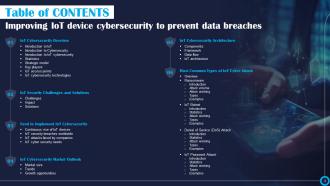
Slide 3: The slide displays Table of CONTENTS.
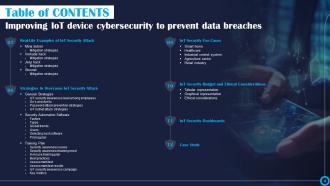
Slide 4: The slide continues Table of CONTENTS further.
Slide 5: The slide again depicts Table of CONTENTS.
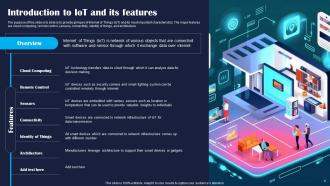
Slide 6: The slide provides glimpse of Internet of Things (IoT) and its most important characteristics.
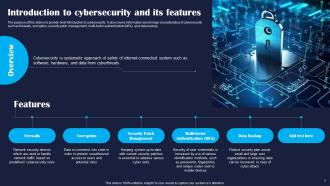
Slide 7: The slide gives brief introduction to cybersecurity.
Slide 8: The slide renders brief introduction to Internet of Things (IoT) cyber security.
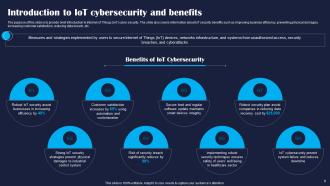
Slide 9: The slide outlines major statistics which are associated with Internet of Things (IoT) security.
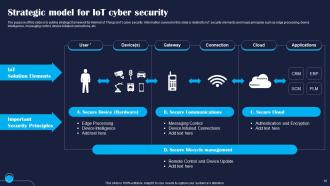
Slide 10: The slide illustrates strategic framework for Internet of Things (IoT) cyber security.
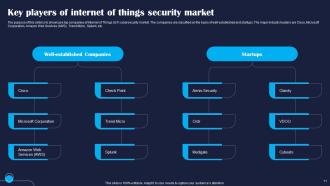
Slide 11: The slide shows top companies of Internet of Things (IoT) cybersecurity market.
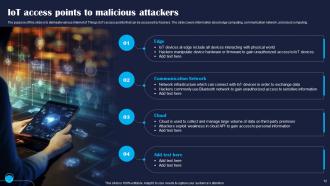
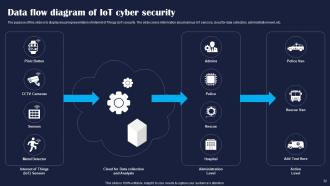
Slide 12: The slide delineates various Internet of Things (IoT) access points that can be accessed by hackers.
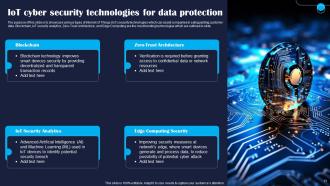
Slide 13: The slide shows various types of Internet of Things (IoT) security technologies which can assist companies in safeguarding customer data.
Slide 14: The slide renders Title of CONTENTS which is to be discussed further.
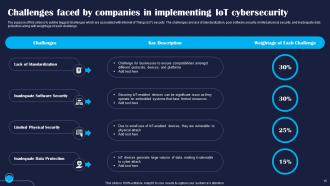
Slide 15: The slide briefs biggest challenges which are associated with Internet of Things (IoT) security.
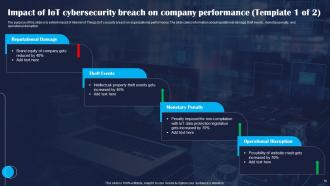
Slide 16: The slide is to exhibit impact of Internet of Things (IoT) security breach on organizational performance.
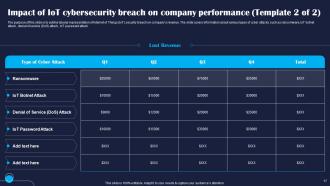
Slide 17: The slide is to outline tabular representation of Internet of Things (IoT) security breach on company’s revenue.
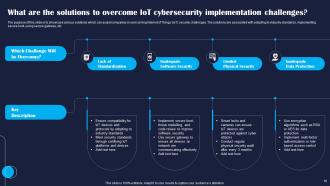
Slide 18: The slide is to showcase various solutions which can assist companies in overcoming Internet of Things (IoT) security challenges.
Slide 19: The slide describes Title of CONTENTS further.
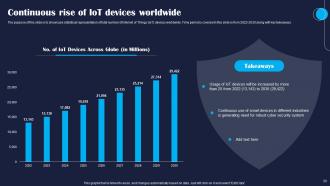
Slide 20: The slide is to showcase statistical representation of total number of Internet of Things (IoT) devices worldwide.
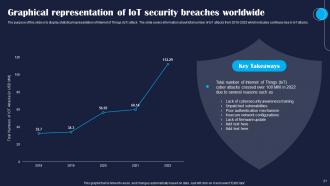
Slide 21: The slide is to display statistical representation of Internet of Things (IoT) attack.
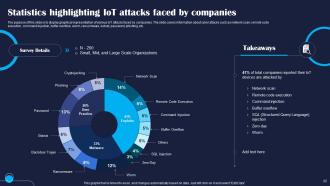
Slide 22: The slide demonstrates graphical representation of various IoT attacks faced by companies.
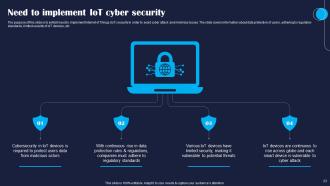
Slide 23: The slide is to exhibit need to implement Internet of Things (IoT) security in order to avoid cyber attack and minimize losses.
Slide 24: The slide shows Title of CONTENTS which is to be discussed further.
Slide 25: The slide is to showcase statistical representation of Internet of Things (IoT) security market across globe.
Slide 26: The slide is to exhibits latest trends which are associated with Internet of Things (IoT) security.
Slide 27: The slide is to showcase emerging opportunities in Internet of Things (IoT) cyber security market.
Slide 28: The slide again renders Title of CONTENTS.
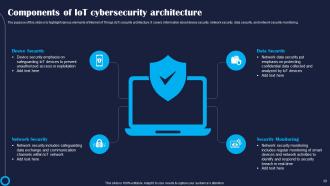
Slide 29: The slide is to highlight various elements of Internet of Things (IoT) security architecture.
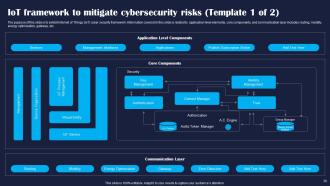
Slide 30: The slide is to exhibit Internet of Things (IoT) cyber security framework.
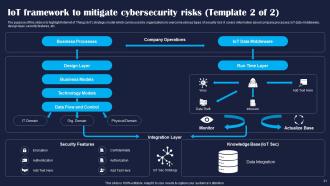
Slide 31: The slide is to highlight Internet of Things (IoT) strategic model which can be used by organizations to overcome various types of security risk.
Slide 32: The slide displays visual representation of internet of Things (IoT) security.
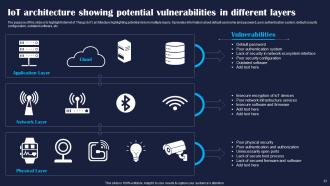
Slide 33: The slide highlights Internet of Things (IoT) architecture highlighting potential risks in multiple layers.
Slide 34: The slide depicts Title of CONTENTS further.
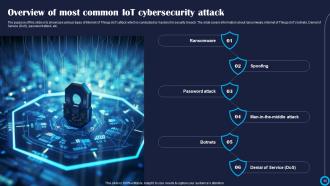
Slide 35: The slide showcases various types of Internet of Things (IoT) attack which is conducted by hackers for security breach.
Slide 36: The slide is to provide glimpse of ransomware attack which can cause deny user to access to files on their system.
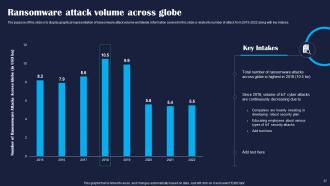
Slide 37: The slide is to display graphical representation of ransomware attack volume worldwide.
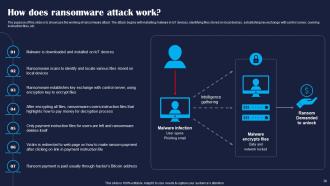
Slide 38: The slide is to showcase the working of ransomware attack.
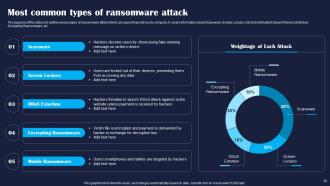
Slide 39: The slide represents various types of ransomware attack which can cause financial loss to company.
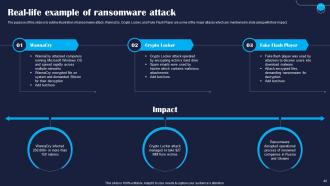
Slide 40: The slide highlights illustration of ransomware attack.
Slide 41: The slide again presents Title of CONTENTS.
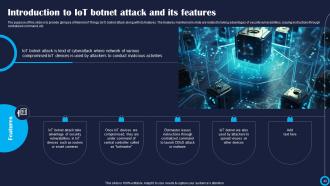
Slide 42: The slide provides glimpse of Internet of Things (IoT) botnet attack along with its features.
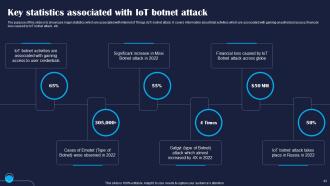
Slide 43: The slide is to showcase major statistics which are associated with Internet of Things (IoT) botnet attack.
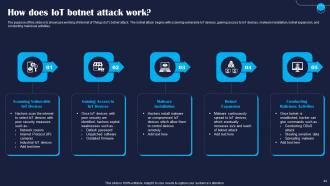
Slide 44: The slide showcases working of Internet of Things (IoT) botnet attack.
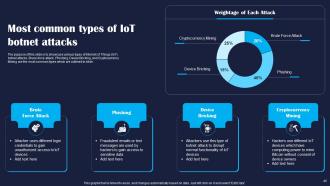
Slide 45: The slide continues various types of Internet of Things (IoT) botnet attacks.
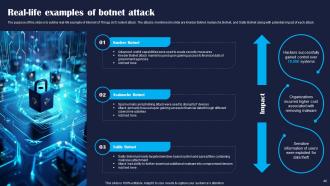
Slide 46: The slide outlines real-life example of Internet of Things (IoT) botnet attack.
Slide 47: The slide displays Title of CONTENTS further.
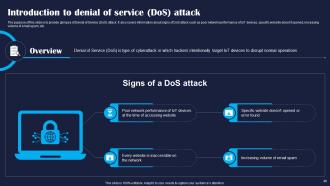
Slide 48: The slide gives glimpse of Denial of Service (DoS) attack.
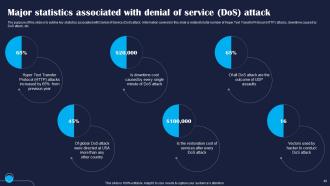
Slide 49: The slide outlines key statistics associated with Denial of Service (DoS) attack.
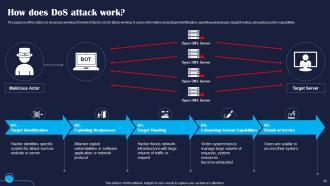
Slide 50: The slide showcases working of Denial of Service (DoS) attack working.
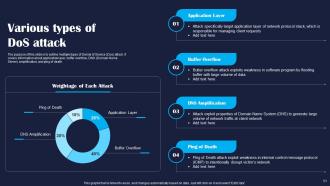
Slide 51: The slide outlines multiple types of Denial of Service (Dos) attack.
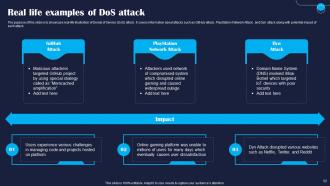
Slide 52: The slide displays real-life illustration of Denial of Service (DoS) attack.
Slide 53: The slide renders another Title of CONTENTS.
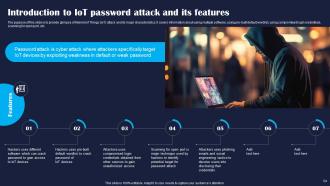
Slide 54: The slide provides glimpse of Internet of Things (IoT) attack and its major characteristics.
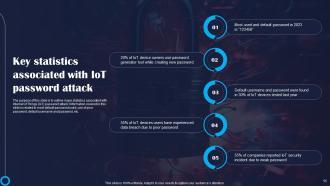
Slide 55: The slide outlines major statistics associated with Internet of Things (IoT) password attack.
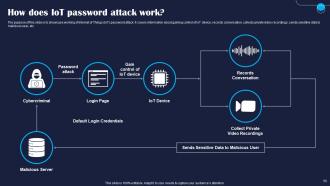
Slide 56: The slide highlights working of Internet of Things (IoT) password attack.
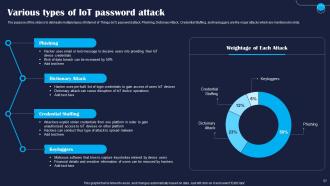
Slide 57: The slide is to delineate multiple types of Internet of Things (IoT) password attack.
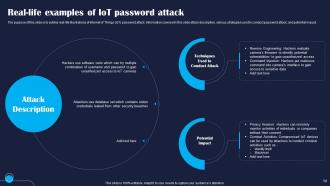
Slide 58: The slide illustrates real-life illustrations of Internet of Things (IoT) password attack.
Slide 59: The slide renders Title of CONTENTS further.
Slide 60: The slide outlines the most common example of IoT cybersecurity attack.
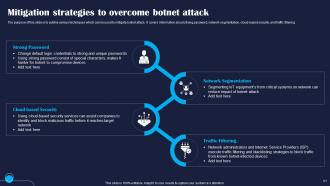
Slide 61: The slide presents various techniques which can be used to mitigate botnet attack.
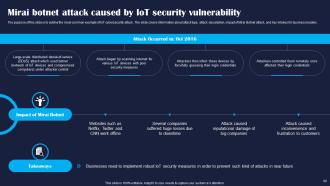
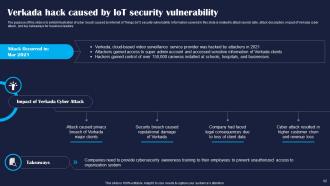
Slide 62: The slide exhibits illustration of cyber beach caused by Internet of Things (IoT) security vulnerability.
Slide 63: The slide is to showcase multiple techniques which can be used to overcome security breach caused by Verkada hack.
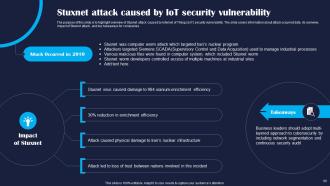
Slide 64: The slide delineates cyber warfare caused by Internet of Things (IoT) security vulnerability.
Slide 65: The slide outlines various mitigation techniques which can be used to overcome IoT cyber attack.
Slide 66: The slide is to highlight overview of Stuxnet attack caused by Internet of Things (IoT) security vulnerability.
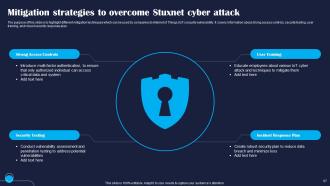
Slide 67: The purpose of this slide is to highlight different mitigation techniques which can be used by companies to Internet of Things (IoT) security vulnerability.
Slide 68: The slide describes Title of CONTENTS further.
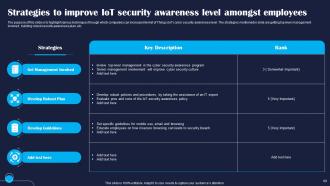
Slide 69: The slide highlights various techniques through which companies can increase Internet of Things (IoT) cyber security awareness level.
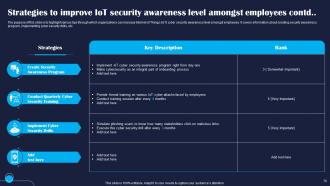
Slide 70: The slide presents various tips through which organizations can increase Internet of Things (IoT) cyber security awareness level amongst employees.
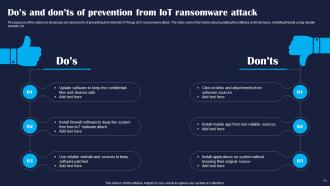
Slide 71: The slide is to showcase do’s and don’ts of preventing from Internet of Things (IoT) ransomware attack.
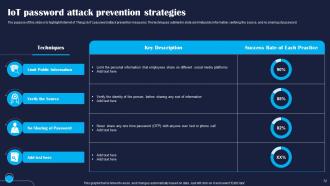
Slide 72: The slide is to highlight Internet of Things (IoT) password attack prevention measures.
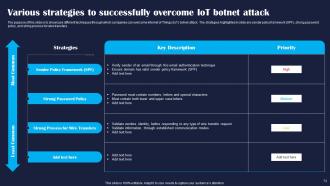
Slide 73: The slide is to showcase different techniques through which companies can overcome Internet of Things (IoT) botnet attack.
Slide 74: The slide displays another Title of CONTENTS.
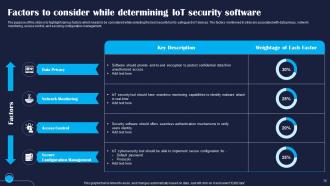
Slide 75: The purpose of this slide is to highlight various factors which needs to be considered while selecting the best security tool to safeguard IoT devices.
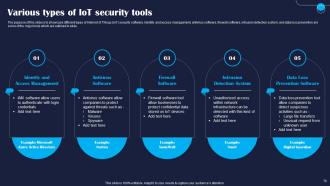
Slide 76: The slide is to showcase different types of Internet of Things (IoT) security software.
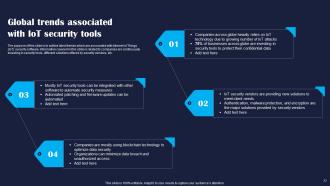
Slide 77: The slide is to outline latest trends which are associated with Internet of Things (IoT) security software.
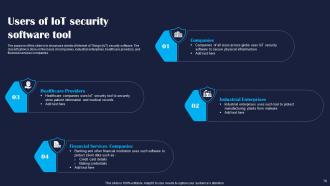
Slide 78: The slide is to showcase clients of Internet of Things (IoT) security software.
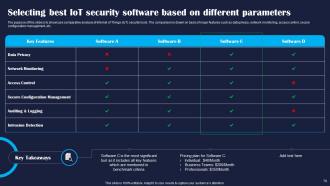
Slide 79: The slide is to showcase comparative analysis of Internet of Things (IoT) security tools.
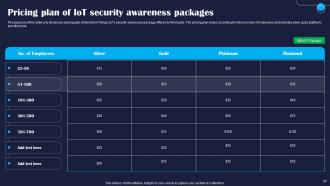
Slide 80: The slide highlights pricing plan of Internet of Things (IoT) security awareness package offered by third-party.
Slide 81: The slide describes Title of CONTENTS further.
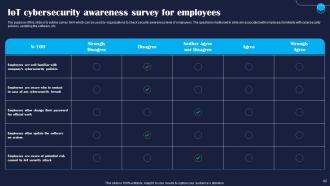
Slide 82: The slide outlines survey form which can be used by organizations to check security awareness level of employees.
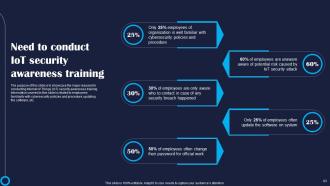
Slide 83: The slide is to showcase the major reasons for conducting Internet of Things (IoT) security awareness training.
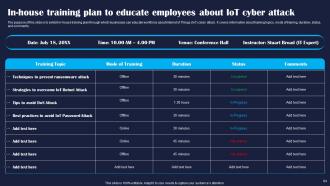
Slide 84: The slide exhibits in-house training plan through which businesses can educate workforce about Internet of Things (IoT) cyber attack.
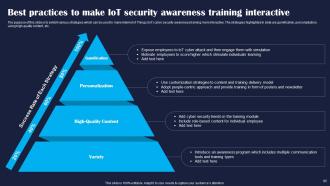
Slide 85: The slide displays various strategies which can be used to make Internet of Things (IoT) cyber security awareness training more interactive.
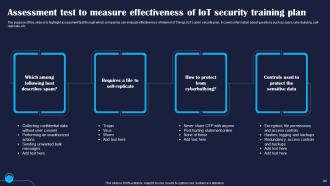
Slide 86: The slide highlights assessment test through which companies can evaluate effectiveness of Internet of Things (IoT) cyber security plan.
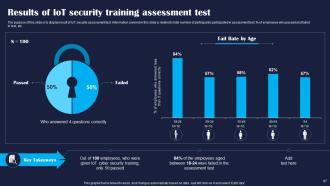
Slide 87: The slide displays result of IoT security assessment test.
Slide 88: The slide exhibits Internet of Things (IoT) security awareness campaign for employees.
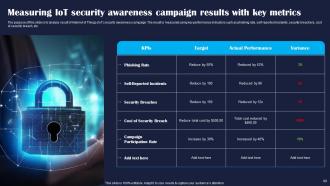
Slide 89: The slide is to analyze result of Internet of Things (IoT) security awareness campaign.
Slide 90: The slide renders another Title CONTENTS.
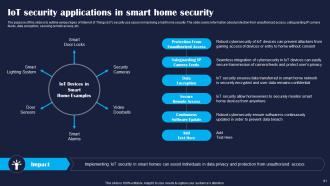
Slide 91: The slide outlines various types of Internet of Things (IoT) security use cases in improving smart home security.
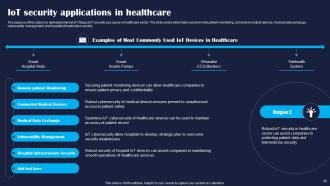
Slide 92: The slide is to delineate Internet of Things (IoT) security use cases in healthcare sector.
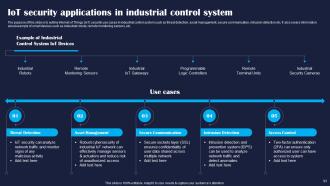
Slide 93: The slide is to outline Internet of Things (IoT) security use cases in industrial control system.
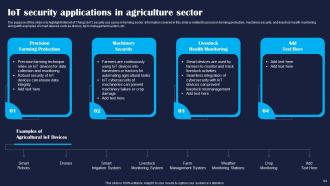
Slide 94: The slide highlights Internet of Things (IoT) security use cases in farming sector.
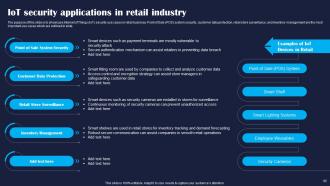
Slide 95: The slide is to showcase Internet of Things (IoT) security use cases in retail business.
Slide 96: The slide again shows Title of CONTENTS.
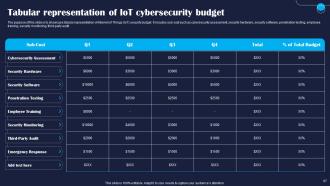
Slide 97: The slide is to showcase tabular representation of Internet of Things (IoT) security budget.
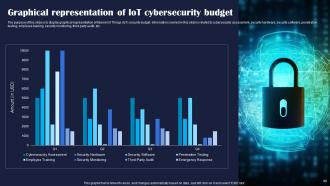
Slide 98: The slide is to display graphical representation of Internet of Things (IoT) security budget.
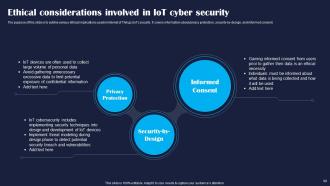
Slide 99: The slide is to outline various ethical implications used in Internet of Things (IoT) security.
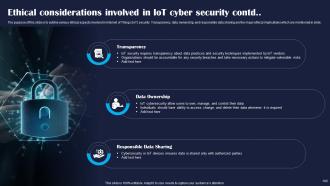
Slide 100: The slide continues various ethical aspects involved in Internet of Things (IoT) security.
Slide 101: The slide renders Title of CONTENTS further.
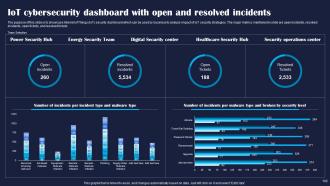
Slide 102: The slide showcases Internet of Things (IoT) security dashboard which can be used by business to analyze impact of IoT security strategies.
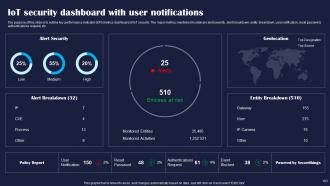
Slide 103: The slide outline key performance indicator (KPI) metrics dashboard of IoT security.
Slide 104: The slide describes another Title of CONTENTS.
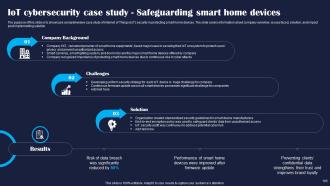
Slide 105: The slide showcases comprehensive case study of Internet of Things (IoT) security in protecting smart home devices.
Slide 106: This slide shows all the icons included in the presentation.
Slide 107: This slide is titled as Additional Slides for moving forward.
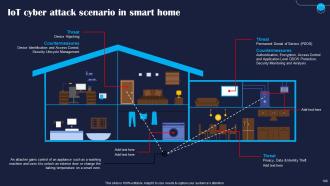
Slide 108: The slide highlights IoT cyber attack scenario in smart home.
Slide 109: The slide shows IoT cyber attack scenario in self automated vehicles.
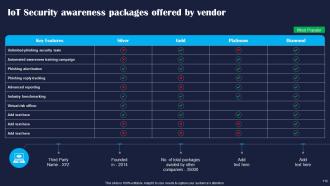
Slide 110: The slide displays IoT Security awareness packages offered by vendor.
Slide 111: This slide provides 30 60 90 Days Plan with text boxes.
Slide 112: This slide displays Weekly Timeline with Task Name.
Slide 113: This slide contains Puzzle with related icons and text.
Slide 114: This slide shows Post It Notes. Post your important notes here.
Slide 115: This is a Thank You slide with address, contact numbers and email address.
Improving IoT Device Cybersecurity To Prevent Data Breaches Powerpoint Presentation Slides IoT CD with all 123 slides:
Use our Improving Iot Device Cybersecurity To Prevent Data Breaches Powerpoint Presentation Slides IoT CD to effectively help you save your valuable time. They are readymade to fit into any presentation structure.







































FAQs for Improving IoT Device Cybersecurity To Prevent Data Breaches Powerpoint Presentation
Dude, IoT security is a mess. Most devices come with terrible default passwords like "admin/admin" - change those immediately or you're basically asking to get hacked. No encryption means attackers can intercept your data easily. Plus tons of smart cameras get turned into botnets for DDoS attacks, which is honestly crazy when you think about it. Many devices can't even get proper security updates. My advice? Put all your smart stuff on a separate network from your main devices. Only buy from companies that actually release firmware updates regularly. Oh, and seriously - change those passwords first thing.
First thing - figure out what IoT stuff you actually have connected. Most companies have no clue, which is honestly pretty scary. Set up network segmentation so your smart thermostat can't access payroll systems if it gets hacked. Those default passwords? Change them immediately - hackers basically have a cheat sheet for those. Keep everything updated, watch your network traffic for weird behavior, and encrypt your data. Oh, and don't treat this like a one-and-done thing. IoT security needs constant attention because these devices love chatting with random servers at 3am.
So basically, manufacturers are your first defense against IoT security disasters. They should build security right into devices - secure boot, encrypted comms, firmware updates, proper authentication. The problem? Half these companies still slap security on at the end, which drives me nuts. Smart ones follow "security by design" and actually test for vulnerabilities. Here's what I'd do - when you're shopping around, grill vendors about their security process and update policies. That conversation alone tells you if they're serious or just talking.
First thing - make a list of every device you've got connected. Sensors, cameras, all that industrial stuff. Then figure out which ones are most vulnerable and what data they're handling. I'd break it down by network sections or device types honestly, makes it way less overwhelming. Check their authentication, encryption, update processes, network controls - the whole nine yards. Third-party vendors are sketchy sometimes so don't skip evaluating them too. Put everything in a risk matrix ranking threats by how likely they are vs. impact. You'll want quarterly reviews since this stuff changes constantly.
So GDPR and CCPA are actually game-changers for IoT security. Gone are the days when you could just vacuum up user data without asking. Now you need explicit consent, minimal data collection, and solid encryption - or face some pretty brutal fines. Privacy by design isn't just a buzzword anymore, it's mandatory. Your devices have to handle automatic data deletion, user controls, breach alerts, the whole nine yards. Honestly, I've started thinking of privacy compliance as my security blueprint. Works out pretty well since you're covering both bases at once.
AI with IoT is kinda weird - it helps and hurts at the same time. You get awesome benefits like catching weird device behavior automatically and spotting attacks crazy fast. Way better than humans at pattern recognition, honestly. But then you're also making everything more complicated, which gives hackers more ways in. The really annoying part? Bad guys are using AI against you now too, so their malware actually learns and adapts. My advice would be focus on using AI for defense first before adding fancy AI features that just create more problems.
First thing - change those default passwords ASAP. It's like giving hackers a key to your house. Keep firmware updated too, I know it's annoying but worth it. Set up a separate network just for smart devices if you can. Turn off features you don't actually use and enable two-factor auth wherever possible. Oh, and check what data your devices are hoarding - some collect crazy amounts of personal info. Start by listing everything that's connected, then focus on securing the important stuff first. Regular network audits help catch weird devices you forgot about.
IoT breaches are weird - these devices multiply like rabbits and half the time nobody even remembers they exist. Map out everything connected first because most companies are flying blind here. You'll need different playbooks since unplugging a smart thermostat isn't the same as isolating someone's laptop. Network segmentation is huge for stopping things from spreading sideways. Oh, and get cozy with your IoT vendors now, not when everything's on fire. Honestly, just start with an asset inventory this week. Can't fix what you don't know about, right?
AES-256 is what you want for storing data, and TLS 1.3 for when it's moving around. Most IoT devices are pretty wimpy though, so DTLS might work better since regular TLS can be too heavy. Don't just encrypt from device to gateway - go end-to-end all the way to your cloud stuff. Never use anything older than TLS 1.2, that's just asking for trouble. Oh and seriously, don't hardcode your encryption keys. I've seen way too many people mess that up and it's such a basic mistake.
First thing - find all your IoT stuff. Can't secure what you don't even know is there, right? Automated scanning helps, but honestly, half these devices are a pain to patch anyway. Network segmentation becomes your best friend here. Run vulnerability scans quarterly on the critical stuff. The real headache is dealing with devices that literally can't be updated - looking at you, ancient industrial sensors. Make sure someone actually owns each device type and knows how updates work. Oh, and have a response plan ready because you WILL find something sketchy eventually.
Oh man, IoT patching is such a pain. Most of these devices don't even have auto-update features, and the hardware is usually too weak for complex patches anyway. Manufacturers basically abandon support after a couple years - it's honestly ridiculous. Then you've got devices stuck in random places like factory floors where you can't easily reach them. Half don't even have proper authentication for secure updates. Worst part? Patches can totally brick the device if something goes wrong during install. I'd start by making a list of what you have, check which ones face the internet, and tackle those first.
Look, you've gotta make this stuff hands-on or people just zone out. Show them actual demos - hack into that smart printer or the lobby camera right in front of them. Honestly, the coffee machine thing always gets people's attention because they never think about it. Don't make it a one-and-done training either. Build it into your regular security stuff and give them simple guides for their personal devices too. Most companies think it's too technical but trust me, when employees see how easy it is to break into these things, they actually start caring. Just keep the demos interactive and tie it back to what they use daily.
Honestly, there's some cool stuff happening with IoT security right now. AI and machine learning can spot threats way faster than old-school methods - that's probably your best bet to start with since it actually works well. Edge computing's getting big too because you're processing security stuff locally instead of shipping everything to the cloud. Makes way more sense, right? Blockchain's popping up for device authentication, though I'm still not totally sold on it yet. Oh, and quantum-resistant encryption is becoming a thing since quantum computers might break current encryption. Zero-trust is pretty much standard now too.
So GDPR makes you bake privacy into your IoT stuff right from the start - can't just slap it on later. Users have to actually agree to data collection, and you can only grab what you really need. Plus there's this whole "privacy by design" thing, which honestly makes sense anyway. Oh, and if you get breached? You've got 72 hours to tell everyone. For IoT devices specifically, that means better encryption, keeping firmware updated, and giving users real privacy controls. My advice? Just treat GDPR as your security baseline instead of some annoying legal requirement.
Think of standards like IEC 62443 as basic guardrails - they force manufacturers to include stuff like encryption and proper authentication. Without them? You'd be shocked how many devices ship with zero security. The IoT Cybersecurity Improvement Act does similar things. Here's the practical bit: when you're shopping around, these certifications actually let you compare products on security instead of just winging it. Always ask vendors what standards they follow and look for third-party security certs. Shows they at least gave security some thought instead of just rushing to market.
-
A perfect platform for all your presentation needs. Unlimited products at an affordable price.
-
SlideTeam is my one-stop destination for templates. Highly recommended!