


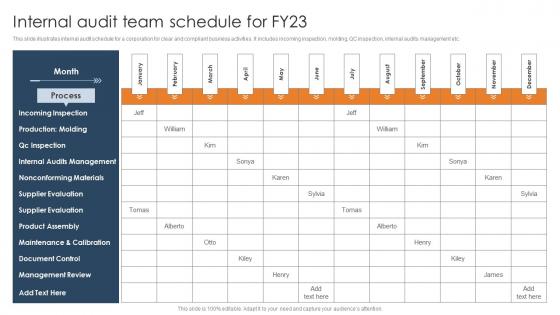
Internal Audit Team Schedule For Fy23




Try Before you Buy Download Free Sample Product
 Impress Your
 Audience
 100%
100% Editable
 Save Hours
 of Time


This slide illustrates internal audit schedule for a corporation for clear and compliant business activities. It includes incoming inspection, molding, QC inspection, internal audits management etc.
People who downloaded this PowerPoint presentation also viewed the following :
Internal Audit Team Schedule For Fy23 with all 6 slides:
Use our Internal Audit Team Schedule For Fy23 to effectively help you save your valuable time. They are readymade to fit into any presentation structure.





FAQs for Internal Audit Team
Risk assessment should be your starting point - it'll help you figure out what to tackle first. Then hit the regulatory stuff since those deadlines aren't flexible. Management requests and areas you haven't touched in ages come next. Buffer time is crucial though - trust me, something unexpected always comes up halfway through the year. Getting stakeholder buy-in early makes everything smoother later. I'd throw it all in a basic spreadsheet first, then run it by department heads before you lock anything in. Way easier than trying to fix pushback later.
Hit the scary stuff first - compliance issues, anything that blew up recently, or processes that could tank operations. Coffee with your risk team is clutch here, they know what's making the C-suite sweat. Don't forget about stuff that hasn't been touched in ages, especially if you've got new systems or acquisitions floating around. Quick risk matrix works great - impact vs likelihood, then rank your audits. Honestly, the scoring part always takes longer than you think it will. Book your top 3-4 ASAP though, because everyone wants the same audit windows.
Risk assessment basically runs your whole schedule - that's how you figure out what to audit first and how much time each area gets. Start by spotting all the high-risk stuff: processes, departments, systems. Then rank them by financial impact, regulatory needs, and when they were last checked. It's honestly like medical triage - biggest problems first. Those risk scores become your calendar. Higher risk = more frequent audits and deeper reviews. Oh, and definitely document why you picked certain areas because leadership will ask. Trust me on that one.
Quarterly reviews are probably your baseline, but honestly? Most places I know check monthly or whenever big stuff happens. Your audit schedule can't just sit there collecting dust after you make it in October - things change too fast. Build in some buffer time from the start and set up those formal check-ins with leadership every few months. That way when regulatory stuff shifts or new risks pop up, you can actually pivot without your whole annual plan going to hell. The trick is staying flexible enough to respond but not so loose that you're constantly scrambling.
Get your stakeholders in the loop right from annual planning - way easier than dealing with pushback later. Survey department heads about their crazy busy periods and major projects first. Nobody wants you auditing during year-end close, trust me on that one. Then hold actual meetings where you can hash out priorities and timing together. Don't just tell them when you're showing up - explain why you picked those dates. Give them heads up if things change too. Honestly, the whole thing works so much better when you treat them like partners instead of just dropping audit schedules on their desks.
Dude, audit management software is a game changer for scheduling. It automatically flags risky areas using data analytics, so you're not manually combing through everything. The calendar integration is clutch - sends reminders to auditees without you having to chase people down constantly. When delays hit (and they always do), the software adjusts timelines in real-time and tracks all those annoying dependencies between audits. I'd check out AuditBoard or Workiva for next year - honestly wasn't sure about them at first, but they'll probably slash your prep time by half. Way better than spreadsheets.
Honestly, the worst part is everyone expects miracles with zero resources and impossible deadlines. Resource constraints will kill you every time. Start with risk assessment to figure out what actually matters - don't waste time on low-impact stuff. Work backwards from what your team can realistically handle, not what management dreams about. Buffer time is crucial because something always goes sideways (trust me on this). Get stakeholders involved early so they understand why you're prioritizing certain areas. Oh, and build flexibility into your schedule - I learned that one the hard way when priorities shifted mid-audit.
Start with the stuff that'll actually hurt you - SOX controls, data privacy, whatever regulations hit your industry hardest. Map those to your audit cycles but schedule them way before deadlines so you're not scrambling. Honestly, I've seen too many companies get burned because they waited until the last minute. Rotate through different departments systematically instead of auditing the same areas over and over. Stay ahead of it rather than playing catch-up. Review your schedule every quarter since regulations change and new risks pop up. It's way less stressful when you're proactive about this stuff.
Honestly, just tie your audit schedule straight to whatever the company's actually trying to accomplish this year. Check out their strategic plan and see what's keeping leadership up at night - that's your roadmap right there. Like if they're going hard on digital transformation in FY23, bump those IT and cybersecurity audits to the front of the line. New compliance stuff? Same deal. The real trick is sitting down with senior management early on (before you even finalize anything) so you're actually hitting their pain points instead of just going through the motions. Makes your job way more relevant too.
Track completion rates and timeline hits first - that's your baseline. Quality matters more than quantity though, so check if you're catching real issues or just paperwork problems. Management response times tell you everything about whether people actually care about your findings. I'd also do quick stakeholder surveys because nobody wants to admit their audit process sucks to your face. The flexibility thing is key - can you pivot when something sketchy pops up? If you're too rigid with your schedule, you'll miss the stuff that actually matters while checking boxes on low-risk areas.
So for high-risk stuff, you'll want to audit annually or even twice a year if it's really dicey. Low-risk areas? Every 2-3 years works fine. I've seen people push it to 4+ years but honestly that's asking for trouble. Your risk assessment should totally drive this - not just what's convenient budget-wise (though I get it, resources are tight everywhere). Financial reporting and cybersecurity need constant eyes on them. For your FY23 schedule, just bucket everything by risk level first. Then figure out timing from there. Oh and document why you chose those frequencies - auditors love that stuff and it'll save you headaches later.
Start with your risk assessment docs - that's what backs up why certain areas made your audit list. Grab last year's results too, especially anything still hanging open. Did management flag specific priority areas? Document those chats because auditors always ask about stakeholder input. Oh, and if you've got regulatory stuff, map that out clearly - honestly, they eat that up. Show how you split audit hours between high/medium/low risk areas. The whole point is proving your schedule wasn't just thrown together randomly but actually follows real risk logic.
Honestly, just start by figuring out what you can realistically handle with your current team hours. List all your planned audits and actually estimate the time each one needs - fieldwork, reports, follow-ups, the whole thing. Then see how that stacks up against what your team can actually do. Always leave buffer time because random stuff WILL pop up mid-year, guaranteed. If the math doesn't work, you've got three options: cut some audits, hire contractors, or tell stakeholders no. Better to have those awkward conversations now than be drowning in work later. Oh, and build in some wiggle room from the start.
Yeah, turnover is brutal for audit scheduling - you lose all that tribal knowledge when people bail. Senior auditors are the worst to lose since they actually know where all the bodies are buried. Cross-training helps so you're not completely toast when someone quits unexpectedly. Document everything too, even the obvious stuff. I'd spread out your gnarly audits so they don't all hit during transition chaos. Honestly? Just assume someone's gonna leave during FY23 and build buffer time into your timeline. Better to be pleasantly surprised than scrambling last minute.
Honestly, save about 15-20% of your audit hours for whatever chaos shows up mid-year. Trust me on this one. COVID taught me that lesson the hard way - our whole schedule went out the window! Economic stuff always hits when you least expect it. Supply chain issues, new regulations, you name it. Do quarterly risk chats with leadership to figure out what's actually stressing them out. Then adjust your priorities. Monthly check-ins with key people work way better than scrambling to catch up later. Sometimes you'll have to push lower-priority audits back, but that's just how it goes.
-
Very unique, user-friendly presentation interface.
-
Their professional templates are very impressive, even my manager was curious about the source. I am very grateful.