


Internal Communication Strategy Powerpoint Presentation Slides






Try Before you Buy Download Free Sample Product
 Impress Your
 Audience
 100%
100% Editable
 Save Hours
 of Time


Introducing Internal Communication Strategy PowerPoint Presentation Slides. With the help of domestic communication plan PPT templates, you can plan the activities in order to attain your goals. You can define your communication goals using this internal communication strategy PowerPoint presentation complete deck. If you want to highlight the challenges present during internal communications, then use interpersonal skills PPT visuals. There are various implementations that support the vision and business priorities, thus describe that by using our professionally designed organizational communication analysis PowerPoint presentation template. With the help communication channel development PPT slides, you can create a 30-60-90 plan which is helpful to establish engagement workshops. The corporate communication PPT comprises of a total of twenty-four slides. This business communication plan PowerPoint presentation includes unique diagrams and high-quality icons with which you can make your presentation even more engaging. Therefore, download this ready-to-use enterprise communication management PPT visuals and develop a cohesive culture among your employees.
People who downloaded this PowerPoint presentation also viewed the following :
Content of this Powerpoint Presentation
Slide 1: This slide introduces Internal Communication Strategy. State Your Company Name and begin.
Slide 2: This slide shows Content of the presentation.
Slide 3: This slide highlights the Content Organizational Analysis.
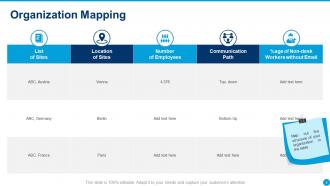
Slide 4: This slide presents Organization Mapping in tabular form.
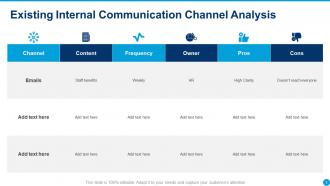
Slide 5: This slide displays Existing Internal Communication Channel Analysis.
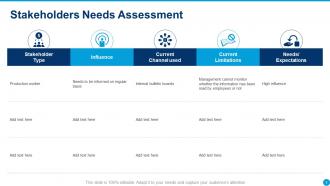
Slide 6: This slide represents Stakeholders Needs Assessment with categories as Stakeholder type, Influence, Current channel used, current limitations, needs/ expectations.
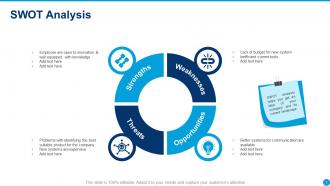
Slide 7: This slide shows SWOT Analysis. Describe your firm's Strengths, weaknesses, opportunities and strengths here.
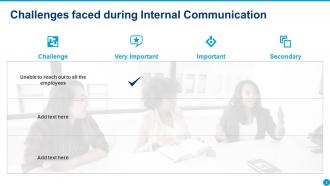
Slide 8: This slide displays Challenges faced during Internal Communication.
Slide 9: This slide highlights the Content Planning & Evaluation.
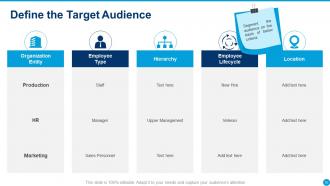
Slide 10: This slide shows Define the Target Audience in tabular form.
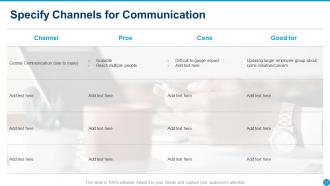
Slide 11: This slide presents Specify Channels for Communication with pros and cons.
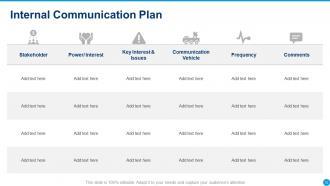
Slide 12: This slide displays Internal Communication Plan.
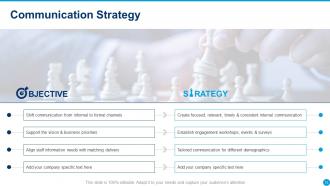
Slide 13: This slide showcases Communication Strategy with related imagery.
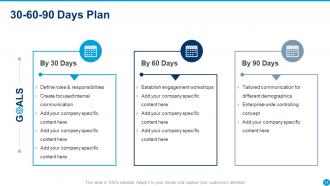
Slide 14: This slide shows 30-60-90 Days Plan.
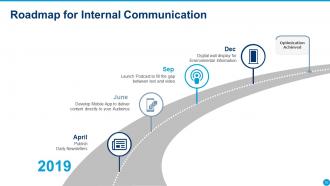
Slide 15: This slide displays Roadmap for Internal Communication.
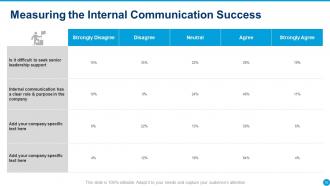
Slide 16: This slide represents Measuring the Internal Communication Success.
Slide 17: This slide shows icons for Internal Communication Strategy.
Slide 18: This slide is titled as Additional Slides for moving forward.
Slide 19: This is About Us slide to show company specifications etc.
Slide 20: This is Our Team slide with names and designation.
Slide 21: This is a Timeline slide to show information related with time period.
Slide 22: This is a Puzzle slide with text boxes.
Slide 23: This is a Financial slide. Show your finance related stuff here.
Slide 24: This is a Thank You slide with address, contact numbers and email address.
Internal Communication Strategy Powerpoint Presentation Slides with all 24 slides:
Elaborate on the authority each insignia denotes with our Internal Communication Strategy Powerpoint Presentation Slides. Explain all the different implications.










FAQs for Internal Communication Strategy
Look, you'll want to nail down four things: what you're actually trying to accomplish, who needs to hear what (don't lump everyone together), picking the right channels, and getting feedback so you're not shouting into the darkness. Honestly, the channel thing trips up most people - they just email blast everything and wonder why nobody cares. Match your message to the platform instead. Oh, and definitely audit what you're doing now first. Find the biggest mess-ups and tackle those. Short bursts work better than novels, by the way. People's attention spans are shot.
Honestly, start with basic pulse surveys - just ask people if they feel informed and whether they trust what leadership's telling them. Email open rates and intranet views give you some data, but they're pretty surface level. The stuff that actually matters? Whether people understand company goals and if they change their behavior after big announcements. I'd do quarterly check-ins with simple questions like "How's leadership transparency?" and "Do you feel in the loop on company updates?" Those will show you what's actually landing. Meeting attendance is worth tracking too, though sometimes mandatory meetings mess up that metric.
Look, modern teams basically can't function without decent tech for internal communication. Start by figuring out where your actual communication gaps are - don't just grab every new app that pops up. Slack or Teams work great for quick messages. Video calls help when you need that face-to-face vibe. Project management tools keep everyone on the same page with deadlines and stuff. I swear, coordinating anything without these would be a nightmare. The trick is finding the right combo for your specific team rather than going overboard with too many platforms.
Honestly, just weave feedback into stuff you're already doing instead of creating whole new processes. After big announcements, send quick pulse surveys. Set up Slack channels for questions - but here's the thing, leadership has to actually respond or people will just ghost it. Town halls with live Q&A work great too. Anonymous suggestion boxes are clutch for getting real opinions. The main thing is making it regular, not some yearly survey nobody cares about. Oh, and always follow up on what you collect. Pick one channel you use now and just add a simple feedback piece this week. Start small and build from there.
Ugh, information silos are the worst - everyone hoards their updates instead of sharing. Your inbox becomes this nightmare where important stuff gets buried under random CCs and reply-alls. Remote people feel totally left out of the loop. Different teams might as well be speaking alien languages to each other. Leadership sends these vague announcements that nobody understands. Plus timing is always terrible - like sending urgent updates right when everyone's drowning in deadlines. Honestly, I'd start by figuring out where your messages are dying. Check which channels people actually pay attention to versus the ones they ignore completely.
Ugh yes, this is so important! I learned the hard way that some people want you to cut straight to the point while others need all the background context first. Like, I had teammates who felt steamrolled when I'd say "let's discuss this" but then others thought I was being too wishy-washy. Cultural stuff matters too. Now I try to figure out early on who prefers detailed emails vs quick Slack pings. It's honestly a bit exhausting adapting to everyone, but it makes such a difference in how smoothly projects run.
Honestly, start with regular all-hands where leadership shares actual updates - not corporate BS. Weekly team check-ins help too. Set up Q&A channels and make sure people actually get answers back quickly. Most folks won't use open-door policies unless they really trust management, which takes time. Monthly town halls work great for bigger picture stuff. Oh, and quarterly strategy sessions where you're transparent about what's working AND what isn't. The trick is being consistent with it all. Information has to flow both ways or people just tune out completely.
Dude, stories beat boring corporate announcements every single time. Your employees actually *listen* when you talk about how Sarah in accounting saved the day during that budget mess, or how Detroit's team completely flipped their customer satisfaction numbers. It's wild how much more engagement you get with an actual narrative arc vs. bullet points. People need characters and plot, not just data dumps. Next time you're doing a team update, try framing it like a mini-story - what happened, what went wrong, how you bounced back. Even small stuff works better this way.
Speed matters way more than having everything perfect - seriously, I've watched companies tank because leadership went completely silent while rumors took over. Get something out fast, even if you're missing details. Hit all your channels - email, Slack, maybe an all-hands if it's big enough. Be upfront about what you know and what you don't, then tell people exactly when they'll hear from you again. Oh, and pick ONE person to be the voice - mixed messages will bite you. Create a dedicated channel for updates so everyone knows where to look.
Leaders need to actually walk the walk here. If they want people to communicate openly, they've got to share updates regularly and ask for real feedback - then actually do something with it. Don't just launch some fancy program and forget about it six months later (classic move, right?). Regular team check-ins help, but only if leadership genuinely listens instead of going through the motions. Create spaces where people won't get thrown under the bus for speaking up. Oh, and celebrate when you see good communication happening - people notice that stuff.
Okay so there's basically three things you need covered: messaging apps (Slack or Teams), video calls (Zoom, Google Meet, whatever), and something to track projects like Asana or Notion. But honestly? The specific tools don't matter as much as everyone actually using them consistently. What really helps is setting up some basic rules - like when to chat vs email, or when to just hop on a call instead of going back and forth forever. Oh, and regular check-ins are clutch. I'd start by looking at what you're already using and figure out where things are falling through the cracks.
Your team's perception is everything when it comes to internal communication. Trust me, if they think leadership is sketchy or has burned them before, your messages will get ignored no matter how good they are. Past drama really messes things up. But when people actually trust you? They'll listen and follow through. Here's what I'd do - survey everyone first to see where you stand. Figure out what their beef is, then tackle those issues directly in how you communicate. Don't just send mass emails and hope for the best.
So basically, your org structure totally controls how info moves around your company. Flat structures? Way faster communication since you don't have like 5 layers of managers to get through. Hierarchical ones give you more control but honestly create those awful bottlenecks where everything gets stuck. I've seen it happen so many times. Siloed departments make it super hard for teams to actually talk to each other. Matrix structures just confuse everyone about who they're supposed to report to. The trick is working WITH your structure instead of against it when you set up communication channels.
Honestly, the biggest thing is just getting departments to actually talk to each other instead of staying in their bubbles. Set up some cross-functional Slack channels or whatever you use. Monthly syncs between teams work wonders too - suddenly marketing isn't clueless about what product is building and sales gets why certain features take forever. Make sure info flows both directions, not just from the top down. Oh, and push people to overshare rather than assume everyone's on the same page. I've literally watched entire team dynamics flip when they started being transparent about wins and roadblocks.
Your onboarding is basically a preview of how communication works at your company. New people pick up on everything - the channels you use, how formal or casual things are, response times. Most just mirror what they see in those first few weeks anyway. Those early habits? They stick around forever. I've noticed people who start somewhere with messy communication just assume that's normal and roll with it. So if you want better internal communication across the board, honestly just fix your onboarding first. What messages are you accidentally sending about how people should actually talk to each other?
No Reviews