


Inventory And Asset Management System Powerpoint Presentation Slides




Try Before you Buy Download Free Sample Product
 Impress Your
 Audience
 100%
100% Editable
 Save Hours
 of Time


An asset tracking system is a technique to monitor an organizations assets more efficiently to enhance customer service and improve equipment longevity. Grab our Inventory and Asset management system template. It is expertly crafted to keep track of purchases to strengthen security and IT safety. Our IT asset management deck provides the latest technology trends for keeping track of assets. It involves the current scenario of an organizations asset and inventory management systems. Additionally, our Inventory management system PPT offers essential methods of an asset tracking system such as RFID tags, barcode scanning, Bluetooth low energy, near-field communication, and more. It further showcases detailed working and key benefits of implementing these systems. Furthermore, our RFID integration module includes a workflow chart and the roles and responsibilities of the HR manager and team. It contains cost analysis and comparative software assessment for enhancing overall performance. Lastly, our Asset management template exhibits the KPI dashboards and impact analysis for measuring the effectiveness of implementing a tracking system. Get instant access.
People who downloaded this PowerPoint presentation also viewed the following :
Content of this Powerpoint Presentation
Slide 1: This slide introduces Inventory and Asset management system. Commence by stating Your Company Name.
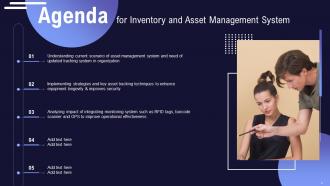
Slide 2: This slide depicts the Agenda of the presentation.
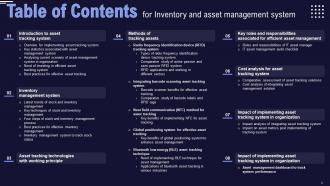
Slide 3: This slide incorporates the Table of Contents.
Slide 4: This slide highlights the Title for the Topics to be covered further.
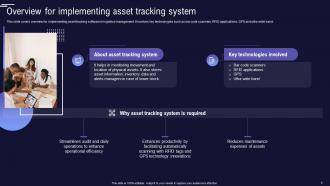
Slide 5: This slide presents an Overview for implementing asset tracking system.
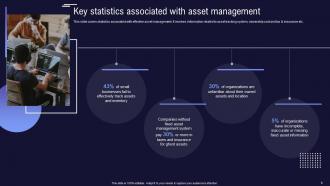
Slide 6: This slide exhibits the Key statistics associated with asset management.
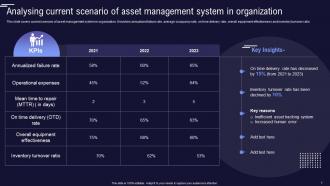
Slide 7: This slide deals with Analysing current scenario of asset management system in organization.
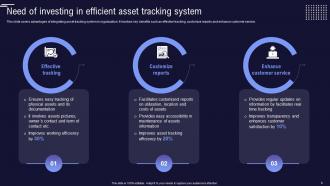
Slide 8: This slide portrays the Need of investing in efficient asset tracking system.
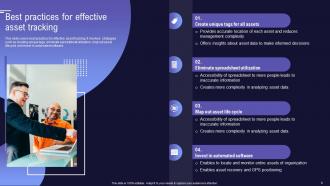
Slide 9: This slide covers best practices for effective asset tracking.
Slide 10: This slide includes the Heading for the Contents to be discussed next.
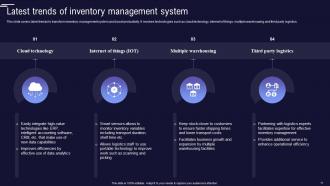
Slide 11: This slide talks about the Latest trends of inventory management system.
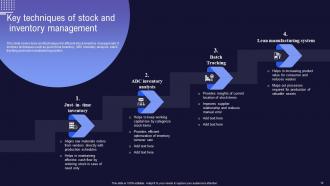
Slide 12: This slide showcases the Key techniques of stock and inventory management.
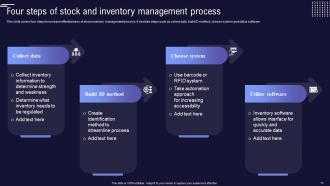
Slide 13: This slide states the Four steps of stock and inventory management process.
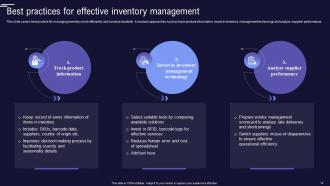
Slide 14: This slide reveals the Best practices for effective inventory management.
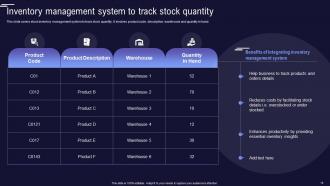
Slide 15: This slide covers stock inventory management system to track stock quantity.
Slide 16: This slide indicates the Title for the Ideas to be covered in the upcoming template.
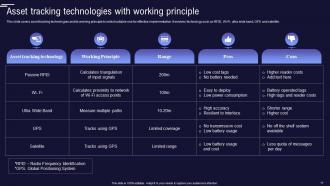
Slide 17: This slide highlights the Asset tracking technologies with working principle.
Slide 18: This slide represents the Heading for the Ideas to be discussed next.
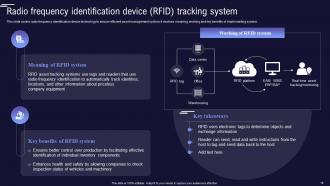
Slide 19: This slide focuses on the Radio frequency identification device (RFID) tracking system.
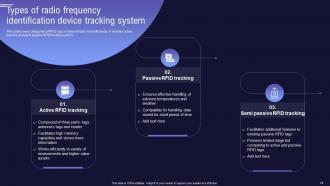
Slide 20: This slide states the Types of radio frequency identification device tracking system.
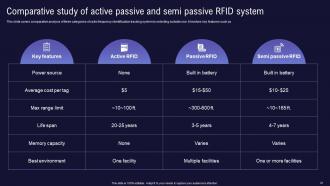
Slide 21: This slide illustrates the Comparative study of active passive and semi passive RFID system.
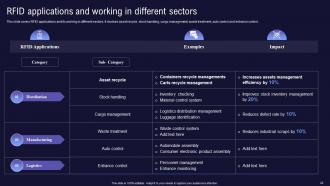
Slide 22: This slide covers RFID applications and its working in different sectors.
Slide 23: This slide mentions the Title for the Contents to be covered in the forth-coming template.
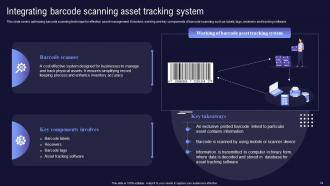
Slide 24: This slide deals with Integrating barcode scanning asset tracking system.
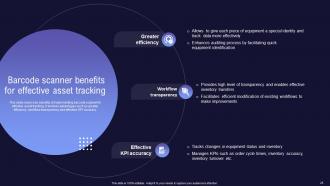
Slide 25: This slide highlights the Barcode scanner benefits for effective asset tracking.
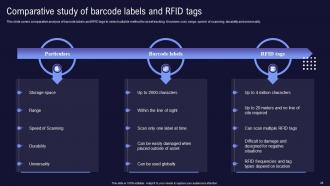
Slide 26: This slide shows the Comparative study of barcode labels and RFID tags.
Slide 27: This slide portrays the Heading for the Topics to be discussed next.
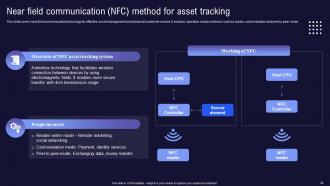
Slide 28: This slide talks about the Near field communication (NFC) method for asset tracking.
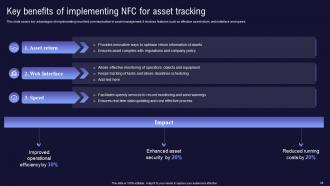
Slide 29: This slide exhibits the Key benefits of implementing NFC for asset tracking.
Slide 30: This slide reveals the Title for the Topics to be covered in the upcoming template.
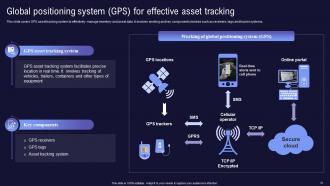
Slide 31: This slide indicates the Global positioning system (GPS) for effective asset tracking.
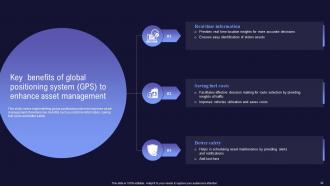
Slide 32: This slide states the Key benefits of global positioning system (GPS) to enhance asset management.
Slide 33: This slide displays the Heading for the Contents to be discussed further.
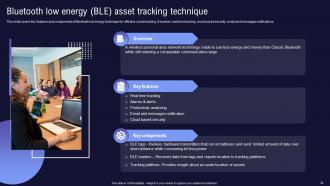
Slide 34: This slide covers key features and components of Bluetooth low energy technique for effective asset tracking.
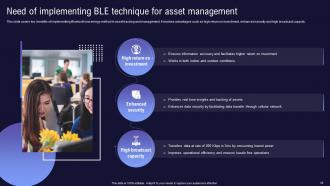
Slide 35: This slide portrays the Need of implementing BLE technique for asset management.
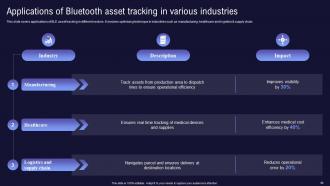
Slide 36: This slide depicts the Applications of Bluetooth asset tracking in various industries.
Slide 37: This slide includes the Title for the Ideas to be covered next.
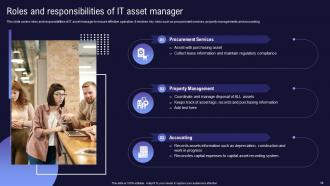
Slide 38: This slide exhibits the Roles and responsibilities of IT asset manager.
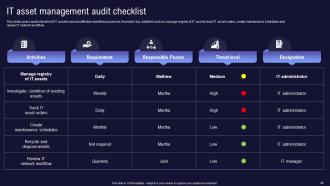
Slide 39: This slide covers audit checklist of IT asset to ensure effective workflow processes.
Slide 40: This slide highlights the Heading for the Ideas to be discussed in the following template.
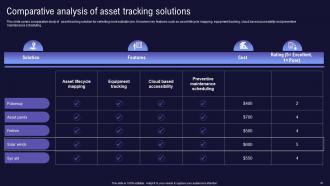
Slide 41: This slide shows the Comparative analysis of asset tracking solutions.
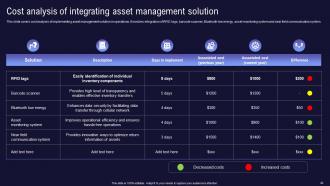
Slide 42: This slide depicts the Cost analysis of integrating asset management solution.
Slide 43: This slide displays the Title for the Contents to be covered next.
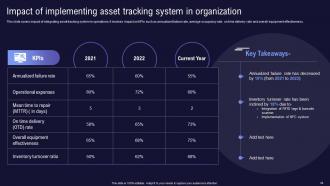
Slide 44: This slide reveals the Impact of implementing asset tracking system in organization.
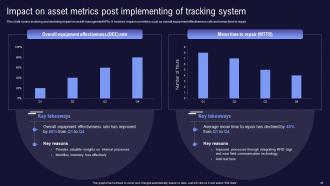
Slide 45: This slide covers inclining and declining impact on asset management KPIs.
Slide 46: This slide includes the Heading for the Topics to be discussed further.
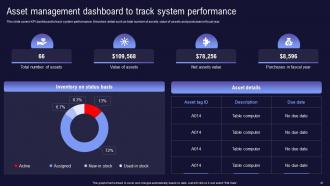
Slide 47: This slide illustrates the Asset management dashboard to track system performance.
Slide 48: This is the Icons slide containing all the Icons used in the plan.
Slide 49: This slide is used for depicting some Additional information.
Slide 50: This is the Idea generation slide for encouraging innovative ideas.
Slide 51: This slide displays the company's Timeline.
Slide 52: This is the 30 60 90 days plan slide for effective planning.
Slide 53: This slide elucidates the organization's Roadmap.
Slide 54: This is Our team slide. State your team-related information here.
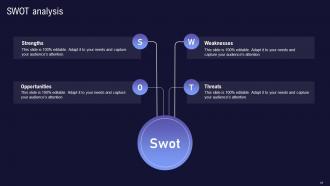
Slide 55: This slide presents the SWOT analysis.
Slide 56: This slide contains the Post it notes for reminders and deadlines.
Slide 57: This is the Venn diagram slide.
Slide 58: This is the Thank you slide for acknowledgement.
Inventory And Asset Management System Powerpoint Presentation Slides with all 66 slides:
Use our Inventory And Asset Management System Powerpoint Presentation Slides to effectively help you save your valuable time. They are readymade to fit into any presentation structure.














FAQs for Inventory And Asset Management System
Okay so first things first - get your data cleaned up because literally nothing works if your numbers are garbage. You'll need demand forecasting and real-time tracking, plus automated reorder points so you're not constantly babysitting everything. ABC analysis helps you focus on the stuff that actually matters instead of obsessing over every paperclip. Integration with sales and purchasing is huge too. Honestly though? I've watched companies blow tons of money on fancy software while their warehouse looks like a tornado hit it. Safety stock calculations are super important, especially for critical items. The physical processes matter just as much as the tech side.
Look, JIT can totally transform how you run things. Basically you're only ordering what you actually need, which frees up tons of cash and cuts storage costs big time. The catch? Your suppliers better be rock solid - honestly, I've seen companies get burned when one shipment runs late and everything falls apart. But when it clicks, inventory moves faster, you're not stuck with old crap nobody wants, and your team gets scary good at reading what customers really want. I'd test it out with your bread-and-butter products first, see how it goes.
So there's tons happening with inventory right now. AI forecasting is huge - it can actually predict when you'll run out of stuff before it happens, which is wild. IoT sensors give you real-time tracking, and some companies are doing these "digital twin" simulations of their whole supply chain. Automated reordering is getting smarter too. RFID and barcode tech keeps improving, plus blockchain's helping with transparency (though honestly that one still feels overhyped to me). Machine learning optimizes reorder points automatically now. If you're thinking about upgrading, I'd go with AI forecasting first - biggest bang for your buck and you'll see results fast.
Think of it this way - inventory turnover is basically how fast you're flipping your stock, and that speed directly hits your wallet. Move products quickly? You free up cash instead of having money just sitting there on shelves. Plus high turnover means you're actually meeting what customers want while keeping storage costs low. But slow turnover? That's rough - ties up your working capital and you're stuck paying for warehousing, insurance, all that stuff. Honestly, products can even go obsolete if they sit too long. Track it monthly and see how you stack up against competitors. The magic number varies by industry though.
Look, demand forecasting is just trying to predict what you'll sell and when. Pull your sales data from the last year or so - you'll start seeing patterns pretty quick. Maybe winter coats sell like crazy in October but nobody wants them in March (shocking, right?). Use those trends plus whatever's happening in your market to guess future demand. Then stock accordingly. Sure, you won't nail it every time, but it beats ordering random amounts and hoping for the best. Nothing worse than running out of your bestseller or having tons of stuff nobody wants collecting dust.
Look, you've got to figure out what stockouts are actually costing you first - most people totally underestimate this. Track your storage costs versus lost sales, pissed off customers, and those crazy expensive rush orders. Do an ABC analysis so you know which products deserve more safety stock and which ones you can keep lean. Different categories should have different service levels based on what matters to your business. Honestly? Calculate last year's stockout costs and you'll probably be shocked. That number will help you find the right balance between holding inventory and avoiding those painful shortages.
Honestly, centralized inventory is a game changer - you get real-time visibility instead of constantly guessing what's in stock. Your carrying costs drop, fewer stockouts happen, and order fulfillment gets so much smoother. The forecasting accuracy alone is worth it when you're working with complete data. I've watched companies slash excess inventory by 20-30% pretty fast. Weekly reporting becomes way less painful too, which is huge. Oh, and definitely map out your current headaches first before you demo systems. Find something that actually fits how your team works - not the other way around.
Honestly, start planning way earlier than feels normal - like 6 months out using last year's numbers and whatever trends you're noticing. Stock up on your bestsellers but go light on the stuff that barely moves (ugh, still have leftover inventory from making that mistake last year). Set your reorder points to automatically adjust for seasonal spikes. Short sentences work better here. Negotiate flexible terms with suppliers upfront so you can ramp up or down without getting stuck. Oh, and track your sell-through rates every week during busy periods - you'll want to pivot quickly if something isn't moving like you expected.
Honestly, start with inventory turnover ratio and stockout frequency - those two will make or break you. Turnover shows how fast you're moving stuff, stockouts tell you when you're losing sales. After that, track your carrying costs and days of inventory sitting around. Gross margin return on investment is clutch too since it shows which products actually pay the bills. Order fulfillment accuracy matters because nobody wants to deal with pissed off customers returning stuff. Dead stock percentage is depressing but necessary - shows you what's just burning cash in your warehouse. Get the first two solid, then worry about the rest.
Honestly, good inventory management is like the backbone of keeping customers happy. You've got what they want in stock? They're not running off to your competitors. Nothing kills the vibe like seeing "out of stock" on something you really need. Also saves you from having tons of random stuff just sitting around forever - I mean, who's buying winter coats in July, you know? Better stock levels mean you can ship faster too. Really, it's less about warehouse logistics and more about not pissing off your customers.
Honestly, you're gonna hate dealing with having too much stuff sitting around eating up your cash. But running out of popular items sucks even worse - nothing like turning away customers, right? Spreadsheets seem fine at first but become a total mess once you're tracking more than like 20 things. Seasonal stuff will throw you for a loop too. Oh and if your storage space is tight, good luck juggling everything. I'd grab some basic inventory software early on even though it feels excessive - way better than spending your weekends counting boxes and trying to remember what you ordered last month.
Honestly, you gotta automate that stuff - manual counting is where everything goes wrong. Barcode scanners and RFID tags update everything automatically, so no more typos or "wait, did I log that shipment?" moments. Real-time alerts hit you before you run out of anything important. The numbers don't lie either - most places cut their errors by like 80-90%. Pretty wild improvement if you ask me. I'd start with whatever you move the most of first, that's where you'll feel the difference right away. Way less headache overall.
Honestly, start with your forecasting - that's where you'll see the biggest difference. Look at your sales history and what's happening in the market so you're not ordering too much upfront. Just-in-time ordering helps cut down on storage costs too. For stuff that's already sitting around, try bundling it with popular items or run some discounts to move it. Oh, and ABC analysis is clutch - basically you rank everything by how valuable it is and how fast it sells. I'd also do inventory checks more often. Sounds boring but you'll catch problem patterns way earlier. Most companies mess up the forecasting part, so nail that first.
So basically you'll want to dig into your sales data from the past year first - look for patterns in demand and seasonal stuff. Analytics can help you nail down those optimal stock levels without going overboard (seriously, the waste I've seen companies deal with is nuts). Set up dashboards to track turnover rates in real time. ABC analysis is super useful too - prioritizes your best sellers. The system should flag slow movers before they turn into dead weight and auto-trigger reorders when you hit your sweet spots. Historical data predicts future demand pretty well once you get it dialed in.
Honestly, the biggest win is just not having to deal with all that warehouse stuff yourself. They've already got the facilities, tech, and shipping connections locked down - way cheaper than building it from scratch. During busy seasons they can actually handle the volume spikes too, which is clutch. Plus their shipping rates are usually way better since they negotiate bulk deals with carriers. You do lose some control over the day-to-day operations though. But unless you're super particular about every little detail, it's probably worth it. I'd hit up maybe 2 or 3 different companies for quotes so you can compare what they're offering.
-
SlideTeam was so customer-centric and quick service-provider that I doubted the amount I was paying and literally re-checked the transaction.
-
The slides come with appealing color schemes and relevant content that helped me deliver a stunning presentation without any hassle!