

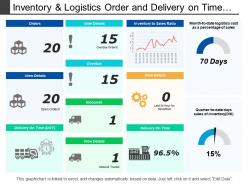
Inventory and logistics order and delivery on time dashboards





Try Before you Buy Download Free Sample Product
 Impress Your
Audience
 100%
Editable
 Save Hours
of Time


Establish a basis for creating consensus with our Inventory And Logistics Order And Delivery On Time Dashboards. Bring folks on common ground.
People who downloaded this PowerPoint presentation also viewed the following :
Inventory and logistics order and delivery on time dashboards with all 6 slides:
Avoid illogical displays of anger with our Inventory And Logistics Order And Delivery On Time Dashboards. Encourage folks to control their ire.


FAQs for Inventory and logistics order and delivery
So you'll want demand forecasting to predict what you need, plus real-time tracking so you actually know your stock levels. Automated reordering is clutch - saves you from those panic moments when you're suddenly out of everything. ABC analysis helps categorize your stuff by importance (honestly wish I'd learned this sooner). Make sure your supplier management tools can talk to your sales channels - integration matters way more than people think. Oh, and start with getting your tracking system solid first. Everything else builds from there, but if you can't see what you have, you're basically flying blind.
Honestly, ditch the guesswork and start with actual sales data for forecasting demand. ABC analysis is your friend here - spend way more energy on those high-value A items instead of worrying about random junk that barely moves. JIT ordering works great, but only if your suppliers aren't flaky (learned that one the hard way). Dead stock will kill your margins, so audit regularly. I'd start by pulling turnover rates for your top 20% of SKUs first. That's where you'll actually move the needle on carrying costs without getting overwhelmed.
Oh man, you really can't do inventory well without tech these days. Barcode scanners and RFID track everything in real-time, which is a lifesaver. Your inventory software predicts demand patterns and sets up automatic reorders so you don't run out of stuff. Cloud platforms mean you can check stock levels from your phone (I do this way too much honestly). AI analyzes your sales history to optimize stock levels. The best part? Everything syncs - your POS talks to your warehouse system talks to accounting. No more manual entry mistakes. Just figure out what's bugging you most right now and tackle that first.
Look, demand forecasting is basically what drives all your big inventory calls - tells you what to order, timing, safety stock levels, the whole thing. Get it right and you'll nail your reorder points while dodging stockouts AND that dreaded overstock situation (finance hates when stuff just sits there). Screw it up though? You're either frantically hunting for inventory or drowning in slow-movers. I always tell people to dig into historical data, seasonal patterns, market shifts - that's your goldmine. Oh and definitely check your forecasting accuracy every month. Adjust as you go.
Oh man, inventory tracking across multiple channels is brutal. Your website, physical store, Amazon - they're all fighting over the same stock but half the time they don't sync up properly. I've seen people accidentally sell the same item three times in one day, total disaster. Forecasting demand gets weird too since customers shop differently on each platform. Then you've got different shipping rules and fees everywhere. Honestly, customers expect everything to be perfect no matter where they buy from you. Get a decent inventory system that connects everything - trust me, it's worth every penny for your mental health.
So tracking demand patterns and supplier stuff through analytics basically shows you what you actually need instead of just winging it. Seasonal spikes become obvious, plus you'll catch which products always sell out faster than you think. Honestly, predictive analytics beats the old "let's just order what we did last year" approach by miles. Set up alerts when stock gets low and use ABC analysis for your high-value items. Oh, and start simple with basic dashboards - you can always get fancier once you're not drowning in spreadsheets anymore.
Honestly, seasonal businesses live or die by looking at last year's numbers - that's how you predict what's coming. Find suppliers who don't freak out when you suddenly need triple your usual order, trust me on this one. We got absolutely slammed once because I waited too long to staff up. During slow months, keep inventory super lean so your money isn't just sitting there. But start ordering for peak season way earlier than feels normal - like 2-3 months ahead. Oh, and time your big shipments right before busy periods hit instead of stockpiling year-round.
So JIT inventory basically means you don't stockpile stuff - you order materials right when production needs them. Your carrying costs drop like crazy because you're not tying up cash in warehouse space or risk having things go obsolete. Cash flow gets way better since you're not paying for inventory months ahead of time. Honestly, it feels sketchy at first with zero buffer, but the money you save is worth it. The catch? Your suppliers have to be rock solid. I'd definitely test which vendors can actually hit those tight delivery windows before you commit - learned that one the hard way.
Dude, too much inventory is a cash killer. Your money gets stuck in products collecting dust instead of working for you. Warehouse fees add up fast - I learned that the hard way! Then there's insurance, plus stuff going obsolete if it sits too long. Carrying costs hit like 20-25% per year, which is brutal. But honestly? The worst part is missing out on better opportunities with that trapped cash. You could be growing the business instead. Check your turnover ratios monthly so you catch this before it wrecks your cash flow.
Honestly, most places just guess and then panic when stuff runs out - don't be them! You gotta figure out your actual reorder points using real demand data, not hunches. Set up automatic alerts when inventory drops to certain levels so you're ordering before stockouts happen. ABC analysis is clutch here - watch your expensive, fast-moving stuff way closer than random items. I'd start tracking how often you actually run out of things, then work backwards to set better thresholds. Get some forecasting tools if possible (even basic ones help), and tweak your numbers monthly. Oh, and don't go overboard - sitting on too much inventory kills cash flow just as bad as running out does.
Start with inventory turnover ratio - shows how fast you're moving stuff off the shelves. Days sales in inventory is key too, tells you how long products just sit there. I'd also watch your stockout frequency and fill rates so you catch supply problems early. Dead stock percentage matters a ton since that's money down the drain. Carrying costs and gross margin by category are worth tracking too, though honestly those can wait if you're just getting started. Pull these monthly at first, then focus on whatever looks sketchy.
Honestly, disruptions mess with everything - you can't just stick to your usual ordering patterns anymore. I'd start hunting for backup suppliers right now, before you actually need them. Yeah, you'll probably have to keep more inventory sitting around, which sucks for cash flow, but better safe than sorry. Map out which products would screw you over the most if they got delayed. Just-in-time is great until it isn't, you know? Build in some cushion for your critical stuff. The whole thing's about not panicking when your main supplier calls with bad news.
Do quarterly audits but rotate which sections you hit each time - nobody wants to deal with audit burnout. Focus on high-value stuff first since that's where mistakes actually cost you money. Between full audits, do some cycle counting to catch problems early. Oh, and don't have the same person count what they originally received - that's just asking for trouble. Take photos if anything's damaged, and jump on variances right away instead of letting them snowball. Honestly, the biggest thing is just being consistent with your schedule. That's what actually prevents the expensive surprises later.
Start with your suppliers - find ones that actually care about the environment and sell eco-friendly stuff. Better demand forecasting helps cut waste too (plus who wants dead inventory taking up space?). Your warehouse can probably save energy with simple upgrades, and less packaging waste is honestly a no-brainer. Shipping's another big one - consolidate orders when you can and pick carriers doing green initiatives. Most of this saves money anyway, which is nice. Pick whatever feels easiest for your setup first.
Honestly, your supplier relationships can make or break inventory control. Good partnerships mean they'll actually tell you when lead times are shifting or if there's trouble coming down the pipeline. You get way better at planning when you're not guessing about everything. They'll also bump you up the priority list when supply gets weird - which happens more than you'd think. The real magic happens when they start sharing their forecasts with you. Game changer. I'd start with regular calls to your main suppliers, even if it's just once a month to stay connected.
No Reviews