


IoT Solutions In Manufacturing Industry Powerpoint Presentation Slides IoT CD




Try Before you Buy Download Free Sample Product
 Impress Your
 Audience
 100%
100% Editable
 Save Hours
 of Time


Grab our insightfully designed IoT Solutions in Manufacturing Industry PowerPoint Presentation. IoT manufacturing involves harnessing the power of the Internet of Things within the manufacturing sector to optimize and automate operations, thus enhancing production efficiency. Its primary objectives encompass boosting productivity, reducing errors, and ultimately elevating the overall business performance. Firstly, the presentation delivers a comprehensive overview of IoT manufacturing, covering its catalysts and industry best practices. The array of pivotal technologies, such as 5G, artificial intelligence, big data analytics, and robotics, are included. Furthermore, the Inventory Management template delves into practical use cases within IoT manufacturing, spanning areas like asset management, supply chain optimization, predictive maintenance, quality control, inventory supervision, and intelligent packaging solutions. Lastly, the Supply Chain Management slides encapsulates the broader impact of IoT manufacturing on businesses, showcasing the power of dashboards and illustrating its benefits through compelling case studies related to inventory management, asset tracking, and cargo monitoring. Get access to this 100 percentage editable template now.
People who downloaded this PowerPoint presentation also viewed the following :
Content of this Powerpoint Presentation
Slide 1: This slide introduces IoT Solutions in Manufacturing INDUSTRY. State your company name and begin.
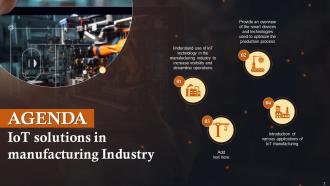
Slide 2: This is an Agenda slide. State your agendas here.
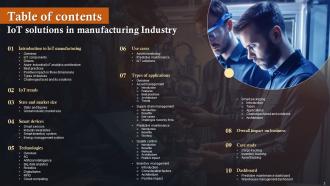
Slide 3: This slide shows Table of Content for the presentation.
Slide 4: This slide shows Table of Content for the presentation.
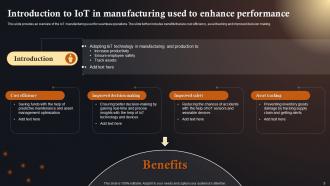
Slide 5: This slide provides an overview of the IoT manufacturing used for seamless operations.
Slide 6: This slide presents an overview of the major components that helps to understand the functioning of IoT systems.
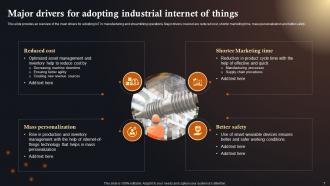
Slide 7: This slide displays an overview of the main drivers for adopting IoT in manufacturing and streamlining operations.
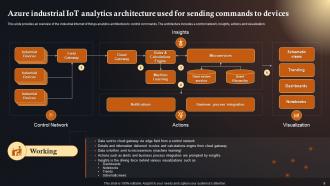
Slide 8: This slide provides an overview of the industrial Internet of things analytics architecture to control commands.
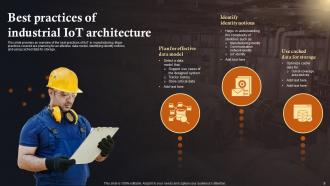
Slide 9: This slide presents an overview of the best practices of IIoT in manufacturing. Major practices covered are planning for an effective data model etc.
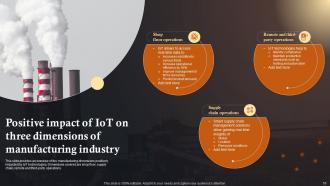
Slide 10: This slide displays an overview of the manufacturing dimensions positively impacted by IoT technologies.
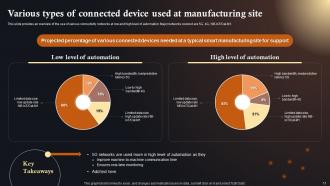
Slide 11: This slide provides an overview of the use of various connectivity networks at low and high level of automation. Major networks covered are 5G, 4G, NB-IoT/Cat-M1.
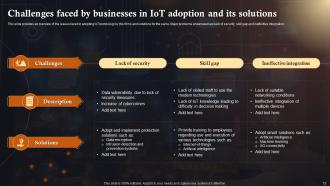
Slide 12: This slide displays an overview of the issues faced in adopting IoT technology by the firms and solutions for the same.
Slide 13: This slide shows Table of Content for the presentation.
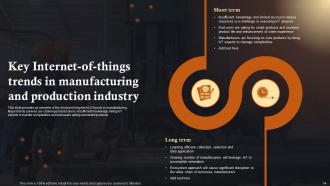
Slide 14: This slide provides an overview of the short and long-term IoT trends in manufacturing.
Slide 15: This slide also provides an overview of the emerging IoT manufacturing trends.
Slide 16: This slide shows Table of Content for the presentation.
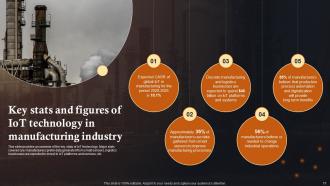
Slide 17: This slide provides an overview of the key stats of IoT technology. Major stats covered are manufacturers prefer data generated from smart sensors etc.
Slide 18: This slide provides an overview of the IoT manufacturing industry market size. Asia-Pacific depicts the highest CAGR of 25.27% during the period 2021-2030.
Slide 19: This slide shows Table of Content for the presentation.
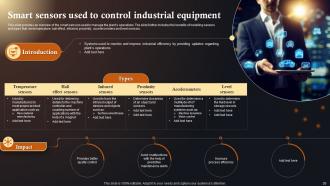
Slide 20: This slide provides an overview of the smart sensors used to manage the plant’s operations.
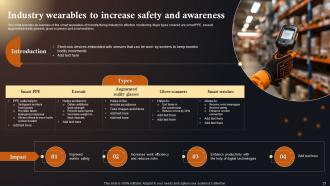
Slide 21: This slide displays an overview of the smart wearables of manufacturing industry for effective monitoring. Major types covered are smart PPE, exosuit etc.
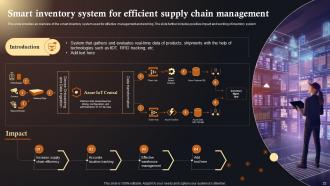
Slide 22: This slide provides an overview of the smart inventory system used for effective management and working.
Slide 23: This slide presents an overview of the smart energy management solutions that help in reducing downtime.
Slide 24: This slide shows Table of Content for the presentation.
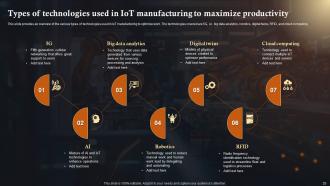
Slide 25: This slide provides an overview of the various types of technologies used in IoT manufacturing to optimize work.
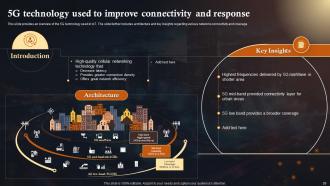
Slide 26: This slide displays an overview of the 5G technology used in IoT. The slide further includes architecture and key insights regarding various networks.
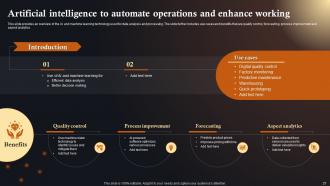
Slide 27: This slide provides an overview of the AI and machine learning technology used for data analysis and processing.
Slide 28: This slide presents an overview of the big data analytics technology used to analyze information collected.
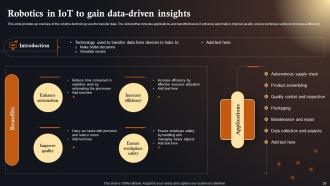
Slide 29: This slide displays an overview of the robotics technology used to transfer data. It includes applications and benefits that are it enhance automation etc.
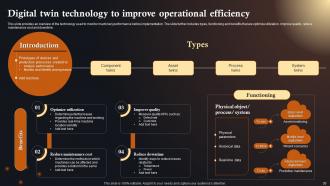
Slide 30: This slide provides an overview of the technology used to monitor machinery performance before implementation.
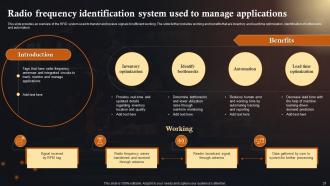
Slide 31: This slide presents an overview of the RFID system used to transfer and receive signals for efficient working.
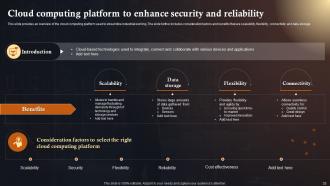
Slide 32: This slide displays an overview of the cloud computing platform used to streamline industrial working.
Slide 33: This slide shows Table of Content for the presentation.
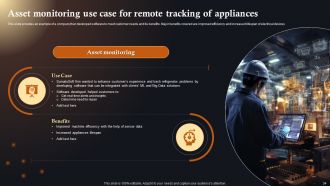
Slide 34: This slide provides an example of a company that developed software to meet customer needs and its benefits.
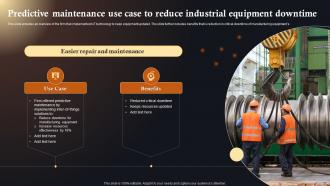
Slide 35: This slide displays an overview of the firm that implemented IoT technology to keep equipment updated.
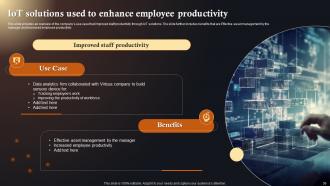
Slide 36: This slide provides an overview of the company’s use case that improved staff productivity through IoT solutions.
Slide 37: This slide shows Table of Content for the presentation.
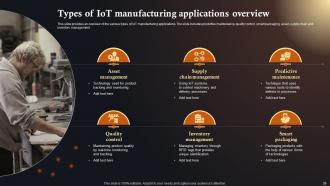
Slide 38: This slide provides an overview of the various types of IoT manufacturing applications.
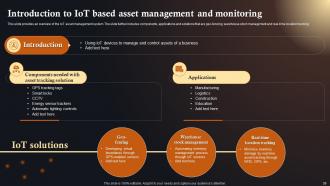
Slide 39: This slide displays an overview of the IoT asset management system. The slide further includes components, applications and solutions.
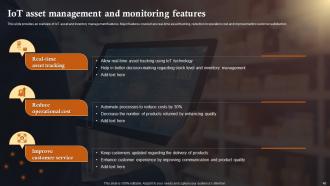
Slide 40: This slide presents an overview of IoT asset and inventory management features. Major features covered are real-time asset tracking etc.
Slide 41: This slide displays an overview of the best practices to be followed for smart asset monitoring.
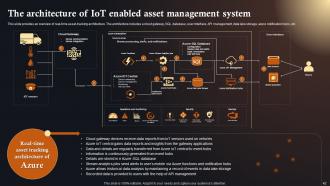
Slide 42: This slide provides an overview of real-time asset-tracking architecture. The architecture includes a cloud gateway, SQL database, user interface etc.
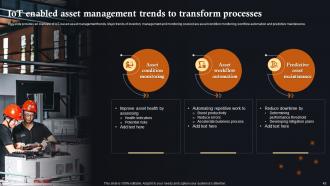
Slide 43: This slide displays an overview of IoT-based asset management trends. Major trends of inventory management and monitoring are covered.
Slide 44: This slide shows Table of Content for the presentation.
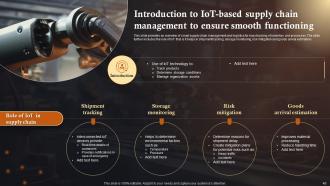
Slide 45: This slide provides an overview of smart supply chain management and logistics for easy tracking of inventory and processes.
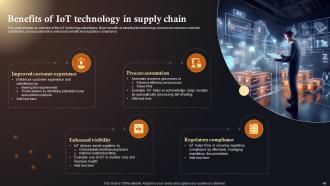
Slide 46: This slide displays an overview of the IoT technology advantages. Major benefits of adopting the technology covered.
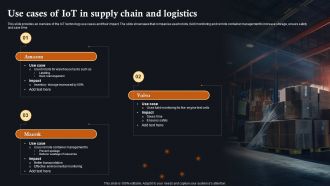
Slide 47: This slide provides an overview of the IoT technology use cases and their impact. The slide showcases that companies used robots, fuild monitoring etc.
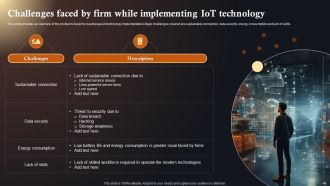
Slide 48: This slide presents an overview of the problems faced by businesses in technology implementation.
Slide 49: This slide shows Table of Content for the presentation.
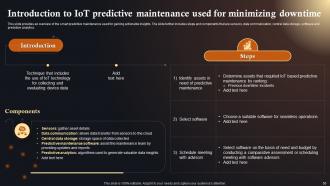
Slide 50: This slide provides an overview of the smart predictive maintenance used for gaining actionable insights.
Slide 51: This slide displays an overview of the IoT predictive maintenance advantages to manufacturing firms.
Slide 52: This slide provides an overview of the smart predictive maintenance working. The architecture includes actuators, field gateways etc.
Slide 53: This slide shows Table of Content for the presentation.
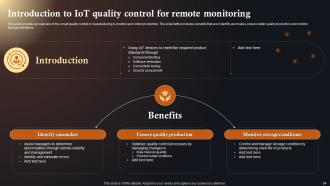
Slide 54: This slide provides an overview of the smart quality control in manufacturing to monitor and control production.
Slide 55: This slide displays an overview of the ways to be followed for better decision-making in the manufacturing industry.
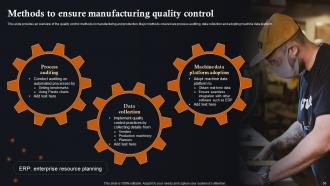
Slide 56: This slide provides an overview of the quality control methods in manufacturing and production.
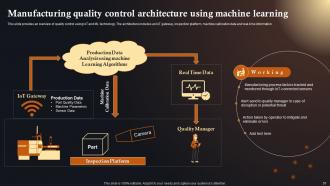
Slide 57: This slide displays an overview of quality control using IoT and ML technology.
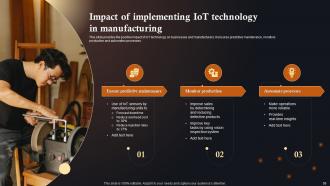
Slide 58: This slide provides the positive impact of IoT technology on businesses and manufacturers. It ensures predictive maintenance and automates processes.
Slide 59: This slide shows Table of Content for the presentation.
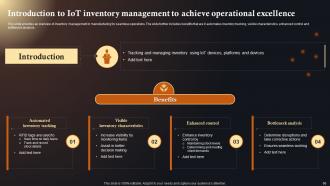
Slide 60: This slide provides an overview of inventory management in manufacturing for seamless operations.
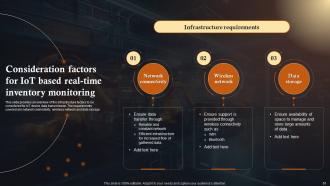
Slide 61: This slide displays an overview of the infrastructure factors to be considered for IoT device data transmission.
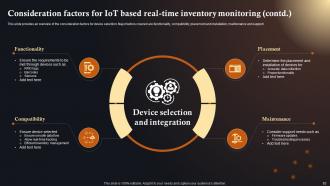
Slide 62: This slide provides an overview of the consideration factors for device selection. Major factors covered are functionality, compatibility etc.
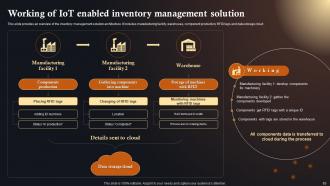
Slide 63: This slide displays an overview of the inventory management solution architecture. It includes manufacturing facility, warehouse, component production etc.
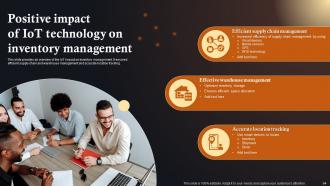
Slide 64: This slide provides an overview of the IoT impact on inventory management. It ensured efficient supply chain and warehouse management and accurate location tracking.
Slide 65: This slide shows Table of Content for the presentation.
Slide 66: This slide provides an overview of the smart packaging to increase brand awareness and improve product quality.
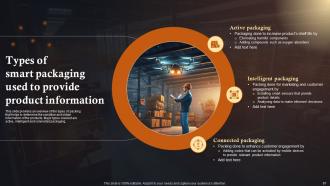
Slide 67: This slide displays an overview of the types of packing that helps to determine the condition and obtain information of the products.
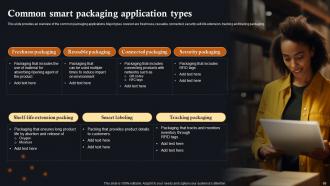
Slide 68: This slide provides an overview of the common packaging applications. Major types covered are freshness, reusable, connected etc.
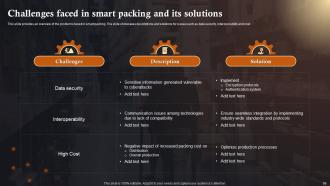
Slide 69: This slide displays an overview of the problems faced in smart packing. The slide showcases descriptions and solutions for issues.
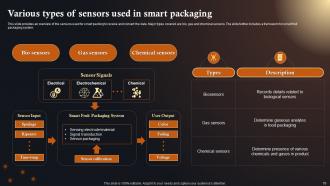
Slide 70: This slide provides an overview of the sensors used for smart packing to receive and convert the data.
Slide 71: This slide shows Table of Content for the presentation.
Slide 72: This slide provides an overview of the positive impact of using IoT technology in a company.
Slide 73: This slide shows Table of Content for the presentation.
Slide 74: This slide provides an overview of the a company’s case study that collaborated with another firm to build cargo tracking system.
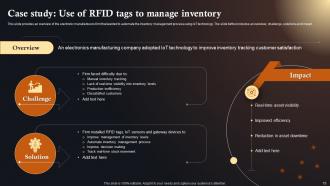
Slide 75: This slide displays an overview of the electronic manufacturers firm that wanted to automate the inventory management process using IoT technology.
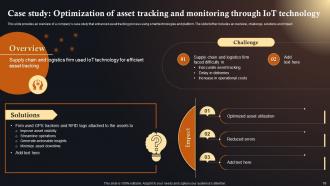
Slide 76: This slide provides an overview of a company’s case study that enhanced asset tracking process using smart technologies and platform.
Slide 77: This slide shows Table of Content for the presentation.
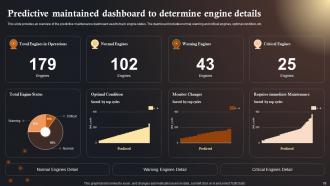
Slide 78: This slide provides an overview of the predictive maintenance dashboard used to track engine status.
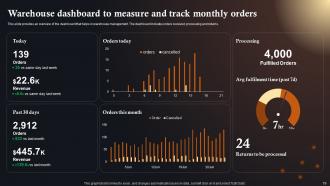
Slide 79: This slide displays an overview of the dashboard that helps in warehouse management. The dashboard includes orders received, processing and returns.
Slide 80: This slide shows all the icons included in the presentation.
Slide 81: This slide is titled as Additional Slides for moving forward.
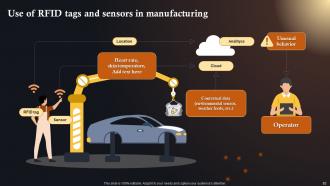
Slide 82: This slide displays the use of RFID tags and sensors in manufacturing with additional textboxes.
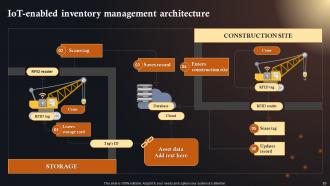
Slide 83: This slide presents IoT-enabled inventory management architecture with additional textboxes.
Slide 84: This slide displays major parties involved in IoT manufacturing with additional textboxes.
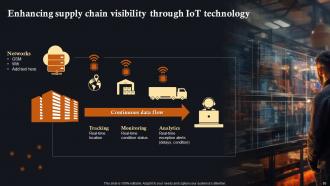
Slide 85: This slide presents Enhancing supply chain visibility through IoT technology with additional textboxes.
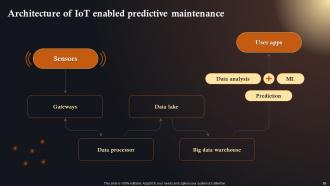
Slide 86: This slide displays Architecture of IoT enabled predictive maintenance with additional textboxes and related imagery.
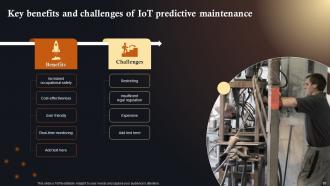
Slide 87: This slide presents Key benefits and challenges of IoT predictive maintenance with additional textboxes.
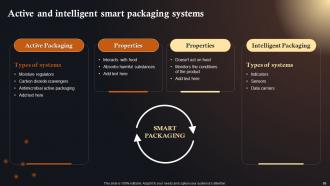
Slide 88: This slide displays Active and intelligent smart packaging systems with additional textboxes and related imagery.
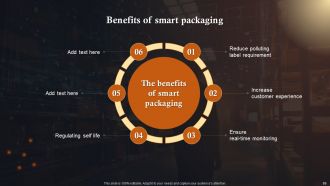
Slide 89: This slide presents the benefits of smart packaging with additional textboxes.
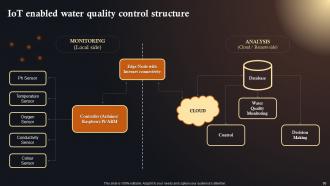
Slide 90: This slide displays IoT enabled water quality control structure with additional textboxes and related imagery.
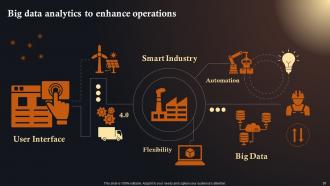
Slide 91: This slide presents Big data analytics to enhance operations with additional textboxes.
Slide 92: This slide displays IoT enabled network connectivity with additional textboxes and related imagery.
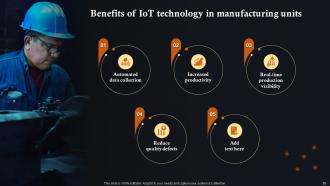
Slide 93: This slide presents benefits of IoT technology in manufacturing units with additional textboxes.
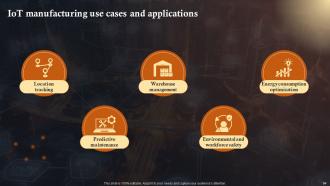
Slide 94: This slide displays IoT manufacturing use cases and applications with additional textboxes and related imagery.
Slide 95: This slide presents Roadmap with additional textboxes.
Slide 96: This slide displays Mind Map with related imagery.
Slide 97: This is a Thank You slide with address, contact numbers and email address.
IoT Solutions In Manufacturing Industry Powerpoint Presentation Slides IoT CD with all 105 slides:
Use our IoT Solutions In Manufacturing Industry Powerpoint Presentation Slides IoT CD to effectively help you save your valuable time. They are readymade to fit into any presentation structure.
































FAQs for IoT Solutions In Manufacturing Industry Powerpoint Presentation
Honestly, the real game-changer is getting live updates on everything instead of waiting till the end of your shift to see what went wrong. Those IoT sensors will ping you the second something's off with your equipment - way better than finding out about breakdowns when it's too late. Plus the data you'll get is kind of mind-blowing. You'll catch bottlenecks you had no idea were there. Your energy bills drop too since the smart systems just handle power optimization on their own. Oh, and definitely start with just one line first - prove it works before you go crazy with it.
So basically IoT lets you see what's happening across your whole supply chain in real time. RFID tags track parts through production, sensors on machines tell you when they need maintenance before they break down. Everything's connected now - your suppliers can automatically share data with your factory floor which is honestly kind of wild when you think about it. You'll spot bottlenecks way faster and make better inventory calls since you're not just guessing anymore. The predictive stuff is huge too - you can see disruptions coming before they actually hit. I'd say start small though, maybe just track one important component first and see how it goes.
So basically you stick IoT sensors on your equipment to track stuff like temperature and vibration in real time. Way better than just waiting for things to break or doing maintenance every X months regardless. The sensors give you a heads up when parts are starting to go bad, so you can fix them during scheduled downtime instead of scrambling when your whole line shuts down unexpectedly. Honestly saved my ass so many times. I'd start with your most critical machines - just throw some basic vibration or temp sensors on there and see what happens.
Okay so three main things to focus on: network segmentation, encryption, and keeping your devices updated. Put your IoT stuff on separate network segments - that way if hackers get into your smart doorbell or whatever, they can't immediately jump to your main systems. Strong encryption for everything is a must at this point, like there's really no excuse not to anymore. Keep firmware updated since manufacturers are constantly fixing security holes. Oh and definitely change those default passwords right away - can't believe how many people skip that step. I'd start by checking what you have now to see where the biggest problems are, then fix those first instead of trying to tackle everything.
Look, predictive maintenance and quality control are the big wins everyone's going for. Your sensors basically babysit equipment to catch problems before they explode into expensive disasters. Real-time defect detection with cameras is pretty slick too. Asset tracking lets you follow materials through the whole production mess. Energy monitoring though? That's where I've seen companies save serious money - like 20% cuts, no joke. Safety monitoring's becoming standard now. Honestly, start with predictive maintenance since the ROI comes fastest and gives you momentum for everything else.
So basically you connect all your machines and sensors to one central system that feeds you live data constantly. Temperature, pressure, production rates - all that stuff streams in real-time. Honestly the amount of data is kinda overwhelming at first but super useful. When things go sideways or numbers drift out of range, you'll get alerts instantly so your team can fix issues before they turn into expensive downtime. You can also control everything remotely - adjust settings, stop processes, whatever. I'd start with dashboards and setting up alert thresholds though.
Honestly, the trickiest parts are usually data security and getting everything to actually work together. Old machines weren't built to connect with modern IoT stuff, so that integration can be a nightmare. Once data starts flowing everywhere, you've got cybersecurity risks - hackers love targeting manufacturing systems. The costs add up fast too between hardware, software, and training everyone. Oh, and don't even get me started on how long implementations can drag on. My take? Pick one small area for a pilot project first. Way smarter than trying to overhaul everything at once and dealing with that chaos.
Honestly, IoT sensors are game-changers for catching defects early. They monitor temperature, vibration, pressure - all that stuff that impacts quality. Real-time data means you spot problems way before traditional methods would catch them. The predictive analytics part is pretty slick too - it'll actually warn you when equipment's about to start churning out bad parts. So you can jump on issues before they mess up your whole batch. Plus if something defective does slip through, you can trace it back instantly to see exactly what went wrong. I'd start with your most critical machines first, then expand from there.
Honestly, don't try to digitize everything at once - I've watched too many companies crash and burn that way. Pick one problem first. Maybe some basic IoT sensors to watch your equipment or track inventory? The sweet spot is finding stuff that pays for itself fast through less downtime or waste. Go for plug-and-play options so you're not building some massive IT setup from scratch. Find vendors who actually get what it's like running a smaller operation and won't try selling you enterprise-level overkill. You can always scale up later once you've got the basics working.
Dude, IoT is a total game-changer for inventory stuff. Smart sensors track everything automatically - no more of those sketchy manual counts that are always wrong anyway. You'll get alerts when stock's running low, plus it actually shows you where everything is in real-time. The coolest part? No more "ghost inventory" where your computer thinks you have 50 widgets but they vanished into thin air. It even monitors temp and humidity if that matters for your products. Honestly, I'd start with whatever moves fastest or costs the most - don't try to tag everything at once or you'll go crazy.
Honestly, IoT analytics is like having a bunch of smart sensors that actually tell you what's going wrong before it breaks. You can predict maintenance needs instead of dealing with surprise breakdowns. Energy waste becomes obvious when you see which processes are sucking power. Quality issues? You'll catch them early by watching temperature swings or weird vibrations. Production bottlenecks show up clear as day too. The whole thing shifts you from constantly putting out fires to actually planning ahead - which is huge. My advice? Don't go crazy trying to monitor everything at once. Pick one line, focus on whatever's causing you the biggest headaches right now.
First thing - get your connectivity sorted with industrial WiFi or ethernet. Edge computing devices are key since cloud processing can lag when you need instant decisions. Industrial sensors for temperature, vibration, pressure have gotten crazy affordable lately (seriously, the price drops have been wild). You'll need some kind of analytics platform to parse all that data streaming in. Oh, and definitely start with just one production line instead of going full-scale immediately. Way easier to troubleshoot when things inevitably get weird.
Basically, these sensors show you exactly where you're wasting energy - like right as it's happening. Your lights and AC will actually adjust themselves based on what you need instead of just blasting away all day. The coolest part? You get warnings before machines break down, which saves both repair costs and the energy they waste when they're acting up. I'd start with smart meters on whatever equipment uses the most power - that's where you'll see the biggest difference. Oh, and you can spot weird patterns too, like why Tuesday nights always spike your electric bill or something.
Dude, edge AI and 5G are about to change everything for manufacturing. Your machines will literally think for themselves and fix issues instantly - no more waiting on cloud processing. Digital twins are getting insane too, you can test entire production changes virtually first. 5G finally solves those annoying dead zones where WiFi just dies on you. Honestly, the predictive maintenance stuff is probably the coolest part - catches problems weeks early. Just start with edge devices on your most important equipment. You'll make your money back pretty quick.
Get your team hands-on with the actual devices they'll be using daily. Theory doesn't stick – people need to mess around with reading sensor data and figuring out alerts. Your IoT vendors should help with specialized training (honestly, make them earn their contract). Find a few tech-savvy people who can become internal mentors. Cross-training works really well here. Have maintenance folks learn the data stuff while your data people get familiar with equipment. Oh, and definitely set up practice environments where they can't accidentally break anything important. Makes everyone way more confident.
-
The slides come with appealing color schemes and relevant content that helped me deliver a stunning presentation without any hassle!
-
I never had to worry about creating a business presentation from scratch. SlideTeam offered me professional, ready-made, and editable presentations that would have taken ages to design.