


IT Operational Analytics With Tickets Management Dashboard




Try Before you Buy Download Free Sample Product
 Impress Your
 Audience
 100%
100% Editable
 Save Hours
 of Time


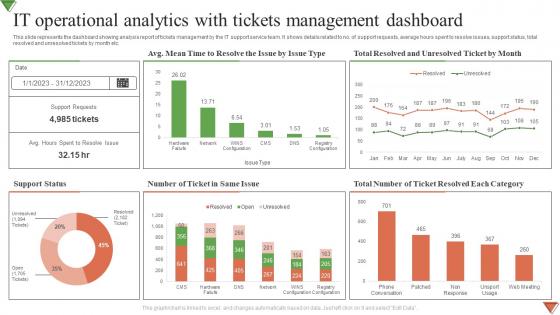
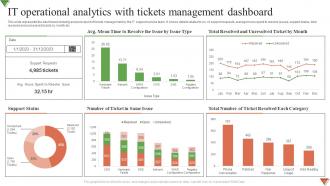
This slide represents the dashboard showing analysis report of tickets management by the IT support service team. It shows details related to no. of support requests, average hours spent to resolve issues, support status, total resolved and unresolved tickets by month etc.
People who downloaded this PowerPoint presentation also viewed the following :
IT Operational Analytics With Tickets Management Dashboard with all 7 slides:
Use our IT Operational Analytics With Tickets Management Dashboard to effectively help you save your valuable time. They are readymade to fit into any presentation structure.






FAQs for IT Operational Analytics With
Honestly, start with monitoring - that's your foundation for everything else. You need solid incident management processes too because stuff's gonna break (usually at 3am, right?). Change management saves you from those "oh shit" deployment moments by having proper approvals in place. Automation's huge for cutting down repetitive work and avoiding dumb mistakes. Don't sleep on documentation either - your future self will thank you when you're not scrambling to remember how something works. Build monitoring first, then layer on the other pieces as you go.
Honestly, automation is a game-changer for IT ops. It knocks out all those boring repetitive tasks and cuts down on mistakes big time. Your incident response gets way faster, deployments stay consistent, and you won't have those "oh crap, forgot to update that server" moments anymore. Plus your team can actually work on interesting stuff instead of babysitting the same old dashboards. Everything runs the same way each time, which is huge for reliability. I'd start with something simple like automated backups - maybe patch management too. Once you see how much time it saves, you'll want to automate everything.
Honestly, start with uptime and response times - those are your bread and butter. MTTR is critical too because it shows how fast you recover from disasters. Track incident resolution time and change success rates, but here's the thing nobody talks about enough: user satisfaction scores matter more than anything. If people are constantly mad, your perfect uptime means nothing. Cost per incident is useful once you get the basics down. Oh, and capacity utilization rates help with planning. Pick maybe 3-4 that actually matter to your specific situation first. Don't go crazy collecting data you'll never look at - use what you track to actually fix things.
Honestly, you've gotta think in layers here. Patch everything religiously and run vulnerability scans like clockwork. Multi-factor auth on literally everything - I can't stress this enough. Keep an eye on network traffic because hackers move insanely fast once they're in (the stats on dwell time will give you nightmares). Set up automated alerts for weird activity. Your incident response plan means nothing if the team never practices it, so actually drill that stuff. Oh, and train your users constantly - people still fall for phishing emails daily. Monthly security reviews will save your butt.
Honestly, cloud computing has become essential for pretty much any IT work these days. You can spin up resources instantly instead of waiting forever for new hardware - which used to drive me crazy. Most companies go with hybrid setups so they're not stuck with just one provider. The cool part is how it makes DevOps stuff actually work smoothly. Automated deployments become way easier when you can treat your infrastructure like code. If you haven't messed around with containers yet, that's probably the best place to jump in. Multi-cloud strategies are popular too since you get the best tools from everyone.
Start by figuring out what the business actually wants to accomplish. I know it sounds basic, but IT teams work in bubbles way too often. Get face time with department heads regularly - learn their headaches and what keeps them up at night. Then connect your tech projects directly to fixing those problems. Sales team struggling with slow customer onboarding? That automation project jumps ahead of upgrading the break room WiFi (Karen will survive). Track metrics that show business impact, not just whether servers are running. Oh, and when you're in those meetings? Talk money and efficiency gains. Nobody cares about your server specs except you.
Honestly, documentation is your best friend here - I can't stress this enough. Map out who's responsible for what during incidents and create escalation paths that don't make people panic. Your SLAs should reflect reality, not some fantasy timeline that'll stress everyone out. Post-incident reviews are where the magic happens though. That's when you figure out what went sideways and how to avoid it next time. Oh, and keep communication flowing throughout - radio silence kills team confidence fast. Start by looking at your current mess (we all have one) and spot the obvious gaps first.
Data analytics will catch infrastructure patterns you'd totally miss otherwise. Start with one annoying metric that's been driving you crazy - maybe response times or resource usage. Honestly, I've watched teams save so many hours just by digging into their ticket data and finding the same issues popping up over and over. Build dashboards that actually help your daily work, not the pretty ones that look good in meetings but tell you nothing useful. Track system performance and bottlenecks before they blow up. Once you're getting real insights from that first metric, then you can expand to more stuff.
Honestly, the hardest part is dealing with people who've been working in separate bubbles forever. Dev and ops teams have this whole blame game thing going on - when stuff breaks, they just point fingers at each other. Breaking that mindset is rough. Your old systems probably weren't built for constant deployments either, which makes everything harder. Plus there's this weird skill mismatch where ops people need to pick up automation tools while devs suddenly have to care about infrastructure. My advice? Don't try to change everything at once. Pick a small project first and show it actually works before going company-wide.
Build compliance into your processes from the start - don't just scramble during audit time. First, figure out what regulations hit your industry (GDPR, SOX, HIPAA, whatever). Then set up automated controls around those rules. Documentation is honestly boring but you'll thank yourself later. Regular audits, proper access controls, and making sure your team actually knows what they need to follow day-to-day. The trick is weaving it into normal operations instead of treating it like some separate beast. Way less stressful that way.
ITIL basically gives you a playbook for standardizing IT stuff - way less chaos that way. Your incident response gets faster since everyone's following the same steps. Change management becomes more predictable too, which is nice. The real benefit though? It actually connects your IT work to what the business needs instead of just fixing random fires all day. Documentation improves a lot, saves time later when you're troubleshooting weird issues. Honestly, if you're thinking about it, just start with incident management first - that's where most people see results right away.
Honestly, the biggest thing is getting your tech people to stop talking in server speak. Have them explain problems like "customers can't check out" instead of "database latency increased 40%." Way more effective. Weekly check-ins help too - business folks share what they're worried about, IT translates their current projects into normal human language. I'd also drag some non-tech people into those post-incident meetings occasionally. They need to see what actually goes into keeping the lights on. Oh, and pair people up for short projects if you can. Nothing beats working together for building some mutual respect between teams.
Honestly, AI and ML are crushing it right now - predicting outages before they hit and automating all that tedious incident response stuff. Infrastructure as Code is finally going mainstream too, so you can treat your whole setup like actual code. Kubernetes is pretty much everywhere at this point. Traditional monitoring? Dead. Observability platforms killed it. Edge computing's making everything messier but way more resilient, which is... whatever, I guess that's progress. Seriously though, get your hands dirty with some AIOps tools. Your future 3am self will thank you when those alerts stop going off constantly.
Dude, IT ops is basically what makes or breaks the user experience. When systems stay up and run fast, users are happy. Crash or slow down? You'll hear about it real quick - trust me on that one. The trick is catching issues before users even notice them through good monitoring. Page load times and transaction success rates are your best friends here. They show you what's actually broken vs what just looks messy on your end. Plus management loves seeing how your work connects to real business stuff. Oh and bottlenecks - kill those things before they multiply.
First thing - get baseline monitoring set up for CPU, memory, storage, and network. Historical data is honestly where the magic happens because you'll spot seasonal spikes and growth patterns you'd totally miss otherwise. There's this 80% rule I swear by: when any resource consistently hits 80% utilization, time to scale up. Set up automated alerts too (trust me on this one). If budget allows, predictive analytics tools are clutch. Weekly capacity reviews with your team keep everyone on the same page. Being proactive beats scrambling to fix things after they break.
-
SlideTeam is the way to go when you are in a time crunch. Their templates have saved me many times in the past three months.
-
I downloaded some of the presentations for work. They were simple to modify and saved me a lot of time and effort.