Weekly ITIL Problem Management Dashboard

Rating:
90%
Weekly ITIL Problem Management Dashboard
Slide 1 of 7
Favourites Favourites

Try Before you Buy Download Free Sample Product

Audience Impress Your
Audience
Editable 100%
Editable
Time Save Hours
of Time
The Biggest Sale is ending soon in
0
0
:
0
0
:
0
0
Rating:
90%
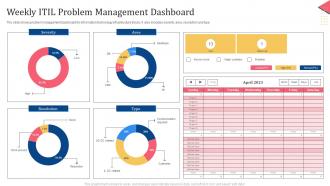
The slide shows problem management dashboard for information technology infrastructure library. It also includes severity, area, resolution and type. Introducing our Weekly ITIL Problem Management Dashboard set of slides. The topics discussed in these slides are Severity, Resolution, Management Dashboard. This is an immediately available PowerPoint presentation that can be conveniently customized. Download it and convince your audience.

FAQs for Weekly ITIL

So basically, you're trying to stop the same annoying problems from happening over and over. You know when your server crashes every Tuesday? That's the kind of pattern you'd hunt down. Incident Management is all about quick fixes - get things working again fast. Problem Management is different though - it's like being a detective who figures out WHY stuff broke in the first place. Way more interesting if you ask me. The whole point is preventing those repeat issues so your users aren't constantly complaining about the same broken services.

Think of it this way - Incident Management is pure firefighting. Your email server dies? Get it back up, whatever it takes. Problem Management comes later as the detective work figuring out WHY it died. Incidents are "what happened," problems are "why it happened." One's urgent and real-time, the other's methodical and can drag on for weeks. Honestly, most teams skip the problem part and wonder why they keep fighting the same fires over and over. Track them separately though - you'll thank me when you're not dealing with the same crashes every month.

So Problem Management breaks down into a few key things you'll be doing. First, you're spotting patterns in incidents and digging into what's actually causing them. Then comes the fun part - fixing things permanently or at least putting solid workarounds in place. Investigation can be a real pain depending on how messy the issue is. You should also get ahead of problems by doing trend analysis and risk assessments before stuff breaks. Oh, and document everything as you go - trust me, you'll need those notes later for knowledge base stuff and when similar issues pop up again.

Look through your incident data for patterns - that's where you'll find the real problems. Similar symptoms keep popping up? Same services crashing? Your monitoring might catch some of this, but honestly the best clue is when your team goes "wait, didn't we just deal with this?" Schedule regular meetings to review incident trends and dig into what's actually causing your big outages. I'd set up dashboards showing your repeat troublemakers too. Way better to hunt these issues down yourself than wait for them to bite you again.

Think of root cause analysis as playing detective with your incidents. Instead of just patching symptoms, you're digging into what's actually breaking stuff repeatedly. The goal? Stop the same problems from coming back to haunt you. Proactive problem management is even better - it catches issues before they blow up into incidents. Honestly, when it works, it feels like magic. Both approaches flip you from constantly putting out fires to preventing them. My advice? Start tracking your most common incident types first. That's where you'll see the biggest impact from doing proper root cause work.

So basically, once you figure out the permanent fix during problem management, you gotta submit an RFC to get it actually implemented. That's when change management takes over - they'll look at the risk, figure out timing, all that stuff. Honestly, this is one of the smoother handoffs in ITIL because it's pretty obvious when to pass things along. Just make sure your problem analysis is solid since the change team needs those details to evaluate everything properly. Oh, and don't skimp on documentation - learned that one the hard way!

Think of it as your team's shared brain for stuff you've already dealt with. Log every workaround you find - symptoms, fix steps, which systems get hit, all that. Next time something similar breaks (and trust me, it will), your service desk can just pull up the solution instead of panicking and calling everyone. Way faster than starting from scratch each time. Only catch is someone actually has to maintain the thing. I've seen too many teams let theirs go stale and then wonder why it's not helping anyone.

So basically Problem Management stops you from dealing with the same annoying issues over and over. Instead of just fixing incidents when they happen, you dig deeper to find what's actually causing them. Track your repeat incidents first - that's where you'll spot the patterns. Once you see what keeps breaking, you can fix the root cause permanently. Way better than constantly putting out fires, trust me. It feeds back into how you design services too, which is pretty useful. My old team used to hate this stuff but honestly it saves so much headache later.

Honestly, just focus on four main things. Track how many incidents keep coming back - that's your biggest red flag. Time matters too: how long does it take to find root causes and actually fix them permanently? The ratio of known errors you're managing vs. ones you actually solve is pretty telling. Oh, and see how many problems you catch proactively instead of just chasing incidents all day. That's it for now - don't go crazy with metrics or your team won't bother using them. Start simple, then build from there.

Honestly, automation is a total game-changer for problem management. Start by automating incident correlation - it'll spot patterns way faster than doing it manually. You can also set up auto-generated problem records when certain thresholds get hit. Root cause analysis tools are probably the biggest win though - they tear through logs and find issues insanely quick. Oh, and automated notifications keep everyone updated without you having to babysit tickets constantly. I'd look at whatever manual tasks are eating up most of your time right now and automate those first.

Honestly, the hardest part is convincing people it's not just busy work on top of their already crazy schedules. Teams hate the root cause analysis stuff - takes forever and they're already putting out fires. Then you've got the whole mess of figuring out what's actually a "problem" vs just random incidents that happen once. Your tools probably don't talk to each other either, which makes tracking anything a nightmare. Oh, and good luck showing leadership any real ROI without decent metrics. My advice? Pick one annoying recurring issue that everyone's sick of dealing with and prove the process works there first.

Make problem management everyone's job, not just IT's thing. People need to feel safe reporting issues without getting blamed - that's huge. After big incidents, do retrospectives with the whole team. Pizza helps, trust me. Give folks maybe 20% of their time for hunting down potential problems before they blow up. Track your resolution times and share what you're learning. Oh, and definitely celebrate when someone catches an issue early or comes up with a better process. That proactive stuff is where you'll see real results.

Most places use ServiceNow, Remedy, or Jira Service Management for tracking problems and doing root cause analysis. Splunk and Dynatrace are solid for the actual detective work - they help you spot patterns in system data. Teams or Slack work great for collaboration since you're always bouncing ideas off people. Don't laugh, but I still throw data into Excel sometimes for quick trend analysis. My advice? Just start with whatever ITSM tool you already have instead of shopping around for something fancy. You can always add monitoring tools later once you get the basics down.

First thing - sort your problems by impact and urgency. Sounds basic but most teams totally botch this and end up fixing random stuff while the big issues just sit there getting worse. Build a database of known errors so you're not reinventing the wheel every time. Do actual root cause analysis instead of slapping band-aids on everything. I can't stress this enough - schedule regular review meetings to spot patterns and track what's actually getting fixed. Oh, and create clear workflows with assigned owners. Nothing's more frustrating than problems disappearing into the void because nobody knows whose job it is.

Communication can totally make or break your problem management - I've watched so many projects crash because teams weren't talking. You need regular updates flowing between your tech people, stakeholders, and users. Otherwise you get duplicate work and angry customers wondering what's happening. Status updates, impact info, workaround tips - all that stuff matters. Honestly, the smartest thing? Set up your communication templates and escalation paths right from the start. Trust me, it'll save you major headaches down the road when things get messy.

Ratings and Reviews

90% of 100
Review Form
Write a review
Most Relevant Reviews
  1. 100%

    by Derick Meyer

    A perfect platform for all your presentation needs. Unlimited products at an affordable price. 
  2. 80%

    by O'Neill Reyes

    One-stop solution for all presentation needs. Great products with easy customization. 

2 Item(s)

per page: