

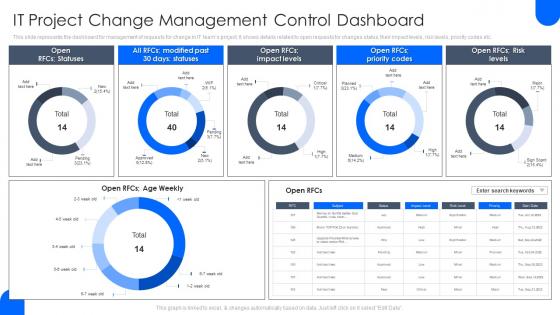
IT Project Change Management Control Dashboard




Try Before you Buy Download Free Sample Product
 Impress Your
 Audience
 100%
100% Editable
 Save Hours
 of Time


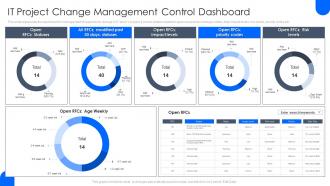
This slide represents the dashboard for management of requests for change in IT teams project. It shows details related to open requests for changes status, their impact levels, risk levels, priority codes etc.
People who downloaded this PowerPoint presentation also viewed the following :
IT Project Change Management Control Dashboard with all 7 slides:
Use our IT Project Change Management Control Dashboard to effectively help you save your valuable time. They are readymade to fit into any presentation structure.





FAQs for IT Project Change
Look, people will fight you if they don't get WHY you're changing things. Be brutally honest about what's broken and what happens if you do nothing - I've watched too many managers try to soften this and it backfires completely. Hit them from all angles: town halls, team meetings, casual one-on-ones. Let them push back and ask hard questions. Here's the annoying part though - you'll have to repeat yourself like a broken record. Most people need to hear the same thing at least three times before it actually clicks.
Honestly, people just hate change - especially when nobody explains what's happening or why. Leadership usually does a terrible job communicating the vision upfront. Then they rush everything and don't give teams enough resources, which is so predictable it hurts. Middle managers get screwed the worst because they're stuck between angry employees and pushy executives. My advice? Figure out who's gonna resist early and talk to them directly. Don't assume people will magically understand - spell out the "why" and keep everyone in the loop. Way better than dealing with the fallout later.
Dude, your leadership approach totally makes or breaks these things. Go too heavy-handed and everyone just digs in their heels - nobody likes feeling steamrolled. But if you're too chill about it, everything falls apart and nothing actually happens. I've watched that trainwreck way too many times. What works is finding that middle ground where you're getting people involved in the planning but still being the one who sets the direction. You gotta read the room too - some changes need you to be more hands-on, others need a lighter touch. It's all about matching your style to what's actually happening with your team.
Dude, you absolutely need to get employees involved from the start. People HATE when change gets forced on them - but if they help create it? Totally different story. Their input is gold since they actually know what works day-to-day. Plus you'll get buy-in instead of pushback. Make them co-creators, not just people who have to deal with whatever you decide. Honestly, I've seen so many initiatives crash and burn because leadership thought they knew best without asking anyone. Ask for their thoughts before you've already made up your mind about everything.
Track the hard numbers first - adoption rates, productivity, retention stats. Those tell you if people are actually using the new stuff. But honestly? The data's only half the picture. You'll want pulse surveys and focus groups too because sometimes people comply but hate every second of it lol. Start measuring before you roll anything out so you have a baseline to compare against. Oh, and don't just check once at the end - keep tabs during implementation too. Resistance usually shows up way before the final metrics do.
So I've used a bunch of these frameworks over the years. Kotter's 8-Step is the go-to for big transformations, super popular. ADKAR's better for individual adoption stuff. Prosci has solid research backing it up if your leadership loves data. But honestly? I've watched teams spend months debating which framework is "best" and never actually start the change work. That's worse than picking an imperfect one and running with it. Lean Change works well in agile shops. Bridges' model is clutch for tech changes since it tackles the emotional stuff people go through. Just match whatever fits your company's vibe and timeline, then don't second-guess yourself halfway through.
Honestly, most people just need to feel safe about change - like their job isn't on the line, you know? I'd start with small pilot programs so they can actually see it working before going big. Communication is everything here. Be super transparent about WHY you're changing things and what's personally in it for them. People get weird about new processes because they're scared of looking stupid or incompetent. Give them proper training time. Don't rush it. Oh, and celebrate those little wins! Find the early adopters and make them look good - others will follow.
First, figure out why people are fighting it - scared they'll lose their job, worried about more work, or just hate change in general. Communication helps SO much here. Tell them straight up what's happening and why it benefits them too. Get the popular people on your side first because honestly, they do half the work for you. Let employees help plan stuff when you can, train them properly, and make a big deal about small wins. Oh and don't let gossip fester - tackle concerns head-on before things get weird.
Honestly, digital transformation makes everything move so much faster - forget those old 6-month rollout plans. You've got to switch to continuous, smaller changes instead of those massive waterfall projects. Communication needs to happen way more often too, like almost annoyingly frequent. The weird part is you're basically managing people who are always in flux now, not just during specific "change moments." Real-time data becomes your best friend for tracking how people are actually adopting stuff. My advice? Shorten everything and build in more checkpoints where people can give you feedback.
Figure out what skills they actually need first, then build training around those gaps. Mix it up - workshops for hands-on learners, docs for people who like to reference stuff later. Timing's huge though. Don't do training months early or they'll forget everything by the time they need it. Get some champions lined up who can help after the formal stuff ends. Oh, and definitely create spaces where people can mess up and ask dumb questions without feeling stupid. That's honestly where most of the real learning happens anyway.
Honestly, just bake in regular check-ins from the start - pulse surveys, quick focus groups, maybe grab coffee with your key people. Don't wait for things to blow up (because they will). I'd set these touchpoints at every major milestone so you can pivot when needed. Quick polls work great, or just do brief "how'd that go?" sessions after each phase. But here's the thing - you've gotta actually DO something with their feedback and tell them what changed. Otherwise people will stop talking to you real quick. Oh, and make it systematic, not just whenever you remember to ask.
Honestly, communication is everything - like annoyingly so. You'll think you've told people enough but do it 3x more because someone will definitely claim they had no idea what was going on. Get your key people bought in early or they'll sabotage you later. Dependencies are a nightmare so map those out first. Oh, and always have a rollback plan ready because something will go wrong. People get weird about change too, so give them space to freak out a little and actually listen to their complaints. Celebrate the small stuff along the way - keeps everyone from losing their minds.
Honestly, you've gotta go overboard with communication when managing change remotely. I'm talking way more check-ins than feels normal. Mix it up - video calls, Slack, emails, whatever works. Those random hallway chats where people actually ask their dumb questions? Gone. So you need to create fake water cooler moments somehow. Document everything because nobody can just walk over anymore to clarify stuff. Oh, and repeat your key messages like three times more than you think you should - people miss things constantly when working from home. Map out who needs what info first, then build your whole rhythm around that.
Track the obvious stuff first - adoption rates, timelines, budgets. But honestly? The soft metrics tell you way more. Employee engagement scores, retention, survey feedback. Even weird indicators like sudden spikes in sick days (people literally can't deal lol). Set your baselines before anything kicks off, then stick to consistent tracking. Oh and don't go overboard - pick maybe 3-4 key things for a simple dashboard. You don't want to drown in spreadsheets when you're just trying to see if people are actually adapting or quietly freaking out.
Honestly, storytelling works so much better than just dumping process changes on people. Find examples of where similar stuff actually worked at other companies and share those. Or talk about what things will look like once you're through the messy part - people need that visual. I always think spreadsheets make everyone's eyes glaze over anyway. Try starting with "Let me tell you about this team that..." instead of jumping into the technical details. Make it about real people who benefited. Even share your own experiences if you've been through something similar before. It just connects better.
-
Colors used are bright and distinctive.
-
Exclusive and extensive collection of templates. Really helped me create a professional presentation in just no time.