


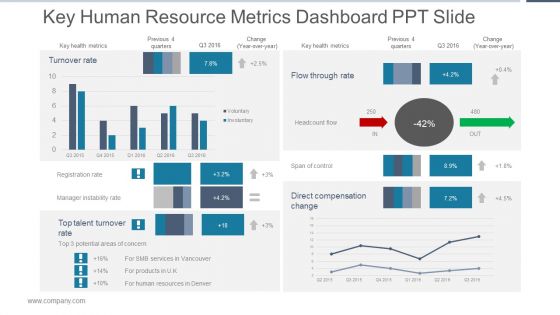
Key Human Resource Metrics Dashboard Snapshot Ppt Slide





Try Before you Buy Download Free Sample Product
 Impress Your
 Audience
 100%
100% Editable
 Save Hours
 of Time


Harness the forces of change with our Key Human Resource Metrics Dashboard Snapshot Ppt Slide. Get them acting in your favor.
People who downloaded this PowerPoint presentation also viewed the following :
Key Human Resource Metrics Dashboard Snapshot Ppt Slide with all 5 slides:
Enable folks to identify bigoted attitudes with our Key Human Resource Metrics Dashboard Snapshot Ppt Slide. Generate awareness among the ignorant.

FAQs for Key Human Resource Metrics Dashboard
Start with turnover rate, time-to-fill positions, and employee engagement scores - those three will give you the biggest picture. Absenteeism and training completion rates are solid too. Cost-per-hire is honestly one people forget about but it'll save your budget planning headaches later. Revenue per employee shows you productivity trends, which is pretty clutch. Oh, and performance review scores obviously. I'd probably stick with these basics first since you can always layer on more specific stuff once you figure out what your company actually struggles with most.
Honestly, start by breaking down turnover by department and role level - that's where the real patterns show up. Are new hires bailing after 90 days? Is one specific manager a problem? Exit interviews are gold here, way more useful than just looking at numbers. I mean, the "why" tells you everything. Separate voluntary from involuntary departures too since those need totally different fixes. Compare your rates to industry benchmarks so you'll know if you're actually hemorrhaging people or just overthinking it. Then tackle the biggest issues first - usually it's crappy onboarding or managers who shouldn't be managing anyone.
Honestly, HR metrics are like having a GPS for your team - they show you if people's daily work actually connects to what the company needs. I'd start with just 2-3 that tie directly to your biggest goals and check them monthly. Look at stuff like productivity ratios, how often people hit their targets, skill gaps. They're great for catching problems early instead of waiting until those awkward annual reviews (which, let's be real, most managers hate anyway). You'll spot where teams are crushing it or totally struggling. Way better than just guessing what's working.
So recruitment metrics are basically your way of figuring out where candidates are getting stuck in your pipeline. I'd start tracking time-to-fill, which sources actually work, and how long people wait for feedback after interviews. Honestly, most companies are way slower than they think they are. The big ones to watch are your application-to-interview rates, interview-to-offer conversion, and offer acceptance rates. Once you measure these weekly, you'll start seeing patterns - like maybe phone screens are taking forever or certain job boards send terrible candidates. I've seen teams literally cut their hiring time in half just by fixing one bottleneck.
Think of engagement metrics as your heads-up before things go sideways. Satisfaction scores, retention rates, feedback sentiment - this stuff shows you what's really going on vs. what you assume is happening. Honestly, nobody wants to work with miserable people anyway! You'll catch problems before they turn into expensive turnover disasters. The data tells you what's actually working (flexible hours rock) versus what's bombing (looking at you, forced team lunches). Then you can have genuine conversations with your team about making work suck less instead of just guessing what they need.
Yeah, there's definitely a connection there. Employees who put in more training hours and ace their assessments usually get 15-20% better performance reviews and move up faster. But here's the thing - it's not just about cramming in hours. Quality matters way more than I initially thought. Track completion rates, how well people retain info, and whether they're actually using new skills on the job. Then compare that stuff to performance data. Most companies see the real impact hit around 3-6 months after training. I'd start by pulling last quarter's training numbers against performance ratings - you'll probably see some obvious patterns jump out.
Track your turnover rates first - that's the biggest red flag if people keep bouncing for better pay. Then compare what you're paying against market rates and run pay gap analysis to catch any internal equity issues. Employee satisfaction surveys are huge too, honestly way more telling than just the numbers sometimes. Exit interviews will give you the real tea on why people leave. Oh and compensation ratio trends over time - that shows if you're actually keeping up or falling behind. I'd check these quarterly so you can fix stuff before it gets expensive. Trust me, waiting too long on this kind of thing always bites you.
Think of D&I metrics like a report card for your company. Track hiring rates by demographics, promotion patterns, pay gaps - stuff that shows what's really happening vs what executives think is going on. Once you've got those numbers, build targeted programs around them. Maybe it's mentorship, maybe recruiting changes, whatever the data suggests. Honestly, most companies are terrible at this part - they collect metrics but don't actually use them to change anything. Set specific goals and then measure if your initiatives actually work. Short sentences work here. The data doesn't lie.
Honestly, start with turnover rates broken down by department and role - that's your bread and butter. Track how long positions stay open too. Employee engagement scores are huge because disengaged people bail within 12-18 months, so watch those closely. Performance ratings + retention data will show you which stars might jump ship (this has literally saved me from scrambling last-minute so many times). Also pull internal mobility patterns and skills gap analyses monthly. Oh, and don't sleep on promotion ratios and retirement eligibility by team. Look at trends over six months minimum to catch patterns before you're in crisis mode.
Exit interviews are honestly underrated - people finally tell you the truth when they're already out. Dig through those conversations for the stuff that keeps coming up: terrible bosses, dead-end roles, crappy pay. I'd track it by department too since some managers are probably worse than others. The really useful part is matching what people say on their way out with engagement scores from when they were still around. Once you've got your top few reasons people are bailing, you can actually fix things before losing more good people.
Honestly, the biggest pain points are data silos and getting leadership to actually care. Your HRIS and performance systems probably hate each other, so clean data? Good luck with that mess. Start small though - pick 3-5 metrics that actually move the needle. Retention rates, time-to-productivity, stuff like that. Skip the fluffy engagement scores for now. Get IT involved early or you'll regret it later. Even if you're doing manual reports at first, that's fine. Prove it works, then worry about fancy automation. I've seen too many people build elaborate dashboards that nobody uses.
Yeah, absenteeism kills productivity - you're constantly scrambling to cover gaps and people are burning out from extra work. Track your absenteeism rate first (absent days divided by scheduled days), then look at frequency per person and department patterns. The cost per absence always shocks managers when they see the real numbers! Bradford Factor scores are useful too since they hit frequent short absences harder than the occasional long one. Honestly, just start with your worst departments first. Then figure out if it's bad management, crazy workloads, or something else driving people away.
Okay so you've got a few different routes here. HRIS systems like Workday or BambooHR are pretty comprehensive - they'll handle turnover, time-to-hire, all that stuff. Most ATS platforms have analytics too if you're already using something like Greenhouse. Don't underestimate Excel though, seriously. Sometimes you just need something simple for custom tracking. For fancier analytics, there's Visier or Culture Amp, but honestly? I'd start with whatever you already have access to first. See what's missing, then fill those gaps. Way easier than overhauling everything at once.
Focus on the HR metrics you actually care about - retention stuff, what keeps people engaged, performance indicators. Mix rating scales (1-5 is solid) with some open-ended questions, but honestly don't go crazy with the open-ended ones or you'll be buried in responses. Been there! Ask specific questions that lead to real actions, like "My manager gives clear feedback" instead of something vague like "How's management?" Keep it under 15 questions max. Then break down your results by department and how long people have been there - that's where you'll find the good patterns. Way more useful than just looking at overall numbers.
Honestly, you really need to compare your HR numbers to what everyone else is doing - otherwise you'll drive yourself crazy. Like, maybe your 15% turnover feels awful, but if everyone else is hitting 22%? You're crushing it. Industry benchmarking shows you where the real problems are vs where you're just being paranoid. Plus leadership actually listens when you can say "we're behind competitors by X%" - way better than just complaining about random issues. I'd grab 3-4 solid industry reports for your field and check quarterly. Trust me, it's a game changer for getting budget approved too.
-
NICE
-
NICE
-
Unique research projects to present in meeting.
-
Use of icon with content is very relateable, informative and appealing.