


Dashboard Showing Employee Measurement Metrics Automation Of HR Workflow




Try Before you Buy Download Free Sample Product
 Impress Your
 Audience
 100%
100% Editable
 Save Hours
 of Time


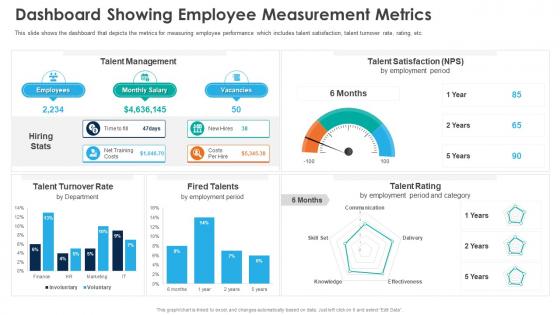
This slide shows the dashboard that depicts the metrics for measuring employee performance which includes talent satisfaction, talent turnover rate, rating, etc.
People who downloaded this PowerPoint presentation also viewed the following :
Dashboard Showing Employee Measurement Metrics Automation Of HR Workflow with all 7 slides:
Use our Dashboard Showing Employee Measurement Metrics Automation Of HR Workflow to effectively help you save your valuable time. They are readymade to fit into any presentation structure.





FAQs for Dashboard Showing Employee Measurement Metrics Automation
Start with turnover and absenteeism - those are your bread and butter. Employee satisfaction scores from surveys are clutch too. Performance stuff like goal completion and review scores will save you tons of time. Oh, and don't sleep on time-to-hire metrics - that data is gold for streamlining your recruiting process. Training completion rates actually tell you way more about team gaps than you'd expect. Productivity tracking helps with the operational side of things. Honestly though? Just pick whatever metrics your leadership team keeps bugging you about in meetings. Those are probably eating up the most manual work anyway.
Dude, automation is a game changer for HR data. Instead of waiting weeks for those manual reports (ugh), you get everything in real-time. Spotting turnover patterns becomes so much easier - same with performance issues and engagement drops. It's honestly night and day compared to wrestling with Excel all the time. The dashboards help too when you're pitching ideas to leadership since you've got actual numbers backing you up. Just make sure you nail down the right metrics from the start, then the system handles the boring stuff while you focus on fixing whatever problems pop up.
BambooHR, Workday, or 15Five are your best bets for HR analytics - they actually integrate without being a nightmare. Already using Tableau or Power BI? Stick with those since everyone's on one anyway. Lattice and Culture Amp work well if you need deeper performance stuff. First thing though - figure out which metrics you actually want automated (trust me, don't go overboard). Then demo maybe 3 platforms max that won't break your budget. The whole point is avoiding manual data entry, so pick something that talks to your current HRIS without your team wanting to quit.
Honestly, real-time tracking works pretty well if you don't make it weird and surveillance-y. People actually like getting instant feedback instead of waiting months for reviews. Think of it like a work fitness tracker – you can see what's actually making a difference and fix stuff quickly. The trick is framing it as something that helps them win, not something you're using to watch them. When people can see their progress happening live, they get way more motivated because they're connected to the results. Oh, and definitely be upfront about what you're tracking and why. Nobody likes mystery metrics.
Honestly, data quality is gonna be your biggest nightmare - most HR systems are a total disaster with duplicate records and missing info everywhere. Getting people on board is tough too. Managers hate losing control over their team data, and employees think you're trying to spy on them or whatever. Legacy system integration is absolutely brutal (learned that the hard way at my last job). Plus the upfront costs will make your head spin. Start super small though - pick something basic like attendance tracking, show it actually works, then slowly add more features. That's the only way I've seen it work without everything falling apart.
Honestly, automation fixes so many headaches with employee data. No more typos or missed entries that happen when people manually input stuff. Your systems just pull data straight from HRIS and time tracking tools - way more accurate. Real-time updates instead of waiting around for monthly reports too. The best part? Your HR team doesn't have to waste time entering timesheets and attendance records by hand anymore. I'd start with whatever data mess is driving you crazy first. Trust me, once you automate those problem areas, you'll wonder why you waited so long.
Think of AI as your pattern-finding buddy for HR stuff. It'll catch trends you'd totally miss - like why certain teams stick around longer or which employees might bail based on their engagement data. The thing processes huge amounts of info in seconds while you'd be stuck crunching numbers for weeks. Yeah, sometimes it finds random connections that don't actually matter, but honestly? It's getting weirdly accurate at figuring out what makes people perform well. I'd say start with just one thing you're curious about and see what patterns it digs up.
Okay so first thing - get your data governance sorted out. Figure out what you're collecting, who can see it, how long you're keeping it. Encrypt everything (seriously, both when it's moving around and just sitting there). Set up permissions so Bob from accounting can't accidentally peek at HR stuff, you know? Anonymize anything sensitive when you can. Regular audits are huge because breaches always happen when you think you're bulletproof. Oh and be upfront with your team about what you're tracking - nobody likes feeling spied on. Give them consent options and let them delete their data if they want.
So basically, automated tracking gives you actual data on where people are struggling - stuff like completion rates, training scores, peer reviews. Way more reliable than just going off what managers think, honestly. The cool part is it'll catch patterns you'd never notice, like when whole departments keep failing at the same tasks or new people consistently take forever to get up to speed in certain areas. I'd probably start small though - pick your most important skills first, then build out from there once you see how it works.
Yeah, there's definitely an upfront cost for the software and getting everything set up. But honestly? You'll make that money back in 6-12 months, maybe sooner if your team's big. Think about all those hours your HR people waste right now doing manual data entry and fixing mistakes - that's pure money down the drain. Once it's automated, they can actually do strategic stuff instead of drowning in spreadsheets. I'd start by tracking how much time you're currently spending on manual work each month. That'll give you a solid baseline for calculating your ROI and probably make the business case pretty obvious.
Honestly, real-time tracking is a game changer for this stuff. Instead of waiting a whole year to see if you're making progress, you can monitor hiring rates, promotions, and pay gaps across different groups as they happen. The cool thing is it catches patterns you'd totally miss otherwise - like maybe engineering never promotes women or there's weird pay discrepancies somewhere. Takes all the guesswork out of it, you know? But here's what I think matters most: leadership can't ignore the data when it's staring them in the face every month. Just pick your key metrics first and build dashboards people will actually check.
Focus on dashboards with real-time stuff - interactive charts, heat maps, those KPI scorecards that update on their own. Tableau and Power BI work well, though honestly Google Data Studio is fine for basic setups (and way cheaper). Make your visuals tell a story instead of just throwing numbers everywhere. Color code your performance levels. Add trend lines so people see the bigger picture. Oh, and definitely include drill-down options - managers love digging into details when something looks off. I'd start with your most critical metrics first, then expand from there once you get the hang of it.
Look, you absolutely need employee feedback or you're basically flying blind. Sure, your system might track productivity numbers, but what if it's just measuring busywork? Employees know the difference. They'll spot gaps in what you're measuring that you'd never catch otherwise. Plus - and this is huge - getting their input upfront means they won't hate the whole thing later. Nobody wants to feel like they're being watched by some robot overlord, right? Ask them what actually matters for their jobs. The context they provide is worth way more than raw data sitting there looking pretty.
First thing - figure out which metrics actually move the needle for your business. Don't just track everything because you can. Your data needs to be clean and connected properly, or you're basically just collecting fancy garbage (trust me on this one). Set up some governance rules so people know what you're tracking and why. Regular audits help catch weird stuff early. Honestly, actionable insights beat vanity metrics every time. Start with maybe 3-5 key ones and build from there once you've got those working smoothly.
Track your time savings first - figure out how many hours you used to waste on manual data stuff versus the automated version. The difference is usually wild! Also compare error rates before and after since fixing mistakes gets expensive fast. One thing people don't think about - faster decision making actually matters a ton. When your managers get insights instantly instead of waiting weeks, everything speeds up from hiring to reviews. I'd start documenting your current process times this week so you've got something to compare against later.
-
Very well designed and informative templates.
-
Nice and innovative design.