


Life Coaching Powerpoint Presentation Slides




Try Before you Buy Download Free Sample Product
 Impress Your
 Audience
 100%
100% Editable
 Save Hours
 of Time


Life Coaching Powerpoint Presentation Slides features a highly visual format that is easy-to-follow. This business life coaching PPT template deck kicks off with an analysis of the current position of the company. You can showcase your findings related to the current year’s workforce turnover. Represent the total and voluntary yearly employee turnover trend or for every four months. Our designers have included ample data visualization tools to aid easy explanation. Your audience can develop a deeper understanding of the subject using this corporate coaching PowerPoint presentation. Our PPT slideshow helps you in putting forth a life coaching need assessment. You can explain the whole training lifecycle with the help of this leadership coaching PowerPoint theme. Elucidate the goals and objectives that form the primary reason for business mentoring. Briefly portray the life coaching process using a linear diagram. So, hit the download icon and begin instant personalizing.
People who downloaded this PowerPoint presentation also viewed the following :
Content of this Powerpoint Presentation
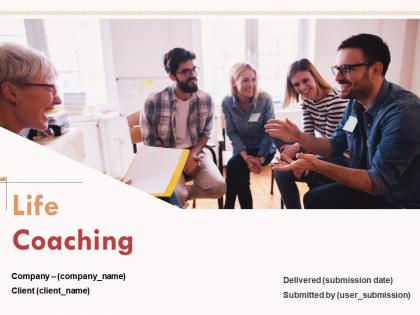
Slide 1: This slide introduces Life Coaching. State Company name, Client name, User name and Delivered date.
Slide 2: This slide displays Content
Slide 3: This slide showcases Analysis of current situation.
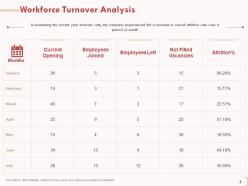
Slide 4: This slide showcases Workforce Turnover Analysis
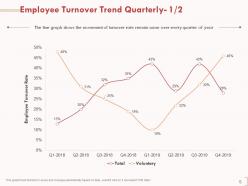
Slide 5: This slide showcases Employee Turnover Trend Quarterly.
Slide 6: This slide displays Employee Turnover Trend Yearly.
Slide 7: This slide shows Drivers of Employee Turnover
Slide 8: This slide presents Drivers of Employee Turnover
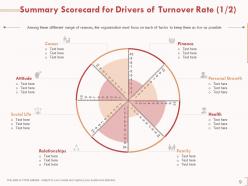
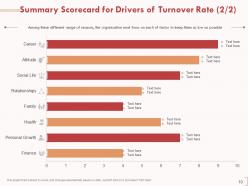
Slide 9: This slide showcases Summary Scorecard
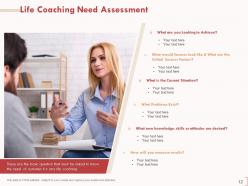
Slide 10: This slide displays Life Coaching Need Assessment
Slide 11: This slide shows Life Coaching Need Assessment
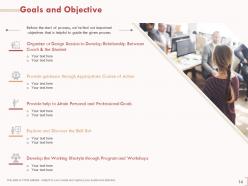
Slide 12: This slide presents Goals and objective
Slide 13: This slide shows Goals and Objective
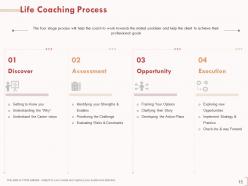
Slide 14: This slide shows Life Coaching Process for Business Life Coaching. The mentioned diagram consists of four different steps to give an overview of career coaching. Users can edit the steps as per requirement
Slide 15: This slide displays Plan of Action /Business. You can use this slide to give an overview of work plan includes details of sessions, briefing and assessments
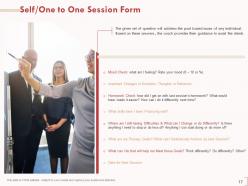
Slide 16: This slide shows Self/One to One Session Form
Slide 17: This slide displays Checklist Questions
Slide 18: This slide showcases Professional feedback
Slide 19: This slide represents Feedback form for Employees/Client
Slide 20: This slide shows Post-Session Evaluation. Write the brief description of results or insight of the process
Slide 21: This slide shows Ways to Provide Constant Encouragement
Slide 22: This slide presents Ways to Provide Constant Encouragement.
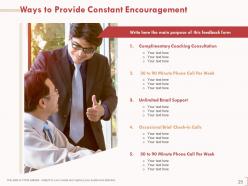
Slide 23: This slide shows Ways to Provide Constant Encouragement. Write here the main purpose of this feedback form
Slide 24: This slide is titled as Additional Slides for moving forward.
Slide 25: This is About Us slide with Company specifications.
Slide 26: This slide displays Vision and Mission
Slide 27: This slide shows 3 step Roadmap process.
Slide 28: This slide shows 4 step Roadmap process.
Slide 29: This slide displays 5 step Roadmap process.
Slide 30: This slide displays 6 step Roadmap process.
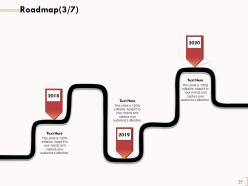
Slide 31: This slide displays Roadmap process.
Slide 32: This is 30 60 90 Days Plan slide.
Slide 33: This slide shows Gantt Chart.
Slide 34: This slide is titled as Important Notes. Post your important notes.
Slide 35: This slide shows Puzzle.
Slide 36: This slide shows Target of the Company.
Slide 37: This slide depicts Mind Map for representing entities.
Life Coaching Powerpoint Presentation Slides with all 37 slides:
Use our Life Coaching Powerpoint Presentation Slides to effectively help you save your valuable time. They are readymade to fit into any presentation structure.



















FAQs for Life Coaching
So basically you're creating this safe bubble where they figure stuff out themselves. Ask really good open questions and listen - like actually listen. Don't judge when you're holding them accountable either. Here's the thing though - it's not therapy at all. You're not digging into childhood trauma or whatever, just helping them get unstuck and move ahead. Stay curious instead of jumping in with advice (hardest part honestly). Help them nail down what they actually value and want. Seriously, just try it with one person first. You'll be shocked how well it works.
Honestly, you've gotta read each client differently. Some people are total data nerds - they want frameworks and metrics laid out clearly. But then you'll get clients who are way more intuitive and need those exploratory, creative conversations instead. Vision boards work amazing for visual people (seriously, their faces light up), while others need regular check-ins and concrete steps or they'll just... drift. I always ask upfront how they like processing stuff and what's actually worked before. Pay attention to their energy in those first sessions - that'll tell you everything about how to adjust your style.
Honestly, EQ is what makes or breaks you as a coach. You've got to read between the lines with clients - like when they say "I'm fine" but clearly aren't. Some sessions get super heavy emotionally, so managing your own reactions while staying present for theirs? That's the real skill. Active listening is huge too. I'd start there and maybe pay attention to your own emotional patterns - sounds boring but it actually helps a ton. Without that trust and rapport, clients won't open up to you anyway.
So you set specific goals upfront with your client - like measurable stuff (applied to X jobs) plus mindset shifts. The subtle wins hit different though - suddenly they're talking about themselves with more confidence or whatever. Check in regularly to see what's actually working. I'd create some basic tracking system you both can look at easily. Sometimes the biggest changes aren't even the obvious ones, you know? Short sessions work better than trying to assess everything at once. Just don't overcomplicate the tracking part.
Honestly, the money thing will stress you out first - some months you're flush, others you're scraping by. Finding clients is brutal too because you're basically selling yourself 24/7 while actually doing the work. Plus everyone and their mom calls themselves a life coach now, so good luck standing out in that mess. Clients always want miracles yesterday, which... yeah, doesn't work that way. But here's what actually helps: get people referring you early on and be super clear about what you can't fix. Those boundaries will save your sanity.
Honestly, content marketing is your best bet here. Pick one platform where your people actually spend time - LinkedIn's great for business coaches, Instagram works for wellness stuff. Post helpful content 3x per week that shows how you think and work. People hire coaches they already trust, so be genuine in your posts and actually engage with comments. Email newsletters are solid too for staying connected with potential clients. The whole "always be selling" thing is dead - just focus on being consistently useful. I'd probably start with whatever platform feels most natural to you first, then expand later.
So boundaries are everything - no getting too close with clients. You're coaching, not therapy, which honestly people confuse all the time. Make sure they actually understand what you do before starting. Keep things confidential but be upfront about when you'd have to break that. Never promise specific results because everyone's different, you know? If someone clearly needs therapy instead, have referrals ready. Be super honest about what you're qualified for and what you're not. Document everything properly. Oh, and definitely find someone experienced to talk through tricky situations with!
Honestly? When you're stuck in the same patterns and can't figure out why. Like, you have goals but keep hitting invisible walls. Or you're "successful" but feel empty inside - hate that feeling. People who need coaches are usually spinning their wheels, making the same relationship or career mistakes over and over. They'll say "I really should start that business" or "I need to leave this job" but... months pass and nothing changes. Sometimes you're just too close to your own problems to see clearly. If you can't break through your mental blocks alone, that's when an outside perspective actually helps.
Just be super consistent - do what you say you'll do, every time. Listen to actually understand them, not just wait for your chance to talk. I've found being a little vulnerable helps too, like mentioning when you've dealt with similar stuff (but don't hijack their moment, you know?). Make sure they feel safe being totally honest without getting judged. Oh, and match how they communicate - some people want direct, others need more gentleness. Setting clear expectations upfront saves you from so many messy situations later. Trust me on that one.
Honestly, the tech options for coaching have gotten pretty wild lately. Apps let your clients track stuff between sessions, so you're not just guessing how their week went. Screen sharing during video calls is clutch - you can walk through exercises together like you're in the same room. I've been experimenting with AI for prepping notes and brainstorming questions, though obviously that's just backup to your actual insights. The trick is finding tools that make the relationship stronger, not more robotic. Maybe start with habit tracking? Don't go overboard with ten different platforms right away.
Honestly, I'd say go for it! The peer support thing is huge - hearing how other people handle similar problems can be such an eye-opener for your own stuff. It's also way cheaper than one-on-one sessions, which is nice. What I really like about groups is the accountability aspect. When someone announces their weekly goal, suddenly you feel more motivated to actually do yours too. Only downside is you won't get as much individual attention, and sharing super personal things might feel weird at first. Maybe try just one session to see how it feels? I'm curious what kind of coaching you're thinking about actually.
Honestly, resistance is super normal - change freaks everyone out. Instead of fighting it, I'd dig into what's actually causing it. Like asking "what scares you about this?" or "what would you lose?" Usually there's some fear or bad experience behind it. The trick is making them feel safe first. Maybe slow things way down, break stuff into tiny steps, or find something they DO want to change. I learned this the hard way - you can't force someone who's not ready. Work with the resistance, not against it. Sometimes people just need time to sit with things before moving forward.
Honestly, goal-setting is everything in life coaching. Without it, you're just having feel-good conversations that go nowhere. Clients come in saying stuff like "I want to be happier" - which, okay, but what does that actually mean? You've got to help them get specific. I usually push for 2-3 concrete goals they actually give a damn about. That's how you structure your sessions and track real progress. When they start hitting those milestones, their confidence shoots up and they're ready for bigger stuff. It's the difference between wandering around and actually getting somewhere meaningful.
Start with basic breathing stuff - gets them centered right away. Body scans are clutch when clients overthink everything (which, let's be real, happens constantly). Try asking "what's your body telling you right now?" - seriously shifts the whole vibe. Mindful listening works too, where they actually hear themselves without the inner critic going nuts. I'll throw in 2-3 minute breaks during longer sessions, especially before heavy conversations. Oh, and don't go overboard at first. Build it up slowly or you'll overwhelm them.
Mix things up constantly - celebrate those tiny wins and break big goals into micro-steps between your sessions. Quick check-ins work great too, just casual texts like "how's that morning thing going?" Sometimes I'll switch the whole format when someone's energy drops - walking sessions or completely different exercises. Honestly, staying curious beats pushing harder every time. When they're stuck, I ask "what would make this easier?" instead of just... you know, being more intense about it. Also don't forget to circle back to their deeper "why" regularly.
-
Commendable slides with attractive designs. Extremely pleased with the fact that they are easy to modify. Great work!
-
Excellent design and quick turnaround.
-
Informative presentations that are easily editable.
-
I discovered this website through a google search, the services matched my needs perfectly and the pricing was very reasonable. I was thrilled with the product and the customer service. I will definitely use their slides again for my presentations and recommend them to other colleagues.