


Management Team Information Technology Company Profile Ppt Formats




Try Before you Buy Download Free Sample Product
 Impress Your
 Audience
 100%
100% Editable
 Save Hours
 of Time


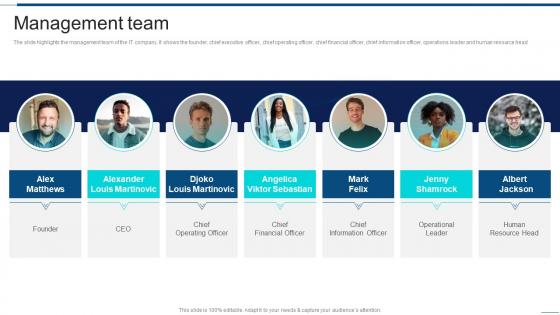
The slide highlights the management team of the IT company. It shows the founder, chief executive officer, chief operating officer, chief financial officer, chief information officer, operations leader and human resource head.
People who downloaded this PowerPoint presentation also viewed the following :
Management Team Information Technology Company Profile Ppt Formats with all 6 slides:
Use our Management Team Information Technology Company Profile Ppt Formats to effectively help you save your valuable time. They are readymade to fit into any presentation structure.





FAQs for Management Team Information Technology Company
Your team needs both tech smarts and business sense - they've gotta understand new technologies AND what customers actually want. Look for people who think strategically about innovation opportunities. The absolute best IT leaders I've seen? They create environments where people aren't afraid to screw up and learn quickly. Also huge on communication skills since you'll constantly be explaining complex stuff to investors and stakeholders. Change management is critical too because you're basically always pivoting. Oh, and definitely audit your current team first - figure out the biggest skill gaps and tackle those. No point spreading yourself thin everywhere at once.
Honestly, having a mix of people on your management team is a game-changer. Different backgrounds mean you'll catch problems before they blow up - like one person spots security issues while another's thinking about user flow. Budget concerns might come from someone totally different. The conversations are way more interesting too, not gonna lie. You end up with solutions you'd never think of solo. Oh, and those blind spots that always bite you? Way easier to avoid. I'd start by looking at who you have now and maybe shake up your planning meetings to get more voices in there.
Honestly, your leadership style makes or breaks an IT team. Be too controlling and you'll kill creativity when people need to solve complex problems. Go too hands-off though? Your devs will be lost when everything hits the fan (and it always does). I've found the best managers can switch gears - sometimes you're coaching someone through code, other times you're making snap decisions or basically being a human shield against corporate nonsense. Really depends on what your specific team needs right now, not whatever generic advice you read online.
Honestly, you can't just grab random techies who sat through one MBA course and call it good. Find managers who've actually coded before AND know how to read financial statements. Cross-training helps too - throw your tech leads into strategy meetings and make sure business people can follow along when engineers start talking without their eyes glazing over (we've all seen that look). The magic happens when teams can translate tech decisions into actual business impact. Mixed project teams work great for this - forces everyone to learn each other's weird languages.
Start with cross-functional teams - seriously breaks down those annoying IT silos fast. Leadership sync meetings help but make them worth people's time, not just boring status updates. When your VPs chase the same quarterly goals instead of competing? Magic happens. Also pick collaboration tools people will actually use (I've seen so many expensive platforms just sit there unused, it's painful). The whole trick is making teamwork easier than working alone. Oh and don't try to fix everything at once - pick one project and build momentum from there.
Yeah, annual reviews are basically pointless in tech - way too slow. I'd go with quarterly check-ins for the big picture stuff like goals and direction changes. Monthly one-on-ones are where the magic happens though. They catch problems early and keep people from feeling ignored. Actually had a manager who did yearly reviews once and it was a disaster - nobody remembered what happened six months ago. Your team will definitely appreciate more frequent feedback, plus you'll see patterns way sooner. Start quarterly and tweak from there based on how your specific people respond.
Track the obvious stuff first - project completion, staying on budget, system uptime. But honestly? The people metrics are where most leaders mess up. Team retention and satisfaction scores tell you way more than you'd think. Customer satisfaction with IT services is massive too, especially if you're client-facing. I'd also watch how you're doing on bigger strategic stuff like digital transformation goals. The trick is balancing "keep everything running" with actually pushing innovation. Pick maybe 3-4 things that match what your company cares about most. Check in quarterly - any more frequent and you'll drive yourself crazy.
Honestly, I'd start with podcasts during your drive - they're seriously underrated for picking up trends. Subscribe to a few newsletters like TechCrunch, but don't go overboard or you'll never read them. Following smart people on LinkedIn helps too. Set up Google Alerts for whatever tech stack you're using. Oh, and get your team doing lunch-and-learns where everyone shares cool stuff they found. Even virtual conferences are worth it these days. Just block out like 30 minutes a week for this stuff. That's really all you need to start.
Honestly, your company culture is probably running the show more than you think. Open cultures? Managers share info and decide things together. Hierarchical places do the opposite - everything flows from the top down. Here's what I've noticed though: blame-heavy cultures kill innovation fast. People get scared to take risks. But when there's psychological safety, your team actually tries new stuff and thinks creatively. The speed thing matters too, especially in IT where everything changes constantly. Some cultures adapt quickly, others... don't. Take a hard look at what's really happening on your team - the culture's probably explaining a lot of those weird dynamics you can't figure out.
Honestly, start by figuring out where your communication is breaking down - that's usually the main culprit. You'll want regular check-ins without being a micromanager, plus tools that don't suck. Document decisions so remote people aren't playing guessing games. The hybrid thing is a pain because you're basically managing two different worlds. I'd focus on what people actually accomplish instead of hours worked. Oh, and watch out for your office crew accidentally leaving remote folks out of conversations - happens more than you'd think. Trust beats surveillance every time.
Don't let conflicts fester - seriously, they just get worse. Focus on the actual problem instead of getting caught up in who's wrong. I've watched teams blow up over stupid stuff like code formatting when nobody even understood what we were building. Make sure people can talk openly without getting thrown under the bus later. Define what's actually broken first, then figure out solutions together. Write down what you agree on (trust me on this one). Oh, and check back in a few weeks because these things love to pop up again when you think they're dead.
Dude, this is huge - way more than most teams get. Your project's success literally depends on getting business leaders, users, and vendors on board. Without that buy-in? You're screwed when budget time rolls around. Regular check-ins keep everyone from going rogue on priorities. I've watched so many IT projects crash because the team just... stayed isolated, you know? Then they'd build something nobody wanted and act surprised. Map out your key people first, then just talk to them regularly. Trust me, it beats fighting fires later when everything's already built wrong.
Honestly, mentorship is what makes or breaks IT teams. Senior managers should pair up with mid-level leads, who then work with junior devs - creates this whole knowledge chain. Code reviews are huge, but the real value comes from sharing decision-making strategies and client management tricks. Oh, and navigating office politics (which is sadly a big part of the job). This way you're growing talent internally instead of constantly recruiting. My advice? Pick your strongest tech leaders and give them formal mentorship roles. It's way more effective than hoping knowledge transfer just happens naturally.
Honestly, you've gotta get your IT people and business folks talking regularly - monthly meetings work well for reviewing what actually matters vs what's just cool tech. I'd start every project by defining success metrics tied to real stuff like revenue or customer happiness. Too many teams build incredible solutions that literally nobody uses (learned this the hard way). Quick scoring system helps too - rank projects by business impact against how complex they'll be. Oh, and quarterly check-ins are clutch for killing projects that aren't actually moving your business forward. Your tech team needs the "why" behind everything, not just specs.
Start with assessing what gaps each manager actually has - way better than generic training for everyone. Most tech people who move into management totally bomb at the soft skills stuff, so communication and conflict resolution training is huge. Get them project management certs like PMP or Agile too. Cross-functional training helps since they need to understand the business side, not just IT. Oh, and mentorship programs are clutch - pair them with seasoned managers. Don't forget emerging tech courses either. Individual development plans work way better than one-size-fits-all approaches.
-
Superb! The innovative and inspiring template designs provide an edge to the presentation.
-
I am extremely pleased with these PPT slides that we used for our event. They were easy to modify and came out great in all aspects!