


Monetary Instruments Powerpoint Presentation Slides




Try Before you Buy Download Free Sample Product
 Impress Your
 Audience
 100%
100% Editable
 Save Hours
 of Time


In order to grow the business and to survive in the market, finances play a very important role. This content ready complete financial tools PPT deck of 36 slides covers various important topics such as bonds, shares, and investments. Showcase the financing instruments of your company using this content ready financial tools PowerPoint presentation. You can edit the slides and put your own text in the financial tools PPT template, and you are ready to represent an engaging and visually appealing PowerPoint presentation with no efforts. This trading instrument PPT deck contains many slides like types of financial instruments we trade in, debentures, rights issue, financial instruments types, foreign exchange market, bond market, bond market components, derivatives market options, derivative market types, other market forms, etc. Additionally, you can also show various other concepts like derivatives and money market options by using this financial instruments PPT template. Grab this monetary tools PPT deck now. Be confident that the audience will agree. Our Monetary Instruments Powerpoint Presentation Slides ensure your thoughts get through.
People who downloaded this PowerPoint presentation also viewed the following :
Content of this Powerpoint Presentation
Slide 1: This slide introduces Monetary Instruments. State Your Company Name and begin.
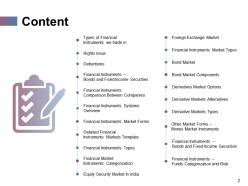
Slide 2: This slide shows Content of the presentation.
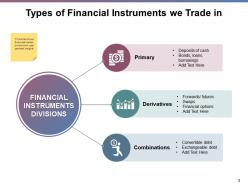
Slide 3: This slide presents Types of Financial Instruments We Trade In.
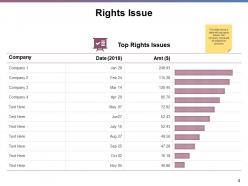
Slide 4: This slide displays Rights Issue in tabular form with the company name and its respective amounts.
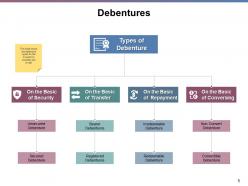
Slide 5: This slide shows the debenture types for the investor to consider and invest
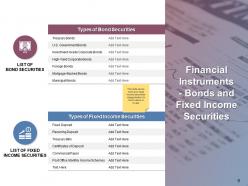
Slide 6: This slide shows bond and fixed income securities categorization for the investor to invest in.
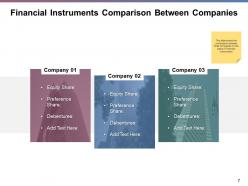
Slide 7: This slide shows the comparison between three companies on the basis of financial instruments.
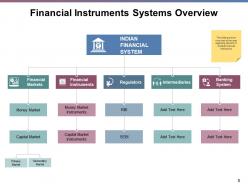
Slide 8: This slide represents Financial Instruments Systems Overview describing- Financial Instruments, Intermediaries, Banking System, Financial Markets, Regulators.
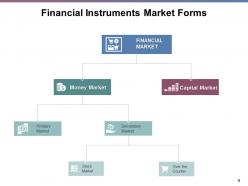
Slide 9: This slide showcases Financial Instruments Market Forms.
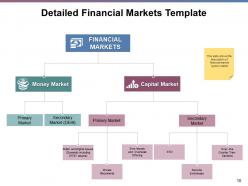
Slide 10: This slide presents Detailed Financial Instrument Markets Template.
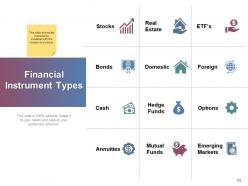
Slide 11: This slide shows the instruments available with the investor to invest in.
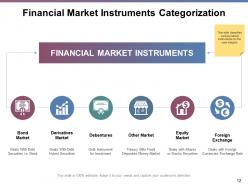
Slide 12: This slide displays Financial Market Instrument Categorization describing- Bond Market, Derivatives Market, Debentures, Other Market, Equity Market, Foreign Exchange.
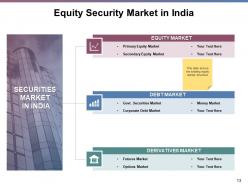
Slide 13: This slide showcases The Equity Security Market in India.
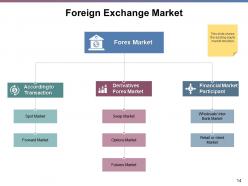
Slide 14: This slide shows the Foreign Exchange Market.
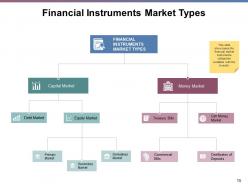
Slide 15: This slide showcases the financial market instrument categories available with the investor.
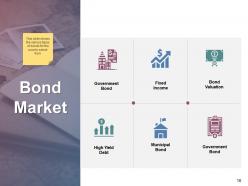
Slide 16: This slide shows Bond Market describing- High Yield Debt, Government Bond, Fixed Income, Bond Valuation, Municipal Bond, Corporate Bond.
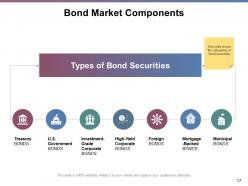
Slide 17: This slide shows Bond Market Components including- Treasury Bonds, U.S. Government Bonds, Investment-Grade Corporate Bonds, High-Yield Corporate Bonds, Foreign Bonds, Mortgage-Backed Bonds, Municipal Bonds.
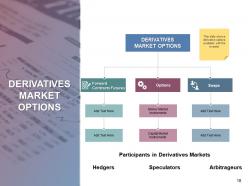
Slide 18: This slide presents Derivatives Market Options available with the investor.
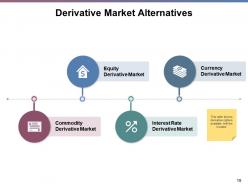
Slide 19: This slide displays Derivative Market Alternatives describing- Commodity Derivative Market, Equity Derivative Market, Interest Rate Derivative Market, Currency Derivative Market.
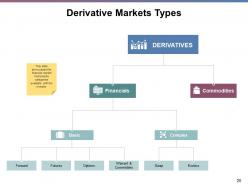
Slide 20: This slide represents Derivative Markets Types with related flow chart.
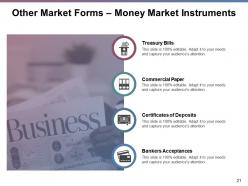
Slide 21: This slide showcases Other Market Forms – Money Market Instruments describing- Treasury Bills, Certificates of Deposits, Bankers Acceptances, Commercial Paper.
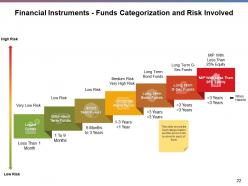
Slide 22: This slide shows Financial Instruments - Funds Categorization And Risk Involved.
Slide 23: This slide displays icons for Monetary Instruments.
Slide 24: This is another slide displaying Monetary Instruments Icons.
Slide 25: This is Our Team slide with names and designation.
Slide 26: This is Our Mission slide with related imagery and text.
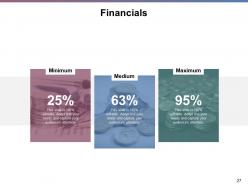
Slide 27: This is a Financials slide. Show your finance related stuff here.
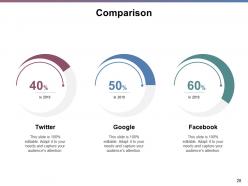
Slide 28: This is a Comparison slide to state comparison between commodities, entities etc.
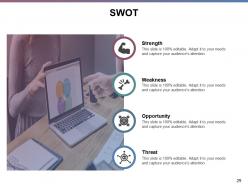
Slide 29: This is a SWOT slide. Show your firm's Strength, Opportunity, Threat, Weakness.
Slide 30: This is a Quotes slide to convey message, beliefs etc.
Slide 31: This is Our Target slide. State your targets here.
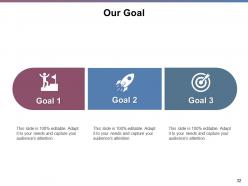
Slide 32: This is Our Goal slide. Show your firm's goals here.
Slide 33: This is a Puzzle slide with text boxes to show information.
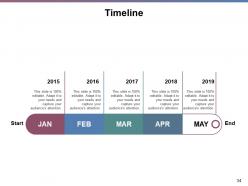
Slide 34: This is a Timeline slide to show information related with time period.
Slide 35: This slide shows Magnifying Glass to highlight information.
Slide 36: This is a Thank You slide with address, contact numbers and email address.
Monetary Instruments Powerpoint Presentation Slides with all 36 slides:
Use our Monetary Instruments Powerpoint Presentation Slides to effectively help you save your valuable time. They are readymade to fit into any presentation structure.






FAQs for Monetary Instruments
Monetary instruments serve crucial functions including controlling money supply, managing inflation rates, regulating interest rates, stabilizing currency values, and facilitating economic growth. These policy tools enable central banks to influence lending behaviors, investment decisions, and consumer spending patterns, with many financial institutions finding that strategic monetary adjustments ultimately deliver enhanced market stability and sustainable economic expansion.
Central banks use monetary instruments to control inflation by adjusting interest rates, conducting open market operations, and modifying reserve requirements for commercial banks. Through these strategic tools, financial institutions can tighten money supply during inflationary periods, with many central banks finding that coordinated policy adjustments effectively stabilize prices while maintaining economic growth and employment levels.
Expansionary monetary instruments increase money supply through lower interest rates, quantitative easing, and reduced reserve requirements to stimulate economic growth, while contractionary instruments decrease money supply through higher rates and tighter policies to control inflation. These opposing approaches enable central banks to navigate economic cycles strategically, with financial institutions and businesses adjusting investment strategies accordingly to maintain competitive advantage.
Interest rates significantly influence monetary instrument effectiveness by determining borrowing costs, investment flows, and economic activity levels across sectors. When central banks adjust rates, financial institutions, corporations, and consumers respond by modifying lending practices, capital allocation, and spending behaviors, ultimately delivering enhanced economic stability and growth control in an increasingly interconnected financial landscape.
Treasury bills serve as foundational short-term government securities that provide liquidity, safety, and benchmark rates for financial markets. These instruments enable central banks to conduct monetary policy operations, offer investors risk-free returns, and help financial institutions manage cash flow needs, while facilitating government funding and establishing yield curves that guide pricing across bond markets.
Quantitative easing serves as a monetary instrument by allowing central banks to inject liquidity directly into financial markets through large-scale asset purchases, bypassing traditional interest rate mechanisms. This unconventional approach enables institutions to stimulate economic growth, support lending activity, and maintain market stability during challenging periods, with many central banks finding that these targeted interventions deliver enhanced monetary policy effectiveness when conventional tools prove insufficient.
Foreign exchange reserves significantly influence monetary policy instruments by providing central banks greater flexibility in managing exchange rates, controlling money supply, and maintaining financial stability during economic volatility. These reserves enable policymakers to intervene in currency markets, support import financing, and enhance credibility of monetary decisions, with many developing economies finding that substantial reserves ultimately deliver enhanced policy autonomy and reduced vulnerability to external shocks.
Monetary instruments influence private sector investment decisions by affecting borrowing costs, liquidity availability, and expected returns on capital. When central banks lower interest rates or expand money supply, companies find financing cheaper and more accessible, encouraging expansion projects, while higher rates typically reduce investment appetite, with many businesses timing major capital expenditures around monetary policy cycles.
Overreliance on specific monetary instruments creates concentration risk, liquidity constraints, interest rate exposure, credit vulnerabilities, and reduced portfolio diversification. While these instruments offer stability and returns, excessive dependence can amplify losses during market volatility, with many financial institutions finding that balanced instrument allocation ultimately delivers better risk management and sustained performance.
Financial crises significantly reduce traditional monetary instruments' effectiveness by limiting transmission mechanisms, constraining lending channels, and disrupting market confidence. During periods like the 2008 financial crisis, central banks found that conventional tools like interest rate adjustments became less responsive, ultimately requiring unconventional approaches such as quantitative easing to restore monetary policy transmission and economic stability.
Fiscal policy and monetary instruments work together to manage economic stability, with fiscal policy involving government spending and taxation decisions while monetary instruments control money supply and interest rates. This strategic combination enables central banks and governments to address inflation, unemployment, and growth simultaneously, with many economies finding that coordinated approaches deliver more effective economic outcomes than isolated measures.
Countries implement monetary instruments differently based on their economic structures, regulatory frameworks, and market conditions. Developed economies like the US rely heavily on open market operations and quantitative easing, while emerging markets often emphasize reserve requirements and direct lending controls, with central banks increasingly adapting these tools to local banking systems, inflation targets, and currency stability needs.
Technology revolutionizes monetary instruments through digital currencies, blockchain-based transactions, mobile payment systems, automated trading platforms, and AI-driven risk assessment tools. These innovations streamline financial operations by reducing transaction costs, enhancing security protocols, and accelerating settlement processes, with banks and financial institutions increasingly finding that digital transformation delivers competitive advantages and improved customer experiences.
International organizations view monetary instruments as essential stabilizing mechanisms that facilitate cross-border transactions, manage currency fluctuations, and promote economic cooperation between nations. Through coordinated monetary policies, central banks and financial institutions enhance global liquidity, reduce systemic risks, and streamline international trade flows, with organizations like the IMF and World Bank increasingly leveraging these instruments to deliver financial stability and competitive economic growth worldwide.
Emerging trends in digital currencies include central bank digital currencies (CBDCs), stablecoins, programmable money, cross-border payment solutions, and blockchain-based settlements. These technologies streamline financial transactions by reducing intermediary costs, accelerating settlement times, and enhancing transparency, with many financial institutions finding that digital currencies ultimately deliver operational efficiency and competitive advantage in an increasingly digital economy.
-
Understandable and informative presentation.
-
Enough space for editing and adding your own content.
-
Use of icon with content is very relateable, informative and appealing.
-
Very unique, user-friendly presentation interface.
-
Excellent template with unique design.