

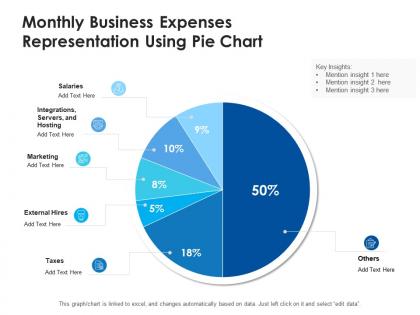
Monthly business expenses representation using pie chart




Try Before you Buy Download Free Sample Product
 Impress Your
 Audience
 100%
100% Editable
 Save Hours
 of Time


Our Monthly Business Expenses Representation Using Pie Chart are topically designed to provide an attractive backdrop to any subject. Use them to look like a presentation pro.
People who downloaded this PowerPoint presentation also viewed the following :
Monthly business expenses representation using pie chart with all 2 slides:
Use our Monthly Business Expenses Representation Using Pie Chart to effectively help you save your valuable time. They are readymade to fit into any presentation structure.
FAQs for Monthly business expenses representation
Track your office stuff first - rent, utilities, supplies. Payroll and contractor payments are obvious ones. Marketing costs, software subscriptions, travel expenses. Equipment purchases can add up fast (laptops, phones, maybe that espresso machine you convinced yourself was a business necessity lol). Professional services like legal and accounting fees matter too, plus insurance. Honestly, just create separate categories in whatever accounting software you use right from the start. Way easier than digging through everything later when tax season hits. Also helps you see where your cash is actually disappearing to each month.
So here's what's worked for me - automate the boring stuff first. Seriously, you'll wonder why you waited so long. Instead of ditching your current vendors, just ask for better rates. Most will negotiate if you've been loyal. Check your subscriptions too, I guarantee you're paying for random software nobody touches. Remote work cuts overhead like crazy, and those energy-efficient upgrades actually pay for themselves pretty quick. Oh, and track everything so you know which changes are actually moving the needle. Quality stays intact but costs drop.
QuickBooks is solid if you want all the bells and whistles, but FreshBooks has a cleaner feel to it. Honestly though? A Google Sheet works fine if you're organized about it - I know that sounds boring but whatever. Expensify's pretty clutch when you're traveling since you just photograph receipts and it sorts everything. Same with Receipt Bank. The thing is, you'll abandon anything too complicated. Pick what feels right for how you actually work, not what sounds impressive. You can always switch later if you outgrow it.
So fixed costs are gonna drain your cash no matter what - whether you sell nothing or everything. Makes growth scary at first because you're locked into those payments. Variable costs though? They move with your sales, which I actually prefer because at least they're predictable as percentages. You need to figure out your break-even point first - that's like your safety net number. Then you can think about growth without sweating the fixed costs as much. Oh and pricing decisions get way easier once you know exactly how much coverage you need for those fixed expenses vs keeping your variable ratios tight.
So you can write off most legit business stuff - office supplies, equipment, travel, half your meals, professional services. Home office deductions too if you work from there. Honestly, the IRS is obsessed with documentation, so keep receipts for everything. Don't wait until tax season to get organized, that's when people panic and miss stuff. Track expenses as you go with some app or spreadsheet. Time big purchases smart. Software subscriptions count too - I always forget those little monthly charges add up. Professional development courses, all that. Just document everything and you'll be golden.
Dude, expenses are all over the place depending on your industry. Tech startups dump like 60% into hiring people, but restaurants? They're getting killed by food costs and rent. I'd definitely hit up other entrepreneurs in your exact space for real numbers - way more helpful than generic advice. Manufacturing has crazy equipment costs, service businesses spend big on staff and marketing. Don't make the mistake of copying some other industry's budget model though. Seriously seen too many people get burned that way. Research what's normal for your sector first, it'll save you headaches later.
Honestly, budgeting is just having a plan so your money doesn't mysteriously disappear. Track what you're spending for like a month first - you'll probably be shocked where it all goes. Then set some realistic limits based on that. It forces you to figure out what you actually need versus what would just be nice to have. The best part? When you need to cut costs or negotiate with vendors, you've got real numbers to work with instead of just guessing. Without one, you're basically crossing your fingers and hoping everything works out (which... yeah, good luck with that).
Honestly, expense reports are way more useful than people think. Most of us have no clue where our money actually goes versus where we assume it's going. Check for stuff like seasonal spending jumps or if certain departments are going overboard. You'll probably catch vendors charging different rates for the same thing too - super annoying but fixable. I'd review them monthly instead of just shoving them in a folder somewhere. Set up categories that make sense for your business so you can see what's actually worth spending on. It's basically free intel for better budgeting.
Look at your last 2-3 years of spending first - you'll see patterns and seasonal stuff pretty quickly. After that, add in whatever big changes are coming (new people, equipment, contract renewals, that kind of thing). I learned the hard way to always pad it by 5-10% because random expenses will definitely hit you. Instead of just planning once a year, update your forecast every quarter. Oh, and split everything into fixed vs variable costs since they act totally different. The real trick is comparing what actually happened to what you predicted each month - that's how you get better at this over time.
Honestly, a good expense policy is like giving your team superpowers. No more "can I expense this?" Slack messages every five minutes. People can just make decisions and get back to actual work instead of playing some weird guessing game with receipts. Trust goes way up too - nobody's walking on eggshells wondering if they'll get in trouble later. Your team feels respected when they know the boundaries upfront. Money stuff can get awkward fast, so being transparent about it shows you've got their back. Just write down what seems obvious to you but probably isn't to them.
Honestly, get your company's expense app ASAP - it's a game changer. Just snap photos of receipts right when you get them instead of stuffing them in your wallet like some kind of receipt graveyard. The app auto-fills most of your expense report, which is honestly magic compared to typing everything manually. Your corporate card syncs with it too, so half the work's already done. Submissions go straight to your manager automatically, and the AI catches policy mess-ups before you look dumb. I'm telling you, it'll save you like 3 hours every month. Way better than scrambling to remember what that random $12 charge was for.
I'd say quarterly deep dives are solid, but check your big expenses monthly. That way you catch stuff early - like random subscriptions draining your account or vendors slowly jacking up prices. Quarterly reviews let you see actual patterns without obsessing over every little weekly fluctuation. Monthly is where you spot the sneaky stuff though. If you're running a smaller operation, maybe twice yearly works, but honestly you'll probably miss chances to trim fat or shift money around. Just throw it on your calendar like any other meeting. Trust me, you'll be so glad when budget planning time hits.
Dude, seriously start tracking your expenses. I made this mistake and couldn't figure out why we were hemorrhaging money on marketing - turns out half of it was going to useless stuff. You're missing tons of tax deductions without proper records, which literally means overpaying the IRS. They also get super pissy if you can't prove your expenses during an audit. The worst part? You have zero clue where your cash actually goes. Can't make decent spending choices when you're flying blind. Honestly, even a basic expense app is better than the chaos of receipts everywhere.
Okay so first thing - get your policies written down and actually follow them. Train people on what's legit deductible because trust me, they'll try to expense everything. Keep all receipts with business purpose, dates, attendees - I've literally seen someone try to write off dinner with their spouse as a "client meeting" lol. Set spending limits and make bigger expenses need approval first. Oh and definitely get expense software that catches weird stuff automatically. Do random audits too. Honestly the documentation part is what'll save you if you ever get audited by the IRS.
Okay so here's what's worked for me - get multiple quotes first to create some competition. Promise them bigger orders or longer contracts since they want that steady cash flow. Don't just haggle over price though, push for better payment terms or throw-in services too. Timing is everything - hit them up end of quarter when they're scrambling to make numbers. I learned this the hard way, but start these talks way before your current deal expires or you'll get screwed. And seriously, be ready to walk away. Half the time they'll call you back with something better anyway.
-
Informative design.
-
Awesome presentation, really professional and easy to edit.
-
Use of icon with content is very relateable, informative and appealing.
-
Innovative and attractive designs.
-
Colors used are bright and distinctive.