


Multiple charts showcasing email marketing analysis presentation slides




Try Before you Buy Download Free Sample Product
 Impress Your
 Audience
 100%
100% Editable
 Save Hours
 of Time


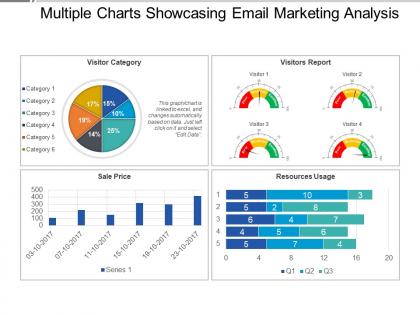
Fuel your business marketing campaigns with our multiple charts showcasing email marketing analysis PPT slide. It will help in analyzing the efficiency of your digital marketing approach. You can even analyze the success of your email marketing by evaluating its performance through this marketing sales graph PPT diagram. It allows you to analyze the effectiveness of your marketing campaign as you can simply keep track over the same. Use this email marketing strategy PowerPoint layout to evaluate the performance of your business. You should simply measure the same with the help of metrics through this email metrics PPT layout image. The metrics are open rate, bounce rate, unsubscribe rate, conversion rate, forwards or share rate and more. It will help in improving the ROI of your business marketing campaigns. Further, you can also use this marketing PPT template to develop some effective and result oriented digital strategies for your organization. Therefore, click on the download link now. Be completely at ease with our Multiple Charts Showcasing Email Marketing Analysis Presentation Slides. They allow you to feel all comfy.
People who downloaded this PowerPoint presentation also viewed the following :
Multiple charts showcasing email marketing analysis presentation slides with all 5 slides:
Every effort comes good with our Multiple Charts Showcasing Email Marketing Analysis Presentation Slides. They are guaranteed to always deliver.
FAQs for Multiple charts showcasing email marketing
Honestly, just focus on three key ones at first - open rate, click-through rate, and conversions. Your subject lines are working if people actually open the emails. CTR tells you if your content sucks or not (pretty brutal but helpful). Conversions are obviously the money metric - did people actually buy something or sign up? Oh, and watch your unsubscribe rate too because nobody wants to be that person flooding inboxes. I mean, there's other stuff like deliverability and list growth, but those three will tell you everything you need to know about whether your campaigns are actually working or just... existing.
So A/B testing is basically where you split your email list and send different versions to see which performs better. Subject lines are probably the easiest place to start since they directly affect whether people even open your emails. But you can test send times, button colors, copy - pretty much anything. Here's the thing though: only change one element at a time or you won't know what actually moved the needle. I've seen people convinced their "clever" subject line would crush it, then the boring straightforward one wins by like 30%. Once you get comfortable with subject line tests, move on to testing your CTAs and how you structure the content.
Honestly, segmenting your email list is a game changer. Instead of staring at some meaningless overall open rate, you can actually see what works for different groups. Like maybe your long-time customers love those behind-the-scenes updates, but new subscribers just want the deals. Makes so much more sense than treating everyone the same, you know? Without segments, a decent 20% open rate might be hiding the fact that half your audience is totally ignoring you. I'd start with maybe 3 simple groups - new vs. returning customers or something. Trust me, the patterns you'll spot are crazy eye-opening.
Definitely track your open rates but break it down by different stuff - send times, subject lines, who you're sending to. I get way too excited when I find the perfect timing, not gonna lie. Try comparing weekdays vs weekends, morning vs afternoon sends. Subject lines matter too - test questions against statements, emojis vs plain text. Don't just look at the big picture numbers though. Which audience segments actually open your emails? Once you spot those patterns, use them for your next A/B test and keep doing more of what works.
Honestly, just start with whatever analytics your email platform already has - Mailchimp, ConvertKit, whatever you're using. Google Analytics is a must for tracking what happens after people click through. I'm weirdly obsessed with Litmus but that's more for testing how your emails look on different devices (total design nerd thing). Campaign Monitor and HubSpot have better data if you want to get fancy with segmentation later. But seriously, don't go crazy at first. Pick one or two tools, track opens and click-throughs consistently for a few months, then worry about the advanced stuff.
So engagement rates are basically your reality check - they show you what people actually want vs what you think they want. Open rates tanking? Your subject lines probably suck or you're hitting their inbox at terrible times. Click-through rates are low? Content's not compelling enough. I always look at my top performers first - like is it the how-to stuff or the sales emails that actually get clicks? That data's gold. Then just double down on whatever's working and ditch the rest. A/B test different content against your benchmarks and you'll figure it out pretty quick.
Honestly, subject lines can totally make or break your emails. Bad subject line = nobody opens it, and then your click rates and conversions are screwed even if the actual email is gold. I always A/B test different ones because tiny changes can bump your opens by like 10-20%. Seriously, I've watched campaigns go from total flops to winners just from switching up the subject. Oh, and track your open rates by subject type and length - you'll notice patterns pretty quick. Your audience will basically tell you what they want if you pay attention to the data.
Check your email platform's analytics dashboard - they all show spam and unsubscribe rates pretty clearly. Keep spam complaints under 0.1% by cleaning your lists regularly and using double opt-in. Seriously, spam complaints will destroy your deliverability faster than anything else. Unsubscribe rates should hover around 0.2-2%, but if they suddenly jump, your content's probably off or you're emailing too much. Set up alerts when these numbers get weird. Oh, and make unsubscribing super easy - I know it seems counterintuitive, but hiding the unsubscribe link just pisses people off and creates more spam complaints.
Don't get hung up on individual campaigns - track your CTR trends over time instead. Break things down by audience, device, and email type too. A 2% rate could be killer for newsletters but pretty meh for promos. Industry benchmarks are helpful but honestly they're kind of all over the place depending where you look. Pay attention to which subject lines and send times work best for you. Oh, and test one thing at a time - I know it's tempting to change everything at once but you won't know what actually made the difference. Your audience is probably different from everyone else's anyway.
Honestly, just pay attention to what people are actually telling you in those surveys and reply emails. If everyone's complaining your emails are too much, back off the frequency. Want more product tips? Give them that. Test changes with small groups first - way less risky that way. The magic happens when you circle back and show customers you actually listened. Like, literally implement what they suggested. People get genuinely excited when they see their feedback made a difference. It's probably one of the easiest ways to build loyalty without spending extra money.
Ugh, Apple's privacy updates totally screwed with open rates - they're basically useless now. Focus on clicks and actual conversions instead. People want emails that feel personally made for them based on what they actually do, not just their age or whatever. Interactive emails are finally catching on (about time). Oh and predictive stuff is getting really good at figuring out when someone wants to hear from you. Honestly? Ditch tracking opens so much and get better at segmenting people by how they behave on your site.
Dude, personalization is a game changer for emails. Your open rates will jump like 20-30% when you actually use people's names and tailor content to them. Click-through rates go up even more. Nobody wants those "Dear Valued Customer" emails - we all trash those immediately, right? Start simple though. Just throwing first names in subject lines helps a ton. Segment your list by what people bought or how much they engage with your stuff. Then you can get fancier with it later. Honestly, anything beats sending the same generic email to everyone.
Ugh, data silos are the worst - your ESP, CRM, and analytics never sync properly. You'll waste hours just trying to clean everything up before doing real analysis. Attribution tracking is a total mess too since someone might see your email on their phone but buy stuff on their laptop days later. Oh, and deliverability problems can totally mess with your numbers without you realizing. Honestly? Just pick one main platform as your go-to source and automate the syncing wherever you can. Trust me on this one.
Honestly, finding the right email frequency is such a pain. You don't want to annoy people into unsubscribing, but you also can't just disappear for weeks. I'd start with maybe once a week and see how it goes. Most brands do well with 1-3 emails weekly, though e-commerce folks can usually push it more than B2B companies. Really depends on your audience too - some people expect daily deals, others will lose their minds. Just watch your open rates and unsubscribes like a hawk. If things start tanking after you increase frequency, dial it back. Better to be conservative at first.
So basically, e-commerce is all about the money stuff - conversion rates, cart recovery, how much people spend per email click. Pretty straightforward. B2B gets weird though because you're not tracking actual purchases most of the time. Instead it's like "did they download our PDF?" or "book a demo call?" The sales cycles drag on forever too - we're talking months, not hours. Honestly, B2B attribution is kind of a nightmare. For e-commerce, just watch your revenue per email. With B2B, focus more on lead quality and whether your emails are actually moving deals forward.
-
Unique research projects to present in meeting.
-
Good research work and creative work done on every template.