


New Product Development Npd Powerpoint Presentation Slides




Try Before you Buy Download Free Sample Product
 Impress Your
 Audience
 100%
100% Editable
 Save Hours
 of Time


Incorporate this New Product Development Npd PowerPoint Presentation Slides for the successful product launch of your product. You can portray the development plan and the various stages involved by this product introduction PPT layout. You can convince your clients by showcasing the complete manufacturing plan to explain the month-wise development progress of your service. Priority wise categorization of sales, marketing, financial and administration and R&D operation plans for a successful marketing launch plan can be illustrated with this product development strategy PPT theme. You can utilize our professionally designed product lifecycle PowerPoint complete deck to illustrate the development roadmap by mentioning the status and key initiatives covered. You can elucidate the marketing plan by explaining the various ways adopted such as updating the website, creating the press release, building demand etc. The product progress funnel along with the planning cycle can be highlighted using this product design PowerPoint template. Hence download this product growth PPT theme to boost your business.
People who downloaded this PowerPoint presentation also viewed the following :
Content of this Powerpoint Presentation
Slide 1: This slide introduces New Product Development (NPD). State Your Company Name and begin.
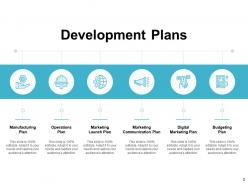
Slide 2: This slide shows Development Plans describing- Manufacturing Plan, Marketing Launch Plan, Operations Plan, Marketing Communication Plan, Digital Marketing Plan, Budgeting Plan.
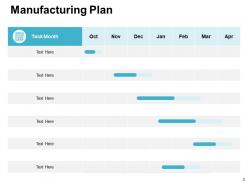
Slide 3: This slide presents Manufacturing Plan in graphical form.
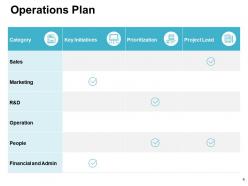
Slide 4: This slide displays Operations Plan with categories as- Sales, marketing, operation, people, etc.
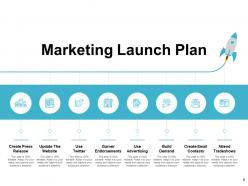
Slide 5: This slide represents Marketing Launch Plan describing- Create Press Release, Update The Website, Use Twitter, Garner Endorsements, Build Demand, Use Advertising, Create Email Contests, Attend Tradeshows.
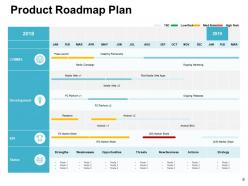
Slide 6: This slide showcases Product Roadmap Plan.
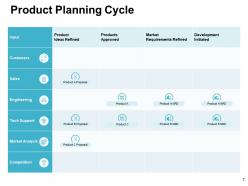
Slide 7: This slide shows Product Planning Cycle.
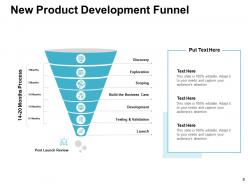
Slide 8: This slide presents New Product Development Funnel.
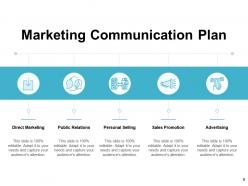
Slide 9: This slide displays Marketing Communication Plan describing- Personal Selling, Public Relations, Sales Promotion, Advertising, Direct Marketing.
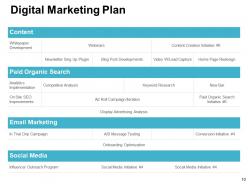
Slide 10: This slide represents Digital Marketing Plan.
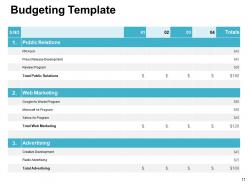
Slide 11: This slide showcases Budgeting Template.
Slide 12: This slide displays New Product Development (NPD) Icons.
Slide 13: This slide is titled as Additional Slides for moving forward.
Slide 14: This is Our Mission slide with related imagery and text.
Slide 15: This is Our Team slide with names and designation.
Slide 16: This is About Us slide to show company specifications etc.
Slide 17: This is a Timeline slide to show information related with time period.
Slide 18: This is Our Goal slide. Show your firm's goals here.
Slide 19: This is a Financial slide. Show your finance related stuff here.
Slide 20: This is Our Target slide. State your targets here.
Slide 21: This is a Quotes slide to convey message, beliefs etc.
Slide 22: This is an Idea Generation slide to state a new idea or highlight information, specifications etc.
Slide 23: This is a Thank You slide with address, contact numbers and email address.
New Product Development Npd Powerpoint Presentation Slides with all 23 slides:
Use our New Product Development Npd Powerpoint Presentation Slides to effectively help you save your valuable time. They are readymade to fit into any presentation structure.

FAQs for New Product Development Npd
So there are basically six stages in NPD - idea generation, concept development, feasibility analysis, product development, testing, and commercialization. First you brainstorm and screen ideas. Develop the good ones into detailed proposals. Then comes feasibility - can you actually pull this off technically and financially? Honestly, this part can be brutal but it's worth doing right. After that, build prototypes and test with real users before launching. Oh, and don't skip stages even when deadlines are tight. Trust me, catching problems early saves you so much headache later.
Honestly, market research is like your sanity check for the whole product development thing. Use it early to see if people actually want what you're building - I can't tell you how many teams I've watched skip this step and crash later. Test your concepts and prototypes with real users as you go. The middle phases are where most people get lazy with research, but that's exactly when you need it most! Way cheaper to pivot early than after you've built everything. Just bake those research checkpoints into your timeline from the start. Even quick surveys or informal chats beat guessing every single time.
Track the money stuff first - revenue growth, profit margins, ROI. That's what actually matters. Market share and customer adoption rates give you the bigger picture though. Customer satisfaction is massive because unhappy customers will tank everything eventually. Development costs vs budget and how you're hitting deadlines matter too. Honestly, most companies I've seen get way too caught up in metrics that look impressive but don't move the needle. Pick like 4-5 that directly impact your goals and check them monthly. Don't overcomplicate it.
Cross-functional teams kill those stupid silos that make everything take forever. You get marketing, engineering, design, and ops all talking from the start - way better than finding out your "brilliant" idea can't actually be manufactured three days before launch. Decisions happen fast since everyone's in the room already instead of playing email tag for weeks. Engineers catch manufacturing headaches early while marketing keeps you grounded on what people actually want. Oh, and make sure everyone owns their piece but doesn't go rogue. Game changer, honestly.
Dude, you absolutely need customer feedback - it's like your sanity check while building stuff. I'd start gathering it super early through surveys, interviews, beta tests, whatever works. Can't tell you how many teams I've watched completely ignore users and then wonder why their product flops. Ask smart questions about their actual problems and what they need, not just "hey do you like this thing?" Oh and don't just do it once - keep that feedback coming through every stage. Trust me, it'll save you from building something totally useless that only you think is cool.
Honestly, the two big killers are launching before you actually know if people want your thing, and getting so attached to your idea that you ignore what users are telling you. I learned this the hard way - burned through so much time and money! Feature creep is another nightmare where you keep adding stuff without thinking about what really matters. Oh, and testing always takes way longer than you think it will. Short sentences here work better. Start with a smaller feature set, get real people using it early, and be brutal about cutting anything that doesn't solve the main problem. Buffer time is your friend.
So innovation management is your roadmap for turning ideas into real products. Basically helps you capture concepts, figure out which ones are worth pursuing, and actually get them built. You set up systems to funnel ideas through - kinda like a pipeline where you evaluate stuff at different stages. The whole point is making collaboration between teams less chaotic (because that's always a mess). It keeps your product development tied to what the business actually needs instead of just random cool ideas. Honestly, without some structure you're just hoping something works out.
Honestly, AI and machine learning are game-changers for product development right now. You can prototype way faster and actually predict what people will want before launching. Digital twins are pretty cool too - basically you test everything virtually first, which saves a ton of cash. Everyone's obsessed with sustainability now, so eco-friendly materials are almost mandatory. IoT stuff is interesting because your products can send back usage data automatically. Oh, and personalized features at scale are totally doable now. I'd look at your current setup and figure out which area would give you the biggest edge. The predictive analytics alone might be worth it.
Honestly, start with making people feel safe to screw up - nobody's gonna take risks if they think you'll throw them under the bus. Celebrate the good failures along with wins. Give your team actual time to mess around with new stuff (that Google 20% thing? It's legit). Mix up your teams more - the coolest ideas happen when different people bounce thoughts off each other. And yeah, get them decent tools and training. Creativity's messy but it still needs some structure, you know? Ask what's blocking them first though. Then just... remove that crap.
So PLM gives you one spot for all your product stuff - concept to launch and after. No more digging through emails or random systems. Version control, team collaboration, design tracking... it's all there. Honestly took me forever to convince my old boss to get it, but now? Total game-changer. You'll cut down on expensive design mistakes since everyone's looking at the same info. Time-to-market gets way faster too. Start by figuring out where all your product data lives right now. I bet it's more scattered than you think.
Oh man, don't make the mistake I've seen so many teams make - thinking you can deal with regulations later. Honestly, that's a recipe for disaster. You've got to bake compliance stuff right into your timeline from the beginning. Figure out which regulatory bodies you're dealing with first, then map out how long their approval process takes. Different countries have totally different rules too, which gets messy fast if you're planning to sell globally. I'd literally put regulatory checkpoints on your development calendar before you even lock down your final product specs. Trust me on this one.
Honestly depends what stage you're at and how much cash you've got. Early on? Just sketch stuff out or make cardboard mockups - super quick and you'll learn what you need to know. Apps obviously work better as digital prototypes. Don't be like my buddy who spent three weeks perfecting his first prototype when he could've tested the basic idea in three hours with some rough wireframes. Once you know your core concept works, then you can get fancy with 3D printing or interactive demos. Match the effort to what you're actually trying to figure out, you know?
Honestly, a scoring matrix saves so much headache here. Pick your top 3-4 criteria first - stuff like market potential, how doable it is technically, strategic fit. Then just score each idea numerically against those same factors. I've watched teams argue in circles for weeks without this kind of structure. Short sentences win sometimes. Resource needs and timing matter too, obviously. The whole point is staying consistent so you're actually comparing things fairly instead of just going with whoever argues loudest. Makes the whole decision way cleaner.
You gotta get your teams working in parallel instead of waiting around for each other. Run design, engineering, and market research all at the same time - huge time saver. Daily check-ins keep everyone on the same page. Most delays are just people not talking to each other, honestly. Get prototypes in front of customers fast rather than polishing everything forever internally. Modular designs help too since you can reuse stuff later. The whole waterfall thing is dead. Start testing while you're still building - don't wait until you think it's "perfect."
Honestly, start with just one or two tools that fix your biggest headaches first. Digital prototyping will save you literal months compared to physical testing - that alone is worth it. Miro and Figma are great for getting real-time feedback on designs, plus PLM software helps track all your product versions (trust me, you'll need this). Project management stuff like Asana keeps teams on the same page. Oh, and don't sleep on automation - workflow tools eliminate those annoying manual handoffs between departments. Customer feedback platforms are clutch for validating ideas quickly too. The tool options are kinda overwhelming tbh, but you can always expand later.
-
Really like the color and design of the presentation.
-
Attractive design and informative presentation.
-
Excellent template with unique design.
-
Excellent design and quick turnaround.