


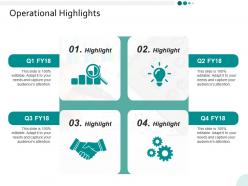
Operational highlights ppt powerpoint presentation infographics outline





Try Before you Buy Download Free Sample Product
 Impress Your
 Audience
 100%
100% Editable
 Save Hours
 of Time


Discourage displays of hostility with our Operational Highlights Ppt Powerpoint Presentation Infographics Outline. Advise folks to extend a hand of friendship.
People who downloaded this PowerPoint presentation also viewed the following :
Operational highlights ppt powerpoint presentation infographics outline with all 5 slides:
Our Operational Highlights Ppt Powerpoint Presentation Infographics Outline have an eye for fine details. Every element is correctly displayed.




FAQs for Operational highlights ppt powerpoint
So it really comes down to what industry you're in, but I'd focus on efficiency, quality, and keeping customers happy. Track stuff like productivity rates, how many mistakes you're making, turnaround times - that kind of thing. Honestly, customer retention is huge too. Don't go crazy measuring every little detail though, you'll drive yourself nuts. I learned this the hard way at my last job lol. Pick maybe 3-5 metrics that actually matter for making decisions. Set up some dashboards so you can check them regularly, and make sure your team gets how their daily work connects to these bigger numbers.
Track the obvious stuff first - cycle times, error rates, output quality. That's your baseline data. But honestly? The real insights come from just talking to people. Do regular check-ins with your team about what's actually slowing them down or driving them crazy. Team retrospectives are super valuable for this - you'd be surprised what comes up. I'd say aim for a mix of dashboards and feedback loops. Sometimes the data looks fine but there's some annoying bottleneck that's making everyone's life harder. Catch those early before they blow up into bigger issues.
Look, technology is basically your secret weapon for multiplying what your team can actually get done. It handles all the boring repetitive tasks and gives you real-time visibility into what's going on. Plus you can make decisions based on actual data instead of just guessing - dashboards, automation, predictive stuff. Honestly though, I've seen so many teams waste crazy amounts of time on manual processes that could totally be automated. Here's what works: figure out your biggest bottlenecks first, then find tech that solves those exact problems. Don't just buy fancy tools because they look cool. Start small, see what actually moves the needle, then double down on what's working.
Look, customer feedback is basically your roadmap for fixing what's broken. Drop in satisfaction? You'll know exactly which processes are screwing up instead of playing guessing games. I always think of it like having GPS for your operations - shows you where you took a wrong turn. Use that data to figure out which fixes will actually move the needle on customer experience. Then close the loop: make changes, check satisfaction again, rinse and repeat. Oh, and track feedback themes weekly so you catch problems before they blow up. Way easier than dealing with angry customers later.
Honestly, start with tracking everything in real-time so you can catch problems early. Automate the boring stuff - inventory, order processing, all that. Don't rely on just one supplier either (learned that the hard way). Data analytics will help you figure out demand patterns, which is huge for inventory planning. Map out what you're doing now first though. Find your biggest headaches and fix those - you'll see results faster. Oh, and definitely have backup plans ready because something always breaks when you least expect it. Trust me on that one.
Honestly, data analytics is a game changer - it turns your hunches into actual proof. You'll stop guessing about what's broken and start seeing exactly where things bog down or waste money. The crazy part? It catches patterns you'd totally miss otherwise, like how Mondays consistently mess up your workflow or whatever. You can actually predict problems before they hit and figure out smarter ways to use your resources. My advice though - don't go overboard at first. Just pick one thing that's driving you nuts operationally and track it for a couple weeks. You'll be surprised what shows up.
Ugh, honestly? Your team's gonna resist everything at first - even the good stuff. Nobody likes change when they don't get why it's happening. Communication is huge here. Also, you'll never have enough resources. Ever. Time, money, people - something's always missing when you need it most. Oh, and count on at least one system randomly breaking at the worst possible moment (Murphy's Law in action, I swear). But here's what works: loop people into the planning early on. When they feel involved instead of blindsided, resistance drops way down. Be upfront about timelines and that things will get messy.
Dude, training your people is huge for efficiency. Fewer mistakes means less time fixing stuff later. Well-trained employees work way faster and don't need someone breathing down their necks constantly. They can actually handle complicated tasks on their own - I've seen teams where it's literally night and day difference. Cross-training is smart too since people can jump in when someone's sick or swamped. Oh, and don't just do it once during onboarding. Keep it going or they'll get rusty.
Honestly, cross-departmental stuff is what stops everything from completely imploding. Teams that actually communicate catch issues early instead of dealing with total chaos later. You'll avoid that annoying duplicate work too. Better decisions happen when people see the whole picture, not just their slice of it. The frustrating roadblocks disappear when departments aren't working against each other - which happens more than you'd think. Set up regular check-ins between teams so everyone knows how their work affects others. I'd start by figuring out where the biggest friction points are happening and fix those first. Way more effective than trying to overhaul everything at once.
Honestly, first thing is figuring out which regulations actually hit your business - I've seen people stress about stuff that doesn't even apply to them. Get someone on your team to own this and stay on top of changes (regulations shift more than you'd expect). Document literally everything - processes, training, incidents, all of it. Run internal checks regularly because stuff will slip through otherwise. Here's the thing though - don't treat compliance like some separate box to check. Build it right into how your team works every day. Makes it way less painful when it's just part of the routine.
Focus on KRIs that actually move the needle - system downtime, error rates, compliance stuff, process jams. Heat maps are clutch for spotting your worst problem areas. Root cause analysis is honestly where the magic happens because you stop playing whack-a-mole with symptoms. Get your team doing regular risk check-ins and watch trends, not just random snapshots. Real-time dashboards are the game-changer though - catch stuff before it blows up. Also weirdly satisfying when you spot an issue brewing and fix it early. Track everything over time so you can see patterns developing.
Look, agility means you can actually pivot fast when things change - no getting stuck with processes that take forever. You'll want modular workflows, teams that know multiple roles, and quick decision-making. Honestly, most companies are way too slow at this stuff. Think sports car vs freight train, right? Design your systems so they bend instead of breaking when you need changes. Days instead of months to respond. Find your biggest bottlenecks first and figure out what it'd take to make changes 50% faster. That's where I'd start anyway.
Start with the boring stuff - automate whatever repetitive tasks are eating up time. Honestly, that's where you'll see the biggest wins right away. Try consolidating vendors too, bulk rates are way better than dealing with five different suppliers. Cross-training helps since your team can jump around without needing new hires. Energy efficiency upgrades sound boring but they actually save decent money. Going paperless is kinda obvious at this point but whatever, it adds up I guess. Just make sure you're tracking numbers before changing anything - otherwise you're just guessing what works. Pick one thing, test it, then expand from there.
Honestly, start with the easy stuff - LED bulbs and turning off equipment after hours saves you money immediately. Set up some decent recycling stations around the office. Going paperless is a pain at first but you'll thank yourself later when you're not drowning in files. Your HVAC probably runs way more than it needs to, so mess with those schedules. When you're buying supplies, just pick the more sustainable option when it's available. Don't try to overhaul everything at once though. Pick like two things that actually make sense for your setup and go from there.
Honestly, start with Asana or Monday.com for tracking your tasks and deadlines - that's the foundation. Slack or Teams works great for quick team updates. I know everyone's obsessed with fancy tools, but Excel or Google Sheets are still unbeatable for budgets and data stuff. Don't let the tech bros convince you otherwise! For mapping out processes, Lucidchart is solid. Then grab something like Tableau or Google Data Studio for dashboards and reporting. Pick maybe 2-3 tools max that your team won't abandon after a week. You can always add more once you figure out what's actually missing.
No Reviews