


Organisationsressourcenplanung PowerPoint-Präsentationsfolien





Try Before you Buy Download Free Sample Product
 Impress Your
 Audience
 100%
100% Editable
 Save Hours
 of Time


Organisationsressourcenplanung ist ein Prozess, den Unternehmen nutzen, um ihre wesentlichen Ressourcen und Vermögenswerte zu integrieren und zu verwalten. Diese Präsentation ist von großer Bedeutung, um einen umfassenden Überblick über die Organisationsressourcenplanung zu geben. Es erläutert auch Details zur Implementierung der Ressourcenplanung in verschiedenen Abteilungen einer Organisation. Darüber hinaus erfasst dieses PPT-Deck das Wachstum der Organisation nach der Implementierung des Systems. Diese Geschäftsplanungssoftware PPT hebt auch die wichtigsten Merkmale, Funktionen, Vorteile und Kategorisierung dieses Systems hervor. In diesem PowerPoint zur Unternehmensressourcenplanung haben wir die Probleme behandelt, mit denen das Unternehmen konfrontiert ist, und die Lückenanalyse zur Erreichung der Geschäftsziele. Darüber hinaus enthält diese Vorlage Details zur Architektur des Systems und zu den Phasen der ERP-Implementierung. Außerdem werden das Cloud-Ressourcenplanungssystem, seine Vorteile und seine Typen erläutert. Darüber hinaus werden Informationen zur ERP-Integration, ihren Vorteilen und ihren Ansätzen präsentiert. Darüber hinaus veranschaulicht dieses PPT Module, Herausforderungen und Lösungen, einen Zeitplan für die Implementierung und eine Roadmap für die Integration. Schließlich erfasst diese Ressourcenplanungspräsentation die Auswirkungen auf die Organisation nach der Implementierung des ERP-Systems. Laden Sie jetzt unsere zu 100 Prozent anpassbare Vorlage herunter.
People who downloaded this PowerPoint presentation also viewed the following :
Inhalt dieser Powerpoint-Präsentation
Folie 1 : Diese Folie zeigt den Titel Organisationsressourcenplanung.
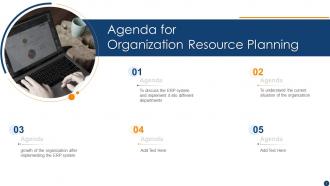
Folie 2 : Diese Folie zeigt die Agenda.
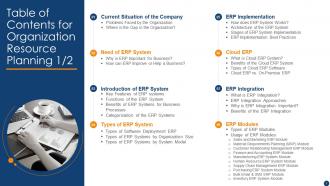
Folie 3 : Diese Folie zeigt das Inhaltsverzeichnis.
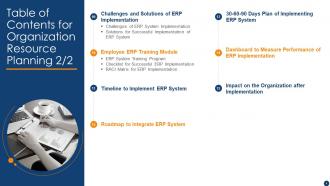
Folie 4 : Diese Folie zeigt auch das Inhaltsverzeichnis.
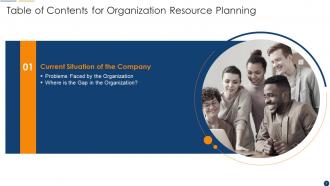
Folie 5 : Diese Folie zeigt das Inhaltsverzeichnis – Aktuelle Situation des Unternehmens.
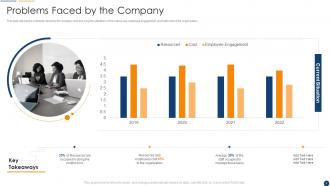
Folie 6 : Diese Folie zeigt die Probleme, mit denen das Unternehmen konfrontiert ist.
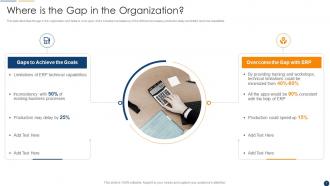
Folie 7 : Diese Folie beschreibt die Lücke in der Organisation.
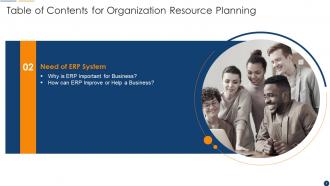
Folie 8 : Diese Folie zeigt das Inhaltsverzeichnis – Notwendigkeit eines ERP-Systems.
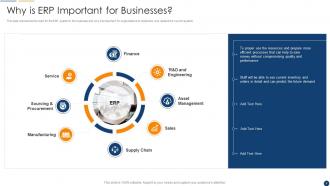
Folie 9 : Diese Folie stellt den Bedarf für das ERP-System im Unternehmen dar.
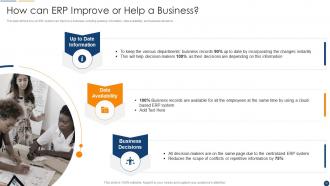
Folie 10 : Diese Folie definiert, wie ein ERP-System ein Unternehmen verbessern kann.
Folie 11 : Diese Folie zeigt das Inhaltsverzeichnis – Einführung des ERP-Systems.
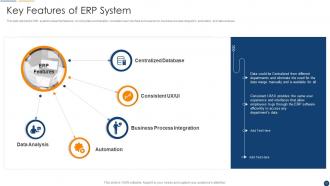
Folie 12 : Diese Folie zeigt die wesentlichen Merkmale des ERP-Systems.
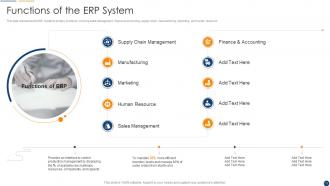
Folie 13 : Diese Folie stellt die Hauptfunktionen des ERP-Systems dar.
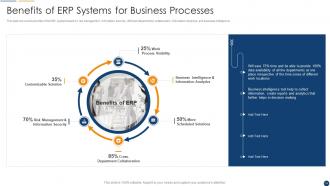
Folie 14 : Diese Folie zeigt die Vorteile für Geschäftsprozesse.
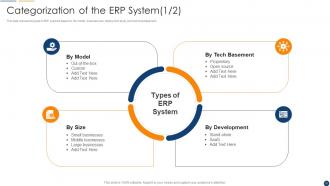
Folie 15 : Diese Folie stellt Arten von ERP-Systemen dar.
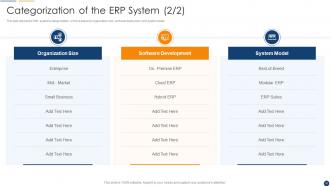
Folie 16 : Diese Folie zeigt auch die Kategorisierung des ERP-Systems.
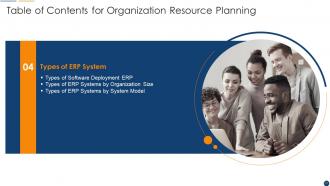
Folie 17 : Diese Folie zeigt das Inhaltsverzeichnis – Arten von ERP-Systemen.
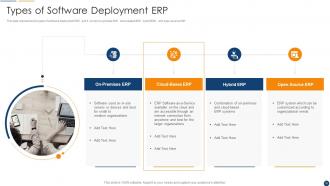
Folie 18 : Diese Folie stellt die Arten der Softwarebereitstellung von ERP dar.
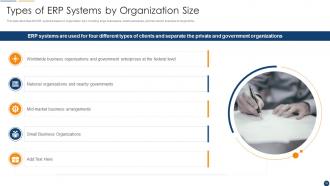
Folie 19 : Diese Folie beschreibt die Typen von ERP-Systemen basierend auf der Unternehmensgröße.
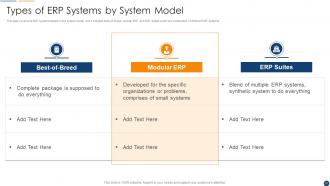
Folie 20 : Diese Folie behandelt die Arten von ERP-Systemen basierend auf dem Systemmodell.
Folie 21 : Diese Folie zeigt das Inhaltsverzeichnis – ERP-Implementierung.
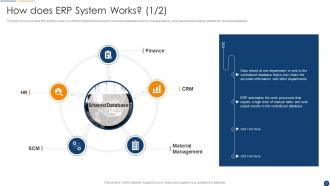
Folie 22 : Diese Folie zeigt, wie das ERP-System funktioniert.
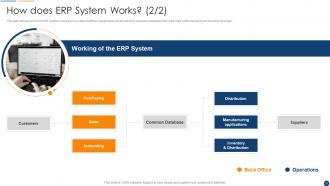
Folie 23 : Diese Folie zeigt, wie das ERP-System funktioniert.
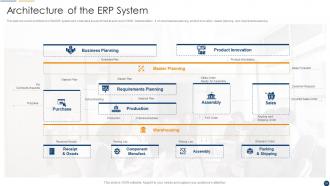
Folie 24 : Diese Folie zeigt die Architektur des ERP-Systems.
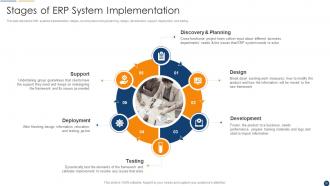
Folie 25 : Diese Folie zeigt die Phasen der ERP-Systemimplementierung.
Folie 26 : Diese Folie beschreibt die Best Practices zur Implementierung des ERP-Systems in der Organisation.
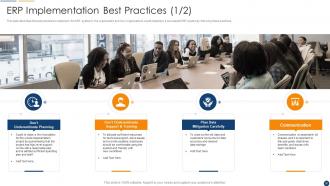
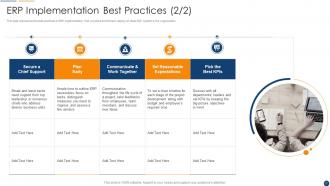
Folie 27 : Diese Folie stellt die Best Practices der ERP-Implementierung dar.
Folie 28 : Diese Folie zeigt das Inhaltsverzeichnis – Cloud ERP.
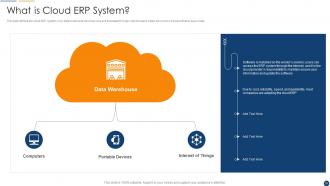
Folie 29 : Diese Folie definiert das Cloud-ERP-System.
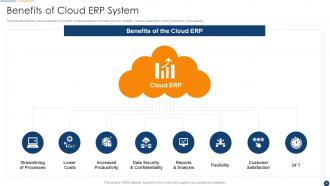
Folie 30 : Diese Folie beschreibt die verschiedenen Vorteile von Cloud-ERP-Systemen.
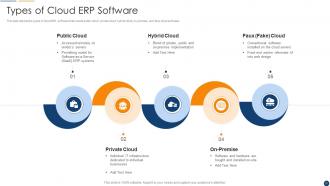
Folie 31 : Diese Folie zeigt die Arten von Cloud-ERP-Software.
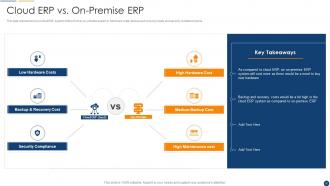
Folie 32 : Diese Folie zeigt, wie sich ein Cloud-ERP-System von einem On-Premise-System unterscheidet.
Folie 33 : Diese Folie zeigt das Inhaltsverzeichnis – ERP-Integration.
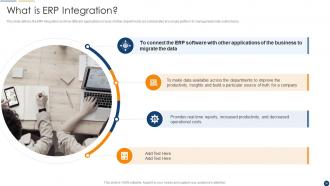
Folie 34 : Diese Folie definiert die ERP-Integration.
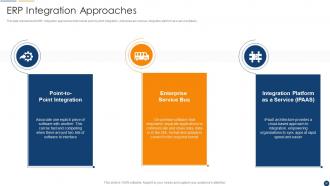
Folie 35 : Diese Folie stellt die ERP-Integrationsansätze dar.
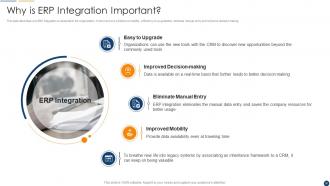
Folie 36 : Diese Folie beschreibt, warum die ERP-Integration in der Organisation unerlässlich ist.
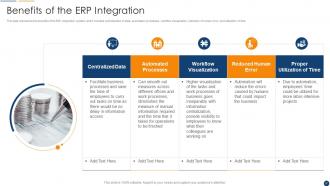
Folie 37 : Diese Folie stellt die Vorteile des ERP-Integrationssystems dar.
Folie 38 : Diese Folie zeigt das Inhaltsverzeichnis – ERP-Module.
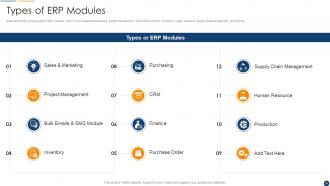
Folie 39 : Diese Folie definiert die verschiedenen Arten von ERP-Modulen.
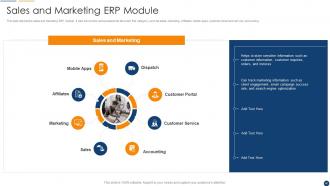
Folie 40 : Diese Folie zeigt das ERP-Modul für Vertrieb und Marketing.
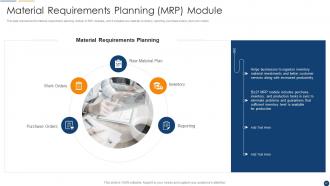
Folie 41 : Diese Folie repräsentiert das Materialbedarfsplanungsmodul in ERP-Modulen.
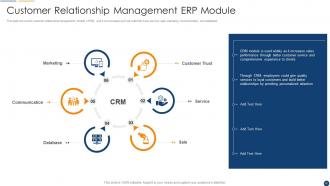
Folie 42 : Diese Folie zeigt das Customer Relationship Management-Modul von ERP.
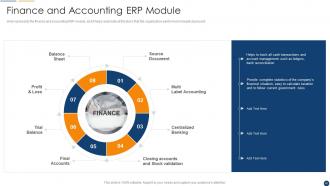
Folie 43 : Diese Folie repräsentiert das ERP-Modul Finanz- und Rechnungswesen.
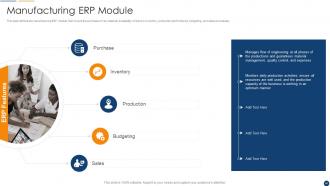
Folie 44 : Diese Folie definiert das Fertigungs-ERP-Modul.
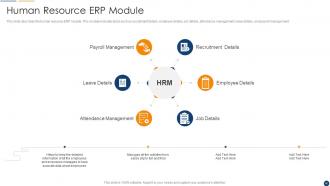
Folie 45 : Diese Folie beschreibt das HR-ERP-Modul.
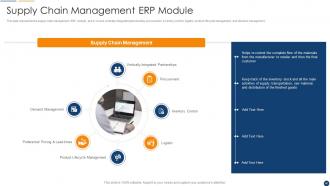
Folie 46 : Diese Folie repräsentiert das ERP-Modul für das Lieferkettenmanagement.
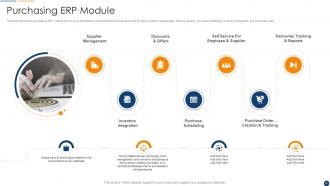
Folie 47 : Diese Folie zeigt das ERP-Modul für den Einkauf.
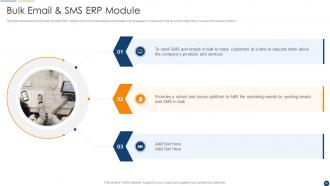
Folie 48 : Diese Folie repräsentiert das Massen-E-Mail- und SMS-ERP-Modul.
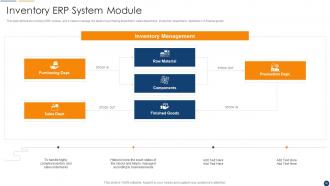
Folie 49 : Diese Folie definiert das Inventar-ERP-Modul.
Folie 50 : Diese Folie zeigt das Inhaltsverzeichnis – Herausforderungen und Lösungen der ERP-Implementierung.
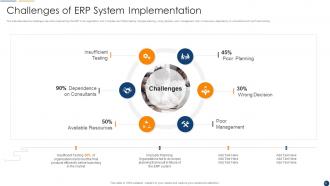
Folie 51 : Diese Folie beschreibt die Herausforderungen, die bei der Implementierung des ERP in der Organisation entstehen.
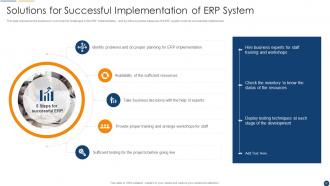
Folie 52 : Diese Folie stellt die Lösungen dar, um die Herausforderungen der ERP-Implementierung zu meistern.
Folie 53 : Diese Folie zeigt das Inhaltsverzeichnis – Mitarbeiter-ERP-Schulungsmodul.
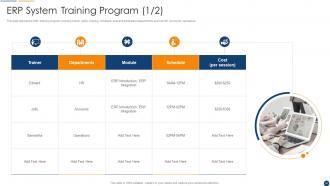
Folie 54 : Diese Folie zeigt das ERP-Schulungsprogramm.
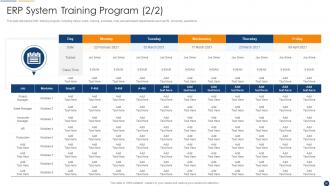
Folie 55 : Diese Folie zeigt das ERP-Schulungsprogramm.
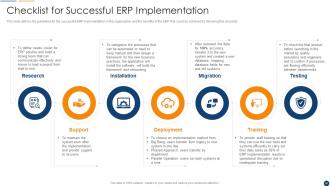
Folie 56 : Diese Folie definiert die Richtlinien für die erfolgreiche ERP-Einführung.
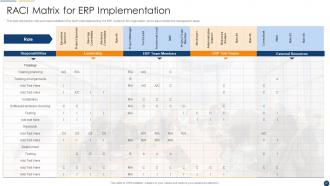
Folie 57 : Diese Folie zeigt die Rollen und Verantwortlichkeiten der Mitarbeiter bei der Implementierung des ERP-Systems.
Folie 58 : Diese Folie zeigt das Inhaltsverzeichnis – Zeitachse zur Implementierung des ERP-Systems.
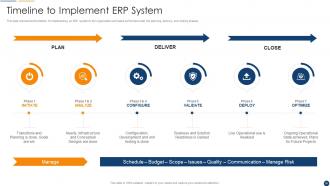
Folie 59 : Diese Folie stellt den Zeitplan für die Implementierung eines ERP-Systems in der Organisation dar.
Folie 60 : Diese Folie zeigt das Inhaltsverzeichnis – Roadmap zur Integration des ERP-Systems.
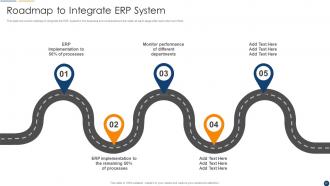
Folie 61 : Diese Folie zeigt die Roadmap zur Integration des ERP-Systems in das Unternehmen.
Folie 62 : Diese Folie zeigt das Inhaltsverzeichnis – 30-60-90-Tage-Plan zur Implementierung des ERP-Systems.
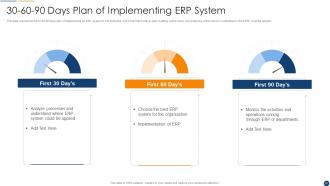
Folie 63 : Diese Folie stellt den 30-60-90-Tage-Plan für die Implementierung eines ERP-Systems im Unternehmen dar.
Folie 64 : Diese Folie zeigt das Inhaltsverzeichnis – Dashboard zur Messung der Leistung der ERP-Implementierung.
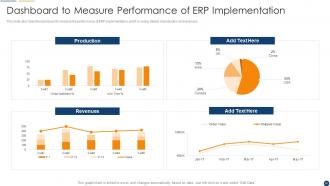
Folie 65 : Diese Folie beschreibt das Dashboard zur Messung der Leistung der ERP-Implementierung.
Folie 66 : Diese Folie zeigt das Inhaltsverzeichnis – Auswirkungen auf die Organisation nach der Implementierung.
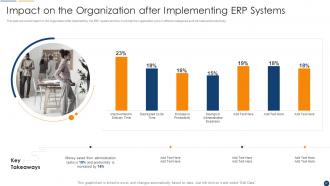
Folie 67 : Diese Folie zeigt die Auswirkungen auf die Organisation nach der Implementierung des ERP-Systems.
Folie 68 : Dies ist die Symbolfolie.
Folie 69 : Diese Folie enthält Titel für zusätzliche Folien.
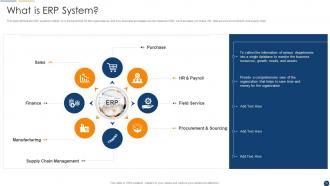
Folie 70 : Diese Folie definiert das ERP-System im Detail.
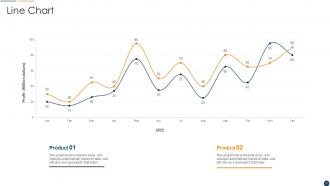
Folie 71 : Diese Folie zeigt gestapelte Jahresgewinn-Liniendiagramme für verschiedene Produkte.
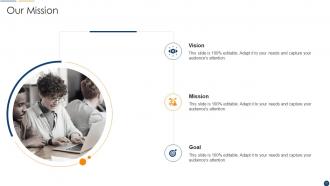
Folie 72 : Diese Folie präsentiert die Vision, Mission und Ziele Ihres Unternehmens.
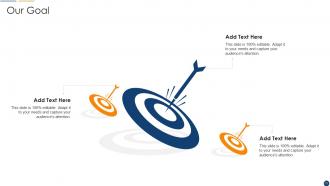
Folie 73 : Diese Folie definiert das Ziel.
Folie 74 : Diese Folie zeigt Details von Teammitgliedern wie Name, Bezeichnung usw.
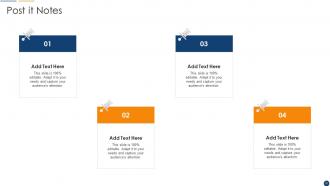
Folie 75 : Diese Folie zeigt Haftnotizen.
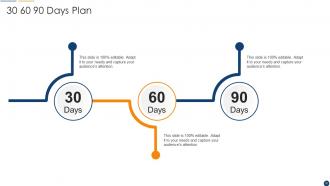
Folie 76 : Diese Folie zeigt einen 30-60-90-Tage-Plan für Projekte.
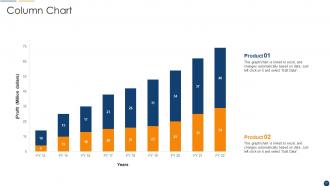
Folie 77 : Diese Folie zeigt gestapelte Säulendiagramme der Jahresgewinne für verschiedene Produkte.
Folie 78 : Diese Folie zeigt Venn.
Folie 79 : Diese Folie zeigt ein Puzzle zum Anzeigen von Unternehmenselementen.
Folie 80 : Dies ist eine Dankesfolie und enthält Kontaktdaten des Unternehmens wie Büroadresse, Telefonnummer usw.
Organization Resource Planning Powerpoint-Präsentationsfolien mit allen 85 Folien:
Verwenden Sie unsere Powerpoint-Präsentationsfolien für die Ressourcenplanung der Organisation, um effektiv dabei zu helfen, wertvolle Zeit zu sparen. Sie sind gebrauchsfertig und passen in jede Präsentationsstruktur.








FAQs for Organization Resource Planning
Key components of an effective ORP system include integrated financial management, human resource optimization, supply chain coordination, performance analytics, and strategic forecasting capabilities. These components work together by streamlining operational workflows, enhancing resource allocation accuracy, and delivering real-time visibility across departments, with many organizations finding that comprehensive integration ultimately reduces costs while improving decision-making speed and competitive responsiveness.
ORP improves departmental alignment by centralizing data access, standardizing workflows, and enabling real-time communication across teams. Through integrated dashboards and automated reporting, departments like finance, operations, and HR can coordinate resource allocation, track shared objectives, and minimize operational silos, ultimately delivering enhanced collaboration and strategic efficiency across the organization.
Data analytics plays a crucial role in optimizing Organization Resource Planning by providing predictive insights, identifying inefficiencies, and enabling data-driven decision making across all operational areas. Through advanced analytics, organizations can forecast demand patterns, optimize inventory levels, and streamline resource allocation, with many companies finding that analytics-driven ERP systems deliver significantly improved operational efficiency and competitive advantage.
ORP enhances financial management by providing real-time visibility into budgets, automating expense tracking, and streamlining financial reporting across departments. Through integrated dashboards and predictive analytics, organizations achieve better cash flow management, reduced operational costs, and improved compliance, with many financial services firms finding that centralized resource planning ultimately delivers greater transparency and strategic decision-making capabilities.
Organizations typically face integration complexities with existing systems, data migration issues, user resistance to new processes, and significant upfront costs when implementing ERP solutions. These challenges often include lengthy implementation timelines, inadequate staff training, and customization requirements, though many companies find that strategic planning and phased rollouts ultimately deliver streamlined operations and enhanced efficiency.
ORP systems enhance collaboration by centralizing data access, standardizing workflows, and enabling real-time communication across departments. Through integrated dashboards and shared databases, teams in finance, operations, and HR can coordinate projects more effectively, reduce information silos, and accelerate decision-making, ultimately delivering improved operational efficiency and stronger cross-functional alignment.
Cloud-based ERP systems, artificial intelligence, machine learning, IoT integration, and mobile-first platforms are revolutionizing organizational resource planning capabilities. These technologies streamline operations by enabling real-time data analytics, predictive forecasting, and automated workflow management, with many enterprises finding that strategic integration ultimately delivers enhanced operational efficiency and competitive advantage.
ORP facilitates strategic decision-making by providing comprehensive data visibility, predictive analytics, scenario modeling, and real-time performance tracking across all organizational functions. Through integrated dashboards and forecasting tools, executives can evaluate resource allocation strategies, assess market opportunities, and model growth scenarios, while manufacturing and service companies find that centralized data enables faster strategic pivots, ultimately delivering competitive advantage and sustainable growth.
Organizations should measure ORP effectiveness through key metrics including inventory turnover rates, order fulfillment accuracy, resource utilization percentages, cost per transaction, and cycle time reductions. These performance indicators enable companies to track operational efficiency, identify bottlenecks, and optimize resource allocation, with many enterprises finding that integrated dashboards deliver enhanced visibility and competitive advantage.
Small businesses benefit from adopting Organization Resource Planning systems by streamlining operations, improving inventory management, enhancing financial visibility, and automating routine processes. These integrated platforms enable retailers, service providers, and manufacturers to reduce operational costs, minimize manual errors, and make data-driven decisions, ultimately delivering improved customer experiences and competitive advantage in increasingly complex markets.
Cloud technology enhances ORP system flexibility through scalable infrastructure, real-time data access, automatic updates, mobile accessibility, and seamless integration capabilities. These cloud-based solutions enable organizations to adapt quickly to changing business needs, scale resources up or down as required, and support remote workforces, while reducing IT maintenance costs and improving operational agility across departments.
Employee training and change management significantly impact ORP implementation success by ensuring user adoption, minimizing resistance, and maximizing system utilization across all organizational levels. Through comprehensive training programs and structured change management approaches, organizations streamline transitions, enhance employee confidence, and accelerate time-to-value, with many companies finding that well-executed change strategies ultimately deliver higher ROI and sustainable operational improvements.
Common pitfalls include inadequate training, poor data migration, insufficient customization, resistance to change, and underestimating implementation timelines. These challenges often stem from rushing deployment without proper planning, with many organizations finding that investing in comprehensive staff training, phased rollouts, and ongoing support ultimately delivers smoother transitions and better user adoption rates.
ORP tools enhance project management by providing real-time visibility into resource availability, automating scheduling processes, and enabling data-driven allocation decisions across multiple projects simultaneously. Through integrated dashboards and predictive analytics, organizations streamline workforce planning, minimize project delays, and optimize budget utilization, with many companies finding that strategic resource allocation delivers improved project outcomes and enhanced operational efficiency.
ORP enables organizational agility by providing real-time data visibility, streamlined resource allocation, and rapid decision-making capabilities that help businesses pivot quickly in changing markets. Through integrated planning systems, organizations can reallocate budgets, redeploy personnel, and adjust operational priorities within days rather than weeks, with many companies finding that this enhanced responsiveness delivers significant competitive advantages during market disruptions.
-
Happy to incorporate such stunning templates in my presentation. Made my presentation look professional and engaging.
-
Editable, diversified, compatible with MS PPT and Google Slides, and on top of that finest graphics!! I mean in the words of the famous Ross Geller, “What more do you want!”