

Enterprise Resource Planning Powerpoint Presentation Slides





Try Before you Buy Download Free Sample Product
 Impress Your
 Audience
 100%
100% Editable
 Save Hours
 of Time


SlideTeam presents you Enterprise resource planning PowerPoint presentation slides, that allows your company to use a system of integrated utilization in managing the business and automate many backhand functions related to human resources, technology, and services. Intrinsic visuals have been included here for peculiar resource and planning with the topics like master data management, human resources, research & development, controlling, marketing and sales, material management, finance, and accounting, enterprise resource planning architecture, task categories included in its system. Stagewise progress of enterprise resource planning system, overview of implementation process, planning and selection phase are also included. One stage processes and flat designs, funnel graphs and liner schemes have been included here for a thorough approach. This PPT slide is dedicated to take you through the complex steps of enterprise resource planning and break it down into gentle steps. Click the download button and we are at your service for a magnanimous experience, get started now. Act as an effective go between with our Enterprise Resource Planning Powerpoint Presentation Slides. Be instrumental in creating accord.
People who downloaded this PowerPoint presentation also viewed the following :
Content of this Powerpoint Presentation
Looking for a way to plan the limited resources available to your business effectively? You may find several sources or mentors stating ways to manage the resources. One preferred by many is using a well-devised Enterprise Resource Planning (ERP) strategy.
An ERP document will provide you with every technique required to manage resources. However, many businesses still won't know or decide what should be included in an ERP strategy. This is where a thorough and curated ERP template comes in.
You can easily access everything required to manage your business's resources using SlideTeam's highly inclusive and 100% customizable enterprise resource planning PowerPoint template. This template alone will help you ascertain and showcase the critical aspects of enterprise resource planning for your business.
So, let’s learn more about this ERP template right below.
Check out the stages of any ERP system for feasible and better control.
Template 1: ERP System Agriculture
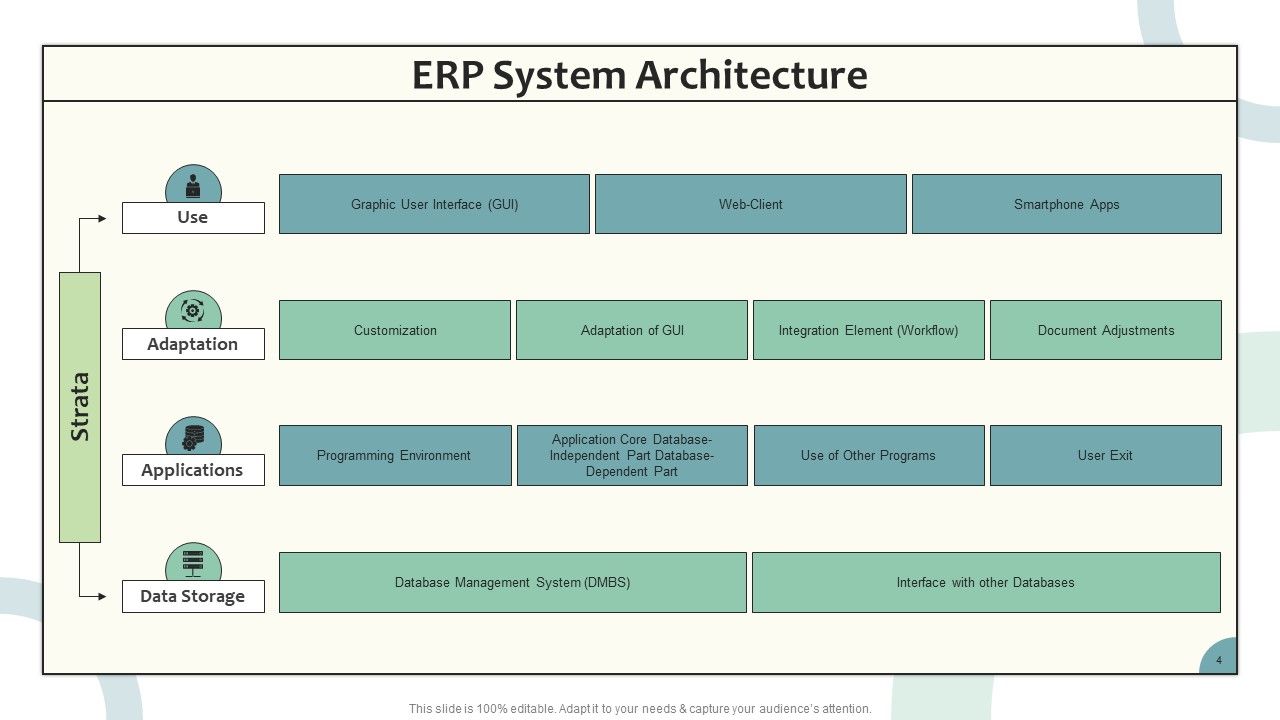
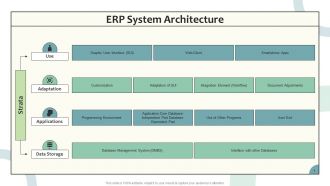
This PPT Slide helps showcase the entire ERP system. The process is divided into four stages: Use, Adaptation, Applications, and Data Storage. Within the Use stage, you can include tasks related to Graphic User Interface (GUI), web client, and smartphone apps. Similarly, the Adaptation stage includes customization, application of GUI, integration of platforms, and document adjustments as required.
Template 2: Task Categories of ERP Systems
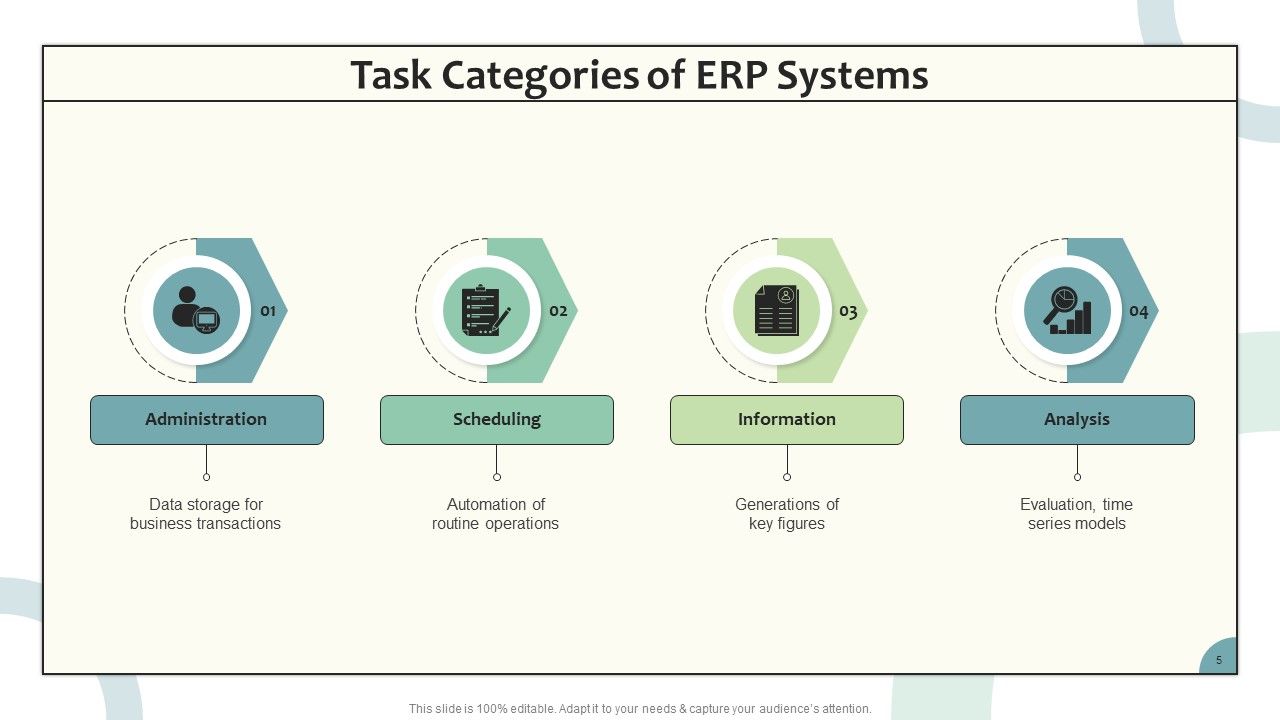
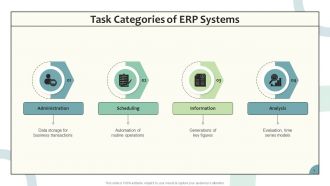
ERP is not a one-step plan but a collection of steps constituting a thorough process. The process includes four main stages: administration, scheduling, information, and analysis. The Administration process is associated with storing data for different business transactions. Similarly, the Scheduling process is related to automating the business's routine operations. Under the Information stage, you can proceed with generating all the key figures. Use this slide to reflect the main points of focus of the ERP system.
Template 3: ERP Project Process by Stage
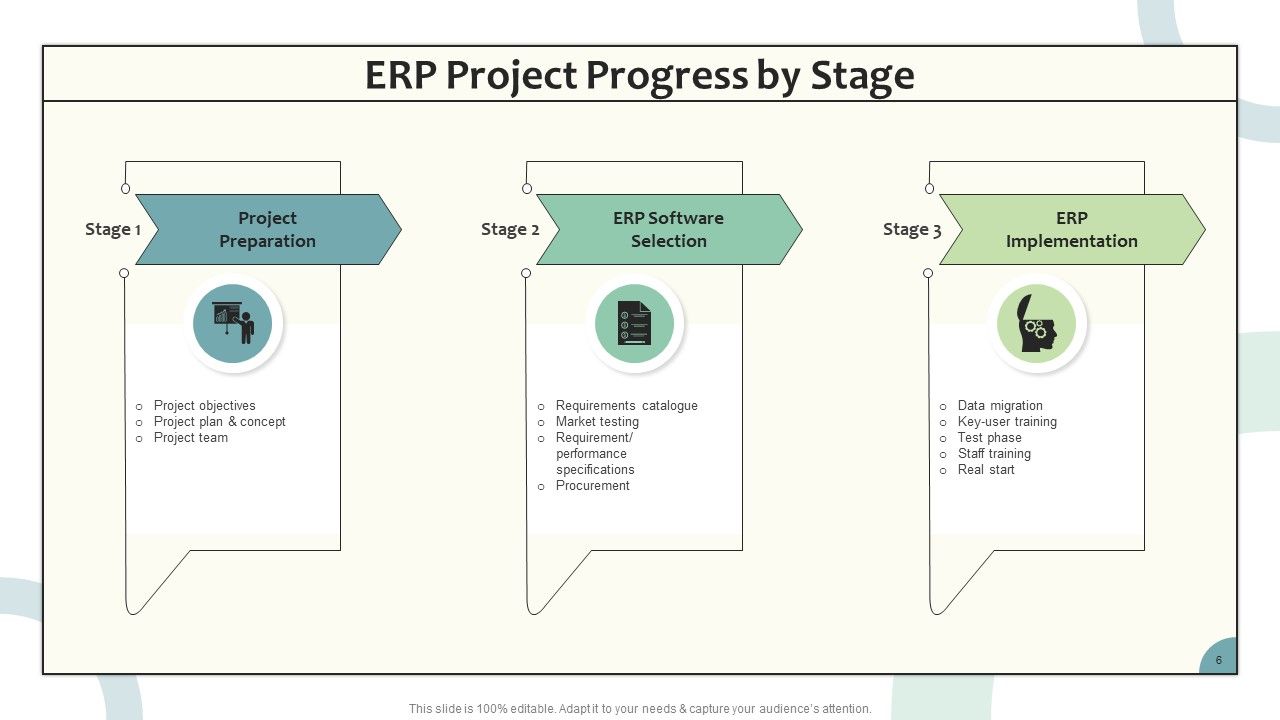
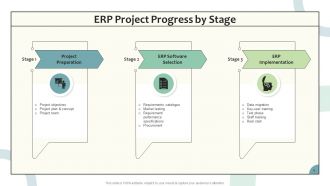
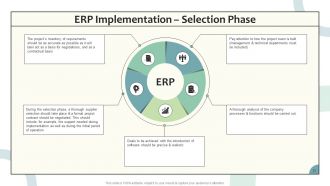
Here's another slide on ERP that allows you to showcase its extremities and technicalities. The process involves three major stages: Project Preparation, ERP Software Selection, and ERP Implementation. These will help to complete tasks related to the project objectives, determining the requirements catalog, market testing, and more.
Template 4: Overview of Implementation Process
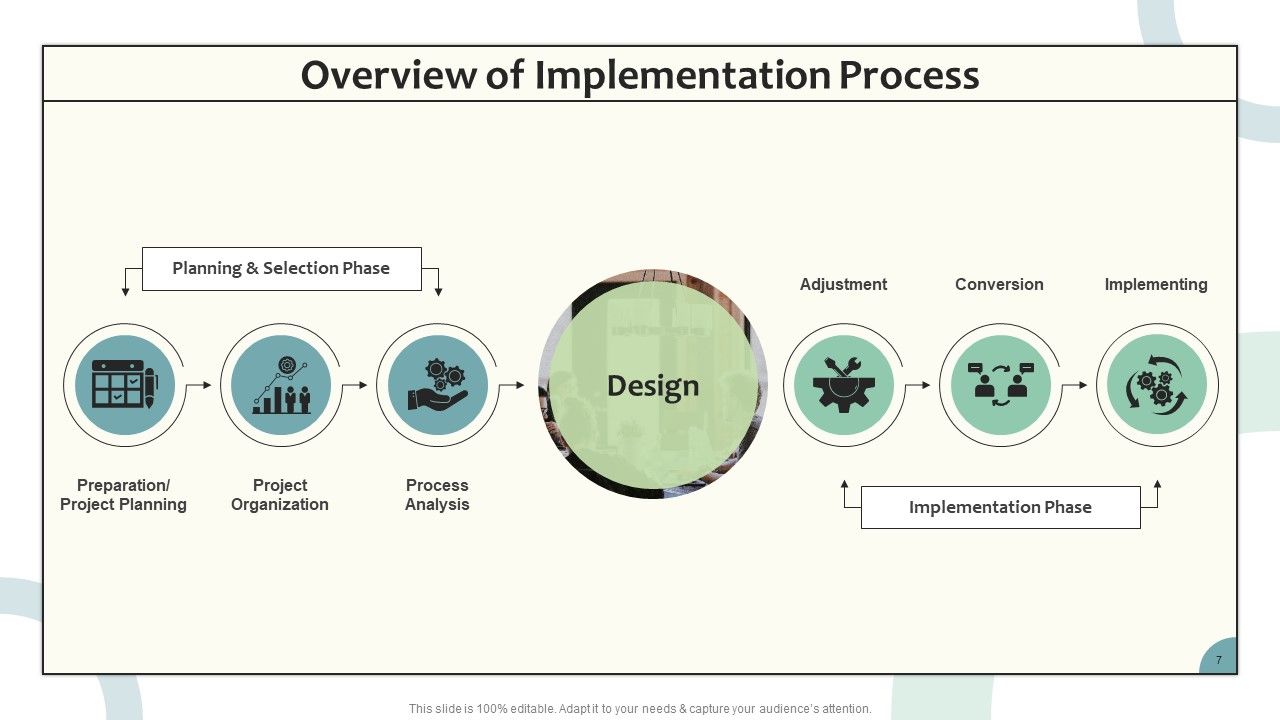
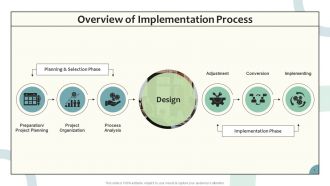
Now that the entire ERP execution process is laid out, you must overview its smooth and effective progress. Use this PPT Framework to divide it into 2 phases for ease of overviewing the process: the planning & selection and the Implementation phases. The planning phase can be divided into extensive project planning, organization, and analysis. Similarly, the second implementation phase will include tasks like introducing adjustments and securing conversions
Template 5: Planning and Selection Phase
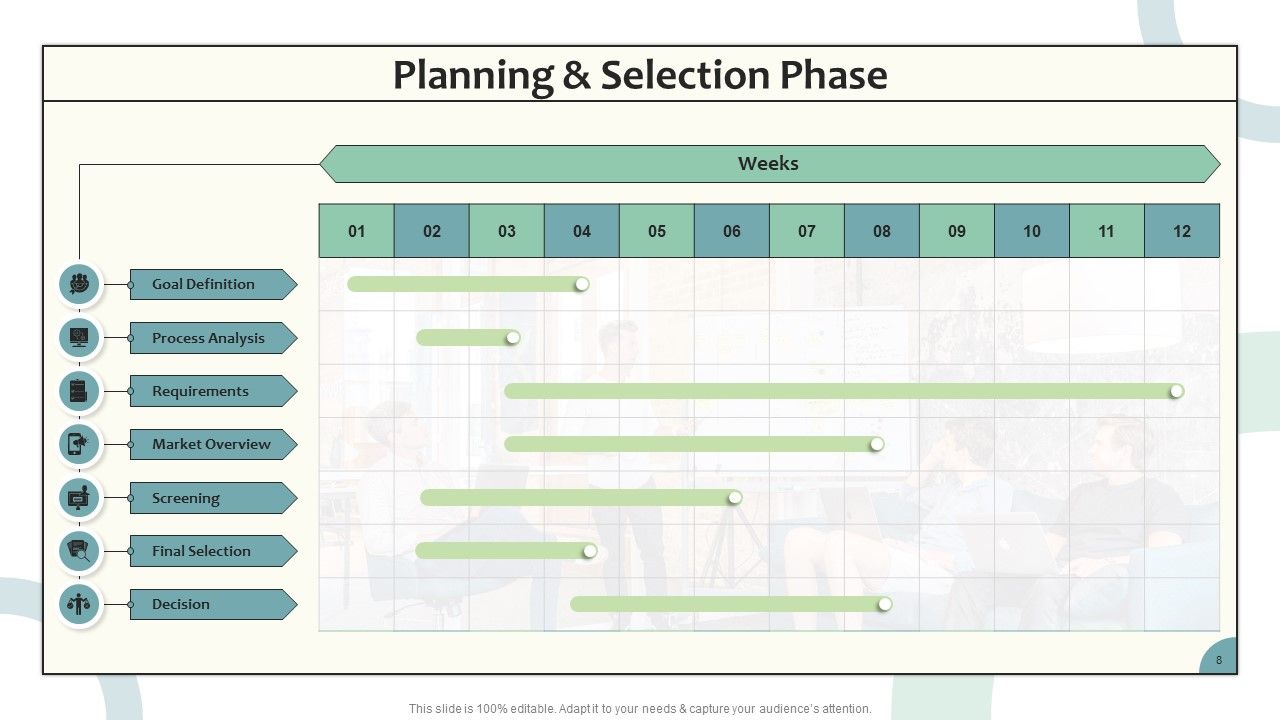
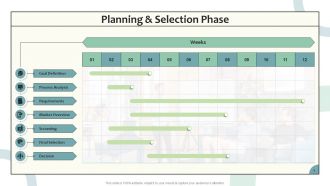
The planning and selection phase is an important one in the ERP system. This slide lets you showcase this phase in detail, including all its associated complications. The slide showcases the phase in the form of tasks and weeks. The tasks included in this phase are Goal definition, process analysis, requirements, market overview, screening, final selection, and decision.
Template 6: Implementation Phase
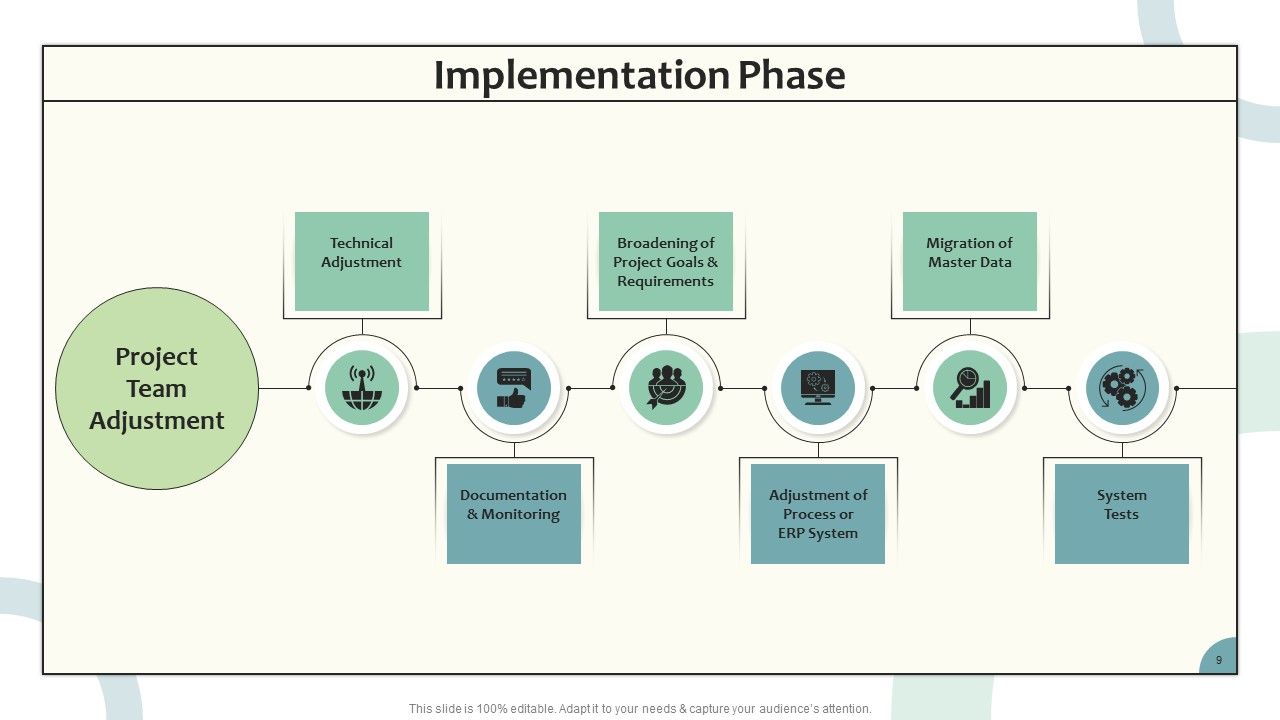
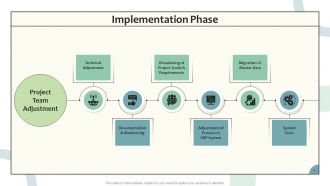
Now, let's learn about the implementation phase of the ERP system. This entire process includes six major steps. These stages are technical adjustments required for feasible processing, documentation and monitoring of data, broadening of project goals and requirements, adjustment of process or ERP system, migration of the entire master data, and scheduling of system tasks. Each step requires an extensive study of different aspects related to enterprise resource planning, thus helping you conclude the ERP system effectively.
Template 7: Enterprise Resource Planning Funnel
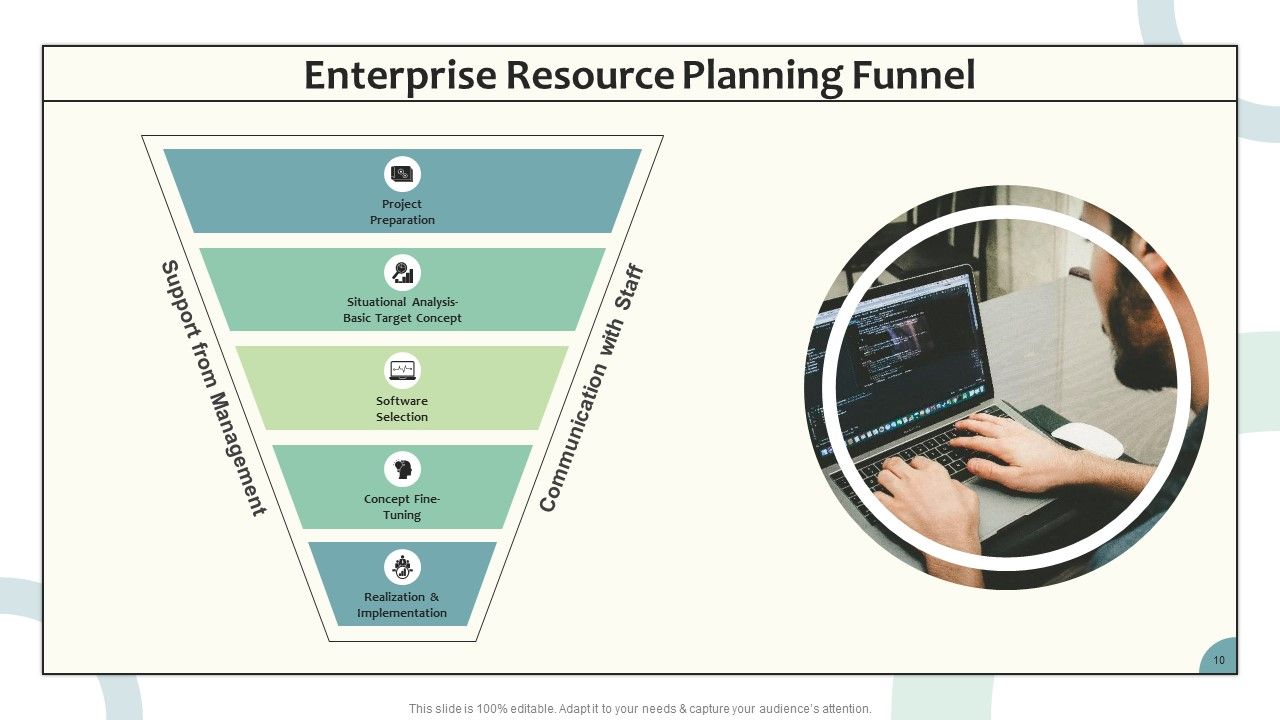
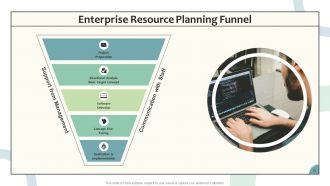
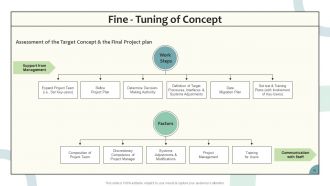
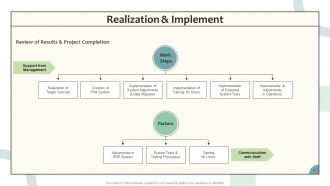
The planning funnel structure is quite extensive and helpful. The broadness of the funnel determines the urgency of the task. This ERP funnel showcased in this slide involves five major stages. It starts with project preparation and proceeds with a situational analysis of the basic target concept. Other vital stages include concept fine-tuning realization and implementation stage.
Template 8: Project Preparation
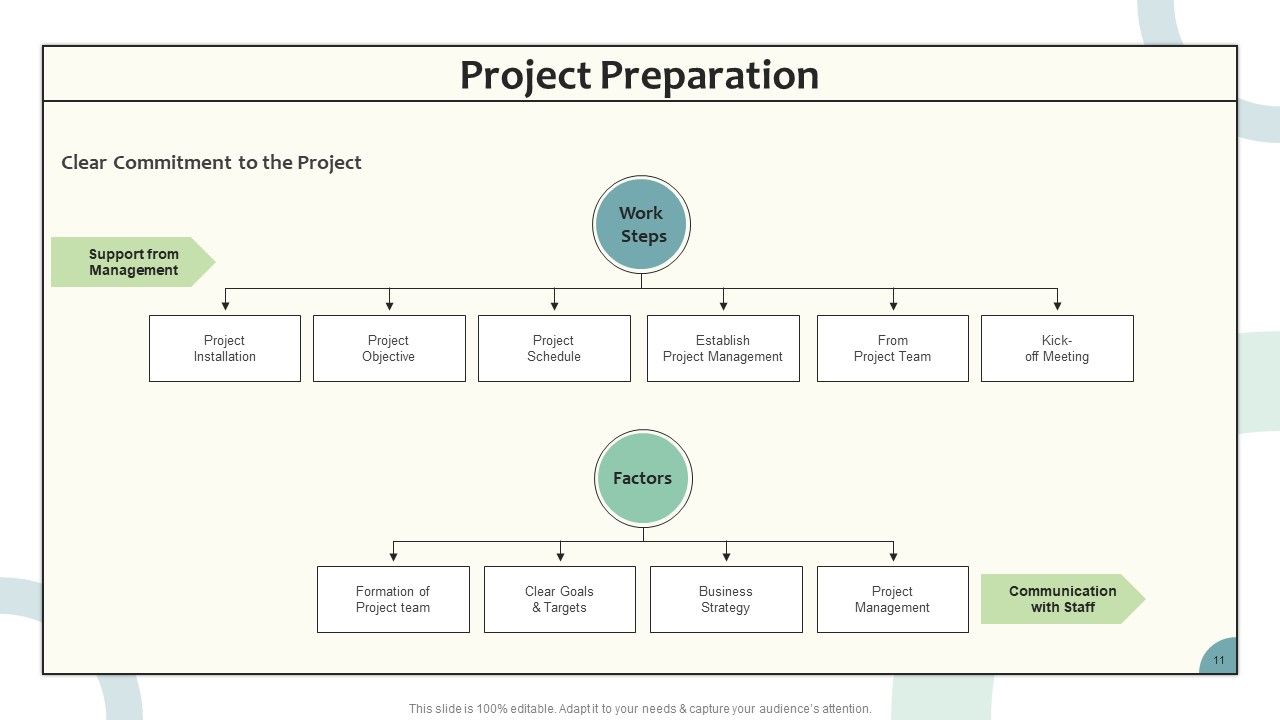
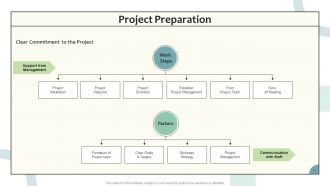
For the successful execution of ERP, you need to undergo extensive project planning and scheduling. This slide helps showcase the working stages involved in the project preparations and the factors affecting the stages. The work steps include tasks associated with the project, such as installation, determining the objective, scheduling it, setting up the management metrics, formulating a team, and kick-starting the initiation meeting. The factors affecting the preparation are team formulation, setting targets, and more.
Template 9: Situational Analysis- Basic Target Concept
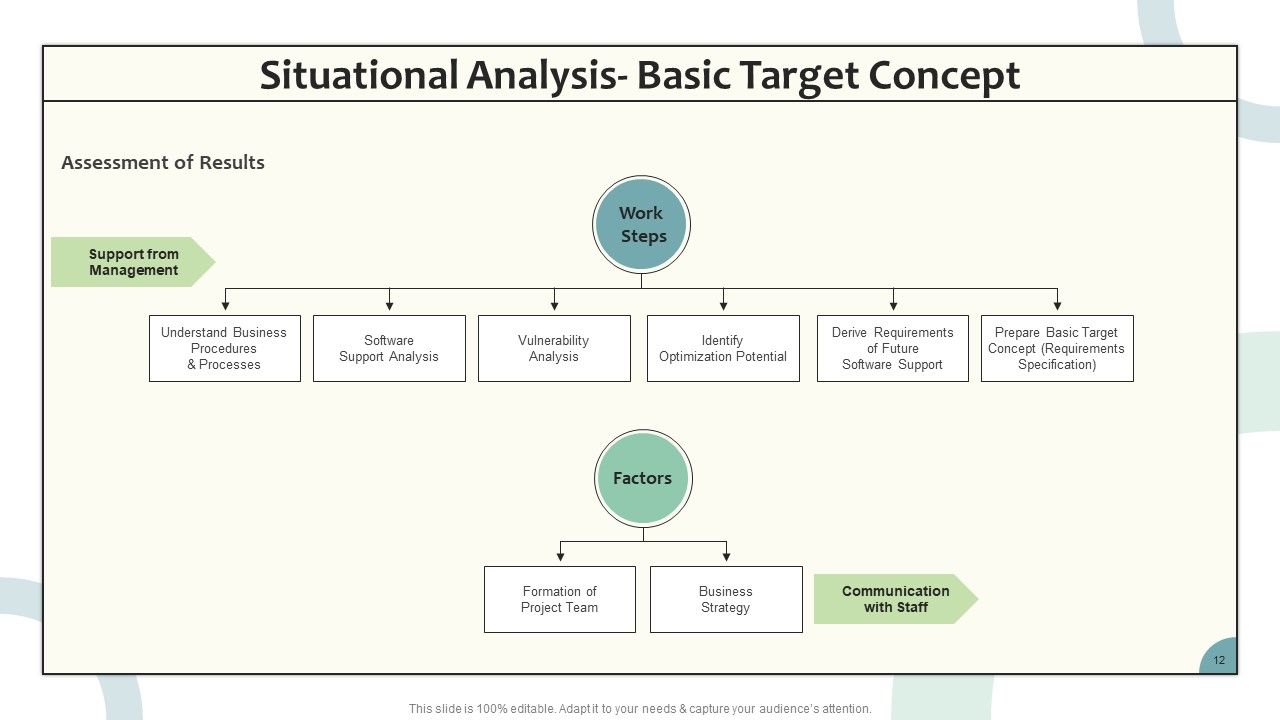
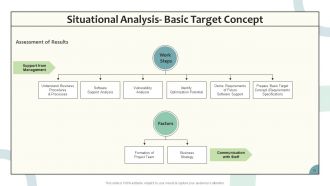
Use this PPT Slide on situational analysis to achieve your objectives smoothly. It illustrates the work steps and factors. The work steps for assessing results generated from the implementation include understanding different processes, analyzing software, evaluating the projects' vulnerability, identifying growth and improvement potential, analyzing future requirements, and preparing specific requirements structures.
Template 10: Software Selection Process
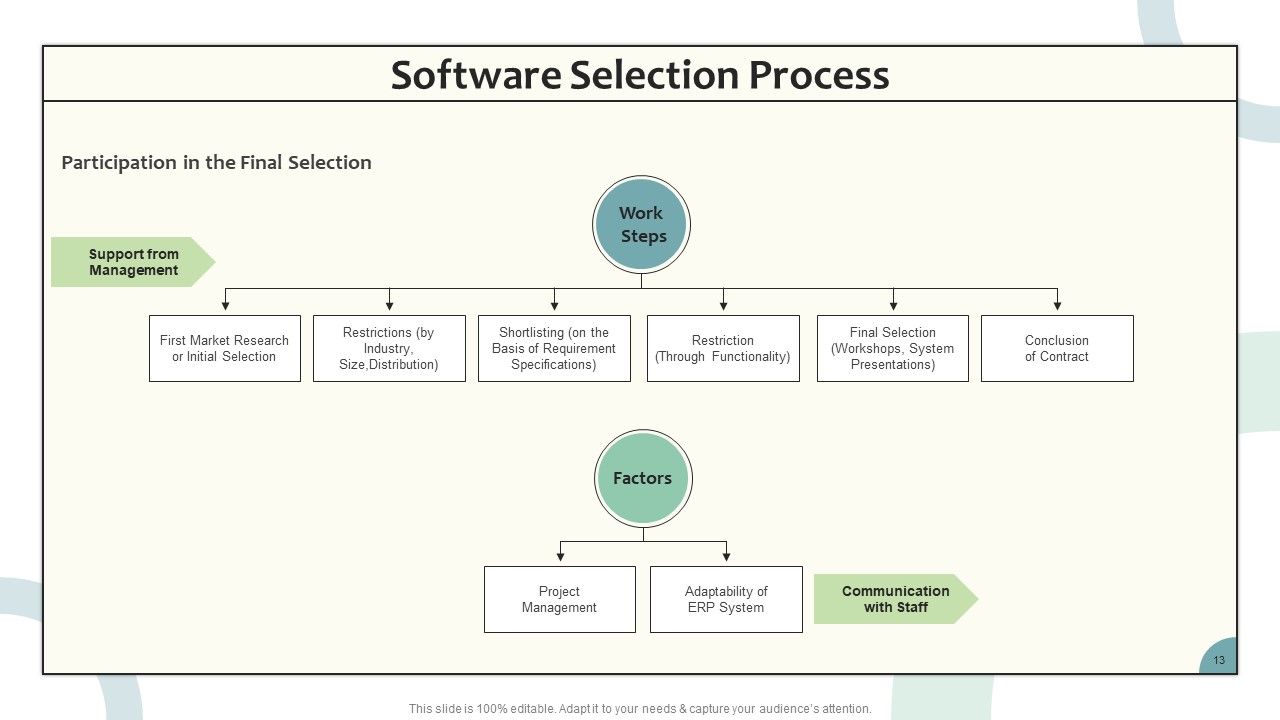
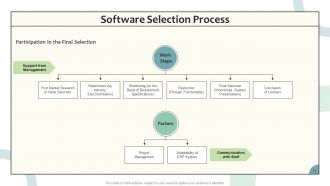
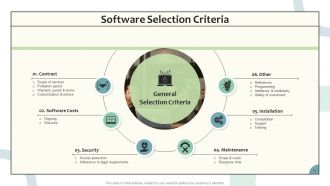
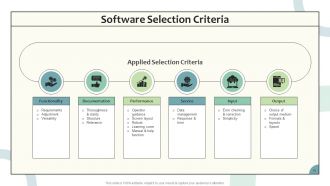
You can devise the Software Selection Process using the previous funnel showcased in the ERP presentation template. Like the last two slides, this one is divided into two parts: Work Steps and Factors. The work steps associated with the selection process for any ERP software are conducting extensive research of the market for software alternatives, restricting the research to your domain, shortlisting the potential tools available, further restricting the other options, selecting the perfect software, and then drafting up a contract for it.
If you are looking for an effective ERP system for the Information Technology domain, here’s a smart template to try.
Grab your audience’s attention with ease using ERP Template
When enlightening your audience on any subject matter, using a presentation template goes a long way. Especially when you have to showcase the crucial elements of your ERP system, a comprehensive yet thorough template can help you explain the technicalities of the planning system. The template mentioned above is one such template that can help you grab your audience's undivided attention with ease.
Check out this ERP implementation timeline template to set up and showcase the entire timeline of the ERP system perfectly.
Enterprise Resource Planning Powerpoint Presentation Slides with all 38 slides:
Acquaint folks with areas of good growth through our Enterprise Resource Planning Powerpoint Presentation Slides. It will enlighten investors.
FAQs for Enterprise Resource Planning
So you'll definitely need the basics - finance/accounting, supply chain stuff, HR/payroll, and CRM. Inventory management too. But honestly? The reporting dashboard is what you'll probably live in day-to-day. Mobile access is pretty much non-negotiable now since everyone's working from everywhere. Integration between departments is huge - you don't want data stuck in random silos. Oh, and workflow automation saves tons of time. My take: pick something that fixes your worst headaches first. Don't get caught up in fancy features you might never use.
So basically ERPs give everyone access to the same data instead of having sales, finance, and operations all working off different spreadsheets - which honestly saves so much headache. When marketing runs a campaign, sales can see leads coming in while inventory adjusts production automatically. No more "which version are we looking at?" drama. Everyone's working from the same info instead of completely separate systems. Just make sure people actually get trained on it though, otherwise you'll drop serious money on software that just sits there collecting digital dust.
Honestly, cloud ERP is where it's at now. Most companies are dumping their old on-premise stuff because it's such a pain to maintain. With cloud systems, you get automatic updates and your team can work from literally anywhere - which was a lifesaver during COVID, not gonna lie. Scalability is huge too since you don't need to buy more servers when you grow. The integration piece is way smoother because everything connects through APIs instead of those janky old workarounds. I mean, unless you really love dealing with IT disasters, I'd skip anything that needs local servers.
Ugh, change management is the worst part honestly - nobody wants to learn a new system. Your old data will be a nightmare to migrate too, it never transfers cleanly. Budget? Yeah, add 50% to whatever they quote you. Every department thinks they need special features, which creates tons of customization headaches. Training takes forever and everyone underestimates it. Oh, and timeline-wise, double whatever they promise. Get people excited about it early though, makes everything smoother later.
Look, ERP basically gets all your departments on the same page instead of everyone doing their own thing with random spreadsheets. Your accounting, inventory, and sales teams can actually see what each other are doing in real-time - which honestly sounds obvious but you'd be surprised how many businesses are flying blind. I'd start by figuring out what's driving you crazy right now. Manual data entry? Terrible inventory tracking? Then check out cloud-based ERPs built for smaller companies. They're not nearly as expensive as those huge enterprise systems anymore, and way less of a headache to set up.
So you'll want to track both money stuff and how things actually run day-to-day. ROI, implementation costs vs what you budgeted, payback time - the usual suspects. But honestly? The operational metrics often tell the real story. Process efficiency, data accuracy, user adoption rates, system uptime. Don't sleep on employee productivity and customer satisfaction either. Oh, and this is crucial - set your baselines before you go live, not months later when you're like "wait, how bad was it before?" Track everything from day one or you'll be kicking yourself later.
Look, data migration can totally make or break your ERP project. Clean data going in means your new system actually works from day one. But migrate garbage? Your users will hate the reports and lose faith in the whole thing pretty quick. I'd honestly spend extra time (and money) on cleaning everything up first, even if it pushes back your launch date. Better to go live late with good data than on time with crap that'll cause headaches for months. Trust me on this one - I've seen too many companies rush it and regret it later.
Cloud-first is the big one - implementations don't take forever anymore like they used to. AI's handling the boring stuff now, data entry and forecasting mostly. Everyone wants mobile access too, which honestly should've happened years ago. Your team's gonna expect to approve stuff from their phones. Low-code customization is pretty sweet - you can tweak workflows yourself instead of waiting on developers. Mobile is basically required at this point, not optional. I'd look at where your current system's headed with these changes, especially if you're thinking about upgrades soon.
Honestly, ERP systems are total game-changers for compliance stuff. They track everything automatically and create audit trails without you having to think about it. Real-time reporting means you'll actually have data ready when auditors show up. The workflows force people to follow the right steps - can't just skip mandatory approvals anymore. When regulations change (which happens way too often), you update everything in one place instead of running around to every department. My advice? Map out what compliance headaches you're dealing with now, then see which ERP modules would fix the worst ones first. Trust me, it's worth the upfront work.
Dude, you HAVE to invest in proper user training - I can't stress this enough. So many companies cheap out on this part and then wonder why their fancy new system isn't working. People will just find workarounds or mess things up if they don't get it. Make sure your team understands why they're doing things differently, not just the button-clicking stuff. Oh, and don't just do one big training dump before launch. You'll need ongoing support after go-live because trust me, people forget everything the second they're stressed about the new system.
So basically, your ERP pulls data from everything - finance, inventory, sales, HR - and processes it instantly through dashboards. You can catch trends or problems right as they're happening instead of waiting weeks for reports. It's like... I don't know, having superpowers for your business? Your inventory hits the danger zone or sales go crazy? You'll know immediately. The trick is actually getting your team to check these dashboards regularly though - which honestly is harder than it sounds.
So ERP customization is tricky, right? The good news - you'll actually get software that works with how your business runs instead of forcing everyone into some cookie-cutter system. People won't hate using it as much. But man, the downsides hit hard. Upgrades become this whole ordeal, costs spiral out of control, and you're stuck depending on whoever coded all that custom stuff. I've seen companies get burned by this. Honestly? Go minimal at first. Only customize the stuff that really gives you an edge over competitors. Everything else can probably wait.
Dude, manufacturing companies get huge benefits from ERP - all that inventory and supply chain stuff is nightmare without it. Healthcare and retail are the same way, tons of moving pieces to track. Finance companies dig the real-time visibility too. Honestly, most industries with complex workflows see wins, but those ones I mentioned? They're basically screwed without decent ERP at this point. My cousin works in manufacturing and says their old system was a total mess before they switched. If you're in any of those fields, might want to start looking at options soon.
Okay so first thing - set up role-based access so people can't poke around where they shouldn't. Data encryption is non-negotiable, both stored and in transit. I'm probably paranoid but quarterly security audits have saved my butt more times than I can count. Don't forget automated backups! Test your disaster recovery too because Murphy's law is real. Oh and here's the thing everyone misses - this isn't a set-it-and-forget-it deal. You've gotta review user permissions regularly or you'll end up with ex-employees still having access months later.
Dude, this decision is huge - I've watched companies totally mess this up and spend years fixing it. Find someone who actually gets your industry, not just whoever has the coolest presentation. Good vendors will walk you through everything, train your team properly, and stick around when stuff inevitably breaks. Honestly, half these sales guys disappear after you sign the contract. Check their support history and talk to companies like yours who've used them. Features matter, but the relationship matters way more. You'll be working with these people for years, so make sure they're not flakes.
-
These slides covers all segments & criteria
-
Very well designed and informative templates.
-
Understandable and informative presentation.