


Overcoming Upfront Rejection In Sales Training Ppt




Try Before you Buy Download Free Sample Product
 Impress Your
 Audience
 100%
100% Editable
 Save Hours
 of Time


These slides discuss upfront rejection in sales. After delivering an opening pitch, a salesperson may face initial rejection or resistance to moving forward. Three rules for overcoming initial resistance are Keep your cool, lower resistance, and Realize that the Prospects are easy to deal with.
People who downloaded this PowerPoint presentation also viewed the following :
Content of this Powerpoint Presentation
Slide 1
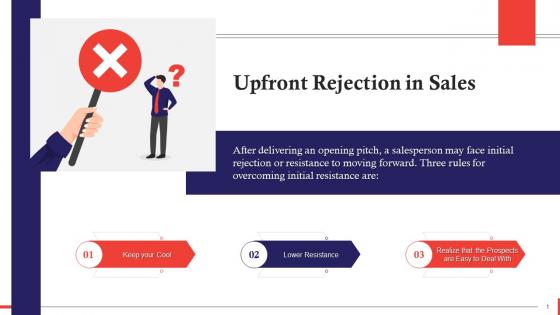
This slide discusses about upfront rejection in sales. It highlights that after delivering an opening pitch, a salesperson may face initial rejection or resistance to moving forward. Three rules for overcoming initial resistance are: Keep your cool, lower resistance, and Realize that the Prospects are Easy to Deal With
Instructor’s Notes: Rules for Overcoming Early Rejections
- Keep your Cool: This is the first rule, which applies whether you're talking to a gatekeeper or a decision maker. Anyone you deal with early on or at any point during a sales conversation can be rude. The absolute inviolable rule while dealing with any resistance or upfront rejection is to keep your cool
- Lower Resistance: Disagreement will always lead to more resistance, and disarming the resisting person is the most effective way to reduce it. While attempting to reduce resistance, avoid selling yourself out of it. Instead of convincing the prospect that they are wrong, try agreeing with them to disarm them. For instance, if someone says, "I don't think you're right for me," reply, "but you could be right." Let us discuss it." The sales representative must put themselves in the buyer's shoes and consider which reaction they are most likely to respond to
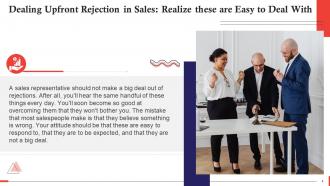
- Realize that the prospects are Easy: A sales representative should not make a big deal out of rejections. After all, you'll hear the same handful of these things every day. You'll soon become so good at overcoming them that they won't bother you. The mistake that most salespeople make is that they believe something is wrong. Your attitude should be that these are easy to respond to, that they are to be expected, and that they are not a big deal
Slide 2
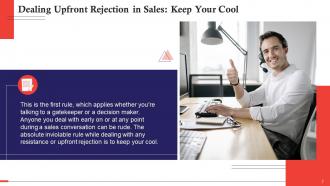
This slide discusses about keeping your cool as the appropriate response to deal with upfront rejection in sales. It highlights that this is the first rule, which applies whether you're talking to a gatekeeper or a decision maker. Anyone you deal with early on or at any point during a sales conversation can be rude. It also mentions that the absolute inviolable rule while dealing with any resistance or upfront rejection is to keep your cool.
Slide 3
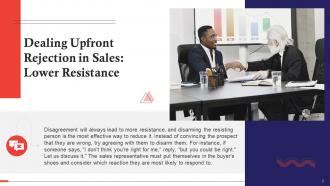
This slide discusses dealing with initial rejection in sales with less resistance. It highlights that disagreement always leads to more resistance, and disarming the resister is the most effective way to reduce it. It also states that instead of convincing the prospect that they are wrong, a sales representative should try to agree with them to disarm them.
Slide 4
This slide discusses the importance of recognizing that prospects are easy to deal with in sales. It emphasizes the importance of a sales representative not making a big deal out of rejections. After all, you're bound to hear a few of these daily. It also mentions the common mistake most salespeople make, which is believing something is wrong. Your attitude should be that these rejections and off-the-cuff reactions simple to respond to, are to be expected, and are not a big deal.
Overcoming Upfront Rejection In Sales Training Ppt with all 20 slides:
Use our Overcoming Upfront Rejection In Sales Training Ppt to effectively help you save your valuable time. They are readymade to fit into any presentation structure.









FAQs for Overcoming Upfront Rejection In
Ugh, rejection really messes with your head first. You start questioning if you're actually good at what you do, and suddenly every decision feels impossible. I hate how it makes you overthink everything later - like you become this weird cautious version of yourself. The annoying part? Those feelings stick around way longer than they should. You might avoid taking risks or second-guess opportunities that come up. But honestly, it's just your brain being dramatic. These feelings don't actually reflect your skills. Give yourself some time to feel crappy about it, then channel that frustration into getting better.
Honestly, visualization has been a game-changer for me with rejection stuff. I spend like 5-10 minutes picturing myself handling "no" with confidence instead of spiraling into shame mode. Before big presentations now, I'll mentally rehearse staying calm if things go sideways - sounds weird but it actually works! Your brain starts building new pathways when you visualize positive responses instead of catastrophic ones. Try seeing rejection as redirection rather than personal failure. Make those mental images really vivid too. Sometimes I even picture my future self laughing about current setbacks. It's wild how much this helps you bounce back faster.
Honestly, feedback is like gold when you get rejected. Sure, plain rejection sucks and doesn't help anyone. But when someone tells you exactly what went wrong? That's actionable stuff. Ask for specifics even if it's awkward - like "what could I have done differently?" Most people will actually tell you the real reasons if you seem genuinely curious about improving rather than just complaining. I've found that even harsh feedback beats getting ghosted with zero explanation. You can fix "your timeline was unrealistic" but you can't fix mystery rejection, you know?
Get back to them fast - shows you're grateful they took the time. Thank them, don't be bitter about the rejection, and definitely mention you'd love to be considered for future stuff. Honestly, I've watched people just disappear or get super weird after a no, which is so cringe. Keep it short but friendly. Maybe bring up something cool you learned during their process or what you liked about the team. This way you're not burning bridges, and they'll actually remember you positively. End with hoping you'll work together someday - you never know what'll open up later.
Honestly, rejection just hits different when you stop taking it personally. I started asking for random discounts at coffee places - sounds dumb but it actually works to desensitize yourself. Keep a little journal of your "nos" and what you learned. The weirdest part? You'll start seeing patterns in why people say no, which is actually useful info. Don't dwell on the sting - that part sucks but passes quickly. Focus on celebrating that you even tried in the first place. Once you do this enough, rejection becomes boring instead of devastating. It's like building a muscle, but for your ego.
Honestly, rejection stings way less when you figure out the actual reasons behind it. Could be your skills, bad timing, or you're just not what they're looking for - but that's all useful info. I know it sounds weird, but I've watched people completely change their game plan after digging into their rejections. Ask follow-up questions if you can. Look for patterns too - like, are you getting the same feedback multiple times? That's your answer right there. Next time you get rejected, just spend 10 minutes jotting down what you learned and what you'd do different.
Honestly, the worst thing you can do is take rejection personally. Most of the time it has zero to do with you - could be timing, budget constraints, or some weird internal drama you'll never know about. I used to just slink away after getting rejected (so embarrassing looking back). But staying in touch actually works. Situations change constantly. Also don't assume one "no" means forever. Following up respectfully can lead somewhere down the road. Think of each rejection as free intel - you're learning what resonates and what doesn't. Way better than wondering "what if" later.
Honestly, body language is huge when you're delivering bad news in presentations. I've seen people totally undermine themselves by slouching or avoiding eye contact - makes you look unsure of your decision. Stand tall, look people in the eye, keep your hands visible. It sounds basic but it works. When you seem confident physically, people are way less likely to argue with your "no." Though you still want your voice to be kind, obviously. I bombed this so hard in early client meetings lol. Practice in a mirror if you can - helps more than you'd think.
Ugh, rejection sucks but I've learned to flip it into useful info. First thing - dig into WHY it happened instead of just wallowing. What feedback can you actually use? Second, treat it like market research for round two. Sounds weird but it works. Getting curious beats staying bitter every time. Within 24 hours, write down three things you'd change or skills you need. Your brain switches from "poor me" to "okay, what's next?" Pretty much turns the whole thing into a learning experience instead of just... well, feeling like crap about it.
Okay so here's the thing - when you turn rejection into a story, it actually makes way more sense. Like, instead of just feeling crappy about it, you can see the whole arc: what happened before, during, and after. It's basically free therapy lol. You start spotting patterns too, which is honestly pretty eye-opening. The whole beginning-middle-end structure helps you figure out what you learned from it all. I'd try writing out one rejection like it's a short story or something. You'll probably catch things you totally missed when you were just stuck in your feelings about it. Works better than I expected it would.
Look, start with basic resilience training - workshops on reframing rejection as feedback, that whole mindset shift thing. Get your leadership talking about their own failures first though, because nobody's gonna open up if the boss acts perfect. Create peer mentoring programs and normalize sharing what bombed. Honestly, some of our best breakthroughs came from epic fails we dissected later. Train managers to actually have decent conversations after setbacks instead of just awkward "better luck next time" stuff. Most crucial part? People need to know rejection isn't about their worth as humans.
Oh man, this is so true! Japan and Latin America? They'll hit you with "we'll think about it" when they really mean no. Germany though - they'll just tell you straight up, no sugar-coating. Honestly can be a shock if you're not ready for it. Your own background plays into this too - some people hear feedback and think "cool, notes for next time" while others take it super personally. I've learned you gotta read who you're talking to first. Makes such a difference once you get it.
Look, rejection actually makes your creative work way better - sounds crazy but hear me out. You're forced to go back and improve your ideas, which honestly they probably needed anyway. Takes the sting out of failing too, so you'll swing for the fences more often. Plus you start picking up on what clicks with people and what totally bombs. I used to hate getting "no" but now I'm like, okay cool, what can I fix here? It's weirdly addictive once you get used to it. Next time someone shoots down your idea, just ask yourself how their feedback could actually make it stronger.
Dude, speaking in public is basically rejection training in disguise. You're putting yourself out there knowing people might judge you or think you suck. But here's the thing - every time you survive those awkward moments, you get tougher. It's like building immunity to embarrassment, which totally carries over to other stuff. I'd start small though - maybe suggest ideas in meetings or volunteer for random presentations. Honestly, once you realize that uncomfortable feeling won't actually kill you, rejection becomes way less scary. The confidence boost is real.
Dude, emotional intelligence is like your safety net when rejection hits. It helps you realize that "no" doesn't mean you suck as a person. You know how we all spiral sometimes? Having good EQ means you catch yourself before going down that rabbit hole. Also, you get better at reading situations - maybe they were having a bad day or it literally had nothing to do with you. The trick is just acknowledging what you're feeling instead of stuffing it down. Sounds weird, but naming your emotions actually helps you bounce back faster. Trust me on this one.
-
SlideTeam is very efficient when it comes to saving time. I am happy that I chose them for my presentation.
-
Great quality product.