


Objection Handling And Overcoming Resistance In Sales Training Ppt
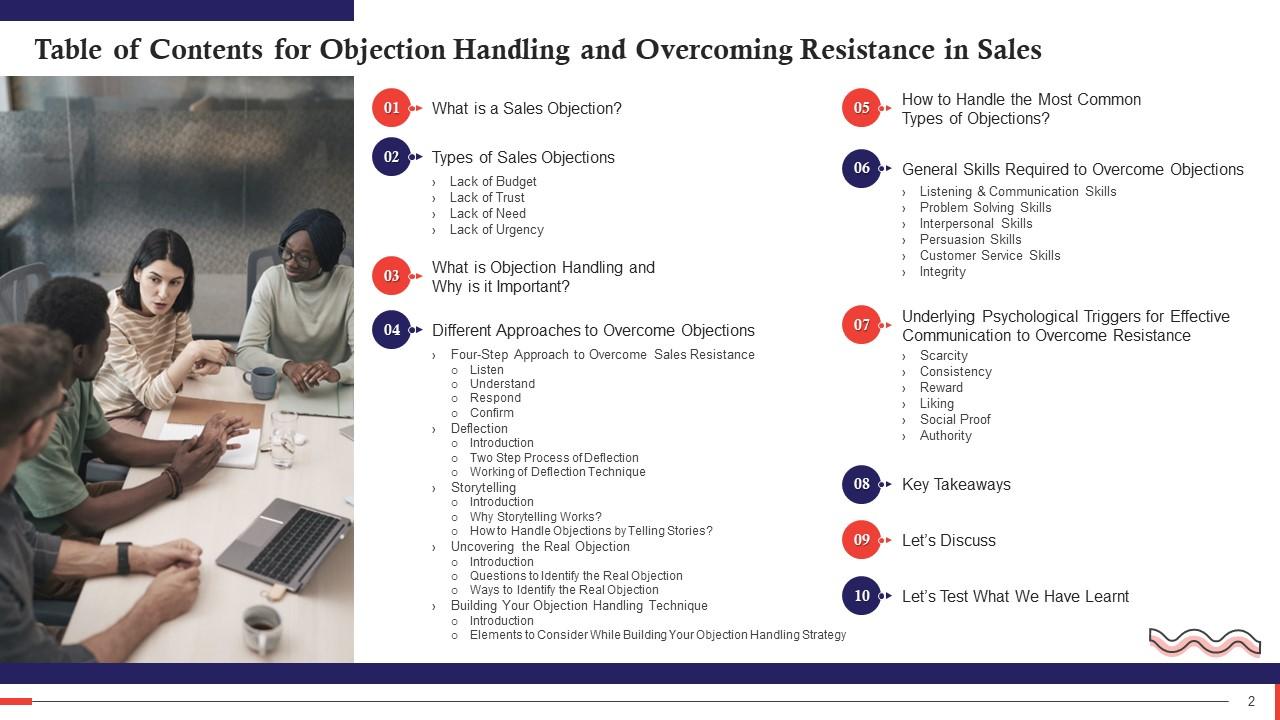
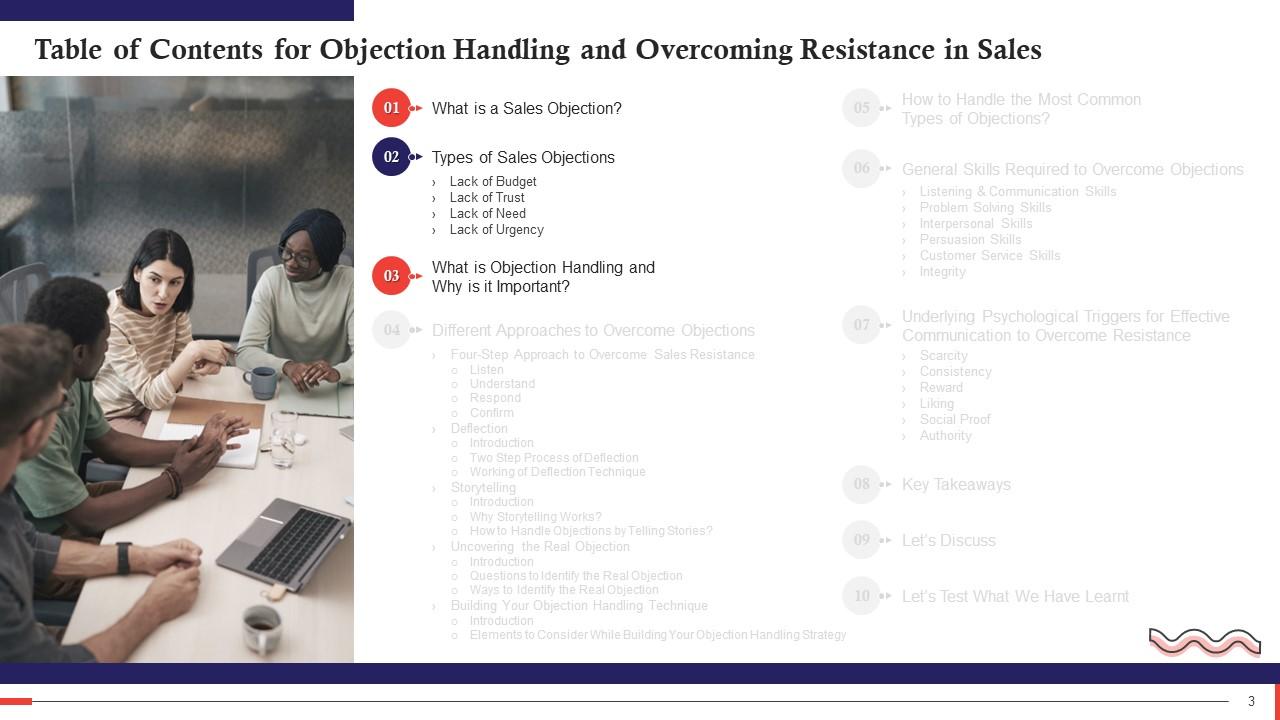
This training module on Objection Handling and Overcoming Resistance in Sales in depth covers the concept of Objection Handling, its Importance, and Types of Sales Objections Lack of Budget, Trust, Need, and Urgency. Then, it comprehensively covers the Different Approaches to Overcome Objections Four-Step Approach, Deflection, Storytelling, General Skills Required to Overcome Objections Communication, Problem-Solving, Interpersonal, Persuasion, Customer Service, Integrity, and Underlying Psychological Triggers for Effective Communication to Overcome Resistance Scarcity, Consistency, Reward, Liking, Social Proof, Authority. It also includes Activities, Key Takeaways, and Discussion Questions related to the topic to make the coaching session more interactive. The deck has PPT slides on About Us, Vision, Mission, Goal, 30-60-90 Days Plan, Timeline, Roadmap, Training Completion Certificate, and Energizer Activities. It also includes a Client Proposal and Assessment Form for training evaluation.









































You must be logged in to download this presentation.


Do you want to remove this product from your favourites?
PowerPoint presentation slides
Presenting Training Deck on Objection Handling and Overcoming Resistance in Sales. This presentation deck contains 101 well-researched and uniquely designed slides. These slides are 100 percent made in PowerPoint and are compatible with all screen types and monitors. They also support Google Slides. Premium Customer Support available. Suitable for use by managers, employees, and organizations. These slides are easily customizable. You can edit the color, text, icon, and font size to suit your requirements.

People who downloaded this PowerPoint presentation also viewed the following :
Content of this Powerpoint Presentation
Slide 4
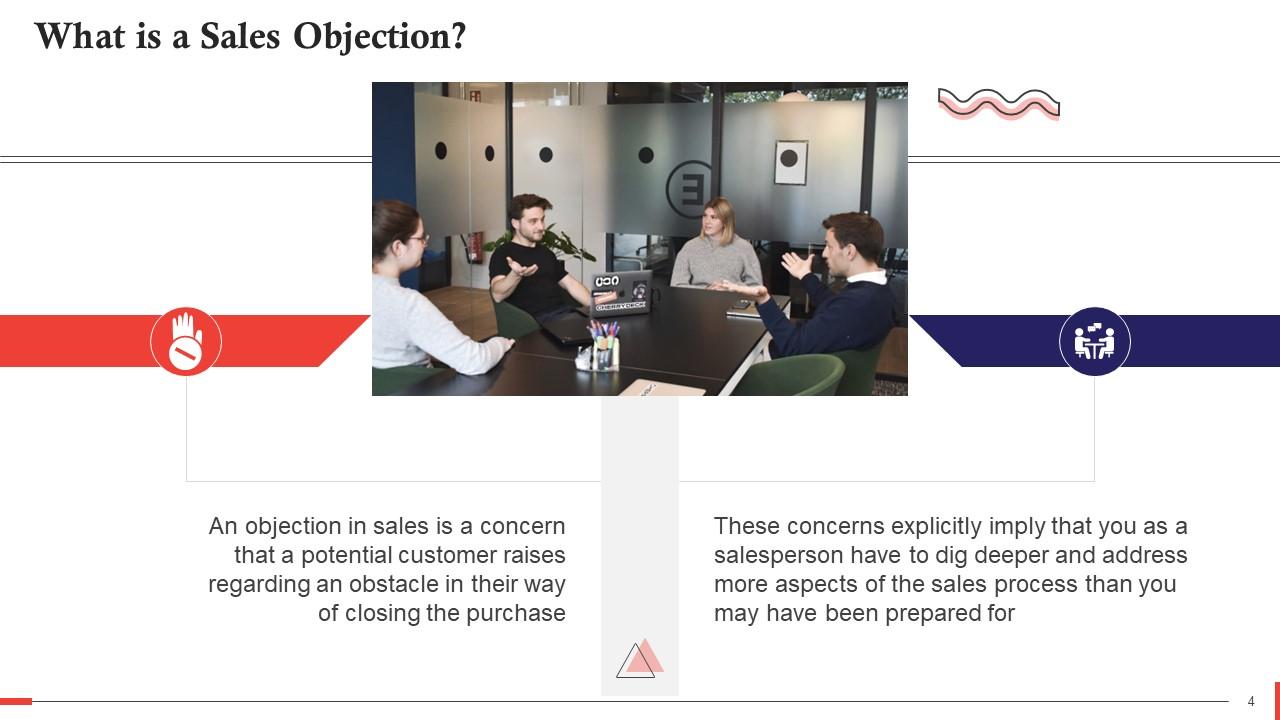
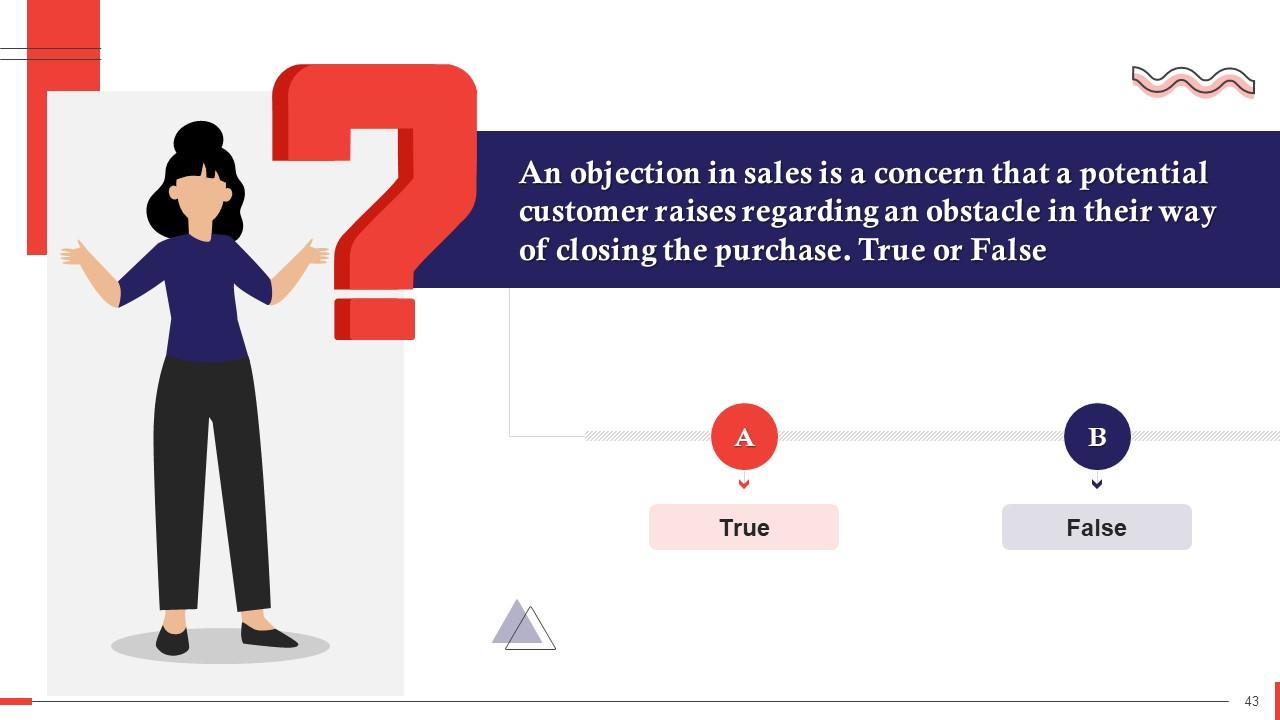
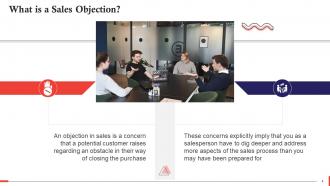
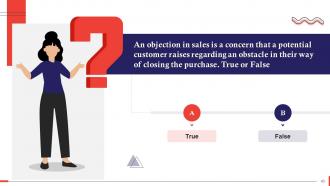
This slide introduces the concept of sales objections. An objection in sales is a concern that a potential customer raises regarding an obstacle in their way of closing the purchase
Slide 5
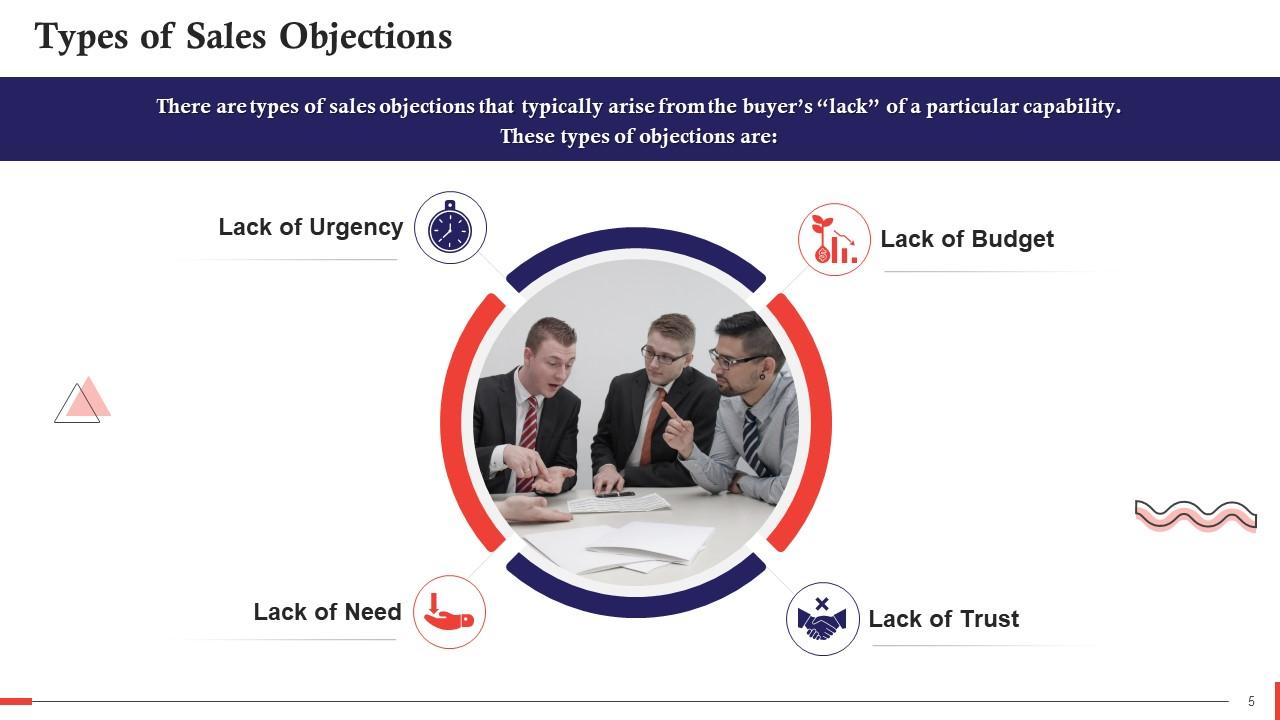
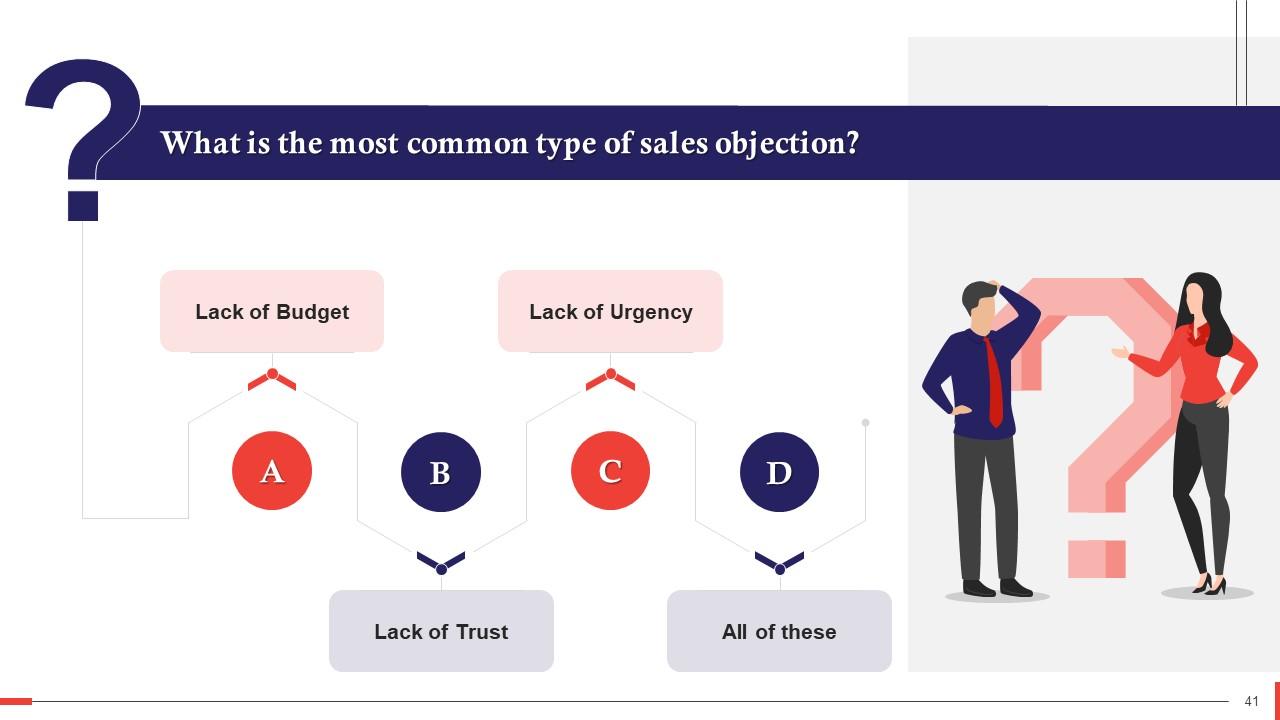
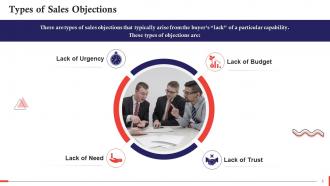
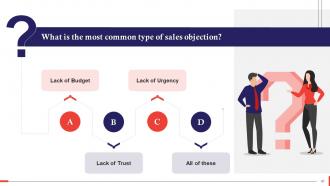
This slide highlights types of sales objections. These objections typically arise from the buyer’s “lack” of a particular capability such as lack of budget, trust, need, and urgency.
Slide 6
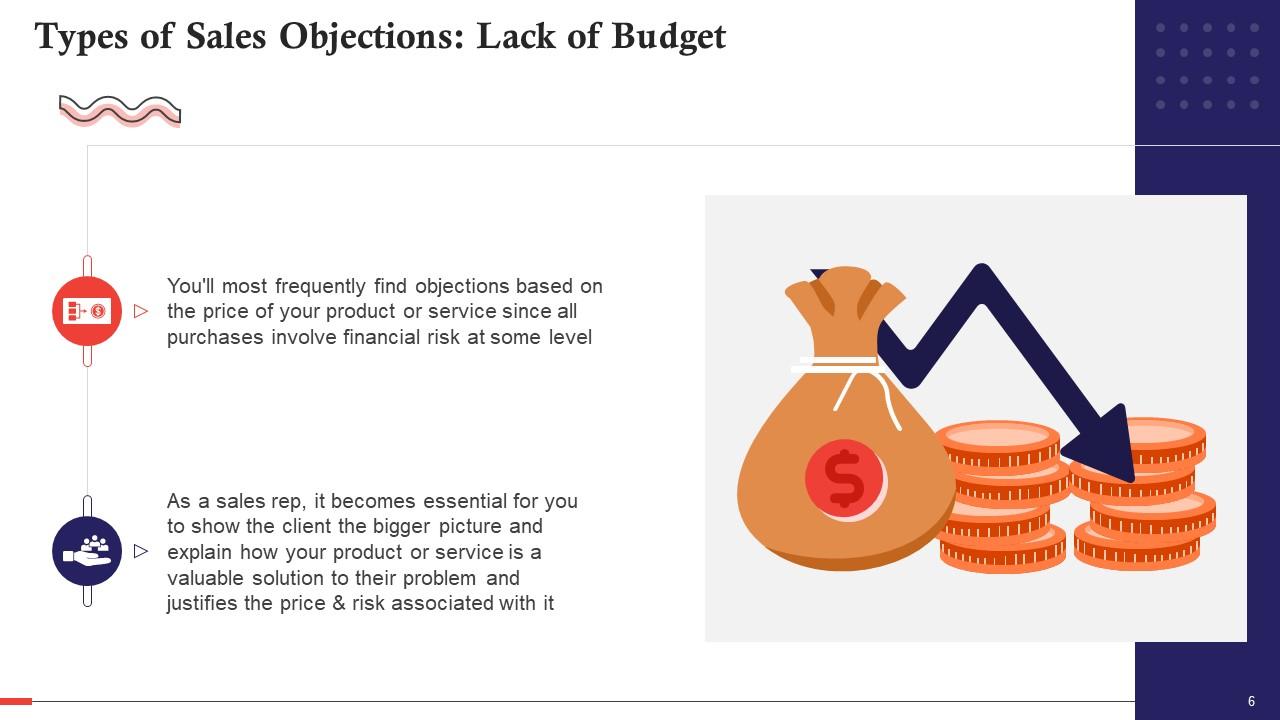
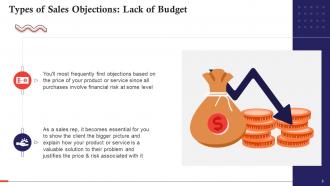
This slide discusses the lack of budget as a type of sales objection. You'll most frequently find objections based on the price of your product or service since all purchases involve financial risk at some level. As a sales rep, you have to justify the price and risk associated with the product or service you are offering and its perfect fit as a solution to their problem.
Slide 7
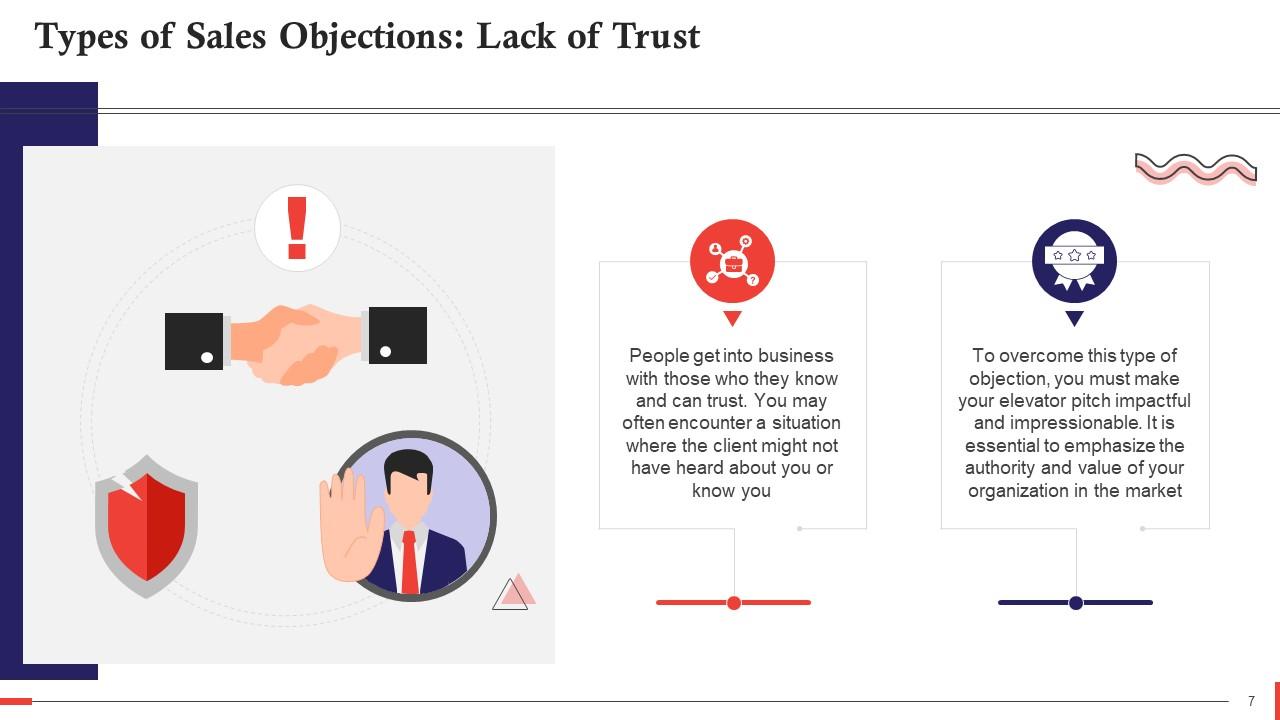
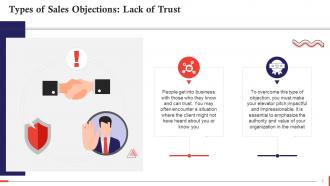
This slide talks about the lack of trust as a type of sales objection. People get into business with those who they know and can trust. You may often encounter a situation where the client might not have heard about you or know you. To overcome this type of objection, you must make your elevator pitch impactful and impressionable.
Slide 8
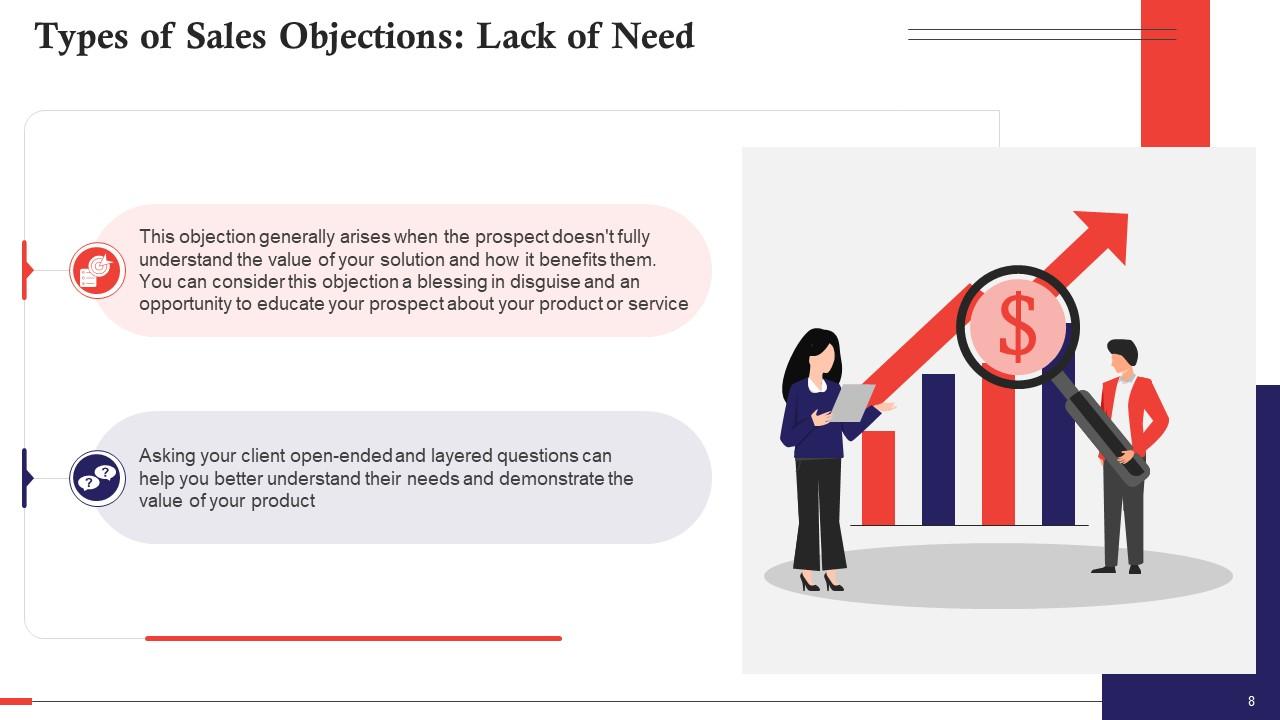
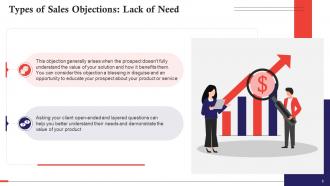
This slide discusses the lack of need as a type of sales objection. This objection generally arises when the prospect doesn't fully understand the value of your solution and how it benefits them. You can consider this objection a blessing in disguise and an opportunity to educate your prospect about your product or service.
Slide 9
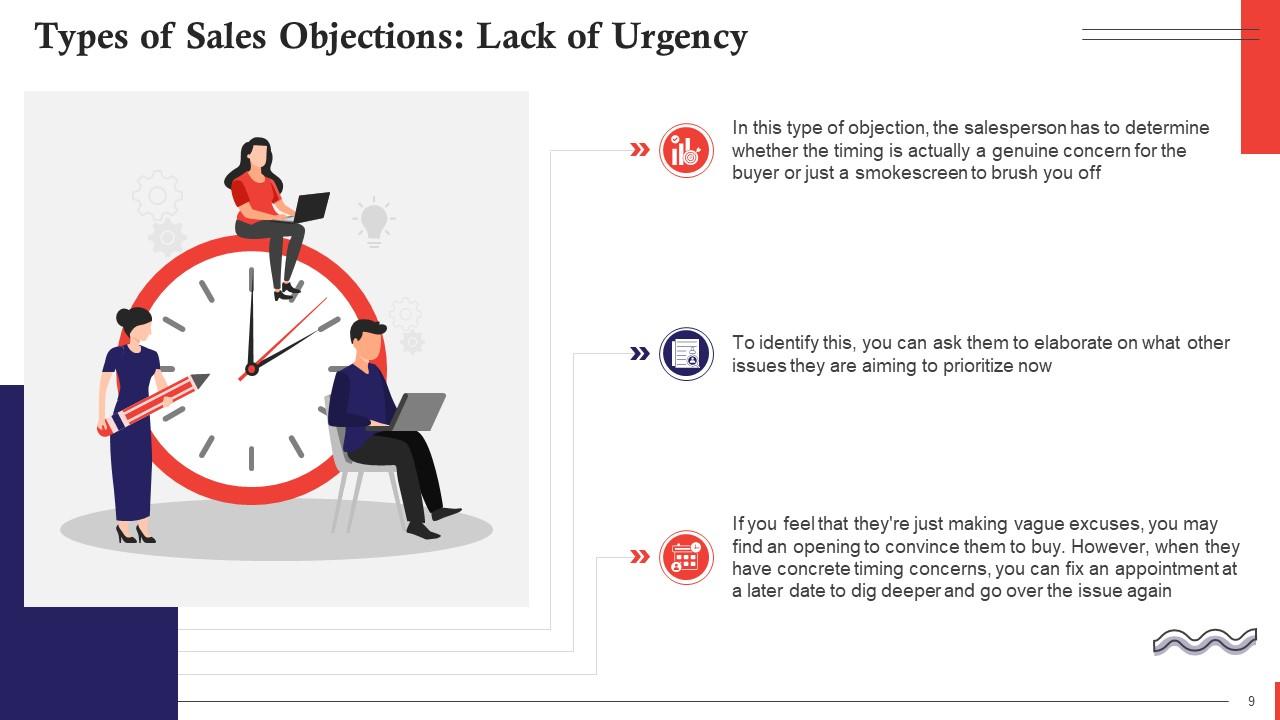
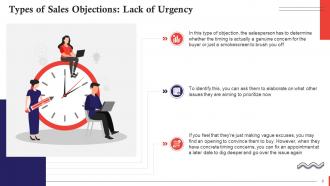
This slide talks about the lack of urgency as a type of sales objection. In this type of objection, the salesperson has to determine whether the timing is a genuine concern for the buyer or just a smokescreen to brush you off. To identify this, you can ask them to elaborate on what other issues they are aiming to prioritize now.
Slide 10
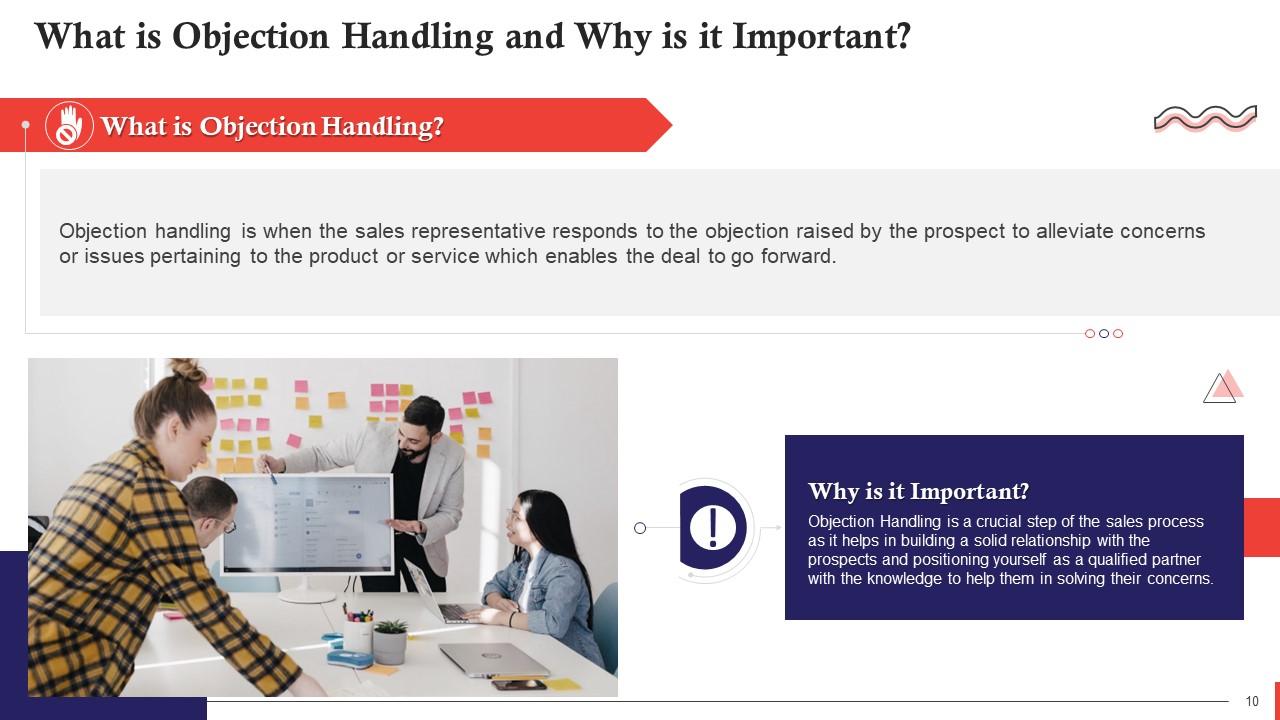
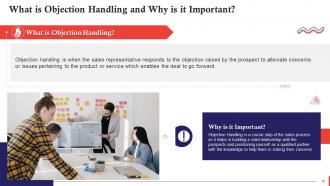
This slide introduces the concept of objection handling and highlights its importance. Objection handling is when the sales representative responds to the objection raised by the prospect to alleviate concerns or issues pertaining to the product or service which helps the deal move forward.
Slide 12
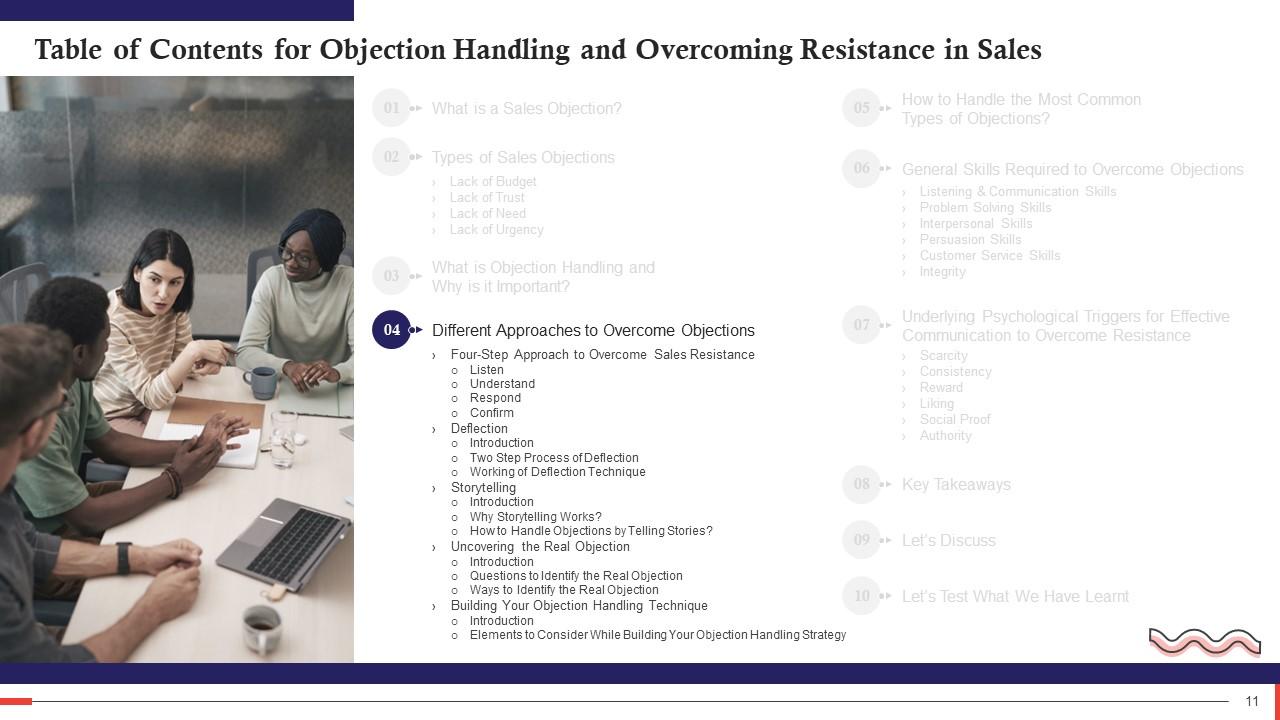
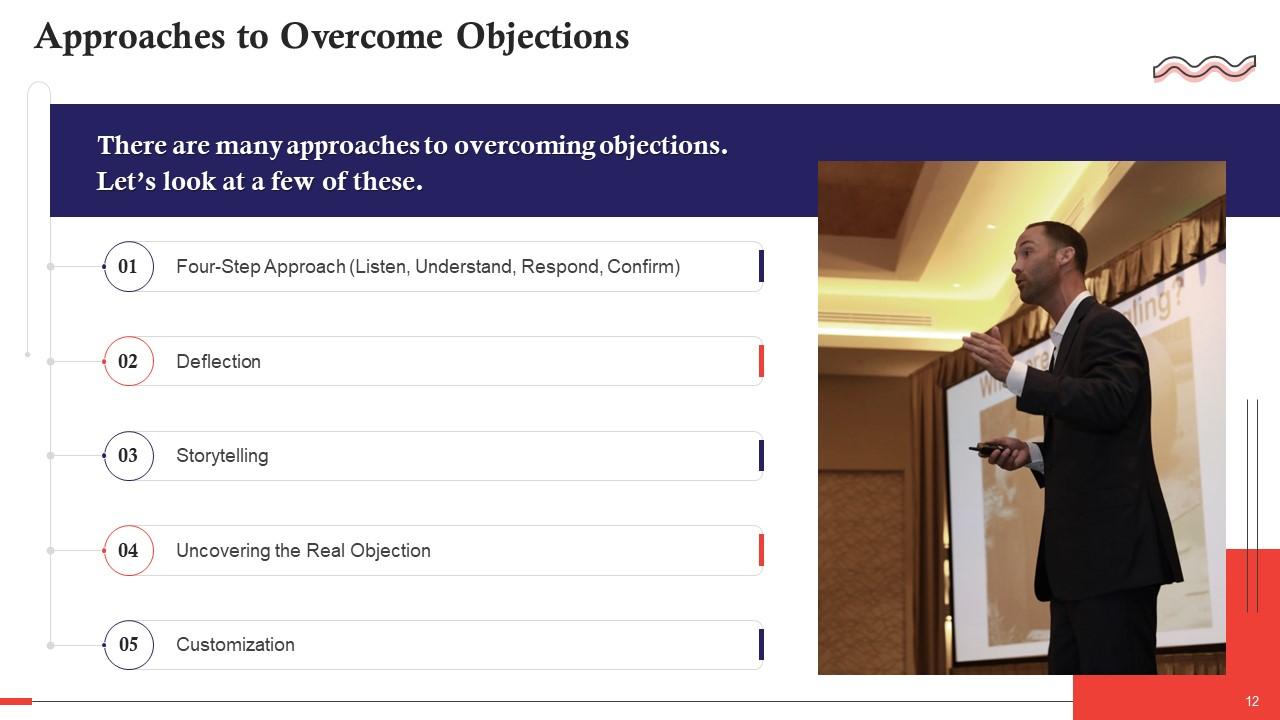
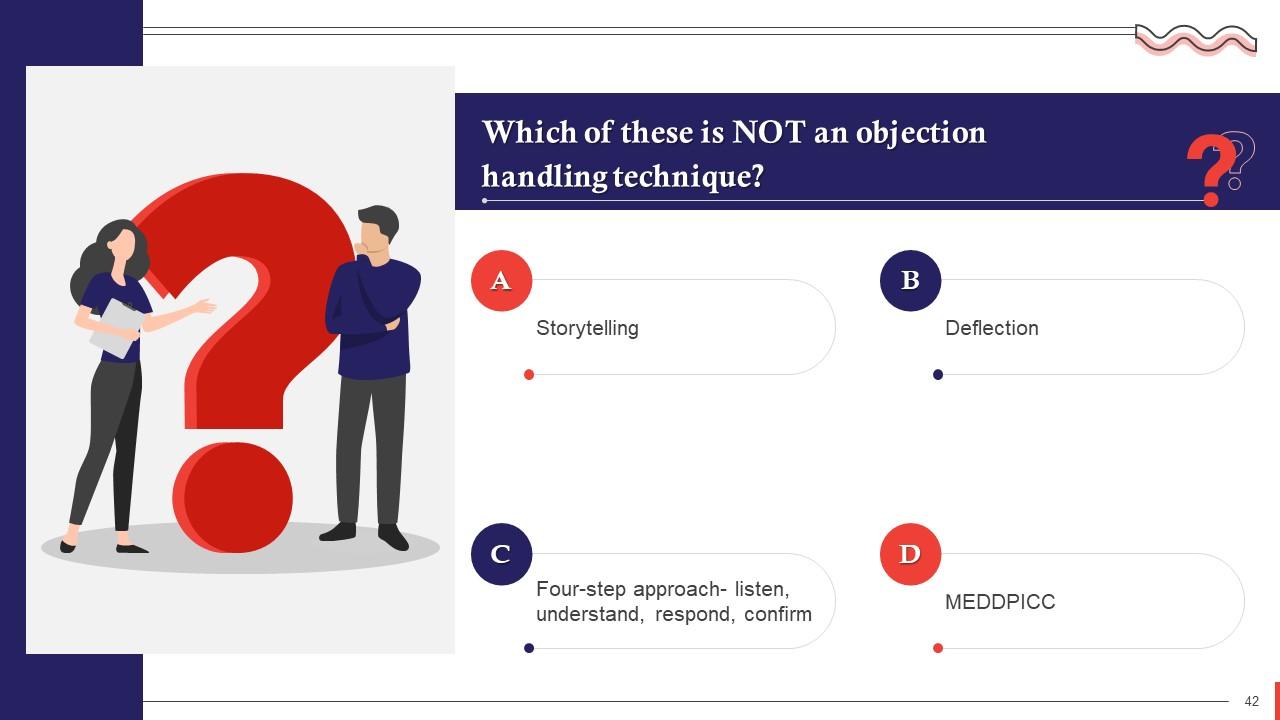
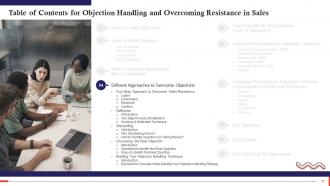
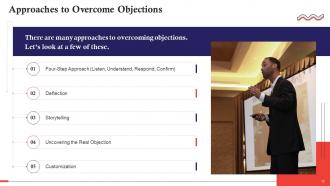
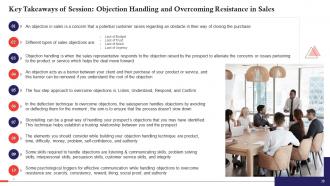
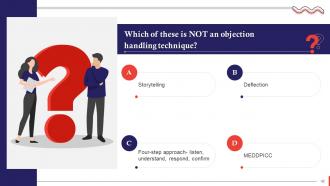
This slide lists approaches to overcoming objections. These are four-step approach (Listen, Understand, Respond, Confirm), Deflection, Storytelling, Uncovering the Real Objection, and Customization.
Slide 13
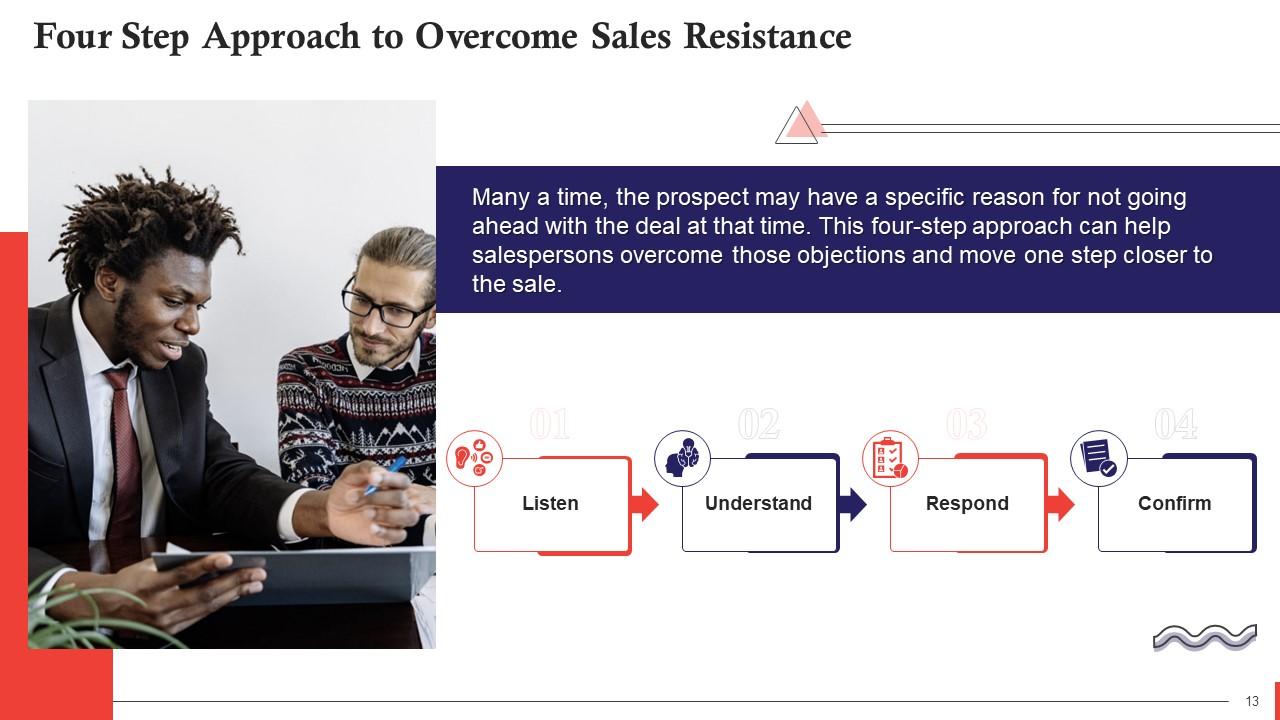
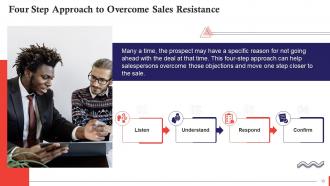
This slide depicts a four-step approach to overcome sales resistance. Many a time, the prospect may have a specific reason for not going ahead with the deal at that time. This four-step approach can help salespersons overcome those objections and move one step closer to the sale. These are listen, understand, respond, and confirm.
Slide 14
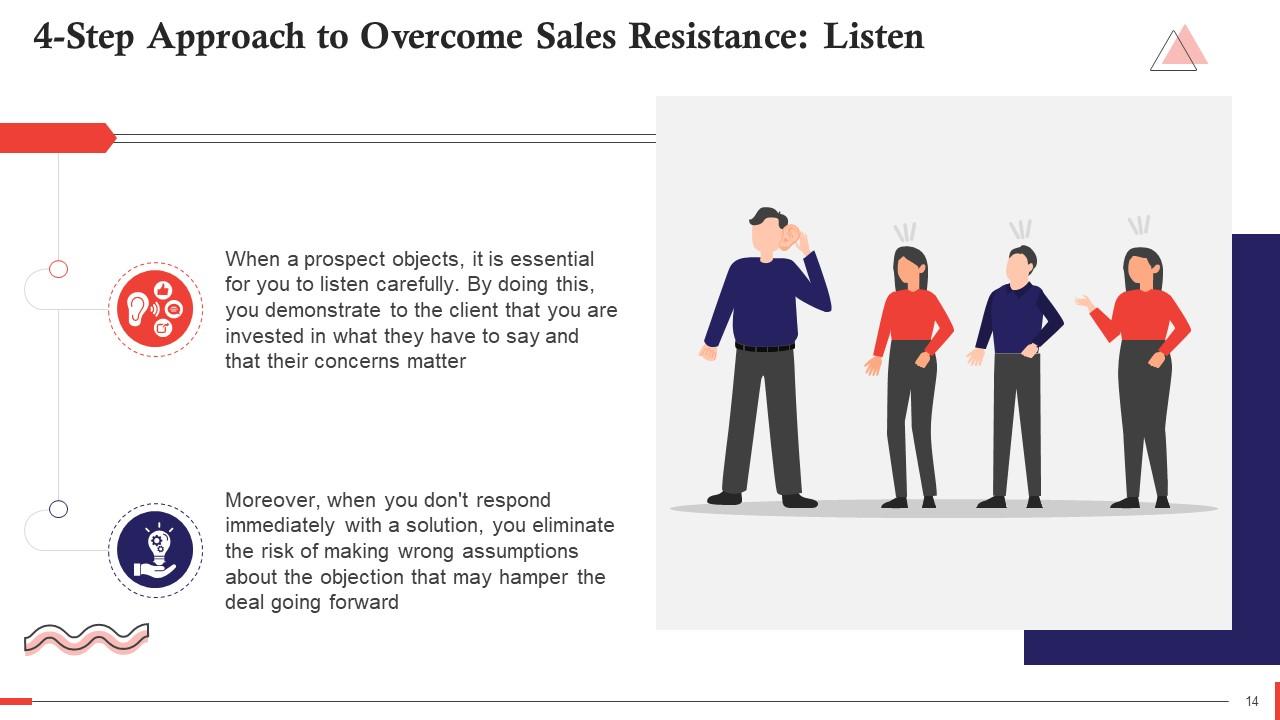
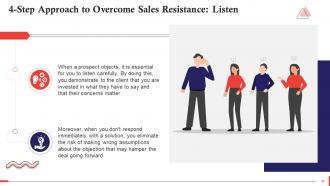
This slide discusses the first step i.e., listen to overcome sales resistance. When a prospect objects, it is essential for you to listen carefully. By doing this, you demonstrate to the client that you are invested in what they have to say and that their concerns matter.
Slide 15
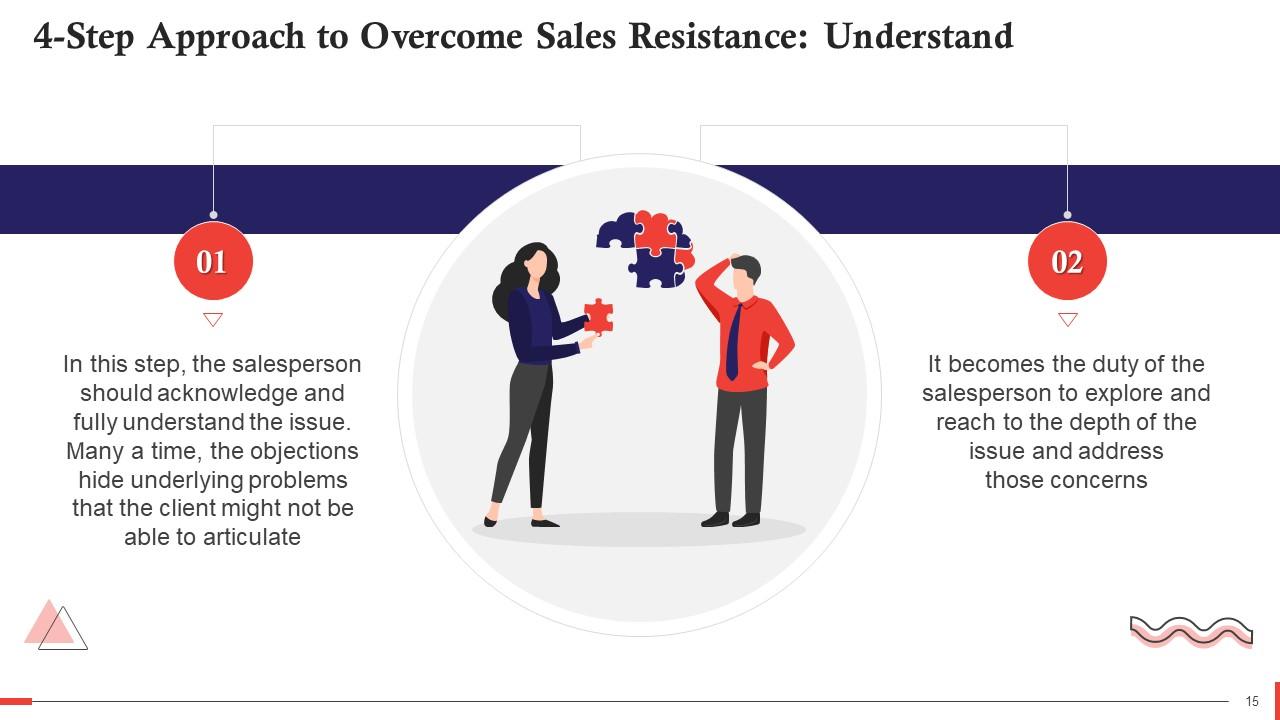
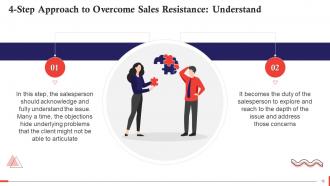
This slide talks about the second step i.e., understand to overcome sales resistance. In this step, the salesperson should acknowledge and fully understand the issue. Many a time, the objections hide underlying problems that the client might not be able to articulate.
Slide 16
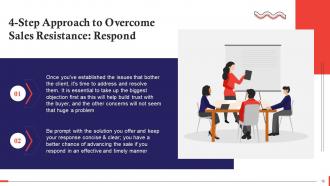
This slide discusses the third step i.e., respond to overcome sales resistance. Once you've established the issues that bother the client, it's time to address and resolve them. It is essential to take up the biggest objection first as this will help build trust with the buyer, and the other concerns might not seem that huge a problem.
Slide 17
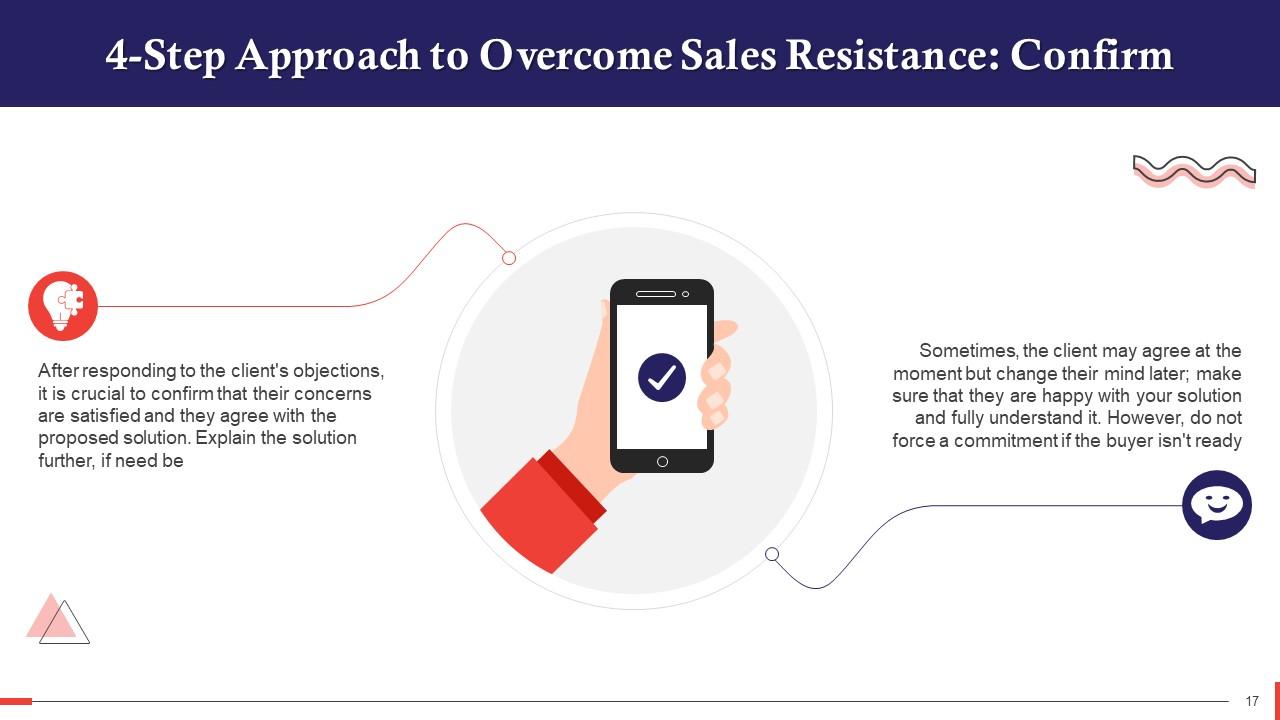
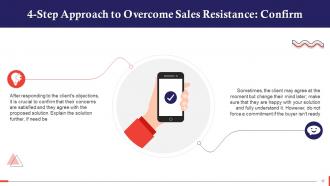
This slide talks about the fourth step i.e., confirm to overcome sales resistance. After responding to the client's objections, it is crucial to confirm that their concerns are satisfied and they agree with the proposed solution. Explain the solution further, if need be.
Slide 18
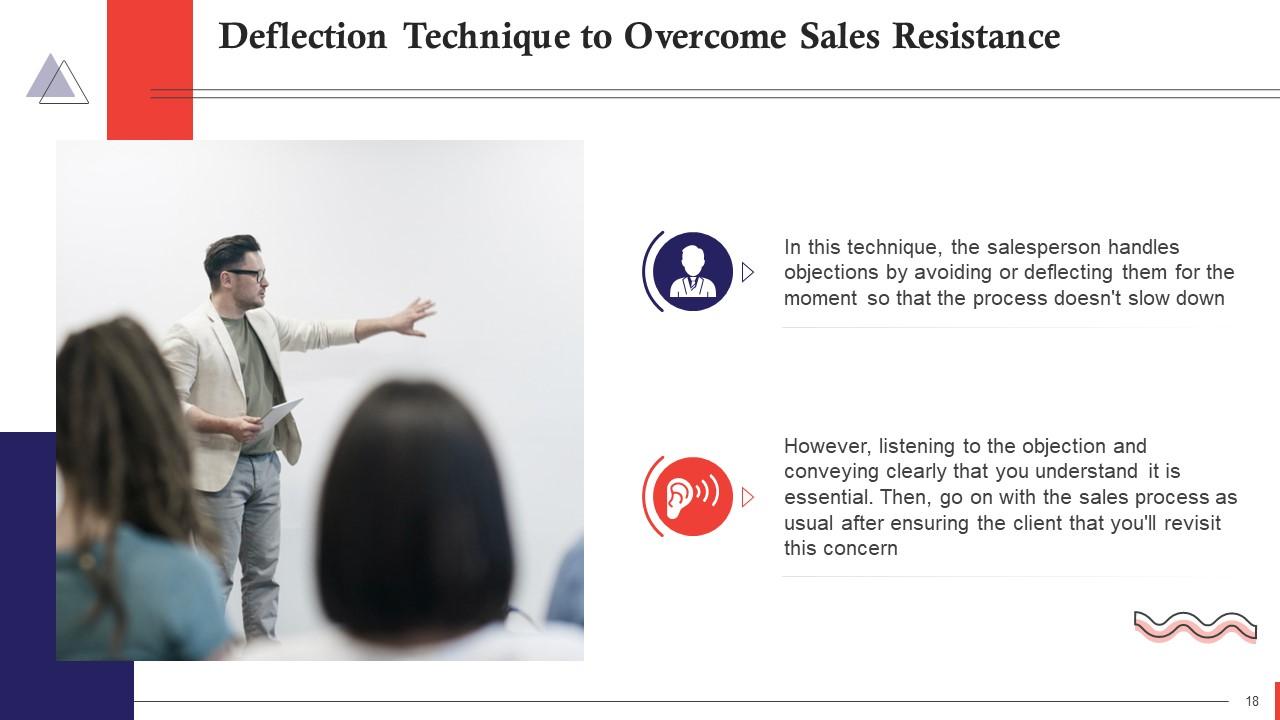
This slide introduces the deflection technique to handle objections. In this technique, the salesperson handles objections by avoiding or deflecting these for the moment so that the process doesn't slow down.
Slide 19
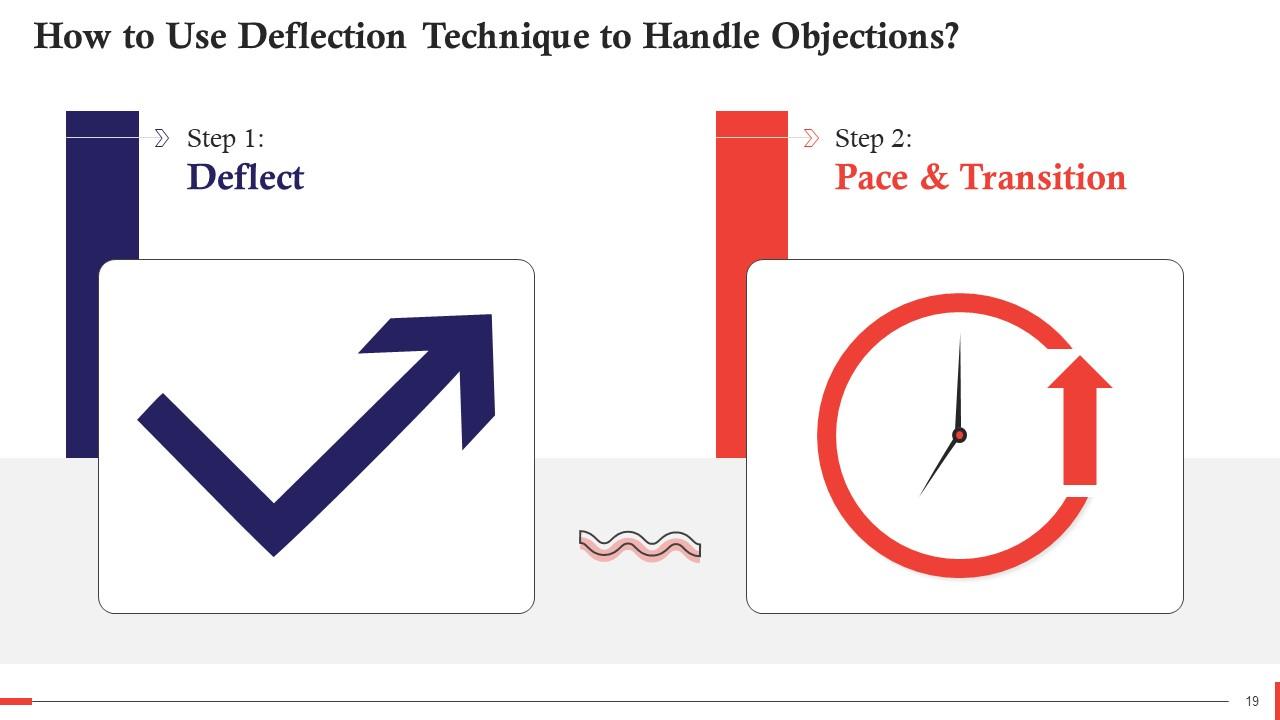
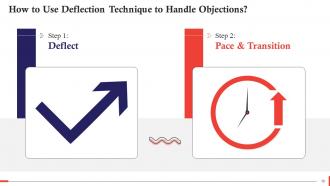
This slide depicts a two-step process of deflection technique to handle objections. The first step is Deflect i.e., deflecting the objections and moving on with the sales process, the second step is Pace & Transition i.e., showing enthusiasm about your product or service and building strong rapport by leading into your presentation.
Instructor’s Notes:
- Deflect: When your client raises an objection, the first step is to deflect it by asking other questions that will lead them to believe that the product you’re offering is valuable to them. You can do this by saying, “ I understand what you’re saying, but do you like the idea? Is it making sense to you?”. The answer to such questions in most cases is “yes,” which allows you to get an idea about their buying intent, which can help you determine your next step
- Pace & Transition: After your client agrees that your product is great and valuable to them, you transition into a slightly more enthusiastic tone and outline the product's major benefits. By pacing into the product's distinguishing features and leading the presentation, you can build a strong rapport with the client. For example, "Yes exactly, it is a great product (slightly enthusiastic); In fact, the beauty of the product…"
Slide 20
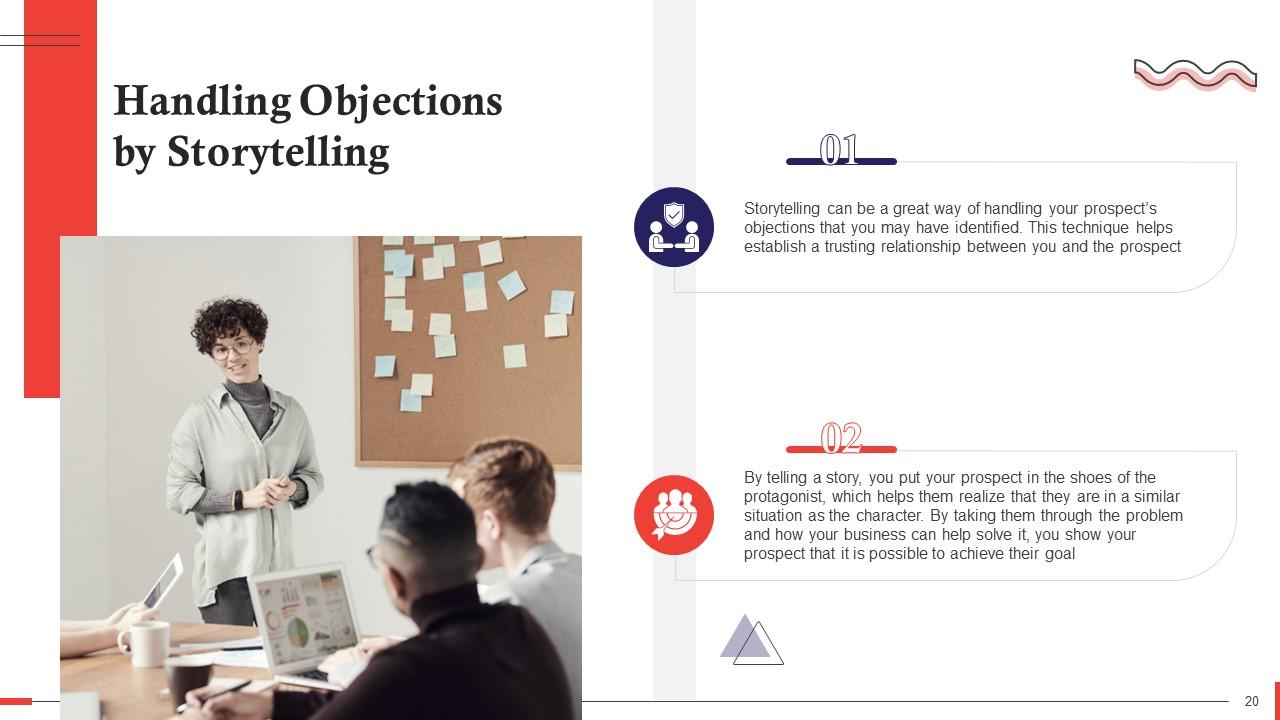
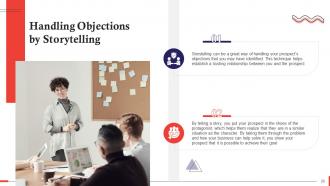
This slide discusses the technique of storytelling to handle objections. Storytelling can be a great way of handling your prospect’s objections that you may have identified. This technique helps establish a trusting relationship between you and the prospect.
Slide 21
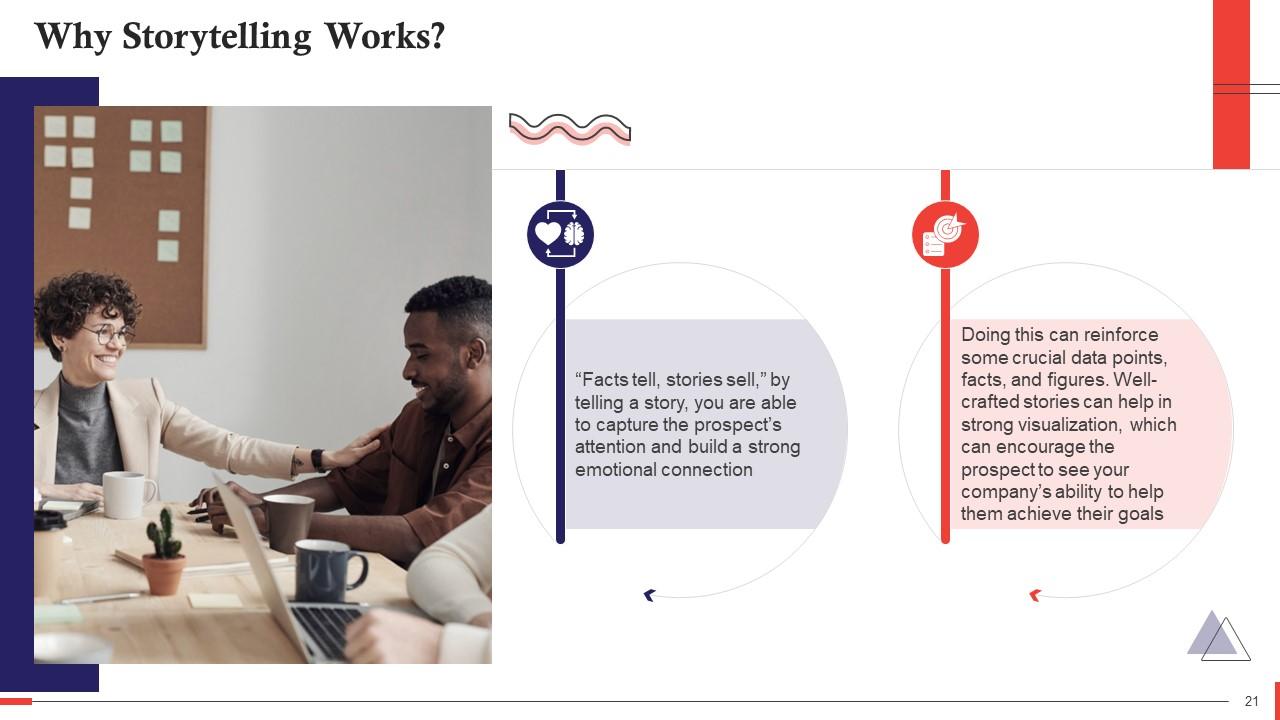
This slide explains how and why storytelling works in overcoming resistance and handling objections. By telling a story, you are able to capture the prospect’s attention and build a strong emotional connection. Doing this can reinforce some crucial data points, facts, and numbers.
Slide 22
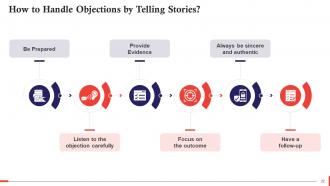
This slide highlights how a salesperson can use the storytelling technique to handle objections. There are steps that a salesperson can follow: Be prepared, listen to the objection carefully, provide evidence, focus on the outcome, be sincere & authentic, and have a follow-up.
Instructor’s Notes:
- Be prepared: The stories used to overcome sales objections must be carefully crafted and must contain crucial information. Building a collection of success stories that address common concerns is essential
- Listen to the objection carefully: The salesperson must listen to the objection carefully and be able to interpret the concern. They should analyze whether it's a price objection or an issue with trust or brand assurance, whether the prospects don't fully understand the product's value, or are there any quality concerns that need to be addressed. This understanding of these concerns will help the salesperson choose a story carefully
- Provide evidence: While crafting their stories, sales reps must include key facts and figures to help their client overcome objections. It is important to incorporate some crucial data points in the story to emphasize the message
- Focus on the outcome: A salesperson should begin with a problem a client faced and how their company helped in overcoming it. Facts and figures are vital to the story, but a success story should also focus on the outcome. The objective of the story should be to address the prospects' concerns along with answering all their questions
- Always be sincere & authentic: A salesperson should be honest with the buyer. They should not make up narratives just to give vital data or facts. By being sincere and authentic, trust and confidence can be established between the salesperson and the buyer
- Have a follow-up: Lastly, it is essential to ask the buyer whether all their concerns have been satisfied or not. Sales reps should ensure that no other issue is bothering their client and may even schedule a follow-up meeting
Slide 23
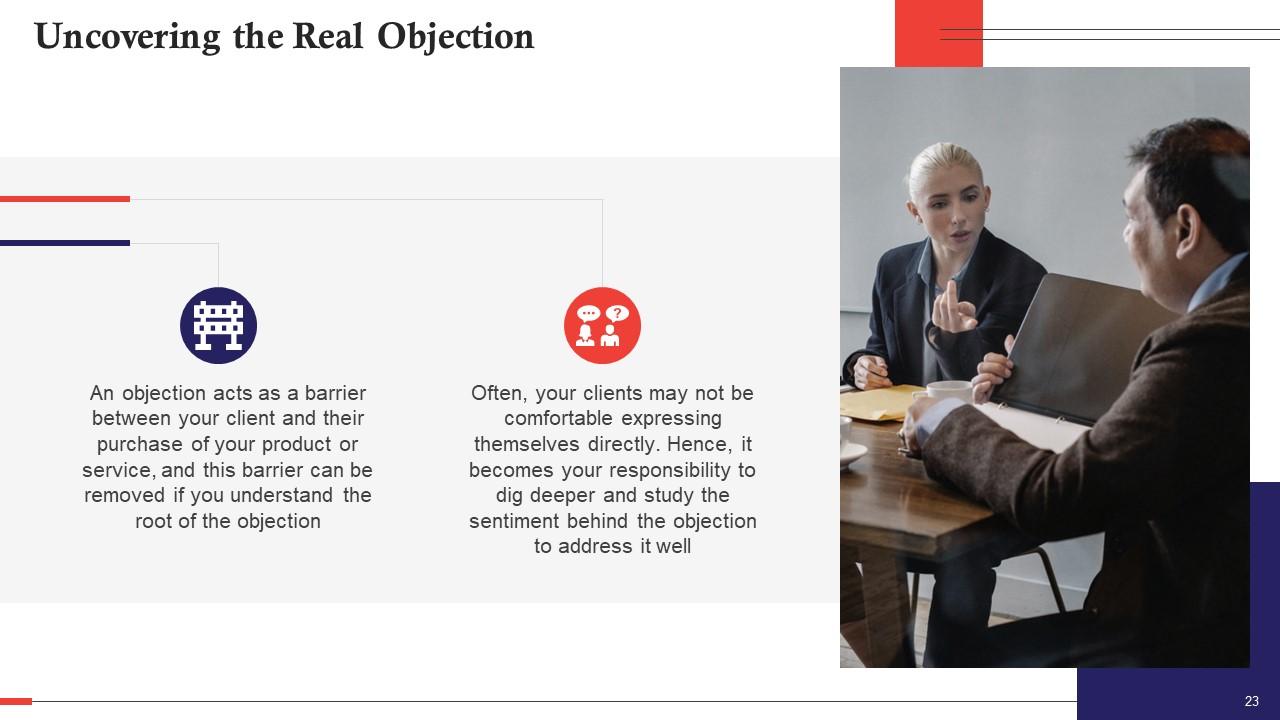
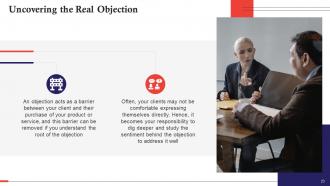
This slide talks about uncovering the real objection. Often, your clients may not be comfortable expressing themselves directly. Hence, it becomes your responsibility to dig deeper and explore the objection to identify the root problem
Slide 24
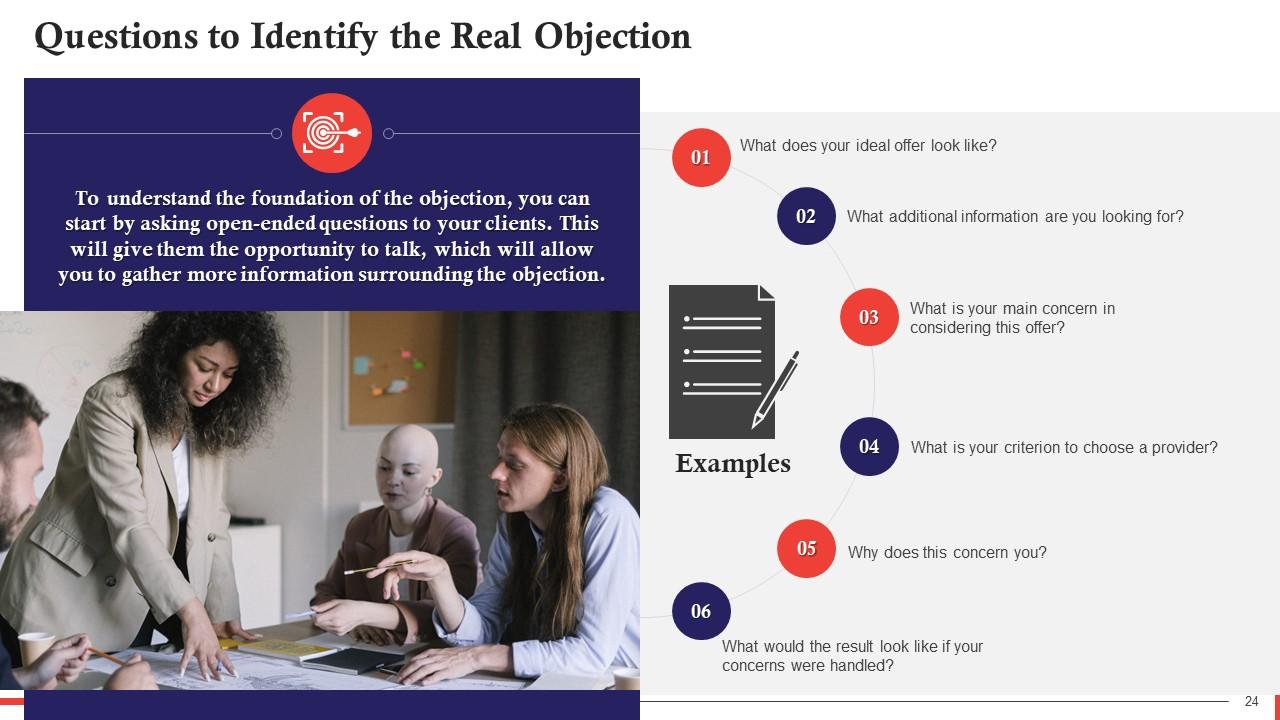
This slide shows some examples of questions to uncover your client’s real objections. To understand the foundation of the objection, you can start by asking open-ended questions to your clients. This will give them the opportunity to talk, which will allow you to gather more information on the cause of the objection.
Slide 25
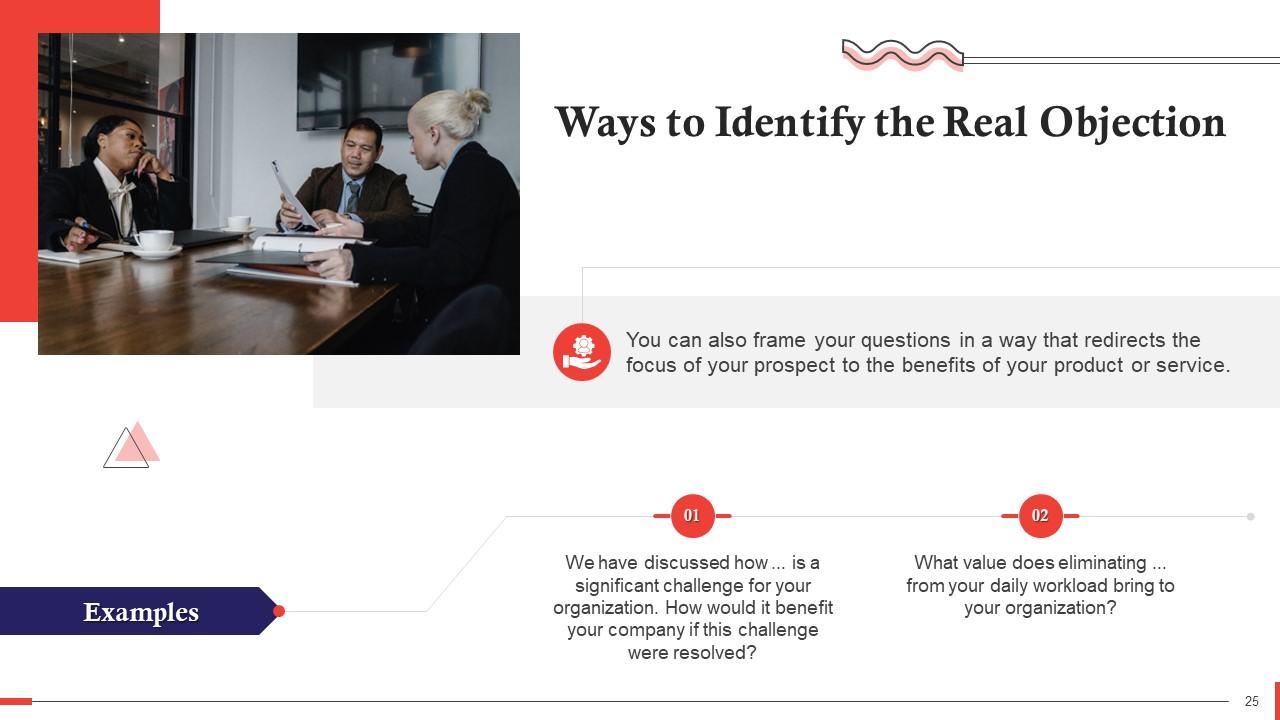
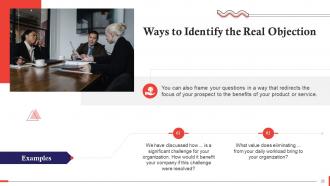
This slide shows some examples of questions to uncover your client’s real objections. To understand the foundation of the objection, you can frame your questions in a way that redirects the focus of your prospect to the benefits of your product or service.
Slide 26
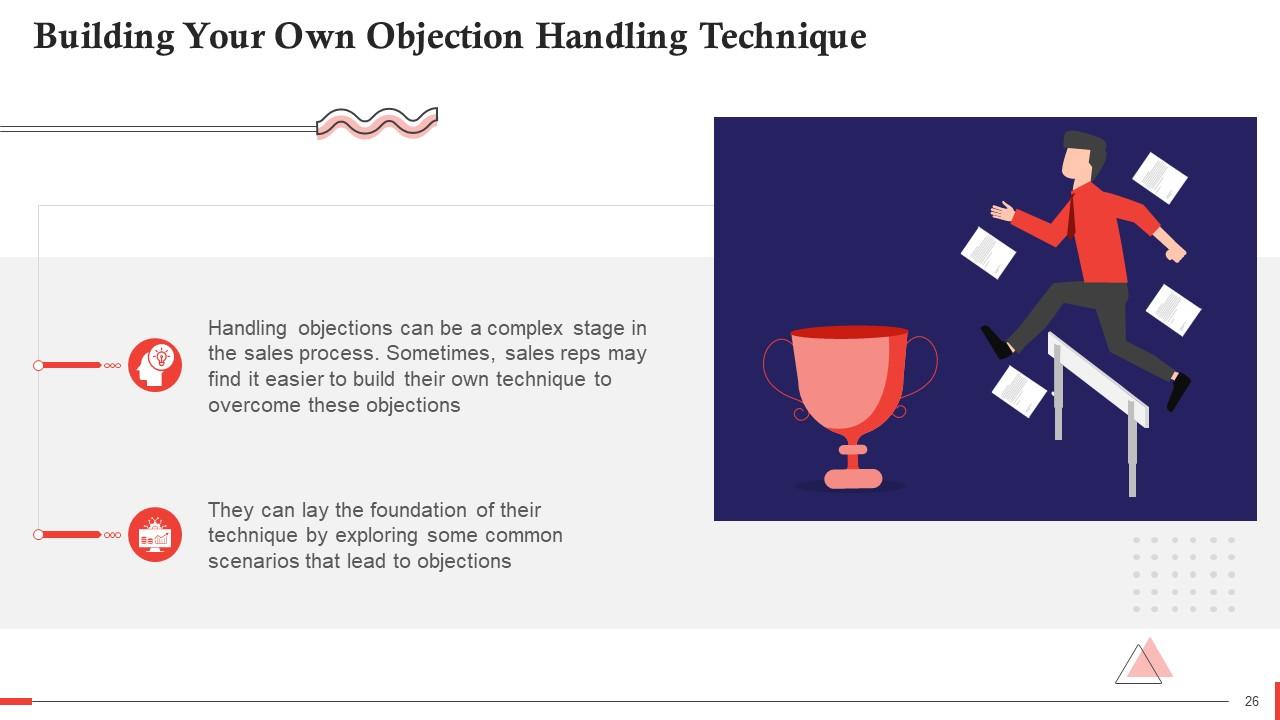
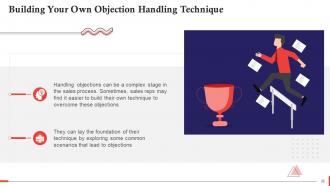
This slide introduces the concept of building your own strategy to overcome objections. Handling objections can be a complex stage in the sales process. Sometimes, sales reps may find it easier to build their own technique to satisfy these objections.
Slide 27
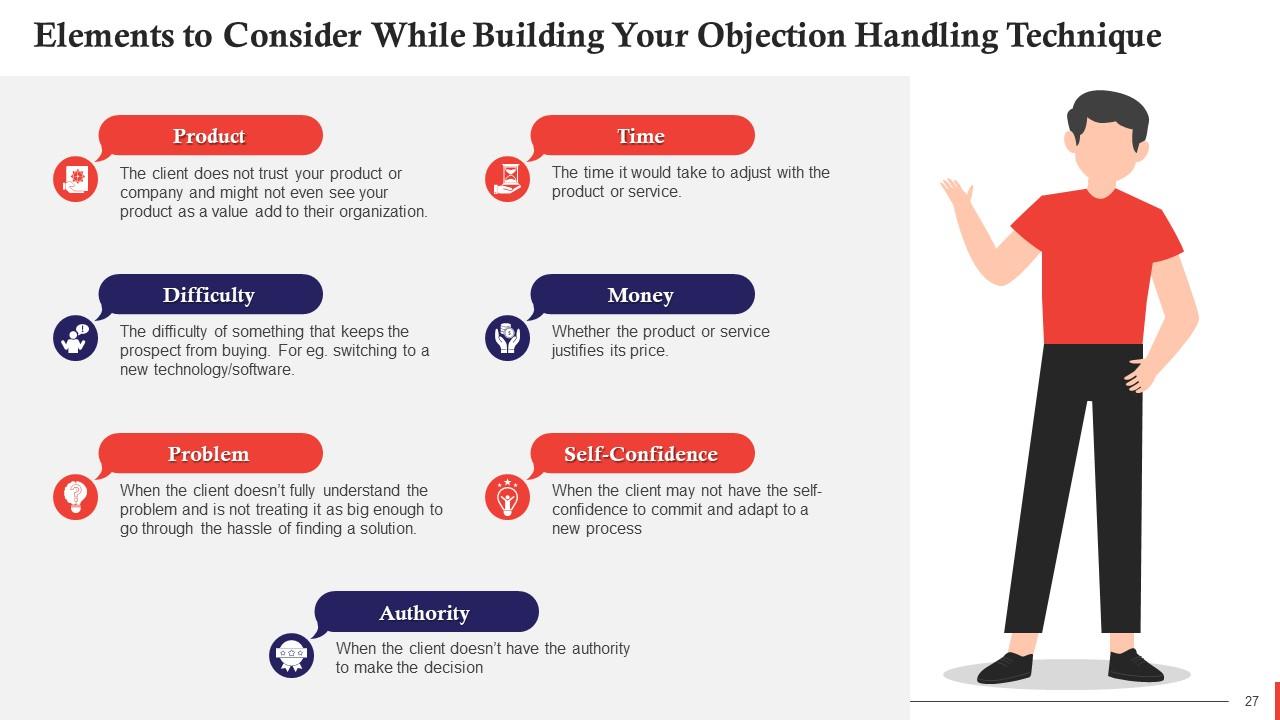
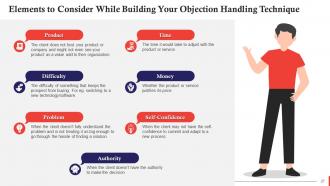
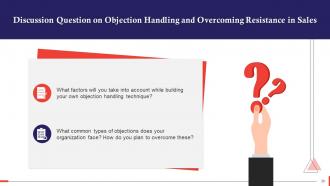
This slide highlights the elements you should consider when building your objection handling technique. These elements are product, time, difficulty, money, problem, self-confidence, and authority.
Slide 29
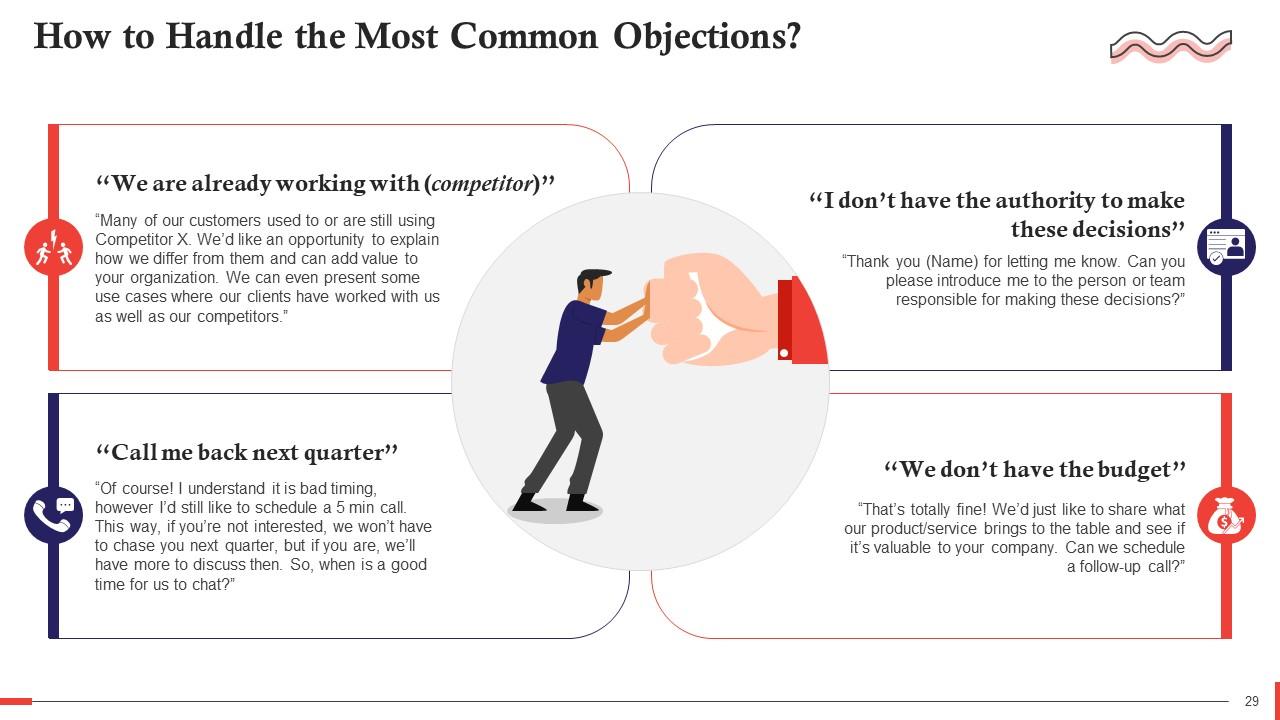
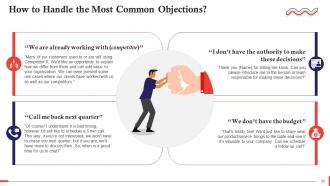
This slide showcases some of the most common objections and ways to handle them. These objections usually relate to budget, decision-making authority, working with a competitor, or just trying to brush off the sales rep.
Slide 30
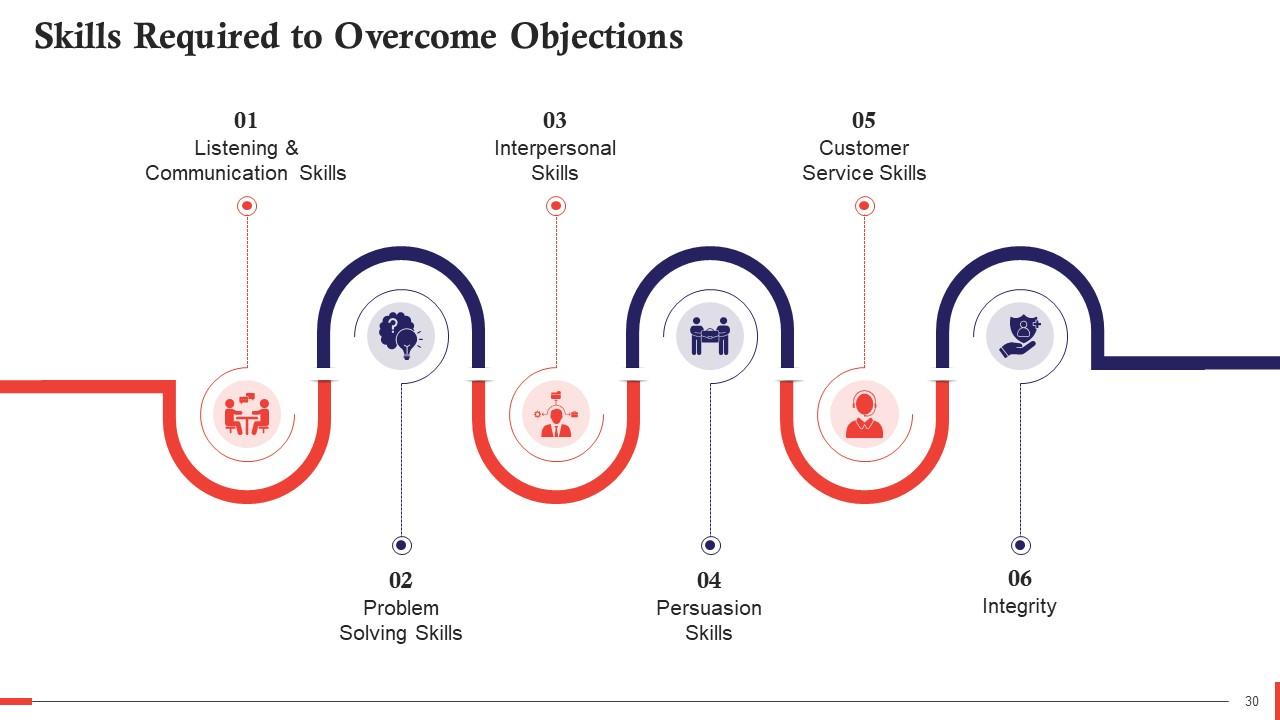
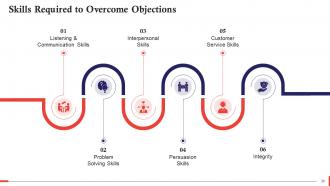
This slide highlights the general skills required to handle objections. These are listening & communicating skills, problem solving skills, interpersonal skills, persuasion skills, customer service skills, and integrity.
Slide 31
This slide discusses the importance of listening and communication for objection handling. A successful sales relationship involves the salesperson being able to help the prospect identify their organization’s needs. Hence, it becomes essential for salespeople to practice active listening and pay close attention to what the prospect wants.
Slide 32
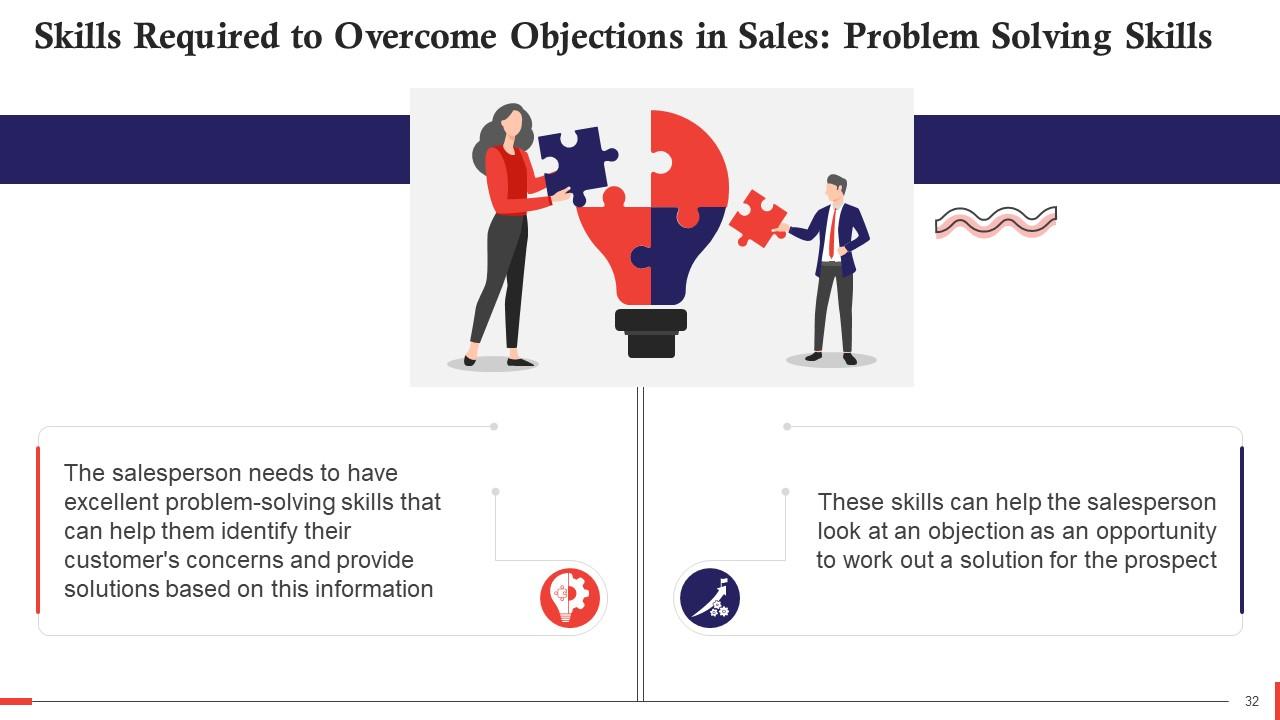
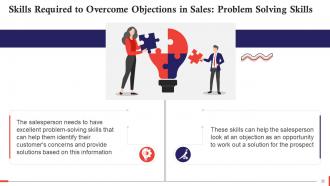
This slide talks about the importance of problem-solving skills for objection handling. The salesperson needs to have excellent problem-solving skills that can help them identify their customer's concerns and provide solutions
Slide 33
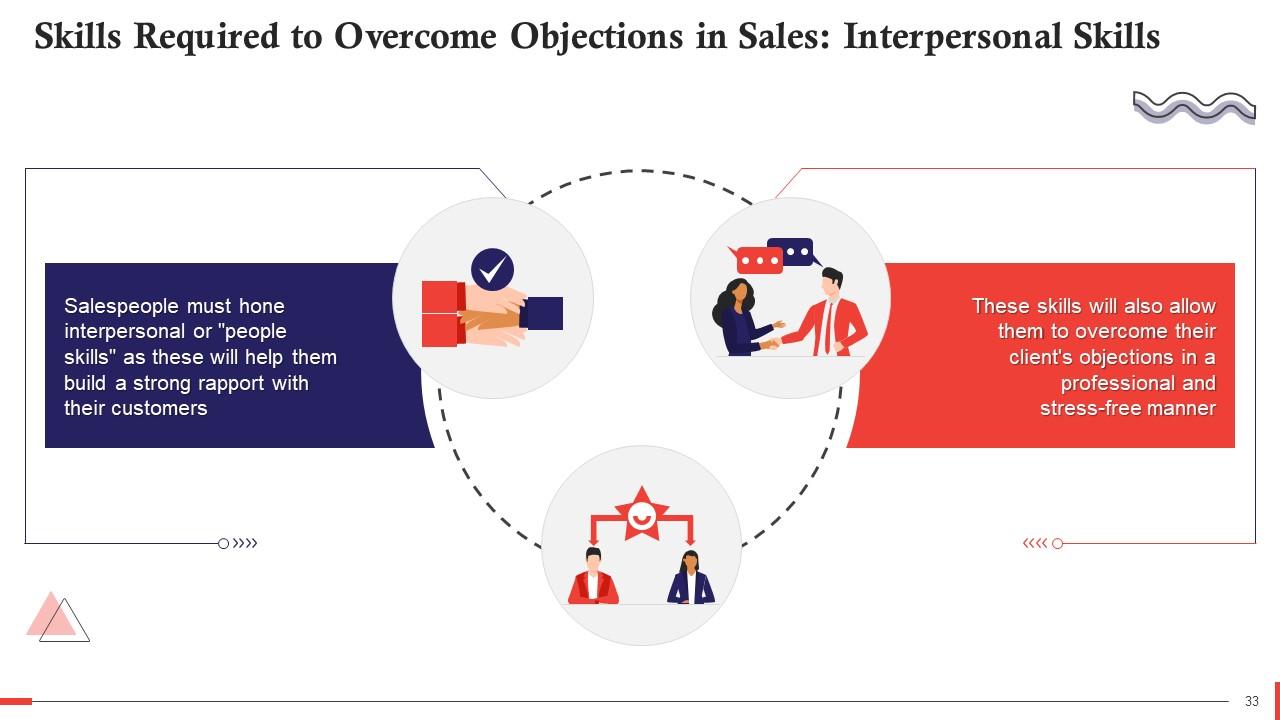
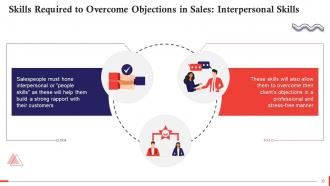
This slide discusses the importance of interpersonal skills for objection handling. Salespeople must hone interpersonal or "people skills" as these will help them build a strong rapport with their customers.
Slide 34
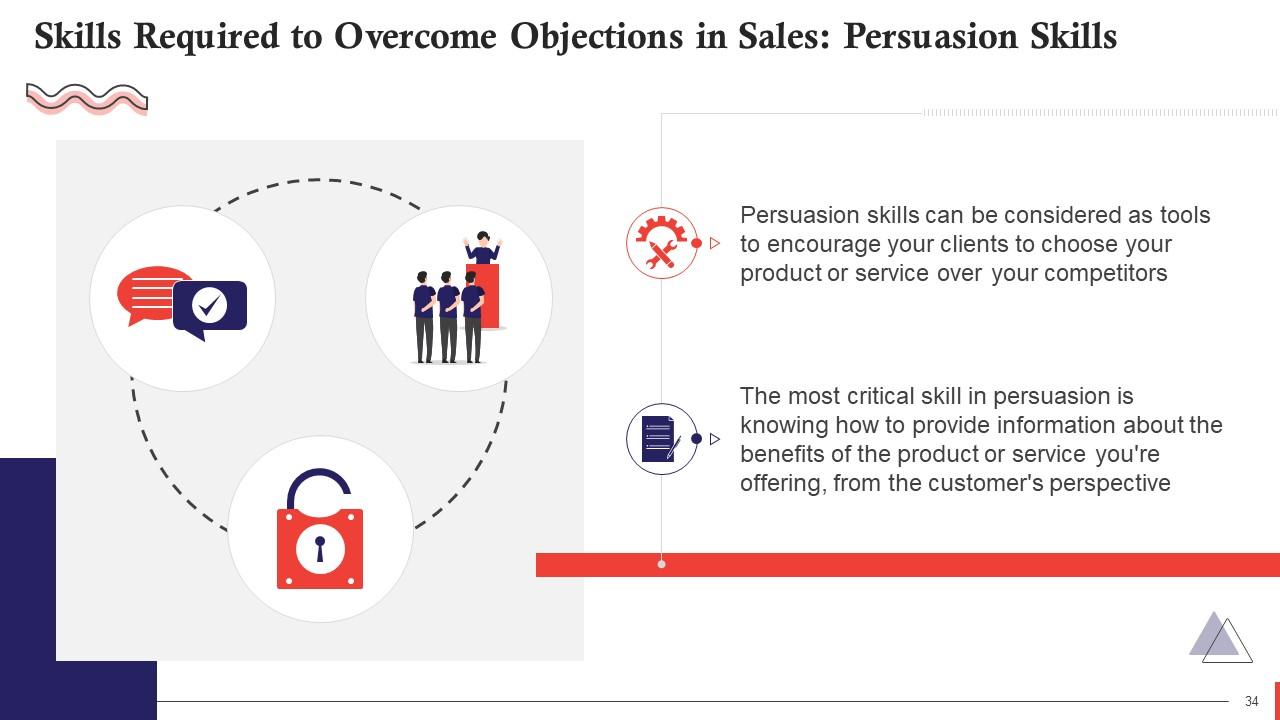
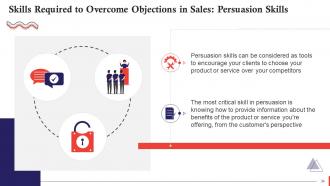
This slide talks about the importance of persuasion skills for objection handling. Persuasion skills can be considered as tools to encourage your clients to choose your product or service over your competitors’ value offerings
Slide 35
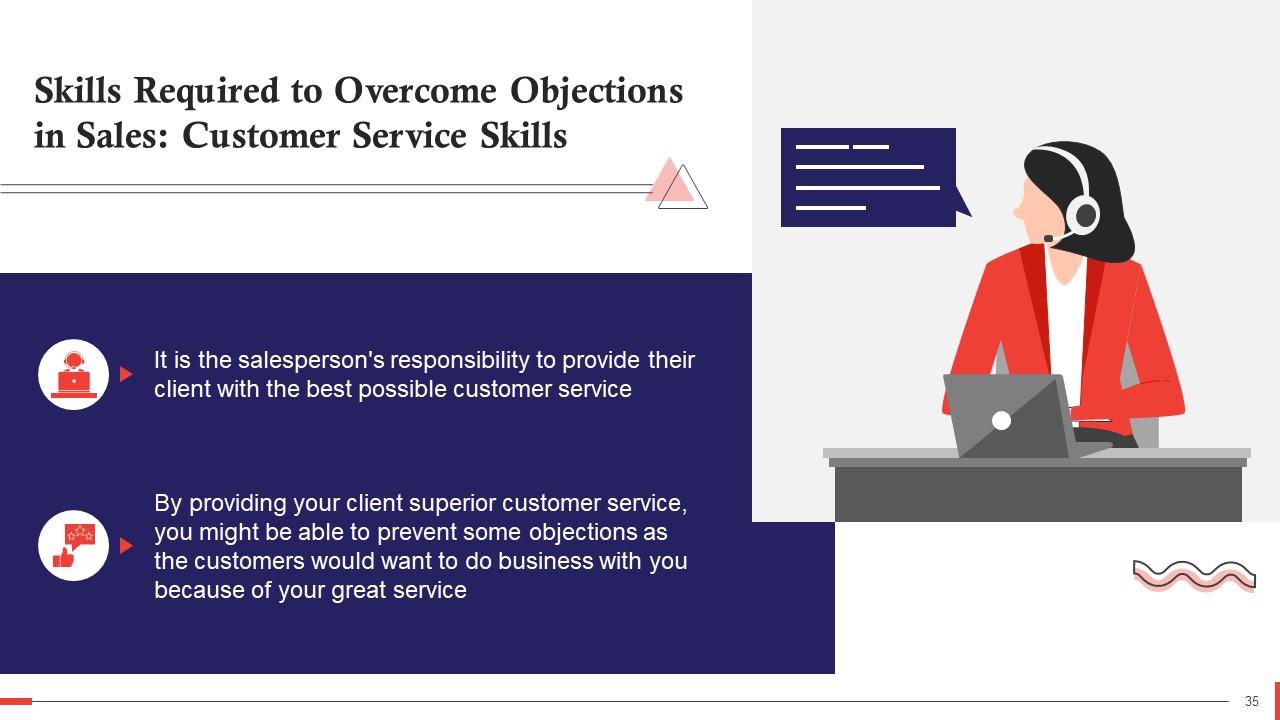
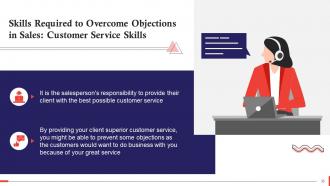
This slide discusses the importance of customer service skills for objection handling. It is the salesperson's responsibility to provide their client with the best possible customer service. With this, you might be able to prevent some objections as the customers would want to do business with you because of your great service.
Slide 36
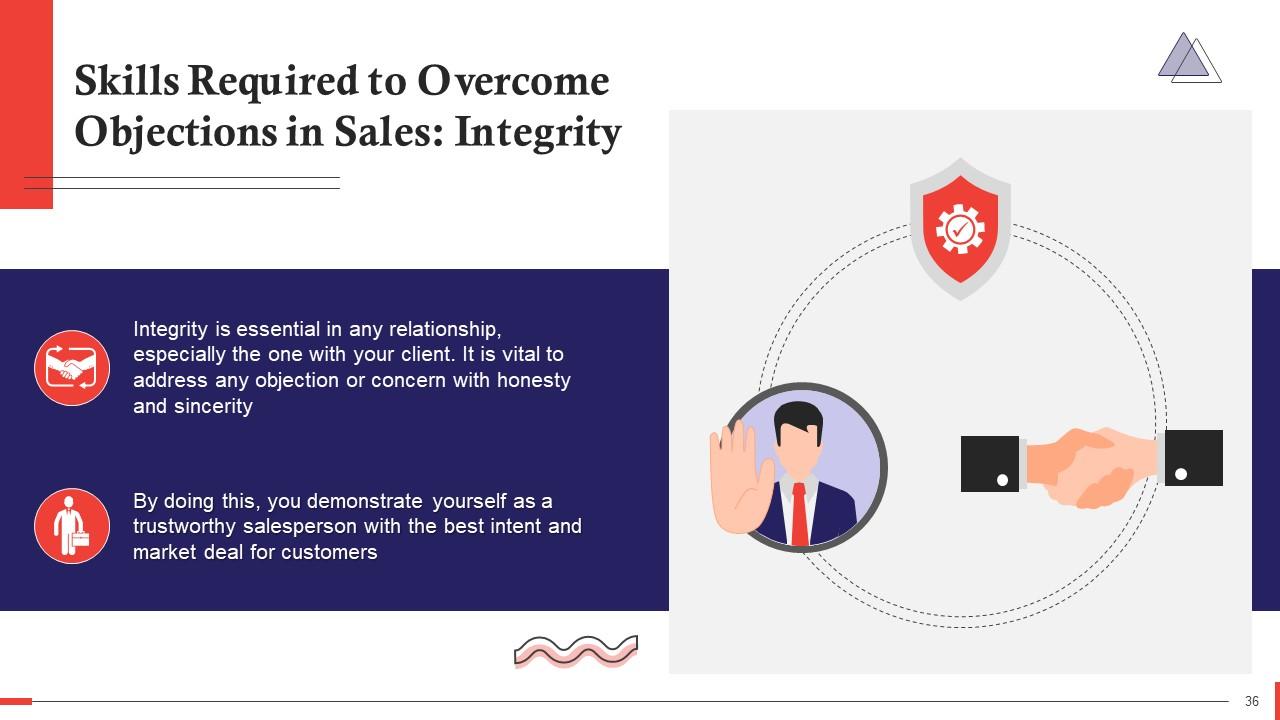
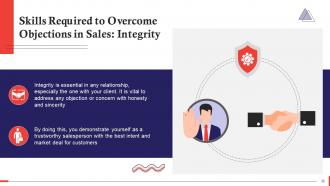
This slide talks about the importance of integrity for objection handling. Integrity is essential in any relationship, especially the one with your client. It is vital to address any objection or concern with honesty and sincerity.
Slide 37
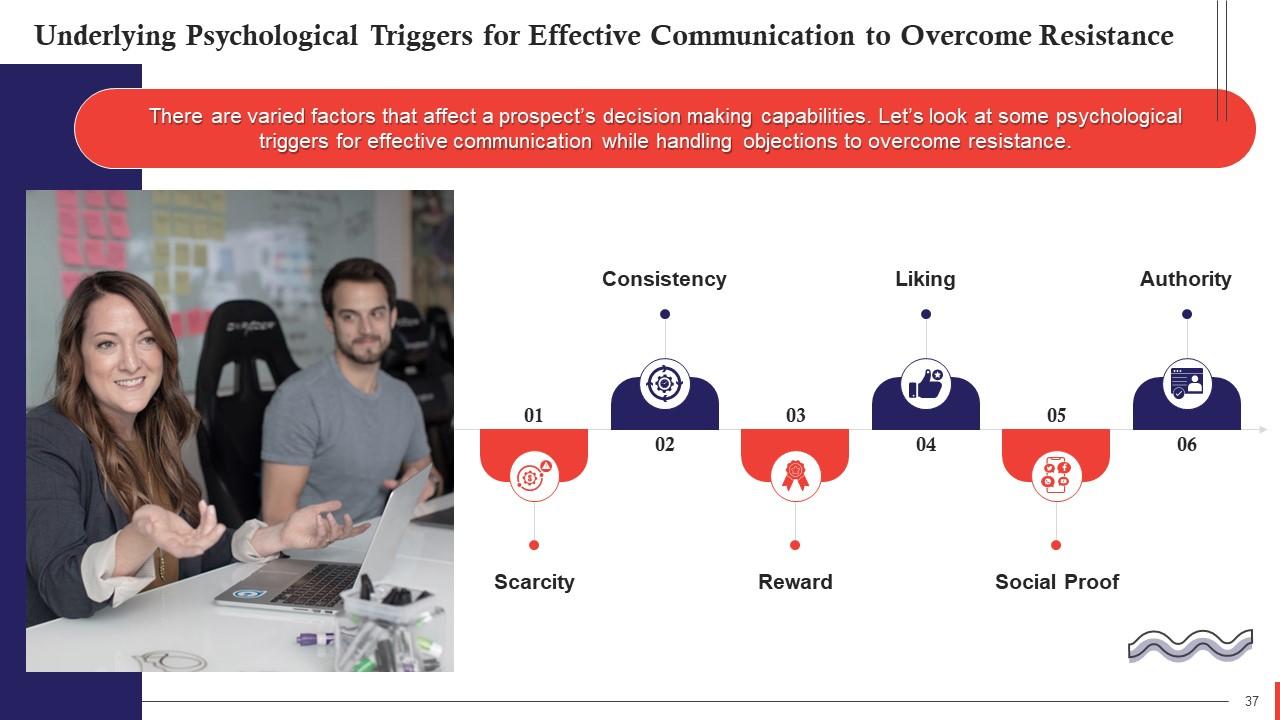
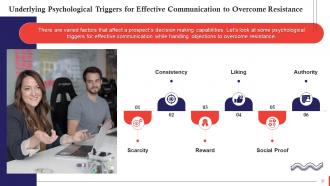
This slide highlights psychological triggers for effective communication while handling objections to overcome resistance. These are scarcity, consistency, reward, liking, social proof, and authority.
Instructor’s Notes:
- Scarcity: Displaying that your product or service is scarce and might not be available for longer unless bought now can trigger your prospect’s cognitive bias and help you in overcoming their resistance
- Consistency: Consistency is a quiet force that works subconsciously. The aim of consistency is to ensure small commitments that lead to bigger ones. For example, let’s say you’re selling a mattress, and it takes a minimum of 30 days for a user to get used to it and be able to compare it with other mattresses. So you offer a 100 day free trial to the customer, and they agree to give it a try since it is risk free and can return it if they don’t like it. Therefore, making a small commitment of trying it which most likely may lead to the purchase which is a bigger commitment
- Reward: Offering your prospect an incentive or reward such as a discount can help overcome resistance. This works because they get a sense that they will be able to get a greater value for a lower price and be able to accomplish their goals
- Liking: Likeability goes a long way in overcoming sales resistance, as when you like someone, you’re more inclined towards trusting them. This can help a salesperson in satisfying their client’s objections
- Social Proof: Social proof acts as an important factor in decision-making. By providing testimonials and proof of great service, you can encourage your prospects to go through with the sale and overcome any objections that they may raise
- Authority: Displaying confidence in your product or service and a sense of authority can persuade your client into doing business with you
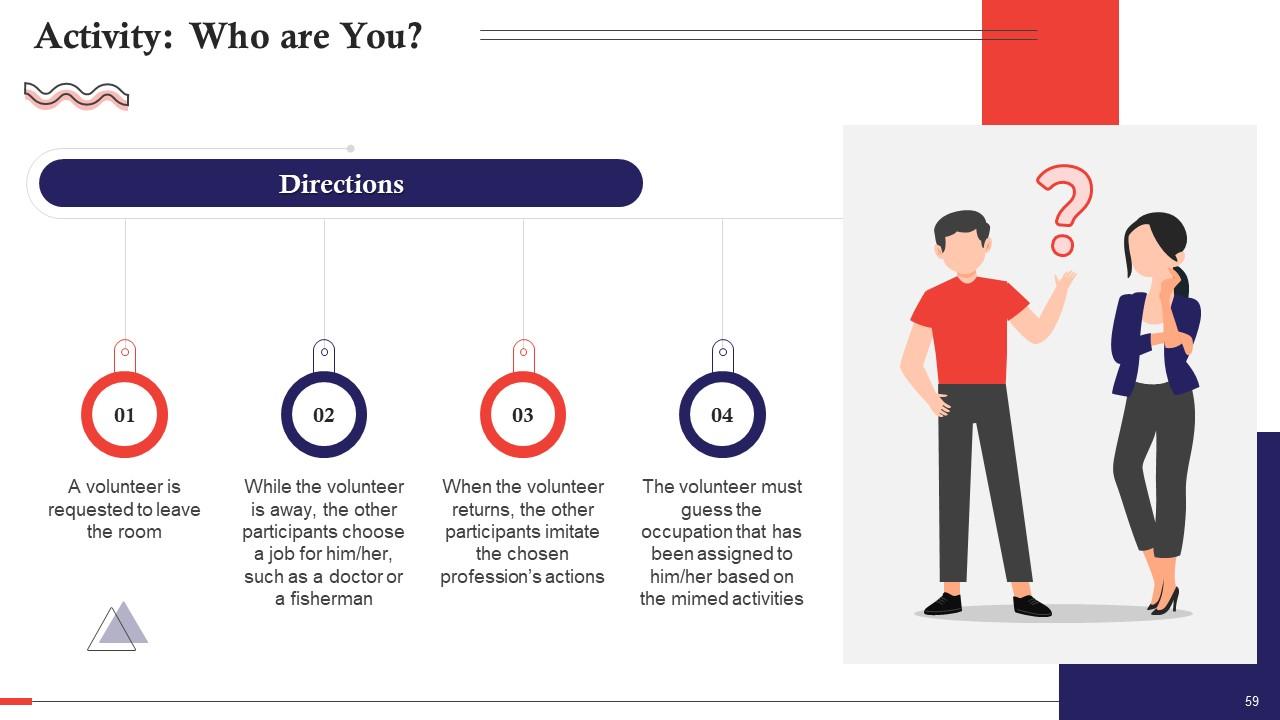
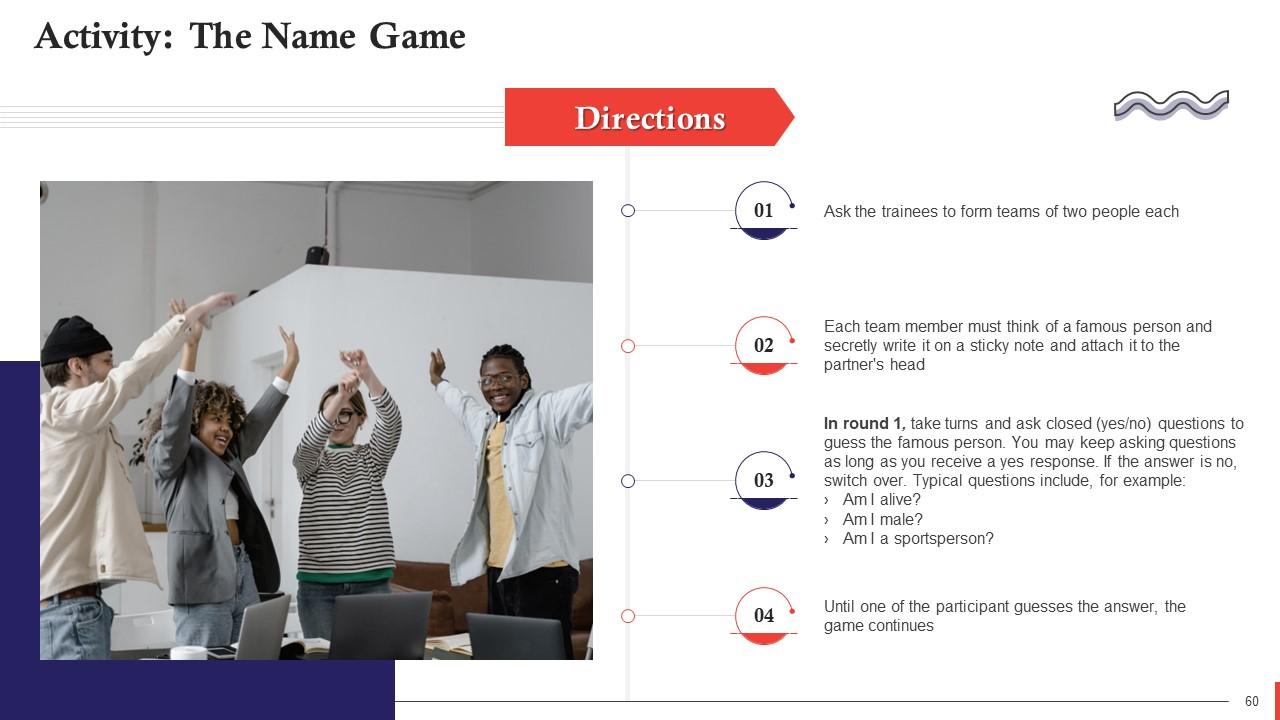
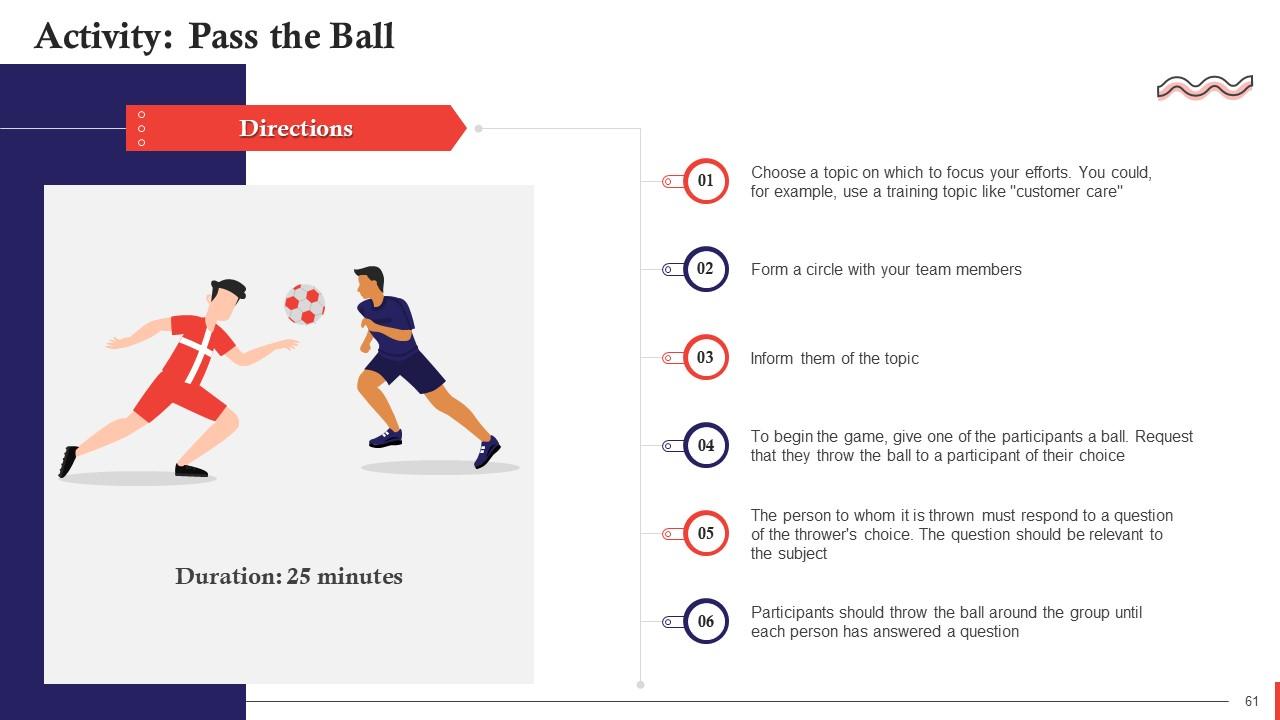
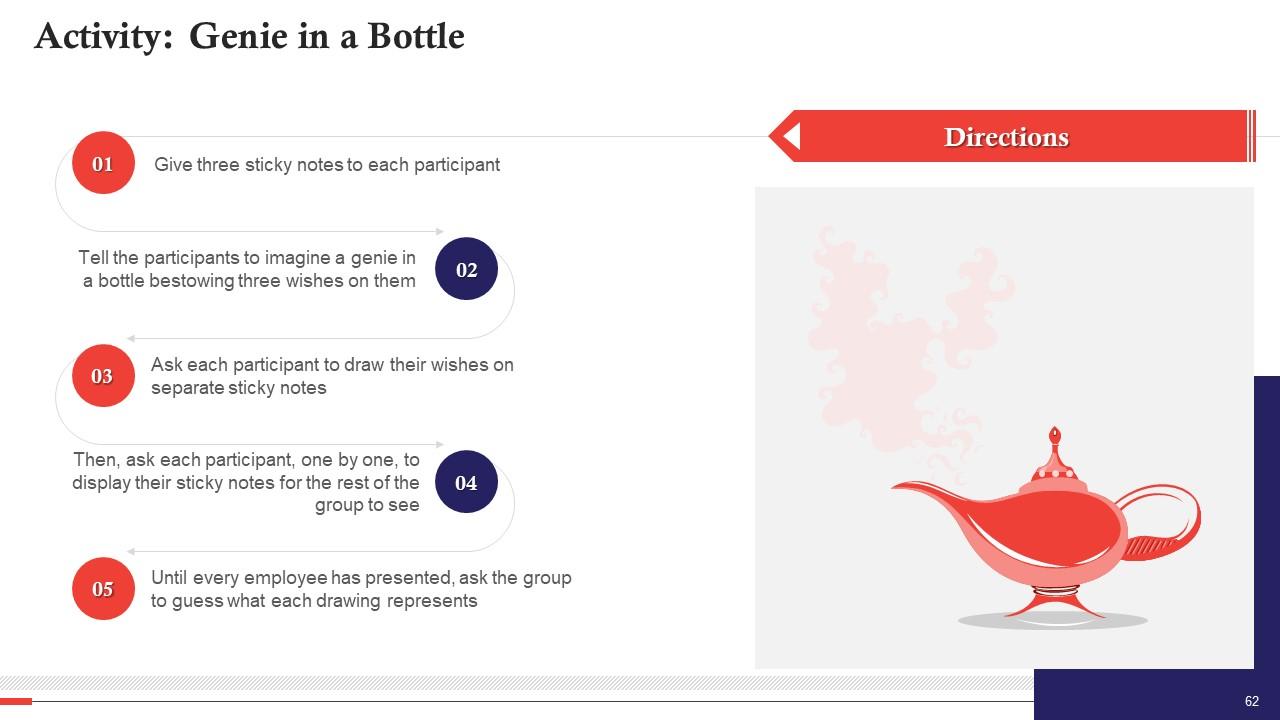
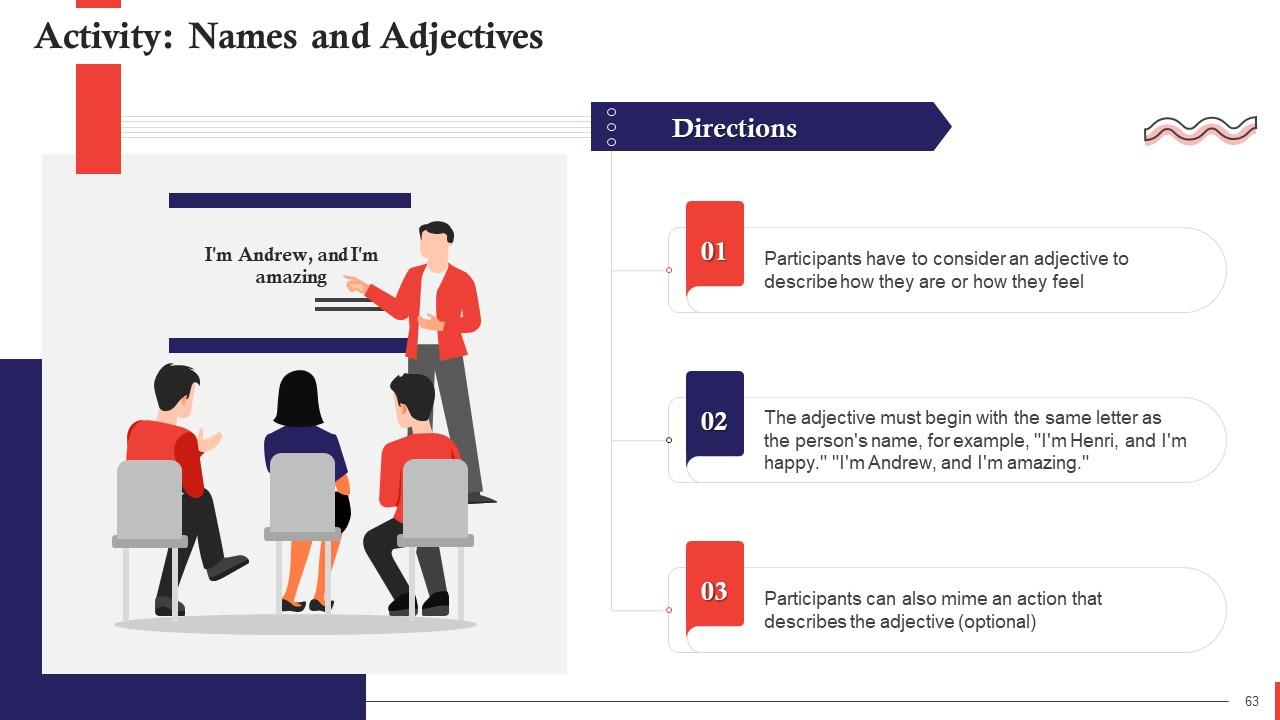
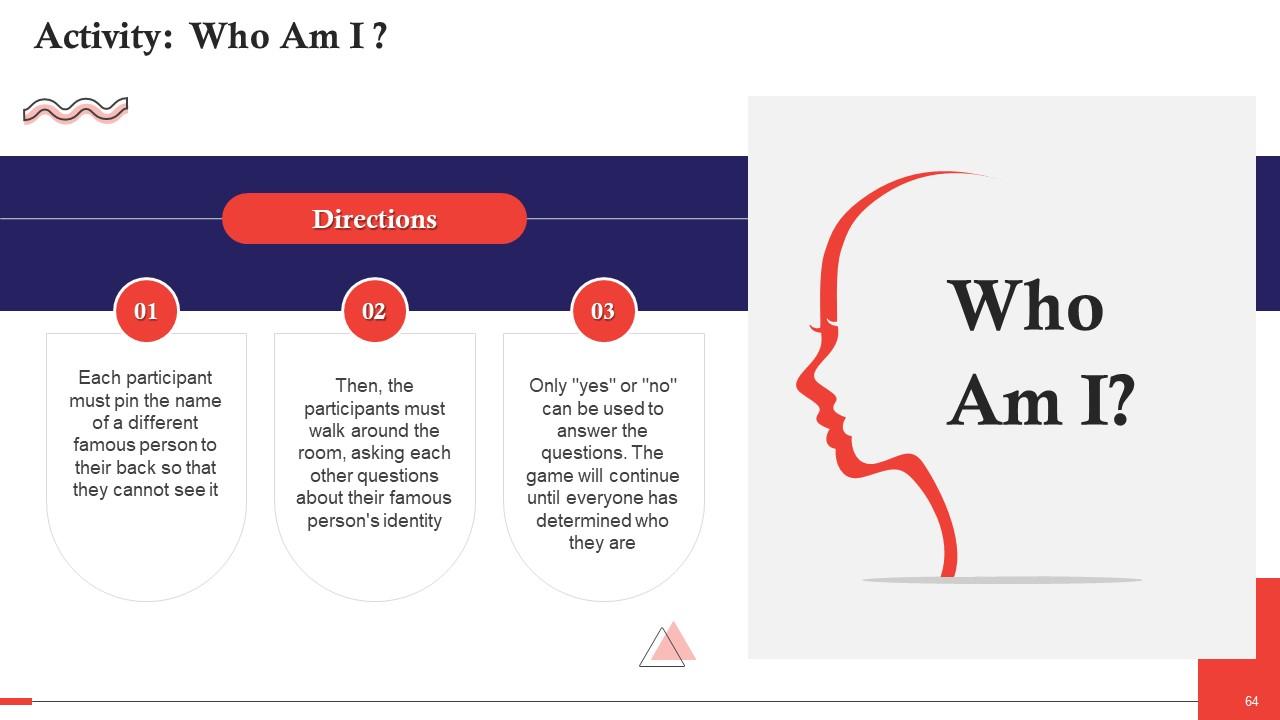
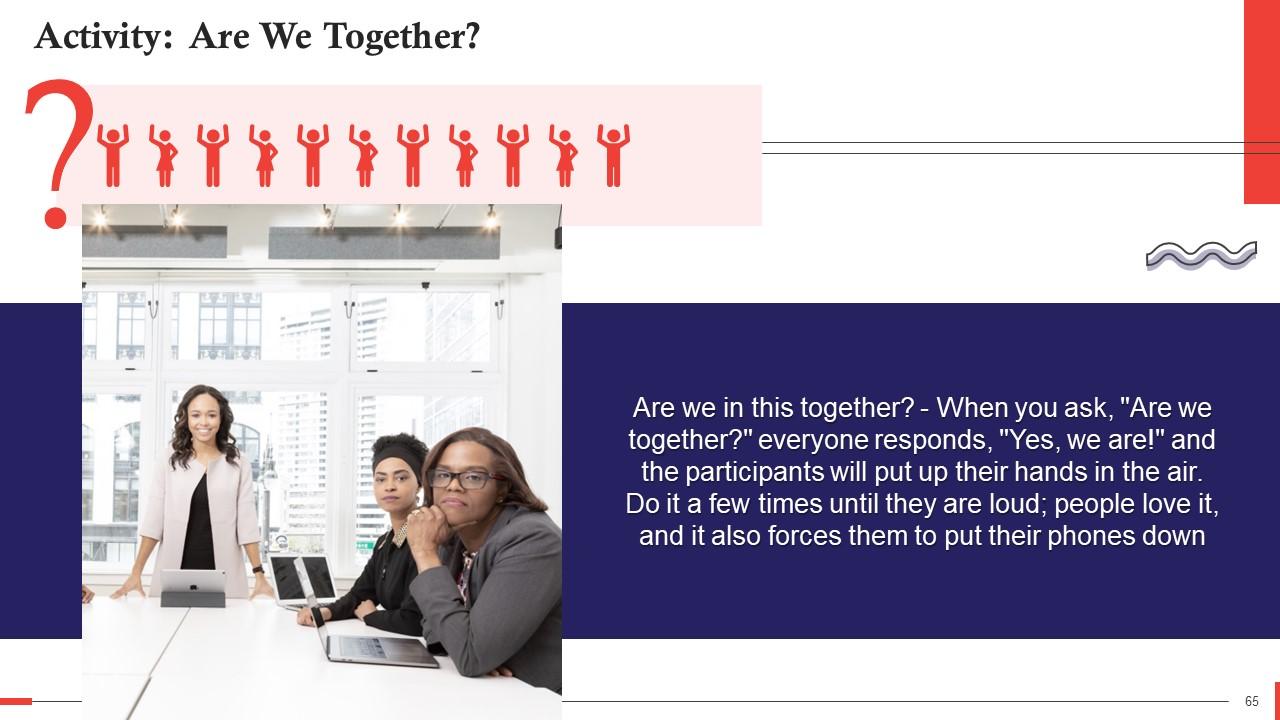
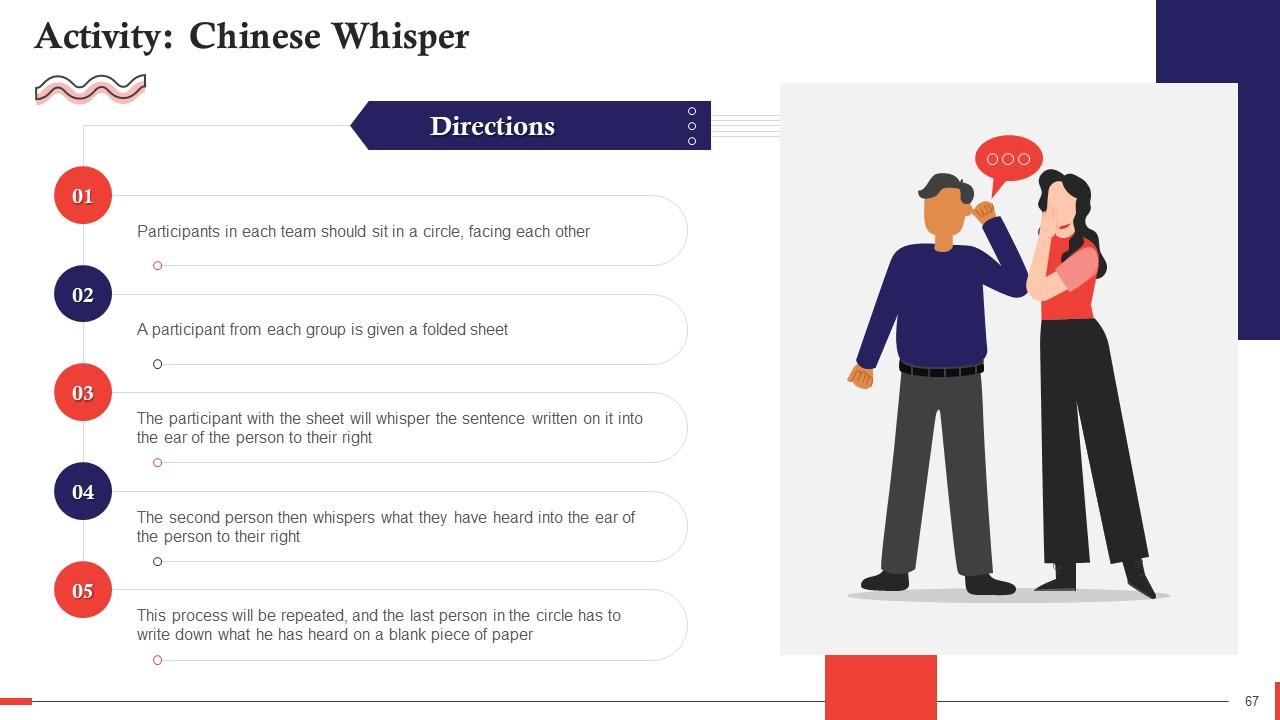
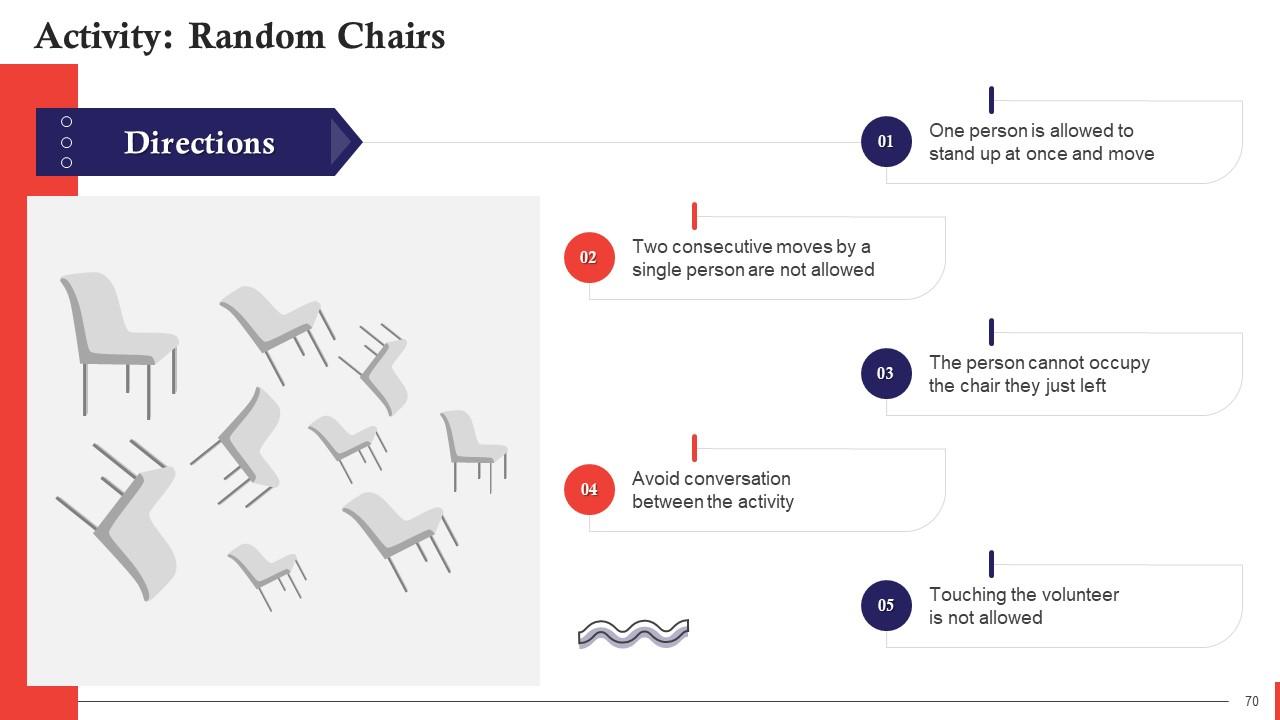
Slide 55 to 70
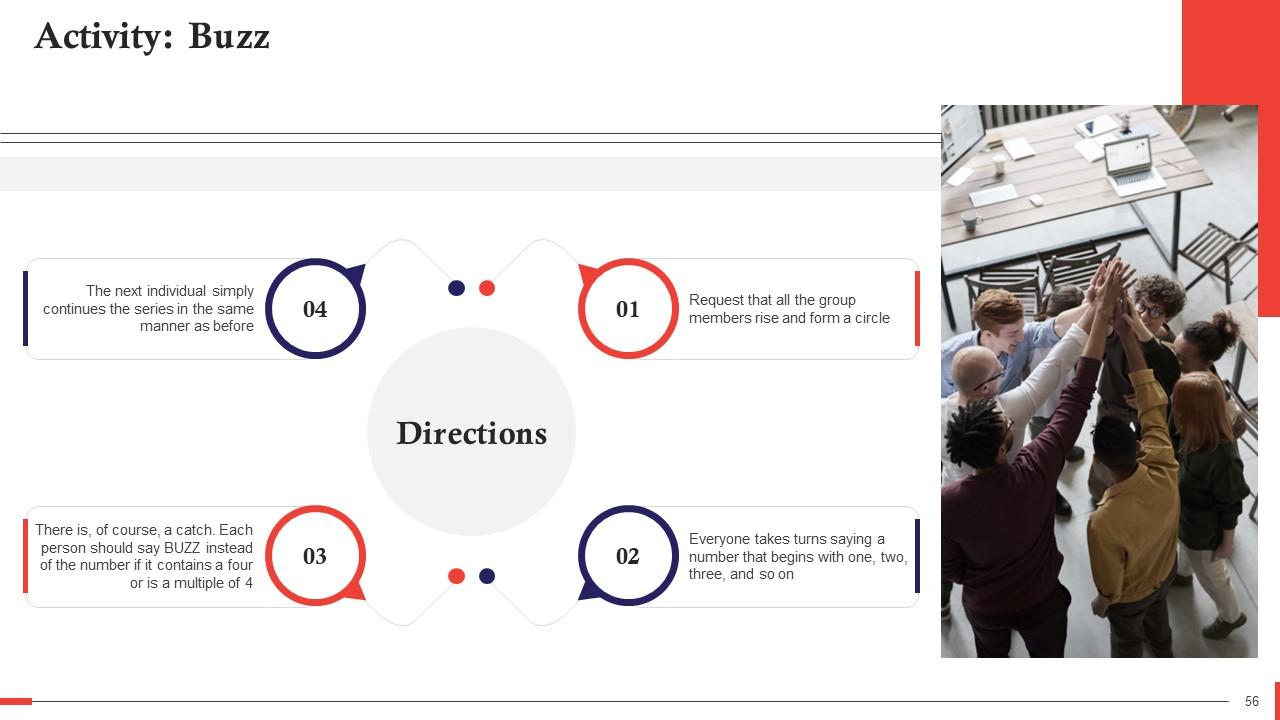
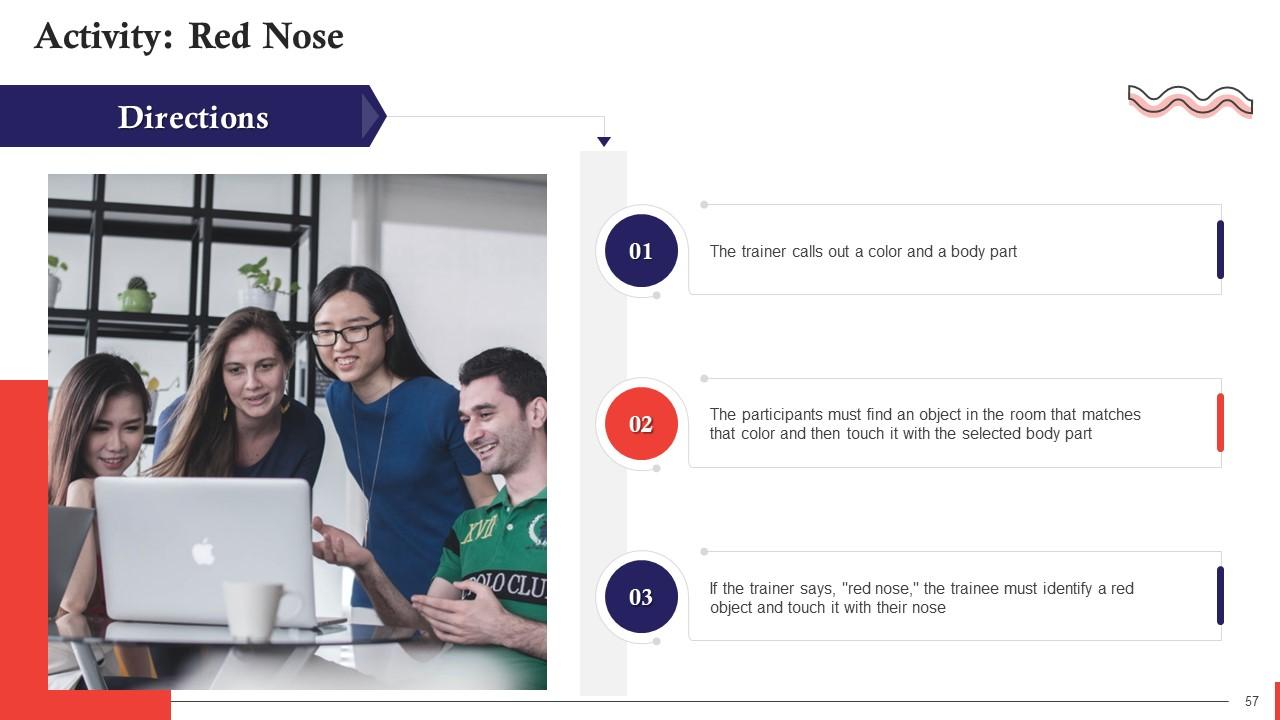
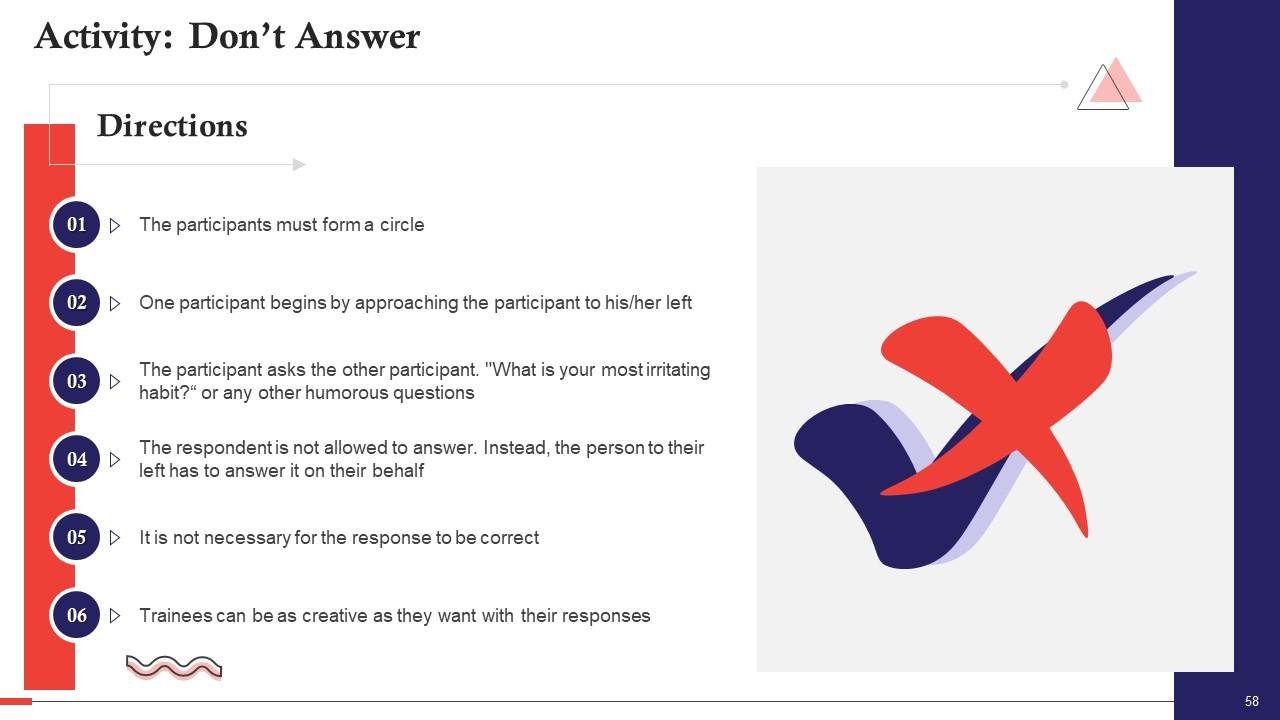
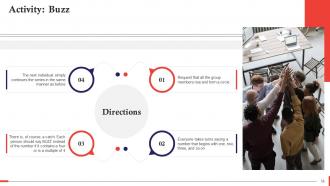
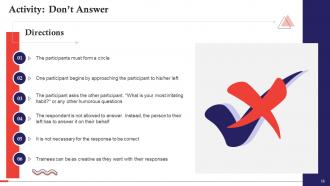
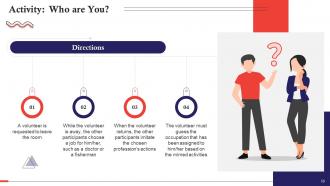
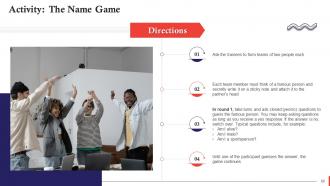
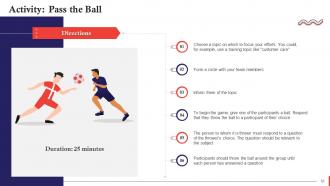
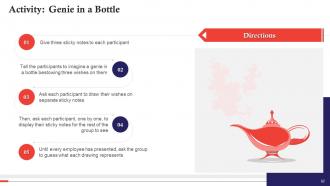
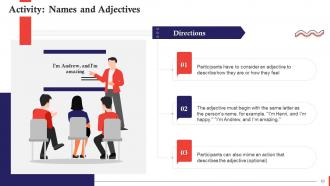
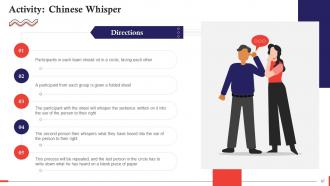
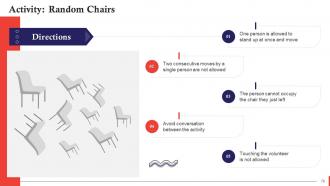
These slides contain energizer activities to engage the audience of the training session.
Slide 71 to 98
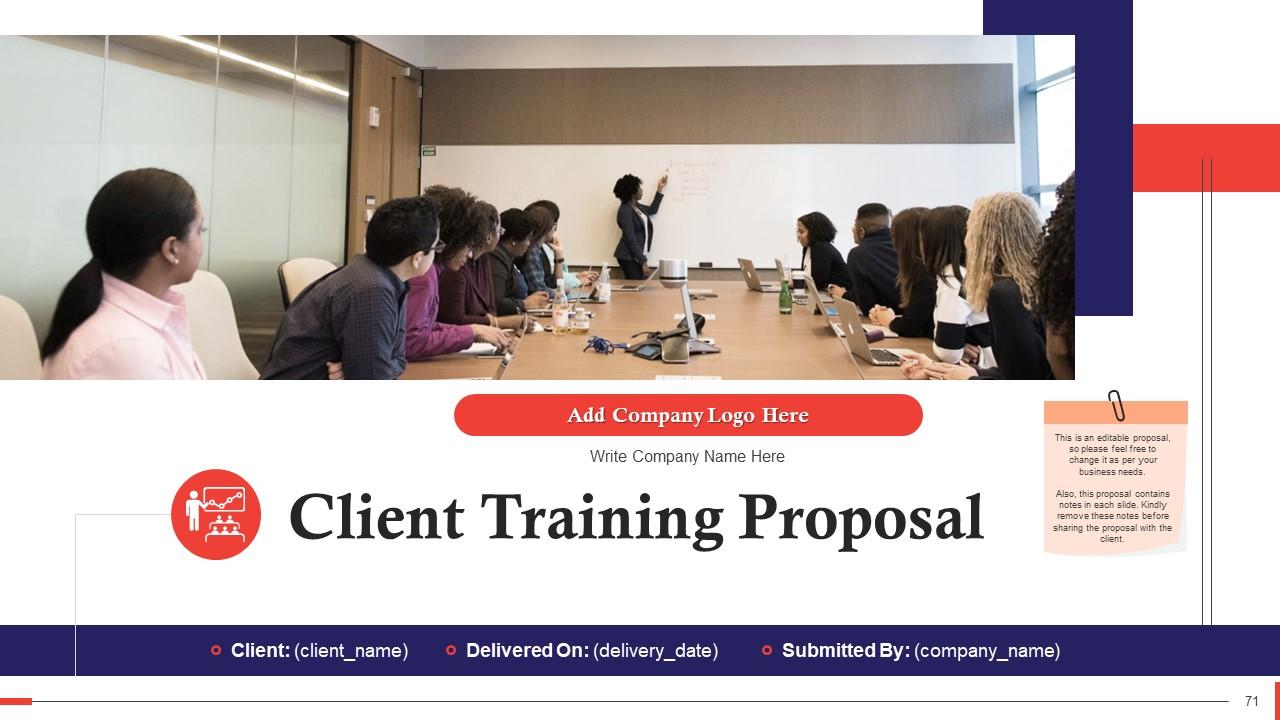
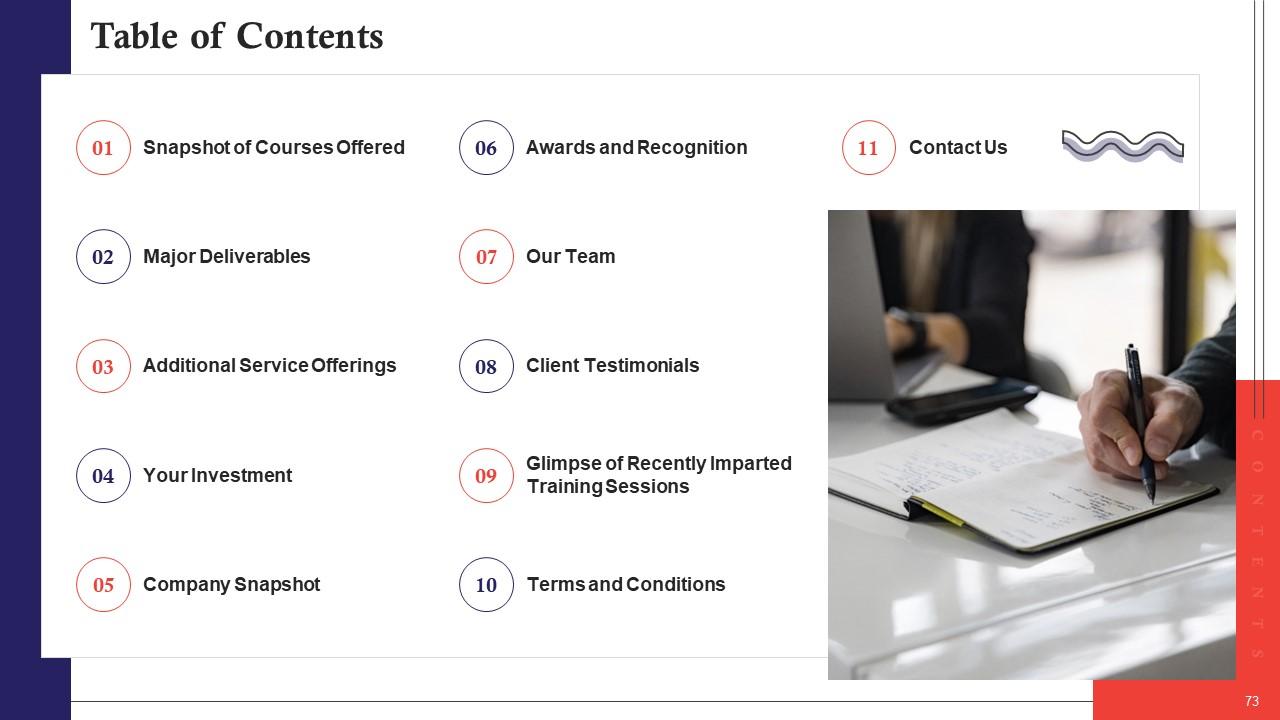
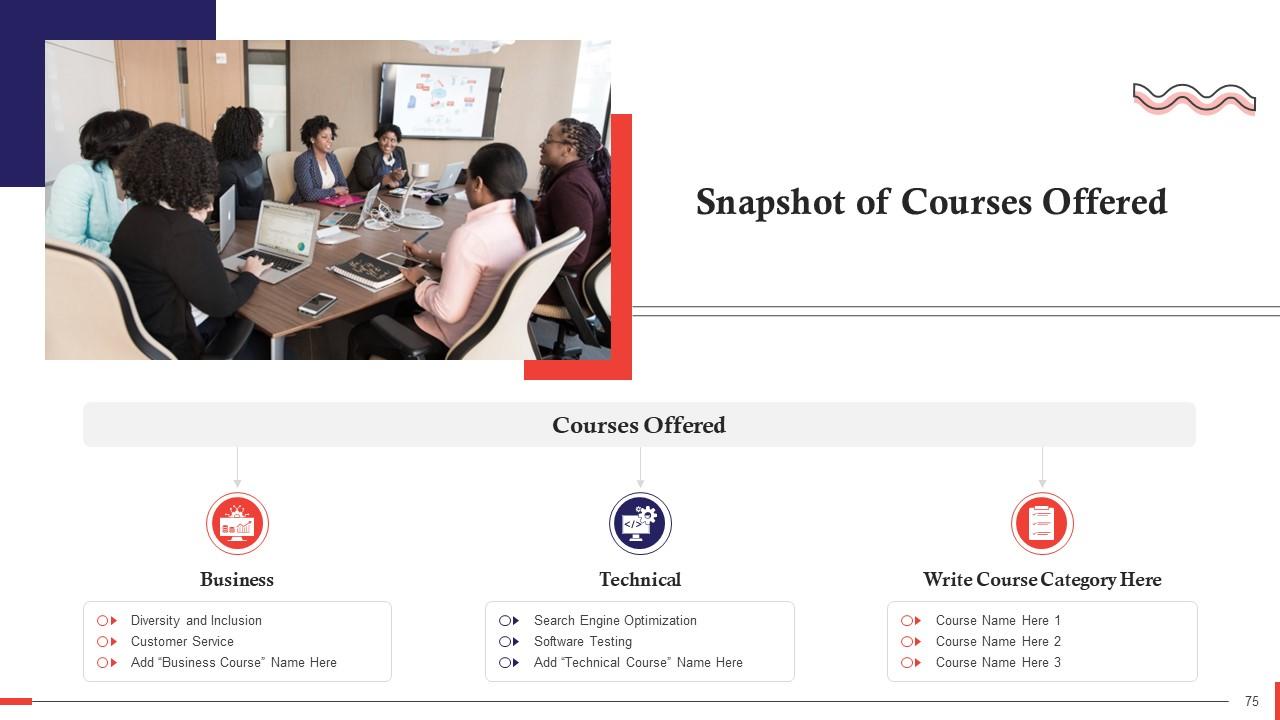
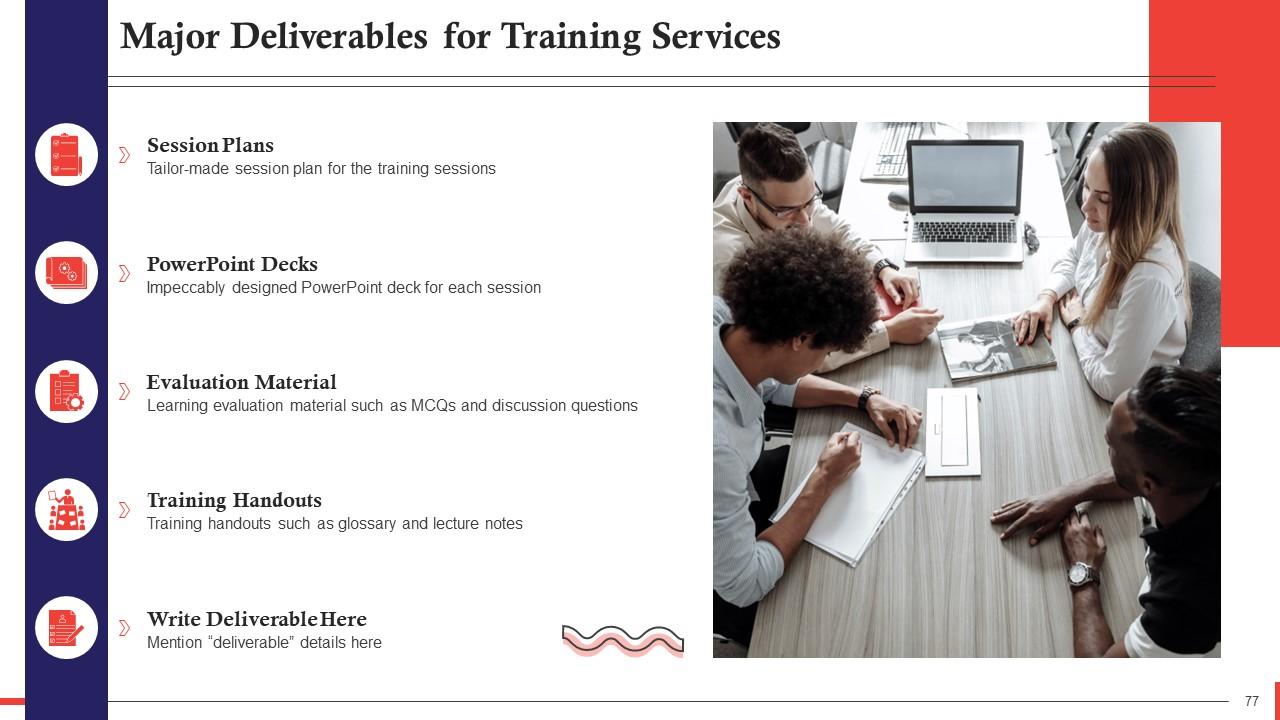
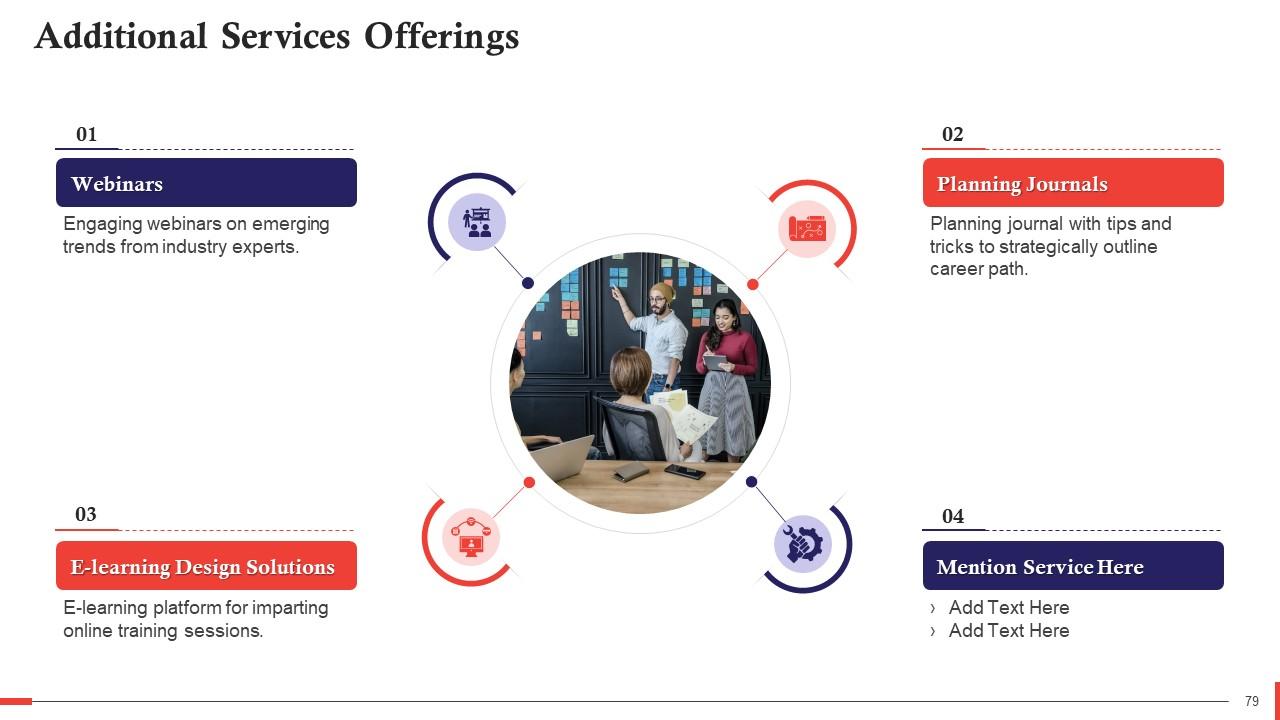
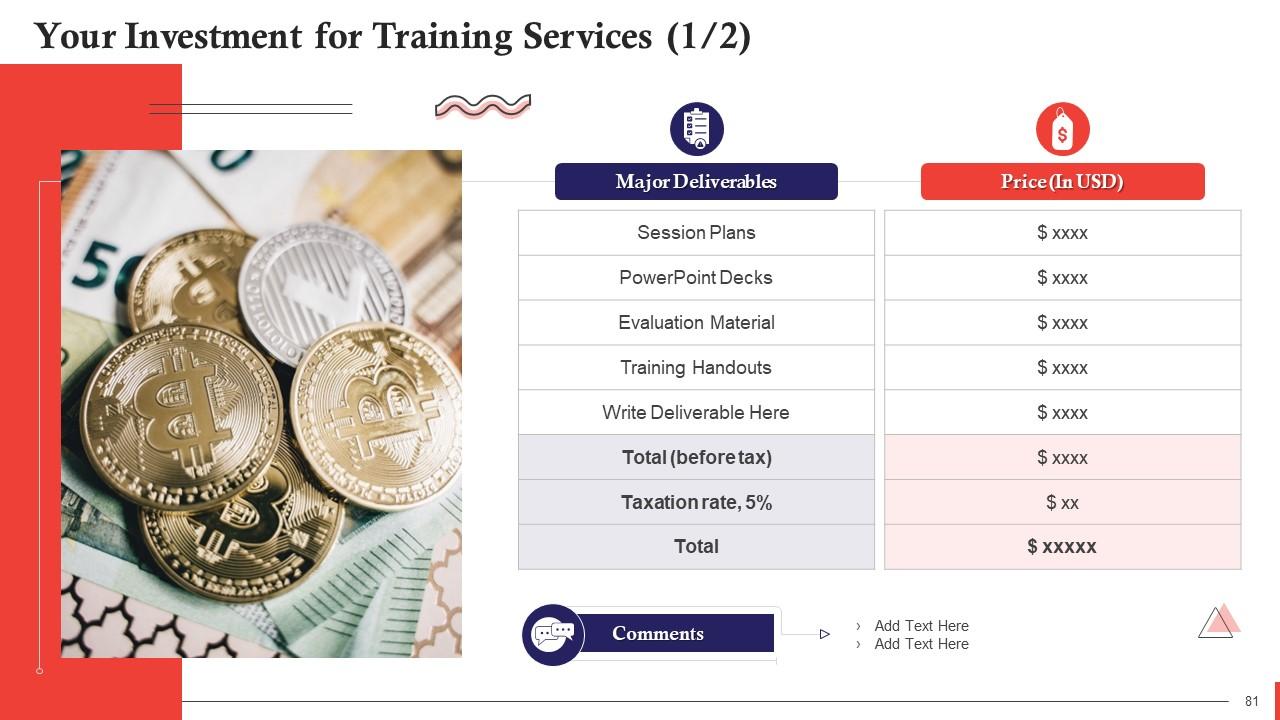
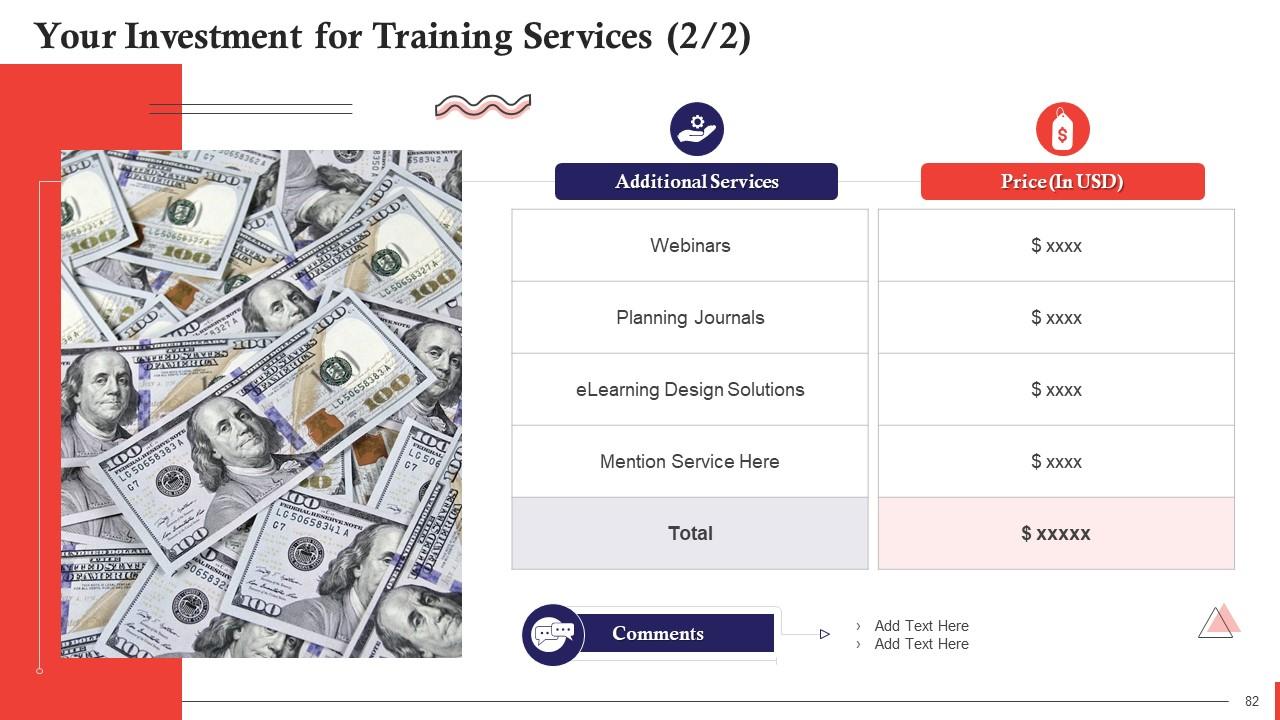
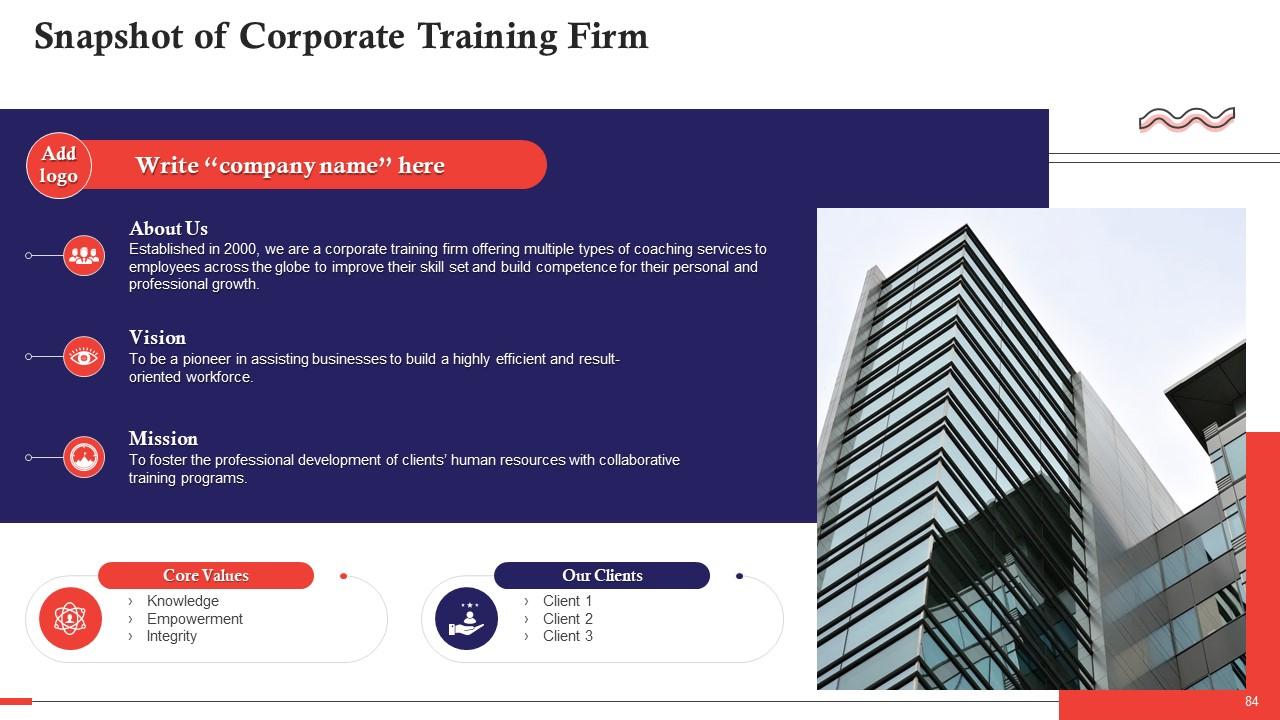
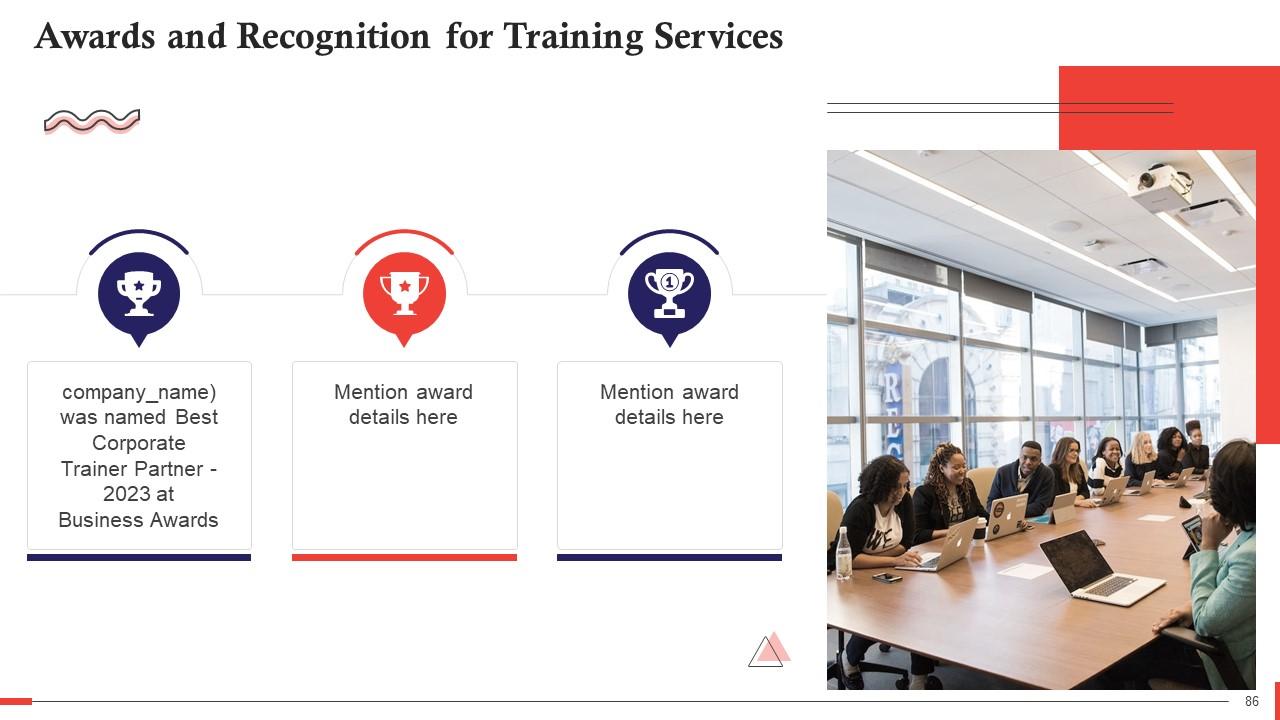
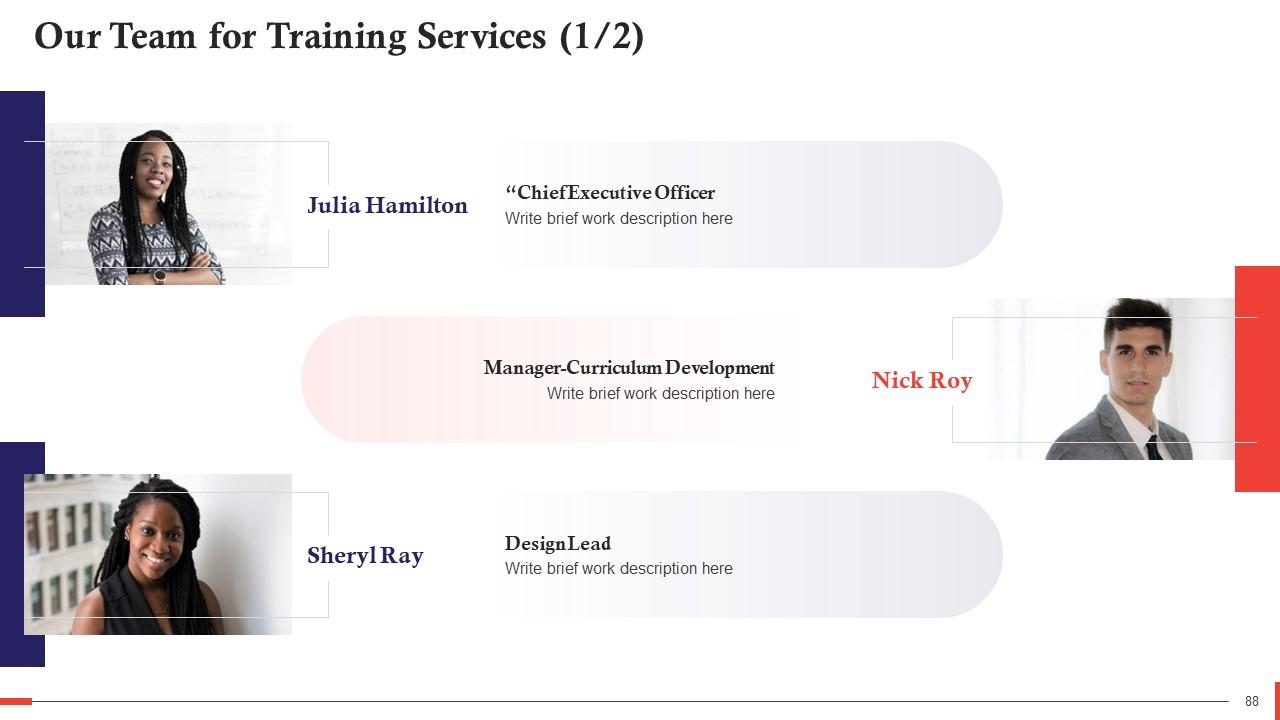
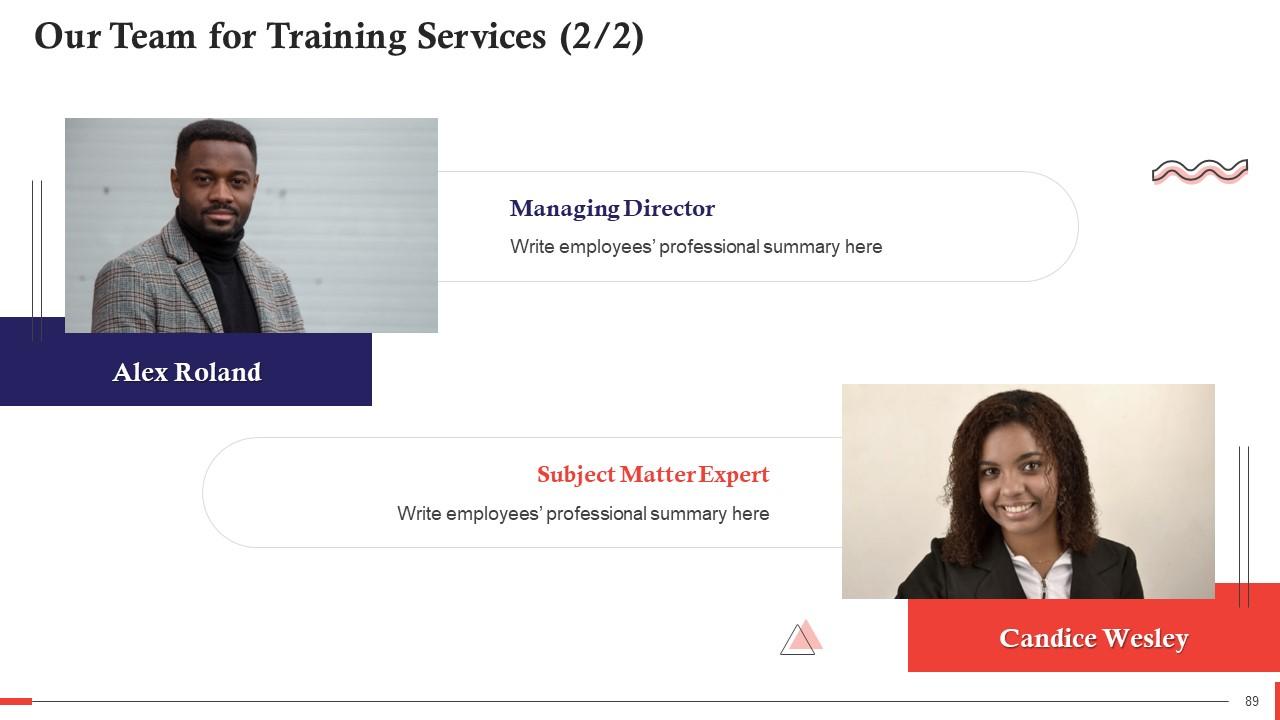
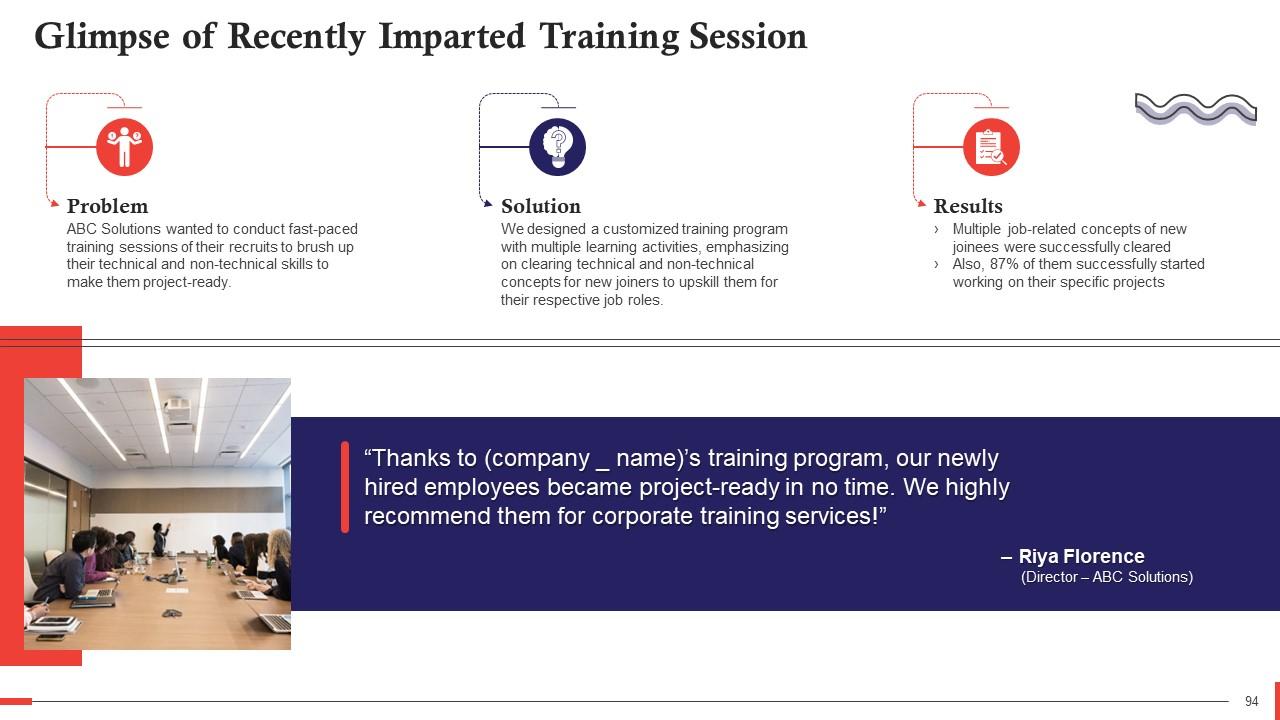
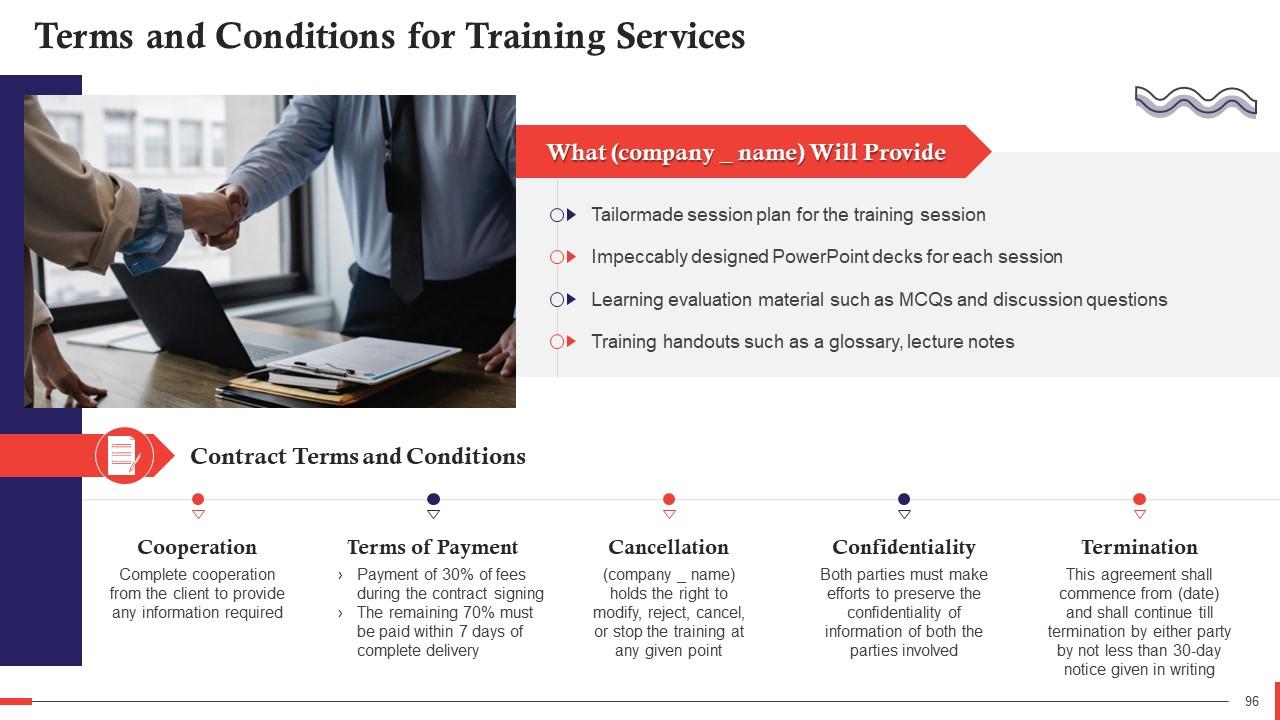
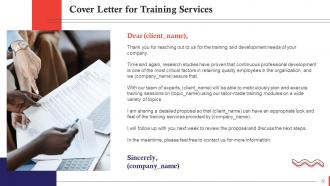
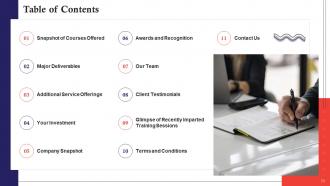
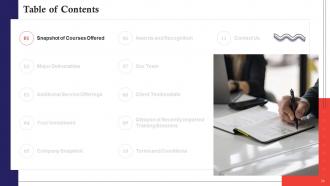
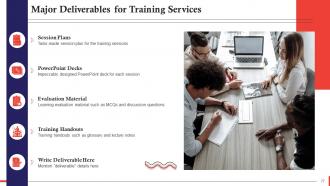
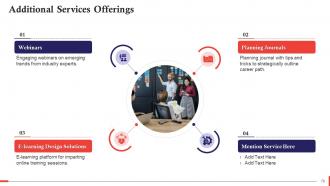
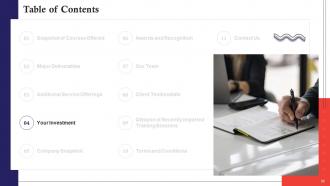
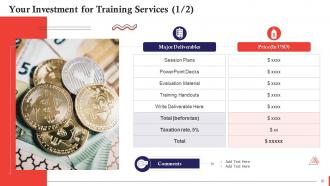
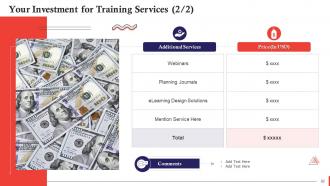
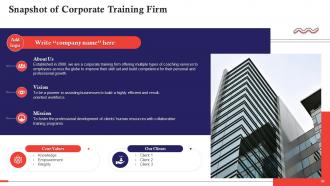
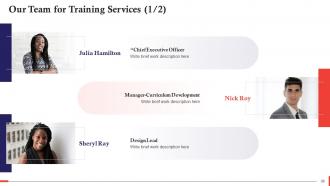
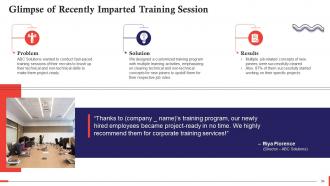
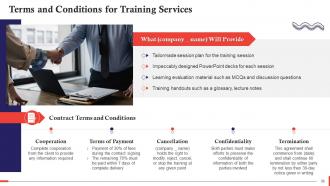
These slides contain a training proposal covering what the company providing corporate training can accomplish for the client.
Slide 99 to 101
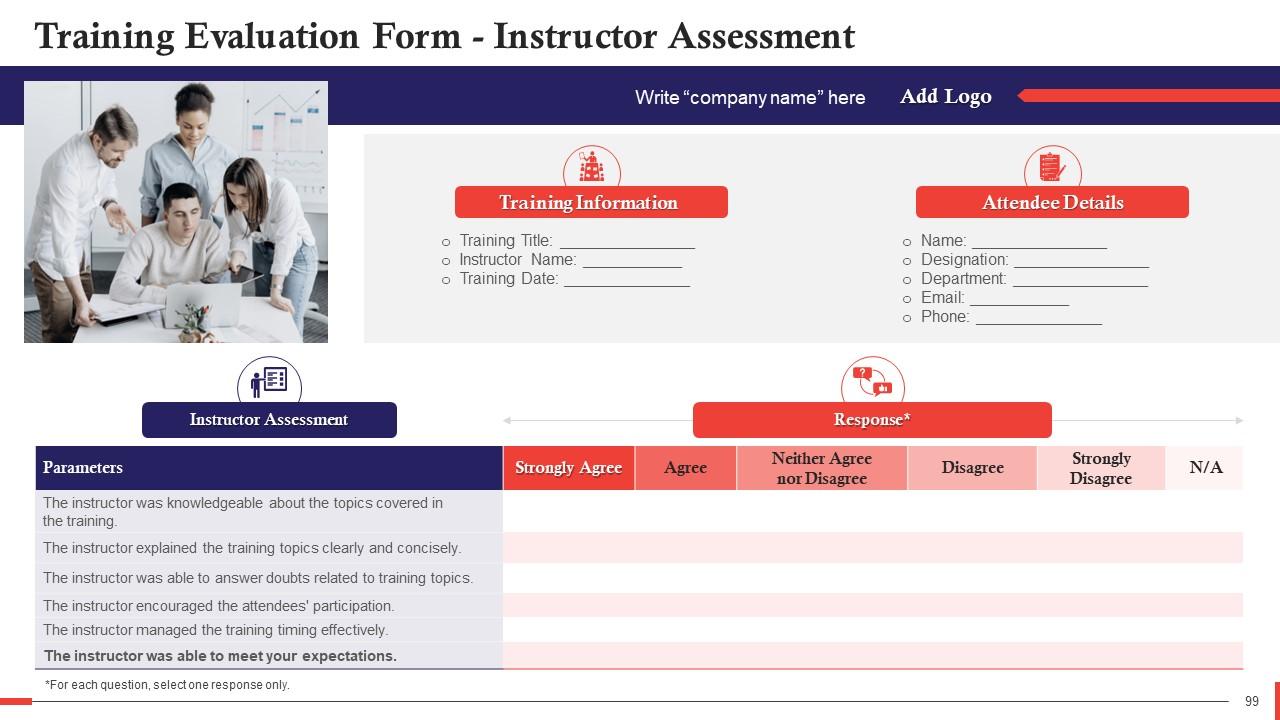
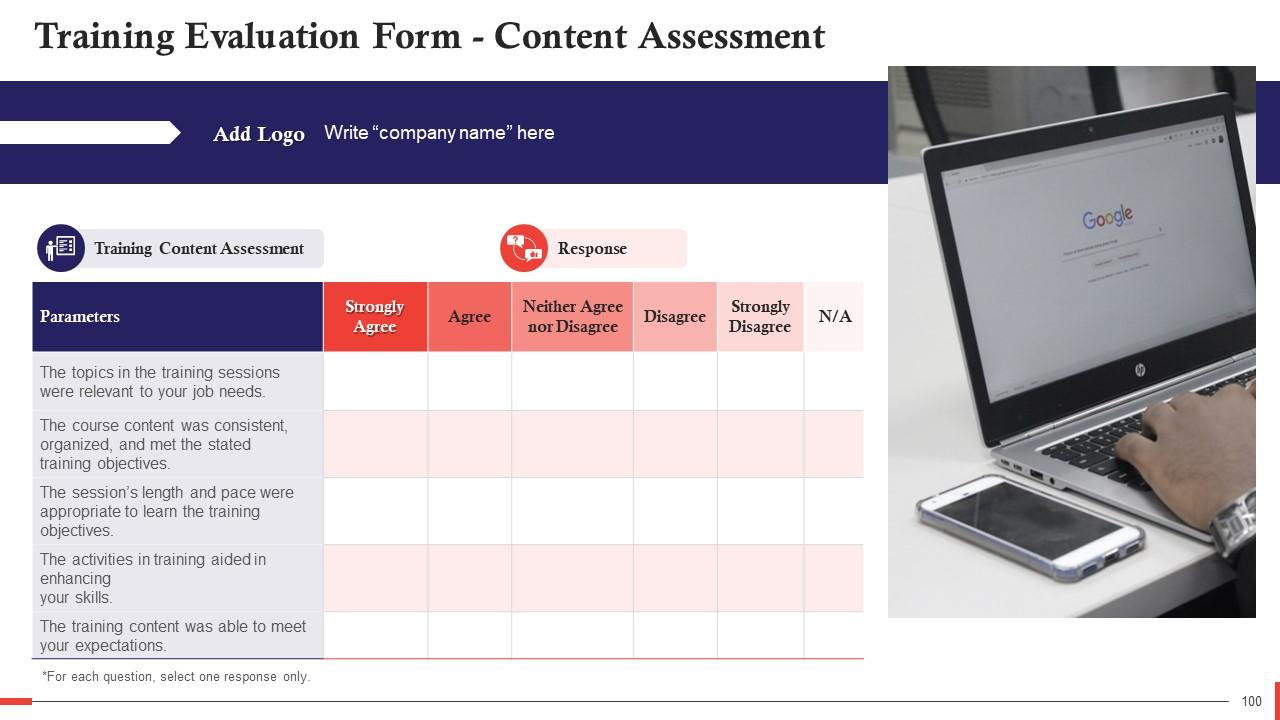
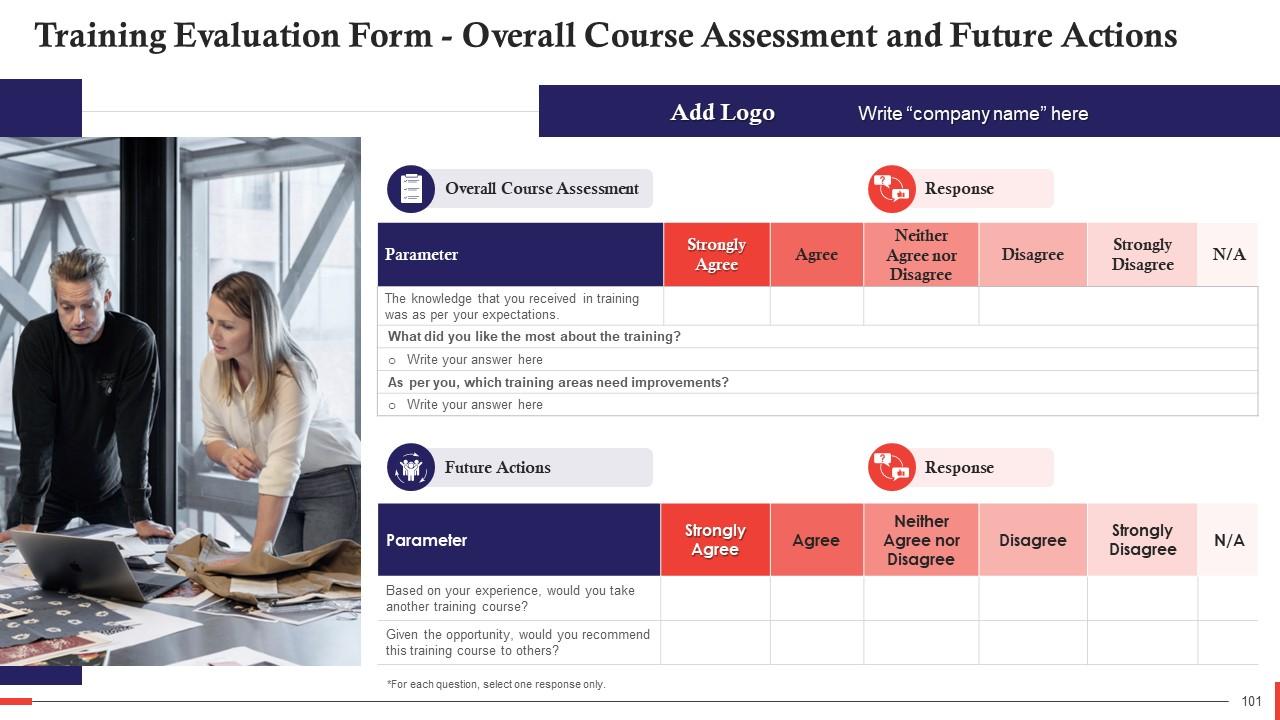
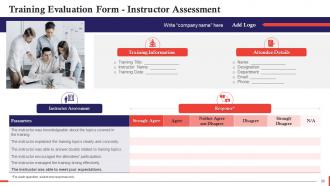
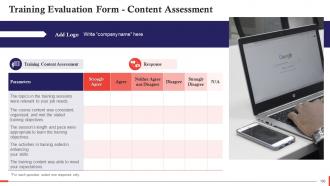
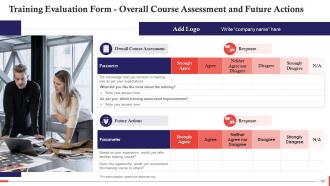
These slides include a training evaluation form for instructor, content and course assessment.
Objection Handling And Overcoming Resistance In Sales Training Ppt with all 106 slides:
Use our Objection Handling And Overcoming Resistance In Sales Training Ppt to effectively help you save your valuable time. They are readymade to fit into any presentation structure.
-
The team is highly dedicated and professional. They deliver their work on time and with perfection.
-
Excellent design and quick turnaround.
