


Overlapping timeline showing project start phases and completion





Try Before you Buy Download Free Sample Product
 Impress Your
 Audience
 100%
100% Editable
 Save Hours
 of Time


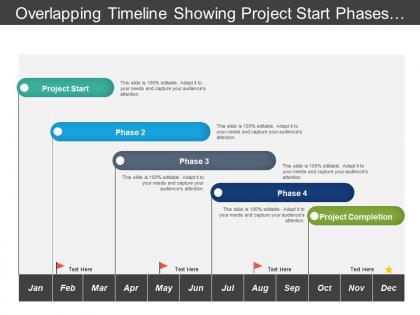
Reach their uncertainties with our overlapping timeline showing project start phases and completion PowerPoint deck. Ensure their fears don't continue to grow. Following flat design consist of a five-stage process to demonstrate the overall working of a project until its completion. Phase 1, phase 2, phase 3, phase 4 and project completion are shown as five stages here. A horizontal timeline view is shown here comprising of all the months and act as a gradient towards completing of the business process. Our overlapping timeline showing project starts phases and completion PowerPoint presentation is the smartest and a captivating way to present ideas and information. Download and make your business presentations a standard. Field their doubts with our Overlapping Timeline Showing Project Start Phases And Completion. Ensure their fears don't continue to grow.
People who downloaded this PowerPoint presentation also viewed the following :
Overlapping timeline showing project start phases and completion with all 5 slides:
Our Overlapping Timeline Showing Project Start Phases And Completion are designed to be inoffensive. It caters for all diverse cultures.
FAQs for Overlapping timeline showing project start
Okay so you'll want clear milestones and realistic deadlines - that's like the foundation. Figure out which tasks depend on others finishing first, because honestly that's where most people screw up their timelines. Oh and don't forget to check who's actually free to do the work when you need them. Buffer time is crucial too since stuff always goes sideways. I use Gantt charts sometimes but even a basic spreadsheet works. The tricky part is remembering to update it when things inevitably change. Dependencies are seriously the biggest pain point though.
Honestly, Gantt charts are pretty cool - they turn your project into these horizontal bars on a timeline so you can actually *see* what's happening. Way better than staring at endless task lists. You'll spot which tasks run at the same time, what's blocking what, and where things might crash into each other. Plus your boss or client can look at it without their eyes glazing over (unlike spreadsheets, ugh). The whole critical path thing becomes obvious too. I started using them last year and now I feel like I actually know what's going on with my projects. Definitely try it!
Honestly? Just use whatever your team already has. Excel or Sheets work great if you're not doing anything crazy complex. Asana and Trello are solid if you want pretty visuals - Monday.com too but it's pricier. Microsoft Project is overkill unless you're building actual buildings or something. I've watched so many teams waste weeks debating tools instead of just... making the timeline. Pick something, start working, then switch later if it sucks. Most people overthink this stuff way too much.
Dependencies will absolutely destroy your timeline if you're not careful with them. One task gets delayed? Everything else starts falling like dominoes. I've seen people estimate 3 days for something, then it sits there for weeks waiting on another piece that's behind schedule. The worst part is some dependencies are sneaky - you don't realize Task C needs Task A until you're already deep in it. Map out your critical path stuff first, then pad some extra time around anything that feels risky. Trust me on this one.
Look, stakeholder feedback is basically your project's early warning system. Build in buffer time from day one because trust me - they'll change their minds about what they actually want. Set hard deadlines for when you need their input back, otherwise you'll be waiting forever. Document everything when timelines shift because of their requests. Honestly, some stakeholders don't even know what they want until they see it. Those "why are we behind?" meetings get way easier when you've got a paper trail showing exactly how we got here. It's saved my butt more times than I can count.
Okay so first thing - you gotta be brutal about what actually matters vs what would just be cool to have. I make this little chart ranking stuff by how much impact it'll have versus how hard it is to build. Timeline's set in stone? Then you're cutting features, period. Talk to everyone upfront about these trade-offs - seriously, don't wait until you're drowning to bring this up. Check in regularly so you catch scope creep early. Oh and always pad your estimates by like 20% because something random will definitely go sideways. Trust me on that one.
Break your project into smaller chunks with actual deadlines - way easier to catch issues before they spiral out of control. Always build in buffer time because something will definitely go wrong (it always does). Check progress weekly instead of those useless monthly meetings. Get your team talking regularly so problems get flagged fast. Tools like Asana help you see which tasks depend on each other - honestly game-changing once you start using it properly. Don't be stubborn about scope either. Better to ship 90% on time than be that team delivering everything perfectly three weeks late.
Check your timeline weekly when things are moving fast - that's the baseline. But real talk, I'm constantly peeking at mine when deadlines get crazy. Longer projects? Every two weeks works pretty well. The trick is catching problems early instead of scrambling after you're already screwed. I learned this the hard way on my last big project lol. Set up a calendar reminder and actually stick to it. Trust me, you'll be so glad you did when your boss starts breathing down your neck asking for updates.
Ugh, the worst thing you can do is be way too optimistic about timing. I always used to think "this'll take 2 hours" and then spend the whole day on it. Definitely pad everything with extra time - like 20% minimum. Also, don't stack a bunch of dependent tasks without breaks between them. Reviews and approvals take FOREVER (seriously, why does everything need three people to sign off?). Oh and testing phases... people act like they're quick but they're not. Be realistic about when your team's swamped too. Just bake in buffer time from the start and you'll thank yourself later.
Honestly, the right tools make such a huge difference for timeline stuff. I'm obsessed with Asana but Monday and even basic Google Sheets work great too. Real-time updates mean nobody's constantly asking "where are we on this?" in Slack anymore - thank god. Everyone sees progress instantly and can comment right on tasks. Most tools create those visual timeline things that don't confuse the higher-ups. Automated notifications are clutch when deadlines move around. My advice? Just pick something your whole team will actually stick with. Simple beats fancy every time.
**Schedule variance** is probably your best bet - shows if you're running late or ahead. I'd also track **milestone completion rate** to see what percentage of big deadlines you're actually hitting. **Task completion velocity** compares how fast work gets done versus your original estimates. Super helpful for future planning tbh. **Burn-down charts** are great visually - you can literally see remaining work shrink over time. Oh, and **critical path progress** matters because any delays there mess up everything downstream. Don't go crazy though. Pick maybe 2-3 metrics max and check them weekly. More than that gets overwhelming fast.
Look, your timeline's only as good as your people. Got your star developer booked solid for three weeks? That "urgent" feature just became not-so-urgent. I can't tell you how many projects I've watched implode because someone just assumed the right people would be free when needed. Plus there's capacity - you can't dump a full sprint on someone who's already at 80%. Actually happened to me last month and it was a disaster. Before you promise any dates, figure out who's actually available. And honestly? Always pad your timeline for the inevitable resource mess.
When scope changes mess with your timeline, you've got options. Buffer time between phases helps a ton. Move people off less important stuff to the critical tasks. Some things can probably run at the same time instead of one after another - I always forget to look for those opportunities. Yeah, you might have to push deadlines back, but honestly that happens more than people admit. The key thing is updating your critical path every time scope shifts so you actually know what affects your end date. And tell stakeholders right away about timeline changes. Don't try to magically make up time later because it never works.
Yeah so tech companies do those agile sprint things with flexible deadlines, but construction? Totally rigid phases because you can't exactly skip steps when building stuff. Healthcare and pharma are super conservative - they'll take forever because regulations are insane and nobody wants people dying. Manufacturing works backwards from when they need to deliver. Oh and consulting firms always pad their timeline estimates since projects inevitably get way more complicated than anyone expects. Honestly your best move is just looking up what's normal in your industry and tweaking from there.
Ugh, don't wait - that's the biggest mistake. Tell them immediately when you know timelines are shifting, even before they start asking questions. I made this error once and seriously damaged a client relationship because I kept putting off the conversation. Send them the facts: what changed, why it happened, your new realistic timeline. Include how this affects their deliverables too. Some people want a quick call, others prefer email - just match their style. Honestly, most stakeholders appreciate the heads up because it gives them space to adjust their own schedules.
-
Visually stunning presentation, love the content.
-
Innovative and attractive designs.