


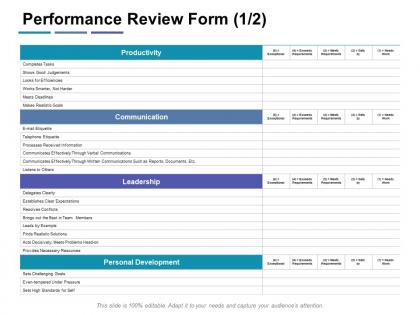
Performance review form leadership ppt powerpoint presentation infographic template




Try Before you Buy Download Free Sample Product
 Impress Your
 Audience
 100%
100% Editable
 Save Hours
 of Time


Our Performance Review Form Leadership Ppt Powerpoint Presentation Infographic Template are a cut above. Give you ideas the edge they deserve.
People who downloaded this PowerPoint presentation also viewed the following :
Performance review form leadership ppt powerpoint presentation infographic template with all 5 slides:
Break through with our Performance Review Form Leadership Ppt Powerpoint Presentation Infographic Template. Clear all the doubts in the minds of your team.
FAQs for Performance review form leadership ppt powerpoint
So for your leadership review template, definitely hit the big stuff - strategic thinking, team development, communication, decision-making. Goal achievement and stakeholder management are obvious ones too. Oh, and adaptability since everything's constantly shifting these days (honestly feels like daily sometimes). Make sure there's room for actual examples and numbers, not just fluffy comments. You want to balance the leadership skills with real business results. Set it up so you can see progress over time and give them concrete areas to work on. Also include how they're developing their people - that's huge.
Honestly, leadership templates are total game-changers when you're drowning in performance reviews. You know how you can get stuck focusing on what someone screwed up? Templates guide you through strengths, growth areas, goal-setting - the whole nine yards. I swear they save my butt when I'm juggling feedback for like 6 different people and everything starts sounding the same. You'll give way better examples instead of those wishy-washy "good job" comments. Try the continue/start/stop thing - it's weirdly effective at keeping conversations from getting awkward.
Honestly, goal-setting makes performance reviews so much less painful. Instead of winging it with vague feedback, you've got actual benchmarks to point to. I always include SMART goals in my template - though let's be real, sometimes life happens and priorities change mid-year. Regular check-ins help catch that stuff early. The biggest thing? Don't just hand down goals from corporate. Work with your people to set them together. Makes a huge difference in buy-in, and frankly, they know their day-to-day better than you do anyway.
Okay so basically you wanna match the template to how they actually lead. Like if someone's super visionary, throw in questions about strategic thinking. More of a coach? Focus on team development stuff. Most templates are honestly pretty generic and useless. Figure out their main leadership style first - are they collaborative, more directive, whatever. Then pick maybe 3-4 key areas that actually matter for how they work. The trick is swapping out those boring standard criteria for things that reflect their specific approach. Change up the behavioral examples too so they're not just cookie-cutter nonsense. Way more helpful than trying to force everyone into the same box, you know?
Honestly, start with the obvious stuff - how's your team performing and are people actually sticking around? Revenue numbers matter too if that's your thing. 360 feedback is huge though, probably more telling than you think. Also track if you're actually developing people - like are team members getting promoted or learning new skills under you? Project timelines and budget stuff if that applies. Pick maybe 4 metrics max that show you're leading, not just doing the work yourself. Oh and definitely check what your job description says you're supposed to be doing first - sounds basic but you'd be surprised how many people skip that step.
Honestly, visuals are a game changer for performance reviews. People's brains just eat up charts and graphs way faster than boring text blocks. I started using simple progress charts and goal completion percentages, and suddenly my team actually pays attention instead of staring at their phones. Before/after comparisons work great too. The difference is wild - I used to watch people zone out during verbal-only reviews, but now they're asking questions and engaging. Plus it keeps me on track as the presenter, which is nice because I tend to ramble. Even basic PowerPoint charts will do the trick. Trust me, your reviews will go from snoozefest to actually useful.
Start with self-assessments - they'll tell you way more about how your people see themselves than you'd expect. Most are actually tougher critics than you'd be, which is wild. Have them set their own goals too instead of you dictating everything. When you sit down together, ask real questions about what's blocking them or what help they need. Make it back-and-forth, not you just talking at them. The whole point is getting them involved in the process rather than just sitting there taking notes while you ramble.
Break your template into two main chunks - individual stuff and team dynamics. Personal goals, skill growth, specific wins go in the first section. Team collaboration, communication, group impact gets its own space. Honestly, 360 feedback is clutch here since leadership isn't a one-person show. Weight them based on the role though - maybe 60% team impact for senior folks, 40% individual. Oh, and always connect team performance to actual business numbers when you can. Makes the whole thing way more meaningful.
Honestly, 360-degree feedback is your best bet - get input from everyone around the leader, not just their boss. Self-assessments work too, though people can be weirdly blind to their own stuff. Here's what I'd do: skip the big annual review dump and do smaller check-ins throughout the year instead. Pulse surveys are clutch for catching issues early. Oh, and definitely make sure team members can give anonymous feedback about their manager - that's where the real insights hide. Start small with maybe two methods, see what sticks in your company culture, then build from there.
Templates force alignment because you're literally baking your company's goals into the review process. When your questions directly connect to business objectives, managers have to evaluate people on what actually matters. Think of it like guardrails - stops everyone from focusing on random stuff they personally care about. The trick is including specific sections that make reviewers explicitly link individual work to bigger company goals. Honestly, it's the only way I've seen performance conversations stay on track instead of turning into those weird subjective discussions about "collaboration skills" or whatever.
Honestly, these templates are game-changers for figuring out what leadership skills you're actually missing. You'll spot development opportunities that would totally fly under the radar otherwise. The cool thing is tracking progress over time - like, you can literally see where you're killing it and where you're still struggling. Your manager conversations get way better too since you'll have real talking points about training or stretch assignments. No more setting those super vague goals like "be a better leader" (ugh, been there). One thing though - use it quarterly, not just once a year. Trust me, you'll catch issues way earlier and actually fix them before they become real problems.
Don't just fill in the blanks like it's some worksheet - that's how you get useless generic feedback. The template should spark real conversation, not replace it. Your person might need feedback on stuff that isn't even in those preset categories, you know? I've seen managers just rush through these things to say they did it. Bad move. Use the template to prep and think of specific examples beforehand. But when you're actually sitting there with them? Forget the script. Have a real talk. The whole point is helping them grow, not checking boxes.
So first thing - just digitize whatever templates you're already using. Then you can add the fancy stuff later once people aren't freaking out about change. Platforms like BambooHR will automate sending everything out and track who's actually done their reviews (spoiler: it's never everyone). The reminders are honestly a lifesaver because you know how people are with deadlines. Everything gets stored in one spot, plus you get dashboards showing where things get stuck. My buddy's company started with just moving their paper forms online, then gradually added the automated features. Way less painful that way.
Honestly, you gotta tie feedback to goals you've already set with them. Don't just say "communicate better" - be specific like "start doing weekly check-ins with the design team to cut project delays by 20%." Vague stuff never works, trust me. Always give them a timeline too. Maybe "let's check back in 30 days" or whatever makes sense. The whole point is they should walk away knowing exactly what they need to do and what success actually looks like. Otherwise you're just wasting everyone's time.
Oh man, you really need to think about cultural stuff when designing those templates. Direct feedback works great in some places, but other cultures find it super uncomfortable - I've seen this bomb spectacularly in our Asia offices. Some teams are all about individual wins while others focus on group success. Hierarchy matters too, especially for peer reviews. The rating scales that work in New York might feel totally wrong in Tokyo, you know? Survey your different regions first about what feedback style they actually prefer. Trust me, it's way better than rolling out something that half your teams will hate using.
No Reviews